Lemongrass — Benefits Deep Dive
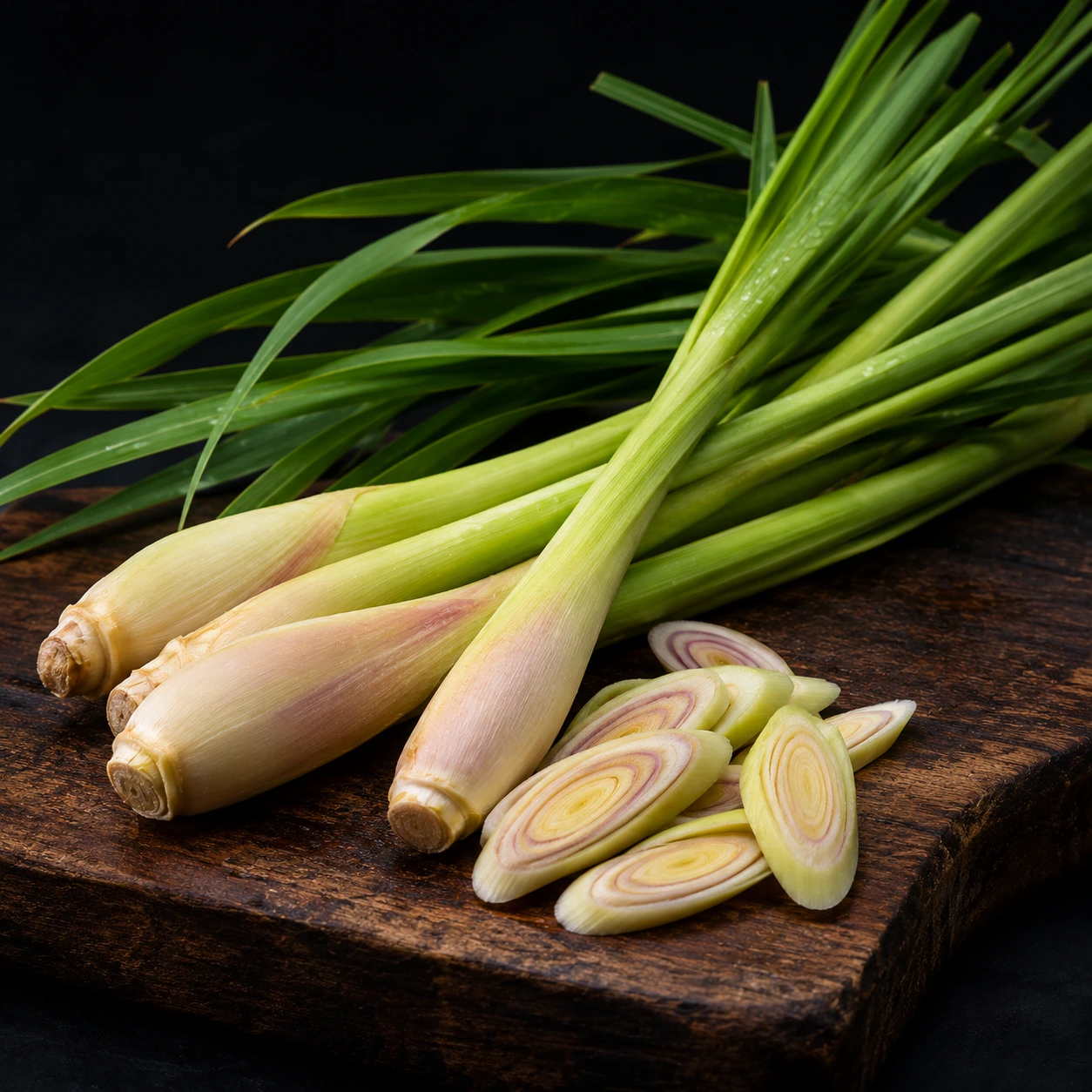
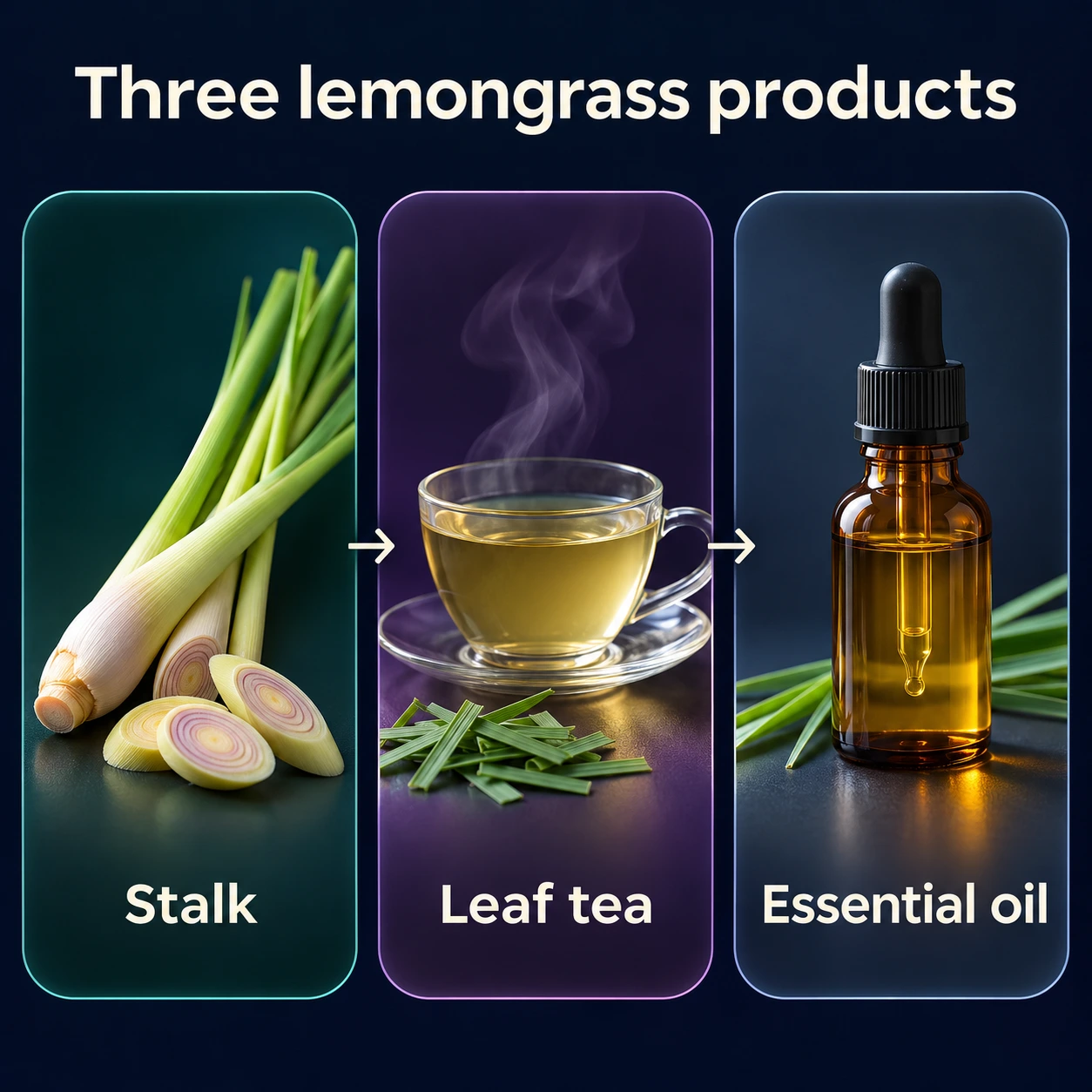
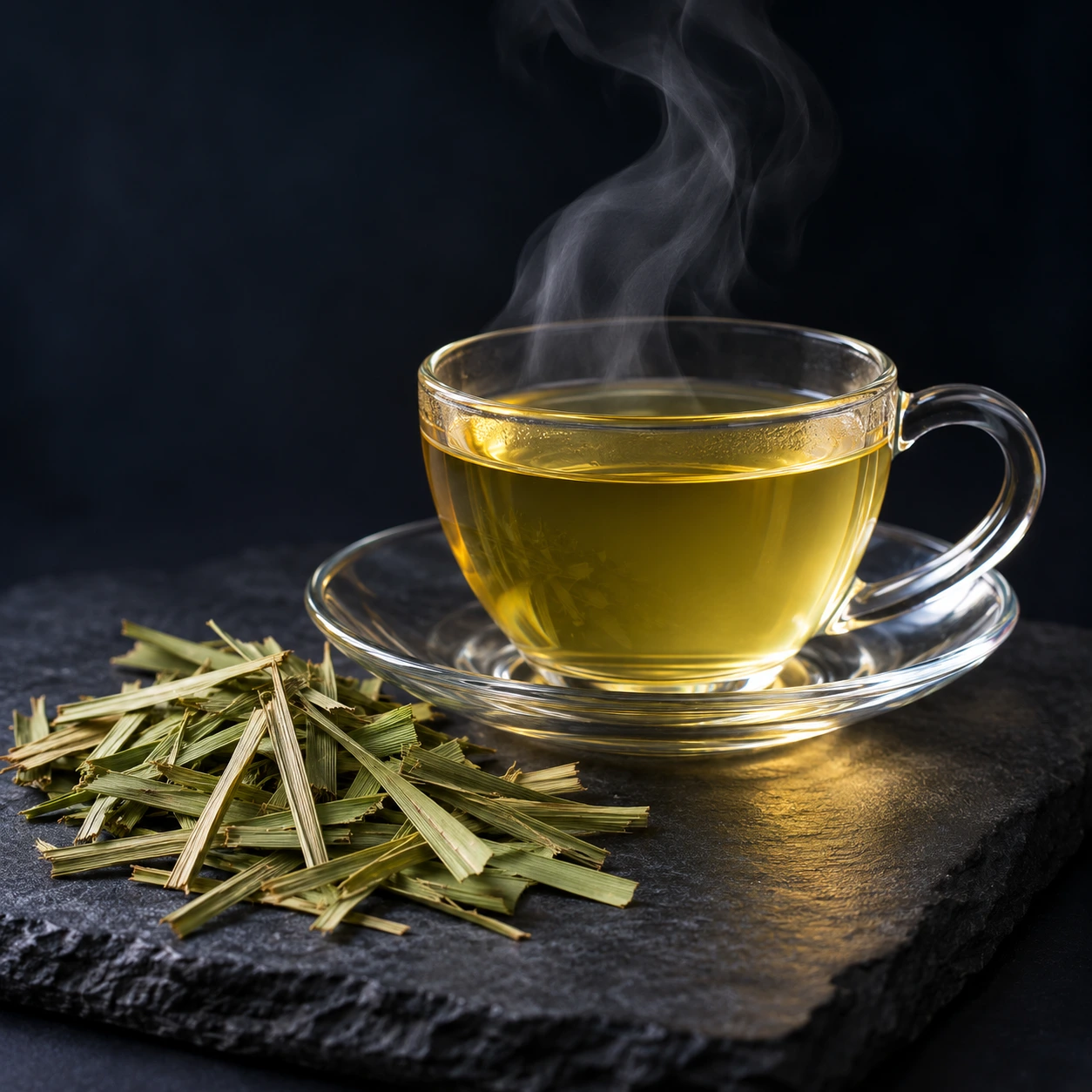
Lemongrass (Cymbopogon citratus) is one of the few plants that is simultaneously a kitchen staple, a household beverage and a laboratory workhorse. The stalk flavors a pot of tom yum; the dried leaves make a mild, faintly sweet lemon tea drunk by the mugful from Brazil to Bangkok; and the steam-distilled essential oil — often 70–85% citral — is one of the most-tested antimicrobial plant oils in the published literature. These four pages take each of the plant's four best-documented claim areas in turn and ask a deliberately narrow question of every one: what was actually given, to whom, and what actually changed?
One distinction governs this whole section. Lemongrass tea and lemongrass essential oil are not two strengths of the same product. A cup of infusion delivers water-soluble flavonoids and a trace of volatile citral, and it has a long record of everyday use. A 1986 human trial that looked for toxicity from the tea found no changes in the blood, urine, brain-wave or heart tests checked, apart from slight rises in direct bilirubin and amylase in some volunteers, without symptoms; a 2015 trial in which 105 young adults drank the tea daily for 30 days found that kidney filtration (creatinine clearance and estimated glomerular filtration rate) fell in every dose group. A bottle of essential oil is a concentrated distillate that irritates skin, is a recognized cause of contact allergy, and is not a food. The great majority of the impressive antimicrobial numbers you will see quoted online come from the oil in a petri dish. Nothing about those numbers transfers automatically to a teapot, and this section will say so every time the distinction matters.
The second thing to hold on to is the evidence tier. Every claim on these pages is labeled one of four ways: randomized clinical trial (tested in people, with a control group), preliminary human (small, uncontrolled or single-arm work in people), preliminary (animal, isolated-tissue or in-vitro only) and traditional use only (a real, documented folk practice with no supporting trial). Lemongrass has a great deal in the third and fourth categories, a little in the second, and almost nothing in the first. That is not a criticism of the plant — it is an accurate description of a well-loved food that has never had a reason to attract pharmaceutical-scale funding. Read it that way and lemongrass becomes genuinely useful: a delicious flavor, a low-risk daily beverage, an interesting oil for topical and household use, and not a medicine.
Table of Contents
- Deep-Dive Articles
- Tea, Stalk and Oil: Three Different Products
- How to Read the Evidence Tiers
- Key Research — Digestion and Cramping
- Key Research — Anxiety, Sleep and Aroma
- Key Research — Antimicrobial and Oral Health
- Key Research — Lipids and Metabolism
- Key Research — Safety, Citral and Pregnancy
- External Resources
- Connections
- Featured Videos
Deep-Dive Articles
Four articles, each one claim area, each one honest about which tier its evidence sits in.
Lemongrass for Digestive Health and Cramping
The oldest and most widespread use: a warm cup after a heavy meal for bloating, gas and stomach cramps. Covers the isolated-tissue work showing citral relaxes intestinal smooth muscle, the rat study in which the leaf infusion protected the stomach lining, why people try the tea for functional gut symptoms, and how it compares with the far better-evidenced peppermint oil.
Read the deep dive →Lemongrass for Anxiety, Sleep and Aromatherapy
The most interesting evidence story on the plant, because the tea and the aroma give different answers. A 1986 human trial of lemongrass tea for anxiety and insomnia found nothing; a 2015 randomized human study of lemongrass aroma found a measurable reduction in experimentally induced anxiety. Mouse work maps part of the effect to the gamma-aminobutyric acid (GABA) system. What that combination does and does not license you to expect.
Read the deep dive →Lemongrass Antimicrobial Effects and Oral Health
Where the laboratory numbers are genuinely strong and the clinical translation is genuinely thin. Broad in-vitro activity against bacteria, biofilms and Candida; a small human trial in oral thrush; a small mouthwash study; a dandruff study. Also the part most articles omit — that nearly all of this work used the oil, not the tea (the oral thrush trial, which used a lemongrass infusion, is the exception), and that the oil is not a food.
Read the deep dive →Lemongrass for Cholesterol and Metabolic Health
The most over-sold claim area on the internet, traced back to its actual source: a small 1989 study of lemongrass oil capsules in which some people's cholesterol fell and others' did not move at all. Plus the rat data on blood glucose and lipids, the blood-pressure question, and a frank explanation of why a daily cup of tea is not a lipid therapy.
Read the deep dive →Tea, Stalk and Oil: Three Different Products
Almost every confused claim about lemongrass comes from silently swapping one of these three for another. They are worth separating explicitly, because their exposures differ by orders of magnitude.
The stalk, as food
The pale lower stalk, bruised whole in a broth or minced into a curry paste, is a culinary ingredient. The amount of citral that reaches you is small and diluted through a shared dish. There is no meaningful safety question here beyond ordinary food allergy, and there is also no plausible pharmacology — nobody has ever shown a therapeutic effect from lemongrass as an ingredient in soup, and it would be surprising if they did.
The leaf infusion, as tea
A tea made by steeping fresh or dried leaves for five to ten minutes extracts the water-soluble fraction: flavonoids including luteolin and apigenin derivatives, other polyphenols, tannins and a modest amount of volatile citral that carries over in the steam and the aroma. This is the form with the folk-medicine reputation, and — importantly — it is the form used in the small number of studies that actually gave lemongrass to people by mouth. Its safety record is mixed: the 1986 trial found no toxicity, while a 2015 trial found kidney filtration measures fell after 30 days of daily tea (see the safety research below). Its measured effects are modest to absent.
The essential oil, as a concentrate
Steam distillation of the leaves yields an oil that is mostly citral (geranial plus neral), with geraniol, citronellal, limonene, myrcene and geranyl acetate making up most of the rest. This is a different product with a different risk profile:
- It is not a food. Concentrated essential oils are not foods and the dose in a single teaspoon is nothing like a cup of tea.
- Neat oil irritates skin. Neat lemongrass oil irritates skin and is a documented contact allergen; the standard practice described for skin use is dilution in a carrier oil plus a patch test.
- It is the oil, not the tea, that produced nearly all of the antimicrobial literature. When you read that lemongrass "kills methicillin-resistant Staphylococcus aureus (MRSA)," the experiment was oil against bacteria on a plate. The exception is the small oral thrush trial in people with HIV, which used a lemongrass infusion (tea).
- Concentrated essential oils are a genuine poisoning hazard for small children, cats and dogs.
How to Read the Evidence Tiers
These four labels appear throughout the sub-articles. They are not decoration — the gap between the first and the last is the difference between a treatment and a habit.
- Randomized clinical trial. People, randomly assigned, with a comparison group. For lemongrass this tier is nearly empty: a randomized human study of lemongrass aroma and experimental anxiety, a 90-patient randomized trial of lemongrass infusion for oral thrush, and small dental and dermatological studies with control arms. Nothing large, nothing long.
- Preliminary human. Small, single-arm or uncontrolled work in people — the early cholesterol study, and the 2015 kidney study of the tea (three doses, each person compared with their own starting values, with no placebo group). The 1986 tea trial sits a step above this tier: it was double-blind and placebo-controlled, but small and negative. Useful for safety signals and for generating hypotheses; not sufficient to establish benefit.
- Preliminary (animal, tissue or in-vitro). The bulk of the lemongrass literature. Rats, mice, isolated rabbit ileum, cultured cells, agar plates. This tier tells you a mechanism could exist. It does not tell you what happens in a person drinking tea, because dose, absorption, first-pass metabolism and dilution all intervene.
- Traditional use only. Documented, sometimes centuries-old practice with no supporting trial — the Caribbean "fever grass" tea for colds, the Brazilian bedtime capim-santo. Worth recording faithfully. Not evidence of effect.
One more habit worth borrowing: when an in-vitro concentration is quoted, ask whether a human body could ever reach it. Antimicrobial minimum inhibitory concentrations for essential oils are frequently in the range of hundreds to thousands of micrograms per milliliter — concentrations that are easy to create in a well and impossible to create safely in blood. That single question dissolves most of the exaggerated claims about this plant.
Key Research — Digestion and Cramping
- Preliminary (isolated tissue). Devi RC, Sim SM, Ismail R. Spasmolytic effect of citral and extracts of Cymbopogon citratus on isolated rabbit ileum. Journal of Smooth Muscle Research, 2011. Find on PubMed — the mechanistic anchor for the antispasmodic claim: citral relaxed contracted intestinal smooth muscle in an isolated-organ bath.
- Preliminary (animal). Sagradas J, Costa G, Figueirinha A, et al. Gastroprotective effect of Cymbopogon citratus infusion on acute ethanol-induced gastric lesions in rats. Journal of Ethnopharmacology, 2015. Find on PubMed — notable because it tested the infusion, the form people actually drink.
- Preliminary (cell culture). Figueirinha A, Cruz MT, Francisco V, Lopes MC, Batista MT. Anti-inflammatory activity of Cymbopogon citratus leaf infusion in lipopolysaccharide-stimulated dendritic cells. Journal of Medicinal Food, 2010. Find on PubMed — attributes part of the infusion's activity to its polyphenols rather than to citral.
- Preliminary (animal). Carbajal D, Casaco A, Arruzazabala L, Gonzalez R, Tolon Z. Pharmacological study of Cymbopogon citratus leaves. Journal of Ethnopharmacology, 1989. Find on PubMed — an early broad screen covering analgesic, anti-inflammatory and smooth-muscle effects.
- Context — randomized trials, different herb. Khanna R, MacDonald JK, Levesque BG. Peppermint oil for the treatment of irritable bowel syndrome: a systematic review and meta-analysis. Journal of Clinical Gastroenterology, 2014. Find on PubMed — included as the benchmark: this is what a properly evidenced botanical antispasmodic looks like, and lemongrass has nothing comparable.
- Context — randomized trials, different herb (2022 update). Ingrosso MR, Ianiro G, Nee J, Lembo AJ, Moayyedi P, Black CJ, Ford AC. Systematic review and meta-analysis: efficacy of peppermint oil in irritable bowel syndrome. Alimentary Pharmacology & Therapeutics, 2022;56(6):932-941. PubMed PMID: 35942669 — the updated benchmark: 10 randomized trials with 1,030 patients. Peppermint oil beat placebo for overall irritable bowel syndrome symptoms (about one extra person helped for every 4 treated) and for abdominal pain (one extra person for every 7 treated), but side effects were more frequent and the authors rated the quality of the evidence as very low.
Key Research — Anxiety, Sleep and Aroma
- Randomized clinical trial (aroma). Goes TC, Ursulino FR, Almeida-Souza TH, Alves PB, Teixeira-Silva F. Effect of lemongrass aroma on experimental anxiety in humans. Journal of Alternative and Complementary Medicine, 2015. Find on PubMed — the strongest single human result on the plant, and it is about smelling it, not drinking it. Forty men inhaled three or six drops of lemongrass oil, tea tree oil or water before an anxiety-provoking task; the lemongrass groups reported less anxiety and tension.
- Controlled human trial (negative). Leite JR, Seabra Mde L, Maluf E, Assolant K, Suchecki D, Tufik S, Klepacz S, Calil HM, Carlini EA. Pharmacology of lemongrass (Cymbopogon citratus Stapf). III. Assessment of eventual toxic, hypnotic and anxiolytic effects on humans. Journal of Ethnopharmacology, 1986;17(1):75-83. PubMed PMID: 2429120 — 50 volunteers were tested for sleep and 18 volunteers with high anxiety scores were tested in an anxiety-inducing task, both double-blind against a placebo. The tea produced no measurable effect on sleep or anxiety, and no toxicity apart from slight rises in direct bilirubin and amylase in some volunteers, without symptoms. Both halves of that sentence matter.
- Preliminary (animal). Costa CA, Kohn DO, de Lima VM, Gargano AC, Flório JC, Costa M. The GABAergic system contributes to the anxiolytic-like effect of essential oil from Cymbopogon citratus (lemongrass). Journal of Ethnopharmacology, 2011. Find on PubMed — mice, and a plausible mechanism.
- Preliminary (animal). Blanco MM, Costa CA, Freire AO, Santos JG Jr, Costa M. Neurobehavioral effect of essential oil of Cymbopogon citratus in mice. Phytomedicine, 2009. Find on PubMed
- Context — systematic review. Aromatherapy and sleep quality have been reviewed across many oils and populations. PubMed topic search: aromatherapy and sleep quality — useful for judging how much of any inhaled-aroma benefit is oil-specific and how much is the ritual.
Key Research — Antimicrobial and Oral Health
- Preliminary (in vitro). Naik MI, Fomda BA, Jaykumar E, Bhat JA. Antibacterial activity of lemongrass (Cymbopogon citratus) oil against some selected pathogenic bacteria. Asian Pacific Journal of Tropical Medicine, 2010. Find on PubMed
- Preliminary (in vitro). Silva CB, Guterres SS, Weisheimer V, Schapoval EE. Antifungal activity of the lemongrass oil and citral against Candida spp. Brazilian Journal of Infectious Diseases, 2008. Find on PubMed
- Preliminary (in vitro). Boukhatem MN, Ferhat MA, Kameli A, Saidi F, Kebir HT. Lemon grass (Cymbopogon citratus) essential oil as a potent anti-inflammatory and antifungal drug. Libyan Journal of Medicine, 2014. Find on PubMed
- Randomized clinical trial (small). Wright SC, Maree JE, Sibanyoni M. Treatment of oral thrush in HIV/AIDS patients with lemon juice and lemon grass (Cymbopogon citratus) and gentian violet. Phytomedicine, 2009;16(2-3):118-24. PubMed PMID: 19109001 — a topical oral application, not a swallowed dose. Ninety HIV-positive patients were randomly assigned to gentian violet, lemon juice or lemongrass for 11 days; the hospice's lemongrass remedy is an infusion (tea) of leaves grown and dried there, not the oil. In the intention-to-treat analysis none of the differences were significant; only the analysis of the 83 who completed the study favoured lemon juice and lemongrass over gentian violet.
- Randomized clinical trial (small, split-head). Chaisripipat W, Lourith N, Kanlayavattanakul M. Anti-dandruff hair tonic containing lemongrass (Cymbopogon flexuosus) oil. Forschende Komplementärmedizin (now Complementary Medicine Research), 2015;22(4):226-9. PubMed PMID: 26566122 — note the species: C. flexuosus, East Indian lemongrass, not the culinary C. citratus. Thirty volunteers took part in a randomized, double-blind, placebo-controlled split-head study; hair tonics with 5, 10 or 15% lemongrass oil cut dandruff by 52, 81 and 74% at day 14.
- Randomized clinical trial (small). Dany SS, Mohanty P, Tangade P, Rajput P, Batra M. Efficacy of 0.25% lemongrass oil mouthwash: a three arm prospective parallel clinical study. Journal of Clinical and Diagnostic Research, 2015;9(10):ZC13-7. PubMed PMID: 26557608 — a double-blinded study of 60 people randomly allocated (20 per group) to 0.25% lemongrass oil mouthwash, 0.2% chlorhexidine mouthwash, or professional cleaning only, for 21 days; the lemongrass group had the largest reductions in plaque and gum-inflammation (gingival index) scores.
- Preliminary (in vitro). PubMed topic search: Cymbopogon citratus and Streptococcus mutans biofilm — the dental-plaque organism, tested on plates and in biofilm models.
Key Research — Lipids and Metabolism
- Preliminary human. Elson CE, Underbakke GL, Hanson P, Shrago E, Wainberg RH, Qureshi AA. Impact of lemongrass oil, an essential oil, on serum cholesterol. Lipids, 1989. Find on PubMed — the origin of essentially every "lemongrass lowers cholesterol" headline. Small, mixed, and never replicated at scale.
- Preliminary (animal). Adeneye AA, Agbaje EO. Hypoglycemic and hypolipidemic effects of fresh leaf aqueous extract of Cymbopogon citratus Stapf. in rats. Journal of Ethnopharmacology, 2007. Find on PubMed
- Preliminary (isolated tissue). Devi RC, Sim SM, Ismail R. Effect of Cymbopogon citratus and citral on vascular smooth muscle of the isolated thoracic rat aorta. Evidence-Based Complementary and Alternative Medicine, 2012. Find on PubMed — the vasorelaxation finding behind the blood-pressure claim.
- Preliminary (in vitro). Cheel J, Theoduloz C, Rodríguez J, Schmeda-Hirschmann G. Free radical scavengers and antioxidants from lemongrass (Cymbopogon citratus (DC.) Stapf.) Journal of Agricultural and Food Chemistry, 2005. Find on PubMed
- Preliminary human (adverse finding). Ekpenyong CE, Daniel NE, Antai AB. Effect of lemongrass tea consumption on estimated glomerular filtration rate and creatinine clearance rate. Journal of Renal Nutrition, 2015;25(1):57-66. PubMed PMID: 25440110 — 105 adults aged 18 to 35 were randomly assigned to infusions made from 2, 4 or 8 g of leaf powder once daily for 30 days. Creatinine clearance and estimated glomerular filtration rate fell significantly by day 30 in every group, and serum and urine creatinine rose; the authors describe dose- and time-dependent adverse effects on kidney filtration.
Key Research — Safety, Citral and Pregnancy
- Preliminary human (safety). Leite JR, et al., 1986, above — the same trial that found no anxiolytic effect also reported the tea as non-toxic: after a single dose or 2 weeks of daily tea there were no changes in the blood chemistry, liver enzymes, urine tests, brain-wave recordings (EEG) or heart tracings (EKG) checked, apart from slight rises in direct bilirubin and amylase in some volunteers, without symptoms.
- Preliminary human (safety, kidney). Ekpenyong CE, et al., 2015, above — in 105 young adults drinking the tea daily for 30 days, kidney filtration measures (creatinine clearance and estimated glomerular filtration rate) fell in every dose group; the authors call the effect dose- and time-dependent.
- Preliminary (animal, reproductive). Souza Formigoni ML, Lodder HM, Gianotti Filho O, Ferreira TM, Carlini EA. Pharmacology of lemongrass (Cymbopogon citratus Stapf). II. Effects of daily two-month administration in male and female rats and in offspring exposed in utero. Journal of Ethnopharmacology, 1986. Find on PubMed — the most directly relevant animal reproductive-exposure work.
- Preliminary (animal, high-dose citral). Repeated high-dose citral exposure has been reported to induce prostatic hyperplasia in rats, attributed to an estrogen-like action. PubMed topic search: citral and prostatic hyperplasia — a finding about concentrated citral, not a cup of tea.
- Review (skin safety). de Groot A, Schmidt E. Essential oils, part V: peppermint oil, lavender oil, and lemongrass oil. Dermatitis, 2016. Find on PubMed — the contact-allergy and irritation record for the oil.
- Reviews (overall). Shah G, Shri R, Panchal V, Sharma N, Singh B, Mann AS. Scientific basis for the therapeutic use of Cymbopogon citratus, Stapf (lemon grass). Journal of Advanced Pharmaceutical Technology & Research, 2011. Find on PubMed · Ekpenyong CE, Akpan E, Nyoh A. Ethnopharmacology, phytochemistry, and biological activities of Cymbopogon citratus (DC.) Stapf extracts. Chinese Journal of Natural Medicines, 2015. Find on PubMed
External Resources
- PubMed — all Cymbopogon citratus literature — the whole file, roughly a thousand records, overwhelmingly preclinical.
- PubChem — citral — chemistry, hazard classification and toxicology summaries for the plant's principal constituent.
- U.S. National Center for Complementary and Integrative Health (NCCIH) — Herbs at a Glance — the US National Center for Complementary and Integrative Health's plain-language evidence summaries.
- Memorial Sloan Kettering — About Herbs — conservative, referenced monographs including lemongrass, with interaction notes.
- LiverTox (U.S. National Institutes of Health, NIH) — the reference database for herbal and dietary supplement liver injury.
- U.S. Department of Agriculture (USDA) FoodData Central — nutrient composition for lemongrass as a food.
- Plants of the World Online (Kew) — botanical authority for the Cymbopogon genus, useful for untangling C. citratus, C. flexuosus, C. nardus and C. winterianus.
Connections
- All Herbs
- Lemongrass — the main topic page: botany, culinary use, compounds and safety.
- Peppermint Benefits — the properly evidenced botanical antispasmodic to compare lemongrass against.
- Lemon Balm Benefits — the other lemony calming herb, with better human trial data.
- Chamomile Benefits — the archetypal bedtime tea and its apigenin story.
- Ginger Benefits — lemongrass's constant kitchen partner, and a genuinely trial-tested anti-nausea herb.
- Fennel Benefits — a classic carminative for bloating and gas.
- Lavender Benefits — the most-studied aromatherapy oil, a useful yardstick for inhaled-aroma claims.
- Tea Tree — another topical antimicrobial essential oil with the same tea-versus-oil confusion.
- Aromatherapy — how inhaled-aroma studies are designed and where they fall down.
- Luteolin — a flavonoid found in lemongrass leaf infusion.
- Apigenin — the other major flavonoid in the leaf, shared with chamomile.
- Irritable Bowel Syndrome — the condition most often self-treated with carminative teas.
- Anxiety — where the aroma evidence would apply if it scaled.
- Cholesterol Management — what actually moves lipid numbers.
- Gingivitis — the target of the lemongrass mouthwash work.
- Galangal — a Southeast Asian aromatic that shares the same dishes.
- Kaffir Lime — the third leg of the tom yum aromatic trio.