⚠ Evidence warning: Clinical trials or other evidence do not support the claim that the stomach protection seen in rats comes from the infusion's polyphenols and mucosal-defense mechanisms. This page keeps it as a report of what people, websites or other media say.
Lemongrass for Digestive Health and Cramping
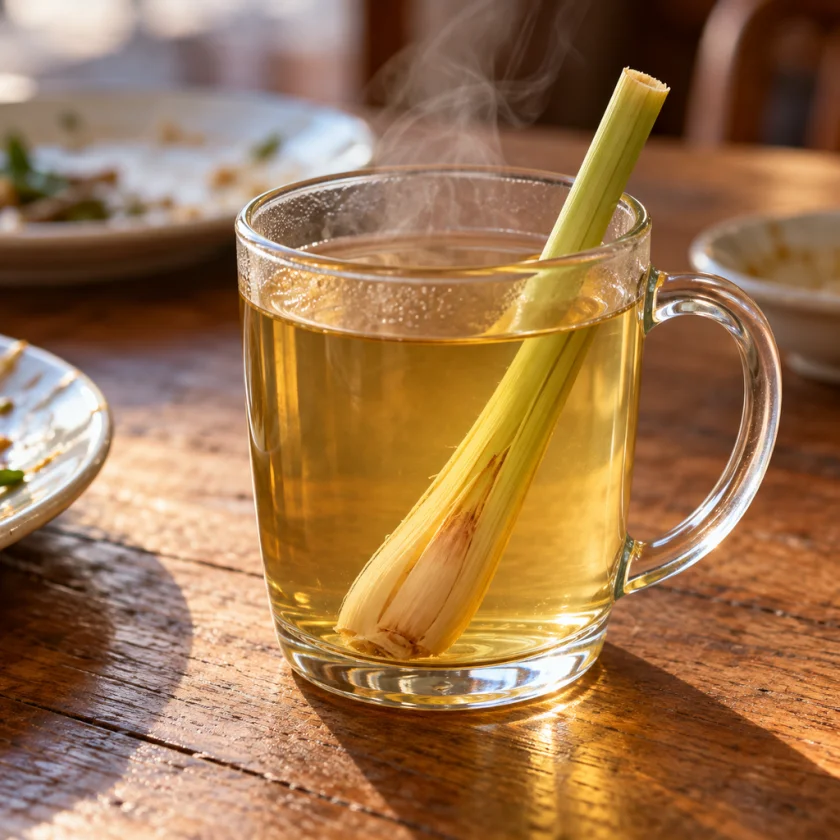
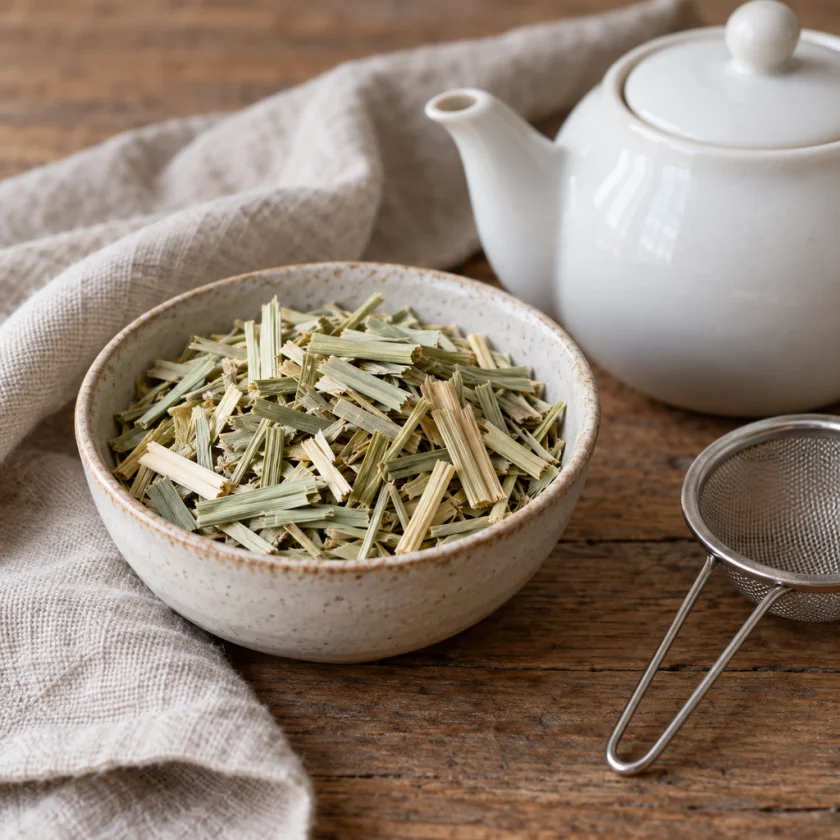

If lemongrass has one traditional use that turns up everywhere it grows, this is it: a warm cup after a heavy meal, for a stomach that feels tight, gassy, crampy or simply overfull. In Brazil the tea is capim-santo or chá de capim-cidreira; in the Caribbean it is fever grass; in Thailand, Vietnam and Cambodia the stalk goes into the pot and the leaves go into the kettle. Herbalists file it under carminative — a plant that eases the gripe of trapped gas and settles an unhappy gut — alongside peppermint, fennel, caraway and anise.
What follows is that claim taken seriously and taken apart. There is a real mechanism here, and it has been demonstrated in isolated intestinal tissue rather than merely asserted. There is a rat study showing that the infusion — the actual tea, not the concentrated oil — protected the stomach lining against an aggressive insult. And there is, honestly, no randomized controlled trial of lemongrass tea for bloating, indigestion, cramping or irritable bowel syndrome. Not a small one, not a poor one, not one at all. So the accurate position is: a plausible mechanism, encouraging preclinical support, a centuries-deep tradition, an excellent safety record for the tea — and no clinical proof. That is enough to explain why people keep reaching for the cup after a heavy meal, and not enough to call it a treatment.
Table of Contents
- The Traditional Carminative Cup
- Tea, Not Oil — Why It Matters Here
- The Antispasmodic Mechanism
- Gastroprotection: The Infusion in Rats
- The Polyphenol Side of the Cup
- Gas, Bloating and What a Carminative Can Actually Do
- Irritable Bowel Syndrome and Functional Dyspepsia
- The Peppermint Benchmark
- Nausea, Appetite and the Bitter Question
- How to Brew and Use It
- When Gut Symptoms Are Not a Tea Problem
- Safety and Cautions
- Key Research Papers
- Connections
- Featured Videos
The Traditional Carminative Cup
Evidence tier: traditional use only. The after-meal lemongrass tea is documented across an enormous geographic range, and the documentation is ethnobotanical rather than clinical — surveys of what people in a region actually use and what they use it for. In Brazilian folk practice lemongrass is among the most frequently named medicinal plants of all, taken for nervousness and for stomach complaints in roughly equal measure. West African and Nigerian ethnobotanical surveys record it for fever, colic and indigestion. Southeast Asian household practice treats it as both flavor and after-dinner settler.
Traditional use is worth writing down precisely because it is a real observation about human behavior: millions of people have drunk this tea for stomach discomfort for a very long time and kept doing it. That tells you the tea is palatable, cheap, available and not obviously harmful. It does not tell you that it works better than a warm cup of anything, because tradition has no control group. Both halves of that sentence are true at once, and the honest reader holds them together.
One consistent detail from the traditional record is worth keeping: the preparation is nearly always a hot water infusion of leaves or bruised stalk, drunk soon after a meal, sometimes with ginger. Nobody in the folk record swallows the distilled oil. That is not an accident — distillation is industrial, and the tradition predates it.
Tea, Not Oil — Why It Matters Here
This distinction runs through every page in this section, but the digestive claim is where getting it wrong is most dangerous, because it is the one claim that tempts people to swallow something.
Lemongrass leaf infusion gives you water-soluble flavonoids — luteolin and apigenin derivatives, other polyphenols, tannins — plus a small amount of citral that carries into the water and the steam. The exposure is in the same league as any other herbal tea.
Lemongrass essential oil is a steam distillate that is typically 70–85% citral. A single millilitre of it contains vastly more citral than a mug of tea. It is sold for diffusers, for dilute topical use and for household products. It is not a food, and drops of it in water is not a stronger cup of tea — it is an unregulated oral dose of a concentrated irritant. Undiluted essential oils can burn the mouth, throat and esophagus, and the enteric-coated peppermint capsules used in gastroenterology are a pharmaceutical-grade product designed and dose-controlled for exactly that reason. There is no equivalent lemongrass product and no dosing evidence to build one from.
So when you read that "lemongrass relaxes intestinal muscle," note carefully what was in the organ bath. It was citral and plant extracts applied directly to tissue — a legitimate mechanistic experiment whose conclusion is about the molecule, not about a beverage. The tea may deliver enough citral to matter, or it may not; nobody has measured that in a person's gut.
The Antispasmodic Mechanism
Evidence tier: preliminary (isolated tissue). The best mechanistic work on lemongrass and the gut comes from classical organ-bath pharmacology, in which a strip of intestine is suspended in a nutrient bath, made to contract with a known stimulus, and then exposed to the test substance while the tension is recorded.
The key paper is Spasmolytic effect of citral and extracts of Cymbopogon citratus on isolated rabbit ileum, published in the Journal of Smooth Muscle Research in 2011 by Devi, Sim and Ismail. Working with rabbit ileum, the group showed that citral and lemongrass extracts relaxed contractions induced by standard spasmogens, in a concentration-dependent way. The same group published a companion study in Evidence-Based Complementary and Alternative Medicine in 2012 examining the effect of C. citratus and citral on vascular smooth muscle in isolated rat aorta — the same relaxant behavior in a different tissue.
The 2011 ileum study also looked at how the relaxation happens. Gut muscle needs calcium to flow into its cells before it can squeeze. When the researchers bathed the ileum in a calcium-free solution and then added calcium back, the contractions returned and grew; citral almost abolished that effect, and the leaf extract shifted the calcium response curve to the right. The authors read this as a calcium-blocking (calcium antagonist) effect, similar to that of verapamil, a prescription calcium-channel blocker. Citral's relaxing effect, but not the leaf extract's, was weakened by a blocker of nitric oxide production, which the authors took as a sign that the leaf contains active compounds besides citral. All of this was in rabbit tissue in a dish.
Why that matters conceptually: cramping pain in the gut is, at the level of tissue, excessive or badly coordinated contraction of smooth muscle. A compound that reduces the amplitude of induced contractions in an isolated intestine is doing the thing a clinical antispasmodic is supposed to do. Hyoscine butylbromide, mebeverine, peppermint oil and dicyclomine all share that basic profile, arrived at by different molecular routes.
Why that does not settle the question: the organ bath deletes almost everything difficult. There is no stomach acid, no mucus layer, no liver, no bloodstream, and the concentration at the tissue is whatever the experimenter chose. To get from this result to "a cup of lemongrass tea eases cramps," you would need to know how much citral survives brewing, how much survives the stomach, how much is absorbed, how much is destroyed on first pass through the liver, and what concentration eventually bathes the gut wall. None of those numbers exist for lemongrass tea in humans. The mechanism is real; the bridge to the mug is missing.
Gastroprotection: The Infusion in Rats
Evidence tier: preliminary (animal). One study deserves particular attention because of what it chose to test. Gastroprotective effect of Cymbopogon citratus infusion on acute ethanol-induced gastric lesions in rats, published in the Journal of Ethnopharmacology in 2015 by Sagradas, Costa, Figueirinha and colleagues, used the leaf infusion — the drinkable form — rather than the distilled oil or a solvent extract.
The ethanol model is a standard, brutal test: a dose of concentrated alcohol given by mouth strips the gastric mucosal barrier and produces visible hemorrhagic lesions within an hour. The rats were given an essential-oil-free leaf infusion by mouth, at 28 or 56 mg per kg of body weight, either before the ethanol (prevention) or after it (treatment), and both significantly reduced the damage compared with rats given ethanol alone. The higher dose did not work better than the lower one, but the protection was greater when the infusion stayed in contact with the stomach lining longer (2 hours rather than 1). The study abstract does not name a mechanism for the protection. The protection has been linked to the infusion's polyphenol content and to antioxidant and mucosal-defense mechanisms rather than to acid suppression.
This is the single most relevant preclinical result for someone who drinks the tea, for three reasons. First, the test article is the actual preparation people use. Second, the endpoint is a physical injury you can see and count, not a soft behavioral score. Third, the protection grew with contact time, which fits a direct effect on the stomach lining — one that would not require large concentrations in the bloodstream, because the tea contacts the stomach lining directly on the way down.
The limits are the usual ones and they are not small. Rats are not people; the ethanol model is not indigestion; a protective effect against a chemical insult does not establish symptom relief in a human with functional dyspepsia; and no one has repeated this in a clinical setting. It is the best available reason to think the tea is doing something in the stomach rather than nothing, and no more than that.
The Polyphenol Side of the Cup
Evidence tier: preliminary (cell culture). Lemongrass is usually discussed as if it were simply citral, which reflects the essential-oil literature's dominance. The tea, however, is mostly not citral — steeping extracts the water-soluble fraction, and Portuguese work at Coimbra characterized that fraction in detail: flavonoid glycosides derived from luteolin and apigenin, plus caffeic-acid derivatives, tannins and proanthocyanidins.
The same group published Anti-inflammatory activity of Cymbopogon citratus leaf infusion in lipopolysaccharide-stimulated dendritic cells in the Journal of Medicinal Food in 2010, reporting that the infusion and its isolated polyphenol fractions damped inflammatory signaling in immune cells challenged with bacterial lipopolysaccharide, and attributing the activity to the polyphenols specifically. Antioxidant characterization of the same material goes back to Cheel and colleagues in the Journal of Agricultural and Food Chemistry in 2005, which identified the free-radical-scavenging constituents of the leaf.
Two practical consequences follow. One: if you are drinking lemongrass tea, you are mainly consuming a flavonoid beverage, which is a perfectly respectable thing to be — luteolin and apigenin are the same class of compound that carries chamomile's reputation. Two: cell-culture anti-inflammatory activity is a long way from a clinical anti-inflammatory effect. Cultured dendritic cells are bathed in a concentration the experimenter selected; a human gut wall is not.
Gas, Bloating and What a Carminative Can Actually Do
It helps to be concrete about what "helps with gas" can and cannot mean, because the traditional language is vague and the physiology is not.
- Reducing gas production. Most intestinal gas is made by colonic bacteria fermenting carbohydrate that was not absorbed upstream. Changing that means changing what you eat or what lives in your colon. There is no evidence that lemongrass tea does either, and it is not a plausible route.
- Easing the passage of gas. This is the classical carminative claim, and it is mechanically coherent: relaxing smooth muscle and reducing spasm can let trapped gas move rather than distend a segment of bowel. This is where the antispasmodic data are relevant, and it is the most defensible version of the traditional use.
- Reducing the perception of bloating. Functional bloating involves visceral hypersensitivity — normal volumes of gas registering as painful. A warm drink, a calmer nervous system and a few minutes sitting still all plausibly move this needle, and none of that is specific to lemongrass. It is also not nothing: symptom relief is symptom relief.
- Speeding gastric emptying. Some herbs are prokinetic; nobody has shown lemongrass to be, in people.
So the honest framing of the after-meal cup is: plausible relief of crampy, gassy discomfort by a smooth-muscle route that has been demonstrated in tissue and never in a person, plus a real and non-trivial contribution from warmth, aroma and pause. If that sounds like faint praise, compare it with the alternative of taking nothing when your stomach hurts.
Irritable Bowel Syndrome and Functional Dyspepsia
Evidence tier: no clinical evidence. This section exists to say clearly what is not there. Search the literature for a trial of lemongrass in irritable bowel syndrome or functional dyspepsia and you will not find one. There is no dosing study, no symptom-score study, no comparison against placebo or against an established antispasmodic.
That gap does not mean lemongrass tea is useless for someone with irritable bowel syndrome (IBS). It means anyone who tries it is running a personal experiment, and a few known features of gut symptoms decide what such an experiment can show:
- One change at a time. Adding lemongrass tea while also starting a new diet tells you nothing about the tea.
- A defined trial period. Two to four weeks of consistent use, with a simple daily symptom note, is enough to see a pattern through normal day-to-day variability.
- Expect regression to the mean. People start remedies when symptoms are bad, and bad weeks are usually followed by better weeks regardless. This is the single largest source of false enthusiasm about gentle herbal remedies.
- Symptoms can move the wrong way. Any drink taken in large volume after meals can worsen reflux. If your dominant symptom is heartburn rather than cramping, a large hot drink lying down after dinner may make things worse — see gastroesophageal reflux disease.
- Other conditions look like it. Irritable bowel syndrome is a diagnosis of pattern and exclusion, and several conditions with better treatments — celiac disease, small intestinal bacterial overgrowth, inflammatory bowel disease, bile-acid diarrhea — can look like it.
The Peppermint Benchmark
Evidence tier for peppermint: randomized clinical trials and meta-analysis. The most useful thing in this article may be the comparison, because it shows what the evidence for a botanical antispasmodic looks like when it exists.
Peppermint oil, in enteric-coated capsules at controlled doses, has been through multiple randomized placebo-controlled trials in irritable bowel syndrome, and those trials have been pooled — for instance in Peppermint oil for the treatment of irritable bowel syndrome: a systematic review and meta-analysis, published in the Journal of Clinical Gastroenterology in 2014 by Khanna, MacDonald and Levesque. The pooled result favors peppermint oil over placebo for global symptoms and abdominal pain. That is why peppermint oil appears in gastroenterology guidance and lemongrass does not.
Newer results point in two directions. A 2019 meta-analysis in BMC Complementary and Alternative Medicine pooled 12 randomized trials with 835 patients: peppermint oil was about 2.4 times as likely as placebo to improve overall irritable bowel syndrome symptoms and about 1.8 times as likely to improve abdominal pain, and about three people needed treatment for one to be spared persistent overall symptoms (four for pain). Reported side effects did not differ significantly from placebo (9.3% versus 6.1%). The largest recent single trial, a 2020 double-blind study of 189 people with irritable bowel syndrome at four Dutch hospitals, published in Gastroenterology, did not meet its main goal: 46.8% responded on abdominal pain with small-intestine-release peppermint oil capsules versus 34.4% on placebo, a difference that was not statistically significant. Those capsules did improve the secondary measures of abdominal pain, discomfort and symptom severity, and mild side effects were more common on peppermint oil than on placebo.
Note the three things peppermint has that lemongrass lacks entirely:
- A defined pharmaceutical form. Enteric-coated capsules releasing a measured dose past the stomach — not a variable-strength beverage.
- A dose. Trials used specified milligram amounts on a specified schedule. "A cup of tea" is not a dose.
- Randomized comparison to placebo. Gut symptoms respond powerfully to placebo, often 30–40% of patients improving. Without a placebo arm, an uncontrolled improvement in bowel symptoms is uninterpretable.
The lesson is not that lemongrass fails; it is that lemongrass has never been asked the question. For irritable bowel syndrome cramping, peppermint oil is the botanical with the trials. Lemongrass tea is a pleasant, very-low-risk daily drink that people use for post-meal gripe, without trial evidence behind it. Those are different things, and many people use both.
Nausea, Appetite and the Bitter Question
Evidence tier: traditional use only. Lemongrass tea is used traditionally for queasiness, often paired with ginger. Here the honest answer is short: the anti-nausea evidence in the pairing belongs to ginger, which has been tested in randomized trials for pregnancy-related nausea, postoperative nausea and motion sickness. Lemongrass has no such trials. If nausea is the target symptom, ginger is the better-supported ingredient and lemongrass is the flavor.
There is also a small point about bitterness worth making, because it separates lemongrass from a whole class of digestive herbs. Traditional bitters — gentian, wormwood, dandelion root, artichoke leaf — are thought to work partly through bitter-taste receptor stimulation triggering digestive secretions. Lemongrass is aromatic, not bitter. Its plausible route is volatile terpenes and smooth-muscle relaxation, not a bitter reflex. So it is not a substitute for a bitter tonic, and claims that transfer the bitters mechanism onto lemongrass are simply mixing up two different traditions.
How to Brew and Use It
There is no evidence-based dose, because there are no dosing trials. What follows is ordinary culinary and household practice, which is the appropriate standard for a beverage.
A basic infusion
- Fresh: one stalk, trimmed, the tough outer layers pulled away, cut into 5 cm lengths and bruised firmly with the flat of a knife to crack the fibers. Bruising matters — it is what releases the aromatic oil.
- Dried leaf: roughly one to two teaspoons per cup.
- Water and time: just-boiled water, steeped 5–10 minutes, covered. Covering the cup keeps the volatile aromatics in the liquid instead of the kitchen.
- Strain and drink, hot or over ice. One to three cups a day is a typical household amount.
Sensible pairings
- Ginger — a few thin slices simmered with the stalk; the best-evidenced partner for nausea.
- Peppermint leaf — a classic carminative combination, though the peppermint trial evidence is for capsules, not tea.
- Fennel seed — another traditional carminative, lightly crushed.
- Chamomile — overlaps lemongrass in flavonoid content and is the traditional choice when cramping and restlessness come together.
Timing
The traditional pattern is after eating, which fits both the proposed mechanism and the practical problem. When reflux rather than cramping is the problem, a large hot drink followed by lying down can make heartburn worse, as noted in the irritable bowel syndrome section above.
Essential Oil Is Not a Tea Ingredient
Lemongrass essential oil is not a drink ingredient — not a drop, not "food grade," not diluted in honey. The oral safety record on this page belongs to the infusion. Ingesting concentrated essential oils is a recognized cause of chemical injury and poisoning, and there is no dosing evidence for swallowed lemongrass oil in any amount.
When Gut Symptoms Are Not a Tea Problem
The kindest thing a page like this can do is name the situations in which reaching for a herbal tea is the wrong move. Doctors treat the following as warning signs that need prompt medical assessment, without waiting to see whether a tea helps:
- Unintentional weight loss, or symptoms that wake you from sleep;
- Blood in the stool, black tarry stools, or vomiting blood;
- Difficulty swallowing, or food sticking;
- Persistent vomiting, or a first onset of significant symptoms after age 50;
- Fever with abdominal pain, or severe, localized, worsening pain;
- Iron-deficiency anemia found on a blood test;
- A family history of colorectal cancer, celiac disease or inflammatory bowel disease alongside new symptoms.
None of those are carminative territory. They are diagnostic territory.
Safety and Cautions
The infusion. Lemongrass tea has a reassuring record. The one human trial that specifically looked for toxicity — Leite and colleagues in the Journal of Ethnopharmacology in 1986, which gave lemongrass tea to volunteers and checked clinical and laboratory measures — found no toxic effects after a single dose or two weeks of daily tea; the only changes were slight rises in direct bilirubin and in amylase in some volunteers, without any symptoms. In the same paper, double-blind tests found no sleep-inducing effect (50 volunteers) and no anti-anxiety effect (18 volunteers). Combined with very wide food use, that supports treating the tea as a low-risk beverage for most adults.
Pregnancy. Traditional herbal texts classify lemongrass as an emmenagogue — a cycle-stimulating herb — and the animal reproductive-exposure study (Souza Formigoni and colleagues, Journal of Ethnopharmacology, 1986, which dosed male and female rats for two months and examined offspring exposed in utero) is the only directly relevant preclinical work: it gave the leaf infusion to rats at up to 20 times the estimated human dose, before mating or during pregnancy, and found no toxic effects in the parents or their offspring. The widely shared position in herbal-safety writing is that lemongrass as a cooking flavor is generally considered fine in pregnancy, while concentrated or medicinal amounts, strong daily teas and the essential oil are the forms it cautions against. This is a caution based on the emmenagogue tradition and thin data, not on demonstrated human harm.
High-dose citral. Animal work has reported that repeated high-dose citral exposure induces prostatic hyperplasia in rats, attributed to an estrogen-like action. That finding concerns concentrated citral at high doses, not the amounts in a cup of tea.
Other cautions. True lemongrass allergy is uncommon but possible; its signs are rash, itching or swelling. Very large or supplemental amounts could in theory add to blood-pressure or blood-glucose medication effects; food and casual tea amounts are not a realistic concern; heavy daily medicinal use is where that theoretical effect would arise, particularly in people with liver or kidney disease. Swallowed essential oil is a poisoning hazard for children and pets.
Disclaimer. This page is educational and is not medical advice. Lemongrass tea has not been shown in any clinical trial to treat bloating, cramping, indigestion, irritable bowel syndrome or any other digestive condition, and persistent gut symptoms have many causes that a tea does not address. Lemongrass essential oil is not safe to swallow: there is no dosing evidence for it, and concentrated essential oils are a recognized cause of chemical injury. Pregnancy, breastfeeding, prescription medication and chronic illness are the situations in which the cautions above matter most.
Key Research Papers
Each citation below links to its PubMed record, except the 2008 Food Chemistry paper, which links to a PubMed topic search, so you can confirm the paper yourself. Evidence tier is stated for each.
- Preliminary (isolated tissue). Devi RC, Sim SM, Ismail R. Spasmolytic effect of citral and extracts of Cymbopogon citratus on isolated rabbit ileum. Journal of Smooth Muscle Research, 2011. PubMed PMID: 22104376 — the core antispasmodic demonstration.
- Preliminary (animal). Sagradas J, Costa G, Figueirinha A, et al. Gastroprotective effect of Cymbopogon citratus infusion on acute ethanol-induced gastric lesions in rats. Journal of Ethnopharmacology, 2015. PubMed PMID: 26160747 — tested the drinkable infusion, not the oil.
- Preliminary (cell culture). Figueirinha A, Cruz MT, Francisco V, Lopes MC, Batista MT. Anti-inflammatory activity of Cymbopogon citratus leaf infusion in lipopolysaccharide-stimulated dendritic cells: contribution of the polyphenols. Journal of Medicinal Food, 2010. PubMed PMID: 20438326
- Preliminary (chemistry). Figueirinha A, Paranhos A, Pérez-Alonso JJ, Santos-Buelga C, Batista MT. Cymbopogon citratus leaves: characterization of flavonoids by HPLC–PDA–ESI/MS/MS and an approach to their potential as a source of bioactive polyphenols. Food Chemistry, 2008. Find on PubMed — what is actually in the tea, as opposed to the oil.
- Preliminary (animal). Carbajal D, Casaco A, Arruzazabala L, Gonzalez R, Tolon Z. Pharmacological study of Cymbopogon citratus leaves. Journal of Ethnopharmacology, 1989. PubMed PMID: 2716341
- Preliminary (in vitro). Cheel J, Theoduloz C, Rodríguez J, Schmeda-Hirschmann G. Free radical scavengers and antioxidants from lemongrass (Cymbopogon citratus (DC.) Stapf.) Journal of Agricultural and Food Chemistry, 2005. PubMed PMID: 15796587
- Preliminary human (safety, negative for effect). Leite JR, Seabra ML, Maluf E, et al. Pharmacology of lemongrass (Cymbopogon citratus Stapf). III. Assessment of eventual toxic, hypnotic and anxiolytic effects on humans. Journal of Ethnopharmacology, 1986. PubMed PMID: 2429120
- Preliminary (animal, reproductive). Souza Formigoni ML, Lodder HM, Gianotti Filho O, Ferreira TM, Carlini EA. Pharmacology of lemongrass (Cymbopogon citratus Stapf). II. Effects of daily two-month administration in male and female rats and in offspring exposed in utero. Journal of Ethnopharmacology, 1986. PubMed PMID: 3762196
- Randomized trials, comparison herb. Khanna R, MacDonald JK, Levesque BG. Peppermint oil for the treatment of irritable bowel syndrome: a systematic review and meta-analysis. Journal of Clinical Gastroenterology, 2014. PubMed PMID: 24100754 — the benchmark lemongrass has not met.
- Randomized trials, comparison herb. Alammar N, Wang L, Saberi B, Nanavati J, Holtmann G, Shinohara RT, Mullin GE. The impact of peppermint oil on the irritable bowel syndrome: a meta-analysis of the pooled clinical data. BMC Complementary and Alternative Medicine, 2019. PubMed PMID: 30654773
- Randomized trial, comparison herb. Weerts ZZRM, Masclee AAM, Witteman BJM, et al. Efficacy and safety of peppermint oil in a randomized, double-blind trial of patients with irritable bowel syndrome. Gastroenterology, 2020. PubMed PMID: 31470006
- Reviews. Shah G, Shri R, Panchal V, Sharma N, Singh B, Mann AS. Scientific basis for the therapeutic use of Cymbopogon citratus, Stapf (lemon grass). Journal of Advanced Pharmaceutical Technology & Research, 2011. PubMed PMID: 22171285
- Reviews. Ekpenyong CE, Akpan E, Nyoh A. Ethnopharmacology, phytochemistry, and biological activities of Cymbopogon citratus (DC.) Stapf extracts. Chinese Journal of Natural Medicines, 2015. PubMed PMID: 25986281
- Live topic searches. Cymbopogon citratus and the gastrointestinal tract · citral and smooth-muscle relaxation · carminative herbal teas and bloating, clinical trials
Connections
- All Herbs
- Lemongrass Benefits Hub — all four deep dives and the themed research blocks.
- Lemongrass — botany, culinary use, compounds and overall safety.
- Peppermint Benefits — the trial-tested botanical antispasmodic.
- Fennel Benefits — a traditional carminative for gas and bloating.
- Ginger Benefits — where the anti-nausea evidence actually lives.
- Chamomile Benefits — overlapping flavonoids, cramping plus restlessness.
- Irritable Bowel Syndrome — the condition most often self-treated with carminative teas.
- Functional Dyspepsia — post-meal fullness and upper-gut discomfort.
- Gastroesophageal Reflux Disease — when a large hot drink after dinner backfires.
- Gastritis — the context for the gastroprotection study.
- Small Intestinal Bacterial Overgrowth — a treatable cause of bloating worth excluding.
- Celiac Disease — another irritable bowel syndrome mimic with a specific treatment.
- Bloating — the symptom itself, and its causes.
- Nausea and Vomiting — where ginger, not lemongrass, has the evidence.
- Luteolin — a principal flavonoid of the leaf infusion.
- Apigenin — the other major infusion flavonoid.
- Galangal — a Southeast Asian aromatic from the same pot.