Cumin (Cuminum cyminum)
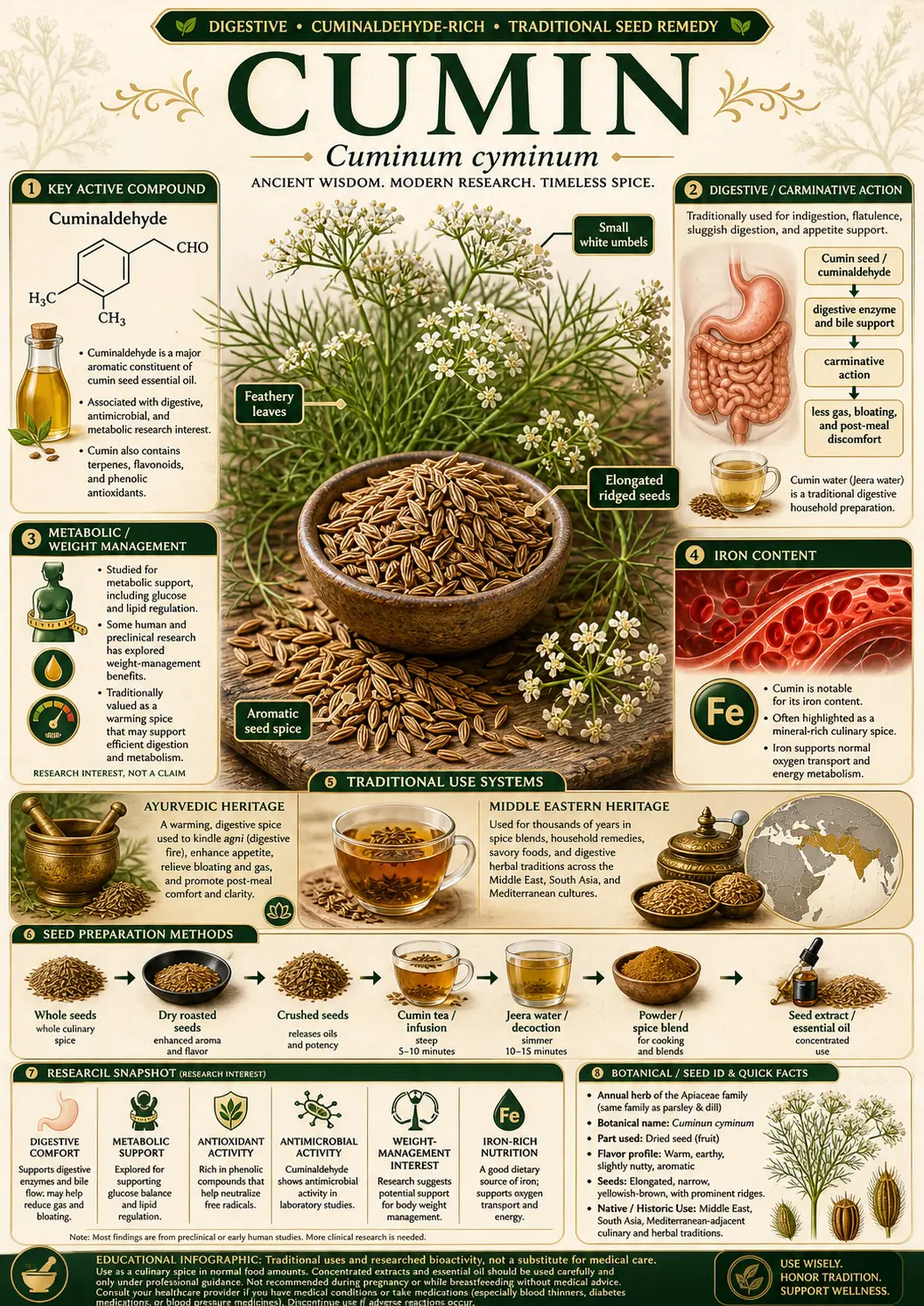
Buddhist Name: "The Herb That Ignites the Inner Digestive Fire"
Table of Contents
Description
- Small elongated seeds
- Cornerstone of Buddhist healing for over 3,000 years
- In Buddhist philosophy, digestion is the foundation of ALL health
- Cumin was the #1 remedy for maintaining digestive function
- Monks traveling through dangerous regions always carried cumin seeds
Key Active Compounds
- Cuminaldehyde: Primary aromatic compound with impressive healing properties
- Thymol: Strong proven antimicrobial effects
- Flavonoids and phenolic compounds: Potent antioxidants
- Extraordinarily rich in bioavailable iron (20% daily requirement in 1 teaspoon)
- Contains copper, calcium, potassium, manganese, selenium, zinc, magnesium
Special Property: Increases BIOAVAILABILITY of other nutrients — helps body absorb and utilize nutrients from ALL foods more effectively.
Health Benefits
Natural Weight Management & Metabolic Acceleration
- Significantly increases basal metabolic rate (burn more calories at rest)
- Greater and faster fat loss, particularly dangerous visceral/abdominal fat
- Insulin and blood sugar: a 2021 meta-analysis of eight randomized trials (552 adults) found that cumin did not significantly change fasting blood sugar, insulin or insulin resistance (HOMA-IR)
- Reduces food cravings
- Natural thermogenic properties increase body temperature, forcing body to burn more calories automatically
Immune System Strengthening
- Potent antioxidants protect immune cells against oxidative damage
- Increases activity of killer T-cells and natural killer cells (first line of defense against infections and cancer)
- Natural antimicrobial compounds kill harmful bacteria and fungi
- Rich iron content supports hemoglobin and immune cell production
- Regular users get sick less frequently and recover faster
Respiratory Health Improvement
- Acts as powerful natural expectorant (loosens and expels trapped mucus)
- Anti-inflammatory compounds reduce swelling in nasal passages and airways
- Helps with chronic asthma, persistent bronchitis, and seasonal allergies
- Improves chronic cough, congestion, and breathing difficulties
Preparation
- Amount: 1-2 teaspoons (5-10 grams); start with 1 teaspoon if new to it
- No crushing needed (smaller size and seed structure allow water to penetrate effectively while whole)
- Water: 300 ml filtered water at room temperature
- Soak: 8-12 hours overnight
- Sign of readiness: Water turns yellowish-brown with distinctive cumin aroma
- Drink: Room temperature or gently heated (NEVER boil — destroys compounds)
- Can strain or drink with seeds
Why 8-12 Hours Soaking
- First hours: Only superficial compounds dissolve
- 4-6 hours: Water penetrates deeper but essential oils still trapped inside
- 8+ hours: Total extraction of cuminaldehyde, thymol, flavonoids, and minerals
- 12 hours: Absolute maximum extraction
Key Research Papers
- Zare R, Heshmati F, Fallahzadeh H, et al. (2014). Effect of cumin powder on body composition and lipid profile in overweight and obese women. Complementary Therapies in Clinical Practice — PubMed PMID: 25456022
- Tavakoli-Rouzbehani OM, Faghfouri AH, Anbari M, et al. (2022). Efficacy of Cuminum Cyminum supplementation on lipid profile and anthropometric parameters: A systematic review and meta-analysis of randomized controlled clinical trials. Phytotherapy Research — PubMed PMID: 34825421
- Liu M, Wu S, Falahatzadeh M (2025). Potential benefits of Cuminum cyminum L supplementation on components of metabolic syndrome in adults with metabolic disorders: a GRADE-assessed systematic review and meta-analysis of randomized controlled trials. Frontiers in Nutrition — PubMed PMID: 41608519
- Karimian J, Farrokhzad A, Jalili C (2021). The effect of cumin (Cuminum cyminum L.) supplementation on glycemic indices: A systematic review and meta-analysis of randomized controlled trials. Phytotherapy Research — PubMed PMID: 33720457
- Chauhan PS, Satti NK, Suri KA, et al. (2010). Stimulatory effects of Cuminum cyminum and flavonoid glycoside on Cyclosporine-A and restraint stress induced immune-suppression in Swiss albino mice. Chemico-biological Interactions — PubMed PMID: 20156427
- Korinek M, Handoussa H, Tsai YH, et al. (2021). Anti-Inflammatory and Antimicrobial Volatile Oils: Fennel and Cumin Inhibit Neutrophilic Inflammation via Regulating Calcium and MAPKs. Frontiers in Pharmacology — PubMed PMID: 34707494
- Saadat S, Shakeri F, Boskabady MH (2018). Comparative Antitussive Effects of Medicinal Plants and Their Constituents. Alternative Therapies in Health and Medicine — PubMed PMID: 29332022
PubMed Topic Searches
The following PubMed topic searches aggregate the peer-reviewed literature underpinning the claims above. Each link opens a live PubMed query so the result set stays current as new research is published.
- PubMed: Blood glucose and diabetes
- PubMed: Weight loss randomized trial
- PubMed: Lipid profile and cholesterol
- PubMed: Essential oil antimicrobial
- PubMed: Antioxidant
- PubMed: Digestion and irritable bowel
- PubMed: Cuminaldehyde pharmacology
- PubMed: Iron bioavailability
- PubMed: Anti-inflammatory
- PubMed: Systematic review
- PubMed: Blood pressure and hypertension