Coriander Seeds — Benefits Deep Dive
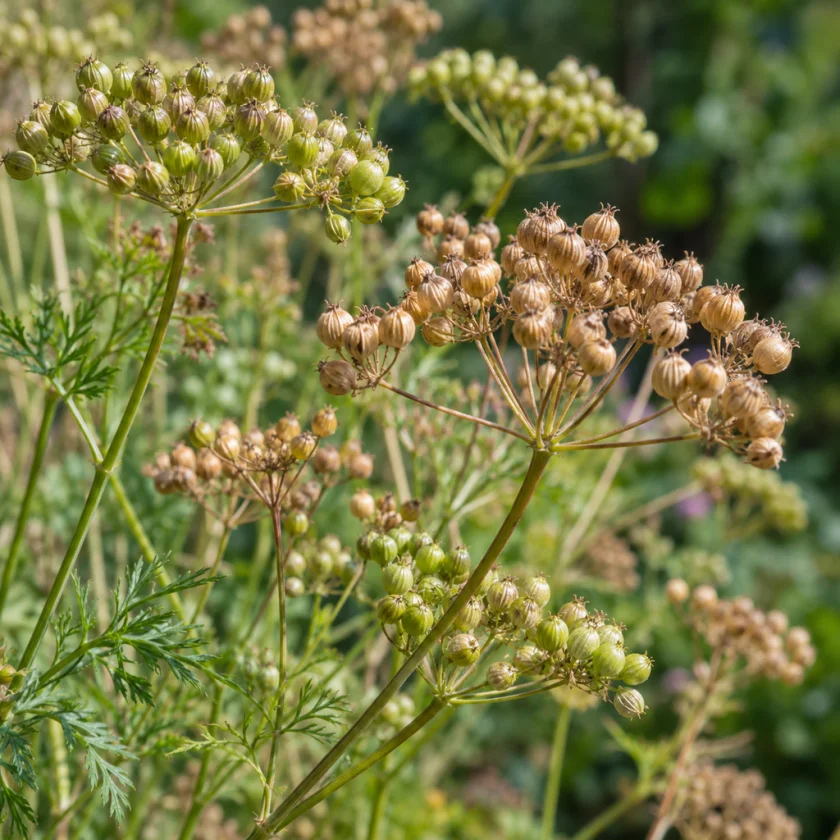
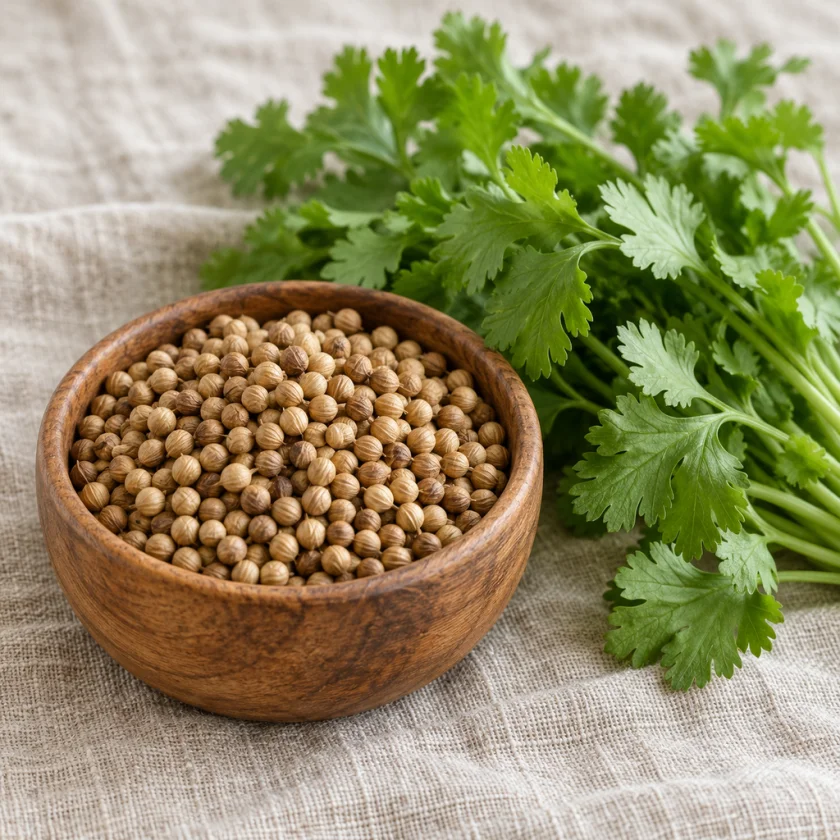
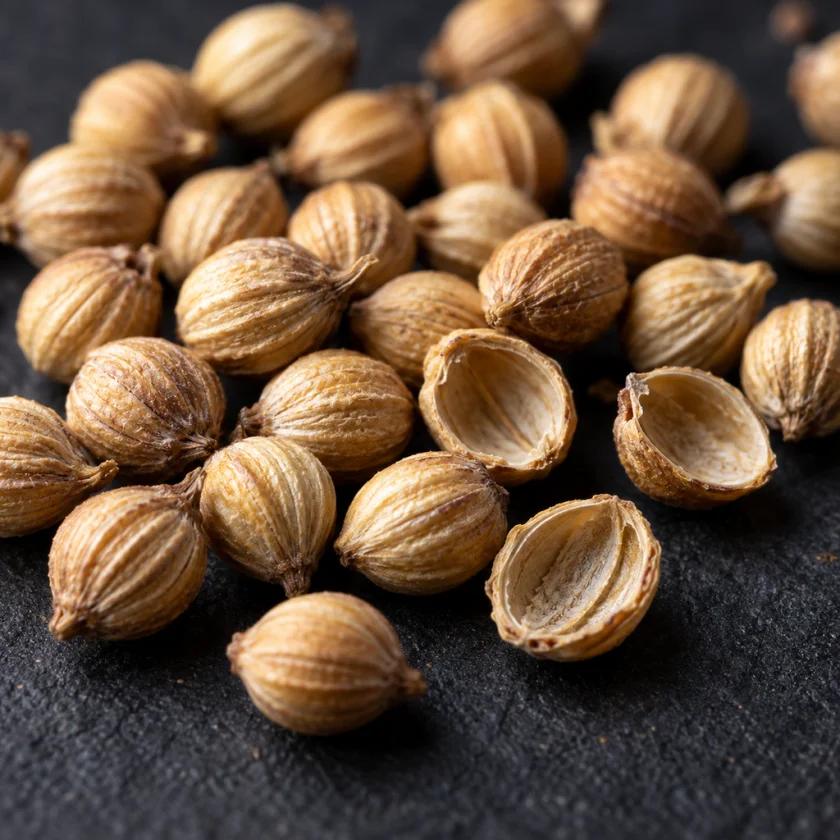
Coriander seeds are the dried, ripe fruits of Coriandrum sativum — an Apiaceae annual whose seed chemistry is sharply distinct from that of its own leaves (cilantro). Where the leaf is dominated by aldehydes such as decanal and (E)-2-dodecenal that give it the polarizing soapy flavor, the seed is dominated by the monoterpene alcohol linalool (60-75% of the essential oil) together with smaller fractions of alpha-pinene, gamma-terpinene, geraniol, camphor, and limonene. Coriander is one of the oldest spices in continuous human use — carbonized seeds recovered from the Nahal Hemar cave in Israel have been radiocarbon-dated to approximately 8,000 years before present, and coriander seeds were found in the tomb of Tutankhamun. Four benefit pages below explore the modern clinical evidence: digestive (carminative and irritable bowel syndrome, IBS), the popular but contested heavy-metal-chelation claim, hypoglycemic activity, and broad-spectrum antimicrobial use including food-safety applications.
Deep-Dive Articles
Digestive Aid
The carminative tradition: linalool and alpha-pinene relax gastrointestinal smooth muscle and reduce intraluminal gas. The Vejdani 2006 placebo-controlled pilot trial of a three-herb IBS preparation (Melissa, spearmint, coriander) in 32 irritable bowel syndrome patients, who all also took loperamide or psyllium depending on their bowel pattern, found less severe and less frequent abdominal pain and bloating after 8 weeks than with placebo. Mechanistic data, doses studied, and where it sits in irritable bowel syndrome care.
Read the deep dive →Heavy Metal Chelation
One of alternative medicine's most popular detox claims, but the underlying evidence is thinner than the reputation suggests. The Aga 2001 mouse study found that Chinese parsley (the coriander leaf), given by stomach tube while the mice drank lead-laced water, reduced lead build-up in the thigh bone and lead damage in the kidneys; the Sears 2013 review summarized "natural chelation" candidates, but no good human randomized controlled trial (RCT) exists. Cilantro-vs-seed chemistry differences, comparison with the pharmaceutical chelators dimercaptosuccinic acid (DMSA) and dimercaptopropane sulfonate (DMPS), and what the data actually supports.
Read the deep dive →Blood Sugar
Gray and Flatt 1999 found that coriander added to food and drinking water reduced high blood sugar in streptozotocin-induced diabetic mice, and that a water extract made a cultured line of insulin-producing beta cells release 1.3 to 5.7 times more insulin. Subsequent small human pilots have reported fasting glucose reductions. Mechanistic detail (insulin release, glucose uptake, alpha-amylase/alpha-glucosidase inhibition), doses studied, and the limited human randomized controlled trial footprint.
Read the deep dive →Antimicrobial
Coriander essential oil is broad-spectrum antimicrobial in vitro against Salmonella, E. coli O157:H7, Listeria, Staphylococcus aureus, and Candida. The cilantro-leaf aldehyde (E)-2-dodecenal is among the most potent natural antimicrobials yet identified. Food-safety preservation applications, the historical role of coriander in spice trade preservation, and the gap between in-vitro minimum inhibitory concentration (MIC) data and clinical infection treatment.
Read the deep dive →Table of Contents
Why Coriander Produces Effects (Linalool, Alpha-Pinene, Dodecenal)
A single plant species — Coriandrum sativum — produces two profoundly different phytochemical profiles depending on which tissue is harvested. The dried fruit (which culinary tradition calls "coriander seed") is dominated by linalool, a monoterpene alcohol that typically accounts for 60-75% of the essential oil. The fresh leaf and stem (which English speakers call "cilantro" and the rest of the world calls "coriander leaf") is dominated by long-chain aliphatic aldehydes including decanal, (E)-2-decenal, and (E)-2-dodecenal, which are responsible for both the leaf's polarizing soapy flavor profile and its remarkable antimicrobial potency. This bifurcation of chemistry matters because most popular health claims circulating online conflate the two — the "cilantro chelates heavy metals" claim is largely a leaf claim, while the "coriander seed lowers blood sugar" claim is a seed claim, and the two cannot be substituted for each other.
- Linalool (monoterpene alcohol, 60-75% of seed essential oil) — the dominant active. Linalool is gamma-aminobutyric acid-A receptor-positive at physiologic concentrations, which mechanistically explains the herb's traditional reputation as a mild anxiolytic and sleep aid. It is also a smooth-muscle relaxant in the gastrointestinal tract via L-type calcium channel modulation, underpinning the carminative tradition and the irritable bowel syndrome data. Linalool is broadly antimicrobial in vitro against gram-positive and gram-negative bacteria and against several Candida species, contributing to the food-safety preservation evidence.
- Alpha-pinene and gamma-terpinene (minor monoterpenes) — co-active with linalool. Alpha-pinene is an acetylcholinesterase inhibitor at high concentration (one of the supposed mechanisms behind herbal cognitive-support claims), and a bronchodilator. Gamma-terpinene contributes antioxidant capacity. Together with linalool, these monoterpenes account for the herb's pleasantly warm-citrus aroma and its synergistic anti-spasmodic activity.
- Quercetin and other flavonoids (in the polar fraction) — coriander seed water and ethanol extracts contain quercetin, kaempferol, rutin, and isoquercitrin. The flavonoid fraction is hypothesized to drive the hypoglycemic effect observed in the Gray 1999 diabetic-mouse model and to provide additional antioxidant capacity. The seed's antioxidant oxygen radical absorbance capacity (ORAC) value is in the moderate range — respectable but not exceptional compared with culinary giants like Cloves or Turmeric.
- (E)-2-dodecenal (cilantro leaf aldehyde, not the seed) — this is included here only because so much popular literature conflates seed and leaf. In the Kubo 2004 laboratory study, (2E)-dodecenal taken from fresh coriander leaves killed Salmonella choleraesuis at 6.25 micrograms per millilitre (34 micromolar), the strongest of the leaf aldehydes tested, followed by (2E)-undecenal at 12.5 micrograms per millilitre; the authors found it killed the bacteria at every growth stage, partly by acting like a soap (a surfactant) on the bacterial surface. This was a test-tube result, not a treatment study. Dodecenal does not occur at significant concentration in the dried fruit (seed), so the dodecenal antimicrobial findings do not apply to seed-based products. The seed has its own antimicrobial profile mediated by linalool and other monoterpenes — weaker than dodecenal but still meaningful.
The fourth area where coriander seed appears in modern alternative-medicine literature is the heavy-metal chelation claim — that cilantro leaf or coriander seed binds mercury, lead, aluminum, and arsenic and accelerates their excretion. This is one of the most popular detox claims circulating online, but the evidence base is much thinner than the popular reputation. The cornerstone studies are Yoshiaki Omura's anecdotal 1995 paper and a 2001 mouse study by Aga and colleagues, in which Chinese parsley (the coriander leaf), given from day 7 of a 32-day lead exposure, reduced lead deposits in the thigh bone and lead injury in the kidneys. There has never been a properly controlled human randomized controlled trial comparing coriander to placebo for measured heavy-metal excretion. The in-vitro and animal data are interesting, but the size and clinical significance of any human effect remain unknown — and medical chelation with dimercaptosuccinic acid (DMSA), dimercaptopropane sulfonate (DMPS), or ethylenediaminetetraacetic acid (EDTA) remains the standard of care for documented heavy metal toxicity. Coriander seed is a long-used food and culinary spice; no study has shown it can replace medical chelation.
The combination of linalool + alpha-pinene + (in cilantro leaf) dodecenal + flavonoids explains why a single plant produces four genuinely distinct clinical signals: carminative/digestive, hypoglycemic, antimicrobial, and (with much weaker evidence) heavy-metal chelating. Each effect is mediated by a different chemical fraction, and dose-finding work for any one indication is still relatively undeveloped compared with single-molecule pharmaceuticals.
Two newer human studies add to this picture. In a 2013 German pilot study, 40 people with athlete's foot between the toes of both feet (interdigital tinea pedis) put a 6% coriander-oil ointment on one foot and a placebo ointment on the other, twice daily; over 28 days the skin signs improved strongly on the coriander side, the number of positive fungal cultures only tended to fall (not a statistically clear result), and the ointment was well tolerated (Beikert 2013). In a 2024 double-blind trial in Kerman, Iran, 90 people with functional dyspepsia (ongoing indigestion with no visible cause) took a 500 mg capsule of a Bunium persicum plus coriander preparation or a placebo twice a day for 4 weeks; among the 80 who finished, all symptom and quality-of-life scores improved more with the herbs than with placebo, without serious side effects (Azimi 2024). That trial tested a two-herb mix, not coriander alone.
Key Research Papers
- Vejdani R, Shalmani HR, Mir-Fattahi M, Sajed-Nia F, Abdollahi M, Zali MR, et al. (2006). The efficacy of an herbal medicine, Carmint, on the relief of abdominal pain and bloating in patients with irritable bowel syndrome: a pilot study. Digestive Diseases and Sciences 51(8):1501–1507. — PubMed PMID: 16868824
- Gray AM, Flatt PR (1999). Insulin-releasing and insulin-like activity of the traditional anti-diabetic plant Coriandrum sativum (coriander). British Journal of Nutrition 81(3):203–209. — PubMed PMID: 10434846
- Aga M, Iwaki K, Ueda Y, Ushio S, Masaki N, Fukuda S, et al. (2001). Preventive effect of Coriandrum sativum (Chinese parsley) on localized lead deposition in ICR mice. Journal of Ethnopharmacology 77(2–3):203–208. — PubMed PMID: 11535365
- Kubo I, Fujita K, Kubo A, Nihei K, Ogura T (2004). Antibacterial activity of coriander volatile compounds against Salmonella choleraesuis. Journal of Agricultural and Food Chemistry 52(11):3329–3332. — PubMed PMID: 15161192
- Sahib NG, Anwar F, Gilani AH, Hamid AA, Saari N, Alkharfy KM (2013). Coriander (Coriandrum sativum L.): a potential source of high-value components for functional foods and nutraceuticals — a review. Phytotherapy Research 27(10):1439–1456. — PubMed PMID: 23281145
- Sears ME (2013). Chelation: harnessing and enhancing heavy metal detoxification — a review. ScientificWorldJournal 2013:219840. — PubMed PMID: 23690738
- Omura Y, Beckman SL (1995). Role of mercury (Hg) in resistant infections & effective treatment of Chlamydia trachomatis and Herpes family viral infections (and potential treatment for cancer) by removing localized Hg deposits with Chinese parsley and delivering effective antibiotics using various drug uptake enhancement methods. Acupuncture & Electro-Therapeutics Research 20(3–4):195–229. — PubMed PMID: 8686573
- Beikert FC, Anastasiadou Z, Fritzen B, Frank U, Augustin M (2013). Topical treatment of tinea pedis using 6% coriander oil in unguentum leniens: a randomized, controlled, comparative pilot study. Dermatology 226(1):47–51. — PubMed PMID: 23466353
- Azimi M, Esfandiarpour M, Raeiszadeh M, Salajegheh F, Saeidpour Parizi A (2024). The Efficacy of the Herbal Formula of Bunium persicum and Coriandrum sativum on Clinical Symptoms of Patients with Functional Dyspepsia: A Double-Blind Randomized Controlled Trial. Complementary Medicine Research 31(5):416–426. — PubMed PMID: 38981452
External Authoritative Resources
- PubMed — All research on Coriandrum sativum
- LactMed (U.S. National Institutes of Health, NIH) — Coriander
- Herbal Medicine: Biomolecular and Clinical Aspects, 2nd ed. (NCBI Bookshelf) — reference text for traditional/clinical phytochemistry
- USDA GRIN Taxonomy — Coriandrum sativum (botanical reference)
- European Medicines Agency — Herbal Medicinal Products (traditional-use monographs)