Skullcap — Benefits Deep Dive
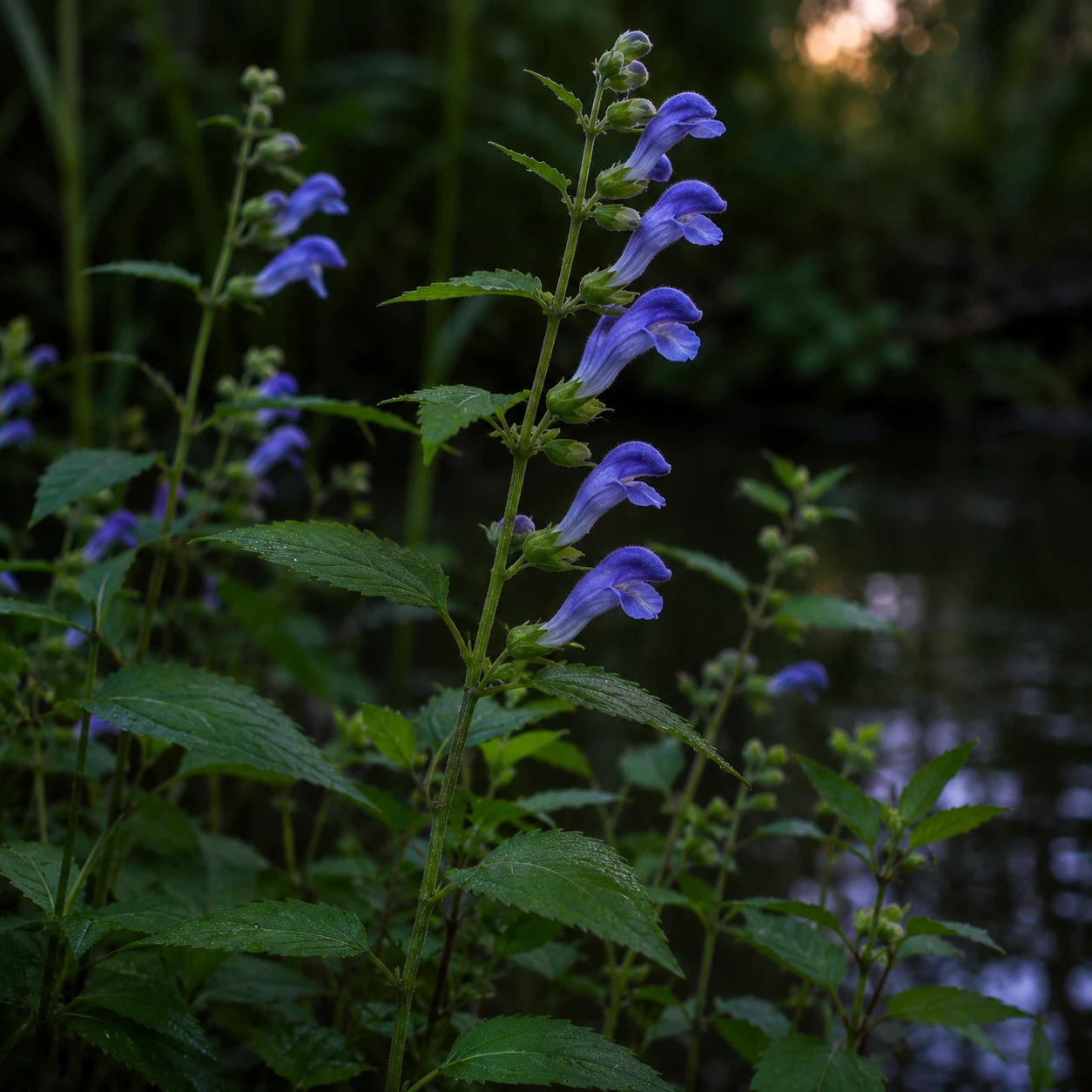
Two things need saying before any benefit is discussed, because both change how the rest of the information should be read.
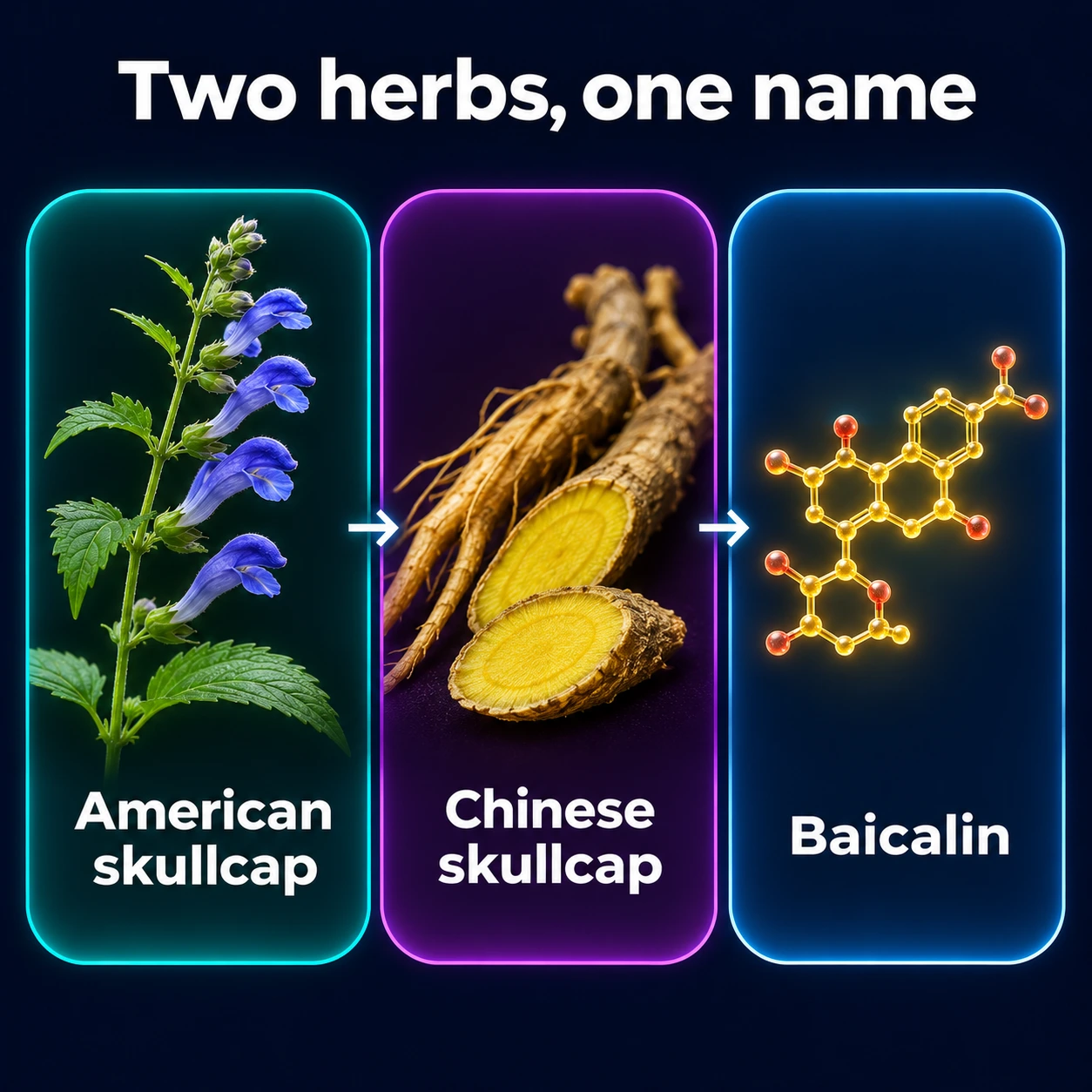
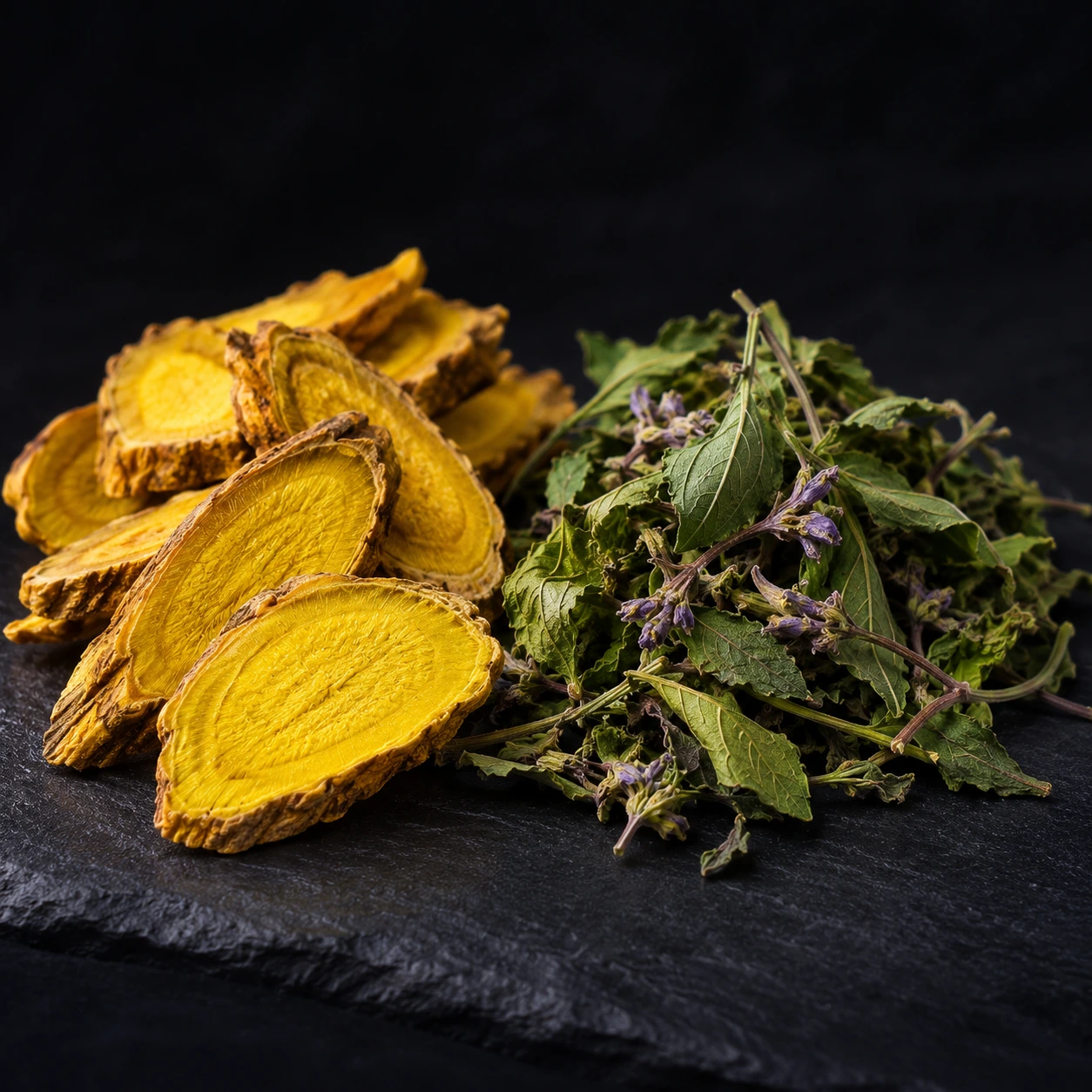
First: “skullcap” is two unrelated medicines sharing a name. American skullcap is Scutellaria lateriflora — a North American mint-family plant whose dried aerial parts are the traditional Western nervine, taken as tea or tincture for anxious tension and restless sleep, with a small amount of genuine randomized human evidence behind it. Chinese skullcap is Scutellaria baicalensis, huang qin — a different species whose dried root is a major traditional Chinese formula herb, and whose flavones baicalin, baicalein and wogonin carry an enormous laboratory literature on inflammation and many other targets that has essentially nothing to do with calming the nerves. Different species, different plant part, different tradition, different chemistry, different evidence. Letting baicalin research appear to support a lateriflora nervine claim is the single most common error made about this herb, and the section below on the two species exists to prevent it.
Second: the most important safety fact about skullcap is not about skullcap. American skullcap has historically been adulterated with germander (Teucrium species), a look-alike mint-family plant that is genuinely hepatotoxic and that caused a documented cluster of liver-injury cases in France, leading to its withdrawal from sale there in 1992. Several of the old “skullcap damaged my liver” case reports are attributed to that substitution rather than to skullcap itself. That attribution cuts both ways: it partly exonerates the plant, and it means an unverified or unlabelled product carries a real risk that a properly identified one does not. It is an explanation, not a reassurance — and it makes buying material whose species has actually been verified the main safety step available to you.
With those two points established, the four deep-dive articles below take the species apart, weigh the anxiety and sleep evidence honestly, survey the baicalin literature and its gap between laboratory and clinic, and lay out the germander story and the liver-safety question in full. Every claim across these pages is labelled with its species, its plant part, and its evidence tier — randomized clinical trial, preliminary (animal or in-vitro), or traditional use only.
Deep-Dive Articles
American vs Chinese Skullcap: Two Different Herbs
Start here. Scutellaria lateriflora aerial parts versus Scutellaria baicalensis root — six ways the two plants differ, how the conflation happens, how to read a label, and why a finding about one can never be borrowed for the other.
Read the deep dive →Skullcap for Anxiety and Sleep
The American species only. The small randomized trials, sized honestly; scutellarein and the plant's own gamma-aminobutyric acid (GABA) content; benzodiazepine-site flavonoid binding; and why “it contains gamma-aminobutyric acid” is not a satisfying explanation.
Read the deep dive →Baicalin and the Chinese Skullcap Research
The Chinese species only. Baicalin, baicalein and wogonin; a huge preclinical literature; the absorption bottleneck that keeps it preclinical; what human data exist; and why this is not the anxiety herb.
Read the deep dive →Skullcap Safety: Germander Adulteration and Liver Injury
The page most sources omit. What germander is, how teucrin A poisons the liver, the French case cluster, what the reattribution does and does not prove, and a practical checklist for buying authenticated herb.
Read the deep dive →Table of Contents
- Deep-Dive Articles
- Two Herbs, One Name
- The Safety Point That Comes First
- What the Evidence Actually Supports
- How to Use This Section
- Key Research: American Skullcap Human Trials
- Key Research: Chemistry and Mechanism
- Key Research: Chinese Skullcap and Baicalin
- Key Research: Germander Hepatotoxicity
- Key Research: Identity and Supplement Quality
- External Resources
- Connections
- Featured Videos
Two Herbs, One Name
The genus Scutellaria contains several hundred species, named for the small dish-shaped bump on the flower's calyx — scutella, “little dish” — which early botanists thought resembled a helmet's skullcap. Two species dominate commerce and both inherited the common name. Set side by side, almost nothing else about them matches.
- American skullcap — Scutellaria lateriflora, aerial parts. Native to damp ground across eastern and central North America. Harvested in flower; the leaves, stems and flowering tops are dried or tinctured. A Western nervine, used since the nineteenth-century Eclectic physicians for nervous tension, irritability and disturbed sleep. Contains a modest amount of baicalin plus a distinct profile including scutellarein-type flavonoids and small measurable amounts of gamma-aminobutyric acid and glutamine in the plant tissue. This is the herb behind the small anxiety trials.
- Chinese skullcap — Scutellaria baicalensis, root. Native to dry grassland from northeast China to eastern Siberia. The thick taproot is lifted, sliced and dried; its interior is bright yellow, which is what gives huang qin its name. A bitter, cold, heat-clearing formula herb in traditional Chinese medicine, used within combinations for inflammatory and infectious presentations. One of the richest plant sources known of baicalin, baicalein and wogonin, at levels an order of magnitude beyond the American species. This is the herb behind the thousands of laboratory papers.
They are not interchangeable in either direction. There is no traditional or trial basis for using huang qin root as a calming evening herb, and none for using lateriflora aerial parts as an anti-inflammatory. When you meet a claim about “skullcap,” the first useful question is always which species and which part — and if the source does not say, the claim cannot yet be evaluated. Full treatment: American vs Chinese Skullcap.
The Safety Point That Comes First
Germander is Teucrium, a Mediterranean and west Asian genus in the same family as Scutellaria. Dried, the two are hard to tell apart: both are square-stemmed, small-leaved, nearly odourless mints, and once milled to powder the distinguishing features are gone entirely. In the late 1980s germander was sold in France in capsules and infusions as a slimming aid, and hepatologists began seeing hepatitis in otherwise healthy users. The clinical series published in Annals of Internal Medicine in 1992 reported seven patients with hepatitis and jaundice 3 to 18 weeks after starting germander, with hepatocyte death on liver biopsy in three. After the product was stopped, jaundice cleared within 8 weeks and recovery was complete in 1.5 to 6 months. In the three who took it again, hepatitis promptly returned. French authorities withdrew germander from sale that year.
The toxicology is unusually well worked out for a herbal problem. Germander's neoclerodane diterpenes, principally teucrin A, carry a furan ring that liver cytochrome P450 enzymes oxidise into a reactive metabolite; that metabolite consumes glutathione and then binds covalently to cellular proteins, and hepatocytes die. The liver, in other words, manufactures the poison while trying to clear the compound.
Skullcap's connection to all this is that germander was substituted for it in commerce, whether by error or to cut costs, and several of the historical liver-injury reports involving “skullcap” products are attributed to that substitution. It is worth being precise about what follows from that:
- It does support the view that correctly identified S. lateriflora has no known hepatotoxic constituent and no demonstrated mechanism of liver injury.
- It does not clear any particular bottle. The exoneration applies to the plant, and only to products that genuinely contain it — which the label alone cannot establish.
- It does not prove skullcap never caused harm. Most implicated products were never analysed. The accurate statement is that skullcap-labelled products have been associated with liver injury and germander substitution is the leading explanation.
- Chinese skullcap has a separate signal of its own, where the implicated ingredient is the herb rather than an impostor — most clearly in liver-injury reports involving the flavocoxid preparations that combined S. baicalensis baicalin with catechins.
So the practical conclusion is neither the old alarm nor a modern brush-off: the herb is probably benign, the marketplace is the risk, and verified identity is the mitigation. Full treatment, including a buying checklist and how to recognise liver injury: Germander Adulteration and Liver Injury.
What the Evidence Actually Supports
Laid out by tier, with species and part attached to each line:
- Randomized clinical trial evidence — S. lateriflora, aerial parts, anxiety. Two small human studies, most notably a randomized, double-blind, placebo-controlled crossover trial in 43 healthy volunteers (350 mg three times daily for two weeks). It found no significant difference from placebo on an anxiety score (p = 0.191). Overall mood disturbance fell from the starting score on skullcap (p < 0.001) and not on placebo (p = 0.072), without loss of energy or cognition; a carryover effect and differences between the groups at the start limit the result. Both studied healthy people rather than diagnosed patients, both were small, both were short. This points to a modest effect on everyday mood — not treatment of an anxiety disorder.
- Preliminary evidence — S. lateriflora, mechanism. Anxiolytic-type effects in animal models, anticonvulsant activity in rats, flavonoid interaction with the benzodiazepine site of the gamma-aminobutyric acidA receptor in binding assays, and inhibition of serotonin 5-HT7 binding. Coherent, genuinely interesting, and not proof of anything in a person. Note the specific caution about the plant's own gamma-aminobutyric acid content: orally consumed gamma-aminobutyric acid penetrates the brain poorly and the plant's quantities are small, so “it contains gamma-aminobutyric acid” is an analytical fact rather than an explanation.
- Traditional use plus one 2025 trial — S. lateriflora, sleep. Consistent historical use for “nervous” insomnia, plus the reasonable inference that a calmer evening helps sleep onset. A 2025 randomized, double-blind, placebo-controlled crossover trial gave 66 adults with mild to moderate primary insomnia an American skullcap extract supplement (400 mg/day) or placebo for 56 days, with a 28-day washout. Sleep quality scores, sleep onset, sleep efficiency and total sleep time improved, and no one reported side effects. It tested one supplement at one centre, using questionnaires and sleep diaries, and these are the only insomnia-patient data found. No substantial trial evidence exists for objective sleep measures; the trial's authors write that future studies need them. Slightly awkwardly, the anxiety trial evidence emphasises calm without sedation.
- Preliminary evidence — S. baicalensis, root, many targets. A very large cell and animal literature on baicalin, baicalein and wogonin across inflammatory signalling, oncology models, neuroprotection, metabolism and antimicrobial activity. Volume is not evidence of clinical effect, and an absorption bottleneck — baicalin needs gut bacteria to unlock it, and the body immediately re-conjugates what it absorbs — stands between these findings and a human dose.
- One sizable randomized trial — baicalin, the isolated compound. 374 patients with both coronary artery disease and rheumatoid arthritis took 500 mg of baicalin or placebo daily for 12 weeks. Blood lipids and C-reactive protein (a blood marker of inflammation) improved, and 71% vs 53% reported a good or moderate arthritis response. It used the isolated compound, not the root, and no repeat of it was found.
- Traditional use only — S. baicalensis, root, heat-clearing indications. Long documented use inside formulas, which cannot be attributed to any single herb, let alone to a purified flavone.
- Not supported at all. Skullcap does not treat rabies, despite the folk name mad-dog weed and a century of nineteenth-century marketing. Nothing herbal does, and a possible rabies exposure is a medical emergency requiring immediate post-exposure vaccination. Chinese skullcap is not a cancer treatment; killing cancer cells in a dish does not translate, and some botanicals interfere with chemotherapy.
How to Use This Section
A short reader's guide, since these four pages answer different questions:
- If you are trying to decide what to buy — read Two Species for the label rules, then the buying checklist in Liver Safety.
- If you want to know whether it will help your anxiety or sleep — go to Anxiety and Sleep, which also covers when skullcap is the wrong tool and which conditions need real assessment instead.
- If you have encountered dramatic claims about baicalin — go to Baicalin, which includes a checklist for reading such headlines.
- If you have liver disease, or take a lot of medication — read Liver Safety first, and note that existing liver disease raises a concern about the herb however carefully it is sourced.
- For the general overview — the main Skullcap article covers botany, traditional use, forms and dosing in a single pass.
Key Research: American Skullcap Human Trials
Scutellaria lateriflora, aerial parts. Tier: randomized and controlled human studies, small, in healthy volunteers, plus one 2025 trial in people with insomnia. Citations link the paper's PubMed record where one is known and a PubMed topic search otherwise.
- American skullcap (Scutellaria lateriflora): a randomised, double-blind placebo-controlled crossover study of its effects on mood in healthy volunteers. Phytotherapy Research, 2014. Better overall mood from the starting score on skullcap but not placebo, without loss of energy or cognition; no significant difference from placebo on the anxiety score. PubMed PMID: 23878109
- An investigation into the efficacy of Scutellaria lateriflora in healthy volunteers. Alternative Therapies in Health and Medicine, 2003. Earlier, smaller volunteer study reporting reduced anxiety ratings. PubMed PMID: 12652886
- Efficacy and Tolerability of a Chemically Characterized Scutellaria lateriflora L. Extract-Based Food Supplement for Sleep Management: A Single-Center, Controlled, Randomized, Crossover, Double-Blind Clinical Trial. Nutrients, 2025. 66 adults with mild to moderate primary insomnia, 400 mg/day for 56 days. PubMed PMID: 40362800
- Systematic reviews of herbal medicines for anxiety — useful for seeing how thin the skullcap evidence is next to better-studied botanicals such as chamomile and kava. PubMed search
- Cognitive behavioural therapy for insomnia versus pharmacotherapy — the comparison that puts any herbal sleep aid, skullcap included, into perspective. PubMed search
Key Research: Chemistry and Mechanism
Mostly Scutellaria lateriflora, aerial parts. Tier: analytical chemistry and in-vitro or animal pharmacology — preliminary.
- Phytochemical and biological analysis of skullcap (Scutellaria lateriflora L.): a medicinal plant with anxiolytic properties. Phytomedicine, 2003. The foundational constituent characterisation — scutellarein-type flavonoids plus measurable gamma-aminobutyric acid and glutamine in the plant — alongside anxiolytic-type activity. PubMed PMID: 14692724
- Characterization of chemical ingredients and anticonvulsant activity of American skullcap (Scutellaria lateriflora). Phytomedicine, 2009. Constituent profile with central-nervous-system activity in rats, consistent with involvement of gamma-aminobutyric acid. PubMed PMID: 18786819
- Inhibition of [3H]-LSD binding to 5-HT7 receptors by flavonoids from Scutellaria lateriflora. Journal of Natural Products, 2003. A serotonergic candidate mechanism alongside the gamma-aminobutyric acid hypothesis, and a better fit for a reported effect on mood rather than sedation. PubMed PMID: 12713409
- Comparison of the chemical composition of extracts from Scutellaria lateriflora using accelerated solvent extraction and supercritical fluid extraction versus standard hot water or 70% ethanol extraction. Journal of Agricultural and Food Chemistry, 2005. Preparation method changes which constituents you actually get — the reason a trial result does not transfer between tea, tincture and capsule. PubMed PMID: 15826062
- Flavonoids as ligands at the benzodiazepine site of the gamma-aminobutyric acidA receptor — the research area that gives mild herbal nervines their most plausible mechanism, and the same literature that underpins mechanistic discussion of passionflower and chamomile's apigenin. PubMed search
- Oral gamma-aminobutyric acid and blood–brain-barrier penetration — the literature behind the caution that a plant's gamma-aminobutyric acid content does not explain a calming effect. PubMed search
Key Research: Chinese Skullcap and Baicalin
Scutellaria baicalensis, root. Tier: overwhelmingly preliminary — cell and animal work — with limited human pharmacokinetic and formula-level clinical data and one sizable trial of isolated baicalin.
- Scutellaria baicalensis, the golden herb from the garden of Chinese medicinal plants. Science Bulletin, 2016. Why the root accumulates such unusual quantities of baicalin and wogonin, via a root-specific biosynthetic route. PubMed PMID: 27730005
- The genus Scutellaria: an ethnopharmacological and phytochemical review. Journal of Ethnopharmacology, 2010. Genus-wide chemistry and traditional use; documents how far species diverge, which is the evidentiary basis for keeping the two skullcaps apart. PubMed search
- Baicalin, an emerging multi-therapeutic agent: pharmacodynamics, pharmacokinetics, and considerations from drug development perspectives. Xenobiotica, 2010. The absorption bottleneck: microbial hydrolysis of baicalin to baicalein, rapid re-conjugation, enterohepatic recycling, and low free-aglycone exposure. PubMed PMID: 20230189
- New therapeutic aspects of flavones: the anticancer properties of Scutellaria and its main active constituents wogonin, baicalein and baicalin. Cancer Treatment Reviews, 2009. The scale of the oncology-model literature — and why cell-line results do not make this a cancer treatment. PubMed PMID: 19004559
- Reviews of baicalin and baicalein in inflammatory disorders — NF-κB suppression, cytokine reduction and 12-lipoxygenase inhibition across cell and animal models. The most coherent preclinical thread, and the closest analogue to the traditional heat-clearing indication. PubMed search
- Human pharmacokinetic interaction studies of baicalin with co-administered drugs, including statin transport — small studies, but evidence that oral baicalin reaches concentrations able to affect drug handling. PubMed search
- Baicalin reduces blood lipids and inflammation in patients with coronary artery disease and rheumatoid arthritis: a randomized, double-blind, placebo-controlled trial. Lipids in Health and Disease, 2018. 374 patients, 500 mg of baicalin or placebo daily for 12 weeks. PubMed PMID: 29935544
- Safety, tolerability, and pharmacokinetics of oral baicalein tablets in healthy Chinese subjects: A single-center, randomized, double-blind, placebo-controlled multiple-ascending-dose study. Clinical and Translational Science, 2021. Baicalein tablets, developed as an influenza drug, have reached human safety trials: 36 healthy adults took 200 to 600 mg or placebo, and adverse events were mild apart from one moderate fever judged unrelated. This tests safety and blood levels, not benefit. PubMed PMID: 34156161
- Safety, tolerability, and pharmacokinetics of a single ascending dose of baicalein chewable tablets in healthy subjects. Journal of Ethnopharmacology, 2014. An earlier single-dose trial of 100 to 2800 mg in 72 healthy adults. This also tests safety and blood levels, not benefit. PubMed PMID: 25219601
- Clinical research on classical huang qin-containing decoctions as chemotherapy adjuncts — formula-level trials whose results cannot be attributed to the single herb. PubMed search
Key Research: Germander Hepatotoxicity
Teucrium species — the adulterant, not the herb. Tier: clinical case series plus unusually well-characterised animal and cell toxicology.
- Hepatitis after germander (Teucrium chamaedrys) administration: another instance of herbal medicine hepatotoxicity. Annals of Internal Medicine, 1992. The pivotal French series — seven patients, hepatocellular injury, improvement on withdrawal, recurrence on re-exposure in three. PubMed PMID: 1605427
- Hepatotoxicity of germander (Teucrium chamaedrys L.) and one of its constituent neoclerodane diterpenes teucrin A in the mouse. Chemical Research in Toxicology, 1994. Identifies teucrin A as a hepatotoxic constituent. PubMed PMID: 7696542
- Hepatotoxicity of germander in mice. Gastroenterology, 1994. Dose-dependent hepatocellular injury and the role of metabolic activation. PubMed PMID: 8299912
- Metabolic activation of germander furano diterpenoids by cytochrome P450 3A, with depletion of cytoskeleton-associated protein thiols and membrane blebbing in hepatocytes. Hepatology, mid-1990s. The cellular mechanism: the liver creates the toxin while clearing the compound. PubMed search
- Liver injury associated with Teucrium polium in traditional use across the Middle East and North Africa — evidence that hepatotoxicity is a genus property rather than one product's defect. PubMed search
- Reviews of hepatotoxic slimming aids and other herbal hepatotoxins, in which germander is a standard teaching example. PubMed search
Key Research: Identity and Supplement Quality
Both species. Tier: quality-control analysis, pharmacopoeial monographs and clinical case literature. This is the block that translates most directly into an action.
- Skullcap Scutellaria lateriflora L.: an American nervine. Journal of Herbal Medicine, 2012;2(3):76-96. An article by Upton and Dayu that treats identity and authentication as central rather than incidental. doi:10.1016/j.hermed.2012.06.004
- Hepatotoxicity of herbal remedies. BMJ, 1989. Liver injury in patients taking skullcap-containing multi-ingredient products — the reports that created the reputation, and a good illustration of why multi-ingredient case reports cannot attribute cause to a component. PubMed PMID: 2513032
- Acute liver injury due to flavocoxid (Limbrel), a medical food for osteoarthritis: a case series. Annals of Internal Medicine, 2012. The Chinese-skullcap liver signal, where the implicated ingredient is the herb itself: a blend of baicalin with catechins from Acacia catechu. Four of 877 patients in the US liver-injury network, all women aged 57 to 68, became ill within 1 to 3 months of starting it; liver tests returned to normal within 3 to 12 weeks of stopping and all recovered. Causality was judged highly likely in three and possible in one. PubMed PMID: 22711078
- Liver injury from herbal and dietary supplements. Hepatology, 2017. Clinical review drawing on prospective registry data, placing Scutellaria within the wider supplement hepatotoxicity picture. PubMed PMID: 27677775
- DNA barcoding and chromatographic authentication of botanical raw materials, including detection of substituted species in finished supplements. Chemical fingerprinting is particularly powerful here because teucrin A should be entirely absent from genuine skullcap. PubMed search
- Causality assessment in herb-induced liver injury — how clinicians decide whether a supplement caused a hepatitis, and why bringing the actual product matters. PubMed search
External Resources
- U.S. National Institutes of Health (NIH) National Center for Complementary and Integrative Health — plain-language herb summaries and safety notes.
- U.S. National Institutes of Health Office of Dietary Supplements — supplement fact sheets, label-reading and interaction guidance.
- PubMed — search the binomial (Scutellaria lateriflora or Scutellaria baicalensis), never the common name.
- NCBI Bookshelf — hosts LiverTox, the U.S. National Institutes of Health reference on drug and herbal liver injury.
- National Institute of Diabetes and Digestive and Kidney Diseases — liver disease information.
- National Institute of Mental Health — evidence-based information on anxiety disorders.
- MedlinePlus — consumer health information from the National Library of Medicine.
- ClinicalTrials.gov — check whether any larger trial of either species is under way.
- American Botanical Council — botanical adulterants prevention programme bulletins.
- United States Pharmacopeia and NSF International — independent supplement verification (quality, not efficacy).
- U.S. Food and Drug Administration — supplement regulation and adverse-event reporting.
- Plants of the World Online (Kew) — authoritative botanical names for checking which Scutellaria is which.
Connections
- All Herbs
- Skullcap (main article)
- American vs Chinese Skullcap
- Skullcap for Anxiety and Sleep
- Baicalin and Chinese Skullcap Research
- Germander Adulteration and Liver Injury
- Valerian
- Passionflower
- Lemon Balm
- Chamomile
- Kava
- Ashwagandha
- Holy Basil
- Berberine
- Astragalus
- Chen Pi
- Milk Thistle
- Gamma-Aminobutyric Acid
- L-Theanine
- Melatonin
- Apigenin
- Luteolin
- Quercetin
- Anxiety
- Insomnia
- Panic Disorder
- Social Anxiety Disorder
- Liver Disease
- Liver Function Tests
Safety and disclaimer. This section is educational and is not medical advice, diagnosis, or a substitute for professional care. Neither American skullcap (Scutellaria lateriflora, aerial parts) nor Chinese skullcap (Scutellaria baicalensis, root) is an approved or established treatment for any condition; the evidence tier behind every claim is labelled so you can judge it yourself. There is no good safety data on either species in pregnancy and breastfeeding, and the liver findings above raise a concern for people with liver disease or a history of drug- or herb-induced liver injury. American skullcap's traditional use is as a sedative, which raises a concern about added drowsiness alongside sedatives, sleep or anti-anxiety medication, or alcohol, and around surgery. Possible interactions of either species are raised for anticoagulants, statins, antiepileptics, immunosuppressants and chemotherapy; small human studies listed above show oral baicalin reaching levels able to affect how the body handles a statin. Because “skullcap” on a label may be either species — and because the American herb has a documented history of substitution with hepatotoxic germander — the only signs of identity on a label are a printed binomial, the plant part and a statement that identity was verified. Unusual fatigue, nausea, right-upper-abdominal pain, dark urine, pale stools, itching, or yellowing of the skin or eyes are signs of liver injury that hospitals treat as urgent; in the case series above the injury cleared after the product was stopped, and the actual product is what lets clinicians work out the cause.