⚠ Evidence warning: Clinical trials or other evidence do not support the claim that American skullcap notably reduces anxiety. This page keeps it as a report of what people, websites or other media say.
Skullcap
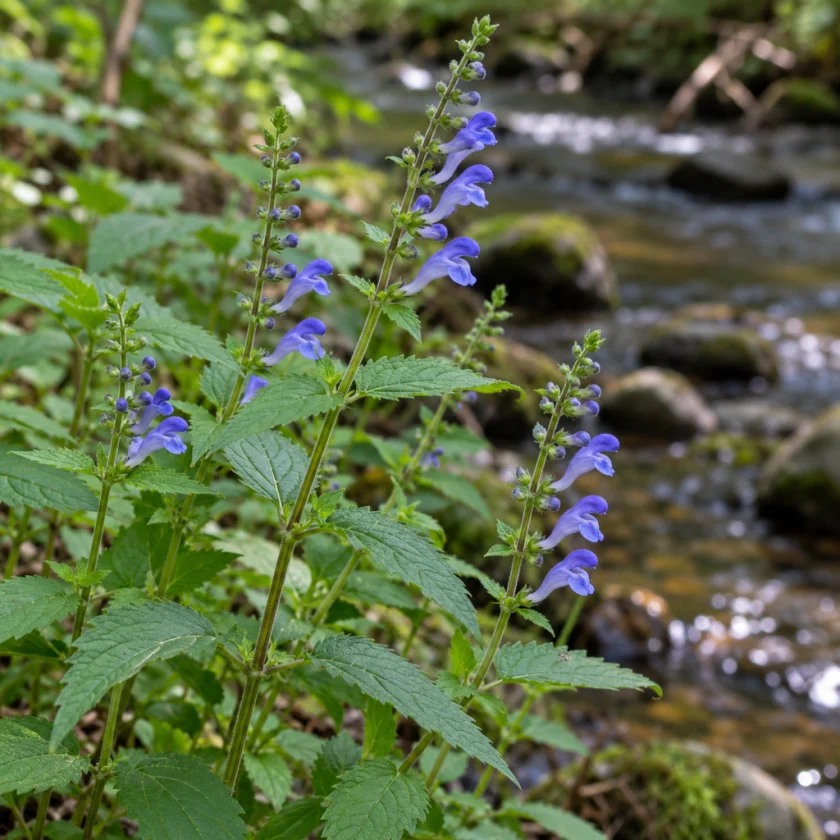
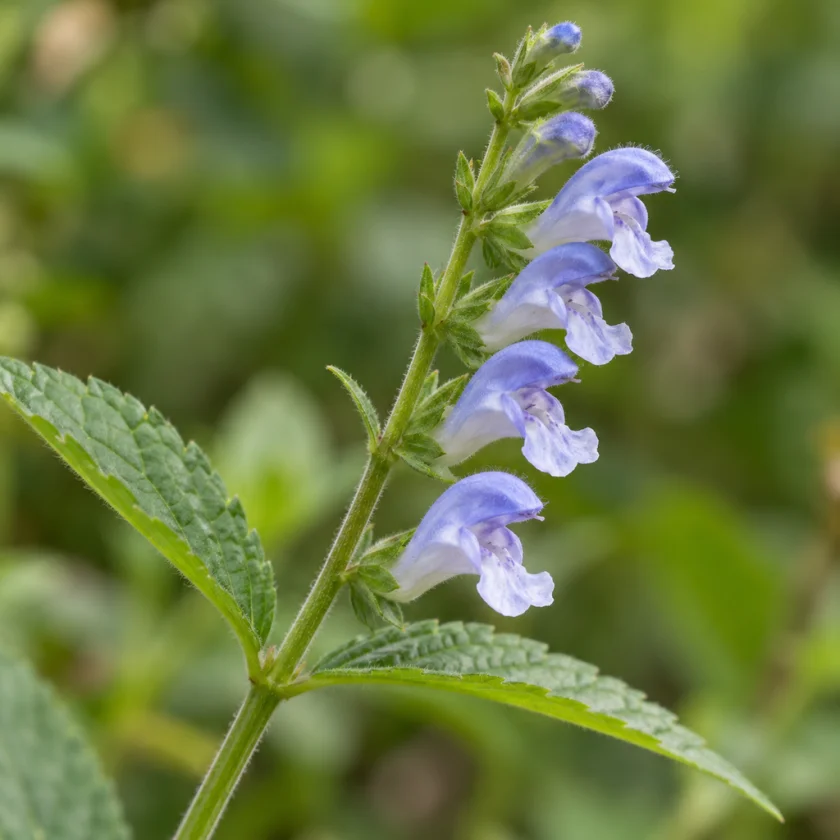
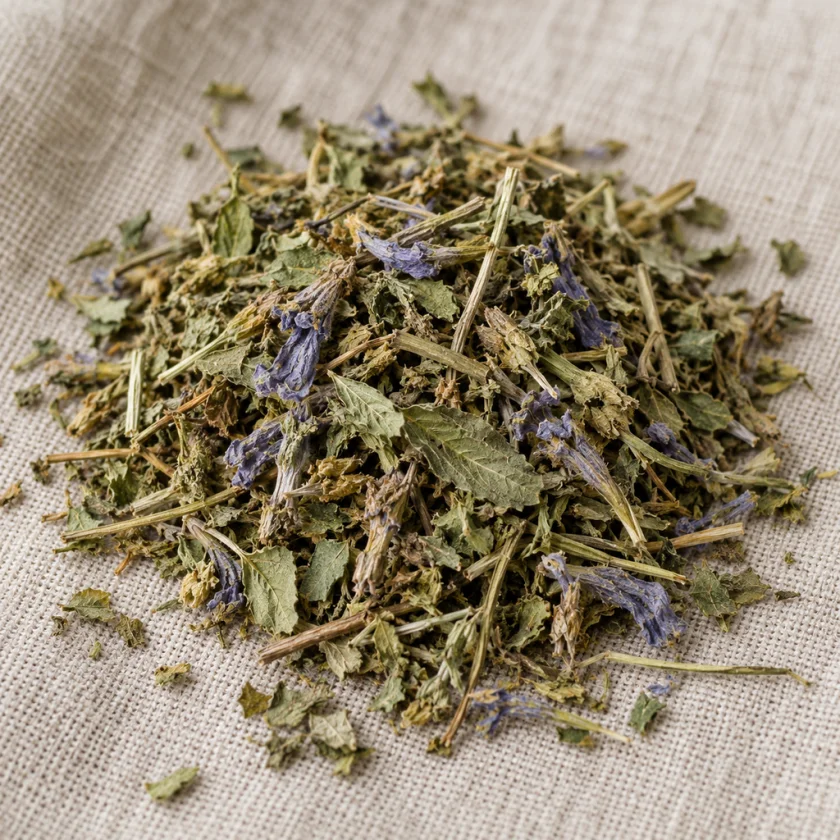
Skullcap is one of the classic calming herbs of Western herbal medicine — a modest mint-family plant that herbalists have reached for over the past two centuries to soothe frazzled nerves, ease anxious tension, and help a restless mind settle toward sleep. The name most people mean when they say “skullcap” is American skullcap (Scutellaria lateriflora), and that is the herb this page is about. But there is an important catch worth knowing up front: a completely different plant, Chinese skullcap (Scutellaria baicalensis, the “Huang Qin” of traditional Chinese medicine), shares the same common name and is used for entirely different purposes. Confusing the two — or, worse, buying a product that has been secretly substituted with a toxic look-alike herb — is the single most important thing to understand before you use skullcap. This page walks through what American skullcap actually is, what tradition and the (small) body of research say about it for anxiety and sleep, how it is taken, and the real safety story behind the old scare stories about liver damage.
Table of Contents
What Skullcap Is
American skullcap is a small perennial herb in the mint family (Lamiaceae), native to North America, where it grows in damp meadows, marshes, and along stream banks from Canada down through much of the United States. Like most mints it has square stems and paired leaves, and in summer it produces slender rows of small blue-to-lavender flowers. The plant gets its curious name from those flowers: each blossom has a little dish- or cap-shaped bump on the upper part of its calyx (the green cup that holds the petals), which early botanists thought resembled a helmet or a skullcap — the close-fitting cap once worn under a helmet or by scholars and clergy. The Latin genus name, Scutellaria, comes from scutella, meaning “little dish,” for the same feature.
The parts used medicinally are the above-ground portions — the leaves, stems, and flowering tops — harvested while the plant is in bloom and then dried or made into a liquid extract. American skullcap is sometimes called Virginia skullcap, blue skullcap, or mad-dog skullcap, and older herbals may list it under names like helmet flower. It has almost no smell and a slightly bitter taste, and unlike some famous calming herbs it does not knock you out or leave you groggy — herbalists describe its action as gentle and steadying rather than heavily sedating.
American vs. Chinese Skullcap
This is the distinction that trips up almost everyone, so it is worth being clear. Two plants in the same genus are both called “skullcap,” but they are used for very different things:
- American (Virginia) skullcap — Scutellaria lateriflora. The traditional Western nervine: an herb taken to calm the nervous system, ease anxiety and nervous tension, and support sleep. This is the herb described throughout this page.
- Chinese skullcap — Scutellaria baicalensis, or “Huang Qin.” A completely different plant in traditional Chinese medicine, where its root (not the leaves) is used to clear what TCM calls “damp heat” roughly, inflammatory and feverish conditions. Its root is unusually rich in the flavonoids baicalin and baicalein, which is why modern research on Chinese skullcap tends to focus on inflammation, antioxidant effects, and cell studies rather than on calming the nerves.
They are not interchangeable. When a recipe, study, or supplement label says “skullcap,” the Latin name tells them apart: lateriflora for the calming American herb, baicalensis for the Chinese root. Product labels, unfortunately, are not always careful about this, and the two herbs can end up conflated in marketing. When you read a claim about skullcap, the first useful question is always: which one?
Traditional Uses
American skullcap entered Western herbal practice through the folk and indigenous medicine of North America. Native American peoples used it in various ways, and by the nineteenth century it had been adopted enthusiastically by the Eclectic physicians — a school of American doctors who relied heavily on plant medicines. To them, skullcap was a premier nervine: an herb for “nervous excitability,” irritability, nervous exhaustion, tension headaches, and the kind of restless, wound-up state that keeps a person from settling or sleeping. It was often paired with valerian or other calming herbs, and it was considered gentle enough for long-term use and for children and the elderly.
The plant also carries a colorful and now-obsolete history under the name mad-dog weed or mad-dog skullcap. In the late 1700s a physician named Lawrence Van Derveer promoted it as a cure for rabies — hydrophobia, the disease you catch from the bite of a “mad dog.” The reputation stuck for a century, and skullcap was sold as a rabies preventive well into the 1800s. It does not work for rabies, and no herb is known to prevent or cure it: rabies is essentially always fatal once symptoms begin, and the only effective response to a possible exposure is prompt medical post-exposure vaccination. The old “mad-dog” name survives as a historical curiosity, not as a use.
Stripped of the rabies mythology, skullcap's enduring traditional role is simple and consistent across sources: a calming herb for anxiety, nervous tension, and disturbed sleep. That is the reputation modern research has tried, in a small way, to test.
The Active Compounds
American skullcap's activity is generally attributed to its flavonoids — a large family of plant pigments and protective compounds. The ones most often named in skullcap are baicalin and its parent baicalein, along with scutellarin and related molecules. (Chinese skullcap root is far richer in baicalin, which is one reason the two plants get discussed together, but American skullcap contains its own characteristic flavonoid profile in the leaves and tops.) The exact amounts vary a great deal depending on how the plant is grown, when it is harvested, and how it is extracted — hot-water tea, alcohol tincture, and modern solvent extracts do not all pull out the same compounds in the same proportions, which is one reason results from one preparation don't automatically apply to another.
How might these flavonoids calm the nerves? The leading proposed mechanism is a GABAergic one. gamma-aminobutyric acid (GABA) is the brain's main “brake” the neurotransmitter that quiets overactive nerve signaling and produces feelings of calm; it is also the system that many pharmaceutical anti-anxiety and sleep drugs act on. Laboratory work has found that skullcap flavonoids can interact with gamma-aminobutyric acid receptors and related targets, and some of its constituents have shown affinity for serotonin receptors as well, which could plausibly connect to mood. It is important to be honest about what this means: these are proposed mechanisms, demonstrated mostly in test tubes and animals. In one animal study (Awad and colleagues, 2003), rats given skullcap extract by mouth went more often into the open, exposed areas of standard anxiety tests (the open-field arena and the elevated plus-maze) — behaviour read as reduced anxiety. The same team measured baicalin in a 50% alcohol extract (40 mg per gram) and baicalein in a 95% alcohol extract (33 mg per gram); both are known to bind the benzodiazepine site of the GABA-A receptor, the site that drugs such as diazepam act on. These findings offer a believable reason why skullcap might ease anxiety, but a plausible mechanism is not the same as proof that it helps people, and the human evidence is where the story gets thin.
Anxiety and Calm: The Honest Evidence
Here is the fair summary: American skullcap is a well-regarded traditional calming herb with a plausible mechanism and a small, mixed body of human research — not a heavily studied, proven treatment. What exists is worth knowing.
The most cited modern human trial is a 2014 study by Brock and colleagues, a randomized, double-blind, placebo-controlled crossover study in healthy volunteers. Forty-three healthy volunteers, most of them only mildly anxious or less, took 350 mg of American skullcap three times a day for two weeks and placebo for two weeks, in random order. Anxiety scores (Beck Anxiety Inventory) were not significantly different between skullcap and placebo (p = 0.191). Overall mood disturbance (Profile of Mood States) did fall from the starting scores while on skullcap (p < 0.001) but not on placebo (p = 0.072), and the authors report that skullcap enhanced overall mood without a reduction in energy or thinking. They note that the low anxiety scores at the start and a carry-over effect between periods may have made an anxiety difference harder to detect. That last point about energy matters, because it fits the traditional description of skullcap as calming without being sedating. An earlier double-blind, placebo-controlled study by Wolfson and Hoffmann in 2003 reported “noteworthy anxiolytic effects” in healthy people. People taking American skullcap have reported improvements in mood — notably reduced anxiety — without a loss of energy or alertness. On the mechanistic side, the animal work by Awad and colleagues (see The Active Compounds above) gives the human findings a coherent biological backdrop.
The caveats are real:
- The studies are small and mostly in healthy volunteers, not in people diagnosed with an anxiety disorder. Showing a calming effect on everyday, sub-clinical anxiousness is not the same as treating clinical anxiety.
- There are only a handful of trials. Compared with, say, the research base behind first-line anxiety treatments, this is a very thin evidence base, and independent replication in larger groups is limited.
- Preparations differ. Because tea, tincture, and standardized extracts contain different amounts of the active flavonoids, the dose that helped in a study may not match what is in a random bottle on a shelf.
In summary, skullcap is a traditional nervine with a plausible GABAergic mechanism and two small human studies — one reporting reduced anxiety, the other a better overall mood but no anxiety difference from placebo — low-risk at normal doses, but not established the way a proven medication is. It is used as a gentle support for ordinary nervous tension; it has not been tested as a treatment for a diagnosed anxiety disorder.
Skullcap for Sleep
Skullcap's use for sleep flows naturally from its calming reputation. A wound-up, anxious, over-busy mind is one of the most common reasons people cannot fall asleep, and an herb that eases that tension may make drifting off easier — not by acting as a heavy sedative, but by taking the edge off the mental restlessness that keeps someone awake. This is why herbalists traditionally use skullcap for “nervous” insomnia and often combine it with other calming herbs such as valerian, passionflower, or lemon balm in bedtime blends.
For a long time the sleep use rested mainly on tradition and on the idea that reducing evening anxiety supports sleep indirectly. The first sleep trial was published in 2025: in a randomized, double-blind, placebo-controlled crossover study, 66 adults aged 18-70 with mild to moderate primary insomnia took a chemically characterized American skullcap extract (400 mg a day) or placebo for 56 days each, with a 28-day break in between. Sleep quality on the Pittsburgh Sleep Quality Index (PSQI), the main measure, improved significantly on skullcap, as did the secondary measures (time to fall asleep, sleep efficiency and total sleep time), and none of the participants reported side effects. It is a single trial of one extract, so it is not yet known whether other skullcap preparations do the same. Many people find a warm cup of skullcap tea a pleasant, low-risk part of a wind-down routine. Sleep habits, caffeine and evening screen time are the other everyday factors most often linked with ongoing insomnia.
Forms and Dosing
American skullcap is sold and used in a few common forms. There is no single official dose, and because preparations vary in strength, the ranges below are general guides drawn from traditional practice rather than precise prescriptions:
- Tea (infusion). The traditional form. Roughly 1–2 teaspoons of the dried herb steeped in a cup of just-boiled water for 10–15 minutes, taken one to three times a day or in the evening. Gentle and pleasant; well suited to a relaxing daily ritual.
- Tincture (liquid extract). An alcohol-based extract, typically taken in small amounts (herbalists often use on the order of 1–4 mL, up to a few times a day, following the product's directions). Convenient and easy to adjust; the alcohol also pulls out flavonoids that water may leave behind.
- Capsules. Dried powdered herb or a concentrated extract in capsule form, dosed per the label. Convenient but variable in strength, and — as discussed below — the form where hidden adulteration is hardest to notice.
Herbalists commonly start low, use a single well-identified product long enough to judge its effect, and favor teas or clearly labeled tinctures over anonymous capsule blends. Because skullcap is mild, it is often taken in the late afternoon or evening, or as needed during a stressful stretch, rather than at a fixed high dose.
Safety and the Germander Problem
At normal doses, American skullcap is generally considered well tolerated, with few reported side effects. But skullcap carries one genuinely important safety story that is worth understanding — and it is not really about the herb itself.
Decades ago, a number of case reports linked “skullcap” products to liver injury (hepatotoxicity), including a few serious cases. This understandably gave skullcap a scary reputation. But investigators studying these cases found a crucial wrinkle: many commercial “skullcap” products had been adulterated with germander (Teucrium species) — a different, unrelated plant that is a known liver toxin. Germander contains compounds called neoclerodane diterpenes (such as teucrin A) that the liver converts into reactive, damaging metabolites; germander itself was pulled from the market in some countries after causing hepatitis. Because dried, powdered skullcap and germander can look similar, germander was substituted — whether by accident or to cut costs — for genuine skullcap in the herb supply. In other words, several of the classic “skullcap caused liver damage” reports were most plausibly cases of germander poisoning wearing a skullcap label.
The lessons drawn from this:
- Product quality and authentication genuinely matter. This is the single most important safety point for skullcap. The protection against adulteration is identity testing of the raw herb, ideally verified by an independent laboratory; the cheapest anonymous products are where substitution has been found. Correctly identified American skullcap is not the same risk as a mislabeled batch of germander.
- Liver disease is listed as a reason not to use skullcap, along with caution about combining it with other things that stress the liver — a theoretical precaution given the adulteration history rather than a proven property of the true herb.
- Sedatives — with prescription anti-anxiety or sleep medications, other strongly sedating herbs, or alcohol, the calming effects can add up.
- Pregnancy and breastfeeding. There is not enough safety data, and calming herbs are by default not used in pregnancy and breastfeeding for that reason.
- Signs of liver injury — unusual fatigue, nausea, dark urine, pale stools, abdominal pain, or yellowing of the skin or eyes while taking any herbal product are signs of liver injury that hospitals treat as urgent.
Understood correctly, the germander story is less a warning against skullcap than a warning about the herbal supplement market: an herb can be gentle and safe in itself yet still cause harm if what is in the bottle isn't what the label says. That is a problem of identity testing, not of the herb itself.
The Honest Bottom Line
American skullcap (Scutellaria lateriflora) is a gentle, time-honored Western calming herb. Tradition uses it as a nervine for anxiety, nervous tension, and restful sleep, and a small but real body of human research — along with a plausible gamma-aminobutyric acid-related mechanism — suggests it can improve mood without heavy sedation; its effect on anxiety itself was not confirmed against placebo in the 2014 trial, and a 2025 trial reported better sleep in mild to moderate insomnia. The evidence base is limited rather than robust: a low-risk support for everyday nervous tension, not a proven treatment for a diagnosed anxiety disorder.
The one caution that truly matters is not toxicity of the herb itself but the historical adulteration of skullcap products with hepatotoxic germander — the likely explanation behind old liver-injury scares. The cautions in the research and herbal literature are authentication (an identity-tested product), pregnancy and breastfeeding (no safety data), sedatives (added effects) and liver disease; within those, it is a pleasant, mild herb to keep in the calming toolkit alongside relatives like valerian, passionflower, and lemon balm.
Key Research Papers
- Brock C, Whitehouse J, Tewfik I, Towell T. American skullcap (Scutellaria lateriflora): a randomised, double-blind placebo-controlled crossover study of its effects on mood in healthy volunteers. Phytotherapy Research. 2014;28(5):692–698. — the key modern human trial: 43 healthy volunteers; anxiety score not different from placebo (p = 0.191), overall mood improved from baseline on skullcap without loss of energy or cognition. — doi:10.1002/ptr.5044
- Wolfson P, Hoffmann DL. An investigation into the efficacy of Scutellaria lateriflora in healthy volunteers. Alternative Therapies in Health and Medicine. 2003;9(2):74–78. — earlier double-blind, placebo-controlled study in healthy people reporting noteworthy anxiolytic effects. — PubMed PMID: 12652886
- Awad R, Arnason JT, Trudeau V, et al. Phytochemical and biological analysis of skullcap (Scutellaria lateriflora L.): a medicinal plant with anxiolytic properties. Phytomedicine. 2003;10(8):640–649. — rats given the extract by mouth showed anxiolytic-type behaviour; baicalin, baicalein and GABA were measured in the extracts, supporting the proposed calming mechanism. — doi:10.1078/0944-7113-00374
- Zhang Z, Lian XY, Li S, Stringer JL. Characterization of chemical ingredients and anticonvulsant activity of American skullcap (Scutellaria lateriflora). Phytomedicine. 2009;16(5):485–493. — profiled the herb's flavonoids and found central nervous system (anticonvulsant) activity in mice. — doi:10.1016/j.phymed.2008.07.011
- Gafner S, Bergeron C, Batcha LL, et al. Inhibition of [3H]-LSD binding to 5-HT7 receptors by flavonoids from Scutellaria lateriflora. Journal of Natural Products. 2003;66(4):535–537. — skullcap flavonoids act on serotonin (5-HT7) receptors, a plausible link to mood effects. — doi:10.1021/np0205102
- Bergeron C, Gafner S, Clausen E, Carrier DJ. Comparison of the chemical composition of extracts from Scutellaria lateriflora using accelerated solvent extraction and supercritical fluid extraction versus standard hot water or 70% ethanol extraction. Journal of Agricultural and Food Chemistry. 2005;53(8):3076–3080. — shows how the extraction method changes which flavonoids you actually get, explaining why tea and tincture differ. — doi:10.1021/jf048408t
- Upton R, Dayu RH. Skullcap Scutellaria lateriflora L.: an American nervine. Journal of Herbal Medicine. 2012;2(3):76–96. — the American Herbal Pharmacopoeia monograph: traditional use, chemistry, and identity/adulteration concerns. — doi:10.1016/j.hermed.2012.06.004
- Brock C, Whitehouse J, Tewfik I, Towell T. Identity issues surrounding American skullcap (Scutellaria lateriflora) and an optimised high performance liquid chromatography method to authenticate commercially available products. Journal of Herbal Medicine. 2013;3(2):57–64. — directly examines the risk of skullcap being substituted or contaminated, including with germander. — doi:10.1016/j.hermed.2013.02.001
- MacGregor FB, Abernethy VE, Dahabra S, Cobden I, Hayes PC. Hepatotoxicity of herbal remedies. BMJ. 1989;299(6708):1156–1157. — case reports of liver injury associated with skullcap-labeled products that helped raise the adulteration question. — doi:10.1136/bmj.299.6708.1156
- Larrey D, Vial T, Pauwels A, et al. Hepatitis after germander (Teucrium chamaedrys) administration: another instance of herbal medicine hepatotoxicity. Annals of Internal Medicine. 1992;117(2):129–132. — documents germander's genuine liver toxicity — the toxin most plausibly behind mislabeled-skullcap cases. — doi:10.7326/0003-4819-117-2-129
- Kouzi SA, McMurtry RJ, Nelson SD. Hepatotoxicity of germander (Teucrium chamaedrys L.) and one of its constituent neoclerodane diterpenes teucrin A in the mouse. Chemical Research in Toxicology. 1994;7(6):850–856. — identifies teucrin A as a germander liver toxin, clarifying why the adulterant is dangerous. — doi:10.1021/tx00042a020
- Loeper J, Descatoire V, Letteron P, et al. Hepatotoxicity of germander in mice. Gastroenterology. 1994;106(2):464–472. — further mechanistic evidence of how germander damages the liver. — doi:10.1016/0016-5085(94)90606-8
- Di Minno A, Morone MV, Buccato DG, De Lellis LF, Ullah H, Piccinocchi R, Cordara M, Larsen DS, Di Guglielmo A, Baldi A, Piccinocchi G, Xiao X, Sacchi R, Daglia M. Efficacy and tolerability of a chemically characterized Scutellaria lateriflora L. extract-based food supplement for sleep management: a single-center, controlled, randomized, crossover, double-blind clinical trial. Nutrients. 2025;17(9):1491. — 66 adults with mild to moderate primary insomnia; PSQI, sleep onset latency, sleep efficiency and total sleep time improved versus placebo, no side effects reported. — PubMed PMID: 40362800
The fuller story — where Skullcap came from, who first wrote it down, and how it travelled into modern use — is told in the dedicated Skullcap: History and Traditional Use article.
Connections
- All Herbs
- Skullcap History
- Skullcap Benefits
- Valerian
- Passionflower
- Lemon Balm
- Anxiety
- Conditions on this site that reference this page: Autoimmune Hepatitis · Liver Disease · Nephrology & Hepatology · Insomnia