⚠ Evidence warning: Clinical trials or other evidence do not support the claims that Black Cohosh has a calming GABA-type effect and that its sleep benefit tracks the fall in night sweats. This page keeps it as a report of what people, websites or other media say.
Black Cohosh for Mood & Sleep
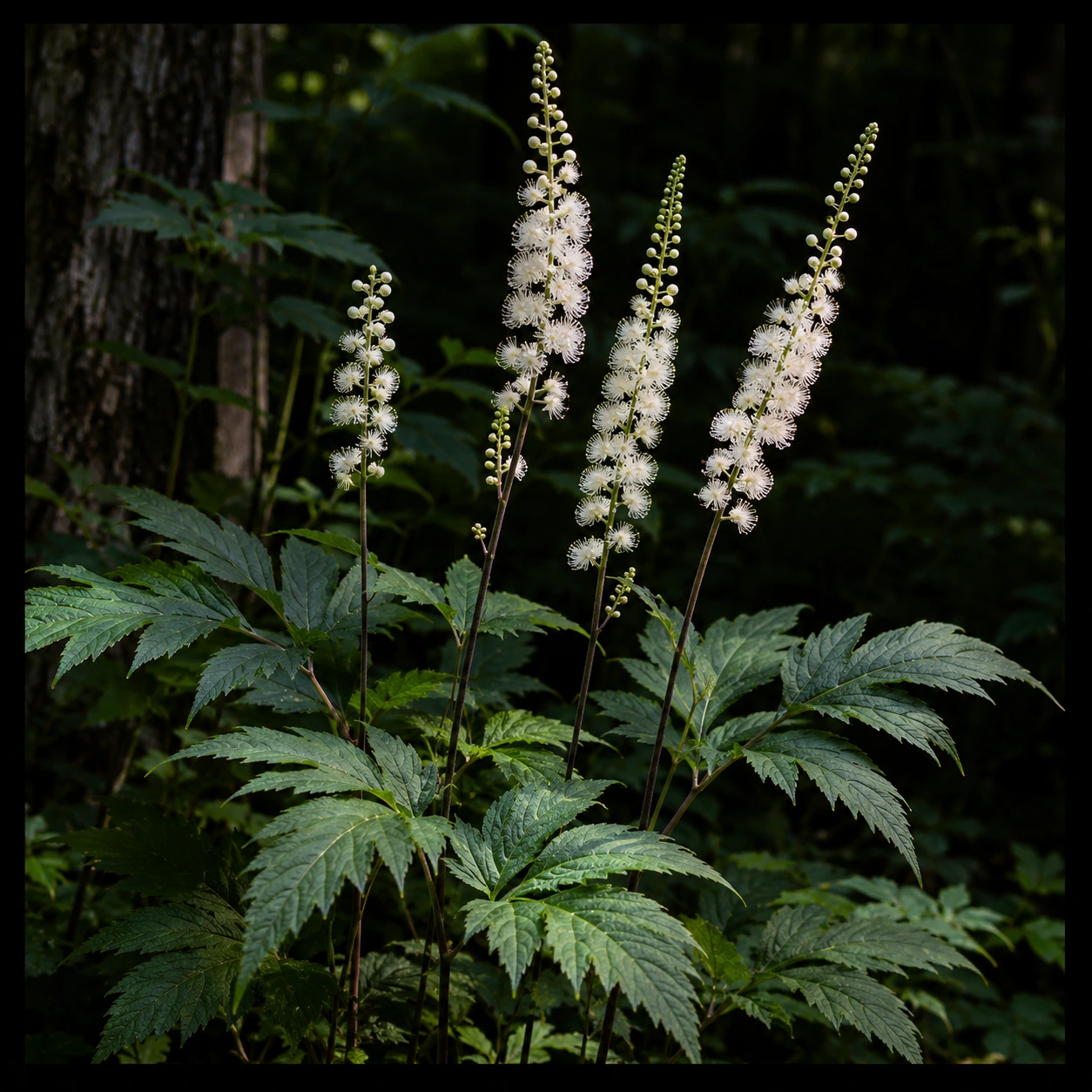
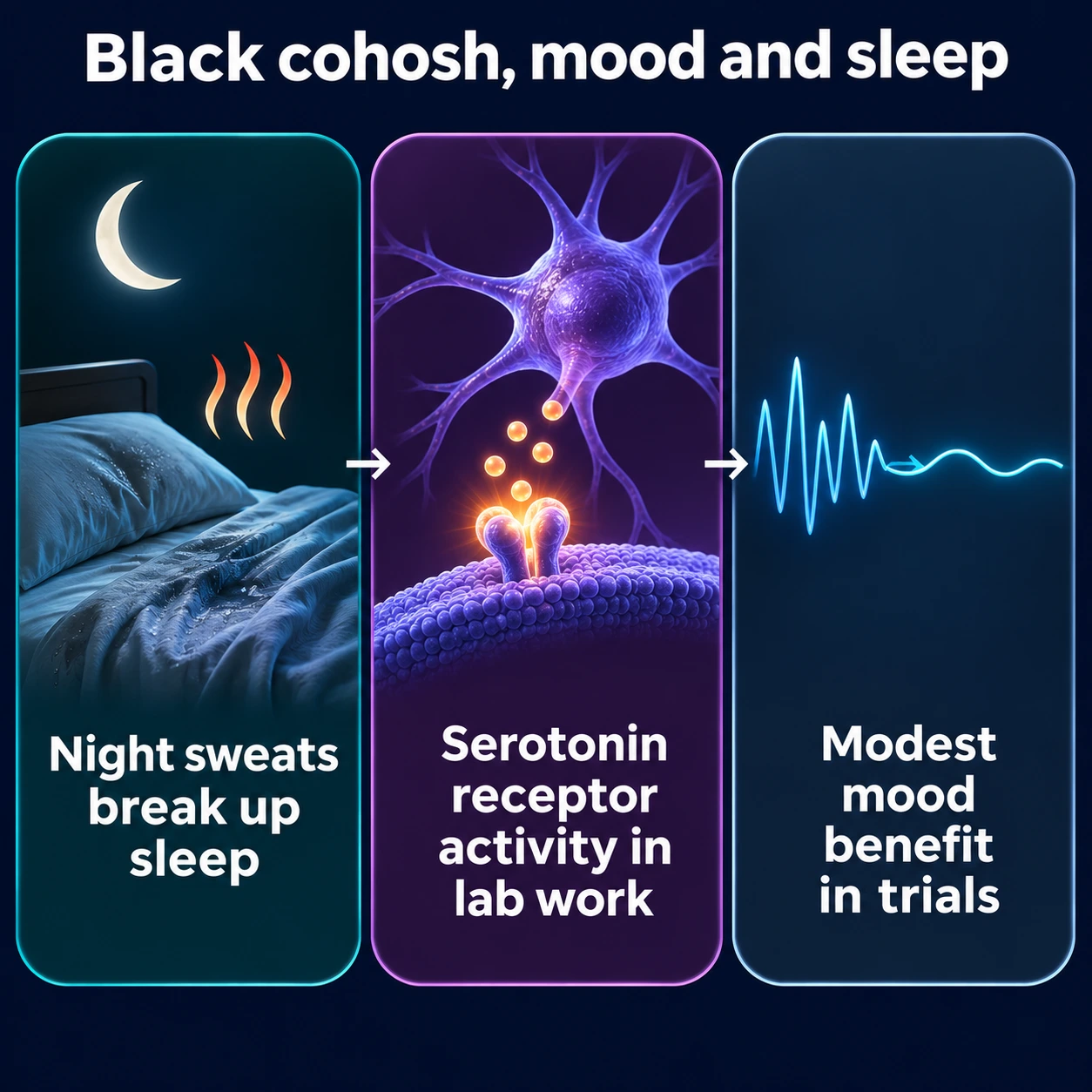
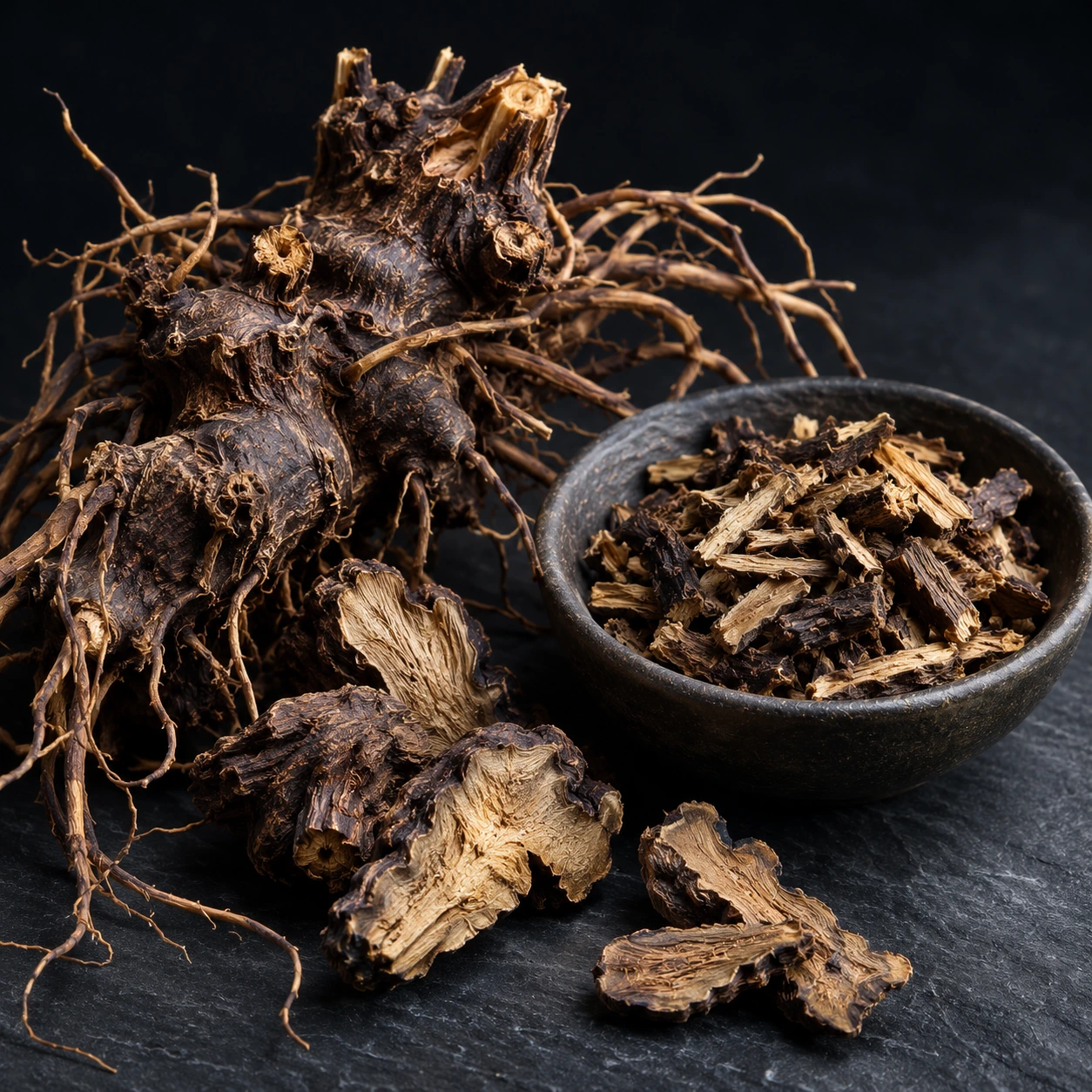
The mood and sleep effects of Black Cohosh have been overshadowed in the modern literature by the hot-flash story, but the herb's traditional uses by the Cherokee, Iroquois, Algonquian, and Penobscot peoples emphasized its calming, nervine, and parturient effects more than its vasomotor effects. Eclectic physicians of the 19th century used it for "nervous excitability" and "uterine irritability" associated with the menopausal transition. Key modern clinical papers include Liske 2002, a 6-month trial of two doses with no placebo group that measured menopausal symptoms (Kupperman index) and depression (Self-Rating Depression Scale) and found symptom relief without any estrogen-like effect; Uebelhack 2006, a placebo-controlled trial of black cohosh with St. John's wort in which depression scores fell 41.8% versus 12.7% on placebo; and Jiang 2015, a placebo-controlled trial with overnight sleep recordings. The proposed mechanism involves serotonin-receptor activity (laboratory work points to the constituent N-methylserotonin), possible GABAergic modulation, and indirect benefit from improved sleep secondary to reduced night sweats. Perimenopausal mood swings, anxiety, and the insomnia that disrupts the perimenopausal sleep architecture are real and disabling — Black Cohosh has modest documented benefit for all three, individually and as a contributor to overall menopausal quality-of-life improvement.
Table of Contents
- Native American and Eclectic Traditional Use
- Perimenopausal Mood Swings — The Clinical Picture
- The Liske 2002 Six-Month Trial Data
- Serotonergic Mechanism for Mood Effects (5-HT1A)
- GABAergic Modulation
- Sleep Architecture in Perimenopause
- Night Sweats as the Primary Sleep Disruptor
- Combination with St. John's Wort (Fixed-Combination Product)
- Perimenopausal Depression — Signs of Major Depression
- "Nervine" as a Concept — Old Word, Real Phenomenon
- Key Research Papers
- Connections
- Featured Videos
Native American and Eclectic Traditional Use
Actaea racemosa grows wild in the deciduous forests of eastern North America from southern Ontario down to Georgia and west to Missouri — the same range as the Cherokee, Iroquois, Algonquian, and Penobscot nations that knew it and used it for centuries before European contact. Ethnobotanical records compiled from Cherokee, Iroquois, and Penobscot informants describe Black Cohosh under names that translate as "black snakeroot," "rattle-root" (from the dried seed pods' sound), and "squaw root" (the latter a culturally insensitive Anglicization that nonetheless reflects the herb's primary use for women's health).
The traditional uses, as documented in classic ethnobotanical compilations (Hamel and Chiltoskey 1975; Vogel 1970; Moerman 1998 Native American Ethnobotany):
- Parturient — to facilitate labor and delivery, taken in the final weeks of pregnancy and during active labor
- Galactagogue — to support postpartum milk supply
- Emmenagogue — to bring on menstrual flow when delayed or absent
- Dysmenorrhea remedy — for painful menstruation
- Menopausal nervine — for "nervous irritability," "weakness," "low spirits" associated with the cessation of menses
- Rheumatism — for joint pain and muscle stiffness, often combined with willow bark or wintergreen
- Snake bite — topical and oral, hence the "black snakeroot" name; modern pharmacology offers no obvious mechanism for this use but the herb was widely employed in this context
The Eclectic physicians of the 19th and early 20th centuries — a movement of formally-trained American physicians who emphasized botanical medicine and developed sophisticated dosing and indication frameworks — adopted Black Cohosh and elaborated its uses considerably. King's American Dispensatory (1898 Felter and Lloyd edition) lists Black Cohosh (under the name "Cimicifuga") with detailed indications for "rheumatic and neuralgic pains," "uterine irritability," "neurasthenia," "tinnitus," and "dysmenorrhea." The dose recommendations and preparation methods in King's informed the modern German Commission E monograph development a century later.
Worth emphasizing: the traditional uses cluster around nervine and reproductive applications, with the menopausal vasomotor use being one application within a broader nervine indication. The modern clinical-trial focus on hot flashes is a narrow slice of the historical use pattern.
Perimenopausal Mood Swings — The Clinical Picture
The perimenopausal transition (typically ages 45–55, with substantial individual variation) is marked by erratic estrogen and progesterone fluctuations that can produce mood symptoms qualitatively similar to but often more severe than premenstrual mood symptoms. The clinical picture in the perimenopausal mood window typically includes some combination of:
- Anxiety — often new-onset, sometimes severe, sometimes with panic features. Generalized rather than specific. May include cardiovascular features (palpitations, chest tightness) that can be confused with cardiac disease.
- Irritability and emotional volatility — the "perimenopausal mood swings" experience — cycles of normal mood interrupted by sudden onset of anger, frustration, or tearfulness, often without identifiable trigger and resolving as suddenly as they began.
- Depressive symptoms — usually milder than major depressive disorder but with measurable impact on quality of life. The reproductive-mood literature distinguishes "perimenopausal depression" (clearly tied to the hormonal transition) from de novo major depressive disorder coincidentally presenting in this age window. Risk factors for perimenopausal depression specifically include prior history of premenstrual dysphoric disorder, prior postpartum depression, prior major depression, and prior severe premenstrual symptoms.
- Cognitive symptoms — "brain fog," difficulty with word retrieval, mild memory complaints. Usually resolves after the menopausal transition completes.
- Sleep disruption — either secondary to night sweats or independent insomnia. Sleep deprivation amplifies all the other mood symptoms.
- Reduced libido — multifactorial; partly hormonal, partly secondary to other symptoms.
Treatment options for perimenopausal mood symptoms range from lifestyle approaches through selective serotonin reuptake inhibitors (SSRIs)/serotonin-norepinephrine reuptake inhibitors (SNRIs) through hormone therapy. Black Cohosh sits at the lower-intensity end of this spectrum: it has been studied mainly in mild-to-moderate symptoms, often alongside its effect on hot flashes, and not as the only treatment for moderate-to-severe symptoms.
For more comprehensive coverage of perimenopausal mood, see our Anxiety page, Depression page, and the Perimenopause page.
The Liske 2002 Six-Month Trial Data
The most-cited clinical evidence for Black Cohosh's mood effects comes from a paper by Liske and colleagues published in Journal of Women's Health and Gender-Based Medicine in 2002. The trial was designed primarily as a 6-month safety and efficacy study of two doses of standardized Black Cohosh extract (39 mg/day vs 127.3 mg/day) for menopausal symptoms in 152 perimenopausal and postmenopausal women. It was randomized and double-blind between the two doses, but had no placebo group.
Efficacy and tolerability were measured with the Kupperman Menopause Index, the Self-Rating Depression Scale (SDS), a global assessment of tolerability, adverse events, and routine blood tests. Vaginal cytology and gynecologically relevant hormone levels were checked for any estrogen-like effect.
Key findings:
- Self-Rating Depression Scale showed comparable reductions over 6 months in both dose groups.
- Menopausal symptoms decreased regardless of dose, with responder rates of 70% and 72%; the higher dose did not have a significantly greater effect on any end point.
- No estrogenic effects on vaginal cytology or measured hormones — consistent with the non-estrogenic mechanism (see the Hormonal Balance deep-dive).
- Tolerability: both perimenopausal and postmenopausal women tolerated the treatment well at both doses over 6 months.
Because the trial had no placebo group and used no anxiety scale, it cannot separate the herb's effect from the placebo response, and it does not show a direct anti-anxiety effect. Its main contribution is the finding of symptom relief without estrogen-like effects.
Serotonergic Mechanism for Mood Effects (5-HT1A)
The receptor-binding work by Burdette and colleagues (covered in detail in the Hormonal Balance deep-dive) found compounds in Black Cohosh extract with strong binding to the serotonin 5-HT1A, 5-HT1D and 5-HT7 receptor subtypes; the extract bound the 5-HT7 receptor more potently than the 5-HT1A receptor and acted as a partial agonist at 5-HT7 in cell tests.
The 5-HT1A receptor is particularly relevant for mood effects. 5-HT1A is the principal target of the anxiolytic drug buspirone (a 5-HT1A partial agonist that lacks the sedative and abuse-liability features of benzodiazepines). 5-HT1A is also one of the targets that selective serotonin reuptake inhibitor antidepressants engage after chronic dosing — the down-regulation and desensitization of presynaptic 5-HT1A autoreceptors is part of the mechanism by which selective serotonin reuptake inhibitors eventually produce sustained increase in synaptic serotonin and clinical antidepressant effect over 4–8 weeks of dosing.
Later laboratory work by Powell and colleagues (2008) narrowed down which constituent is responsible. The Cimicifuga triterpenoids and phenolic acids bound only weakly to the 5-HT7 receptor and had no serotonin-reuptake-blocking activity, while N-methylserotonin (N-omega-methylserotonin) bound the 5-HT7 receptor very strongly (IC50 = 23 pM), switched on its cell signal (cAMP), and blocked serotonin reuptake (IC50 = 490 nM). The authors suggest N-methylserotonin may be responsible for the serotonergic activity of black cohosh. These are laboratory findings; how much of it reaches the brain from a standard dose is not known.
The 5-HT7 binding, in addition to its thermoregulatory role, also has mood-relevant downstream effects. 5-HT7 receptors are expressed in the dorsal raphe (where serotonergic neurons originate), the hippocampus, and several limbic structures. 5-HT7 antagonists have demonstrated antidepressant-like effects in animal models, and human clinical work is ongoing. Black Cohosh as a 5-HT7 partial agonist with mixed-competitive properties likely contributes to mood modulation through this pathway as well.
GABAergic Modulation
In addition to serotonergic effects, in vitro work has documented modest GABAergic activity for Black Cohosh extract and for purified triterpene glycoside fractions. gamma-aminobutyric acid (GABA) is the principal inhibitory neurotransmitter of the central nervous system, and gamma-aminobutyric acid-A receptor positive allosteric modulators (benzodiazepines, barbiturates, zolpidem) are the dominant pharmaceutical class for acute anxiolysis and sleep induction.
The GABAergic affinity of Black Cohosh is much weaker than that of benzodiazepines — it would not produce sedation or motor impairment at clinical doses, and there is no abuse-liability or tolerance signal. It is more comparable to the mild GABAergic activity of valerian, lemon balm, or passionflower — herbs with traditional nervine and mild sedative uses whose mechanism includes weak gamma-aminobutyric acid-A receptor modulation.
The clinical significance of the GABAergic component is probably modest contribution to overall calming and sleep-promoting effects, additive to the serotonergic anxiolytic effect. The combination of serotonergic and GABAergic activity (with the dopaminergic and opioid components from the Hormonal Balance deep-dive) is the multi-target neurotransmitter modulation profile that distinguishes Black Cohosh from any single-mechanism pharmaceutical analog.
Sleep Architecture in Perimenopause
Sleep complaints are among the most common and most disabling perimenopausal symptoms. Approximately 40–60% of women in the perimenopause and early postmenopause report clinically significant insomnia, compared to roughly 20–25% in age-matched premenopausal women.
The contributing mechanisms are multiple:
- Night-sweat awakenings — vasomotor symptoms during sleep produce micro-arousals and fragment sleep architecture, even when the patient does not recall waking. Polysomnography studies confirm that women with severe vasomotor symptoms have measurably increased arousal index, reduced sleep efficiency, and reduced slow-wave sleep.
- Direct hormonal effects on sleep regulation — estrogen and progesterone both modulate sleep through effects on hypothalamic sleep centers. Progesterone's allopregnanolone metabolite is a gamma-aminobutyric acid-A positive modulator with sedative effects; the loss of cyclic progesterone in perimenopause removes this background calming influence. Estrogen withdrawal also reduces REM sleep stability.
- Mood-related insomnia — perimenopausal anxiety and depression independently disrupt sleep through the standard mechanisms of cognitive arousal and hypothalamic-pituitary-adrenal-axis activation.
- Sleep-disordered breathing — obstructive sleep apnea prevalence increases in women after menopause, partly because progesterone (a respiratory stimulant) is no longer providing baseline upper-airway tone support.
- Restless legs syndrome and periodic limb movements — both increase in prevalence during perimenopause, possibly related to changes in iron metabolism and dopaminergic tone.
The sleep effect of Black Cohosh in clinical trials is variable but generally favorable. Several trials have included sleep-quality patient-reported outcomes, and most show statistically significant improvement on Black Cohosh versus placebo. The mechanism is mostly indirect (reduction in night-sweat awakenings, modest anxiolytic effect promoting sleep onset) rather than direct hypnotic activity. Polysomnography (overnight sleep-recording) studies are scarce. In a 6-month randomized, double-blind, placebo-controlled trial in China (Jiang 2015), 48 early-postmenopausal women aged 45–60 with sleep problems took black cohosh or placebo daily, and 42 completed the trial. Compared with placebo, the overnight recordings showed increased sleep efficiency and less time awake after falling asleep (on average 15.8% less on black cohosh); Pittsburgh Sleep Quality Index scores tended to improve, and safety checks (liver and kidney function, breast and pelvic ultrasound) found no adverse event attributed to black cohosh.
A 2024 systematic review of 59 studies of nutritional approaches (foods and supplements) to menopause-related sleep problems found that 37 reported some sleep benefit and 22 found none; the benefit was mainly in self-reported sleep, and most studies were of low methodological quality.
For broader coverage of menopausal sleep, see the Perimenopause page and our pages on sleep-supportive herbs like Chamomile and Lemon Balm.
Night Sweats as the Primary Sleep Disruptor
For most perimenopausal women with sleep complaints, the dominant mechanism is night-sweat-induced sleep fragmentation. A woman who has 4–6 night sweats per night will wake (or partially wake) 4–6 times to thermoregulate, often needing to throw off covers, change wet sleepwear, or get out of bed. Even when she does not consciously recall these awakenings, the cumulative effect is severe sleep fragmentation with reduced slow-wave sleep and reduced REM consolidation.
This is thought to be the primary mechanism by which Black Cohosh improves sleep: by reducing the night-sweat frequency, it reduces the number of thermoregulatory awakenings, and the sleep architecture is allowed to consolidate. Practitioners describe sleep improving alongside the fall in hot-flash frequency, which fits the night-sweat-mediated mechanism.
What this means in practice: in women with prominent night sweats and secondary insomnia, sleep improvement is expected to track behind hot-flash improvement (both on the 4–8 week response timeline). In severe insomnia without significant vasomotor symptoms, the direct sleep-inducing effect of Black Cohosh is weak. Other options studied for primary insomnia include cognitive behavioral therapy for insomnia (CBT-I, described as the gold-standard first-line therapy), valerian, melatonin (low dose 0.3–1 mg), and prescription sleep medicines.
Combination with St. John's Wort (Fixed-Combination Product)
The combination of Black Cohosh with St. John's Wort (Hypericum perforatum) has been formally studied and is sold in Germany as a fixed black cohosh + St. John's wort combination product. The rationale is that the two herbs target complementary aspects of perimenopausal symptom burden — Black Cohosh for vasomotor and mild mood/anxiety effects, St. John's Wort for the depressive component of perimenopausal mood symptoms.
The Uebelhack 2006 trial published in Obstetrics & Gynecology randomized 301 women with menopausal (climacteric) complaints plus pronounced psychological symptoms to the combination of isopropanolic black cohosh and ethanolic St. John's wort extracts or to a matched placebo for 16 weeks. The Hamilton Depression Rating Scale (HAM-D) total score fell 41.8% on the combination (from 18.9 to 11.0 points) versus 12.7% on placebo (from 18.9 to 16.5), and the Menopause Rating Scale score fell 50% versus 19.6% (both P < .001). There were no relevant differences between the groups in adverse events, laboratory values or tolerability.
The interaction concern is that St. John's Wort is a potent inducer of CYP3A4, CYP2C9, CYP1A2, and P-glycoprotein. This produces clinically significant drug interactions with a long list of medications:
- Tamoxifen — reduced conversion to active endoxifen; potential reduction in efficacy. Contraindicated combination.
- Warfarin — reduced anticoagulant effect via CYP induction.
- Oral contraceptives — reduced effectiveness; breakthrough bleeding and contraceptive failure documented.
- Immunosuppressants (cyclosporine, tacrolimus) — reduced levels; transplant rejection cases reported. Absolute contraindication.
- Anti-HIV drugs (protease inhibitors, NNRTIs) — reduced levels; treatment failure. Absolute contraindication.
- Anticonvulsants — reduced levels; seizure breakthrough.
- Statins — reduced efficacy via cytochrome P450 3A4 (CYP3A4) induction (atorvastatin, simvastatin).
- Selective serotonin reuptake inhibitors and other serotonergic drugs — risk of serotonin syndrome with co-administration.
The drug-interaction list is long. For a woman taking no regular prescription medicines, these interactions do not arise; for a woman on any medication on the list above, St. John's wort can lower that drug's levels and effect or, with serotonergic drugs, raise the risk of serotonin syndrome.
Perimenopausal Depression — Signs of Major Depression
Black Cohosh and Black Cohosh + St. John's Wort combinations have been studied in mild-to-moderate menopausal mood symptoms. They have not been tested in moderate-to-severe major depressive episodes, where relying on herbal therapy alone can delay effective treatment. The signs psychiatry uses to identify a major depressive episode, and to weigh selective serotonin reuptake inhibitor/serotonin-norepinephrine reuptake inhibitor (SNRI) treatment, are:
- Sustained depressed mood for >2 weeks not responsive to lifestyle interventions and herbal therapy
- Significant functional impairment — can't work, can't care for family, can't maintain hygiene
- Anhedonia — loss of interest or pleasure in previously enjoyed activities
- Significant weight loss or weight gain not explained by other factors
- Significant insomnia or hypersomnia not explained by vasomotor symptoms
- Psychomotor agitation or retardation
- Severe fatigue or loss of energy
- Feelings of worthlessness or excessive guilt
- Diminished concentration or indecisiveness
- Recurrent thoughts of death or suicidal ideation — a sign that hospitals and mental-health services treat as urgent
The full DSM-5 criteria for major depressive disorder require five or more of these symptoms for at least two weeks. For people meeting these criteria, the treatments with trial evidence are antidepressant drugs, hormone therapy (which has direct antidepressant effects in perimenopausal depression specifically), or both; Black Cohosh alone has not been tested in major depression.
For an otherwise-healthy perimenopausal woman with mild-to-moderate mood symptoms, anxiety, and sleep disruption who is also using Black Cohosh for vasomotor symptoms, the trials summarized here describe modest mood and sleep contributions from the herb alongside its effect on hot flashes.
"Nervine" as a Concept — Old Word, Real Phenomenon
"Nervine" is a 19th-century herbal-medicine term that doesn't map cleanly onto any single modern pharmacological category. A nervine was a herb that calmed nervous excitability, supported the patient through stressful periods, improved sleep, and produced overall well-being — without the obvious sedation of opium, the stimulation of coffee, or the intoxication of alcohol. The Eclectic physicians distinguished "tonic nervines" (Damiana, Oats, Ashwagandha) from "relaxing nervines" (Valerian, Chamomile, Skullcap) from "antispasmodic nervines" (Black Cohosh, Cramp Bark, Lobelia). Black Cohosh sat in the antispasmodic-and-relaxing category, with particular relevance to "uterine irritability" and "neurasthenia."
The modern equivalent is a hybrid mild anxiolytic + sleep-supporter + mood-modulator without dose-related sedation or abuse liability. The neurotransmitter footprint of Black Cohosh — serotonergic + GABAergic + dopaminergic + mu-opioid — reproduces in molecular terms what the Eclectic physicians described in functional terms. The multi-target neurotransmitter profile is what gives the herb its broad — if individually modest — effects across the perimenopausal symptom complex.
In summary: Black Cohosh is not a hot-flash drug. It is not an antidepressant. It is not a sleeping pill. It is a multi-target perimenopausal-symptom-complex modulator with modest effects across several axes, working through neurotransmitter modulation rather than hormonal substitution, taking 4–8 weeks to develop full effect, and providing a real but limited contribution to overall menopausal quality of life. For women whose perimenopausal symptoms span the multi-symptom complex (vasomotor + mood + sleep + mild cognitive), this multi-target profile is genuinely useful. For women whose primary problem is severe and single-domain — severe hot flashes alone, severe insomnia alone, severe depression alone — more targeted therapies are expected to do better.
Key Research Papers
- Liske E, Hanggi W, Henneicke-von Zepelin HH et al. (2002). Physiological investigation of a unique extract of black cohosh (Cimicifugae racemosae rhizoma): a 6-month clinical study demonstrates no systemic estrogenic effect. Journal of Women's Health and Gender-Based Medicine 11(2):163-74. — PubMed PMID: 11975864
- Burdette JE, Liu J, Chen SN et al. (2003). Black cohosh acts as a mixed competitive ligand and partial agonist of the serotonin receptor. Journal of Agricultural and Food Chemistry 51(19):5661-70. — PubMed PMID: 12952416
- Uebelhack R, Blohmer JU, Graubaum HJ et al. (2006). Black cohosh and St. John's wort for climacteric complaints: a randomized trial. Obstetrics & Gynecology 107(2 Pt 1):247-55. — PubMed PMID: 16449108
- Powell SL et al. (2008). In vitro serotonergic activity of black cohosh and identification of N(omega)-methylserotonin as a potential active constituent. Journal of Agricultural and Food Chemistry 56(24):11718-26. — PubMed PMID: 19049296
- Reame NE et al. (2008). Black cohosh has central opioid activity in postmenopausal women: evidence from naloxone blockade and positron emission tomography neuroimaging. Menopause 15(5):832-40. — PubMed PMID: 18521048
- Jarry H et al. (1985). Studies on the endocrine effects of the contents of Cimicifuga racemosa. 2. In vitro binding of compounds to estrogen receptors. Planta Medica 51(4):316-9. — PubMed PMID: 17340522
- Mahady GB (2005). Black cohosh (Actaea/Cimicifuga racemosa): review of the clinical data for safety and efficacy in menopausal symptoms. Treatments in Endocrinology 4(3):177-84. — PubMed PMID: 15898823
- Frei-Kleiner S, Schaffner W, Rahlfs VW et al. (2005). Cimicifuga racemosa dried ethanolic extract in menopausal disorders: a double-blind placebo-controlled clinical trial. Maturitas 51(4):397-404. — PubMed PMID: 16039414
- Geller SE, Studee L (2007). Botanical and dietary supplements for mood and anxiety in menopausal women. Menopause 14(3 Pt 1):541-9. — PubMed PMID: 17194961
- Cohen LS et al. (2006). Risk for new onset of depression during the menopausal transition: the Harvard study of moods and cycles. Archives of General Psychiatry 63(4):385-90. — PubMed PMID: 16585467
- Joffe H, Soares CN, Cohen LS (2003). Assessment and treatment of hot flushes and menopausal mood disturbance. Psychiatric Clinics of North America 26(3):563-80. — PubMed PMID: 14563098
- Jiang K, Jin Y, Huang L et al. (2015). Black cohosh improves objective sleep in postmenopausal women with sleep disturbance. Climacteric 18(4):559-67. — PubMed PMID: 26000551
- Polasek D, Santhi N, Alfonso-Miller P et al. (2024). Nutritional interventions in treating menopause-related sleep disturbances: a systematic review. Nutrition Reviews 82(8):1087-1110. — PubMed PMID: 37695299