Lentils, Soaking, and Phytates
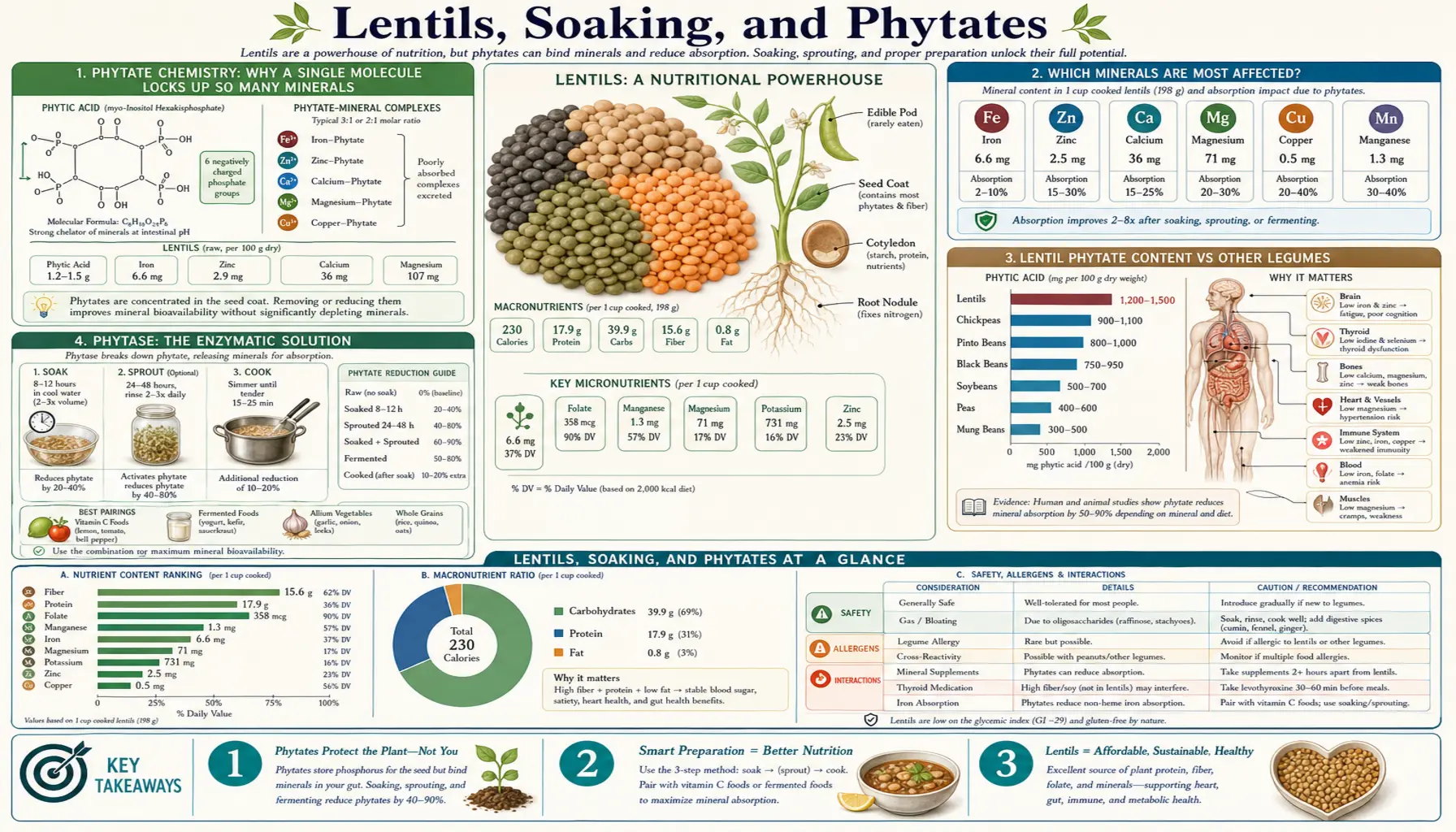
Phytic acid (inositol hexaphosphate, or IP6) is the dominant phosphorus-storage molecule in plant seeds, and it is the single most important antinutrient to understand for anyone eating a legume-heavy or grain-heavy diet. A 6-phosphate cluster around an inositol ring forms an extremely effective chelator that binds iron, zinc, calcium, magnesium, and copper in the gut lumen with such affinity that the bound minerals pass through largely unabsorbed. At typical dietary loads, phytate can reduce zinc absorption by 30-60% and iron absorption by 30-50%. The historical solution — and the cultural reason every traditional legume cuisine includes a soaking or fermentation step — is that phytic acid is enzymatically degradable by phytase, an enzyme activated by water-soaking, germination, sourdough fermentation, and pressure-cooking. Overnight soaking degrades roughly 30% of phytates; 3-day sprouting degrades 60-80%; combined soaking-and-sprouting plus cooking can degrade over 90%. This page covers the chemistry, the contrarian "phytic acid as antioxidant" literature, and the practical kitchen protocol for a legume-heavy diet that does not silently deplete minerals.
Table of Contents
- Phytate Chemistry: Why a Single Molecule Locks Up So Many Minerals
- Which Minerals Are Most Affected
- Lentil Phytate Content vs Other Legumes
- Phytase: the Enzymatic Solution
- Soaking: 30% Reduction
- Sprouting: 60-80% Reduction
- Sourdough and Bacterial Fermentation: >90%
- Pressure Cooking and Slow Cooking
- The Contrarian View: Phytate as Antioxidant and Anticancer Agent
- Beyond Phytates: Oligosaccharides, Lectins, Tannins
- Practical Kitchen Protocol
- Who Needs the Full Protocol vs Who Can Skip It
- Cautions
- Key Research Papers
- Connections
- Featured Videos
Phytate Chemistry: Why a Single Molecule Locks Up So Many Minerals
Phytic acid is the chemical name for myo-inositol 1,2,3,4,5,6-hexakisphosphate (InsP6 or IP6). The molecule has a six-carbon inositol ring with a phosphate group attached at each carbon — producing a structure with up to 12 negative charges at physiological pH that can simultaneously bind multiple positively charged metal cations.
In the developing plant seed, phytic acid serves as the storage form of phosphorus and chelated minerals; the seed mobilizes these stores during germination by activating phytase enzymes that cleave the phosphate groups, releasing phosphorus and freeing the bound minerals for the seedling. Mature, dry seeds (lentils, beans, grains, nuts) store roughly 60-90% of their total phosphorus as phytate, with the rest as inorganic phosphate or phosphoesters.
When eaten by an animal that lacks endogenous phytase — including humans, dogs, cats, pigs, and chickens (humans have minimal phytase in salivary glands and intestinal mucosa; ruminants have abundant phytase from rumen bacteria; monkeys have moderate phytase activity) — the phytate-mineral complex passes intact through the small intestine. The bound minerals are not absorbed and are excreted. The phosphate is largely unrecoverable as well, contributing to environmental phosphorus pollution from animal feedlot waste.
The mineral chelation is competitive, not absolute — small amounts of free iron, zinc, and calcium do escape phytate binding and are absorbed normally. But at typical dietary phytate loads of 500-1,500 mg/day (achievable with even moderate legume and whole grain intake), measurable reductions in mineral absorption are documented in controlled isotope-labeled absorption studies.
Which Minerals Are Most Affected
The magnitude of phytate inhibition varies by mineral due to differences in binding affinity and the existence of secondary regulatory mechanisms:
- Zinc (the most affected) — phytate has very high affinity for zinc. Phytate:zinc molar ratios above 15:1 reduce zinc absorption by 60% or more. WHO classifies populations with mean phytate:zinc ratio >18 as high-risk for zinc deficiency. In rural cereal-and-legume-based diets without traditional processing, the ratio commonly exceeds 25:1.
- Iron (highly affected, non-heme only) — phytate binds non-heme iron tightly and reduces absorption by 30-50% at typical legume dietary loads. Heme iron from meat is not affected because the iron remains in its porphyrin ring during absorption. The mitigation strategy — co-consuming vitamin C with the phytate-containing meal — is covered in detail on Plant Protein and Iron.
- Calcium (moderately affected) — calcium-phytate complexes are poorly soluble and reduce calcium absorption by approximately 15-30% at typical loads. This is rarely a significant clinical concern in adults with adequate calcium intake but can matter in growing children with marginal calcium intake.
- Magnesium (modestly affected) — phytate reduces magnesium absorption by 10-20%. Less clinically significant than zinc and iron effects.
- Copper (modestly affected) — similar magnitude to magnesium.
The Gibson et al. 2010 review in Food and Nutrition Bulletin is the standard reference for mineral bioavailability in plant-based diets, including extensive tables of phytate:mineral molar ratios for staple foods and the reductions in absorbed mineral that result.
Lentil Phytate Content vs Other Legumes
Phytate content of common legumes, per 100 g dry weight (varying by variety, growing conditions, and analytical method):
- Lentils: 270-1,500 mg phytate per 100 g dry — among the lower-phytate legumes
- Chickpeas: 280-1,600 mg per 100 g dry
- Black beans: 850-2,400 mg per 100 g dry
- Pinto beans: 600-2,400 mg per 100 g dry
- Kidney beans: 600-2,000 mg per 100 g dry
- Soybeans: 1,000-2,200 mg per 100 g dry — notably high
- Wheat bran: 2,100-4,800 mg per 100 g dry — the highest phytate food in common consumption
- Brazil nuts: 1,700-6,300 mg per 100 g dry
- Almonds: 1,300-3,500 mg per 100 g dry
Lentils sit toward the lower end of the legume phytate range, which is consistent with the observation that traditional cuisines often skip the long-soak step for lentils (which would be required for beans). Red split lentils, in particular, have had the seed coat removed and have substantially less phytate than whole brown or green lentils.
Cooking water from soaked legumes contains a significant fraction of the leached phytate; discarding the soaking water (rather than cooking the legumes in it) is a simple step that removes 5-15% additional phytate without any additional time investment.
Phytase: the Enzymatic Solution
Phytase (myo-inositol hexakisphosphate phosphohydrolase) is the enzyme that cleaves phosphate groups from phytic acid, producing free inorganic phosphate and progressively lower-phosphate inositol derivatives (IP5, IP4, IP3, IP2, IP1, and finally free inositol). The lower-phosphate intermediates have progressively weaker mineral-binding affinity, with IP3 and below considered "non-inhibitory" for mineral absorption.
Sources of phytase:
- Endogenous plant phytase — present in the seed itself, dormant in dry storage but activated by water imbibition. Optimal activity at 45-55°C and pH 4.5-5.5. The most abundant phytase activity is found in wheat, rye, and barley; lentils have moderate endogenous phytase; oats have surprisingly low phytase despite high phytate.
- Microbial phytase — produced by lactobacilli and yeasts during sourdough fermentation, by Aspergillus during koji fermentation (the basis of miso and tempeh), and by gut bacteria in ruminant guts and to a limited extent in the human large intestine.
- Exogenous commercial phytase — produced industrially from Aspergillus or genetically engineered organisms and added to animal feed (since the 1990s) to reduce phosphorus pollution from feedlot waste and improve mineral availability for the animals. Available as a human supplement for some patients with documented mineral deficiency on plant-based diets.
Both temperature and pH matter for phytase activation. The endogenous plant phytase in lentils is most active at warm room temperatures during soaking (warm-water soaking outperforms cold-water soaking by a factor of about 1.5-2.0). Acidic soaking water (a tablespoon of lemon juice or whey added per quart of water) further activates phytase. Pressure cooking at high temperature briefly inactivates phytase early but extracts more phytate into the cooking liquid, producing a net reduction that exceeds simple boiling.
Soaking: 30% Reduction
Soaking is the simplest phytate-reduction technique and the only one that fits comfortably into busy modern weeknight cooking. The standard protocol:
- Rinse 1 cup of dry lentils to remove dust and grit.
- Cover with 3-4 cups of warm (not hot) water, ideally around 35-40°C (around 100°F). Optional: add 1 tablespoon of lemon juice or 1 tablespoon of whey to acidify the water and activate phytase more effectively.
- Soak for 8-12 hours (overnight is convenient).
- Discard the soaking water — do not cook in it. The phytate that leached out is in the soaking water.
- Rinse the soaked lentils with fresh water.
- Cook in fresh water as usual (typically 15-20 minutes for soaked red lentils, 20-25 minutes for soaked brown or green lentils).
Effect: approximately 25-35% reduction in total phytate content versus unsoaked lentils. Most of the reduction comes from leaching into the soaking water; some comes from endogenous phytase activation during the soak.
Practical note: lentils, unlike beans, cook quickly enough without soaking that the soak step is often skipped in modern recipes. If you eat lentils once a week or less, this skip is fine — the antinutrient load is below the threshold for significant mineral depletion in an otherwise mineral-adequate diet. If you eat lentils 4+ times per week or rely on them as primary protein source, the soaking step is worth the modest planning ahead.
Sprouting: 60-80% Reduction
Sprouting (also called germination) activates the seed's own metabolism, including a several-fold upregulation of phytase activity. The seed essentially digests its own phytate to mobilize phosphorus and minerals for the seedling. The protocol:
- Soak 1 cup of whole (not split) lentils overnight as in the soaking protocol.
- Drain the soaking water and transfer the lentils to a sprouting jar, sprouting tray, or simply a colander.
- Rinse 2-3 times per day with fresh water and drain thoroughly. Keep at room temperature, out of direct sunlight, with airflow.
- Visible sprouts (small white tails) emerge within 24-48 hours. Continue rinsing for 2-4 days total until sprout tails are about the length of the seed itself.
- Refrigerate to halt growth. Use within 5-7 days.
Effect: approximately 60-80% reduction in phytate, depending on sprout duration. Egli et al. 2002 in the Journal of Food Science documented phytate reductions of 70-85% over 3-4 days of germination in lentils.
Bonus effects of sprouting:
- Vitamin C content increases (from near zero in dry seeds to 10-15 mg per cup of sprouts)
- Folate content increases by 50-100%
- Bioavailability of B vitamins improves
- Oligosaccharides (raffinose, stachyose — the gas-producing carbohydrates) decrease significantly
- Lectins decrease
- The lentils become tender enough to eat raw in salads or sandwiches, eliminating cook-time entirely
Caveat: sprouted seeds eaten raw carry a small risk of pathogen contamination (E. coli O157:H7, Salmonella, Listeria) particularly if hygiene during sprouting is poor. Several outbreaks have been traced to commercially sprouted seeds. Light cooking (a brief steam or stir-fry) eliminates this risk while preserving most of the antinutrient-reduction benefits.
Sourdough and Bacterial Fermentation: >90%
Lactic acid fermentation by lactobacilli is the single most effective phytate-reduction technique. Lactobacilli produce both their own phytases and an acidic environment (pH 4-5) that activates plant phytases optimally. The traditional applications:
- Sourdough bread — the canonical example. A 12-24 hour sourdough fermentation can degrade 90%+ of the phytate in whole wheat flour, which is why traditional sourdough is so different nutritionally from commercial yeasted whole-grain bread. The Lopez et al. 2002 review documented near-complete phytate degradation in well-fermented sourdough.
- Idli and dosa — South Indian fermented lentil-and-rice batters. Overnight fermentation by wild lactobacilli reduces phytate dramatically and improves protein digestibility.
- Tempeh — Indonesian fermented soybeans (Rhizopus mold) reduce soybean phytate by approximately 70-80%.
- Miso and natto — Japanese fermented soybeans similarly reduce phytate.
- Injera — Ethiopian teff-based sourdough flatbread, similar mechanism.
- Sauerkraut and kimchi — primarily vegetable rather than legume, but the same lactobacilli mechanism produces parallel benefits for the vegetable mineral profile.
For lentils specifically, deliberate fermentation is not widely practiced in Western kitchens but can be done by combining cooked lentils with sauerkraut juice or whey starter and letting them ferment at room temperature for 24-48 hours — producing a tangy, probiotic-rich condiment.
Pressure Cooking and Slow Cooking
Modern cooking technologies provide partial phytate reduction without the long lead time of soaking or sprouting:
- Pressure cooking — at 120°C and 15 PSI, pressure cooking dry lentils for 10-15 minutes (without pre-soaking) produces phytate reductions of approximately 30-50%. The combination of high temperature and high pressure extracts phytate into the cooking liquid and partially hydrolyzes the phytate-mineral complexes. Discarding the cooking liquid (not always practical for lentil soup) further reduces phytate exposure.
- Slow cooking (Crock-Pot / slow cooker) — long slow cooking at 70-90°C for 6-8 hours produces modest phytate reduction (20-30%), comparable to overnight soaking. The lower temperature avoids inactivating endogenous phytase early in the cook.
- Soak-and-pressure-cook combination — the most practical kitchen approach. Soak overnight (30% reduction), discard soaking water, pressure cook (additional 20-30%), discard cooking liquid if recipe allows. Total: 50-60% phytate reduction without the multi-day sprouting investment.
For maximum phytate reduction without the sprouting effort: soak overnight in warm acidified water, discard soak water, pressure cook in fresh water with optional lemon juice, and discard cooking water if making a non-soup dish.
The Contrarian View: Phytate as Antioxidant and Anticancer Agent
The "phytate as antinutrient" framing is the dominant clinical perspective and is well-supported by mineral absorption data. But a parallel body of research, beginning with Ernst Graf's 1987 Journal of Biological Chemistry paper "Phytic acid: a natural antioxidant," has documented that phytate also has beneficial functions:
- Iron chelation antioxidant effect — the same chelation property that reduces iron absorption in the gut also chelates excess iron in the body, preventing iron-catalyzed Fenton reactions that generate hydroxyl radicals. In conditions of iron overload (hemochromatosis, transfusion-dependent thalassemia), this is potentially protective.
- Colorectal cancer chemoprevention — in vitro and animal studies have shown that IP6 inhibits proliferation of colorectal cancer cell lines and reduces colon tumor incidence in chemically-induced rodent models. Epidemiologic studies link legume and whole-grain intake to reduced colorectal cancer incidence, though it is difficult to isolate phytate from fiber and other phytochemicals.
- Kidney stone prevention — calcium oxalate stone formation depends on calcium crystallization in urine. Phytate (which is partially absorbed and excreted in urine) inhibits calcium crystallization. Several observational studies link higher phytate intake to lower kidney stone incidence.
- Diabetic cataract prevention — the same antioxidant property may slow lens protein glycation in animal models of diabetic cataract.
The Schlemmer et al. 2009 review in Molecular Nutrition & Food Research is the standard reference for the dual-role view of phytate — antinutrient at high doses in mineral-marginal populations, possible chemoprotective agent at typical Western dietary levels.
The practical synthesis is roughly: in populations with marginal mineral intake (much of South Asia, sub-Saharan Africa, infants and young children worldwide), phytate reduction matters a great deal and traditional preparation methods are essential. In well-nourished Western adults eating mixed diets with adequate animal protein or fortified foods, phytate exposure is rarely high enough to cause clinical mineral deficiency and may provide modest chemoprotective benefits. The kitchen-prep effort should be proportionate to the dietary reliance on legumes and grains.
Beyond Phytates: Oligosaccharides, Lectins, Tannins
Phytate is the most consequential antinutrient in lentils, but several others are worth understanding:
- Raffinose, stachyose, and verbascose (alpha-galactosides) — these short-chain carbohydrates pass undigested through the small intestine because humans lack the alpha-galactosidase enzyme to break their alpha-1,6 glycosidic bonds. In the colon, they ferment rapidly to produce hydrogen and methane gas (the source of the "musical fruit" reputation of legumes). Soaking with frequent water changes removes a significant fraction (these sugars are water-soluble); sprouting reduces them further; the supplemental enzyme Beano (alpha-galactosidase) hydrolyzes them in the gut before colonic fermentation.
- Lectins — carbohydrate-binding proteins found in many plant seeds. Raw lentils contain modest lectins; raw red kidney beans contain large quantities of phytohaemagglutinin which is acutely toxic and the reason raw or undercooked kidney beans can cause severe gastroenteritis. Cooking destroys lectins reliably — any properly cooked legume has negligible residual lectin activity. The "lectins are dangerous" framing of the Plant Paradox literature is largely inapplicable to cooked legumes; it remains a relevant concern for raw or undercooked beans.
- Tannins (condensed proanthocyanidins) — concentrated in the seed coat of darker lentil varieties (brown, black, French green). Tannins reduce non-heme iron absorption (as discussed on Plant Protein and Iron) but also contribute polyphenol antioxidant activity. Red split lentils have minimal tannin because the seed coat has been removed.
- Saponins — foam-producing glycosides present in modest amounts in lentils (more so in chickpeas and soybeans). Once viewed as antinutrients, saponins are now appreciated for cholesterol-binding and possible anticancer effects in the gut. The foam that appears on the surface of cooking legume water is partly saponins; skimming is cosmetic, not necessary.
Practical Kitchen Protocol
A pragmatic protocol that balances effort against benefit:
- Occasional lentil eaters (1-2 servings per week) — no special prep needed. Rinse to remove debris, cook as usual. The antinutrient load at this intake frequency is below the threshold for clinical concern in adults with otherwise adequate diet.
- Regular lentil eaters (3-5 servings per week) — overnight soak in warm acidified water (lemon juice or whey added), discard soak water, cook in fresh water. Approximately 30% phytate reduction with minimal extra effort. Pair lentil meals with vitamin C source (tomato, citrus, bell pepper) to enhance iron absorption.
- Heavy lentil/legume eaters (daily, primary protein source) — alternate between two preparation streams:
- Quick weeknight: soaked-then-pressure-cooked lentils (50-60% phytate reduction)
- Weekend batch: sprouted lentils made over 2-3 days, refrigerated for use across the week (70-85% phytate reduction). Use sprouted lentils raw in salads, lightly steamed in grain bowls, or cooked normally.
- Infants and young children — full soaking-and-sprouting protocol matters here, because growing children have higher mineral requirements per kg body weight and less reserve capacity to absorb the mineral hit from a phytate-heavy meal. WHO complementary feeding guidance for low-income settings emphasizes traditional preparation methods specifically for this reason.
- Vegetarian/vegan diets — full protocol matters more because there is no animal-source heme iron or readily available zinc to compensate for phytate-reduced absorption. Vegetarians eating sprouted/sourdough/fermented legumes plus vitamin C with meals can achieve mineral status equivalent to omnivores.
Who Needs the Full Protocol vs Who Can Skip It
The phytate-mitigation effort should be proportionate to baseline risk for mineral deficiency. Categories that benefit most:
- Pregnant and lactating women — iron, zinc, and calcium requirements are dramatically elevated, and any mineral absorption reduction matters more.
- Infants and toddlers — growth is rapid, iron and zinc requirements per kg are high, and mineral reserves are minimal.
- Adolescents (especially menstruating girls) — growth plus menstrual iron losses create elevated requirements.
- Strict vegans — no animal-source heme iron compensation; zinc bioavailability from plants is intrinsically lower than from animal sources.
- Patients with malabsorption (IBD, celiac, bariatric surgery) — baseline absorption is impaired; any additional inhibition is more consequential.
- Patients with documented iron or zinc deficiency — obviously, baseline is already inadequate.
- Athletes with high iron requirements (endurance, particularly women) — iron losses through sweat and exercise-induced hemolysis are elevated.
Categories that can largely skip the protocol:
- Well-nourished omnivorous adults eating legumes 1-3 times per week
- Adults with iron overload (hemochromatosis) — phytate's iron chelation may actually be helpful
- Adults with kidney stones (calcium oxalate) — phytate may provide modest stone prevention
The default recommendation is: at minimum, rinse and soak overnight (low effort, modest benefit); for daily legume eaters and high-risk categories, invest in the sprouting or fermentation protocol.
Cautions
- Sprouted seeds and foodborne illness — sprouts are a documented vector for E. coli O157:H7, Salmonella, and Listeria. Commercial sprouts are responsible for over 40 documented outbreaks since 1990. Use clean sprouting equipment, rinse 2-3 times daily, refrigerate promptly, and discard any sprouts that smell off or develop visible mold. Light cooking eliminates the pathogen risk while preserving most antinutrient-reduction benefits.
- Raw legume gastroenteritis — raw or undercooked legumes (especially kidney beans and undercooked tempeh) can cause severe nausea, vomiting, and diarrhea due to lectins, particularly phytohaemagglutinin. Lentils have lower lectin content than kidney beans but should still be cooked before consumption (sprouted lentils are an exception — the germination process degrades the lectins).
- Hyperhomocysteinemia in MTHFR variants on high-phytate diets — the combination of phytate-reduced zinc absorption (zinc is a cofactor for several methylation enzymes) plus MTHFR polymorphism can compound homocysteine elevation. Folate and B12 status assessment is warranted; see Folate and Pregnancy.
- Iron-overload conditions reversed concern — for the 1 in 200-400 of Northern European ancestry homozygous for HFE C282Y (hereditary hemochromatosis), the standard "mitigate phytate to improve iron absorption" advice is reversed. These patients benefit from phytate-rich foods and should avoid vitamin C with high-iron meals.
- Acute kidney injury / advanced CKD — the phosphate liberated from phytate hydrolysis during digestion adds to dietary phosphorus load. Patients with stage 4-5 CKD on phosphorus restriction should discuss legume intake with their renal dietitian.
- Sprouting equipment contamination — mason-jar sprouting setups must be cleaned with hot soapy water between batches and ideally sanitized with food-grade hydrogen peroxide or vinegar solution. Cross-contamination from previous batches can establish persistent bacterial reservoirs.
Key Research Papers
- Reddy NR, Sathe SK (2002). Food Phytates. CRC Press — comprehensive monograph on phytate chemistry, distribution, and effects. — PubMed
- Gibson RS, Bailey KB, Gibbs M, Ferguson EL (2010). A review of phytate, iron, zinc, and calcium concentrations in plant-based complementary foods used in low-income countries and implications for bioavailability. Food and Nutrition Bulletin, 31(2 Suppl):S134-146. — PubMed
- Egli I et al. (2002). The influence of soaking and germination on the phytase activity and phytic acid content of grains and seeds potentially useful for complementary feeding. Journal of Food Science, 67(9):3484-3488. — PubMed
- Lopez HW, Leenhardt F, Coudray C, Remesy C (2002). Minerals and phytic acid interactions: is it a real problem for human nutrition? International Journal of Food Science and Technology, 37(7):727-739. — PubMed
- Schlemmer U, Frolich W, Prieto RM, Grases F (2009). Phytate in foods and significance for humans: food sources, intake, processing, bioavailability, protective role and analysis. Molecular Nutrition & Food Research, 53(S2):S330-S375. — PubMed
- Hurrell RF (2003). Influence of vegetable protein sources on trace element and mineral bioavailability. Journal of Nutrition, 133(9):2973S-2977S. — PubMed
- Sandberg AS (2002). Bioavailability of minerals in legumes. British Journal of Nutrition, 88(S3):S281-S285. — PubMed
- Greiner R, Konietzny U (2006). Phytase for food application. Food Technology and Biotechnology, 44(2):125-140. — PubMed
- Kumar V et al. (2010). Dietary roles of phytate and phytase in human nutrition: A review. Food Chemistry, 120(4):945-959. — PubMed
- Graf E, Empson KL, Eaton JW (1987). Phytic acid: a natural antioxidant. Journal of Biological Chemistry, 262(24):11647-11650. — PubMed
- Vucenik I, Shamsuddin AM (2003). Cancer inhibition by inositol hexaphosphate (IP6) and inositol: from laboratory to clinic. Journal of Nutrition, 133(11):3778S-3784S. — PubMed
- Grases F, Costa-Bauza A (2019). Key aspects of myo-inositol hexaphosphate (phytate) and pathological calcifications. Molecules, 24(24):4502. — PubMed
PubMed Topic Searches
- PubMed: Phytic acid and mineral bioavailability
- PubMed: Soaking, germination, and phytate
- PubMed: Sourdough fermentation and phytate
- PubMed: IP6 cancer chemoprevention
- PubMed: Legume oligosaccharides and gas
Connections
- All Food
- Lentils (Main Page)
- Lentils Benefits Hub
- Lentils for Plant Protein and Iron
- Lentils for Cholesterol
- Lentils for Folate
- Zinc
- Iron
- Calcium
- Magnesium
- Iron Deficiency Anemia
- Beans
- Chickpeas
- Oats
- Fermentation
- Sourdough