Entamoeba histolytica Symptoms
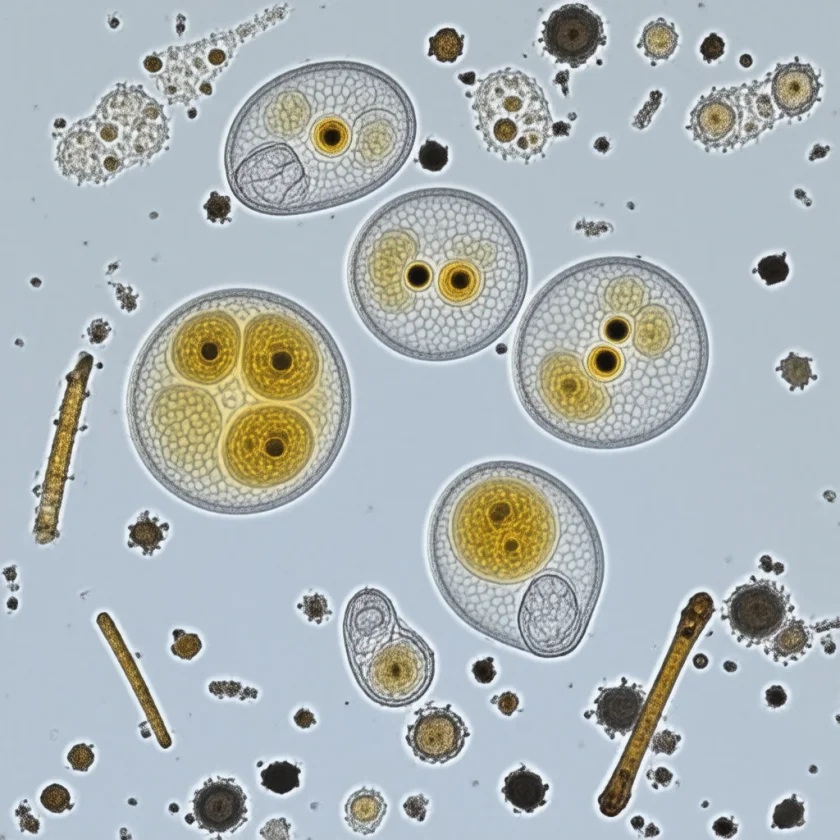
Table of Contents
1. What Is Entamoeba histolytica?
Entamoeba histolytica is a microscopic, single-celled protozoan parasite and the sole cause of amoebiasis — a spectrum of illness ranging from silent intestinal carriage to life-threatening dysentery and organ abscesses. The species name is apt: histolytica means "tissue-dissolving," capturing the parasite's defining ability to breach and invade the gut wall and distant organs. Humans are its principal reservoir; infection is acquired by swallowing hardy cysts shed in contaminated feces.
The parasite lives in two forms. The cyst is the dormant, tough-walled, four-nucleate form that survives for weeks to months in water, moist soil, and food, resists chlorination at standard water-treatment concentrations, and passes intact through stomach acid to excyst in the small intestine. The trophozoite is the active, motile, feeding form that colonizes the large intestine. In most people the trophozoites remain confined to the gut lumen and produce no symptoms; in a minority they penetrate the intestinal wall and trigger invasive disease.
E. histolytica was classified as a protozoan parasite in the Amoebozoa group. It belongs to the genus Entamoeba, which contains multiple species, most of them harmless commensals. Understanding which species is actually present in a patient's stool is central to clinical management — a point developed fully in the next section.
2. E. histolytica vs. E. dispar — A Critical Distinction
The single most important practical fact about amoebiasis diagnosis is that Entamoeba histolytica has a morphologically indistinguishable harmless twin: Entamoeba dispar. Under a light microscope the two species look identical at every life-cycle stage. Yet only E. histolytica invades tissue; E. dispar is an entirely benign commensal that never causes disease and never requires treatment.
E. dispar is far more common — estimates suggest a ratio of roughly 10:1 (dispar to histolytica) among people colonized with morphologically identical "amebae." For most of the twentieth century the two were classified as a single species, which led to massive overestimation of true invasive amoebiasis burden and unnecessary treatment of millions of people carrying only the benign species. The WHO formally recognized them as separate species in the 1990s following molecular and biochemical work by David Mirelman, Adolfo Martínez-Palomo, and colleagues.
A third species, Entamoeba moshkovskii, is also morphologically identical and is increasingly recognized as a human colonizer, particularly in children in developing countries; its pathogenic potential, if any, remains under investigation. Standard stool microscopy cannot distinguish any of these three species. Only PCR, stool antigen testing targeting species-specific proteins, or isoenzyme analysis can reliably differentiate them. The clinical and public-health implication is direct: a positive stool microscopy report for "E. histolytica" or "ameba cysts" does not by itself indicate true infection requiring treatment.
3. How Amoebiasis Spreads
Amoebiasis is transmitted exclusively by the fecal-oral route. Cysts shed in the stool of an infected person — symptomatic or asymptomatic — are the source of infection for others. The trophozoite form does not survive outside the body and is not responsible for transmission.
- Contaminated drinking water. Cysts resist the chlorine concentrations used in routine municipal water treatment but are killed by boiling, UV irradiation, or filtration through membranes fine enough to trap protozoan cysts (<1 µm). In endemic regions, inadequately treated surface water is the dominant vehicle.
- Contaminated food. Raw vegetables and fruit grown in or washed with contaminated water, or handled by infected food workers, can carry viable cysts. Cysts survive refrigerator temperatures and persist for days on surfaces.
- Person-to-person contact. Direct transmission through fecal contamination of hands is an important route in institutional settings (childcare, residential facilities) and through certain sexual practices. Men who have sex with men (MSM) are a recognized risk group, particularly in urban settings, due to oral-anal contact.
- Environmental persistence. Cysts survive for weeks in moist environments and months in cool water, enabling point-source outbreaks from a single contaminated water supply.
4. Who Is at Risk?
Amoebiasis is strongly linked to socioeconomic determinants of sanitation and water access. The highest burden falls on populations in South Asia, sub-Saharan Africa, and Central and South America where these infrastructures are limited. Within any population, certain groups face elevated risk:
- Travelers to and residents of endemic regions. Travelers from high-income countries who visit endemic areas and consume local water or raw produce are at significant risk of acquiring intestinal carriage; a proportion develop symptomatic disease.
- Immunocompromised individuals. People living with HIV/AIDS, organ transplant recipients, and those on high-dose corticosteroids face heightened risk of invasive and severe amoebiasis. Corticosteroids in particular can convert asymptomatic colonization to fulminant colitis by impairing host defense.
- Young children and pregnant women. Severe disease disproportionately affects young children in endemic settings. Pregnancy may increase susceptibility to dissemination.
- MSM communities. Sexual transmission is well-documented; periodic outbreaks in urban MSM networks have been reported in Japan, Taiwan, and Western Europe.
- Institutionalized persons. Close contact and shared facilities in prisons, psychiatric institutions, and refugee camps facilitate cyst spread.
- Malnourished individuals. Malnutrition impairs intestinal mucosal defense and is associated with progression from colonization to invasive disease.
5. The Clinical Spectrum
One of the most striking features of E. histolytica infection is the enormous range of clinical outcomes. The majority of people infected — estimates vary but often place the figure at roughly 90% — remain entirely asymptomatic even though they harbor and shed the parasite. This silent carriage is not benign from a public-health perspective: these individuals continue to shed cysts and may develop invasive disease at any point.
When disease does occur, it falls into two broad anatomical categories that can occur independently or together:
- Intestinal amoebiasis — the parasite invades the bowel wall, producing amebic colitis ranging from mild diarrhea to fulminant dysentery with hemorrhage and perforation.
- Extraintestinal amoebiasis — trophozoites reach the bloodstream and seed distant organs, most commonly the liver (amebic liver abscess), rarely the lungs, brain, or skin.
The two forms are not mutually exclusive, but the clinical presentations are often distinct enough that a clinician seeing a patient with fever and right upper quadrant pain — without diarrhea — may not initially suspect amoebiasis until serology and imaging reveal the diagnosis.
6. Intestinal Disease
Intestinal amoebiasis encompasses a range of severity. At the mild end, some patients notice only loose stools or mild cramping that resolves spontaneously. At the severe end, fulminant amebic colitis carries a mortality rate exceeding 40% without prompt aggressive treatment.
Amebic colitis — typical presentation:
- Incubation period of 2 to 4 weeks from ingestion of cysts (though latency of months to years before symptomatic invasion has been documented).
- Gradual onset — unlike the abrupt start of most bacterial dysenteries.
- Bloody, mucus-containing diarrhea (amebic dysentery) — the hallmark of mucosal invasion.
- Lower abdominal cramping and tenesmus (painful urge to defecate with little or no stool produced).
- Low-grade fever; high fever suggests complicated or superinfected disease.
- Right-sided abdominal tenderness, reflecting the cecum and ascending colon predilection.
- Absence of peripheral eosinophilia — a key distinguishing feature from helminthic (worm) infections, which characteristically raise eosinophil counts.
Endoscopic and pathological features: The characteristic lesion is the flask-shaped ulcer — a discrete mucosal breach that is narrow at the lumen surface and widens in the submucosa as trophozoites spread laterally. Skip lesions (areas of normal mucosa between ulcers) are typical. The intervening mucosa looks normal or only mildly inflamed, in contrast to the continuous inflammation of inflammatory bowel disease — a distinction that matters because misdiagnosis as IBD and treatment with corticosteroids can precipitate fulminant amebic colitis.
Complications of intestinal amoebiasis:
- Fulminant colitis / toxic megacolon: extensive transmural necrosis with colonic dilatation; mortality >40%.
- Perforation: peritonitis from penetration through all bowel layers.
- Amoeboma: a granulomatous inflammatory mass, most often in the cecum or sigmoid, that can mimic carcinoma on imaging.
- Fistula formation: rare cutaneous or perianal fistulae.
7. Extraintestinal Disease
When trophozoites breach the intestinal mucosa and reach mesenteric venules, they travel via the portal circulation to the liver, where they can establish an amebic liver abscess (ALA) — the most common extraintestinal manifestation. A minority disseminate further.
- Amebic liver abscess: typically presents as fever (38–40°C), right upper quadrant pain (sometimes referred to the right shoulder), and an enlarged, tender liver. Importantly, up to 70% of ALA patients have no concurrent diarrhea and may not recall any bowel symptoms. The abscess is classically single, large, and in the right lobe (reflecting portal drainage from the cecum). Contents are the characteristic "anchovy paste" — chocolate-brown, odorless necrotic material — that distinguishes ALA from pyogenic bacterial abscess.
- Pleuropulmonary amoebiasis: rupture of a right-lobe abscess into the right pleural space produces empyema or hepatobronchial fistula. Left-lobe abscesses may rupture into the pericardium — the most immediately life-threatening complication of amoebiasis.
- Cerebral amoebiasis: rare hematogenous seeding to the brain; presents as rapidly progressive space-occupying lesion with very high mortality.
- Cutaneous and genitourinary amoebiasis: perianal skin lesions, or perineal/genital fistulae can develop when trophozoites extend from perforated bowel or from skin contact with contaminated material.
Male sex, alcohol use, and malnutrition are independently associated with progression to ALA. The mechanism likely involves impairment of hepatic macrophage (Kupffer cell) clearance of blood-borne trophozoites.
8. Global Burden
E. histolytica is ranked as the fifth most common cause of death from a parasitic infection worldwide, after malaria, schistosomiasis, leishmaniasis, and Chagas disease. Published estimates attribute approximately 50 million cases of invasive amoebiasis and 40,000–100,000 deaths annually to the parasite, with most fatalities occurring in South Asia, sub-Saharan Africa, and parts of Latin America where poverty and inadequate sanitation concentrate risk.
The true burden is difficult to measure precisely because:
- Routine stool microscopy — the most widely used diagnostic method in endemic settings — cannot distinguish E. histolytica from the harmless E. dispar, leading to systematic overcount of true cases.
- Conversely, asymptomatic cases and those treated empirically without species confirmation are underreported.
- Death-certificate attribution in resource-limited settings is unreliable.
Decades of research have failed to produce a licensed vaccine. Control therefore depends on the same infrastructure improvements — clean water, sanitation, and hand hygiene — that reduce the burden of all fecal-oral pathogens. Targeted treatment of asymptomatic true E. histolytica carriers in non-endemic settings helps interrupt transmission chains.
Key Research Papers
Peer-reviewed literature on the epidemiology, pathogenesis, and clinical spectrum of Entamoeba histolytica infection.
- Haque R et al. Amebiasis. N Engl J Med. — Search PubMed
- Shirley DT et al. A Review of the Global Burden, New Diagnostics, and Current Therapeutics for Amebiasis. Open Forum Infect Dis. — Search PubMed
- Petri WA Jr et al. Enteric infection, dehydration and the gut microbiome. Sci Transl Med. — Search PubMed
- Moonah SN et al. Amebiasis pathogenesis. PLoS Pathog. — Search PubMed
- Bercu TE et al. Amebic colitis — new insights into pathogenesis and treatment. Curr Gastroenterol Rep. — Search PubMed
- Espinosa-Cantellano M, Martínez-Palomo A. Pathogenesis of intestinal amebiasis. Clin Microbiol Rev. — Search PubMed
- Blessmann J et al. Epidemiology, diagnosis and treatment of liver abscess. Clin Microbiol Infect. — Search PubMed
- Fotedar R et al. Laboratory diagnostic techniques for Entamoeba species. Clin Microbiol Rev. — Search PubMed
- Shirley DT, Watanabe K, Moonah S. Significance of amebiasis. PLoS Negl Trop Dis. — Search PubMed
- Marie C, Petri WA Jr. Regulation of virulence of E. histolytica. Annu Rev Microbiol. — Search PubMed