Microscopic Colitis
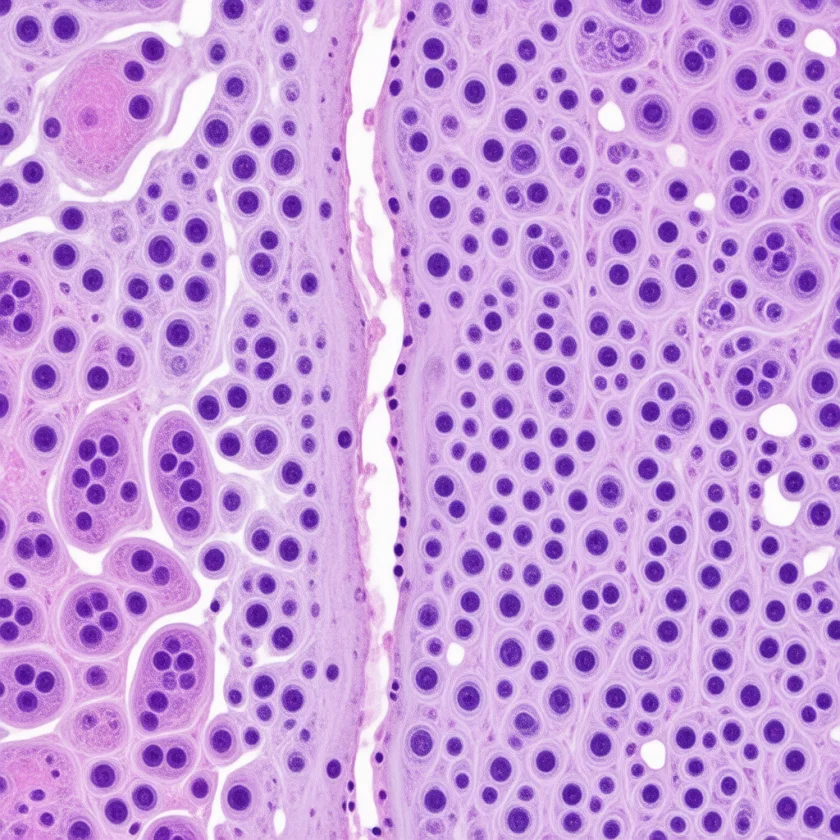
Microscopic colitis (MC) is a chronic inflammatory bowel disease that causes chronic, watery, non-bloody diarrhea while the colon looks normal or almost normal at colonoscopy; the diagnosis is made by examining biopsies under a microscope. The 2021 European guideline from United European Gastroenterology and the European Microscopic Colitis Group puts the pooled prevalence at 119 per 100,000 people and finds microscopic colitis in 12.8% of patients with unexplained chronic watery diarrhea. Women and people over 60 are affected most often, and the symptoms overlap with diarrhea-predominant irritable bowel syndrome.
- Overview
- Epidemiology
- Pathophysiology
- Drug Associations
- Clinical Presentation
- Diagnosis
- Treatment
- Prognosis and Disease Course
- Key Research Papers
- Connections
Overview
Microscopic colitis is a chronic inflammatory bowel disease in which the colon looks normal or almost normal at colonoscopy while biopsies show distinct abnormalities. The 2021 European guideline from United European Gastroenterology and the European Microscopic Colitis Group (UEG/EMCG) describes three histological subtypes: collagenous colitis (CC), lymphocytic colitis (LC) and incomplete microscopic colitis.
The guideline's histological criteria are a thickened subepithelial collagen band of 10 micrometers or more with an increased inflammatory infiltrate in the lamina propria for collagenous colitis, and 20 or more intraepithelial lymphocytes per 100 surface epithelial cells with an increased lamina propria infiltrate and no significantly thickened collagen band for lymphocytic colitis. Incomplete forms are defined by a band thicker than 5 but thinner than 10 micrometers, or by more than 10 but fewer than 20 intraepithelial lymphocytes.
The guideline describes the most common symptom as chronic, watery, non-bloody diarrhea, often with fecal urgency, nocturnal stools and fecal incontinence. Because the symptoms and the endoscopic appearance overlap with diarrhea-predominant irritable bowel syndrome, the guideline states that microscopic colitis should be ruled out in people who meet the criteria for a functional bowel disorder, especially when risk factors are present or IBS treatment has not worked; two meta-analyses it cites found microscopic colitis in 9% of patients with diarrhea-predominant functional disorders.
Epidemiology
The UEG/EMCG guideline gives a pooled incidence of 11.4 cases per 100,000 person-years and a pooled prevalence of 119 per 100,000 people (50.1 per 100,000 for collagenous and 61.7 per 100,000 for lymphocytic colitis). In patients with unexplained chronic watery diarrhea, the pooled frequency of microscopic colitis was 12.8%.
A 2015 meta-analysis of 25 studies (Tong and colleagues) found pooled incidence rates of 4.14 per 100,000 person-years for collagenous colitis and 4.85 for lymphocytic colitis. Incidence rose steadily before 2000 and has since been stable in the United States, Sweden and Spain. The female-to-male incidence rate ratio was 3.05 for collagenous and 1.92 for lymphocytic colitis, and the median age at diagnosis was 64.9 years for collagenous and 62.2 years for lymphocytic colitis; incidence increased with age. In the three largest studies reviewed by the European guideline, about 72% of patients were women, and people over 65 had a 5.25 times higher probability of microscopic colitis.
Smoking: the guideline states that former and especially current smoking is associated with a higher risk of both subtypes. In the meta-analysis it cites, current smokers had an odds ratio of 2.99 compared with never smokers, and former smokers 1.6. It found insufficient evidence on whether stopping smoking changes the disease course.
Associated conditions: in a Swedish multicenter study of 116 patients with collagenous colitis (Vigren and colleagues, 2013), 30.2% had one or more autoimmune disorders, most often celiac disease (12.9%) and autoimmune thyroid disease (10.3%), followed by Sjögren's syndrome (3.4%) and diabetes mellitus (1.7%). For celiac disease, the European guideline cites one large prospective study with celiac disease in 3.3% of patients with microscopic colitis versus 0.4% of controls, and rates of 2% to 4% in large cohort studies, lower than older case series had reported. It also states that developing microscopic colitis was not associated with gluten intake.
Pathophysiology
The UEG/EMCG guideline states that the cause of microscopic colitis is complex and multifactorial and may include luminal factors, immune dysregulation and genetic predisposition, and that the mechanisms are poorly understood, with scarce evidence.
In collagenous colitis, the guideline describes the thickened subepithelial collagen band as often having an irregular deeper edge that may contain trapped capillaries, red blood cells and inflammatory cells. The surface epithelium shows focal damage, including detachment from the basement membrane, and the lamina propria carries a mild to moderate infiltrate dominated by plasma cells and lymphocytes, with eosinophils and mast cells. In lymphocytic colitis, the defining feature is the raised count of intraepithelial lymphocytes in the surface epithelium.
Factors studied in relation to the disease include:
- Medicines — proton pump inhibitors (PPIs), nonsteroidal anti-inflammatory drugs (NSAIDs) and selective serotonin reuptake inhibitors (SSRIs) are associated with microscopic colitis in case-control studies (see Drug Associations below). The authors of a UK case-control study proposed that dysbiosis related to acid suppression may contribute to the PPI association, possibly made worse by NSAID side effects; this is their hypothesis, not a demonstrated mechanism.
- Bile acids — the European guideline reports that active collagenous colitis was associated with reduced reabsorption of bile acids in the ileum, and that this normalized as disease activity settled. Whether the bile acid diarrhea is a consequence of the inflammation or a coexisting condition remains open. A 2024 meta-analysis (Tome and colleagues) found bile acid malabsorption in a pooled 34% of 1,011 patients tested.
- Smoking — associated with a higher risk of both subtypes (see Epidemiology).
Drug Associations
The UEG/EMCG guideline states that chronic or frequent use of PPIs, NSAIDs or SSRIs is associated with an increased risk of microscopic colitis, and adds that this does not imply a causal relationship. In its pooled analysis of retrospective case-control studies, the odds ratio was 2.95 for PPI use (4.69 for continuous use over 4 to 12 months), 2.40 for NSAIDs and 2.98 for SSRIs. The guideline notes that the studies used different definitions of drug exposure and lacked data on symptoms after withdrawal or re-exposure, which limits conclusions about causality.
Individual studies, all case-control designs:
- Danish nationwide case-control study (Bonderup and colleagues, 2018) — 10,652 histologically confirmed cases. Current PPI use was strongly associated with collagenous colitis (adjusted odds ratio 6.98) and lymphocytic colitis (3.95). The association was seen with all PPIs and was strongest for current lansoprazole use (15.74 for collagenous and 6.87 for lymphocytic colitis). Odds ratios were highest for current use and lower for recent or past use, with no clear dose-response pattern.
- Dutch nested case-control study (Masclee and colleagues, 2015) — 218 cases from a primary-care database. Compared with community controls, current use of PPIs, NSAIDs, SSRIs, low-dose aspirin, ACE inhibitors and beta-blockers was associated with a higher risk, with odds ratios from 2.5 (ACE inhibitors) to 7.3 (PPIs). After accounting for diagnostic delay, only NSAIDs, PPIs, low-dose aspirin and ACE inhibitors remained associated; compared with colonoscopy-negative controls, only PPIs (odds ratio 10.6) and NSAIDs (5.6) did. The authors concluded that the other associations are probably explained by drugs worsening diarrhea rather than raising the risk of the disease itself.
- UK case-control study (Verhaegh and colleagues, 2016) — 1,211 cases and 6,041 controls. Current use of NSAIDs (adjusted odds ratio 1.86), PPIs (3.37) and SSRIs (2.03) was associated with microscopic colitis; continuous use for 4 to 12 months raised the risk further, and combined NSAID and PPI use showed the highest risk. Statins were not associated.
- 2015 meta-analysis (Tong and colleagues) — odds ratios of 2.68 for PPIs and 2.41 for SSRIs.
Withdrawal reports: the European guideline analyzed 62 case reports and 13 case-control studies of drug-associated microscopic colitis. PPIs were the most reported drugs. Resolution of diarrhea with normal histology after stopping the PPI was reported in 4 cases with omeprazole, 16 with lansoprazole and 1 with esomeprazole, and in 10 cases a switch to another PPI did not bring the diarrhea back, which the guideline says contradicts the idea of a class effect. The guideline suggests considering withdrawal of any drug whose start fits the onset of diarrhea in time, graded as a weak recommendation on very low-quality evidence.
Other medicines described in the literature:
- Olmesartan (an angiotensin II receptor blocker) — a 2021 case report describes a 73-year-old man with severe sprue-like enteropathy and collagenous colitis after 5 years of olmesartan; the colonic mucosa had normalized 6 months after the drug was stopped.
- Ticlopidine (an antiplatelet drug) — case reports cited by the European guideline describe lymphocytic colitis during ticlopidine treatment.
- Immunomodulatory drugs — a 2026 analysis of the FDA adverse event reporting system (2,648 microscopic colitis cases among 12,109,491 reports) found disproportionate reporting for immune checkpoint inhibitors (reporting odds ratio 3.03, strongest for ipilimumab and the ipilimumab-nivolumab combination), leflunomide (9.89), tocilizumab (4.93) and several other immunosuppressants. A reporting-database signal shows disproportionate reporting, not proof that a drug causes the disease.
Clinical Presentation
The UEG/EMCG guideline reports chronic, watery, non-bloody diarrhea in 84% to 100% of patients across 22 studies. Onset was acute in about one third of cases, and in a European prospective registry diarrhea had lasted 6 months before diagnosis in 43% of patients. A large Danish study of 539 patients recorded an average of 6 to 7 bowel movements per day.
Accompanying symptoms reported in the guideline's evidence summary:
- Fecal urgency — 55%
- Nocturnal stools — 35.3%
- Fecal incontinence — 26.3%
- Abdominal pain, weight loss and bloating — less frequent, with prevalence varying between studies; a 2004 Swedish study of 199 patients with lymphocytic colitis reported a median weight loss of 5 kg, though the guideline notes early studies may have included selected patients
- IBS-type symptoms — in a survey of 151 patients, 34.4% reported IBS-type symptoms and had higher levels of anxiety, depression and somatization and poorer quality of life
Colonoscopy findings: across 80 articles covering 1,582 patients, the guideline found visible lesions or alterations in 38.8%, including isolated linear ulcerations, pseudomembranes, irregular vascular patterns, mucosal lacerations, redness, swelling and nodularity. It describes these findings as nonspecific, so the diagnosis depends on biopsy.
Diagnosis
Diagnosis rests on a compatible clinical picture plus the histological findings described in the Overview. The UEG/EMCG guideline's statements and recommendations on diagnosis:
- Biopsy sites — the guideline recommends ileocolonoscopy with biopsies from at least the right and left side of the colon (high-quality evidence). Studies with simultaneous right- and left-sided biopsies found the characteristic changes on both sides in 95% to 98% of patients, and biopsies from the rectum alone were not sufficient. Expert opinion among the guideline's pathologists leaned toward sending right- and left-sided biopsies in separately labelled containers, because normal cell counts are higher in the right colon and the normal collagen band is thicker in the sigmoid colon and rectum.
- Histological monitoring — the guideline recommends against repeat biopsies to monitor the disease; agreement between histology and symptoms is weak.
- Fecal calprotectin — stated as not useful to exclude or monitor microscopic colitis, because values overlap widely with those of patients with IBS or no organic disease.
- Celiac disease — the guideline recommends screening for celiac disease in patients with microscopic colitis (high-quality evidence).
- Bile acid diarrhea — testing (by SeHCAT scan) is not part of the routine work-up, but the guideline states it can be considered when budesonide treatment does not work. Symptoms of the two conditions cannot be told apart, and they can coexist.
- Disease activity — in the absence of a validated activity score, the guideline uses the Hjortswang criteria: clinical remission is a mean of fewer than 3 stools per day and fewer than 1 watery stool per day over a one-week record.
Treatment
This section reports what trials, systematic reviews and the 2021 UEG/EMCG guideline found. Decisions about medicines belong with a clinician.
Medication Review and Smoking
The guideline suggests considering withdrawal of any drug whose introduction fits the onset of diarrhea in time (weak recommendation, very low-quality evidence; see Drug Associations). It found insufficient evidence on whether stopping smoking changes the disease course.
Budesonide for Active Collagenous Colitis
The guideline recommends oral budesonide to induce remission in collagenous colitis (strong recommendation, moderate-quality evidence) and describes it as currently the only licensed drug for microscopic colitis. Placebo-controlled trials:
- Miehlke and colleagues (2002) — 51 patients randomized to budesonide 9 mg/day or placebo for 6 weeks. Clinical remission: 86.9% vs 13.6% per protocol, and 76.9% vs 12.0% by intention to treat. Histological improvement: 60.9% vs 4.5%.
- Baert and colleagues (2002) — 28 patients, budesonide 9 mg daily or placebo for 8 weeks. Clinical response in 8 of 14 vs 3 of 14 (P = 0.05). The lamina propria infiltrate fell significantly, but the mean thickness of the collagen band did not change.
- Bonderup and colleagues (2003) — 20 patients, 8 weeks. All 10 patients on budesonide responded, compared with 2 of 10 on placebo; 8 of the 10 budesonide patients relapsed within 8 weeks of stopping.
- Miehlke and colleagues (2014) — patients randomized to budesonide 9 mg once daily (30), mesalamine 3 g once daily (25) or placebo (37) for 8 weeks. On the primary endpoint (3 or fewer stools per day), remission was 80.0% with budesonide vs 59.5% with placebo by intention to treat, a difference that did not reach significance (P = .072); per protocol it was 84.8% vs 60.6% (P = .046). By the Hjortswang criteria, remission was 80.0% with budesonide, 44.0% with mesalamine and 37.8% with placebo.
The 2017 Cochrane review of collagenous colitis (Kafil and colleagues; 12 trials, 476 participants) found clinical response in 81% of budesonide patients vs 17% on placebo, and maintained response in 68% vs 20%, rating the evidence as low quality.
Budesonide for Active Lymphocytic Colitis
- Miehlke and colleagues (2009) — 42 patients, budesonide 9 mg/day or placebo for 6 weeks. Clinical remission: 86% vs 48% (P = .010); histological remission: 73% vs 31%. During a mean 14 months of follow-up, 44.1% relapsed, and 8 of the relapsing patients responded again to budesonide.
- Miehlke and colleagues (2018) — 57 patients randomized to budesonide 9 mg, mesalazine 3 g or placebo for 8 weeks. Clinical remission: 79% with budesonide vs 42% with placebo (P = .01); mesalazine (63%) was not significantly better than placebo. Histological remission: 68% with budesonide, 26% with mesalazine, 21% with placebo.
The 2017 Cochrane review of lymphocytic colitis (Chande and colleagues; 5 trials, 149 participants) found clinical response in 88% of budesonide patients vs 38% on placebo, on low-quality evidence. The European guideline recommends budesonide to induce remission in lymphocytic colitis.
Budesonide Maintenance
- Miehlke and colleagues (2008) — 46 patients in remission after open-label budesonide were randomized to budesonide 6 mg/day or placebo for 6 months. Relapse: 26% vs 65% (P = .022), almost all within the first 2 months.
- Bonderup and colleagues (2009) — 34 patients, budesonide 6 mg/day or placebo for 24 weeks. Remission at 24 weeks: 76.5% vs 12%. At 48 weeks, after 24 weeks without treatment, the figures were 23.5% vs 12%, a non-significant difference.
- Münch and colleagues (2016) — 92 patients randomized to budesonide (mean 4.5 mg/day) or placebo for 12 months. Remission maintained throughout the year in 61.4% vs 16.7%; during treatment-free follow-up, 82.1% of former budesonide patients relapsed.
A 2024 meta-analysis (Tome and colleagues; 35 studies) found a pooled relapse rate of 53% after budesonide was stopped, and no differences in adverse events such as metabolic bone disease, high blood pressure, high blood sugar or cataracts/glaucoma between maintenance budesonide and placebo or non-steroid treatments. The European guideline recommends budesonide to maintain remission in collagenous colitis and suggests it for lymphocytic colitis. It states that serious adverse events are not increased with budesonide in microscopic colitis, and that osteoporotic fracture risk does not seem to be increased, although prolonged use might lower bone mineral density.
Other Treatments Studied
- Mesalamine (mesalazine) — in the Cochrane analysis of the 2014 collagenous colitis trial, clinical response was 44% with mesalamine vs 59% with placebo, and in the 2018 lymphocytic colitis trial mesalazine was not significantly better than placebo. The European guideline recommends against mesalazine to induce remission.
- Bismuth subsalicylate — in an open-label study (Fine and Lee, 1998), 13 patients took eight 262 mg chewable tablets per day for 8 weeks; 11 of the 12 who finished had resolution of diarrhea, and colitis resolved in 9. The only placebo-controlled data in the Cochrane review come from one very small trial (4 of 4 vs 0 of 5 responders). The European guideline states there is not enough evidence to recommend it.
- Bile acid binders — the European guideline suggests bile acid binders for patients with microscopic colitis and bile acid diarrhea. In a prospective cohort it cites, bile acid diarrhea coexisted in about 14%, and 84 of 167 patients treated with cholestyramine reported that the diarrhea stopped. The 2024 meta-analysis by Tome and colleagues found a pooled response of 62% to bile acid sequestrants, higher in patients with bile acid malabsorption, with side effects in 9%.
- Loperamide — the guideline states there is not enough evidence to recommend it in microscopic colitis; in a cohort of 539 patients, 46 of 77 reported a subjective effect.
- Probiotics and other corticosteroids — the guideline recommends against probiotics, and against prednisolone or corticosteroids other than budesonide. It found too little evidence to recommend antibiotics.
Disease That Does Not Respond to Budesonide
- Immunomodulators and biologics — the European guideline recommends thiopurines, anti-TNF drugs or vedolizumab for selected patients who do not respond to budesonide, and recommends against methotrexate. The thiopurine evidence comes from retrospective series of 9 to 49 patients, with long-term response rates from 28% to 89%; in one analysis of 49 patients, 43% had a complete and 22% a partial response, and 35% stopped because of adverse events.
- Biologics in pooled studies — a 2024 meta-analysis of 14 retrospective studies and case series (164 patients with steroid-refractory disease) found pooled clinical remission rates of 63.5% for vedolizumab, 57.8% for infliximab and 39.3% for adalimumab; the authors call for randomized trials.
- Surgery — the guideline states surgery can be considered in selected patients as a last option, on very low-quality evidence. In a 1995 series of nine women with collagenous colitis, diarrhea stopped after an ileostomy or sigmoidostomy but returned when bowel continuity was restored.
Prognosis and Disease Course
In a European prospective registry of 381 newly diagnosed patients with a full year of follow-up (Verhaegh and colleagues, 2021), 49% had a chronic active or relapsing course, 40% reached sustained remission after treatment and 11% had a quiescent course. Symptoms and quality of life generally improved after 3 months, but a relapsing or chronic active course was linked to more symptoms and poorer quality of life at one year.
Relapse after stopping budesonide is common in the trials: 8 of 10 patients within 8 weeks (Bonderup 2003), 82.1% during treatment-free follow-up after a year of low-dose maintenance (Münch 2016), and a pooled 53% in the 2024 meta-analysis.
The European guideline states that health-related quality of life is impaired in microscopic colitis, depending on disease activity, severity and other conditions, and that baseline quality of life was lower than in patients with other intestinal and proctological disorders. In a population-based study of 116 patients with collagenous colitis, quality of life was impaired during active disease, while patients in remission scored similarly to the background population.
Long-term findings:
- Colorectal cancer — the European guideline states that microscopic colitis does not increase the risk of colorectal cancer or adenoma and recommends against a special surveillance colonoscopy program. A Swedish nationwide cohort of 11,758 patients (Bergman and colleagues, 2021) found a lower risk of colorectal cancer (adjusted hazard ratio 0.52).
- Cancer overall — the same Swedish cohort found an 8% higher overall cancer risk (adjusted hazard ratio 1.08), highest in the first year after diagnosis, with higher risks of lymphoma (1.43) and lung cancer (1.32).
- Mortality — in a Swedish nationwide cohort of 14,333 patients (Khalili and colleagues, 2020), the risk of death was higher than in matched comparators (adjusted hazard ratio 1.17), but after adjusting for other illnesses the difference disappeared (0.98), and the authors attribute the excess to a higher burden of other illnesses. Gastrointestinal-related and infection-related deaths were more frequent; cancer-related and cardiovascular deaths were not.
- Celiac disease — because celiac disease is more frequent in microscopic colitis, the European guideline recommends screening for it in patients with microscopic colitis (see Diagnosis).
Key Research Papers
- Miehlke S, Guagnozzi D, Zabana Y, et al. (2021). European guidelines on microscopic colitis: United European Gastroenterology and European Microscopic Colitis Group statements and recommendations. United European Gastroenterology Journal — PubMed PMID: 33619914
- Miehlke S, Heymer P, Bethke B, et al. (2002). Budesonide treatment for collagenous colitis: a randomized, double-blind, placebo-controlled, multicenter trial. Gastroenterology — PubMed PMID: 12360457
- Baert F, Schmit A, D'Haens G, et al. (2002). Budesonide in collagenous colitis: a double-blind placebo-controlled trial with histologic follow-up. Gastroenterology — PubMed PMID: 11781276
- Bonderup OK, Hansen JB, Birket-Smith L, et al. (2003). Budesonide treatment of collagenous colitis: a randomised, double blind, placebo controlled trial with morphometric analysis. Gut — PubMed PMID: 12524408
- Miehlke S, Madisch A, Kupcinskas L, et al. (2014). Budesonide is more effective than mesalamine or placebo in short-term treatment of collagenous colitis. Gastroenterology — PubMed PMID: 24440672
- Kafil TS, Nguyen TM, Patton PH, et al. (2017). Interventions for treating collagenous colitis. Cochrane Database of Systematic Reviews — PubMed PMID: 29127772
- Miehlke S, Madisch A, Karimi D, et al. (2009). Budesonide is effective in treating lymphocytic colitis: a randomized double-blind placebo-controlled study. Gastroenterology — PubMed PMID: 19303012
- Miehlke S, Aust D, Mihaly E, et al. (2018). Efficacy and Safety of Budesonide, vs Mesalazine or Placebo, as Induction Therapy for Lymphocytic Colitis. Gastroenterology — PubMed PMID: 30195447
- Chande N, Al Yatama N, Bhanji T, et al. (2017). Interventions for treating lymphocytic colitis. Cochrane Database of Systematic Reviews — PubMed PMID: 28702956
- Miehlke S, Madisch A, Bethke B, et al. (2008). Oral budesonide for maintenance treatment of collagenous colitis: a randomized, double-blind, placebo-controlled trial. Gastroenterology — PubMed PMID: 18926826
- Bonderup OK, Hansen JB, Teglbjaerg PS, et al. (2009). Long-term budesonide treatment of collagenous colitis: a randomised, double-blind, placebo-controlled trial. Gut — PubMed PMID: 18669576
- Münch A, Bohr J, Miehlke S, et al. (2016). Low-dose budesonide for maintenance of clinical remission in collagenous colitis: a randomised, placebo-controlled, 12-month trial. Gut — PubMed PMID: 25425655
- Tome J, Tariq R, Hassett LC, et al. (2024). Effectiveness and Safety Profile of Budesonide Maintenance in Microscopic Colitis: A Systematic Review and Meta-Analysis. Inflammatory Bowel Diseases — PubMed PMID: 37589651
- Bonderup OK, Nielsen GL, Dall M, et al. (2018). Significant association between the use of different proton pump inhibitors and microscopic colitis: a nationwide Danish case-control study. Alimentary Pharmacology & Therapeutics — PubMed PMID: 30039564
- Masclee GM, Coloma PM, Kuipers EJ, et al. (2015). Increased risk of microscopic colitis with use of proton pump inhibitors and non-steroidal anti-inflammatory drugs. American Journal of Gastroenterology — PubMed PMID: 25916221
- Verhaegh BP, de Vries F, Masclee AA, et al. (2016). High risk of drug-induced microscopic colitis with concomitant use of NSAIDs and proton pump inhibitors. Alimentary Pharmacology & Therapeutics — PubMed PMID: 26956016
- Tong J, Zheng Q, Zhang C, et al. (2015). Incidence, prevalence, and temporal trends of microscopic colitis: a systematic review and meta-analysis. American Journal of Gastroenterology — PubMed PMID: 25623658
- Kaneko S, Matsuda K, Mizuta Y, et al. (2021). Severe spruelike enteropathy and collagenous colitis caused by olmesartan. BMC Gastroenterology — PubMed PMID: 34556042
- Cohen Y, Münch A, Levartovsky A, et al. (2026). Immunomodulatory therapies and emerging drug associations with microscopic colitis: A global pharmacovigilance analysis. Digestive and Liver Disease — PubMed PMID: 42151032
- Vigren L, Tysk C, Ström M, et al. (2013). Celiac disease and other autoimmune diseases in patients with collagenous colitis. Scandinavian Journal of Gastroenterology — PubMed PMID: 23800241
- Tome J, Tariq R, Chelf CJ, et al. (2024). Effectiveness of Bile Acid Sequestrants in Microscopic Colitis and Utility of Bile Acid Testing: A Systematic Review and Meta-analysis. American Journal of Gastroenterology — PubMed PMID: 38864509
- Fine KD, Lee EL (1998). Efficacy of open-label bismuth subsalicylate for the treatment of microscopic colitis. Gastroenterology — PubMed PMID: 9428215
- El Hage Chehade N, Ghoneim S, Shah S, et al. (2024). Efficacy and Safety of Vedolizumab and Tumor Necrosis Factor Inhibitors in the Treatment of Steroid-refractory Microscopic Colitis: A Systematic Review and Meta-analysis. Journal of Clinical Gastroenterology — PubMed PMID: 37668427
- Verhaegh BPM, Münch A, Guagnozzi D, et al. (2021). Course of Disease in Patients with Microscopic Colitis: A European Prospective Incident Cohort Study. Journal of Crohn's and Colitis — PubMed PMID: 33433605
- Bergman D, Khalili H, Roelstraete B, et al. (2021). Microscopic colitis and risk of cancer - a population-based cohort study. Journal of Crohn's and Colitis — PubMed PMID: 32710780
- Khalili H, Bergman D, Roelstraete B, et al. (2020). Mortality of Patients With Microscopic Colitis in Sweden. Clinical Gastroenterology and Hepatology — PubMed PMID: 31857243
PubMed Topic Searches
- Microscopic colitis diagnosis and biopsy — PubMed
- Collagenous colitis treatment budesonide RCT — PubMed
- Lymphocytic colitis clinical features and treatment — PubMed
- Microscopic colitis NSAID and PPI drug-induced — PubMed
- Microscopic colitis SSRI sertraline lansoprazole — PubMed
- Microscopic colitis and celiac disease association — PubMed
- Microscopic colitis epidemiology incidence prevalence — PubMed
- Collagenous colitis pathophysiology collagen band — PubMed
- Microscopic colitis bile acid malabsorption — PubMed
- Budesonide maintenance therapy microscopic colitis relapse — PubMed
- Microscopic colitis quality of life patient outcomes — PubMed
- Microscopic colitis vs IBS misdiagnosis chronic diarrhea — PubMed