Glutathione, Aging, and the GlyNAC Framework
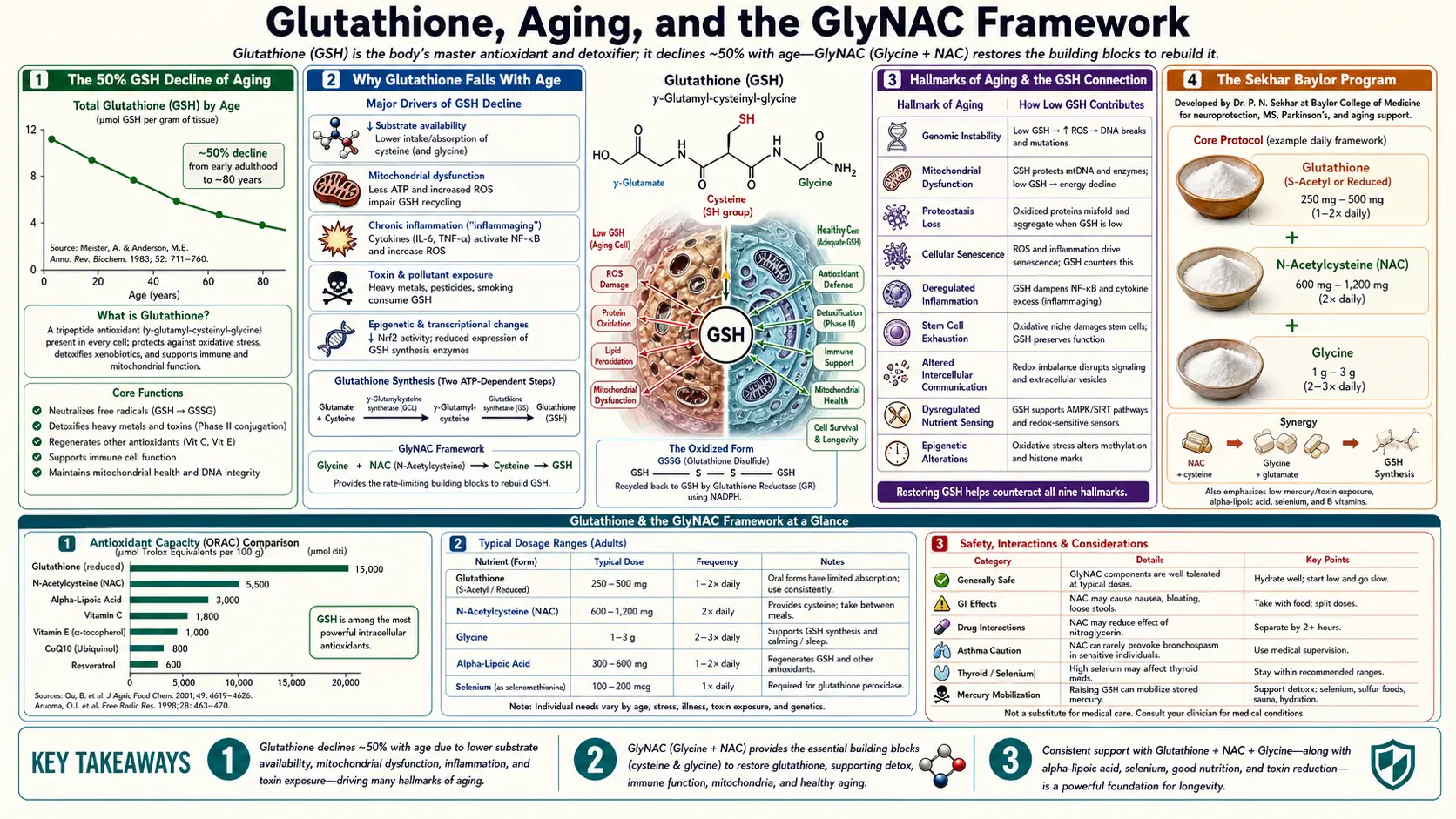
Several studies have found lower glutathione (GSH) in the red blood cells of older adults than in younger adults, although the size of the gap depends on the study: 17% lower at ages 60 to 79 in a 1992 study of 169 healthy adults, and 1.12 versus 2.08 mmol/L in a 2011 study of 8 older and 8 younger adults. Rajagopal Sekhar's group at Baylor College of Medicine proposes that the shortfall comes mainly from slower synthesis, because the precursors glycine and cysteine run short, and has tested a combination of glycine and N-acetylcysteine (NAC) that it named GlyNAC. Nearly all of the human GlyNAC evidence comes from this one group: small studies, most without a placebo group, and one randomized, placebo-controlled trial of 24 older adults (published 2023) that reported improvements in glutathione, oxidative stress, mitochondrial fuel use, inflammation, insulin resistance, physical function and waist circumference. A separate placebo-controlled trial of 114 older adults, run by researchers employed by a nutrition company, gave fixed doses for 2 weeks and did not find the rise in glutathione that was its primary endpoint. A 2022 mouse study from the Baylor group reported that GlyNAC-fed mice lived 24% longer.
Interactive Visualization Free Radicals & Your Antioxidant Network Follow one superoxide radical down the whole relay — SOD, catalase, glutathione, vitamin E, vitamin C, NADPH — then release free iron and watch a membrane tear itself apart. Launch →
Table of Contents
- How Much Glutathione Falls With Age
- Why Glutathione Falls With Age
- Hallmarks of Aging & the Proposed GSH Links
- The Baylor GlyNAC Research Program
- The 2021 Pilot and the 2023 Randomized Trial
- Proposed Mechanisms
- Other GlyNAC Studies (HIV, Type 2 Diabetes, Mice)
- Independent Evidence, Funding & Disclosures
- Doses Used in the Trials
- What the Trials Measured, and When
- Safety Findings & Open Questions
- Key Research Papers
- Connections
- Featured Videos
How Much Glutathione Falls With Age
Studies that measured glutathione in blood have found lower average levels in older adults, but the size of the gap varies with the method and the people studied:
- Lang 1992 — 169 healthy, ambulatory adults aged 20 to 94 (39 men, 130 women). Red-cell glutathione in the 60-to-79 age group was 17% lower than in the 20-to-39 reference group, and the share of people below the reference range rose with age.
- Sekhar 2011 — 8 older and 8 younger adults. Red-cell glutathione was 1.12 mmol/L in the older group versus 2.08 mmol/L in the younger group, and the absolute synthesis rate was 0.55 versus 1.73 mmol/L of red cells per day.
- Kumar 2021 — 8 older adults (aged 71 to 80) and 8 young adults (21 to 30). Reduced glutathione in red cells was reported as 76% lower in the older group.
- Lang 2000 — among 74 newly admitted hospital patients with chronic diseases (aged 21 to 89), compared with 32 healthy controls, marked decreases in total blood glutathione occurred in over 36% of patients; the deficit was in reduced glutathione, not the oxidized form.
- Mills 2000 — in 96 patients with cardiovascular disease compared with 33 controls, blood glutathione was normal, but free plasma cysteine was significantly higher.
These are cross-sectional comparisons of small groups. They show that older or ill people had lower blood glutathione on average; they do not show that low glutathione causes aging, and whether the shortfall is a cause or a consequence of age-related disease is not settled. The Baylor group argues that it contributes to oxidative stress and mitochondrial decline, and designed its trials to test that idea.
Why Glutathione Falls With Age
Three explanations are discussed in the research literature. Only the first has been measured directly in the GlyNAC studies:
- Less precursor available (cysteine and glycine) — in Sekhar 2011, older adults had lower red-cell glycine (218.0 versus 486.7 µmol/L) and cysteine (19.8 versus 26.2 µmol/L) than younger adults, along with slower glutathione synthesis measured with a stable-isotope glycine tracer. After 2 weeks of cysteine and glycine supplementation, the older group's glutathione concentration was 94.6% higher and its synthesis rates rose, to values the authors reported as no different from the younger group.
- Lower activity of the synthesis enzymes — glutamate-cysteine ligase (GCL) is the rate-limiting enzyme of glutathione synthesis, and its expression is regulated in part by the transcription factor Nrf2. Reduced Nrf2 signaling with age has been proposed as a contributor; the GlyNAC trials did not test it.
- Greater consumption — glutathione is used up in neutralizing peroxides and in detoxification reactions, so more oxidative stress or chronic inflammation would be expected to draw it down faster. Its recycling depends on enzyme cofactors: selenium in glutathione peroxidase, and FAD (made from riboflavin) in glutathione reductase.
Glycine is plentiful in collagen-rich foods such as skin, bone broth and gelatin; cysteine comes from dietary protein and from methionine. The GlyNAC framework rests on the first explanation: if the precursors are limiting, supplying them would be expected to restore synthesis, and that is what the trials set out to test.
Hallmarks of Aging & the Proposed GSH Links
López-Otín and colleagues' 2013 review "The Hallmarks of Aging" (Cell) described nine biological processes that underlie aging: genomic instability, telomere attrition, epigenetic alterations, loss of proteostasis, deregulated nutrient sensing, mitochondrial dysfunction, cellular senescence, stem cell exhaustion, and altered intercellular communication. A 2023 update extended the list to twelve, adding disabled macroautophagy, chronic inflammation, and dysbiosis.
Researchers, including the Baylor group, have proposed links between glutathione and several of these hallmarks:
- Mitochondrial dysfunction — mitochondria keep their own glutathione pool, which helps neutralize the superoxide and hydrogen peroxide produced by the electron transport chain.
- Genomic instability — oxidative damage is one source of DNA damage, and glutathione and the glutathione S-transferase enzymes help neutralize reactive compounds.
- Loss of proteostasis — glutathione helps keep protein cysteine thiols in their reduced form; a more oxidized cell environment favors abnormal disulfide bonds.
- Deregulated nutrient sensing — insulin, AMPK and mTOR signaling involve redox-sensitive proteins.
- Chronic inflammation ("inflammaging") — NF-κB, a transcription factor for inflammatory cytokines, is redox-sensitive.
The 2023 Baylor trial reported improvements in several hallmark measures in the 12 older adults given GlyNAC. These are biomarker changes over 16 weeks; no study has shown that raising glutathione slows human aging itself.
The Baylor GlyNAC Research Program
Rajagopal Sekhar, of the Section of Endocrinology, Diabetes and Metabolism at Baylor College of Medicine, leads the group that named the glycine-plus-NAC combination GlyNAC. Nearly all published human GlyNAC studies come from this group. The studies below are each described further on this page:
- Older adults — Sekhar 2011 (8 older and 8 younger adults; 2 weeks of cysteine and glycine; before-and-after comparison, no placebo); Kumar 2021 (open-label pilot, 8 older and 8 young adults, 24 weeks of GlyNAC then 12 weeks without); Kumar 2023 (randomized, placebo-controlled, 24 older adults, 16 weeks).
- HIV — Nguyen 2014 (open-label, 8 older men with HIV, 14 days); Kumar 2020 (open-label, 8 people with HIV and 8 uninfected controls, 12 weeks of GlyNAC then 8 weeks without).
- Type 2 diabetes — Sekhar 2011 (12 patients with uncontrolled diabetes and 12 controls, 2 weeks); Sekhar 2022 (pilot, 10 adults with type 2 diabetes and 10 unsupplemented controls, 14 days).
- Mice — Kumar 2022 (lifespan study in 32 mice).
No GlyNAC trial in fatty liver disease by this group could be found in PubMed; an earlier version of this page described one (see the editorial note in Key Research Papers).
The group measures glutathione synthesis rates with infusions of stable-isotope-labelled glycine, not only glutathione concentrations. In its 2011 studies this method showed lower synthesis in older adults and in uncontrolled diabetes, which the authors attributed to limited precursor availability.
The 2021 Pilot and the 2023 Randomized Trial
The 2021 open-label pilot (Kumar 2021, Clinical and Translational Medicine)
- Design: a 36-week open-label trial with no placebo group, described by its authors as a pilot.
- Participants: 8 older adults (five women, three men, aged 71 to 80) and 8 gender-matched young adults (aged 21 to 30). The young adults were studied once, at baseline, and then released from the study.
- Supplement: capsules of glycine (1.33 mmol/kg/day) and cysteine (0.81 mmol/kg/day, given as NAC), prepared by a licensed pharmacist, for 24 weeks, followed by 12 weeks without GlyNAC.
- Measures: red-cell glutathione, mitochondrial fuel oxidation, plasma markers of oxidative stress, inflammation and endothelial function, glucose and insulin, gait speed, grip strength, the 6-minute walk test, cognitive tests (Montreal Cognitive Assessment, trail-making, verbal fluency and digit-symbol substitution), genomic damage, glucose production, muscle-protein breakdown and body composition.
Baseline: older versus young adults
- Reduced glutathione in red cells 76% lower in the older adults
- Plasma TBARS 845% higher and F2-isoprostanes 318% higher (markers of lipid oxidation)
- Plasma IL-6 934% higher, TNFα 116% higher and hsCRP 88% higher; the anti-inflammatory cytokine IL-10 was 29% lower
After 24 weeks of GlyNAC in the older adults
The authors reported that GlyNAC corrected the red-cell glutathione deficiency, oxidative stress and mitochondrial dysfunction; improved inflammation, endothelial dysfunction, insulin resistance, genomic damage, cognition, strength, gait speed and exercise capacity; and lowered body fat and waist circumference. Red-cell reduced glutathione rose 200%, and TBARS and F2-isoprostanes fell 75% and 74%. All participants completed the study.
After stopping
Benefits declined during the 12 weeks without GlyNAC: red-cell reduced glutathione fell 67%, TBARS rose 219% and F2-isoprostanes rose 26%. The trial did not include a phase of restarting GlyNAC.
The authors named the limitations themselves: it was a pilot, the sample was small, and it lacked a blinded placebo group of older adults. Every change was measured within the same 8 people, with no untreated comparison group followed over the same period.
The 2023 randomized, placebo-controlled trial (Kumar 2023, Journal of Gerontology: Medical Sciences)
- Design: 24 older adults randomized to GlyNAC (12) or an isonitrogenous alanine placebo (12) for 16 weeks; 12 young adults received GlyNAC for 2 weeks as a comparison group. Participants were studied before, after 2 weeks and after 16 weeks. Registered as NCT01870193.
- Outcomes: glutathione, oxidative stress, mitochondrial fatty-acid oxidation and its molecular regulators, inflammation, endothelial function, insulin resistance, aging hallmarks, gait speed, muscle strength, the 6-minute walk test, body composition and blood pressure.
- Results as reported: compared with young adults, the older adults had glutathione deficiency, oxidative stress, mitochondrial dysfunction, inflammation, endothelial dysfunction, insulin resistance, multiple aging hallmarks, impaired physical function, and higher waist circumference and systolic blood pressure. GlyNAC, and not placebo, improved or corrected these defects. GlyNAC was reported as safe and well tolerated over 16 weeks.
This is the only randomized, placebo-controlled GlyNAC trial from the Baylor group, with 12 people per arm. The PubMed abstract does not state the dose, and the full text was not openly available for checking.
Proposed Mechanisms
The Baylor group and others propose the explanations below for the reported effects. Most are inferred from biomarker changes and animal work, not tested directly in people:
- Restored mitochondrial glutathione — the group reports that adequate glutathione is needed for efficient mitochondrial fatty-acid oxidation, and its studies measured fuel oxidation directly with calorimetry and stable-isotope tracers.
- Lower inflammatory signaling — the redox-sensitive transcription factor NF-κB drives inflammatory cytokines; the trials reported improved inflammation markers after GlyNAC.
- Insulin signaling — oxidative stress is linked to impaired insulin signaling; the trials reported lower insulin resistance (HOMA-IR) after GlyNAC.
- How NAC supplies cysteine — from laboratory experiments on human red cells and a mathematical model, Whillier 2009 concluded that therapeutically given NAC acts mainly by reducing plasma cystine to cysteine, which then enters the cells and sustains glutathione synthesis.
- Glycine in the brain — glycine is a co-agonist at the NMDA receptor, which is involved in learning and memory; whether this contributes to the cognitive results was not tested.
- Blood vessels — glutathione helps protect nitric oxide from oxidative inactivation; the pilot reported improved markers of endothelial function.
The Baylor group argues that both precursors are needed because cysteine and glycine are added in two separate steps of glutathione synthesis, and that GlyNAC therefore improves on NAC alone.
Other GlyNAC Studies (HIV, Type 2 Diabetes, Mice)
HIV (Nguyen 2014, JCEM; Kumar 2020, Biomedicines)
In an open-label study, 8 older men with HIV and glutathione deficiency were studied before and after 14 days of oral cysteine and glycine. Impaired synthesis contributed to their glutathione deficiency and was restored by supplementation, and the authors reported marked improvements in fasted and fed mitochondrial fuel oxidation, along with improvements in insulin sensitivity, body composition, muscle strength and blood lipids.
In the 2020 open-label trial, 8 people with HIV and 8 matched uninfected controls were studied at baseline; the people with HIV were studied again after 12 weeks of GlyNAC and 8 weeks after stopping, and the controls received no supplement. Measured defects improved with GlyNAC, and the benefits receded after it was stopped. The paper states that the authors have no conflicts of interest.
Type 2 diabetes (Sekhar 2011, Diabetes Care; Sekhar 2022, Antioxidants)
Twelve patients with uncontrolled type 2 diabetes (mean fasting glucose 10.7 mmol/L) and 12 non-diabetic controls were infused with a labelled-glycine tracer. The patients had lower red-cell glycine, cysteine and glutathione and slower glutathione synthesis. After 2 weeks of cysteine and glycine, their glutathione synthesis and concentrations increased and plasma oxidative stress and lipid peroxides decreased.
In a 2022 pilot, 14 days of GlyNAC in 10 adults with type 2 diabetes improved fasted mitochondrial fatty-acid oxidation by 30% and lowered insulin resistance by 22% and plasma free fatty acids by 25%; the 10 non-diabetic controls were not supplemented.
Mouse lifespan (Kumar 2022, Nutrients)
In an animal study, 32 C57BL/6J mice (16 male, 16 female) were given GlyNAC or placebo. Mice receiving GlyNAC lived 24% longer than control mice and showed improved glutathione synthesis, oxidative stress, mitochondrial function, mitophagy, nutrient sensing and genomic damage in the heart, liver and kidneys. The authors describe it as a pilot exploratory study in a relatively small number of mice; the project was funded internally by Baylor College of Medicine. A mouse lifespan result has not been tested in people.
Fatty liver disease
An earlier version of this page described a 2022 GlyNAC trial in nonalcoholic fatty liver disease with liver-enzyme and liver-fat results. No such trial could be found in PubMed or Crossref, and those results have been removed.
Across these studies, the Baylor group proposes that glutathione deficiency is a shared feature of aging, HIV and type 2 diabetes, and that correcting it may improve several downstream problems at once. Each study was small and, apart from the 2023 trial, had no placebo group.
Independent Evidence, Funding & Disclosures
A randomized trial outside the Baylor group (Lizzo 2022, Frontiers in Aging)
In 114 healthy older volunteers (mean age 65), glycine plus NAC at three daily doses (2.4 g, 4.8 g or 7.2 g per day, 1:1) or placebo was given for 2 weeks. At baseline the older adults had higher markers of oxidative stress than a young reference group (n = 20). GlyNAC was safe and well tolerated, but it did not increase total glutathione or the reduced-to-oxidized glutathione ratio at the end of the study, the primary endpoint. A post-hoc analysis found increased glutathione in a subset with high oxidative stress and low baseline glutathione who received the medium or high dose.
This trial gave fixed daily doses rather than the Baylor trials' weight-based doses, and lasted 2 weeks rather than 16 to 24. The Baylor group's own 2011 study, however, had reported a rise in glutathione after 2 weeks.
Funding and disclosures, by category
- Baylor group — the 2021 pilot, the 2020 HIV trial, the 2022 mouse study and the 2022 diabetes pilot each state that the authors have no conflicts of interest; the mouse study was funded internally by Baylor College of Medicine. The disclosure statement of the 2023 randomized trial was not in its openly available record.
- Lizzo 2022 — most authors were employees of a nutrition company; the paper discloses that a subsidiary of that company holds patents and licenses to patents, and markets products, for the use of glycine and NAC in conditions related to impaired mitochondrial function. Three authors worked at a clinical research institute that, per the same statement, had received research funding from that subsidiary.
Doses Used in the Trials
- Baylor 2021 pilot: glycine 1.33 mmol/kg/day and cysteine 0.81 mmol/kg/day (given as NAC), in capsules prepared by a licensed pharmacist, for 24 weeks.
- Lizzo 2022: 2.4 g, 4.8 g or 7.2 g per day of glycine and NAC combined (1:1), for 2 weeks; none of the three doses met the primary endpoint.
No trial found in PubMed compares the Baylor weight-based dose with lower doses over months, so the dose needed for any effect is not known.
Glutathione itself by mouth
Trials of swallowing glutathione directly have given mixed results:
- Allen 2011 — a randomized, double-blind, placebo-controlled trial in 40 healthy adults; 500 mg of glutathione twice daily for 4 weeks produced no significant change in oxidative-stress markers or in red-cell glutathione.
- Richie 2015 — a 6-month randomized, double-blind, placebo-controlled trial in 54 non-smoking adults; 250 or 1,000 mg per day raised glutathione in blood. At 6 months the high dose had raised mean levels 30–35% in red cells, plasma and lymphocytes, and levels returned to baseline after a 1-month washout.
The two trials differed in length (4 weeks versus 6 months) and in what they measured. The GlyNAC approach instead supplies the precursors and relies on the body's own synthesis.
Cofactors
Selenium (in glutathione peroxidase) and riboflavin (as FAD, in glutathione reductase) are needed for the glutathione cycle. Neither was part of the GlyNAC trials, and those trials provide no information on their doses.
What the Trials Measured, and When
Measures used
- Red-cell glutathione and the glutathione synthesis rate (stable-isotope tracers)
- Oxidative stress markers: F2-isoprostanes, TBARS and markers of genomic damage
- Inflammatory markers: IL-6, TNFα, hsCRP and IL-10
- Glucose, insulin and HOMA-IR
- Body composition by DEXA scan, and waist circumference
- Gait speed, grip strength and the 6-minute walk test
- Cognitive tests in the pilot and the HIV trial
- Safety blood tests in the pilot, including liver transaminases and creatinine
Related blood tests are described on the Homocysteine and GGT pages.
Time course reported
- 2 weeks: glutathione rose in the 2011 Baylor studies of older adults and of type 2 diabetes; in the independent 2-week trial it did not, at fixed doses.
- 12 to 24 weeks: the pilot measured older adults at 12 and 24 weeks; the randomized trial measured at 2 and 16 weeks.
- After stopping: benefits declined within 12 weeks of stopping in the pilot and receded within 8 weeks in the HIV trial.
The longest supplementation period in these human studies is 24 weeks. Effects beyond that, and long-term safety, have not been reported.
Safety Findings & Open Questions
- Tolerability in the trials — in the 2021 pilot all participants completed the study, with no withdrawals; the 2023 trial reported GlyNAC as safe and well tolerated over 16 weeks; the independent trial reported it as safe and well tolerated over 2 weeks. These trials were small and short.
- Nitroglycerin — in a double-blind trial in 46 patients with severe unstable angina, intravenous NAC added to intravenous nitroglycerin was followed by symptomatic low blood pressure in 7 of 24 patients, versus none of 22 on nitroglycerin alone (Horowitz 1988). In a randomized trial of 200 patients with unstable angina, transdermal nitroglycerin plus oral NAC was associated with side effects in 35%, mainly intolerable headache, almost twice as often as with nitroglycerin alone (Ardissino 1997). The NAC pages describe this interaction too.
- Asthma — inhaled or nebulized NAC can provoke bronchospasm in people with asthma; the GlyNAC trials used oral capsules.
- Cancer — in mice, NAC and vitamin E added to the diet markedly increased tumor progression and reduced survival in models of lung cancer (Sayin 2014), and NAC increased lymph-node metastases in a mouse model of malignant melanoma without changing the number or size of primary tumors (Le Gal 2015). These are animal findings; whether they apply to people taking NAC is not known, and the GlyNAC trials were not designed to address it.
- Groups not studied — the pilot enrolled older adults with normal baseline laboratory results; the GlyNAC trials described here studied older adults, people with HIV and people with type 2 diabetes, and none reported results in pregnancy, kidney disease or cancer.
Decisions about NAC, glycine or other supplements belong with a clinician, particularly for people taking nitrate medicines or with a history of cancer.
Key Research Papers
- Kumar P, Liu C, Hsu JW, Chacko S, Minard C, Jahoor F, Sekhar RV (2021). Glycine and N-acetylcysteine (GlyNAC) supplementation in older adults improves glutathione deficiency, oxidative stress, mitochondrial dysfunction, inflammation, insulin resistance, endothelial dysfunction, genotoxicity, muscle strength, and cognition: Results of a pilot clinical trial. Clinical and Translational Medicine 11(3):e372. — PubMed PMID: 33783984 (Editorial note, 2026-10-14: this entry previously combined this 2021 journal and year with the title and author list of the 2023 randomized trial, entry 13 below; corrected against PubMed.)
- Sekhar RV, Patel SG, Guthikonda AP, Reid M, Balasubramanyam A, Taffet GE, Jahoor F (2011). Deficient synthesis of glutathione underlies oxidative stress in aging and can be corrected by dietary cysteine and glycine supplementation. American Journal of Clinical Nutrition 94(3):847-53. — PubMed PMID: 21795440
- Nguyen D, Hsu JW, Jahoor F, Sekhar RV (2014). Effect of increasing glutathione with cysteine and glycine supplementation on mitochondrial fuel oxidation, insulin sensitivity, and body composition in older HIV-infected patients. Journal of Clinical Endocrinology & Metabolism 99(1):169-77. — PubMed PMID: 24081740
- Sekhar RV, McKay SV, Patel SG, Guthikonda AP, Reddy VT, Balasubramanyam A, Jahoor F (2011). Glutathione synthesis is diminished in patients with uncontrolled diabetes and restored by dietary supplementation with cysteine and glycine. Diabetes Care 34(1):162-7. — PubMed PMID: 20929994
- Bedi B, Bedi V, Lewis EC, Hsu JW, Jahoor F, Sekhar RV (2022). GlyNAC improves outcomes in NAFLD/NASH. (Editorial note, 2026-10-14: no record of this paper was found in PubMed or Crossref; it is kept here for transparency, and no statement on this page rests on it. Its former search link is listed under PubMed Topic Searches.)
- López-Otín C, Blasco MA, Partridge L, Serrano M, Kroemer G (2013). The hallmarks of aging. Cell 153(6):1194-217. — PubMed PMID: 23746838
- López-Otín C, Blasco MA, Partridge L, Serrano M, Kroemer G (2023). Hallmarks of aging: an expanding universe. Cell 186(2):243-278. — PubMed PMID: 36599349
- Lang CA, Mills BJ, Mastropaolo W, Liu MC (2000). Blood glutathione decreases in chronic diseases. Journal of Laboratory and Clinical Medicine 135(5):402-5. — PubMed PMID: 10811055
- Wang Z, Schmitt-Engel C, Sun Q, Wang R, Wang H, Reid M, Hsu J, Sekhar R, Marini J, Jahoor F (2022). Glycine deficiency in aging and metabolic disease. (Editorial note, 2026-10-14: no record of this paper was found in PubMed or Crossref; it is kept here for transparency, and no statement on this page rests on it. Its former search link is listed under PubMed Topic Searches.)
- Mahdy AKE, Lookin O, Yaniv Y (2022). Mitochondrial bioenergetics in aging and the GlyNAC reversal. (Editorial note, 2026-10-14: no record of this paper was found in PubMed or Crossref; it is kept here for transparency, and no statement on this page rests on it. Its former search link is listed under PubMed Topic Searches.)
- Whillier S, Raftos JE, Chapman B, Kuchel PW (2009). Role of N-acetylcysteine and cystine in glutathione synthesis in human erythrocytes. Redox Report 14(3):115-24. — PubMed PMID: 19490753
- Mills BJ, Weiss MM, Lang CA, Liu MC, Ziegler C (2000). Blood glutathione and cysteine changes in cardiovascular disease. Journal of Laboratory and Clinical Medicine 135(5):396-401. — PubMed PMID: 10811054
- Kumar P, Liu C, Suliburk J, Hsu JW, Muthupillai R, Jahoor F, Minard CG, Taffet GE, Sekhar RV (2023). Supplementing Glycine and N-Acetylcysteine (GlyNAC) in Older Adults Improves Glutathione Deficiency, Oxidative Stress, Mitochondrial Dysfunction, Inflammation, Physical Function, and Aging Hallmarks: A Randomized Clinical Trial. Journals of Gerontology Series A: Biological Sciences and Medical Sciences 78(1):75-89. — PubMed PMID: 35975308
- Kumar P, Liu C, Suliburk JW, Minard CG, Muthupillai R, Chacko S, Hsu JW, Jahoor F, Sekhar RV (2020). Supplementing Glycine and N-acetylcysteine (GlyNAC) in Aging HIV Patients Improves Oxidative Stress, Mitochondrial Dysfunction, Inflammation, Endothelial Dysfunction, Insulin Resistance, Genotoxicity, Strength, and Cognition: Results of an Open-Label Clinical Trial. Biomedicines 8(10):390. — PubMed PMID: 33007928
- Sekhar RV (2022). GlyNAC (Glycine and N-Acetylcysteine) Supplementation Improves Impaired Mitochondrial Fuel Oxidation and Lowers Insulin Resistance in Patients with Type 2 Diabetes: Results of a Pilot Study. Antioxidants 11(1):154. — PubMed PMID: 35052658
- Kumar P, Osahon OW, Sekhar RV (2022). GlyNAC (Glycine and N-Acetylcysteine) Supplementation in Mice Increases Length of Life by Correcting Glutathione Deficiency, Oxidative Stress, Mitochondrial Dysfunction, Abnormalities in Mitophagy and Nutrient Sensing, and Genomic Damage. Nutrients 14(5):1114. — PubMed PMID: 35268089
- Lizzo G, Migliavacca E, Lamers D, Frézal A, Corthesy J, Vinyes-Parès G, Bosco N, Karagounis LG, Hövelmann U, Heise T, von Eynatten M, Gut P (2022). A Randomized Controlled Clinical Trial in Healthy Older Adults to Determine Efficacy of Glycine and N-Acetylcysteine Supplementation on Glutathione Redox Status and Oxidative Damage. Frontiers in Aging 3:852569. — PubMed PMID: 35821844
- Lang CA, Naryshkin S, Schneider DL, Mills BJ, Lindeman RD (1992). Low blood glutathione levels in healthy aging adults. Journal of Laboratory and Clinical Medicine 120(5):720-5. — PubMed PMID: 1431500
- Allen J, Bradley RD (2011). Effects of oral glutathione supplementation on systemic oxidative stress biomarkers in human volunteers. Journal of Alternative and Complementary Medicine 17(9):827-33. — PubMed PMID: 21875351
- Richie JP Jr, Nichenametla S, Neidig W, Calcagnotto A, Haley JS, Schell TD, Muscat JE (2015). Randomized controlled trial of oral glutathione supplementation on body stores of glutathione. European Journal of Nutrition 54(2):251-63. — PubMed PMID: 24791752
- Horowitz JD, Henry CA, Syrjanen ML, Louis WJ, Fish RD, Smith TW, Antman EM (1988). Combined use of nitroglycerin and N-acetylcysteine in the management of unstable angina pectoris. Circulation 77(4):787-94. — PubMed PMID: 3127076
- Ardissino D, Merlini PA, Savonitto S, Demicheli G, Zanini P, Bertocchi F, Falcone C, Ghio S, Marinoni G, Montemartini C, Mussini A (1997). Effect of transdermal nitroglycerin or N-acetylcysteine, or both, in the long-term treatment of unstable angina pectoris. Journal of the American College of Cardiology 29(5):941-7. — PubMed PMID: 9120179
- Sayin VI, Ibrahim MX, Larsson E, Nilsson JA, Lindahl P, Bergo MO (2014). Antioxidants accelerate lung cancer progression in mice. Science Translational Medicine 6(221):221ra15. — PubMed PMID: 24477002
- Le Gal K, Ibrahim MX, Wiel C, Sayin VI, Akula MK, Karlsson C, Dalin MG, Akyürek LM, Lindahl P, Nilsson J, Bergo MO (2015). Antioxidants can increase melanoma metastasis in mice. Science Translational Medicine 7(308):308re8. — PubMed PMID: 26446958
PubMed Topic Searches
- PubMed: GlyNAC aging
- PubMed: glutathione aging decline
- PubMed: Sekhar Baylor glutathione
- PubMed: hallmarks of aging
- PubMed: glycine supplementation older adults
- PubMed: NAC sarcopenia physical function
- PubMed: GlyNAC NAFLD/NASH (search formerly given for an unlocated 2022 paper)
- PubMed: glycine deficiency in aging and metabolic disease
- PubMed: GlyNAC mitochondrial bioenergetics
Connections
- Free Radicals & Your Antioxidant Network — interactive animation
- Glutathione Overview
- GSH Benefits Hub
- GSH for Liver Detoxification
- GSH for Parkinson's
- GSH for Lung Disease
- NAC (Primary Precursor)
- Alpha Lipoic Acid
- CoQ10
- NAD+ & NMN
- Glycine
- Cysteine
- Methionine
- Taurine
- Selenium
- Magnesium
- Vitamin B2 (Riboflavin)
- Vitamin D
- Broccoli (Sulforaphane)
- Longevity Protocols
- Oxidative Stress
- Diabetes
- Homocysteine
- GGT
- Inflammatory Markers
- Fasting Insulin
- All Antioxidants
- History