Lysine: Essential Amino Acid, Food Sources and Research
Interactive Visualization Vitamin C, Collagen & Why Sailors Fell Apart Zip three protein chains into the strongest rope in biology — then take the vitamin C away and watch the helix unravel, and old healed scars split back open. Launch →
Table of Contents
- Overview
- Collagen Formation and Connective Tissue
- Calcium Absorption and Bone Health
- Immune Findings and Herpes Simplex in Cell Culture
- Cold Sore Prevention Trials
- Carnitine and Other Compounds Made From Lysine
- Cardiovascular Questions
- Anxiety and Stress Research
- Wound Healing Evidence
- Low Lysine Intake and Deficiency
- Food Sources
- Supplement Forms and Doses Used in Studies
- Lysine Requirement (WHO/FAO/UNU 2007)
- Key Research Papers
- Connections
- Featured Videos
Overview
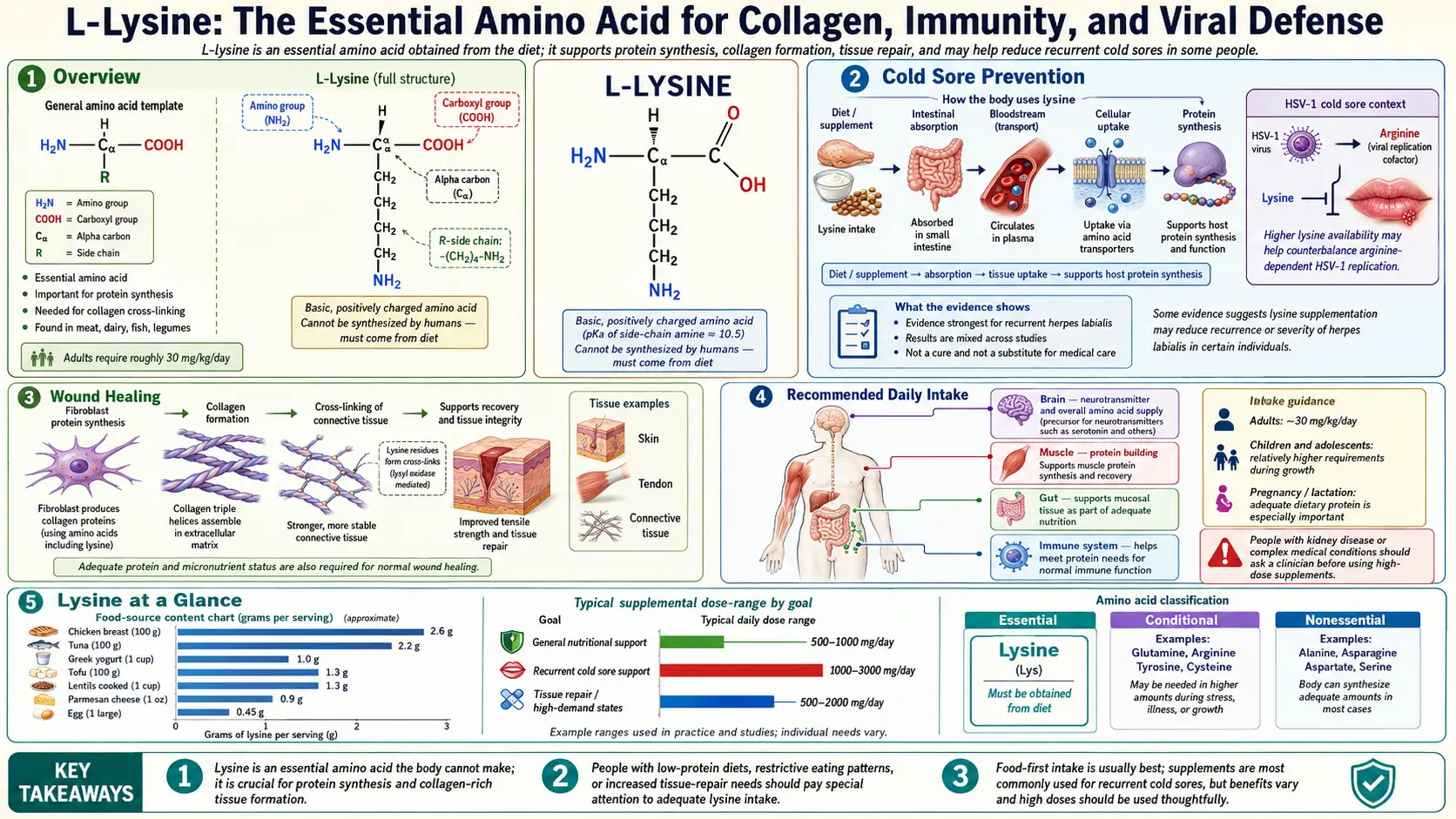
L-lysine is one of the nine essential amino acids: the body cannot make it, so it has to come from food. It is a building block of every protein, and the 2007 Joint WHO/FAO/UNU Expert Consultation on protein and amino acid requirements gives an adult lysine requirement of 30 mg per kilogram of body weight per day (WHO/FAO/UNU 2007). Lysine is the limiting amino acid in diets built on wheat as the staple (Smriga 2004); cereal proteins are low in lysine, while legume and animal proteins are richer in it.
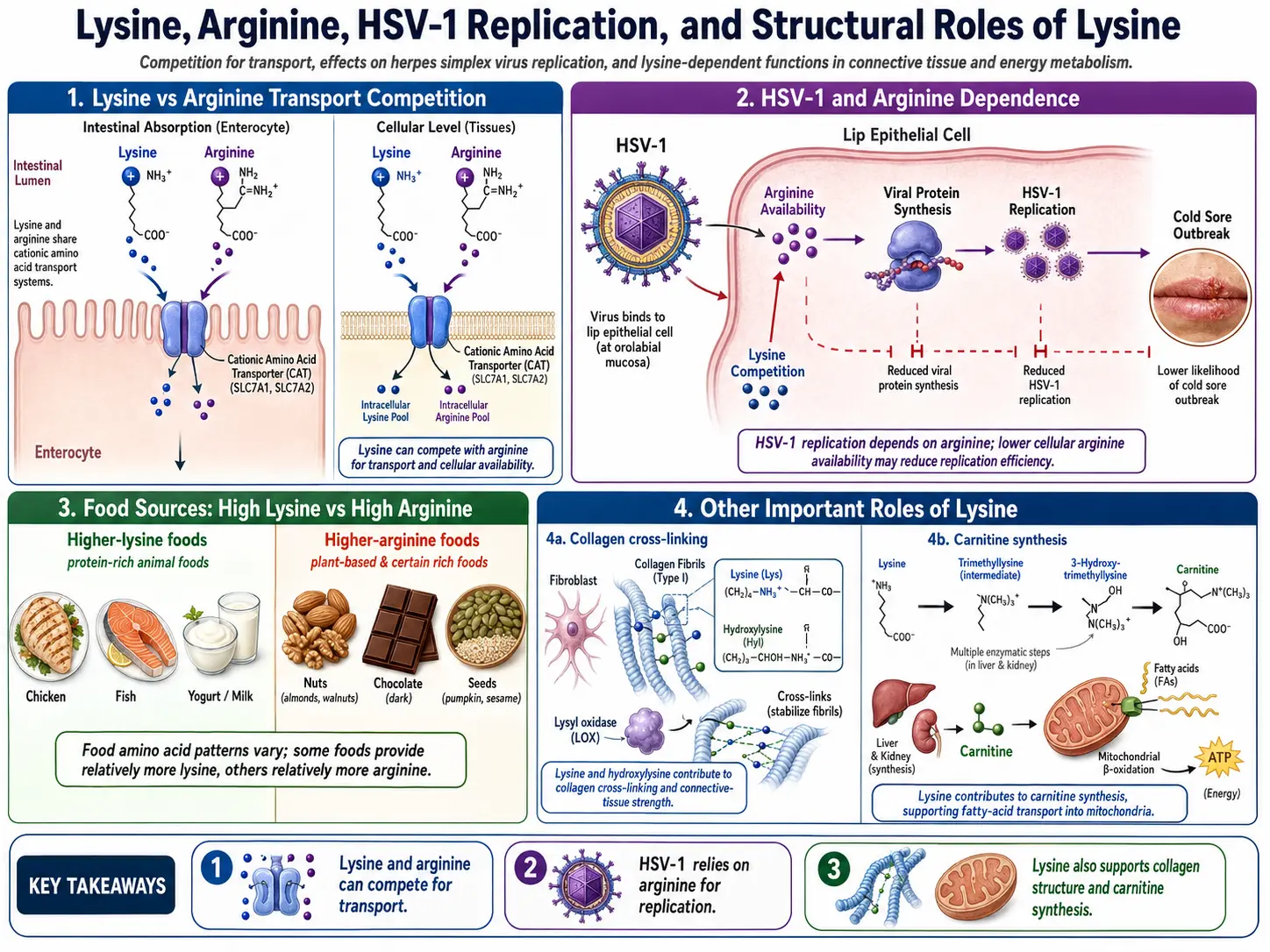
Chemically, lysine is a basic amino acid that carries a positive charge at the body's pH, as arginine does, and the two share a transporter in the kidney (Eggermann 2012). Beyond its role in protein, lysine has been studied through four separate lines of research, each resting on a different piece of chemistry: competition with arginine in herpes simplex virus replication, the modification of collagen by lysyl hydroxylase and lysyl oxidase, calcium absorption, and a weak partial block of the serotonin 5-HT4 receptor. The diagram below sets out what kind of evidence stands behind each one; the studies themselves are described in the sections that follow and, in more detail, on the Lysine Benefits deep-dive pages.
The four lines differ in strength. Herpes has the most human trials, with mixed results; the calcium and anxiety findings rest on a few small, short studies; and for collagen there is no published human trial of lysine on its own. No study was identified that tested whether one lysine dose produces more than one of these effects.
Collagen Formation and Connective Tissue
Collagens form the structural framework of tissues under tension: skin, tendons, ligaments, cartilage, bone and blood vessels. Two of the steps that turn a newly made collagen chain into a stable, cross-linked fibril act on lysine (Yamauchi and Sricholpech 2012):
- Hydroxylation — inside the cell, lysyl hydroxylases convert specific lysine residues to hydroxylysine. These enzymes need vitamin C to stay active (Salo and Myllyharju 2021).
- Cross-linking — outside the cell, the copper-dependent enzyme lysyl oxidase oxidizes lysine residues in collagen and elastin, starting the covalent cross-links that stabilize these fibrous proteins (Kagan and Li 2003). Pyridinoline and deoxypyridinoline are two of these lysine-derived cross-links (Yamauchi and Sricholpech 2012).
When these steps fail, connective tissue is fragile. The signs of scurvy, severe vitamin C deficiency, are attributed largely to defective hydroxylation of proline and lysine in newly made collagen (Salo and Myllyharju 2021). Mutations in the lysyl hydroxylase 1 gene cause enzyme deficiency and the clinical picture of Ehlers-Danlos syndrome type VI (Yeowell and Walker 2000).
These diseases come from a missing cofactor or a faulty enzyme, not from a shortage of lysine. Whether extra dietary lysine improves collagen in people who already eat enough protein has not been tested in published human trials. The enzymes, the cross-links and the related studies of collagen and gelatin supplements are covered on the Lysine for Collagen Synthesis page.
Calcium Absorption and Bone Health
The human evidence on lysine and calcium comes from one 1992 paper by Civitelli and colleagues, which combined two short experiments (Civitelli 1992):
- Calcium-load study — 15 healthy and 15 osteoporotic women took a single oral calcium load (3 g, as calcium chloride) with or without 400 mg of L-lysine. Urinary calcium rose in every group except the healthy women given lysine, whose rise was blunted.
- Absorption study — in 45 osteoporotic patients, short-term L-lysine at 800 mg/day significantly raised intestinal absorption of a calcium-47 tracer, while the same amount of L-valine or L-tryptophan did not.
The authors suggested a potential use for lysine in osteoporosis. The abstract gives no percentage effects, and no trial has measured bone density or fractures with lysine; a 2025 review lists the use of lysine in osteoporosis therapy among the questions still needing investigation (Holeček 2025). How lysine might affect calcium absorption is not known; soluble lysine-calcium complexes in the gut are one proposed explanation that has not been tested directly in people.
Lysine also enters bone through collagen: bone mineral is laid down on a type I collagen scaffold, which goes through the same lysine chemistry described above. The 1992 experiments, the vitamin D and protein consensus for bone, and lysine in cystinuria are covered on the Lysine for Calcium Absorption page.
Immune Findings and Herpes Simplex in Cell Culture
Lysine's best-known proposed clinical use rests on cell-culture work. In 1964 Tankersley reported that herpes simplex virus (HSV) produced no new virus in human cells in tissue culture when arginine was withheld, and that lysine, which the virus did not need, partially inhibited its multiplication (Tankersley 1964). In 1981 Griffith, DeLong and Nelson reported that lysine, acting as an arginine analogue, antagonised arginine's growth-promoting effect on HSV in tissue culture (Griffith 1981). A 2022 narrative review describes lysine as interfering with the formation of viral capsid proteins and DNA through competitive antagonism with arginine, and by increasing arginase, the enzyme that breaks arginine down; it concludes that more studies are needed (Pedrazini 2022).
These are test-tube findings. Whether lysine taken by mouth shifts arginine availability inside infected skin cells enough to matter is what the human trials, described in the next section, set out to test.
No trial was found that tested lysine supplements against immune outcomes in well-fed people. The immune-related findings come from trials in low-income communities whose diets are based on cereals. In poor peri-urban households in Accra, Ghana, where 30% of men, 50% of women and 15% of children were at risk of lysine inadequacy, 1 g of lysine a day reduced diarrhoeal episodes in children and respiratory illness in men compared with placebo (Ghosh 2010). In rural northwest Syria, lysine-fortified wheat flour was followed by higher complement C3 in men and less diarrhoeal illness in women, with no other significant differences between the groups (Ghosh 2008).
Cold Sore Prevention Trials
Clinical interest followed a 1974 letter to The Lancet by Christopher Kagan on lysine therapy for herpes simplex (Kagan 1974). Six small human trials published between 1978 and 1987 gave oral lysine, mostly as L-lysine monohydrochloride, to people with recurrent herpes, at doses from 312 mg a day to 1,000 mg three times a day:
- Griffith, Norins and Kagan 1978 — 45 patients, 312-1,200 mg a day; the authors reported faster recovery and fewer recurrences, but the abstract describes no placebo or control group.
- Milman 1980 — a double-blind, placebo-controlled crossover in 65 patients, 1,000 mg a day for 12 weeks; no overall effect on the recurrence rate, although significantly more patients were recurrence-free on lysine than on placebo (p = 0.05); no effect on healing.
- DiGiovanna and Blank 1984 — a placebo-controlled trial in 21 patients, 400 mg three times a day; no substantial benefit, either for episodes in progress or for prevention.
- McCune 1984 — a crossover in 41 patients; 1,248 mg a day showed evidence of fewer recurrences, 624 mg a day was not effective, and neither dose shortened healing time.
- Thein and Hurt 1984 — 26 volunteers completed a 12-month crossover of 1,000 mg a day; in most instances the lysine group reported significantly fewer lesions.
- Griffith 1987 — a placebo-controlled multicentre trial of 1,000 mg three times a day for six months; 27 participants on lysine and 25 on placebo completed it, and the lysine group had an average of 2.4 fewer HSV infections (p < 0.05), milder symptoms and shorter healing time.
The reviews are cautious. A 2017 literature review concluded that lysine appears ineffective at doses below 1 g a day without a low-arginine diet, that doses above 3 g a day appear to improve patients' subjective experience of the disease, and that longer controlled studies of doses above 1.2 g a day are needed (Mailoo and Rampes 2017). The 2015 Cochrane review of interventions for preventing cold sores (32 randomized trials, 2,640 participants) found no evidence of efficacy for lysine; it found that long-term oral antiviral drugs can prevent cold sores, with a small clinical benefit (Chi 2015).
Popular herpes diet lists name chocolate, nuts and seeds as high in arginine and animal proteins as high in lysine. No trial has tested a dietary lysine-to-arginine ratio against herpes recurrence, no trial was found that tested a short, higher-dose "outbreak" course of oral lysine, and no controlled trial of lysine alone applied to the skin was found. Each trial, the antiviral drugs and the food lists are covered on the Lysine for Herpes Prevention, Lysine for Herpes Simplex and Cold Sores and Lysine to Arginine Ratio pages.
Carnitine and Other Compounds Made From Lysine
Lysine is the starting material for carnitine, the molecule that lets activated fatty acids enter the mitochondria, where they are broken down for energy (Vaz and Wanders 2002). The pathway does not start from free lysine in the diet: lysine residues in proteins, histones among them, are methylated to trimethyllysine, and the breakdown of those proteins appears to be the major source of the free trimethyllysine from which carnitine is made. The first enzyme of the pathway depends on iron, 2-oxoglutarate and ascorbate (vitamin C) (Maas 2020). The body's carnitine comes from this synthesis, from food, and from efficient reabsorption by the kidney (Vaz and Wanders 2002).
Lysine is also a substrate for homoarginine, and lysine residues in proteins undergo many other modifications, including methylation and the formation of desmosine cross-links in elastin; a 2025 review covers these and the questions about them that remain open (Holeček 2025).
Cardiovascular Questions
In a 1992 paper in the Journal of Orthomolecular Medicine, Matthias Rath and Linus Pauling proposed a "unified theory" of cardiovascular disease centred on vitamin C deficiency, with vitamin C and lysine proposed as treatment. The paper is not indexed in PubMed, and no controlled clinical trial testing the proposal was identified there.
Arginine, the amino acid lysine competes with, is the substrate that endothelial nitric oxide synthase uses to make nitric oxide in the lining of blood vessels (Bode-Böger 2007). The 2017 herpes review states that people with cardiovascular or gallbladder disease face theoretical risks from lysine supplementation (Mailoo and Rampes 2017). No study was found that measured whether lysine supplements change nitric oxide production, blood pressure or blood-vessel function in people.
Anxiety and Stress Research
The proposed mechanism comes from animals and tissue. In rats, a severely lysine-deficient diet increased stress-induced anxiety (Smriga 2002). In a binding assay lysine inhibited 9.17% of serotonin binding to the 5-HT4 receptor, and given by mouth to rats it blocked anxiety induced by a 5-HT4 agonist; the authors described lysine as possibly a partial 5-HT4 antagonist (Smriga and Torii 2003). Whether the doses used in people reach a level that blocks brain 5-HT4 receptors has not been measured.
Three small human trials measured anxiety or stress responses:
- Northwest Syria, 2004 — a 3-month randomized double-blind study of lysine-fortified wheat in poor communities eating wheat as their staple. Trait anxiety fell in men, the plasma cortisol response to blood drawing was smaller in women, and sympathetic arousal measured by skin conductance was lower in men (Smriga 2004).
- Slovakia, 2005 — 29 healthy people with trait anxiety at the upper limit of the normal range took 3 g each of lysine and arginine a day for 10 days and then gave a public speech. Compared with placebo, ACTH, cortisol, adrenaline and noradrenaline were higher, not lower; the authors interpreted this as a possible normalization toward the pattern of people with low trait anxiety (Jezova 2005).
- Japan, 2007 — in 108 healthy adults, one week of 2.64 g of lysine plus 2.64 g of arginine a day reduced trait anxiety and stress-induced state anxiety, and lowered basal salivary cortisol in men (Smriga 2007).
The 2010 Ghana trial (1 g of lysine a day) listed anxiety among its outcomes, but its abstract reports no anxiety result, and its conclusion mentions only reductions in illness (Ghosh 2010). Smriga is an author of all of these studies. Two of the three trials gave lysine together with an equal amount of arginine, so they describe the combination rather than lysine alone, which sits awkwardly beside the herpes hypothesis that the virus needs arginine. No trial in people diagnosed with an anxiety disorder was found. A 2010 systematic review of supplements for anxiety counted combinations of L-lysine and L-arginine among those with strong evidence, while noting that heterogeneity and the small number of studies prevented a meta-analysis and that placebo effects may account for some positive results (Lakhan and Vieira 2010). More on the Lysine for Anxiety and Stress page.
Wound Healing Evidence
Wound repair depends on rapid deposition of new collagen, and both the hydroxylation and the cross-linking of that collagen act on lysine residues. Even so, no randomized trial testing lysine on its own for wound healing in people was identified in PubMed. The human wound-healing trials have tested mixtures in which lysine was not the studied ingredient, such as arginine-based amino acid mixtures and enriched formulas for pressure ulcers; they are described on the Lysine for Collagen Synthesis page.
A critical review of amino acid supplementation for wound healing concluded that, although enteral supplementation may seem a reasonable strategy, a number of biochemical and physiologic barriers limit it (Albaugh 2017).
Low Lysine Intake and Deficiency
Because lysine must come from food, intake is lowest in diets built mainly on cereals with little legume or animal protein. Lysine is the limiting amino acid in wheat-based diets (Smriga 2004), and adding lysine to cereal flour has been studied as a way to improve the protein value of such diets in the poorest countries (Pellett and Ghosh 2004). At the start of the Ghana trial, 30% of men, 50% of women and 15% of children in poor peri-urban households were at risk of lysine inadequacy (Ghosh 2010).
The effects measured when lysine was added to these diets were fewer episodes of diarrhoeal and respiratory illness (Ghosh 2010; Ghosh 2008) and, in the 2004 Syrian trial, lower trait anxiety in men (Smriga 2004). Lists of specific lysine-deficiency symptoms in people eating mixed diets (fatigue, hair loss, anemia, frequent cold sores and the like) circulate widely, but no clinical study describing such a syndrome was identified for this page, so none is given here.
Inherited disorders of lysine transport are a separate matter. In cystinuria, mutations in the SLC3A1 or SLC7A9 gene impair a kidney transporter that reabsorbs cystine and the dibasic amino acids, lysine among them (Eggermann 2012). In lysinuric protein intolerance, a rare genetic disorder of cationic amino acid transport, lysine, arginine and ornithine intake is managed under specialist care.
Food Sources
In the USDA figures below, cheese, meat, poultry and fish list the most lysine per 100 g, along with dried spirulina; cooked legumes list less, and cooked grains much less. The values below are grams of lysine per 100 g of food exactly as listed in USDA FoodData Central (SR Legacy dataset), each linked to its record. Amounts change with preparation, because cooking removes or adds water.
- Parmesan cheese, hard — 3.306 g (FDC 170848)
- Spirulina, dried — 3.025 g (FDC 170495)
- Chicken breast, meat only, roasted — 2.635 g (FDC 171477)
- Beef, composite of trimmed retail cuts, lean and fat, cooked — 2.63 g (FDC 170609)
- Salmon, sockeye, cooked, dry heat — 2.574 g (FDC 173692)
- Tuna, light, canned in water, drained — 2.343 g (FDC 171986)
- Sardine, Atlantic, canned in oil, drained, with bone — 2.26 g (FDC 175139)
- Cod, Atlantic, cooked, dry heat — 2.097 g (FDC 171956)
- Cheddar cheese, sharp — 2.037 g (FDC 170899)
- Pumpkin and squash seed kernels, dried — 1.236 g (FDC 170556)
- Natto (fermented soybeans) — 1.145 g (FDC 172443)
- Tempeh (fermented soybeans) — 0.908 g (FDC 174272)
- Egg, whole, hard-boiled — 0.904 g (FDC 173424)
- Lentils, cooked, boiled — 0.63 g (FDC 175254)
- Black beans, cooked, boiled — 0.608 g (FDC 175237)
- Chickpeas, cooked, boiled — 0.593 g (FDC 173799)
- Yogurt, plain, whole milk — 0.311 g (FDC 171284)
- Milk, whole, 3.25% milkfat — 0.264 g (FDC 171265)
- Quinoa, cooked — 0.239 g (FDC 168917)
- Brown rice, long-grain, cooked — 0.099 g (FDC 169704)
Cereal proteins are low in lysine and legume proteins relatively rich in it, which is why cereal-and-legume combinations such as rice and beans are described as complementary. A 1994 review concluded that mixtures of plant proteins can serve as a complete and well-balanced source of amino acids for meeting human requirements (Young and Pellett 1994). The same USDA records list more arginine than lysine in nuts, seeds and grains; dried pumpkin seed kernels, for example, are listed at 5.353 g of arginine per 100 g. Lysine and arginine values for more foods are on the Lysine to Arginine Ratio page and the Lysine Sources page.
Supplement Forms and Doses Used in Studies
Lysine supplements are sold mostly as L-lysine hydrochloride (monohydrochloride), the form a 1997 review describes as widely available to the public as a nonprescription oral supplement, mostly used against recurrent herpes simplex (Flodin 1997). Because the salt carries extra mass, a milligram of the hydrochloride holds less lysine than a milligram of the free amino acid, and trial reports differ in which of the two their stated dose refers to.
The doses below are those used in published studies, not established doses for any condition:
- Herpes trials — 312 mg a day to 1,000 mg three times a day (1978-1987), with mixed results; see Cold Sore Prevention Trials above.
- Calcium experiments — 400 mg once, with a calcium load, and 800 mg/day for a short period (Civitelli 1992).
- Anxiety trials — 2.64 g of lysine plus 2.64 g of arginine a day for one week (Smriga 2007), and 3 g of each a day for 10 days (Jezova 2005).
- Fortification trial — 1 g of lysine a day in Ghana (Ghosh 2010).
- Collagen and wound healing — no human trial of lysine on its own, so no study dose exists.
No trial was found that compared lysine taken with and without meals, or in single and divided doses. How each study reported its dose is set out on the Lysine Doses Used in Studies page.
Safety Findings and Cautions
- Stomach and bowel symptoms — a 2019 systematic review of 71 human studies, at doses from 16.8 mg to 17,500 mg a day for 1 to 1,095 days, found the adverse events to be mainly nausea, stomach ache and diarrhoea, with no significant increase in risk overall, and set a provisional no-observed-adverse-effect level of 6,000 mg a day (Hayamizu 2019); a 2020 version of the review identified the same level, 6.0 g/day, in healthy people (Hayamizu 2020). A 2020 expert-workshop proposal also set 6.0 g/day as a no-observed-adverse-effect level for supplemental lysine in healthy adults (Cynober 2020).
- Kidney — a 1996 case report describes a 44-year-old woman who developed Fanconi's syndrome in association with oral L-lysine; a severe tubulointerstitial nephritis followed, with eventual progression to chronic kidney failure, and the authors described the entity as previously unrecognized in humans (Lo 1996). No safety data on lysine supplements in people with chronic kidney disease were found.
- Cystinuria and lysinuric protein intolerance — inherited disorders of the transporters that carry lysine. The shared kidney transporter raises a theoretical concern about lysine loading in cystinuria that has not been tested in trials (Eggermann 2012).
- Cardiovascular and gallbladder disease — the 2017 herpes review describes theoretical risks from lysine supplementation for people with these conditions (Mailoo and Rampes 2017).
- Calcium — lysine raised calcium absorption and blunted urinary calcium in the 1992 experiments (Civitelli 1992); no study of lysine supplements in people with high blood calcium was identified.
- Pregnancy and breastfeeding — lysine from food is part of a normal diet; no safety data on supplemental lysine doses in pregnancy or breastfeeding were found.
- Medicines — no study of lysine taken with acyclovir, valacyclovir or famciclovir, or with antidepressants or anxiety medicines, was found.
Decisions about supplements belong with a clinician.
Lysine Requirement (WHO/FAO/UNU 2007)
The 2007 Joint WHO/FAO/UNU Expert Consultation on protein and amino acid requirements gives an adult lysine requirement of 30 mg per kilogram of body weight per day (WHO/FAO/UNU 2007).
A requirement of this kind is an estimate of need, not a ceiling and not a dose for any condition. There are no official guidelines for an upper limit of lysine intake (Hayamizu 2019); the safety findings are listed above. How much lysine diets supply varies widely: a 2004 review of food-balance data reported that per-person lysine availability rose from 5,400 to 6,167 mg a day in developed countries and from 2,400 to 3,454 mg a day in developing countries, while in the very poorest countries it stayed at about 2,400 to 2,500 mg a day (Pellett and Ghosh 2004).
Key Research Papers
The papers below are the sources for the statements on this page, each linked to its PubMed record. The PubMed topic searches after them open live PubMed queries for lysine.
- Joint WHO/FAO/UNU Expert Consultation (2007). Protein and amino acid requirements in human nutrition. World Health Organization Technical Report Series (935):1-265. — PubMed PMID: 18330140
- Tankersley RW Jr (1964). Amino acid requirements of herpes simplex virus in human cells. Journal of Bacteriology 87(3):609-13. — PubMed PMID: 14127578
- Griffith RS, DeLong DC, Nelson JD (1981). Relation of arginine-lysine antagonism to herpes simplex growth in tissue culture. Chemotherapy 27(3):209-13. — PubMed PMID: 6262023
- Kagan C (1974). Letter: Lysine therapy for herpes simplex. The Lancet 1(7848):137. — PubMed PMID: 4130340
- Griffith RS, Norins AL, Kagan C (1978). A multicentered study of lysine therapy in Herpes simplex infection. Dermatologica 156(5):257-67. — PubMed PMID: 640102
- Milman N, Scheibel J, Jessen O (1980). Lysine prophylaxis in recurrent herpes simplex labialis: a double-blind, controlled crossover study. Acta Dermato-Venereologica 60(1):85-7. — PubMed PMID: 6153847
- DiGiovanna JJ, Blank H (1984). Failure of lysine in frequently recurrent herpes simplex infection. Treatment and prophylaxis. Archives of Dermatology 120(1):48-51. — PubMed PMID: 6419679
- McCune MA, Perry HO, Muller SA, O'Fallon WM (1984). Treatment of recurrent herpes simplex infections with L-lysine monohydrochloride. Cutis 34(4):366-73. — PubMed PMID: 6435961
- Thein DJ, Hurt WC (1984). Lysine as a prophylactic agent in the treatment of recurrent herpes simplex labialis. Oral Surgery, Oral Medicine, Oral Pathology 58(6):659-66. — PubMed PMID: 6438572
- Griffith RS, Walsh DE, Myrmel KH, Thompson RW, Behforooz A (1987). Success of L-lysine therapy in frequently recurrent herpes simplex infection. Treatment and prophylaxis. Dermatologica 175(4):183-90. — PubMed PMID: 3115841
- Mailoo VJ, Rampes S (2017). Lysine for herpes simplex prophylaxis: a review of the evidence. Integrative Medicine (Encinitas) 16(3):42-46. — PubMed PMID: 30881246
- Chi CC, Wang SH, Delamere FM, Wojnarowska F, Peters MC, Kanjirath PP (2015). Interventions for prevention of herpes simplex labialis (cold sores on the lips). Cochrane Database of Systematic Reviews (8):CD010095. — PubMed PMID: 26252373
- Pedrazini MC, da Silva MH, Groppo FC (2022). L-lysine: its antagonism with L-arginine in controlling viral infection. Narrative literature review. British Journal of Clinical Pharmacology 88(11):4708-4723. — PubMed PMID: 35723628
- Yamauchi M, Sricholpech M (2012). Lysine post-translational modifications of collagen. Essays in Biochemistry 52:113-33. — PubMed PMID: 22708567
- Kagan HM, Li W (2003). Lysyl oxidase: properties, specificity, and biological roles inside and outside of the cell. Journal of Cellular Biochemistry 88(4):660-72. — PubMed PMID: 12577300
- Salo AM, Myllyharju J (2021). Prolyl and lysyl hydroxylases in collagen synthesis. Experimental Dermatology 30(1):38-49. — PubMed PMID: 32969070
- Yeowell HN, Walker LC (2000). Mutations in the lysyl hydroxylase 1 gene that result in enzyme deficiency and the clinical phenotype of Ehlers-Danlos syndrome type VI. Molecular Genetics and Metabolism 71(1-2):212-24. — PubMed PMID: 11001813
- Albaugh VL, Mukherjee K, Barbul A (2017). Proline precursors and collagen synthesis: biochemical challenges of nutrient supplementation and wound healing. Journal of Nutrition 147(11):2011-2017. — PubMed PMID: 28978679
- Civitelli R, Villareal DT, Agnusdei D, Nardi P, Avioli LV, Gennari C (1992). Dietary L-lysine and calcium metabolism in humans. Nutrition 8(6):400-5. — PubMed PMID: 1486246
- Holeček M (2025). Lysine: sources, metabolism, physiological importance, and use as a supplement. International Journal of Molecular Sciences 26(18):8791. — PubMed PMID: 41009362
- Ghosh S, Smriga M, Vuvor F, Suri D, Mohammed H, Armah SM, Scrimshaw NS (2010). Effect of lysine supplementation on health and morbidity in subjects belonging to poor peri-urban households in Accra, Ghana. American Journal of Clinical Nutrition 92(4):928-39. — PubMed PMID: 20720257
- Ghosh S, Pellett PL, Aw-Hassan A, Mouneime Y, Smriga M, Scrimshaw NS (2008). Impact of lysine-fortified wheat flour on morbidity and immunologic variables among members of rural families in northwest Syria. Food and Nutrition Bulletin 29(3):163-71. — PubMed PMID: 18947029
- Vaz FM, Wanders RJ (2002). Carnitine biosynthesis in mammals. Biochemical Journal 361(Pt 3):417-29. — PubMed PMID: 11802770
- Maas MN, Hintzen JCJ, Porzberg MRB, Mecinović J (2020). Trimethyllysine: from carnitine biosynthesis to epigenetics. International Journal of Molecular Sciences 21(24):9451. — PubMed PMID: 33322546
- Bode-Böger SM, Scalera F, Ignarro LJ (2007). The L-arginine paradox: importance of the L-arginine/asymmetrical dimethylarginine ratio. Pharmacology & Therapeutics 114(3):295-306. — PubMed PMID: 17482266
- Smriga M, Kameishi M, Uneyama H, Torii K (2002). Dietary L-lysine deficiency increases stress-induced anxiety and fecal excretion in rats. Journal of Nutrition 132(12):3744-6. — PubMed PMID: 12468617
- Smriga M, Torii K (2003). L-Lysine acts like a partial serotonin receptor 4 antagonist and inhibits serotonin-mediated intestinal pathologies and anxiety in rats. Proceedings of the National Academy of Sciences 100(26):15370-5. — PubMed PMID: 14676321
- Smriga M, Ghosh S, Mouneimne Y, Pellett PL, Scrimshaw NS (2004). Lysine fortification reduces anxiety and lessens stress in family members in economically weak communities in Northwest Syria. Proceedings of the National Academy of Sciences 101(22):8285-8. — PubMed PMID: 15159538
- Jezova D, Makatsori A, Smriga M, Morinaga Y, Duncko R (2005). Subchronic treatment with amino acid mixture of L-lysine and L-arginine modifies neuroendocrine activation during psychosocial stress in subjects with high trait anxiety. Nutritional Neuroscience 8(3):155-60. — PubMed PMID: 16117182
- Smriga M, Ando T, Akutsu M, Furukawa Y, Miwa K, Morinaga Y (2007). Oral treatment with L-lysine and L-arginine reduces anxiety and basal cortisol levels in healthy humans. Biomedical Research 28(2):85-90. — PubMed PMID: 17510493
- Lakhan SE, Vieira KF (2010). Nutritional and herbal supplements for anxiety and anxiety-related disorders: systematic review. Nutrition Journal 9:42. — PubMed PMID: 20929532
- Pellett PL, Ghosh S (2004). Lysine fortification: past, present, and future. Food and Nutrition Bulletin 25(2):107-13. — PubMed PMID: 15214255
- Young VR, Pellett PL (1994). Plant proteins in relation to human protein and amino acid nutrition. American Journal of Clinical Nutrition 59(5 Suppl):1203S-1212S. — PubMed PMID: 8172124
- Flodin NW (1997). The metabolic roles, pharmacology, and toxicology of lysine. Journal of the American College of Nutrition 16(1):7-21. — PubMed PMID: 9013429
- Hayamizu K, Oshima I, Fukuda Z, Kuramochi Y, Nagai Y, Izumo N, Nakano M (2019). Safety assessment of L-lysine oral intake: a systematic review. Amino Acids 51(4):647-659. — PubMed PMID: 30661148
- Hayamizu K, Oshima I, Nakano M (2020). Comprehensive safety assessment of l-lysine supplementation from clinical studies: a systematic review. Journal of Nutrition 150(Suppl 1):2561S-2569S. — PubMed PMID: 33000161
- Cynober L, Bier DM, Stover P, Kadowaki M, Morris SM, Elango R, Smriga M (2020). Proposals for upper limits of safe intake for methionine, histidine, and lysine in healthy humans. Journal of Nutrition 150(Suppl 1):2606S-2608S. — PubMed PMID: 33000163
- Lo JC, Chertow GM, Rennke H, Seifter JL (1996). Fanconi's syndrome and tubulointerstitial nephritis in association with L-lysine ingestion. American Journal of Kidney Diseases 28(4):614-7. — PubMed PMID: 8840955
- Eggermann T, Venghaus A, Zerres K (2012). Cystinuria: an inborn cause of urolithiasis. Orphanet Journal of Rare Diseases 7:19. — PubMed PMID: 22480232
- Rath M, Pauling L (1992). A unified theory of human cardiovascular disease leading the way to the abolition of this disease as a cause for human mortality. Journal of Orthomolecular Medicine. (Not indexed in PubMed or Crossref; no identifier link.)
PubMed Topic Searches
- PubMed: Lysine — Metabolism and biochemistry (review)
- PubMed: Lysine — Dietary intake and requirements
- PubMed: Lysine — Supplementation randomized controlled trials
- PubMed: Lysine — Plasma levels and clinical outcomes
- PubMed: Lysine — Muscle protein synthesis and exercise
- PubMed: Lysine — Deficiency: signs and consequences
- PubMed: Lysine — Cardiovascular effects
- PubMed: Lysine — Neurological and cognitive effects
- PubMed: Lysine — Immune function
- PubMed: Lysine — Oxidative stress and antioxidant activity
- PubMed: Lysine — Gastrointestinal and gut health
- PubMed: Lysine — Safety, toxicity, and upper limit
For a broader literature review, see the full PubMed record for Lysine and the NIH Office of Dietary Supplements Fact Sheets.
This content is provided for informational purposes only and does not constitute medical advice. Decisions about supplements belong with a clinician.
Connections
- All Amino Acids
- Vitamin C, Collagen & Why Sailors Fell Apart — interactive animation
- Lysine Benefits Deep Dive
- Arginine
- Proline
- Methionine
- Glycine
- Tryptophan
- Threonine
- Vitamin C
- Collagen
- Calcium
- Anxiety
- Iron
- Zinc
- Fatigue
- Stress Management
- Magnesium Replenishment
- NAC & Mental Health
- Pork
- L Lysine
- Conditions on this site that reference this page: Herpes Simplex · Shingles (Herpes Zoster) · Myalgic Encephalomyelitis / Chronic Fatigue Syndrome · Post-Viral Triggers · Multiple Sclerosis (MS)