Folate for Methylation & Homocysteine
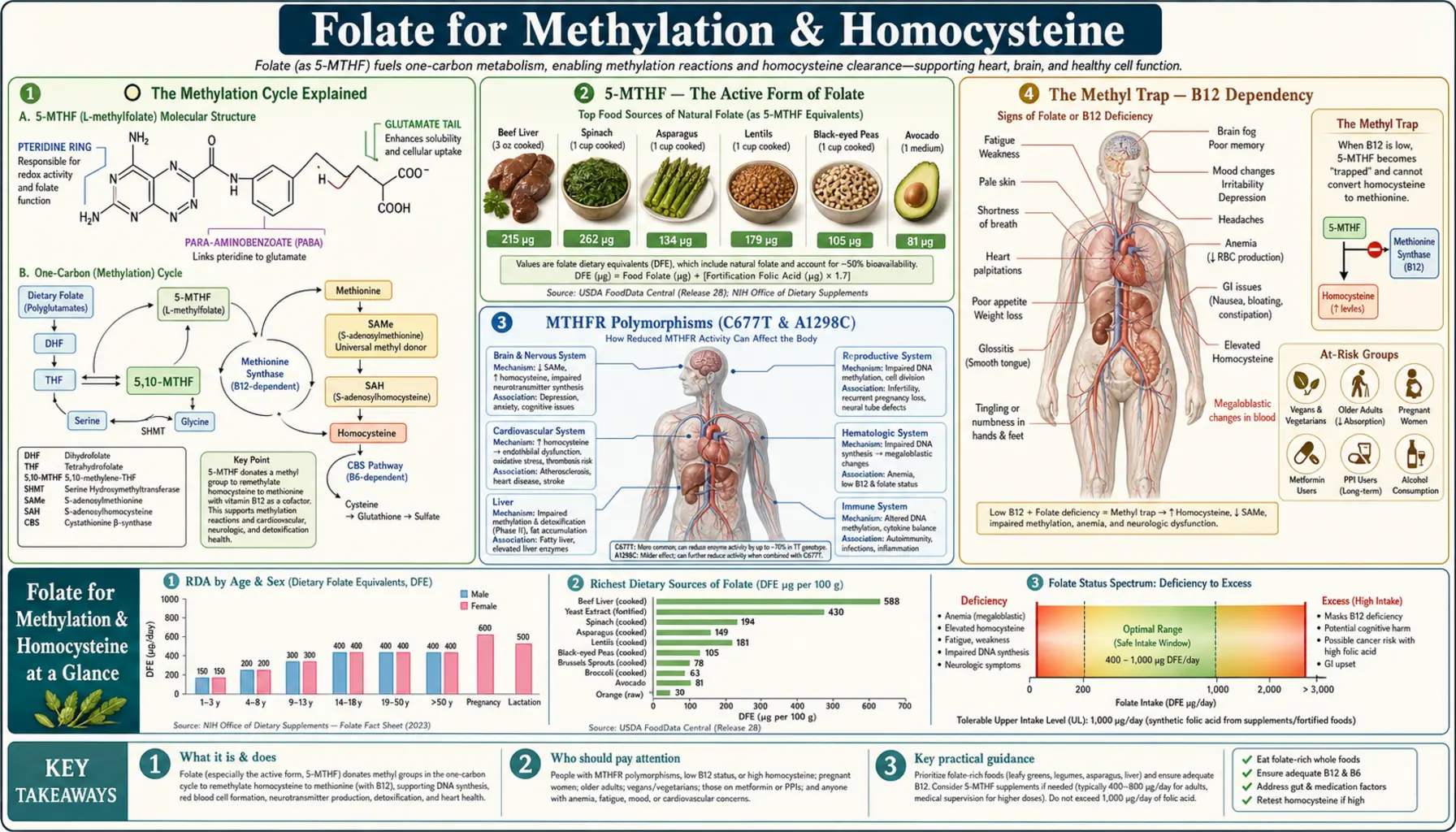
Folate carries one-carbon units in the body. In its main circulating form, 5-methyltetrahydrofolate (5-MTHF), it supplies the methyl group that turns homocysteine back into methionine, a reaction that also needs vitamin B12. Methionine is then made into S-adenosylmethionine (SAMe), the methyl donor for DNA, RNA, neurotransmitters, phospholipids and proteins (Selhub 2002; Crider 2012). The enzyme MTHFR makes 5-MTHF, and a common variant of its gene, C677T, lowers the enzyme's activity (Frosst 1995). CDC states that people with an MTHFR variant can process all types of folate, including folic acid, and that folic acid is the only type of folate shown to help prevent neural tube defects. Large randomized trials found that lowering homocysteine with folic acid and other B vitamins did not reduce heart attacks or deaths; a Cochrane review found a small reduction in stroke (Martí-Carvajal 2017). This page covers the methylation cycle, the MTHFR variants, the methyl trap that links folate with B12, what studies comparing folic acid with 5-MTHF found, unmetabolized folic acid, and the cardiovascular and cognitive trials.
Table of Contents
- The Methylation Cycle Explained
- 5-MTHF — The Main Circulating Form of Folate
- MTHFR Polymorphisms (C677T & A1298C)
- The Methyl Trap — B12 Dependency
- Methylfolate vs Synthetic Folic Acid: What Studies Compared
- The Unmetabolized Folic Acid (UMFA) Concern
- DHFR Activity & the 200 mcg Threshold
- Supplement Forms: 5-MTHF Salts, L-Methylfolate, Folinic Acid
- Homocysteine-Lowering Trials: Heart Disease and Stroke
- The VITACOG Cognitive Trial
- Testing Folate, Homocysteine, MTHFR
- Cautions
- Key Research Papers
- Connections
- Featured Videos
The Methylation Cycle Explained
Methylation is the transfer of a methyl (CH3) group onto another molecule. S-adenosylmethionine (SAM or SAMe) is the cofactor and methyl donor for the methylation of DNA, RNA, neurotransmitters and other small molecules, phospholipids, and proteins including histones (Crider 2012). Selhub describes SAM as a universal donor of methyl groups (Selhub 2002).
The cycle, as described in Crider and colleagues' 2012 review:
- Folate enters the pool. Absorbed food folate is metabolized to 5-MTHF (in its monoglutamate form) in the intestine and/or liver. Folic acid is first reduced by dihydrofolate reductase (DHFR) to dihydrofolate and then to tetrahydrofolate (THF).
- THF → 5,10-methylene-THF → 5-MTHF. THF is converted to 5,10-methylene-THF by the vitamin B6-dependent enzyme serine hydroxymethyltransferase, which is then irreversibly reduced to 5-MTHF by methylenetetrahydrofolate reductase (MTHFR).
- 5-MTHF + homocysteine → methionine. 5-MTHF donates its methyl group to homocysteine through the vitamin B12-dependent methionine synthase reaction.
- Methionine → SAM → SAH. Methionine is the substrate for SAM. After donating its methyl group, SAM becomes S-adenosylhomocysteine (SAH), a potent product inhibitor of SAM-dependent methyltransferases.
- SAH → homocysteine. SAH is hydrolyzed to homocysteine; the review describes continual hydrolysis of SAH as essential to maintain normal DNA methylation.
Other nutrients are needed to keep this flux going: vitamin B6 (serine hydroxymethyltransferase), riboflavin (MTHFR stability), vitamin B12 (methionine synthase), and choline, a precursor of betaine, which serves as a methyl source in the liver through betaine:homocysteine methyltransferase (Crider 2012). Selhub notes that methylene-THF is also used to make thymidine for DNA, and that it can be oxidized to formyl-THF, which is used to make purines (Selhub 2002).
Selhub's 2002 review describes slightly elevated plasma homocysteine as a risk factor for cardiovascular disease, stroke and thrombosis in observational data, and reports associations with loss of cognitive function and Alzheimer's disease. He also states that more studies are needed to confirm that these vitamins play important roles in causing these diseases. Whether lowering homocysteine changes these outcomes was tested in the randomized trials described in the cardiovascular and VITACOG sections.
5-MTHF — The Main Circulating Form of Folate
Pietrzik, Bailey and Shane's 2010 review describes L-5-methyltetrahydrofolate (L-5-MTHF) as the predominant form of dietary folate and the only form normally found in the circulation, so it is the folate normally carried into tissues. Folic acid, by contrast, is a synthetic form found only in fortified foods, supplements and pharmaceuticals; it lacks coenzyme activity and must be reduced to tetrahydrofolate inside the cell (Pietrzik 2010).
The main folate forms named in the sources on this page:
- Folic acid: the synthetic form used in fortification and supplements (Pietrzik 2010). It is reduced by DHFR to dihydrofolate and then to THF (Crider 2012).
- Tetrahydrofolate (THF): the form into which folic acid and dietary folate are converted before entering the one-carbon cycle; it is the best substrate for polyglutamate synthetase, the enzyme that lets cells retain folate (Crider 2012).
- 5,10-methylene-THF: used for thymidine synthesis (DNA) and the substrate that MTHFR reduces to 5-MTHF (Selhub 2002; Crider 2012).
- Formyl-THF: used for purine synthesis (Selhub 2002).
- Folinic acid: used with methotrexate in rheumatoid arthritis (Shea 2013) and, in children with cerebral folate deficiency, shown to normalize 5-MTHF in the cerebrospinal fluid (Ramaekers 2005).
- 5-MTHF: the form that donates its methyl group to homocysteine (Crider 2012). Tissues other than the liver take up mainly 5-MTHF, which must be converted to THF through the methionine synthase reaction before cells can retain it (Crider 2012).
How fast folic acid is converted has been studied directly. Crider's 2012 review states that folic acid from fortified foods or supplements is metabolized primarily to 5-MTHF during intestinal absorption and/or first pass through the liver, after which it behaves identically to natural dietary folate. In six human liver samples, Bailey and Ayling measured DHFR activity toward folic acid at, on average, less than 2% of that in rat liver, with almost a 5-fold variation between people. They suggested that the benefit of high folic acid doses will be limited by saturation of DHFR, and noted that this fits reports of unmetabolized folic acid in plasma and urine (Bailey 2009).
MTHFR Polymorphisms (C677T & A1298C)
MTHFR catalyzes the reduction of 5,10-methylene-THF to 5-MTHF, the predominant circulating form of folate and the carbon donor for remethylating homocysteine (Frosst 1995). Two common variants of the gene are described in the literature.
C677T (rs1801133)
- What it does: Frosst and colleagues found the substitution on about 38% of unselected chromosomes. In the heterozygous or homozygous state it was linked to reduced enzyme activity and greater heat-sensitivity (thermolability) in lymphocyte extracts, and people with two copies had significantly higher plasma homocysteine (Frosst 1995).
- How common the TT genotype is: from 1% or less among Black populations in Africa and the US to 20% or more among Italians and US Hispanics (Botto 2000); about 10% of North Americans (Weisberg 1998). CDC states: “More people in the United States have one or two copies of the MTHFR C677T variant than don't have it.”
- Homocysteine: Weisberg and colleagues describe TT individuals as predisposed to mildly elevated homocysteine when their folate status is low (Weisberg 1998).
- Neural tube defects: in Botto and Yang's pooled analysis, TT in the infant was associated with a moderately higher risk of spina bifida (odds ratio 1.8, 95% CI 1.4-2.2), and maternal TT also appeared to be a moderate risk factor (odds ratio 2.0, 95% CI 1.5-2.8). Studies of other outcomes (oral clefts, Down syndrome) had conflicting or unreplicated results (Botto 2000).
- Blood folate: in a meta-analysis of 40 studies, red blood cell folate measured by microbiologic assay was 16% higher in CC than in TT women (95% credible interval 12-20%) (Tsang 2015).
- Response to folic acid: Crider and colleagues gave 932 genotyped women in northern China 100, 400 or 4,000 mcg of folic acid a day, or 4,000 mcg a week, for 6 months. Folate was lower in TT women at every dose, but genotype did not significantly interact with folic acid dose. The 100 mcg/day and 4,000 mcg/week doses did not lower high homocysteine in TT women (Crider 2011).
A1298C (rs1801131)
- A substitution that changes a glutamate into an alanine. In van der Put's Dutch study the allele frequency was 0.33; the variant lowered MTHFR activity, more so in homozygotes than heterozygotes, but neither state was associated with higher plasma homocysteine or lower plasma folate (van der Put 1998).
- Weisberg and colleagues found homozygosity in about 10% of Canadian individuals, with about 60% of control enzyme activity in lymphocytes (Weisberg 1998).
Compound heterozygosity (C677T + A1298C)
- About 15% of individuals in Weisberg's Canadian sample carried one copy of each variant, with 50-60% of control enzyme activity, lower than in single C677T heterozygotes (Weisberg 1998).
- Van der Put and colleagues found that combined heterozygosity produced features similar to C677T homozygosity (lower activity, higher homocysteine, lower plasma folate). It was seen in 28% of 86 NTD patients and 20% of 403 controls (odds ratio 2.04, 95% CI 0.9-4.7), a confidence interval that includes no difference (van der Put 1998).
Riboflavin (vitamin B2)
Riboflavin is the cofactor for MTHFR and is listed among the nutrients needed for MTHFR stability (Crider 2012; Wilson 2012). In a 4-year follow-up from Ulster, 31 patients with cardiovascular disease and the TT genotype took riboflavin (1.6 mg/day for 16 weeks) or placebo in a crossover design. Riboflavin lowered systolic blood pressure by 9.2 mm Hg and diastolic by 6.0 mm Hg on average. The authors described the findings as having implications for hypertension prevention if they are confirmed in the general population (Wilson 2012).
What CDC states about MTHFR and folic acid
CDC's MTHFR Gene Variant and Folic Acid Facts page states: “People with an MTHFR gene variant can process all types of folate, including folic acid.” It continues: “Folic acid is the only type of folate shown to help prevent neural tube defects (NTDs).” It also states: “Your folic acid intake is more important than your MTHFR genotype for determining the amount of folate in your blood.” On the claim that people with a variant need 5-MTHF instead of folic acid, the page says: “However, this is not true.” The studies that compared 5-MTHF with folic acid by genotype measured blood folate and homocysteine, not clinical outcomes; they are summarized in the comparison section.
The Methyl Trap — B12 Dependency
The “methyl trap” hypothesis explains why folate deficiency and vitamin B12 deficiency can produce the same blood picture. Shane and Stokstad's 1985 review summarizes it this way:
- MTHFR's conversion of 5,10-methylene-THF to 5-MTHF is irreversible (Crider 2012), so folate in the 5-MTHF form can only return to THF through the B12-dependent methionine synthase reaction.
- Vitamin B12 deficiency can lower methionine synthase activity. An increasing share of folate is then trapped as 5-MTHF, producing a functional folate deficiency (Shane 1985).
- Because 5-MTHF is a poor substrate for the enzyme that adds glutamate tails, tissues also retain less folate, causing a real folate deficiency that the authors consider probably as important as the trap itself (Shane 1985).
- The authors add that B12 deficiency would have to lower methionine synthase levels before folate metabolism is disturbed (Shane 1985).
What B12 deficiency does:
- B12 is the coenzyme for methionine synthase and for methylmalonyl-CoA mutase; deficiency leads to accumulation of homocysteine and methylmalonic acid (MMA). Clinically it leads to neurological deterioration and megaloblastic anemia and, if untreated, to death (Hannibal 2016).
- Masking: the 1992 US Public Health Service recommendation advised keeping total folate below 1 mg a day except under a physician's supervision, because the effects of higher intakes are not well known but include complicating the diagnosis of vitamin B12 deficiency (USPHS 1992). Kelly and colleagues described masking the diagnosis of B12 deficiency in pernicious anemia, and the progression of neurologic disease, as chief among the risks of folic acid in the circulation (Kelly 1997).
- SOGC's 2015 guideline states that folic acid supplementation is unlikely to mask B12 deficiency (pernicious anemia) and that testing is not required before starting it in women considering a pregnancy; to address even theoretical concerns, it recommends folic acid in a multivitamin that includes 2.6 mcg/day of B12 (Wilson 2015). Pietrzik's review suggests that the potential for masking may be reduced with 5-MTHF (Pietrzik 2010).
Groups in which the research reports lower B12:
- Older adults: Selhub lists achlorhydria, which affects B12 absorption, among the reasons B12 status is often inadequate in the elderly (Selhub 2002).
- Metformin: in a 4.3-year randomized trial in 390 people with type 2 diabetes on insulin, metformin lowered B12 by 19% compared with placebo, and the absolute risk of B12 deficiency (<150 pmol/L) at the end of the study was 7.2 percentage points higher. The authors suggested that regular B12 measurement during long-term metformin treatment be strongly considered (de Jager 2010).
- Some antiepileptic drugs: in 2,730 treated patients, phenobarbital, pregabalin, primidone and topiramate were associated with lower B12 levels (Linnebank 2011).
Methylfolate vs Synthetic Folic Acid: What Studies Compared
A summary of what the cited sources report about the two main supplement forms:
| Aspect | Synthetic Folic Acid | 5-MTHF (Methylfolate) |
|---|---|---|
| Where it is found | Only in fortified foods, supplements and pharmaceuticals (Pietrzik 2010) | The predominant form of dietary folate and the only form normally in the circulation (Pietrzik 2010) |
| Activation | Reduced by DHFR to dihydrofolate, then THF; metabolized primarily to 5-MTHF during absorption and first pass in the liver (Crider 2012) | Already in the methyl-donor form (Crider 2012) |
| MTHFR variants | CDC: people with a variant can process all types of folate, including folic acid. TT women had lower folate at every dose, with no genotype-by-dose interaction (Crider 2011) | Raised plasma folate more than folic acid after a single dose in both TT and CC women (Prinz-Langenohl 2009) |
| Red cell folate in 24-week trials | Rose less than with 416 mcg 5-MTHF (Lamers 2006); rose similarly to 113 mcg 5-MTHF at the 100 mcg dose (Venn 2002) | See the folic acid column |
| Homocysteine (8 weeks) | Lowered it by at least 13% in all three genotypes (Fohr 2002) | Significant fall only in CT women (Fohr 2002) |
| Unmetabolized folic acid | Appears regularly in plasma after a 400 mcg dose (Prinz-Langenohl 2009) | Rarely seen (Prinz-Langenohl 2009) |
| B12-deficiency masking | SOGC 2015: unlikely to mask B12 deficiency (Wilson 2015) | Masking potential may be reduced (Pietrzik 2010) |
| Neural tube defect prevention | CDC: the only type of folate shown to help prevent NTDs; USPSTF 2023 recommends 0.4-0.8 mg folic acid daily (Barry 2023) | Comparison studies measured blood markers, not birth defects |
| Depression trials (add-on to an antidepressant) | 500 mcg with fluoxetine: greater improvement, confined to women (Coppen 2000) | L-methylfolate: no difference in the first trial; 15 mg/day better than placebo in the second (Papakostas 2012) |
The comparison trials, as reported in their abstracts:
- Lamers 2006: 144 women aged 19-33 took 400 mcg folic acid, an equimolar 416 mcg of [6S]-5-MTHF, 208 mcg of [6S]-5-MTHF, or placebo for 24 weeks. Red blood cell folate rose significantly more with 416 mcg 5-MTHF than with 400 mcg folic acid (P<0.001). No group reached a red-cell plateau in 24 weeks.
- Venn 2002: 104 women aged 18-49 took 113 mcg of [6S]-5-MTHF, 100 mcg of folic acid, or placebo for 24 weeks. Increases in plasma and red cell folate did not differ between the two forms (red cell folate rose 251 vs 275 nmol/L over placebo).
- Prinz-Langenohl 2009 (by MTHFR genotype): 16 TT and 8 CC women each took a single dose of 400 mcg folic acid and 416 mcg [6S]-5-MTHF in a crossover design. The plasma folate peak and area under the curve were higher after 5-MTHF in both genotypes. This was an 8-hour single-dose plasma study, not a measure of red cell folate or clinical outcomes.
- Fohr 2002 (homocysteine, by genotype): 160 women took 400 mcg folic acid, an equimolar 480 mcg of racemic 5-MTHF, or placebo for 8 weeks. Folic acid lowered homocysteine by at least 13% in all three genotypes, with the largest fall (20%) in TT women at 4 weeks. 5-MTHF significantly lowered homocysteine only in CT women. The authors concluded that TT women seemed to benefit most from either form, and that in CT and CC women folic acid lowered homocysteine more than 5-MTHF.
How reviews read this evidence differs. Pietrzik, Bailey and Shane report comparable physiological activity, bioavailability and absorption at equimolar doses, with 5-MTHF at least as effective as folic acid at improving folate status (Pietrzik 2010). Scaglione and Panzavolta's review argues that 5-MTHF overcomes the metabolic defects caused by the MTHFR polymorphism (Scaglione 2014); CDC's MTHFR page states the opposite, that people with a variant can process folic acid and that folic acid intake matters more than genotype for blood folate.
The Unmetabolized Folic Acid (UMFA) Concern
Folic acid that has not yet been converted can appear in the blood as unmetabolized folic acid. In NHANES 2007-2008, UMFA was detectable (>0.3 nmol/L) in more than 95% of US serum samples from both supplement users and non-users. Concentrations above 1 nmol/L were found in 33.2% of people overall and 21.0% of fasting adults, and were associated with older age, not fasting, higher total folic acid intake and higher red cell folate, among other factors (Pfeiffer 2015).
Associations and concerns reported in the literature:
- Natural killer cell activity: among 105 healthy postmenopausal women, UMFA was detected in 78% of fasting samples, and natural killer cell cytotoxicity was about 23% lower in women with detectable folic acid. Among women with a low-folate diet, those using folic acid supplements had greater NK cytotoxicity; women with a folate-rich diet who also took more than 400 mcg/day had lower NK cytotoxicity. This was an observational study, and the authors called for further studies of long-term high folic acid intake (Troen 2006).
- B12 deficiency masking: see the methyl trap section.
- Colorectal adenomas: in a randomized trial of 1,021 people with a history of colorectal adenomas, 1 mg/day of folic acid did not reduce adenoma risk. At the second follow-up, advanced lesions occurred in 11.6% with folic acid and 6.9% with placebo (risk ratio 1.67, 95% CI 1.00-2.80, P=0.05), and folic acid was associated with higher risks of three or more adenomas and of noncolorectal cancers. The authors concluded that further research is needed into the possibility that folic acid might increase the risk of colorectal neoplasia (Cole 2007).
- Autism (observational): in 1,257 Boston mother-child pairs, very high maternal plasma folate at birth (≥60.3 nmol/L) was associated with 2.5 times the risk of autism spectrum disorder (95% CI 1.3-4.6) compared with the middle 80%, and very high B12 showed a similar association. The authors call the study hypothesis-generating and state that it does not question the importance of adequate folic acid and B12 in pregnancy (Raghavan 2018). The abstract reports total plasma folate, not unmetabolized folic acid.
With 5-MTHF, unmetabolized folic acid was rarely seen in plasma (Prinz-Langenohl 2009). What UMFA means for health has not been established in the studies above.
DHFR Activity & the 200 mcg Threshold
Bailey and Ayling found human liver DHFR activity toward folic acid to be, on average, less than 2% of rat liver activity, with almost a 5-fold variation among six human samples (Bailey 2009).
The “200 mcg” figure comes from Kelly and colleagues' acute studies:
- Volunteers eating fortified ready-to-eat cereal and bread had a threshold intake of 266 mcg of folic acid per meal, above which unaltered folic acid appeared in serum. When folic acid was given in saline, milk or white bread, the threshold was also above 200 mcg (Kelly 1997).
- The authors predicted that flour fortification at 1.4 mg/kg was unlikely to cause folic acid to appear in serum if intake was spread through the day, but that a repeated serum folic acid response was likely in many women taking 400 mcg/day of folic acid (Kelly 1997).
5-MTHF does not need DHFR to enter the cycle (Crider 2012), and unmetabolized folic acid was rarely seen after it (Prinz-Langenohl 2009). The depression trials of L-methylfolate used 7.5 and 15 mg/day (Papakostas 2012).
Supplement Forms: 5-MTHF Salts, L-Methylfolate, Folinic Acid
5-MTHF calcium salt
L-5-MTHF is available commercially as a crystalline calcium salt with the stability needed for use as a supplement (Pietrzik 2010). The comparison trials on this page (Lamers 2006, Venn 2002, Prinz-Langenohl 2009) used [6S]-5-MTHF.
5-MTHF glucosamine salt
A glucosamine salt of (6S)-5-MTHF is also sold. The comparison found for it in PubMed is a single-dose pharmacokinetic study in rats (three groups of six), which reported higher plasma 5-MTHF than with the calcium salt or folic acid (Miraglia 2016). It is an animal study, not a human trial.
L-methylfolate at high doses
Papakostas and colleagues ran two trials of L-methylfolate added to an SSRI in major depressive disorder that had not responded to the SSRI. In the first (148 patients; 7.5 mg/day, then 15 mg/day) there was no significant difference between groups. In the second (75 patients; 15 mg/day), L-methylfolate was more effective than placebo on both primary outcomes, with a number needed to treat of about six, and adverse event rates did not differ from placebo (Papakostas 2012).
Folinic acid
- Methotrexate for rheumatoid arthritis: in a Cochrane review of six trials (624 patients), folic or folinic acid taken with methotrexate reduced gastrointestinal side effects (RR 0.74), abnormal liver enzymes (RR 0.23) and withdrawal from methotrexate (RR 0.39), with no significant effect on methotrexate's efficacy (Shea 2013).
- Cerebral folate deficiency: in this infantile-onset disorder, 5-MTHF in the cerebrospinal fluid is low while serum and red cell folate are normal. Blocking autoantibodies against folate receptors were found in 25 of 28 affected children and in none of 28 controls. Oral folinic acid normalized cerebrospinal-fluid 5-MTHF and was followed by clinical improvement (Ramaekers 2005).
Homocysteine-Lowering Trials: Heart Disease and Stroke
Observational studies link higher homocysteine with more heart disease and stroke (Selhub 2002; Lonn 2006). Randomized trials then tested whether lowering homocysteine with folic acid and other B vitamins prevents these events:
- HOPE-2 (Lonn 2006): 5,522 people aged 55 or older with vascular disease or diabetes took 2.5 mg folic acid, 50 mg B6 and 1 mg B12 daily, or placebo, for an average of five years. Homocysteine fell, but the combined outcome of cardiovascular death, heart attack and stroke did not differ (18.8% vs 19.8%; relative risk 0.95, 95% CI 0.84-1.07). Fewer people on the vitamins had a stroke (relative risk 0.75, 95% CI 0.59-0.97), and more were hospitalized for unstable angina (relative risk 1.24). The authors concluded the supplements did not reduce the risk of major cardiovascular events.
- NORVIT (Bønaa 2006): 3,749 people who had had a heart attack within the previous seven days took folic acid (0.8 mg) plus B12, B6, both, or placebo for a median of 40 months. Folic acid plus B12 lowered homocysteine by 27% but had no significant effect on recurrent heart attack, stroke and sudden coronary death (risk ratio 1.08, 95% CI 0.93-1.25). In the group given all three vitamins there was a trend toward higher risk (relative risk 1.22, 95% CI 1.00-1.50, P=0.05), and the authors concluded that a harmful effect was suggested.
- VISP (Toole 2004): 3,680 adults after a nondisabling ischemic stroke took a high-dose formulation (2.5 mg folic acid, 25 mg B6, 0.4 mg B12) or a low-dose one for 2 years. Homocysteine fell 2 μmol/L more with the high dose, but there was no treatment effect on any end point; ischemic stroke within 2 years was 9.2% vs 8.8%.
- Cochrane review (Martí-Carvajal 2017): 15 randomized trials with 71,422 participants. Compared with placebo, homocysteine-lowering B vitamins made no difference to heart attack (RR 1.02, 95% CI 0.95-1.10), death from any cause (RR 1.01) or serious adverse events (high-quality evidence). Stroke was slightly reduced (4.3% vs 5.1%; RR 0.90, 95% CI 0.82-0.99, 10 trials).
- CSPPT (Huo 2015): 20,702 adults with high blood pressure in China, with no history of stroke or heart attack, were stratified by MTHFR C677T genotype and randomized to enalapril 10 mg plus folic acid 0.8 mg or enalapril alone for a median of 4.5 years. First stroke occurred in 2.7% vs 3.4% (hazard ratio 0.79, 95% CI 0.68-0.93). Heart attack (HR 1.04) and death from any cause (HR 0.94) did not differ. The authors described the findings as consistent with benefit from folate among adults with hypertension and low baseline folate levels. The Cochrane review rated the effect of enalapril plus folic acid on stroke as uncertain because it rests on this one large trial.
The trials above used folic acid. The B9 Cardiovascular & Stroke page covers this topic in more depth.
The VITACOG Cognitive Trial
VITACOG was a single-center Oxford trial in 271 people over 70 with mild cognitive impairment. Participants took folic acid (0.8 mg/day), vitamin B12 (0.5 mg/day) and vitamin B6 (20 mg/day), or placebo, for 24 months. A subset had brain MRI scans at the start and end; the main outcome was the rate of whole-brain atrophy (Smith 2010).
Results, as reported:
- Brain atrophy: among 168 participants who completed the MRI part, the mean rate of brain atrophy was 0.76% a year with B vitamins and 1.08% a year with placebo (P=0.001). In participants with homocysteine above 13 μmol/L, the atrophy rate was 53% lower with treatment (Smith 2010).
- Brain regions: a later analysis reported that treatment reduced atrophy, by as much as seven-fold, in grey-matter regions vulnerable to Alzheimer's disease, including the medial temporal lobe, and that the benefit was confined to participants with homocysteine above the median of 11 μmol/L (Douaud 2013).
- Cognition (secondary outcomes): homocysteine was 30% lower with treatment. B vitamins stabilized executive function overall, and among participants with homocysteine above the median (11.3 μmol/L) there were benefits in global cognition, episodic memory and semantic memory. The authors described it as a small trial and called for further trials on conversion to dementia (de Jager 2012).
- Omega-3 status: in a retrospective analysis, B vitamins slowed atrophy by 40% in people with high baseline omega-3 fatty acids (>590 μmol/L) and had no significant effect in those with low levels (<390 μmol/L) (Jernéren 2015).
The VITACOG authors concluded that trials are needed to see whether the same treatment delays the development of Alzheimer's disease (Smith 2010). The trial used folic acid, not methylfolate.
Larger trials of cognitive aging
A meta-analysis of 11 large trials in 22,000 participants (B-Vitamin Treatment Trialists' Collaboration) found that B vitamins lowered homocysteine by 28% and 26% in the two sets of trials but had no significant effect on individual cognitive domains, global cognitive function or cognitive aging (Clarke 2014).
Testing Folate, Homocysteine, MTHFR
Red blood cell and serum folate
WHO guidelines, summarized by CDC in 2015, set a population-level threshold: red blood cell folate above 400 ng/mL (906 nmol/L) in women of reproductive age for the greatest reduction of neural tube defects. The threshold cannot predict an individual's risk and is only useful at the population level, and no serum folate threshold is recommended for this purpose (Cordero 2015). Blood folate rises slowly: red cell folate had not reached a plateau after 24 weeks of supplementation in either comparison trial (Lamers 2006; Venn 2002).
Homocysteine
Homocysteine rises when B12 is lacking, because B12 is the coenzyme for methionine synthase (Hannibal 2016), and folic acid lowers it (Fohr 2002; Crider 2011). Folate or B12 levels below the reference range were associated with higher homocysteine in patients on antiepileptic drugs (Linnebank 2011). See the Homocysteine lab test page for more on the test.
Methylmalonic acid (MMA)
MMA accumulates when B12 is lacking, because B12 is also the coenzyme for methylmalonyl-CoA mutase. With total B12 and holo-transcobalamin, homocysteine and MMA are the preferred serum markers of B12 status, and serum B12 alone has limited diagnostic value: low serum B12 does not always mean deficiency, and severe functional deficiency has been documented with normal or even high serum B12 (Hannibal 2016).
MTHFR genotyping
Genotyping identifies the C677T and A1298C variants. CDC states: “Your folic acid intake is more important than your MTHFR genotype for determining the amount of folate in your blood.” In Crider's trial, genotype predicted folate and homocysteine levels but did not change how they responded to folic acid dose (Crider 2011).
Cautions
- B12 deficiency — folate does not correct B12 deficiency, which causes neurological deterioration and megaloblastic anemia (Hannibal 2016). The 1992 US Public Health Service recommendation advised keeping total folate below 1 mg a day except under a physician's supervision because higher intakes can complicate diagnosis of B12 deficiency (USPHS 1992); SOGC's 2015 guideline states folic acid supplementation is unlikely to mask it (Wilson 2015). Metformin and some antiepileptic drugs are associated with lower B12 (de Jager 2010; Linnebank 2011).
- Methotrexate — methotrexate works against folic acid metabolism. In rheumatoid arthritis, folic or folinic acid taken with methotrexate (up to 25 mg/week) reduced side effects without a significant loss of efficacy (Shea 2013). Pietrzik's review suggests 5-MTHF may interact less with drugs that inhibit DHFR (Pietrzik 2010).
- Antiepileptic drugs — carbamazepine, gabapentin, oxcarbazepine, phenytoin, primidone and valproate were associated with lower serum folate, and folate or B12 below the reference range with higher homocysteine. Three months of vitamin replacement in 141 patients with low levels restored normal levels in 95% (Linnebank 2011).
- Cerebral folate deficiency — serum folate can be normal while cerebrospinal-fluid 5-MTHF is low; oral folinic acid normalized it in the children studied (Ramaekers 2005).
- Pregnancy — the USPSTF (2023, grade A) recommends that all persons planning to or who could become pregnant take a daily supplement containing 0.4 to 0.8 mg of folic acid (Barry 2023). CDC states that folic acid is the only type of folate shown to help prevent neural tube defects and that people with an MTHFR variant can process it. The Pregnancy & Neural Tube page covers the trials and guidelines.
- Colorectal adenomas — 1 mg/day of folic acid did not prevent adenomas in people with a history of them, and the trial raised the possibility of more advanced lesions (Cole 2007). See the UMFA section.
Decisions about folate supplements, and about testing, belong with a clinician.
Key Research Papers
- Frosst P et al. (1995). A candidate genetic risk factor for vascular disease: a common mutation in methylenetetrahydrofolate reductase. Nat Genet 10:111-3. — PubMed PMID: 7647779
- Smith AD et al. (2010). Homocysteine-lowering by B vitamins slows the rate of accelerated brain atrophy in mild cognitive impairment: a randomized controlled trial. PLoS ONE (VITACOG). — PubMed PMID: 20838622
- de Jager CA et al. (2012). Cognitive and clinical outcomes of homocysteine-lowering B-vitamin treatment in mild cognitive impairment: a randomized controlled trial. Int J Geriatr Psychiatry. — PubMed PMID: 21780182
- Jerneren F et al. (2015). Brain atrophy in cognitively impaired elderly: the importance of long-chain omega-3 fatty acids and B vitamin status in a randomized controlled trial. Am J Clin Nutr. — PubMed PMID: 25877495
- Troen AM et al. (2006). Unmetabolized folic acid in plasma is associated with reduced natural killer cell cytotoxicity among postmenopausal women. J Nutr. — PubMed PMID: 16365081
- Pietrzik K et al. (2010). Folic acid and L-5-methyltetrahydrofolate: comparison of clinical pharmacokinetics and pharmacodynamics. Clin Pharmacokinet. — PubMed PMID: 20608755
- Wilson CP et al. (2012). Riboflavin offers a targeted strategy for managing hypertension in patients with the MTHFR 677TT genotype: a 4-y follow-up. Am J Clin Nutr. — PubMed PMID: 22277556
- McNulty H et al. (2019). Effect of continued folic acid supplementation beyond the first trimester of pregnancy on cognitive performance in the child: a follow-up study from a randomized controlled trial (FASSTT Offspring Trial). BMC Med 17:196. — PubMed PMID: 31672132
- Bailey SW, Ayling JE (2009). The extremely slow and variable activity of dihydrofolate reductase in human liver and its implications for high folic acid intake. Proc Natl Acad Sci. — PubMed PMID: 19706381
- Selhub J (2002). Folate, vitamin B12 and vitamin B6 and one carbon metabolism. J Nutr Health Aging 6:39-42. — PubMed PMID: 11813080
- Scaglione F, Panzavolta G (2014). Folate, folic acid and 5-methyltetrahydrofolate are not the same thing. Xenobiotica. — PubMed PMID: 24494987
- Crider KS et al. (2012). Folate and DNA methylation: a review of molecular mechanisms and the evidence for folate's role. Adv Nutr 3:21-38. — PubMed PMID: 22332098
- Botto LD, Yang Q (2000). 5,10-Methylenetetrahydrofolate reductase gene variants and congenital anomalies: a HuGE review. Am J Epidemiol 151:862-77. — PubMed PMID: 10791559
- Weisberg I et al. (1998). A second genetic polymorphism in methylenetetrahydrofolate reductase (MTHFR) associated with decreased enzyme activity. Mol Genet Metab 64:169-72. — PubMed PMID: 9719624
- van der Put NM et al. (1998). A second common mutation in the methylenetetrahydrofolate reductase gene: an additional risk factor for neural-tube defects? Am J Hum Genet 62:1044-51. — PubMed PMID: 9545395
- Tsang BL et al. (2015). Assessing the association between the methylenetetrahydrofolate reductase (MTHFR) 677C>T polymorphism and blood folate concentrations: a systematic review and meta-analysis of trials and observational studies. Am J Clin Nutr 101:1286-94. — PubMed PMID: 25788000
- Crider KS et al. (2011). MTHFR 677C→T genotype is associated with folate and homocysteine concentrations in a large, population-based, double-blind trial of folic acid supplementation. Am J Clin Nutr 93:1365-72. — PubMed PMID: 21508090
- Lamers Y et al. (2006). Red blood cell folate concentrations increase more after supplementation with [6S]-5-methyltetrahydrofolate than with folic acid in women of childbearing age. Am J Clin Nutr 84:156-61. — PubMed PMID: 16825690
- Venn BJ et al. (2002). Increases in blood folate indices are similar in women of childbearing age supplemented with [6S]-5-methyltetrahydrofolate and folic acid. J Nutr 132:3353-5. — PubMed PMID: 12421850
- Prinz-Langenohl R et al. (2009). [6S]-5-methyltetrahydrofolate increases plasma folate more effectively than folic acid in women with the homozygous or wild-type 677C→T polymorphism of methylenetetrahydrofolate reductase. Br J Pharmacol 158:2014-21. — PubMed PMID: 19917061
- Fohr IP et al. (2002). 5,10-Methylenetetrahydrofolate reductase genotype determines the plasma homocysteine-lowering effect of supplementation with 5-methyltetrahydrofolate or folic acid in healthy young women. Am J Clin Nutr 75:275-82. — PubMed PMID: 11815318
- US Preventive Services Task Force; Barry MJ et al. (2023). Folic Acid Supplementation to Prevent Neural Tube Defects: US Preventive Services Task Force Reaffirmation Recommendation Statement. JAMA 330:454-459. — PubMed PMID: 37526713
- US Public Health Service / CDC (1992). Recommendations for the use of folic acid to reduce the number of cases of spina bifida and other neural tube defects. MMWR Recomm Rep 41(RR-14):1-7. — PubMed PMID: 1522835
- Wilson RD et al. SOGC (2015). Pre-conception Folic Acid and Multivitamin Supplementation for the Primary and Secondary Prevention of Neural Tube Defects and Other Folic Acid-Sensitive Congenital Anomalies. J Obstet Gynaecol Can 37:534-52. — PubMed PMID: 26334606
- Shane B, Stokstad EL (1985). Vitamin B12-folate interrelationships. Annu Rev Nutr 5:115-41. — PubMed PMID: 3927946
- Hannibal L et al. (2016). Biomarkers and Algorithms for the Diagnosis of Vitamin B12 Deficiency. Front Mol Biosci 3:27 (corrigendum 2017, PMID 28798917). — PubMed PMID: 27446930
- de Jager J et al. (2010). Long term treatment with metformin in patients with type 2 diabetes and risk of vitamin B-12 deficiency: randomised placebo controlled trial. BMJ 340:c2181. — PubMed PMID: 20488910
- Linnebank M et al. (2011). Antiepileptic drugs interact with folate and vitamin B12 serum levels. Ann Neurol 69:352-9. — PubMed PMID: 21246600
- Kelly P et al. (1997). Unmetabolized folic acid in serum: acute studies in subjects consuming fortified food and supplements. Am J Clin Nutr 65:1790-5. — PubMed PMID: 9174474
- Pfeiffer CM et al. (2015). Unmetabolized folic acid is detected in nearly all serum samples from US children, adolescents, and adults. J Nutr 145:520-31. — PubMed PMID: 25733468
- Cole BF et al. (2007). Folic acid for the prevention of colorectal adenomas: a randomized clinical trial. JAMA 297:2351-9. — PubMed PMID: 17551129
- Raghavan R et al. (2018). Maternal Multivitamin Intake, Plasma Folate and Vitamin B12 Levels and Autism Spectrum Disorder Risk in Offspring. Paediatr Perinat Epidemiol 32:100-111. — PubMed PMID: 28984369
- Miraglia N et al. (2016). Enhanced oral bioavailability of a novel folate salt: comparison with folic acid and a calcium folate salt in a pharmacokinetic study in rats. Minerva Ginecol 68:99-105. — PubMed PMID: 27008238
- Papakostas GI et al. (2012). L-methylfolate as adjunctive therapy for SSRI-resistant major depression: results of two randomized, double-blind, parallel-sequential trials. Am J Psychiatry 169:1267-74. — PubMed PMID: 23212058
- Coppen A, Bailey J (2000). Enhancement of the antidepressant action of fluoxetine by folic acid: a randomised, placebo controlled trial. J Affect Disord 60:121-30. — PubMed PMID: 10967371
- Shea B et al. (2013). Folic acid and folinic acid for reducing side effects in patients receiving methotrexate for rheumatoid arthritis. Cochrane Database Syst Rev CD000951. — PubMed PMID: 23728635
- Ramaekers VT et al. (2005). Autoantibodies to folate receptors in the cerebral folate deficiency syndrome. N Engl J Med 352:1985-91. — PubMed PMID: 15888699
- Lonn E et al.; HOPE 2 Investigators (2006). Homocysteine lowering with folic acid and B vitamins in vascular disease. N Engl J Med 354:1567-77. — PubMed PMID: 16531613
- Bønaa KH et al.; NORVIT Trial Investigators (2006). Homocysteine lowering and cardiovascular events after acute myocardial infarction. N Engl J Med 354:1578-88. — PubMed PMID: 16531614
- Toole JF et al. (2004). Lowering homocysteine in patients with ischemic stroke to prevent recurrent stroke, myocardial infarction, and death: the Vitamin Intervention for Stroke Prevention (VISP) randomized controlled trial. JAMA 291:565-75. — PubMed PMID: 14762035
- Martí-Carvajal AJ et al. (2017). Homocysteine-lowering interventions for preventing cardiovascular events. Cochrane Database Syst Rev 8:CD006612. — PubMed PMID: 28816346
- Huo Y et al.; CSPPT Investigators (2015). Efficacy of folic acid therapy in primary prevention of stroke among adults with hypertension in China: the CSPPT randomized clinical trial. JAMA 313:1325-35. — PubMed PMID: 25771069
- Douaud G et al. (2013). Preventing Alzheimer's disease-related gray matter atrophy by B-vitamin treatment. Proc Natl Acad Sci 110:9523-8. — PubMed PMID: 23690582
- Clarke R et al.; B-Vitamin Treatment Trialists' Collaboration (2014). Effects of homocysteine lowering with B vitamins on cognitive aging: meta-analysis of 11 trials with cognitive data on 22,000 individuals. Am J Clin Nutr 100:657-66. — PubMed PMID: 24965307
- Cordero AM et al. (2015). Optimal serum and red blood cell folate concentrations in women of reproductive age for prevention of neural tube defects: World Health Organization guidelines. MMWR Morb Mortal Wkly Rep 64:421-3. — PubMed PMID: 25905896
PubMed Topic Searches
Connections
- All Vitamins
- Vitamin B9 Overview
- B9 Benefits Hub
- B9 Pregnancy & Neural Tube
- B9 Cardiovascular & Stroke
- B9 Depression & Mental Health
- Vitamin B12 (Methylcobalamin)
- Vitamin B6 (P5P)
- Vitamin B2 (Riboflavin)
- Choline
- Methionine
- Homocysteine
- Anemia (Megaloblastic)
- Depression
- Alzheimer's Disease
- Dementia
- B12 Deficiency Diagnosis
- Deficiency
- Toxicity
- History
- Sources