Medicines and Oils
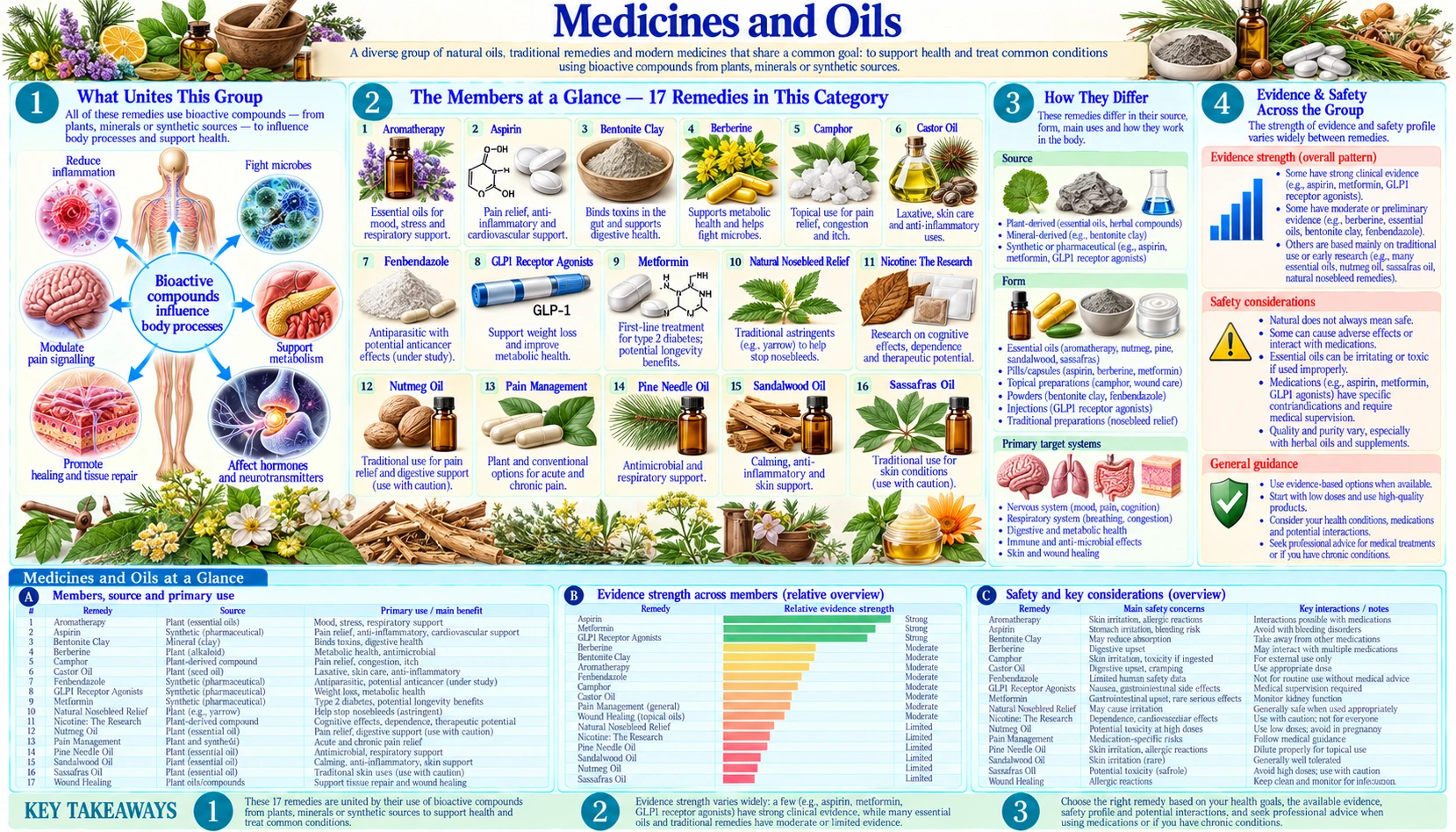
The Remedies (19)
Castor Oil
Oil pressed from castor seeds, a long-used stimulant laxative that is also applied to skin and studied for labor induction.
Read the deep dive →Berberine
A bright yellow plant alkaloid studied extensively for blood sugar, cholesterol and weight, with meta-analyses reporting improvements in type 2 diabetes markers.
Read the deep dive →Fenbendazole
A veterinary deworming drug drawing anticancer interest from anecdotal cases and lab studies; no formal human trials had been registered as of 2025.
Read the deep dive →Bentonite Clay
Volcanic clay that binds certain toxins; trials found it lowered aflatoxin exposure, but heavy-metal detox claims lack human evidence and some products carried lead.
Read the deep dive →GLP1 Receptor Agonists
Drugs that mimic the gut hormone GLP-1, studied for blood sugar, weight loss, heart and kidney outcomes, alongside side effects and muscle loss.
Read the deep dive →Metformin
The most prescribed type 2 diabetes pill worldwide, a biguanide traced to goat's rue, also researched for longevity, which remains unproven.
Read the deep dive →Wound Healing
How wounds heal in four phases, and what the evidence says about first aid, protein, vitamin C, zinc, honey and silver dressings.
Read the deep dive →Aromatherapy
The practice of inhaling or massaging in diluted plant essential oils, studied for anxiety, short-term stress, sleep and nausea, with modest measured benefits.
Read the deep dive →Aspirin
A century-old drug that irreversibly blocks COX enzymes, studied for heart attack and stroke prevention, pain, fever and colorectal cancer, with bleeding risks.
Read the deep dive →Pain Management
Non-prescription pain approaches graded by evidence, from movement and psychological therapies with strong trial support to heat, TENS, herbs and acupuncture.
Read the deep dive →Natural Nosebleed Relief
Covers how pressure on the soft nose stops a nosebleed, prevention with humidity, saline and petrolatum, and warning signs that need medical care.
Read the deep dive →Sandalwood Oil
Fragrant heartwood oil once taken as a urinary antiseptic, though not a modern infection treatment; now studied for skin inflammation and aroma.
Read the deep dive →Nutmeg Oil
Essential oil of the nutmeg seed, once a Dispensatory remedy for gas and aching joints; swallowing it can cause serious myristicin poisoning.
Read the deep dive →Pine Needle Oil
Oil steam-distilled from pine needles, historically inhaled with steam for chest congestion; the effect is mainly comforting, with antimicrobial activity in lab studies.
Read the deep dive →Sassafras Oil
Root-bark oil that once flavored root beer; it is mostly safrole, an animal carcinogen banned from US food since 1960.
Read the deep dive →Camphor
Sharp-smelling compound in chest rubs and balms; a trial found modest relief of children's night cough, but swallowed it can cause seizures.
Read the deep dive →Nicotine: The Research
The tobacco alkaloid acting on nicotinic receptors; a PubMed research collection on memory, Parkinson's, bowel inflammation, mood, pain, cancer biology and toxicity.
Read the deep dive →Ibogaine
The alkaloid from the root bark of the African shrub Tabernanthe iboga: its ceremonial and research history, how it acts in the brain, and the published heart-rhythm findings.
Read the deep dive →DMSO
A solvent made from wood-pulp by-products; FDA-approved only as a bladder solution for interstitial cystitis; trials of skin use for pain disagree; it carries other substances through skin.
Read the deep dive →Pharmaceuticals used off-label, over-the-counter drugs, and the medicinal oils and clays. This is where dose, interaction and prescribing status matter most, so each page leads with them.
A remedy is filed here by what it claims to do, not by a judgement that it works. This section deliberately covers practices whose own pages conclude they do not — read the page before the category name.