Bodywork and Manual Therapies
The Remedies (17)
Cupping
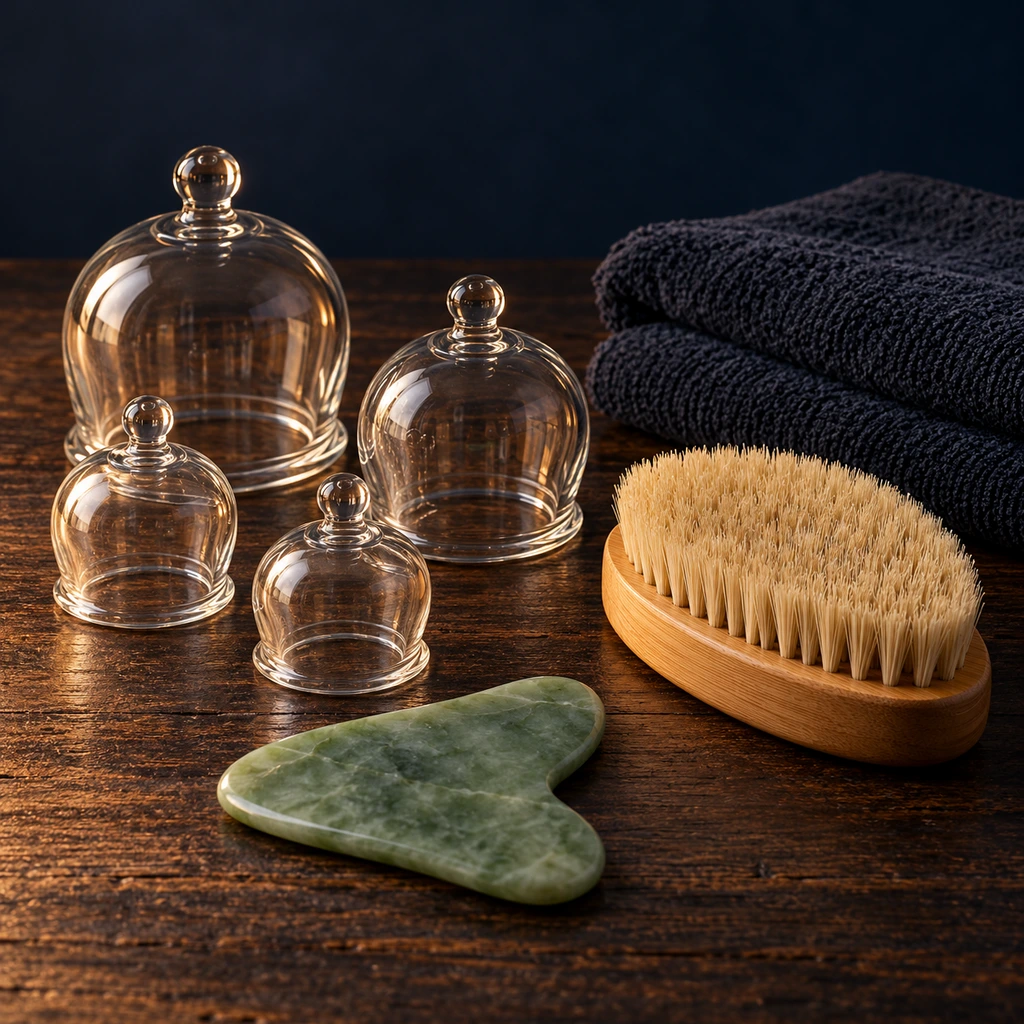
Suction cups drawing up the skin, rooted in Chinese and Middle Eastern tradition; reviews report modest short-term pain relief in low-quality trials.
Read the deep dive →Massage
Hands-on kneading and stroking of muscles and soft tissue; studied for back and neck pain, stress and sleep, with modest, short-lived benefits.
Read the deep dive →Reflexology
Pressure on mapped points of the feet said to link to organs; the maps lack anatomical basis, though sessions may ease anxiety.
Read the deep dive →Gua Sha
East Asian skin-scraping with a smooth tool that raises bruise-like marks; small trials report short-term relief of neck and back pain.
Read the deep dive →Lymphatic Drainage
A very light, rhythmic skin-stretching massage; an established part of lymphedema care, while spa detox and cellulite claims are unsupported.
Read the deep dive →Chiropractic
A licensed profession built around spinal manipulation; trials support modest relief for low-back and neck pain, with rare serious neck risks.
Read the deep dive →Rolfing
Deep, sustained fascial bodywork over a ten-session series, also called Structural Integration; evidence is limited, small and mixed.
Read the deep dive →Dry Brushing
Sweeping a dry bristle brush over the skin before bathing; it exfoliates, but lymph, detox and cellulite claims lack evidence.
Read the deep dive →Acupuncture
Thin needles placed at chosen skin points, from Traditional Chinese Medicine; best evidence is for several kinds of chronic pain and nausea.
Read the deep dive →Craniosacral Therapy
Feather-light touch on the skull, spine and sacrum; studies find no measurable cranial rhythm, though many people find sessions calming.
Read the deep dive →Osteopathy
Manual treatment founded in 1870s America; in the US a DO is a full physician, and studies support modest help for low-back pain.
Read the deep dive →Feldenkrais
Slow, gentle movement lessons that retrain habitual patterns; small-to-moderate trials support better balance in older adults and some pain relief.
Read the deep dive →Applied Kinesiology
Muscle-strength testing said to reveal allergies, deficiencies and organ problems; blinded studies find its results no better than chance.
Read the deep dive →Alexander Technique
A taught method for releasing habitual neck, head and back tension; a large trial found lasting gains in chronic low back pain.
Read the deep dive →Physical Therapy
A licensed profession using exercise, hands-on care and education; strong trial evidence covers back pain, arthritis, stroke rehabilitation and surgery recovery.
Read the deep dive →Reiki
A Japanese light-touch or no-touch energy practice from the 1920s; small trials report short-term calm, but no proven effect on disease.
Read the deep dive →Bowen Therapy
Light rolling thumb moves over muscle and fascia, separated by resting pauses; research is small, preliminary and mostly low in quality.
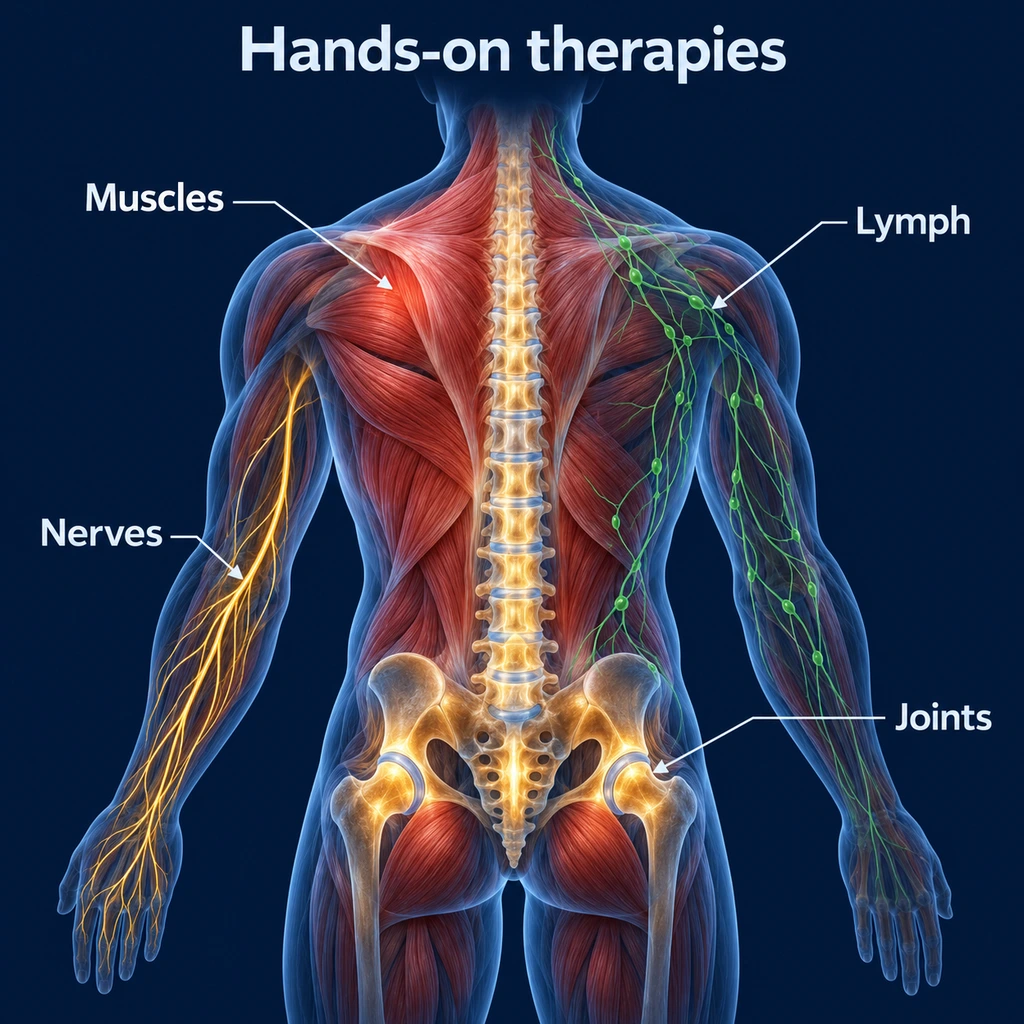
Read the deep dive →Hands-on techniques, whether practitioner-administered or self-applied. They range from physical therapy, which is standard care, to methods with no demonstrated mechanism at all — the category groups them by what is done to the body, not by whether it works, and each page reaches its own verdict.
A remedy is filed here by what it claims to do, not by a judgement that it works. This section deliberately covers practices whose own pages conclude they do not — read the page before the category name.