Nicotine Patches for Long COVID: The Leitzke 2023 Cases Dr. Ardis Cites

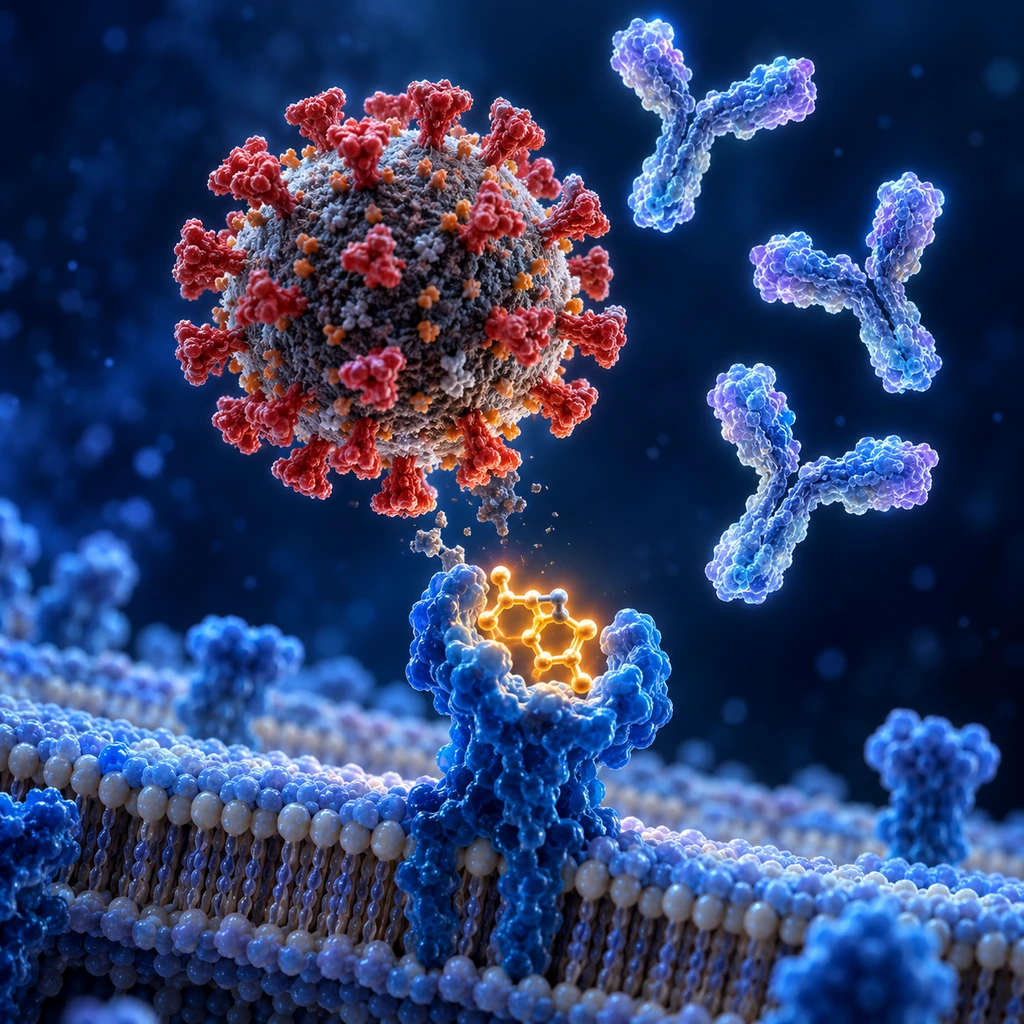
Table of Contents
- Why This Paper Matters to Dr. Ardis
- The Paper at a Glance
- The Hypothesis in Plain Words
- How the Patches Were Used
- Case 1: Lost Smell and Taste at 19
- Case 2: Fatigue and Poor Concentration at 31
- Case 3: An Accidental Double Dose at 41
- Case 4: A Second Patch Added at 52
- What the Author Concluded
- Dr. Ardis’s Protocol Built on It
- Dr. Ardis’s Own Work
- Key Research Papers
- Connections
- Featured Videos
1. Why This Paper Matters to Dr. Ardis
When Dr. Bryan Ardis talks about long COVID, this is the study he cites. He refers to it as the work of “Mark Lemke” and sums it up as “six days of a seven milligram nicotine patch.”
In his words, “on the third day, half of all their symptoms disappeared,” and he describes all of the symptoms as gone within six days. The paper fits his wider view of nicotine, which he calls “the antidote to all viruses” (Myers Detox Podcast #607).
Two details help anyone looking the paper up:
- The author is Dr. Marco Leitzke — the name to search for.
- The patch strength in the paper is 7.5 mg/24 h, which the paper calls “the lowest available dosage.” The patch in Dr. Ardis’s own handout is 7 mg (section 10).
Dr. Ardis lists some 21 long-hauler symptoms. Among them are chronic fatigue, dizziness, breathing difficulty, low-grade fever, loss of taste and smell, memory lapses, muscle pain, diarrhoea, poor concentration, sleep problems, mood disorders, headaches, chest tightness, heart palpitations, cognitive impairment and exercise intolerance.
Many of those are the complaints of the four patients in the paper: fatigue, lost smell and taste, poor concentration, sleep problems, mood swings, chest tightness and palpitations among them.
2. The Paper at a Glance
| Item | Detail |
|---|---|
| Title | “Is the post-COVID-19 syndrome a severe impairment of acetylcholine-orchestrated neuromodulation that responds to nicotine administration?” |
| Author | Dr. Marco Leitzke |
| Journal | Bioelectronic Medicine, volume 9, article 2 |
| Published | 18 January 2023 |
| Type | A hypothesis paper with four case reports |
| Patients | Four adults aged 19 to 52, all nicotine-naïve |
| Identifiers | PubMed PMID: 36650574 · PMCID PMC9845100 · doi:10.1186/s42234-023-00104-7 |
| Read it free | Open-access full text (PMC9845100) |
The paper is written about post-COVID patients who cannot manage everyday activities “due to weakness, memory lapses, pain, dyspnea and other unspecific physical complaints.” Dyspnea is the medical word for breathlessness.
Its abstract sums up what the author saw once the patches were on: “we witnessed improvements ranging from immediate and substantial to complete remission in a matter of days.” Remission means the symptoms ease or disappear.
3. The Hypothesis in Plain Words

The paper’s idea turns on nicotinic acetylcholine receptors, or nAChRs. Acetylcholine (ACh) is a messenger the body makes itself, and the paper calls it “the natural ligand” of these receptors — a ligand being a molecule that fits a receptor, like a key in a lock. Nicotine fits the same receptors.
The paper lays the idea out as a chain:
- The spike fits a second lock. The spike protein on the virus “attaches not only to ACE-2 receptors but also shows … sections highly affine to nicotinic acetylcholine receptors (nAChRs)” — parts of it bind these receptors closely.
- The body’s own signal is pushed aside. In the paper’s figure, the virus attaches to nAChRs, “displacing the natural ligand (ACh).” The paper’s title asks whether post-COVID syndrome is “a severe impairment of acetylcholine-orchestrated neuromodulation.”
- Nicotine holds on harder. “The agonist ligand nicotine shows an up to 30-fold higher affinity to nACHRs than acetylcholine (ACh).” An agonist switches a receptor on; affinity is how tightly a molecule binds.
- The virus is pushed off. “Due to the high affinity of nicotine to nAChRs, the virus is extruded from the attachment to nAChRs by nicotine.” Antibodies then capture the released virus.
- The signal is freed. The author hypothesizes that nicotine “could displace the virus from nAChR attachment and pave the way for unimpaired cholinergic signal transmission” — cholinergic meaning carried by acetylcholine.
The paper adds a second effect. Nicotine up-regulates one type of nicotinic receptor, called α4β2: the high-affinity share of these receptors rises from 25% up to 70%, and their channel opens up to three times as often.
Dr. Ardis makes a parallel comparison in his own terms. He says nicotine binds alpha-7 receptors with “approximately 30 times higher binding ability than venoms do,” so venom or spike cannot attach, or is displaced (The Dr. Ardis Show, 28 August 2023). The paper’s comparison is with acetylcholine; his is with venoms. He likens it to potassium iodide filling the thyroid’s iodine receptors.
To watch acetylcholine reach nicotinic receptors in motion, see the site’s animation The Neuromuscular Junction: How a Nerve Commands a Muscle.
4. How the Patches Were Used
The method, in brief:
- Who: four adults aged 19, 31, 41 and 52, all nicotine-naïve — none had used nicotine before.
- What: a nicotine skin patch at “the lowest available dosage (7.5 mg/24 h).”
- When: once a day, in the morning.
- Tracking: each symptom scored from 0 to 5 every day, starting four days before the first patch.
Days are counted from the first patch, which is day 1. Two patients departed from the plan — one by mistake and one by choice — and the paper reports both (cases 3 and 4).
The chart puts all four cases on one day-by-day scale. Sections 5 to 8 tell each story in full.
How to read it: each bar is the days a patch was worn, and each dot is a day the paper reports a named symptom gone or restored. The open dot marks case 2’s partial return of fatigue.
5. Case 1: Lost Smell and Taste at 19

A 19-year-old man caught COVID-19 on 26 March 2021, a mild case. About three weeks later he suddenly lost his sense of smell and taste, and fatigue followed for months.
On 23 November 2021 — some eight months after the infection — he began a 7.5 mg/24 h patch and used it for seven days.
| Day | What the paper reports |
|---|---|
| By day 9 | Weakness-free |
| Day 16 | Taste fully back |
| From day 16 | Smell fully back |
6. Case 2: Fatigue and Poor Concentration at 31

A 31-year-old woman caught COVID-19 in November 2020. Afterwards she had fatigue, loss of smell and taste, poor concentration, headache and exercise intolerance — trouble coping with physical effort.
She used the 7.5 mg/24 h patch for six days.
| Day | What the paper reports |
|---|---|
| By day 4 | Fatigue reversed |
| From day 4 | Memory and concentration restored |
| From day 6 | Fatigue partly returned |
| By day 23 | Fatigue gone |
| From day 24 | Full physical performance |
Her fatigue lifted by day 4, partly came back from day 6, and was gone by day 23.
7. Case 3: An Accidental Double Dose at 41
A 41-year-old man was meant to use the 7.5 mg/24 h patch but mistakenly used 15 mg/24 h — double the strength. Within seven hours he had vomiting and diarrhoea, and he stopped after ten hours.
The paper then follows his symptoms day by day:
| Day | What the paper reports |
|---|---|
| From day 1 | Sleep problems gone |
| By day 4 | Fatigue gone |
| From day 5 | Weakness gone |
| Day 15 | Smell and taste fully back |
8. Case 4: A Second Patch Added at 52
A 52-year-old man caught COVID-19 in March 2022. He had fatigue, breathlessness, poor concentration, sleep problems, mood swings, chest tightness and palpitations.
He started on the 7.5 mg/24 h patch. On day 3 he added a second patch himself, and on day 4 he stopped, after a near-complete remission.
| Day | What the paper reports |
|---|---|
| From day 1 | Concentration problems gone |
| From day 5 | Sleep and mood problems gone |
| Day 6 | Fatigue gone; chest tightness gone |
| From day 7 | Breathlessness gone |
9. What the Author Concluded
In the paper’s conclusions, Dr. Leitzke writes:
“In all four of the cases we studied, transcutaneous use of nicotine led to a near immediate improvement in symptoms and rapid restitutio ad integrum.”
Transcutaneous means through the skin. Restitutio ad integrum is Latin for a full restoration to health.
Later in the same section:
“The ease of implementation and the good controllability of the minor side effects make randomized, double-blinded studies to investigate this treatment option more closely seem feasible. Based on the results of this case study, this treatment option—using nicotine patches to combat long-haul COVID—seems far superior to the time-consuming, often underwhelming or disappointing, costly and complex rehabilitation measures currently available to these patients.”
In plain terms, he proposes testing the patches in randomized, double-blinded studies — patients assigned to groups by chance, with neither they nor the researchers knowing who received what — and writes that such studies “seem feasible.”
10. Dr. Ardis’s Protocol Built on It
Dr. Ardis sets out his own routine in a handout, “How To Use Nicotine.” These are adult doses; this site gives no nicotine dose for children.
| Situation | What his handout says |
|---|---|
| Long COVID (long-haulers), patch | One 7 mg patch daily for a minimum of one week, or until symptoms resolve |
| Long COVID, gum instead | One 2 mg piece of gum, chewed for 10 minutes or more, four times daily, for a minimum of two weeks |
| COVID-19 vaccine injury | “C19 Vaccine Injured — Follow Long-Hauler COVID protocol above.” |
For people new to nicotine he starts lower — about 1 mg a day for a week, cut from a 7 mg patch, then about 3 mg — and if someone feels dizzy or nauseated, he says to cut the piece in half. He says he himself has worn “three and a half milligrams every day for three and a half years.”
He also explains why a few people react to the gum, in his words:
“Every cell in your body has nicotine receptors including the gut… a few people, when chewing and swallowing nicotine gum get nauseous and vomit or get loose stools. This is because so much of the venom spike proteins are attached to the nicotine receptors that line your entire bowel lining… If this happens, please switch to nicotine patches. The nicotine skips the bowels and gets absorbed into your bloodstream through your skin… This is why I do patches every day. Most people have no reaction to the gum or nicotine orally but some do, that get mitigated by using a topical nicotine patch.”
His advice in short: if the gum upsets the stomach, switch to patches.
He also names who should not use nicotine at all: “Those who have seizures… You should not take nicotine. It’s on the box.” Used and unused patches are poisonous to children and pets.
The full dose table, his prevention dose and the site’s safety notes are on the Nicotine Patch Protocol page. For his wider approach to post-vaccination symptoms, see Vaccine-Injury Recovery.
Dr. Ardis’s Own Work
- The Dr. Ardis Show — official site
- The Dr. Ardis Show, 28 August 2023 — “Venom Industrial Complex: Weaponizing Venoms”
- The Dr. Ardis Show podcast archive, April 2024 — his nicotine presentation “The Other ‘N’ Word”
- Myers Detox Podcast #607 — “Nicotine Can Reverse Brain Fog, Inflammation, Dementia, and Chronic Illness” with Dr. Bryan Ardis (transcript)
- Cosmic Reality Podcast, May 2024 — “Dr. Ardis on Nicotine, Snake Venom & Bible Messaging”
- Bryan Ardis, Moving Beyond the COVID-19 Lies: Restoring Health & Hope for Humanity (2024; ISBN 978-1-961641-22-8) — library record; see also the site’s book page
- His nicotine protocols, as documented by a reader site
Key Research Papers
- Leitzke M (2023). Is the post-COVID-19 syndrome a severe impairment of acetylcholine-orchestrated neuromodulation that responds to nicotine administration? Bioelectronic Medicine. 9:2. — PubMed PMID: 36650574
- Changeux JP, Amoura Z, Rey FA, Miyara M (2020). A nicotinic hypothesis for Covid-19 with preventive and therapeutic implications. C R Biol. 343(1):33-39. — PubMed PMID: 32720486 (Pasteur Institute; compared a spike sequence with snake-venom neurotoxins and proposed that the virus engages nicotinic receptors.)
- Alexandris N, Lagoumintzis G, Chasapis CT, et al. (2021). Nicotinic cholinergic system and COVID-19: In silico evaluation of nicotinic acetylcholine receptor agonists as potential therapeutic interventions. Toxicol Rep. 8:73-83. — PubMed PMID: 33425684
PubMed Topic Searches
Connections
- The Nicotine Patch: Skin to Bloodstream to Receptor — interactive animation
- Dr. Bryan Ardis Hub
- COVID-19: the PubMed research — the published papers on nicotine and this subject, summarised and linked, kept separate from Dr. Ardis’s claims
- Nicotine Patch Protocol
- Vaccine-Injury Recovery
- The Nicotine Hypothesis
- Nicotinic Acetylcholine Receptors
- Cobra Venom and Nicotine
- Detox and Recovery
- Nightshade Nicotine and Parkinson’s