Zinc Toxicity (Excess Zinc): Nausea and Stomach Upset
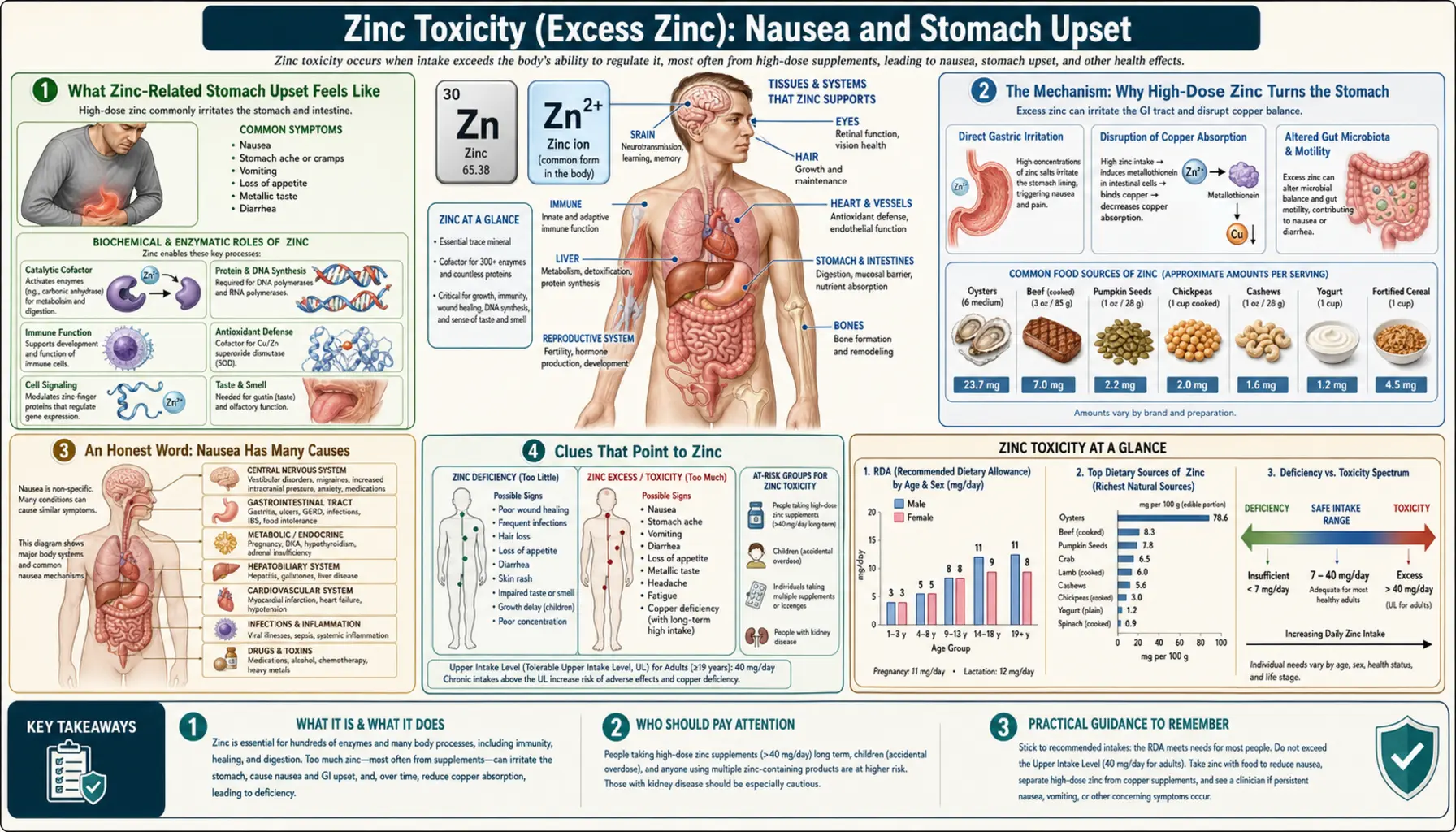
By far the most common harm from too much zinc is the most immediate one: a wave of nausea, queasiness, cramping, and sometimes vomiting that hits within an hour or two of swallowing a big dose — usually a zinc lozenge, a cold remedy, or a hefty supplement taken on an empty stomach. It is unpleasant, occasionally dramatic, but in healthy people it is rarely dangerous: the stomach is simply objecting to a concentrated dose of an irritating metal salt, and the symptom passes as the zinc clears. The honest caveat runs the other way, though — nausea is one of the most non-specific symptoms in all of medicine, and zinc is far down the list of its usual causes. This page explains the stomach upset specifically: what it feels like, why high-dose zinc irritates the gut, why you should not assume zinc is the culprit, the clues that point to it, and the rare situations where vomiting after zinc is a genuine emergency.
Table of Contents
- What Zinc-Related Stomach Upset Feels Like
- The Mechanism: Why High-Dose Zinc Turns the Stomach
- An Honest Word: Nausea Has Many Causes
- Clues That Point to Zinc
- Common Causes of a Zinc Overdose
- Getting Checked
- Settling the Stomach and Preventing It
- When to Seek Care / Red Flags
- Key Research Papers
- Connections
- Featured Videos
What Zinc-Related Stomach Upset Feels Like
Zinc-related stomach upset is an acute event — it comes on quickly and is tied to a specific dose, not to weeks of taking a sensible supplement. The classic story is someone who, at the first sign of a cold, sucks on several zinc lozenges in a row, or takes a 50 mg zinc tablet on an empty stomach, and then within 30 minutes to 2 hours feels their stomach turn.
The sensations people describe most often are:
- Nausea and queasiness. A rising, seasick feeling in the upper abdomen, sometimes with a sudden loss of appetite or a watering mouth that warns vomiting may follow.
- A metallic taste. Many people notice a sharp, coppery or tinny taste in the mouth — especially with lozenges — that often arrives alongside the nausea and lingers afterward.
- Stomach cramps and burning. A gnawing or burning ache high in the belly (the epigastrium), as if the stomach lining itself is irritated — because it is.
- Vomiting. With a large enough dose the nausea tips over into vomiting. This is the body's blunt, effective way of getting rid of the irritant, and it often ends the episode.
- Loose stools or diarrhea. Higher doses can also hurry things through the gut, producing cramping and loose bowel movements a little later.
The defining feature is the timing and the dose. This is not a slow, day-after-day nausea; it is a relatively sudden reaction to a clearly identifiable large amount of zinc, and it usually settles within hours once the dose is out of the stomach. If queasiness drags on for days or weeks, zinc is a much less likely explanation — and other causes deserve attention, as the honesty section below stresses.
The Mechanism: Why High-Dose Zinc Turns the Stomach
To understand why zinc upsets the stomach, it helps to separate two things that happen at once: a local chemical irritation of the gut lining, and a central nausea reflex that the brain triggers in response.
The local part comes first. Zinc reaches your stomach not as a tidy nutrient but as a metal salt — zinc sulfate, zinc gluconate, zinc acetate, zinc oxide. When a concentrated dose dissolves in stomach acid, it releases a high local burst of zinc ions right against the delicate cells of the stomach lining. Zinc is a reactive metal; in that concentration it is directly corrosive and irritating to the mucosa, the same way a strong, astringent chemical would be. The lining responds with inflammation, and that inflammation is registered as cramping, burning, and queasiness.
An analogy. Think of your stomach lining as bare skin and a high-dose zinc tablet as a drop of undiluted antiseptic. A diluted splash — zinc taken with food, where it is buffered and spread out — the skin tolerates easily. The same chemical applied neat and concentrated — a big tablet on an empty stomach — stings and reddens. The substance is identical; what changed is the concentration hitting the surface at once. This is exactly why taking zinc with a meal so reliably prevents the nausea: food dilutes and buffers the dose, so no single patch of lining gets a corrosive hit.
The central part follows. The gut is wired to the brain's vomiting center through the vagus nerve and through chemical sensors in the gut wall and bloodstream. When the stomach lining is irritated, those sensors fire, and the brain interprets the signal the way it interprets a swallowed toxin: with nausea and, if the signal is strong enough, with the vomiting reflex. From the body's point of view this is protective — nausea discourages you from swallowing more, and vomiting ejects what is already there. The metallic taste comes along partly from the zinc salt itself contacting the tongue (vivid with lozenges) and partly from the same nerve pathways being stirred up.
Two practical consequences fall straight out of this mechanism. First, the form and the dose matter more than the total daily amount: one big bolus on an empty stomach is far more irritating than the same milligrams split up and taken with meals. Second, the upset is generally self-limiting — once the offending dose is vomited or simply absorbed and cleared, the irritant is gone and the lining recovers, usually within hours. Unlike the slow, systemic harms of chronic zinc excess (which quietly drains the body of copper — see zinc-induced copper deficiency), acute stomach upset is a short, local event.
An Honest Word: Nausea Has Many Causes
This is the most important section to read before blaming zinc. Nausea and stomach upset are about as non-specific as symptoms get. They accompany an enormous range of ordinary, everyday conditions, and in the overwhelming majority of cases zinc has nothing whatsoever to do with it. Reaching for “it must be the zinc” can both miss the real cause and lead someone to abandon a supplement they did not actually react to.
Far more common explanations for nausea and an upset stomach include:
- Viral gastroenteritis (“stomach flu”) and food poisoning — the single most common reasons for sudden nausea and vomiting.
- Other medications and supplements taken on an empty stomach. Iron supplements, metformin, many antibiotics, NSAIDs such as ibuprofen, and others routinely cause nausea — sometimes the real culprit when zinc is in a multi-ingredient pill.
- Acid-related conditions — acid reflux/GERD, gastritis, and peptic ulcers cause queasiness and upper-belly burning that can mimic zinc irritation exactly.
- Pregnancy — morning sickness is an extremely common cause of nausea in anyone who could be pregnant.
- Migraine, motion sickness, and inner-ear problems — nausea driven by the brain and balance system rather than the gut.
- Anxiety and stress, alcohol, overeating, and simple indigestion.
- Serious abdominal conditions — appendicitis, gallstones, pancreatitis, and bowel obstruction all begin with nausea and pain and must not be dismissed as “just a supplement.”
So acute stomach upset is a recognized and genuine effect of a large zinc dose — but it is a common symptom with an uncommon cause. Treat zinc as a suspect only when the timing fits, and never let a tidy “it was the zinc” story override pain that is severe, persistent, or accompanied by the red flags listed further down.
Clues That Point to Zinc
Because nausea is so non-specific, the case for zinc rests almost entirely on the story — the relationship between what you took and when you felt sick. The pattern that genuinely implicates zinc looks like this:
- A clear, recent, large dose. You took a substantial amount of zinc — several lozenges, a high-dose tablet (often 30–50 mg or more), or a zinc-heavy cold product — shortly before the nausea began.
- Empty stomach. The dose was taken without food, which dramatically increases the irritation.
- Tight timing. The queasiness started within roughly 30 minutes to 2 hours of the dose, not days later.
- A metallic taste alongside the nausea — a fairly distinctive companion to a zinc dose, especially from lozenges.
- It settles as the dose clears, and — the most telling clue of all — it reliably returns when you repeat the same big dose on an empty stomach, and does not happen when you take a smaller amount with food.
That last point is the practical test most people can apply themselves: a zinc reaction is dose- and food-dependent and reproducible. Zinc lozenge trials for the common cold are a useful real-world mirror of this — in those studies nausea and a bad or metallic taste are consistently the most reported complaints, precisely because lozenges deliver repeated, concentrated zinc directly into the mouth and stomach. By contrast, if the queasiness is unrelated to any zinc dose, persists for days, or comes with fever, severe pain, or other systemic symptoms, the clues are pointing somewhere else — toward the common causes above, or toward the slow harms of chronic overuse such as the fatigue and frequent infections of zinc-driven weakened immunity and copper depletion, which feel nothing like an acute stomach ache.
Common Causes of a Zinc Overdose
You essentially cannot get an irritating dose of zinc from food — even zinc-rich foods like oysters and beef deliver it slowly and buffered. Acute stomach upset comes almost entirely from concentrated supplemental zinc. For reference, the U.S. Tolerable Upper Intake Level for adults is 40 mg of zinc per day from all sources, yet many over-the-counter products and cold remedies far exceed it in a single serving. The usual sources are:
- Cold lozenges and remedies. The number-one cause. Zinc lozenges are meant to be sucked repeatedly through the day, stacking dose on dose, and they routinely provoke nausea and a bad taste — the best-documented side effects of zinc cold therapy.
- High-dose single supplements. Stand-alone zinc tablets of 50 mg (or higher) taken on an empty stomach are a classic trigger, particularly when someone “doubles up” hoping to fight off an illness faster.
- Stacking multiple products. A multivitamin, a separate zinc pill, a zinc-containing cold remedy, and a zinc lozenge can add up to a large unintended bolus when taken together.
- Denture creams and other hidden sources. Some older zinc-containing denture adhesives, used heavily, contributed to chronic excess; while that is more a long-term copper-depletion story than acute nausea, it is a reminder that zinc hides in unexpected products.
- Accidental ingestion of non-supplement zinc. Swallowed zinc-containing objects (such as certain coins) or industrial/cleaning products containing concentrated zinc salts can cause severe corrosive injury — a true poisoning, not the everyday upset this page describes, and a reason to call Poison Control immediately.
The thread tying the everyday causes together is simple: a large amount, taken at once, without food. Recognizing that is most of the way to preventing it.
Getting Checked
For ordinary, short-lived stomach upset after a known zinc dose, no testing is needed — the diagnosis is made from the story, and the symptom resolves on its own. Medical evaluation matters in two situations: when the reaction is severe (large accidental ingestion, relentless vomiting, signs of corrosive injury), and when nausea is persistent and zinc is only a guess.
When evaluation is warranted, a clinician starts with history and examination — what was taken, how much, when, with or without food, and a careful abdominal exam to exclude the serious causes (appendicitis, gallbladder disease, pancreatitis, obstruction). Routine blood tests such as a Comprehensive Metabolic Panel check kidney and liver function, electrolytes, and hydration after vomiting, and help point to other explanations.
A serum zinc level can be measured, but it is of limited use for acute upset and is not part of routine care: levels fluctuate with recent meals and the time of day, the lab result lags well behind the symptom, and a single number rarely changes what you do for a transient stomach ache. Zinc levels — usually paired with a copper level — become genuinely useful only when chronic excess is suspected, where the real concern is copper depletion (anemia, low white-cell counts, or neurological signs), covered on the copper deficiency page. In a major accidental ingestion, evaluation is driven by the clinical picture and Poison Control guidance rather than by a zinc level.
Settling the Stomach and Preventing It
For the everyday version — queasiness after a big lozenge or tablet — treatment is mostly common sense, and prevention is genuinely easy once you know the mechanism.
To settle an episode that has already started:
- Stop the zinc for now — no more lozenges or tablets until the stomach settles.
- Put something in your stomach. A few plain crackers, toast, or a little bland food helps buffer any remaining zinc and often eases the nausea.
- Sip fluids slowly to stay hydrated, especially if you have vomited — small, frequent sips of water or an oral rehydration drink rather than large gulps.
- Let it pass. Acute zinc upset is self-limiting and typically resolves within a few hours as the dose clears. If you did vomit, that usually ends the episode.
To prevent it next time:
- Always take zinc with food. This is the single most effective step — food dilutes and buffers the dose so it never hits the lining at corrosive strength.
- Keep the dose sensible. Most people need only modest amounts; respect the 40 mg/day adult upper limit unless a clinician has specifically advised more, and do not “stack” multiple zinc-containing products.
- Split larger doses across the day with meals rather than taking one big tablet at once.
- Be cautious with lozenges. If cold lozenges make you queasy or leave a bad taste, that is the expected trade-off of the format; spacing them out, not exceeding label directions, and not using them on an empty stomach all help.
- Avoid intranasal zinc. Zinc nasal sprays and gels marketed for colds have been linked to lasting loss of smell (anosmia) and are best avoided entirely — a separate harm from stomach upset, but a clear reason to keep zinc out of the nose.
If, despite taking zinc correctly with food and at sensible doses, it still reliably makes you sick, the simplest answer is to stop supplemental zinc and get the mineral from food instead — the body absorbs dietary zinc gently and without the irritation. For who actually benefits from zinc and how much is reasonable, see the Zinc overview.
When to Seek Care / Red Flags
Most zinc-related stomach upset needs nothing more than time, food, and fluids. But certain features mean the situation is not a simple irritation and you should seek care promptly — and for the first item, call Poison Control or emergency services right away:
- A large accidental or intentional ingestion of zinc — swallowed zinc objects, industrial or cleaning products containing zinc salts, or a massive supplement overdose. Concentrated zinc can cause corrosive injury to the throat and stomach. In the U.S., call Poison Control at 1-800-222-1222 immediately, or emergency services if the person is very unwell.
- Vomiting blood, or vomit that looks like coffee grounds, or black, tarry stools — signs of bleeding in the stomach or gut that need urgent assessment.
- Severe, persistent, or worsening abdominal pain — particularly pain that localizes, comes with fever, or is far out of proportion to a passing upset. This can signal appendicitis, gallbladder disease, pancreatitis, or obstruction, none of which should be written off as “just the zinc.”
- Persistent vomiting and dehydration — inability to keep fluids down, very little urine, dizziness on standing, or marked weakness.
- Nausea that lasts for days or keeps recurring without a clear, repeated zinc trigger — this points away from zinc and toward another cause that deserves a proper look.
- Signs of chronic zinc excess rather than acute upset — ongoing fatigue, recurrent infections, easy bruising, numbness or unsteady walking — which can reflect copper depletion from long-term high-dose zinc and should be evaluated (see zinc-induced copper deficiency).
The guiding principle: a brief bout of nausea after a known big dose of zinc, settling within hours, is reassuring. Severe pain, bleeding, an inability to stay hydrated, a true overdose, or nausea that simply will not quit are not — and they deserve medical attention regardless of whether zinc was involved.
Key Research Papers
- Fosmire GJ (1990). Zinc toxicity. The American Journal of Clinical Nutrition;51(2):225-227. — DOI: 10.1093/ajcn/51.2.225
- Maret W, Sandstead HH (2006). Zinc requirements and the risks and benefits of zinc supplementation. Journal of Trace Elements in Medicine and Biology;20(1):3-18. — DOI: 10.1016/j.jtemb.2006.01.006
- Sandstead HH (1995). Requirements and toxicity of essential trace elements, illustrated by zinc and copper. The American Journal of Clinical Nutrition;61(3):621S-624S. — DOI: 10.1093/ajcn/61.3.621s
- Singh M, Das RR (2015). Zinc for the common cold. Cochrane Database of Systematic Reviews;(4):CD001364. — DOI: 10.1002/14651858.cd001364.pub5
- Hemilä H (2011). Zinc lozenges for the common cold: Should we ignore the side-effects? Medical Hypotheses;77(2):308-309. — DOI: 10.1016/j.mehy.2011.04.026
- Hemilä H, Petrus EJ, Fitzgerald JT, et al. (2017). Zinc lozenges and the common cold: a meta-analysis comparing zinc acetate and zinc gluconate. JRSM Open;8(5):2054270417694291. — DOI: 10.1177/2054270417694291
- Alexander TH, Davidson TM (2006). Intranasal Zinc and Anosmia: The Zinc-Induced Anosmia Syndrome. The Laryngoscope;116(2):217-220. — DOI: 10.1097/01.mlg.0000191549.17796.13
- Patterson WP, Winkelmann M, Perry MC (1985). Zinc-Induced Copper Deficiency: Megamineral Sideroblastic Anemia. Annals of Internal Medicine;103(3):385-386. — DOI: 10.7326/0003-4819-103-3-385
- Wahab A, Mushtaq K, Borak SG, Bellam N (2020). Zinc-induced copper deficiency, sideroblastic anemia, and neutropenia: A perplexing facet of zinc excess. Clinical Case Reports;8(9):1666-1671. — DOI: 10.1002/ccr3.2987
- Nutrition Reviews (1985). Copper Deficiency Induced By Megadoses Of Zinc. Nutrition Reviews;43(5):148-149. — DOI: 10.1111/j.1753-4887.1985.tb06895.x
PubMed Topic Searches
- PubMed — Zinc supplementation, nausea, and GI adverse effects
- PubMed — Zinc lozenges, common cold, and side effects
- PubMed — Zinc toxicity and tolerable upper intake level
- PubMed — Acute zinc ingestion and gastric injury
- PubMed — Zinc-induced copper deficiency
Connections
- All Minerals
- Zinc Toxicity Symptom Hub
- Zinc Toxicity and Copper Deficiency
- Zinc Toxicity and Weakened Immunity
- Zinc Deficiency Symptom Hub
- Zinc Overview
- Zinc Benefits
- Copper
- Iron
- Comprehensive Metabolic Panel
- Food Sources of Zinc