Zinc for Immune Function
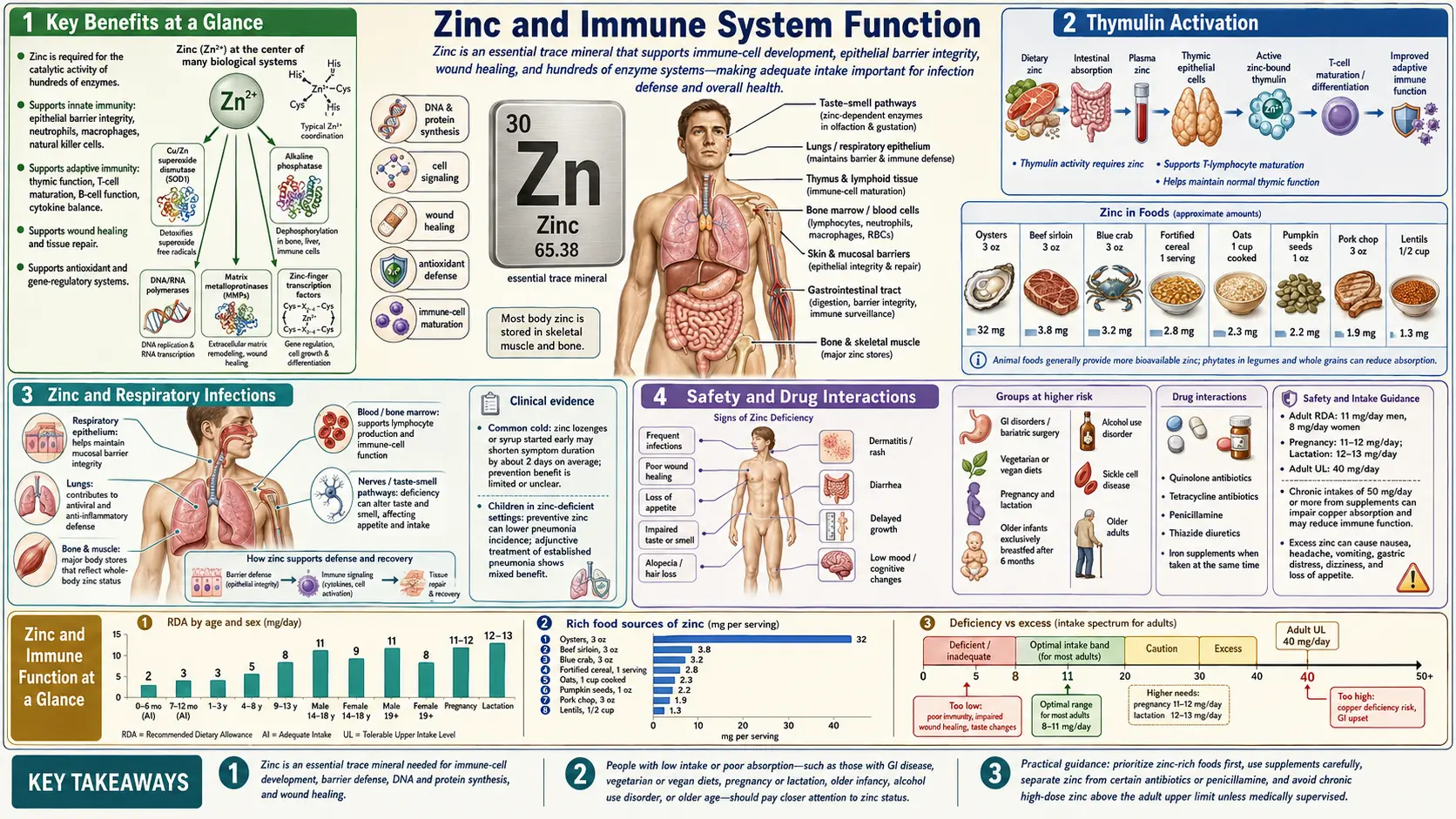
Zinc is essential for the immune system. Reviews describe its roles in innate defences such as phagocytosis and the oxidative burst, and in the formation, activation and maturation of lymphocytes (Maares 2016). A 2013 review estimates that nearly 2 billion people may be zinc deficient, mainly where diets rely on high-phytate cereal protein (Prasad 2013), and the World Health Organization’s World Health Report 2002 estimated that zinc deficiency affects about one-third of the world’s population. Even a mild deficiency, induced by diet in human volunteers, lowered natural killer cell activity, T-helper cell IL-2 activity and serum thymulin activity (Prasad 2013).
Table of Contents
- Key Findings at a Glance
- Innate Immunity
- Adaptive Immunity
- Thymulin Activation
- Natural Killer (NK) Cell Activity
- Cytokine Production and Regulation
- Deficiency and Susceptibility to Infection
- Zinc and Respiratory Infections
- Clinical Evidence in Adults
- Reference Intakes, Trial Doses and Food Sources
- Safety and Drug Interactions
- Key Research Papers
- Connections
- Featured Videos
Key Findings at a Glance
- Common cold — The current Cochrane review found that zinc used as treatment may shorten a cold (low-certainty evidence) but may make little or no difference to the risk of catching one (Nault 2024).
- Childhood diarrhoea — WHO and UNICEF recommend zinc during acute diarrhoea. A 2016 Cochrane review found it may shorten diarrhoea by around half a day in children older than 6 months, and by around a day in children with signs of malnutrition; no effect was seen in infants younger than 6 months (Lazzerini 2016).
- Thymus function — The thymic hormone thymulin needs zinc for its activity, and its activity fell in mild human zinc deficiency (Prasad 1988).
- T-helper balance — Reviews describe a shift of the T-helper balance toward Th2 cells in both zinc deficiency and aging (Haase 2009).
- Phagocytes and NK cells — Disrupted zinc homeostasis weakens phagocytosis and the oxidative burst (Maares 2016); mild deficiency lowered NK cell lytic activity (Prasad 2013).
- Older adults — In a 12-month trial in 50 healthy adults aged 55–87, zinc lowered the incidence of infections (Prasad 2007); in zinc-deficient nursing-home residents, zinc raised serum zinc and T-cell numbers (Barnett 2016).
- COVID-19 — In the COVID A to Z trial, high-dose zinc did not significantly shorten symptoms in outpatients, and the trial was stopped early (Thomas 2021).
Innate Immunity
The innate immune system provides the body's first line of defense against invading pathogens. Reviews describe zinc as supporting several of its components (Maares 2016; Wessels 2017).
- Epithelial barrier integrity — The skin and the mucosal surfaces that line the respiratory, gastrointestinal, and genitourinary tracts physically prevent pathogen entry. Zinc takes part in maintaining these surfaces, and the skin lesions and diarrhoea of severe zinc deficiency show what happens when it is lacking.
- Neutrophil function — Neutrophils are the most abundant white blood cells and are among the first responders to sites of infection. They migrate toward pathogens (chemotaxis), engulf them (phagocytosis), and kill them with reactive oxygen species (the oxidative burst). A disrupted zinc homeostasis weakens phagocytosis and the oxidative burst (Maares 2016).
- Macrophage activity — Macrophages perform phagocytosis, antigen presentation, and cytokine secretion. Reviews describe zinc signals inside macrophages as regulating their activation and cytokine release (Wessels 2017).
- Complement system — The complement cascade helps antibodies and phagocytic cells clear pathogens. The effect of zinc status on complement has been studied far less than its effects on immune cells.
- Dendritic cells — These antigen-presenting cells serve as a bridge between innate and adaptive immunity. Reviews describe zinc signals as affecting dendritic cell maturation and the way they activate T cells (Wessels 2017).
- Myelopoiesis is spared — As zinc deficiency advances, the production of lymphocytes falls while the production of myeloid cells (the precursors of neutrophils and macrophages) is preserved, which a 2004 review describes as protecting the first line of innate defence (Fraker 2004).
Adaptive Immunity
The adaptive immune system mounts highly specific responses to particular pathogens and generates immunological memory. Zinc deficiency impairs the formation, activation, and maturation of lymphocytes (Maares 2016).
- Thymus gland and T-cell maturation — The thymus is the primary site of T-cell development. Thymic atrophy, lymphopenia, and compromised cell- and antibody-mediated responses are described as the immunological hallmarks of zinc deficiency in humans and higher animals. As the deficiency advances, chronic production of glucocorticoids speeds the death (apoptosis) of pre-T and pre-B cells, reducing lymphocyte production and shrinking the thymus (Fraker 2004).
- CD4+ helper T cells — These cells coordinate the immune response by secreting cytokines that direct other immune cells. In an experimental human model of mild zinc deficiency, the ratio of helper (T4+) to cytotoxic (T8+) T cells and IL-2 activity fell during zinc depletion and were corrected after zinc repletion (Prasad 1988). Prasad's review describes the immune dysfunction of experimental zinc deficiency as mainly affecting T-helper cells (Prasad 2008).
- CD8+ cytotoxic T cells — These cells kill virus-infected and tumor cells. Cell-mediated immune dysfunction is one of the main clinical problems of zinc deficiency (Prasad 2013).
- Th1/Th2 balance — Th1 responses are central to defense against intracellular pathogens such as viruses and certain bacteria. Zinc deficiency affects Th1 cell function adversely in humans (Prasad 2013), and reviews describe a shift of the balance toward Th2 cells in both zinc deficiency and aging (Haase 2009).
- B cells and antibody production — Zinc deficiency accelerates the death of pre-B cells and compromises antibody-mediated responses (Fraker 2004). Reviews also list a weaker response to vaccination among the parallels between aging and zinc deficiency (Haase 2009).
- Regulatory T cells — Regulatory T cells (Tregs) maintain immune tolerance. Reviews discuss zinc signals in their development (Wessels 2017); how much zinc status affects Treg function in people is less established.
Thymulin Activation
Thymulin (formerly known as facteur thymique sérique, or FTS) is a nonapeptide hormone secreted by thymic epithelial cells. Its activity depends on the presence of zinc in the molecule (Prasad 1988).
- Zinc-thymulin complex — Thymulin is active when it carries a bound zinc ion; without zinc the peptide is biologically inactive.
- T-cell differentiation — Thymulin is known to induce T-cell differentiation both inside and outside the thymus, which Prasad and colleagues proposed as a mechanism linking zinc to T-cell function (Prasad 1988).
- Biomarker of zinc status — In mildly zinc-deficient adults whose plasma zinc was normal and who had no overt signs of deficiency, serum thymulin activity was decreased and was corrected by zinc supplementation, suggesting it is a sensitive indicator of zinc deficiency (Prasad 1988). On a zinc-restricted diet of 3–5 mg a day, serum thymulin activity and the Th1 cytokines IL-2 and interferon-gamma were affected within 8–12 weeks, whereas plasma zinc fell only after 20 to 24 weeks (Prasad 2013).
- Age-related decline — The activity of the thymus and thymic hormones falls with age, one of several parallels between aging and zinc deficiency (Haase 2009). In a 16-week crossover study in 44 institutionalized older adults, 20 mg of zinc a day raised serum zinc by about 20% and produced a partial but significant restoration of serum thymulin activity (Boukaiba 1993).
Natural Killer (NK) Cell Activity
Natural killer cells are large granular lymphocytes of the innate immune system that provide rapid responses to virus-infected cells and tumor cells without requiring prior sensitization.
- Cytotoxic mechanism — NK cells kill target cells by releasing cytotoxic granules containing perforin and granzymes. Perforin creates pores in the target cell membrane, allowing granzymes to enter and trigger apoptosis.
- Impact of deficiency — In Prasad's experimental model of mild zinc deficiency in human volunteers, natural killer cell lytic activity decreased (Prasad 2013).
- NK cell receptors — Activating and inhibitory receptors on the NK cell surface decide whether a cell attacks or spares a target. Clustering of the killer cell inhibitory receptor (KIR) is zinc-dependent, though a 2017 review notes there are no data on how it behaves during zinc deficiency (Wessels 2017).
- Interferon production — NK cells and Th1 cells produce interferon-gamma (IFN-γ), a cytokine that activates macrophages and supports antiviral defense. Interferon-gamma generation was affected early in experimental human zinc restriction (Prasad 2013).
Cytokine Production and Regulation
Cytokines are signaling molecules that coordinate the immune response. Zinc has a complex and cell-specific relationship with cytokine production.
- Pro-inflammatory cytokines — In a promyelocytic cell line, zinc raised A20, a protein that dampens NF-κB activation, and so lowered the production of tumor necrosis factor alpha (TNF-α), interleukin-1 beta (IL-1β) and IL-8 (Prasad 2008). Reviews describe a pro-inflammatory phenotype developing during zinc deficiency (Wessels 2017).
- Effects in people — In young adults and in older adults, zinc supplementation decreased oxidative stress markers and the generation of inflammatory cytokines (Prasad 2008). In the 12-month trial in older adults, ex vivo TNF-α generation was lower in the zinc group than in the placebo group (Prasad 2007).
- Interleukin-2 (IL-2) — This cytokine is critical for T-cell proliferation. In a T-helper cell line, zinc deficiency lowered the gene expression of IL-2 and of the IL-2 receptor alpha chain, through decreased NF-κB activation, which shows that zinc's effects on NF-κB differ between cell types (Prasad 2008).
- Severe infections — Zinc's anti-inflammatory actions have drawn attention as a possible way to limit excessive cytokine release in severe respiratory infections. That remains a hypothesis; the one randomized COVID-19 trial cited on this page found no significant benefit (see below).
Zinc Deficiency and Susceptibility to Infection
Zinc deficiency is one of the most common micronutrient deficiencies globally and has profound consequences for immune competence and infection risk.
- Prevalence — The World Health Organization's World Health Report 2002 estimated that, worldwide, zinc deficiency is responsible for approximately 16% of lower respiratory tract infections, 18% of malaria and 10% of diarrhoeal disease. Deficiency is driven mainly by diets high in phytate-containing cereal protein, since phytates inhibit zinc absorption (Prasad 2013).
- Diarrheal disease — WHO and UNICEF recommend zinc supplementation during acute diarrhoea in children. A 2016 Cochrane review of 33 trials with 10,841 children found that, in children older than 6 months, zinc may shorten acute diarrhoea by around half a day (low-certainty evidence) and probably reduces the number whose diarrhoea lasts to day seven; in children with signs of malnutrition the reduction was around a day (high-certainty evidence). In infants younger than 6 months no effect was seen, and zinc increased the risk of vomiting in both age groups (Lazzerini 2016). For prevention, a 2023 Cochrane review of 96 trials in children aged 6 months to 12 years found that preventive zinc likely reduces the incidence of diarrhoea (RR 0.91, 95% CI 0.90 to 0.93; moderate-certainty evidence) but makes little to no difference to all-cause mortality (RR 0.93, 95% CI 0.84 to 1.03; high-certainty evidence) (Imdad 2023).
- Pneumonia — A 2016 Cochrane review of six trials with 5,193 children aged 2 to 59 months found that zinc supplementation reduced the incidence of pneumonia by 13% (RR 0.87, 95% CI 0.81 to 0.94) and its prevalence by 41% (one study, 609 children), both on low-quality evidence (Lassi 2016). The 2023 Cochrane review of preventive zinc found little to no difference in lower respiratory tract infection morbidity (RR 1.01, 95% CI 0.95 to 1.08; high-certainty evidence) (Imdad 2023). Given with antibiotics as a treatment, zinc did not significantly improve clinical recovery from pneumonia in four trials with 3,267 young children (Haider 2011).
- Malaria — In a trial in Papua New Guinea, 274 preschool children given 10 mg of zinc six days a week for 46 weeks had 38% fewer health-centre episodes of Plasmodium falciparum malaria than children given placebo (Shankar 2000). As an add-on treatment for acute malaria in 1,087 children in five African and South American countries, zinc had no effect on fever or parasite clearance (Zinc Against Plasmodium Study Group 2002).
- HIV infection — Zinc deficiency occurs in more than half of adults with HIV. In a trial in 231 adults with HIV and low plasma zinc, 12 mg (women) or 15 mg (men) of zinc a day for 18 months cut the rate of immunological failure (CD4+ count below 200 cells/mm³) about fourfold and reduced the rate of diarrhoea, with no difference in mortality (Baum 2010). The NIH Office of Dietary Supplements notes that two Cochrane reviews of zinc in HIV were less positive.
- Vulnerable populations — Conditioned zinc deficiency has been observed in malabsorption syndromes, liver disease, chronic kidney disease, sickle cell disease and other chronic illnesses (Prasad 2013). A review of older adults reports that people aged 60–65 and over have zinc intakes below 50% of the recommended daily allowance on a given day (Mocchegiani 2013).
Zinc and Respiratory Infections
The relationship between zinc and respiratory tract infections has been extensively studied, with particular attention to the common cold and lower respiratory infections.
- Common cold — The current Cochrane review (Nault 2024) included 34 placebo-controlled trials with 8,526 participants; 17 tested lozenges, and zinc gluconate lozenge doses ranged from 45 to 276 mg a day. It found that zinc may make little or no difference to the risk of catching a cold (RR 0.93, 95% CI 0.85 to 1.01; low-certainty evidence). Used as treatment, zinc may shorten a cold, by a mean of 2.37 days (95% CI 0.53 to 4.21 days; 8 studies, 972 participants; low-certainty evidence), and it probably increases non-serious adverse events such as unpleasant taste and stomach upset (RR 1.34, 95% CI 1.15 to 1.55; moderate-certainty evidence). The authors noted wide variation in the interventions and incomplete reporting across the trials. Earlier meta-analyses reported shorter colds in adults but no significant effect in children (Science 2012), colds 33% shorter in lozenge trials giving more than 75 mg of zinc a day (Hemilä 2017), and colds 2.73 days shorter, against an average cold of 7 days, in three zinc acetate lozenge trials with 199 patients (Hemilä 2016). An earlier Cochrane review (Singh 2013) was withdrawn in 2015 and is superseded by Nault 2024; its figures are not used here. The NIH Office of Dietary Supplements describes the proposed mechanism as zinc inhibiting rhinovirus binding and replication in the nasal mucosa and suppressing inflammation.
- Influenza — There is little trial evidence on zinc for influenza specifically; the idea of a supportive role rests on zinc's general immune functions rather than on influenza trials.
- COVID-19 — In laboratory experiments, zinc ions inhibited the RNA polymerase of SARS-coronavirus and an arterivirus, and zinc ionophores blocked their replication in cell culture (te Velthuis 2010). In people, the COVID A to Z randomized trial assigned 214 outpatients with SARS-CoV-2 infection to 50 mg of zinc gluconate, 8,000 mg of ascorbic acid, both, or usual care for 10 days. It was stopped for a low conditional power for benefit: zinc, alone or combined, did not significantly shorten the time to a 50% reduction in symptoms, and secondary outcomes did not differ (Thomas 2021).
- Lower respiratory infections in children — Trials of preventive zinc in young children in low-income countries are summarized under Pneumonia above: a lower incidence in the 2016 Cochrane review (Lassi 2016), little to no difference in respiratory infection morbidity in the broader 2023 review (Imdad 2023), and no significant benefit as an add-on to antibiotics (Haider 2011).
- Mechanisms proposed for respiratory defense — Reviews link zinc to respiratory immunity through epithelial barriers, phagocytes and the regulation of inflammation (Maares 2016; Wessels 2017). Direct inhibition of viral RNA polymerase has been shown in vitro for coronaviruses and arteriviruses (te Velthuis 2010), not in patients.
Clinical Evidence in Adults
The clinical evidence for zinc's role in immune function spans decades of observational studies, randomized controlled trials, and meta-analyses.
- Older adults — In a randomized, placebo-controlled trial in 50 healthy adults aged 55–87 recruited from a senior center, 45 mg of elemental zinc a day (as zinc gluconate) for 12 months lowered the incidence of infections, raised plasma zinc, and lowered TNF-α generation and oxidative stress markers (Prasad 2007). In nursing-home residents aged 65 and over with low serum zinc, 30 mg a day for 3 months (31 participants) raised serum zinc and increased T-cell proliferation, mainly through an increase in T-cell numbers; not every deficient resident reached a normal level (Barnett 2016). In an observational analysis of 578 nursing-home residents from a vitamin E trial, normal serum zinc was associated with a lower incidence and shorter duration of pneumonia, fewer new antibiotic prescriptions and fewer days of antibiotic use than low serum zinc, and normal baseline zinc with lower all-cause mortality (Meydani 2007). These findings come from people with low zinc status or from a single small trial.
- Reference intakes and doses studied — The recommended dietary allowance (RDA) for zinc is 11 mg/day for adult men and 8 mg/day for adult women. The tolerable upper intake level (UL) for adults is 40 mg/day from food and supplements combined; it was set on the basis of zinc's effect on copper status and does not apply to people receiving zinc as medical treatment (NIH Office of Dietary Supplements). The immune trials above used 30–45 mg a day, and the cold-lozenge trials used doses above the UL.
- Forms of supplementation — Zinc is sold in several supplemental forms, including zinc gluconate, zinc acetate, zinc sulfate, zinc picolinate, and zinc citrate. The cold trials in the 2024 Cochrane review used acetate, gluconate and orotate lozenges, gluconate most often (Nault 2024). In an absorption study in 15 healthy adults taking 10 mg without food, zinc citrate (61.3% absorbed) matched zinc gluconate (60.9%) and was absorbed better than zinc oxide (Wegmüller 2014).
- Risks of excess — Too much zinc can also suppress immunity. When 11 healthy men took 150 mg of elemental zinc twice a day for six weeks, their lymphocyte response to a mitogen, neutrophil chemotaxis and phagocytosis of bacteria all fell, and HDL cholesterol decreased (Chandra 1984). Zinc may also induce intestinal metallothionein, which binds copper with high affinity and keeps it from passing into the blood; this is how zinc is used as an anticopper treatment in Wilson's disease (Prasad 2013).
- Drug interactions — The NIH Office of Dietary Supplements lists interactions with tetracycline and quinolone antibiotics (each can reduce the absorption of the other), penicillamine (used for Wilson's disease and rheumatoid arthritis), and thiazide diuretics (which increase urinary zinc excretion).
Reference Intakes, Trial Doses and Food Sources
- RDA — Men 11 mg/day; women 8 mg/day; pregnancy 11 mg/day; lactation 12 mg/day (NIH Office of Dietary Supplements).
- Doses in the immune trials cited here — 45 mg/day for 12 months in healthy older adults (Prasad 2007); 30 mg/day for 3 months in zinc-deficient nursing-home residents (Barnett 2016); 12–15 mg/day for 18 months in adults with HIV (Baum 2010).
- Cold lozenge trials — Zinc gluconate lozenge doses ranged from 45 to 276 mg a day across the trials in the 2024 Cochrane review (Nault 2024); the 2017 meta-analysis pooled trials giving more than 75 mg a day (Hemilä 2017).
- Oysters — Oysters contain more zinc per serving than any other food: 32 mg in 3 ounces of farmed raw Eastern oysters (NIH Office of Dietary Supplements).
- Meat and poultry — Beef, lamb, chicken thigh; 3 ounces of roasted beef bottom sirloin provides 3.8 mg (NIH Office of Dietary Supplements).
- Legumes, nuts, seeds — Chickpeas, pumpkin seeds, cashews; they contain phytates, which bind zinc and lower its absorption compared with animal foods.
- Fortified cereals — A breakfast cereal fortified with 25% of the Daily Value provides 2.8 mg per serving (NIH Office of Dietary Supplements).
Safety and Drug Interactions
- Tolerable Upper Intake Level (UL) — 40 mg/day for adults, set on the basis of zinc's effect on copper status.
- Copper deficiency — The NIH fact sheet states that zinc doses of 50 mg or more, if used for weeks, can interfere with copper absorption, reduce immune function and lower HDL cholesterol. The high-dose AREDS eye-disease formula paired 80 mg of zinc with 2 mg of copper, which Prasad's review describes as added to prevent zinc-induced copper deficiency (Prasad 2013).
- GI upset — High zinc intakes can cause nausea, dizziness, headaches, gastric distress, vomiting and loss of appetite (NIH Office of Dietary Supplements). In the cold trials, zinc probably increased non-serious adverse events such as unpleasant taste (Nault 2024), and in children treated for diarrhoea it increased vomiting (Lazzerini 2016).
- Intranasal zinc and loss of smell — On June 16, 2009 the US Food and Drug Administration advised consumers to stop using three over-the-counter intranasal zinc cold remedies, a nasal gel and two nasal swab products, because they were associated with loss of the sense of smell (anosmia), which the agency said may be long-lasting or permanent; it had received more than 130 reports (FDA news release, June 16, 2009, archived copy). A 2006 case series described 17 patients with anosmia after intranasal zinc gluconate gel (Alexander 2006). The warning concerns zinc applied inside the nose, not zinc taken by mouth.
- Drug interactions — The NIH fact sheet states that taking a tetracycline or quinolone antibiotic at least 2 hours before or 4–6 hours after a zinc supplement minimizes their interaction, and lists separating zinc and penicillamine by at least 1 hour; thiazide diuretics increase urinary zinc loss.
This content is provided for informational purposes only and does not constitute medical advice. Decisions about high-dose or long-term zinc use belong with a clinician.
Key Research Papers
- Wessels I, Maywald M, Rink L (2017). Zinc as a gatekeeper of immune function. Nutrients 9(12):1286. — PubMed PMID: 29186856
- Prasad AS (2008). Zinc in human health: effect of zinc on immune cells. Mol Med 14(5-6):353-357. — PubMed PMID: 18385818
- Singh M, Das RR (2013). Zinc for the common cold. Cochrane Database Syst Rev (6):CD001364. — PubMed PMID: 23775705 — Withdrawn (withdrawn by Cochrane in April 2015 after errors were reported in the calculation and analysis of its data, and kept withdrawn in September 2016 after an editorial investigation found the authors’ explanation of how some means and standard deviations were derived not conclusive; superseded by Nault et al. 2024, below; withdrawal notice: PubMed PMID: 25924708)
- Science M, Johnstone J, Roth DE, Guyatt G, Loeb M (2012). Zinc for the treatment of the common cold: a systematic review and meta-analysis of randomized controlled trials. CMAJ 184(10):E551-E561. — PubMed PMID: 22566526
- Lassi ZS, Moin A, Bhutta ZA (2016). Zinc supplementation for the prevention of pneumonia in children aged 2 months to 59 months. Cochrane Database Syst Rev (12):CD005978. — PubMed PMID: 27915460
- te Velthuis AJ, van den Worm SH, Sims AC, Baric RS, Snijder EJ, van Hemert MJ (2010). Zn(2+) inhibits coronavirus and arterivirus RNA polymerase activity in vitro and zinc ionophores block the replication of these viruses in cell culture. PLoS Pathog 6(11):e1001176. — PubMed PMID: 21079686
- Prasad AS, Beck FW, Bao B, et al. (2007). Zinc supplementation decreases incidence of infections in the elderly: effect of zinc on generation of cytokines and oxidative stress. Am J Clin Nutr 85(3):837-844. — PubMed PMID: 17344507
- Haase H, Rink L (2009). The immune system and the impact of zinc during aging. Immun Ageing 6:9. — PubMed PMID: 19523191
- Fraker PJ, King LE (2004). Reprogramming of the immune system during zinc deficiency. Annu Rev Nutr 24:277-298. — PubMed PMID: 15189122
- Mocchegiani E, Romeo J, Malavolta M, et al. (2013). Zinc: dietary intake and impact of supplementation on immune function in elderly. Age 35(3):839-860. — PubMed PMID: 22222917
- Maares M, Haase H (2016). Zinc and immunity: an essential interrelation. Arch Biochem Biophys 611:58-65. — PubMed PMID: 27021581
- Hemila H, Petrus EJ, Fitzgerald JT, Prasad A (2016). Zinc acetate lozenges for treating the common cold: an individual patient data meta-analysis. Br J Clin Pharmacol 82(5):1393-1398. — PubMed PMID: 27378206
- Nault D, Machingo TA, Shipper AG, et al. (2024). Zinc for prevention and treatment of the common cold. Cochrane Database Syst Rev 5:CD014914. — PubMed PMID: 38719213
- Hemilä H (2017). Zinc lozenges and the common cold: a meta-analysis comparing zinc acetate and zinc gluconate, and the role of zinc dosage. JRSM Open 8(5):2054270417694291. — PubMed PMID: 28515951
- Prasad AS (2013). Discovery of human zinc deficiency: its impact on human health and disease. Adv Nutr 4(2):176-190. — PubMed PMID: 23493534
- Prasad AS, Meftah S, Abdallah J, Kaplan J, Brewer GJ, Bach JF, Dardenne M (1988). Serum thymulin in human zinc deficiency. J Clin Invest 82(4):1202-1210. — PubMed PMID: 3262625
- Boukaiba N, Flament C, Acher S, et al. (1993). A physiological amount of zinc supplementation: effects on nutritional, lipid, and thymic status in an elderly population. Am J Clin Nutr 57(4):566-572. — PubMed PMID: 8460613
- Barnett JB, Dao MC, Hamer DH, et al. (2016). Effect of zinc supplementation on serum zinc concentration and T cell proliferation in nursing home elderly: a randomized, double-blind, placebo-controlled trial. Am J Clin Nutr 103(3):942-951. — PubMed PMID: 26817502
- Meydani SN, Barnett JB, Dallal GE, et al. (2007). Serum zinc and pneumonia in nursing home elderly. Am J Clin Nutr 86(4):1167-1173. — PubMed PMID: 17921398
- Thomas S, Patel D, Bittel B, et al. (2021). Effect of high-dose zinc and ascorbic acid supplementation vs usual care on symptom length and reduction among ambulatory patients with SARS-CoV-2 infection: the COVID A to Z randomized clinical trial. JAMA Netw Open 4(2):e210369. — PubMed PMID: 33576820
- Lazzerini M, Wanzira H (2016). Oral zinc for treating diarrhoea in children. Cochrane Database Syst Rev 12:CD005436. — PubMed PMID: 27996088
- Imdad A, Rogner J, Sherwani RN, et al. (2023). Zinc supplementation for preventing mortality, morbidity, and growth failure in children aged 6 months to 12 years. Cochrane Database Syst Rev 3:CD009384. — PubMed PMID: 36994923
- Haider BA, Lassi ZS, Ahmed A, Bhutta ZA (2011). Zinc supplementation as an adjunct to antibiotics in the treatment of pneumonia in children 2 to 59 months of age. Cochrane Database Syst Rev (10):CD007368. — PubMed PMID: 21975768
- Shankar AH, Genton B, Baisor M, et al. (2000). The influence of zinc supplementation on morbidity due to Plasmodium falciparum: a randomized trial in preschool children in Papua New Guinea. Am J Trop Med Hyg 62(6):663-669. — PubMed PMID: 11304051
- Zinc Against Plasmodium Study Group (2002). Effect of zinc on the treatment of Plasmodium falciparum malaria in children: a randomized controlled trial. Am J Clin Nutr 76(4):805-812. — PubMed PMID: 12324294
- Baum MK, Lai S, Sales S, Page JB, Campa A (2010). Randomized, controlled clinical trial of zinc supplementation to prevent immunological failure in HIV-infected adults. Clin Infect Dis 50(12):1653-1660. — PubMed PMID: 20455705
- Chandra RK (1984). Excessive intake of zinc impairs immune responses. JAMA 252(11):1443-1446. — PubMed PMID: 6471270
- Wegmüller R, Tay F, Zeder C, Brnic M, Hurrell RF (2014). Zinc absorption by young adults from supplemental zinc citrate is comparable with that from zinc gluconate and higher than from zinc oxide. J Nutr 144(2):132-136. — PubMed PMID: 24259556
- Alexander TH, Davidson TM (2006). Intranasal zinc and anosmia: the zinc-induced anosmia syndrome. Laryngoscope 116(2):217-220. — PubMed PMID: 16467707
PubMed Topic Searches
- Zinc supplementation + immune + randomized
- Zinc + thymulin + T-cell
- Zinc lozenge + common cold
- Zinc deficiency + pneumonia + children
- Zinc + NK cell cytotoxicity
- Zinc + respiratory infection
- NIH Office of Dietary Supplements — Zinc Fact Sheet
- Linus Pauling Institute — Zinc
- World Health Organization — World Health Report 2002 (archived copy)