Saw Palmetto Hormonal Effects and Cautions
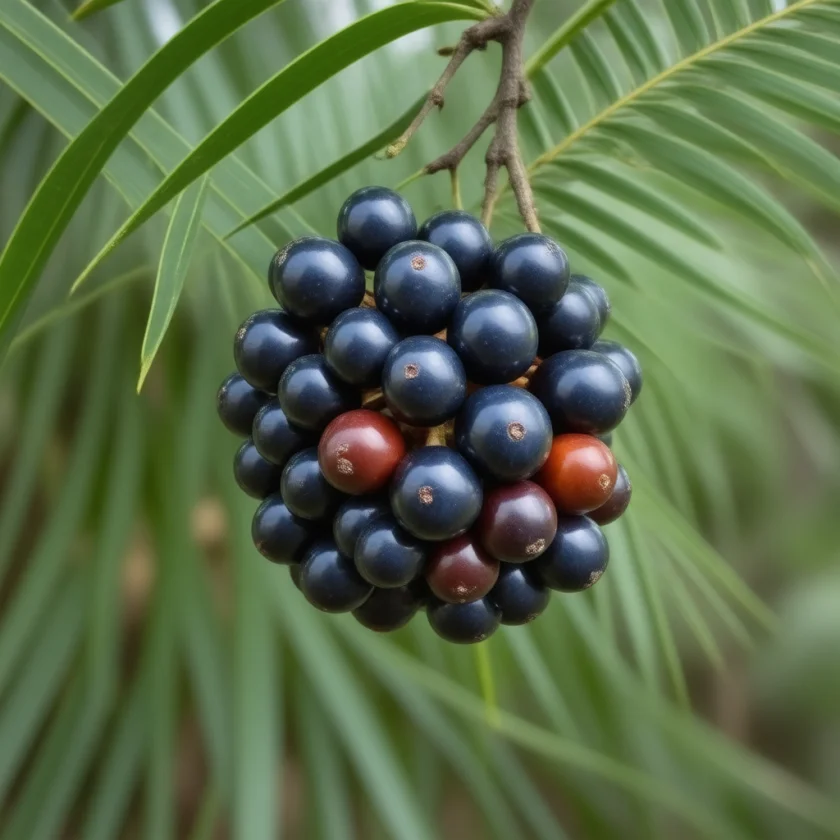
Saw palmetto's 5-alpha-reductase inhibition makes it pharmacologically an anti-androgen, which has both intended and theoretical clinical implications. The intended uses are in androgen-driven conditions in men (benign prostatic hyperplasia (BPH) and androgenetic alopecia (AGA, inherited pattern hair loss), covered on the dedicated pages) and the off-label exploration in women with polycystic ovary syndrome (PCOS), hirsutism, and androgen-driven acne. The theoretical implications, particularly relevant for women of reproductive age, include possible effects on menstrual cycling, hormonal contraception, and fertility — though controlled trials in these areas are essentially absent. Critically, unlike the prescription 5-alpha-reductase inhibitor finasteride, saw palmetto in controlled trials has not been associated with persistent post-finasteride syndrome (PFS), gynecomastia, measurable feminizing side effects in men, or any of the other dramatic anti-androgen toxicities that have driven a fraction of finasteride users to abandon therapy. Trials report side-effect rates close to placebo. This page covers the full hormonal mechanism, the legitimate women's indications, the surgery and bleeding-related precautions, and the drug interactions worth knowing about.
Table of Contents
- 5-Alpha-Reductase Inhibition as Anti-Androgen
- Women, Polycystic Ovary Syndrome, and Hirsutism
- Androgen-Driven Acne in Women
- Why Saw Palmetto Lacks the Feminizing Side Effects of Finasteride
- No Persistent Post-Saw-Palmetto Syndrome
- Pre-Operative Discontinuation (2 Weeks)
- Anticoagulant and Antiplatelet Interaction
- Pregnancy and Lactation Contraindication
- Effect on Prostate-Specific Antigen and Prostate Cancer Screening
- Other Drug Interactions
- The Hepatotoxicity Question
- Key Research Papers
- Connections
- Featured Videos
5-Alpha-Reductase Inhibition as Anti-Androgen
Saw palmetto liposterolic extract acts as a non-competitive inhibitor of both type I and type II isoforms of 5-alpha-reductase, the enzyme that catalyzes the conversion of testosterone to the more potent androgen dihydrotestosterone (DHT). The inhibition is partial and dose-dependent — the Bayne 1999 in-vitro work characterized the enzyme kinetics and confirmed activity against both isoforms, with type II inhibition somewhat stronger than type I at standard doses.
This pharmacologic mechanism makes saw palmetto an anti-androgen in the technical sense. The clinical translation is more nuanced than the pharmacology suggests:
- Tissue-level DHT reduction — the Marks 2001 prostate biopsy study, a 6-month randomised trial in 40 men that used a saw palmetto herbal blend rather than saw palmetto alone, found that DHT in prostate tissue fell by about a third (32%, from 6.49 to 4.40 ng/g), with no significant change on placebo. This pattern — a local tissue effect, with serum hormones essentially unchanged (next point) — is the usual explanation for why the herb is described as producing anti-androgen effects (in benign prostatic hyperplasia and androgenetic alopecia) without producing systemic anti-androgen toxicity (sexual side effects, gynecomastia, mood effects).
- Serum testosterone and DHT — remain essentially unchanged on saw palmetto across the published trial literature. This is in stark contrast to finasteride, which reduces serum DHT by ~70%, or dutasteride, which reduces it by ~95%.
- Sex hormone-binding globulin (SHBG), luteinising hormone (LH), follicle-stimulating hormone (FSH), estradiol — remain essentially unchanged on saw palmetto. No systemic feminization signal in controlled trials.
- The dose threshold — theoretically, very high doses of saw palmetto might produce systemic DHT reduction, but the dose range used clinically (320 mg/day, occasionally 640 mg/day) does not appear to cross that threshold. The CAMUS (Complementary and Alternative Medicine for Urological Symptoms) trial in 369 men raised the dose step by step — 320 mg a day for 24 weeks, 640 mg for the next 24 weeks and 960 mg for the last 24 weeks — and identified no clearly attributable side effects. It also found saw palmetto no better than placebo for urinary symptoms: symptom scores fell 2.20 points on saw palmetto and 2.99 points on placebo over 72 weeks.
This combination of pharmacology and tolerability is unusual and explains the herb's persistent popularity even in the face of negative confirmatory benign prostatic hyperplasia trials. Many patients are willing to try a possibly-modest-benefit therapy with side-effect rates close to placebo in trials before progressing to a clearly-effective therapy with a meaningful side effect risk.
Women, Polycystic Ovary Syndrome, and Hirsutism
Polycystic ovary syndrome (PCOS) is the most common endocrine disorder of women of reproductive age, affecting approximately 10% of premenopausal women. The Rotterdam criteria require at least two of: oligo-ovulation or anovulation, clinical or biochemical hyperandrogenism, and polycystic ovaries on ultrasound. The clinical manifestations of the hyperandrogenism component include hirsutism (terminal hair growth in male-pattern distribution), acne (often persistent into adulthood), androgenetic alopecia, and reduced fertility from anovulation.
Standard pharmacotherapy for the androgen manifestations of polycystic ovary syndrome includes combined oral contraceptives (which increase SHBG and reduce free testosterone), spironolactone (androgen receptor antagonist with some 5-alpha-reductase activity), metformin (improves insulin sensitivity, indirectly reducing ovarian androgen production), and finasteride (off-label, type II 5-alpha-reductase inhibitor).
Saw palmetto's use in polycystic ovary syndrome hirsutism follows the same anti-androgen logic. The evidence is mostly practice experience:
- Integrative practitioners report using saw palmetto for hirsutism, with any change described as slow, over months of use.
- Combination products pairing saw palmetto with other phytotherapies (spearmint tea, Vitex agnus-castus, beta-sitosterol) are popular in the integrative polycystic ovary syndrome literature but have not been rigorously compared against single-agent prescription therapy.
A 2015 Italian case report (Morabito and colleagues) described hot flashes in a 10-year-old girl taking a food supplement containing saw palmetto extract for hirsutism. The flashes stopped when she stopped the supplement and came back when it was restarted, and she had her first period about 4 months after starting it. The authors wrote that the product could have been responsible for the early first period, and that herbal products used in children need a closer weighing of benefit and risk.
For women with polycystic ovary syndrome who decline or cannot tolerate spironolactone (orthostatic hypotension, hyperkalemia, breast tenderness), or who decline combined oral contraceptives (smoking, thrombosis risk, migraine with aura), saw palmetto is one of the herbal options practitioners describe using alongside other care. It does not address the larger issues in polycystic ovary syndrome beyond the cosmetic androgen manifestations: fertility goals, metabolic risk, and cardiovascular risk.
In premenopausal women, the anti-androgen mechanism is theoretically capable of affecting hormonal contraception interpretation and fertility tracking; no contraceptive failures attributed to saw palmetto have been documented.
Androgen-Driven Acne in Women
Persistent adult acne in women is frequently driven by androgen excess, sometimes in the context of polycystic ovary syndrome and sometimes idiopathic. The clinical pattern is typically lower-face / jawline distribution, premenstrual flares, and resistance to conventional topical acne therapy. Standard anti-androgen therapies for this presentation include combined oral contraceptives (with non-androgenic progestins like drospirenone), spironolactone (often the workhorse drug for adult female acne), and occasionally oral isotretinoin (for severe nodulocystic disease).
Saw palmetto's use for adult female acne is a niche application supported by small open-label data and integrative dermatology practice experience rather than rigorous controlled trials. The mechanistic logic: type I 5-alpha-reductase is the dominant isoform in skin and sebaceous glands, and saw palmetto's dual type I and type II inhibition is theoretically more relevant for skin than the type II-selective finasteride.
In integrative practice, saw palmetto is described as an add-on for adult female androgen-driven acne, particularly for women who decline spironolactone or hormonal contraception. Practitioners describe 3-6 months before clear improvement, with saw palmetto used alongside conventional topical retinoids and antibacterials (benzoyl peroxide). Severe nodulocystic acne is the form treated in dermatology with oral isotretinoin.
Why Saw Palmetto Lacks the Feminizing Side Effects of Finasteride
Finasteride 1 mg/day for hair loss or 5 mg/day for benign prostatic hyperplasia is associated with a meaningful set of anti-androgen side effects:
- Sexual dysfunction — in the 4-year trial reported on the finasteride tablets label (DailyMed) (5 mg), year 1 rates on finasteride versus placebo were: impotence 8.1% vs 3.7%, decreased libido 6.4% vs 3.4%, decreased volume of ejaculate 3.7% vs 0.8%, and ejaculation disorder 0.8% vs 0.1%. In years 2 to 4 the label reports no significant difference from placebo for impotence, decreased libido and ejaculation disorder.
- Gynecomastia — breast enlargement in 0.5% on finasteride vs 0.1% on placebo in year 1 (1.8% vs 1.1% in years 2 to 4), and breast tenderness in 0.4% vs 0.1% in year 1, on the same label
- Mood effects — depression and anxiety in a subset of users, possibly mediated by neurosteroid changes (5-alpha-reductase also produces allopregnanolone and related neurosteroids)
- Persistent post-finasteride syndrome (PFS) — in a small but real fraction of users (probably <1%), sexual, cognitive, and mood symptoms persist for months to years after discontinuation. The mechanism is debated; the syndrome is recognized by the U.S. Food and Drug Administration (FDA) but contested by some endocrinologists.
Saw palmetto in controlled trials does not produce these effects at clinically detectable rates. Why?
- Tissue-specific rather than systemic effect — saw palmetto's 5-alpha-reductase inhibition appears to act preferentially at tissue level (prostate, hair follicle) rather than producing systemic DHT suppression. Finasteride and dutasteride produce dramatic systemic DHT reduction; saw palmetto does not.
- Partial rather than complete inhibition — saw palmetto's enzyme inhibition is dose-limited and non-competitive, never reaching the >80% suppression achieved by finasteride at therapeutic dose.
- Neurosteroid sparing — finasteride substantially reduces brain allopregnanolone production, which appears related to the mood and PFS sequelae. Saw palmetto's effect on neurosteroid production is poorly characterized but the absence of clinical mood signals across decades of use is reassuring.
- Multi-mechanism rather than mono-mechanism — the alpha-1 adrenergic and anti-inflammatory mechanisms contribute to symptom relief independent of the anti-androgen action, distributing the therapeutic load across multiple pathways and reducing the per-pathway demand on the 5-AR mechanism.
The difference between the two lies mainly in side effects. The CAMUS safety analysis found no difference from placebo in side effects at up to 960 mg a day, while the finasteride label lists the sexual side effects above; CAMUS also found saw palmetto no better than placebo for urinary symptoms. People who stopped finasteride because of sexual side effects are described as switching to saw palmetto, and saw palmetto trials have not found sexual side effects above placebo rates.
No Persistent Post-Saw-Palmetto Syndrome
Persistent post-finasteride syndrome (PFS) has been one of the more troubling stories in modern pharmacotherapy. A small subset of finasteride users — estimates range from 1 in 1,000 to 1 in 10,000 depending on case definition and ascertainment method — report persistent sexual, cognitive, and mood symptoms that begin during finasteride use and fail to resolve after discontinuation, sometimes lasting years. The U.S. Food and Drug Administration added a persistent side effects warning to the finasteride label in 2012. The mechanism is debated; proposed contributors include persistent androgen receptor downregulation, neurosteroid pathway disruption, and gut microbiome changes.
The reassuring observation: no recognized persistent post-saw-palmetto syndrome exists in the published literature. Despite saw palmetto being used by millions of men globally for decades, no equivalent of PFS has been described. This is consistent with the herb's lack of measurable systemic anti-androgen effect in controlled trials.
For people concerned about persistent side effects, this is the main difference reported between the two. It does not mean saw palmetto is risk-free — the surgery, bleeding, and pregnancy precautions discussed below all apply — but no persistent syndrome of the kind that drives some patients away from finasteride has been described with saw palmetto.
Pre-Operative Discontinuation (2 Weeks)
Saw palmetto has been reported in several case reports to be associated with intraoperative bleeding or post-operative hematoma, attributed to a theoretical antiplatelet effect of the fatty acid extract. The case reports are few and the causal connection is not definitively established, but the precaution has become standard in perioperative medicine guidelines. In one published case (Cheema and colleagues, 2001), a man taking saw palmetto had severe bleeding during surgery; his prolonged bleeding time returned to normal a few days after he stopped the herb.
The interval usually given is stopping saw palmetto at least 2 weeks before a planned surgical procedure, including:
- Elective surgical procedures (orthopedic, abdominal, urologic, plastic)
- Cataract surgery and other ophthalmic procedures
- Dental procedures involving extraction or deep tissue surgery (routine cleanings and fillings are not usually included)
- Colonoscopy with polyp removal
- Skin biopsies and dermatologic surgery
- Cosmetic procedures involving incision or deep tissue manipulation
The pre-operative medication reconciliation that anesthesia teams perform is meant to cover all supplements. Surgical teams may not think to ask about herbal supplements, so saw palmetto use is often missed unless the patient mentions it. Restarting is usually described once any post-operative bleeding concern has resolved — typically 1-2 weeks for most procedures.
The same precaution applies before scheduled obstetric procedures (cesarean delivery, labor induction with anticipated regional anesthesia), though saw palmetto is contraindicated in pregnancy anyway as discussed below.
Emergency surgery in a patient already on saw palmetto is generally not a major management issue — the bleeding risk is theoretical rather than dramatic, and emergency procedures proceed without modification. What matters is that the anesthesia team knows about it.
Anticoagulant and Antiplatelet Interaction
The same theoretical antiplatelet effect that drives the surgical precaution also creates a recognized interaction with anticoagulants and antiplatelet drugs. The concern applies to people taking these medications:
- Warfarin — saw palmetto may potentiate the anticoagulant effect. Case reports of elevated international normalized ratio (INR) have been published: a 2001 report (Yue and Jansson) described an effect on blood clotting, with and without warfarin, for a combination product containing saw palmetto, possibly related to its vitamin E content, and a 2026 case report described an INR of 3.8 in a man on warfarin with saw palmetto-associated liver injury (see below). The INR blood test is the measurement that would show such a change.
- Direct oral anticoagulants (apixaban, rivaroxaban, dabigatran, edoxaban) — no formal interaction studies. Theoretical concern is the same as for warfarin; the warning signs would be unusual bruising or bleeding.
- Antiplatelet agents (aspirin, clopidogrel, ticagrelor, prasugrel) — theoretical additive antiplatelet effect. The clinical magnitude of any additive bleeding risk is probably small.
- Combined antiplatelet + anticoagulant therapy — patients on dual antiplatelet therapy or aspirin + warfarin are already at substantial bleeding risk; saw palmetto would add to an already substantial bleeding risk.
- Nonsteroidal anti-inflammatory drugs (NSAIDs) at high dose — chronic high-dose nonsteroidal anti-inflammatory drug (NSAID) use has its own bleeding risk profile; any added effect from saw palmetto is theoretical.
A 2009 systematic review of 40 published reports on saw palmetto-only products (Agbabiaka and colleagues) found adverse events mild and similar to placebo, and no drug interactions reported; it noted that more serious events appear only in isolated case reports where causality is questionable. Unusual bleeding (nosebleeds, gum bleeding with brushing, easy bruising, blood in urine or stool) is the warning sign of an interaction with blood thinners.
Pregnancy and Lactation Contraindication
Saw palmetto is contraindicated in pregnancy. The anti-androgen mechanism creates a theoretical risk of disrupted male fetal genital development analogous to the well-documented finasteride teratogenicity. The current finasteride tablets label (DailyMed) lists pregnancy as a contraindication, because finasteride may cause abnormalities of the external genitalia of a male fetus, and states that women who are or may be pregnant “should not handle crushed or broken finasteride tablets” because of the potential risk to a male fetus. The saw palmetto contraindication rests on this analogy with finasteride.
The clinical reality is that no documented saw palmetto teratogenicity has been described in humans, but the absence of evidence is not evidence of absence — the herb is simply not widely used by pregnant women, and any teratogenic effects would require systematic surveillance to detect. The contraindication in pregnancy is therefore precautionary.
For women of reproductive potential using saw palmetto for hair loss, polycystic ovary syndrome, hirsutism, or acne, the theoretical concern is exposure in early pregnancy, before a pregnancy is known. No harm to a fetus from saw palmetto has been documented.
Lactation — insufficient safety data. The anti-androgen mechanism creates theoretical concern about effects on the breastfeeding infant's hormonal development, particularly for male infants. The concern is theoretical and unstudied.
Both contraindications are precautionary rather than evidence-based: no harm in human pregnancy or breastfeeding has been documented, and the basis is the analogy with the finasteride label.
Effect on Prostate-Specific Antigen and Prostate Cancer Screening
Unlike finasteride and dutasteride, which halve the measured prostate-specific antigen (PSA) and require physicians to double the result when interpreting cancer screening, saw palmetto produces minimal effect on serum prostate-specific antigen. This is mechanistically explained by the herb's tissue-selective rather than systemic action — the herb reduces intra-prostatic DHT and may modestly reduce the inflammatory contribution to prostate-specific antigen without producing the dramatic prostatic atrophy and androgen-driven gene expression suppression that drives finasteride's prostate-specific antigen reduction.
The CAMUS trial tested this directly. In 369 men randomly assigned to saw palmetto (320 mg a day, rising to 640 mg and then 960 mg over 72 weeks) or placebo, prostate-specific antigen changed by about the same small amount in both groups — up 0.23 ng/ml on saw palmetto and 0.16 ng/ml on placebo, not a significant difference — and the authors concluded that saw palmetto does not affect it more than placebo, even at relatively high doses. In cell work, Bayne 1999 likewise found the extract did not change prostate-specific antigen release by prostate cells. The result is that a prostate-specific antigen reading on saw palmetto is read the same way as in an untreated man, with no doubling or correction factor; by contrast, the finasteride label states that finasteride lowers it by approximately 50%.
This is genuinely useful for older men who want to address benign prostatic hyperplasia symptoms while preserving the diagnostic clarity of their prostate cancer screening. Patients who switch from finasteride to saw palmetto can resume normal prostate-specific antigen interpretation after approximately 3 months (the time required for finasteride's prostate-specific antigen effect to wash out).
Saw palmetto does not affect the digital rectal exam findings, prostate ultrasound, magnetic resonance imaging (MRI), or biopsy interpretation. It can be used safely throughout the prostate cancer workup, treatment, and surveillance pathway.
Other Drug Interactions
Beyond anticoagulants, saw palmetto has a relatively benign drug interaction profile. Worth noting:
- Hormonal contraception — theoretical anti-androgen interaction. No documented contraceptive failures attributed to saw palmetto.
- Hormone replacement therapy — theoretical interaction with testosterone replacement (TRT) given the 5-alpha-reductase mechanism. Men on TRT who add saw palmetto may experience slightly reduced testosterone-to-DHT conversion, which is generally desirable from a prostate perspective but may modestly reduce the masculinizing benefit of TRT in some patients.
- Alpha-blockers (tamsulosin, alfuzosin, doxazosin) — additive orthostatic hypotension. Light-headedness on standing matters most in older people at risk of falls.
- 5-alpha-reductase inhibitors (finasteride, dutasteride) — mechanistically redundant. Adding saw palmetto to finasteride therapy is unlikely to produce additive anti-androgen benefit and adds the small theoretical bleeding risk.
- Phenobarbital, phenytoin, and other cytochrome P450 3A4 (CYP3A4) inducers — theoretical reduction in saw palmetto active fatty acid metabolism. Clinical magnitude unknown.
- Iron supplements — no documented interaction. Saw palmetto does not affect iron absorption.
- Statins, angiotensin-converting enzyme inhibitors (ACE inhibitors), beta-blockers, calcium channel blockers, metformin, levothyroxine, selective serotonin reuptake inhibitors (SSRIs) — no recognized interactions.
The Hepatotoxicity Question
A small number of case reports have described elevated liver enzymes or acute hepatitis temporally associated with saw palmetto use. The LiverTox database (a National Institute of Diabetes and Digestive and Kidney Diseases resource) lists saw palmetto as a possible cause of idiosyncratic drug-induced liver injury, though the causal connection is not definitively established and many of the case reports involve multi-ingredient products where the saw palmetto contribution cannot be isolated.
What is known:
- For routine saw palmetto use in healthy patients, baseline liver enzyme monitoring is not routinely recommended.
- People with pre-existing liver disease (chronic hepatitis B or C, non-alcoholic fatty liver disease (NAFLD)/non-alcoholic steatohepatitis (NASH), alcohol-related liver disease) have the least liver reserve. The blood tests that show liver injury are the liver enzymes aspartate aminotransferase (AST) and alanine aminotransferase (ALT).
- In the CAMUS trial, blood and urine laboratory tests taken at regular intervals over 18 months showed no significant difference in laboratory abnormalities, side effects or vital signs between saw palmetto (320, then 640, then 960 mg a day) and placebo, and no sign of dose-related harm; the authors found no evidence of toxicity at up to three times the usual dose.
- A 2026 case report (Jayasree Rajendran and colleagues) described a 70-year-old man on warfarin who developed jaundice from cholestatic liver injury, confirmed by liver biopsy, after about four months of over-the-counter saw palmetto; his INR was 3.8. The authors judged saw palmetto the most likely cause but could not establish it definitively, because he had also taken other drugs, including a recent antibiotic course. His liver tests gradually improved after treatment.
- Unexplained right-upper-quadrant pain, jaundice (yellow skin or eyes), dark urine, light-colored stool, or marked fatigue are signs of liver injury that hospitals treat as urgent.
- The risk appears to be idiosyncratic and rare. The vast majority of long-term users experience no liver effect.
This is true of essentially all herbal supplements — idiosyncratic hepatotoxicity is a possibility for any orally ingested herb, particularly multi-ingredient products. The risk with saw palmetto monotherapy is genuinely small but worth being aware of.
Key Research Papers
- Bayne CW, Donnelly F, Ross M, Habib FK (1999). Serenoa repens (Permixon): a 5alpha-reductase types I and II inhibitor-new evidence in a coculture model of BPH. Prostate 40(4):232-41. — PubMed PMID: 10420151
- Marks LS, Hess DL, Dorey FJ, Luz Macairan M, Cruz Santos PB, Tyler VE (2001). Tissue effects of saw palmetto and finasteride: use of biopsy cores for in situ quantification of prostatic androgens. Urology 57(5):999-1005. — PubMed PMID: 11337315
- Avins AL et al. (2008). A detailed safety assessment of a saw palmetto extract. Complementary Therapies in Medicine. — PubMed
- Habib FK, Wyllie MG (2004). Not all brands are created equal: a comparison of selected components of different brands of Serenoa repens extract. Prostate Cancer and Prostatic Diseases. — PubMed
- Cheema P, El-Mefty O, Jazieh AR (2001). Intraoperative haemorrhage associated with the use of extract of Saw Palmetto herb: a case report and review of literature. Journal of Internal Medicine 250(2):167-9. — PubMed PMID: 11489067
- Yue QY, Jansson K (2001). Herbal drug curbicin and anticoagulant effect with and without warfarin: possibly related to the vitamin E component. Journal of the American Geriatrics Society 49(6):838. (Curbicin is a combination product.) — PubMed PMID: 11454132
- Lapi F et al. (2010). Acute liver damage due to Serenoa repens: a case report. British Journal of Clinical Pharmacology. — PubMed
- Suzuki M et al. (2009). Pharmacological effects of saw palmetto extract in the lower urinary tract. Acta Pharmacologica Sinica. — PubMed
- Tacklind J et al. (2012). Serenoa repens for benign prostatic hyperplasia (adverse events analysis). Cochrane Database. — PubMed
- Penugonda K, Lindshield BL (2013). Fatty acid and phytosterol content of commercial saw palmetto supplements (quality assessment). Nutrients. — PubMed
- Agbabiaka TB, Pittler MH, Wider B, Ernst E (2009). Serenoa repens (saw palmetto): a systematic review of adverse events. Drug Safety 32(8):637-47. — PubMed PMID: 19591529
- Barry MJ, Meleth S, Lee JY, et al.; CAMUS Study Group (2011). Effect of increasing doses of saw palmetto extract on lower urinary tract symptoms: a randomized trial. JAMA 306(12):1344-51. — PubMed PMID: 21954478
- Andriole GL, McCullum-Hill C, Sandhu GS, Crawford ED, Barry MJ, Cantor A; CAMUS Study Group (2013). The effect of increasing doses of saw palmetto fruit extract on serum prostate specific antigen: analysis of the CAMUS randomized trial. Journal of Urology 189(2):486-92. — PubMed PMID: 23253958
- Avins AL, Lee JY, Meyers CM, Barry MJ; CAMUS Study Group (2013). Safety and toxicity of saw palmetto in the CAMUS trial. Journal of Urology 189(4):1415-20. — PubMed PMID: 23063633
- Morabito P, Miroddi M, Giovinazzo S, Spina E, Calapai G (2015). Serenoa repens as an Endocrine Disruptor in a 10-Year-Old Young Girl: A New Case Report. Pharmacology 96(1-2):41-3. — PubMed PMID: 26043832
- Jayasree Rajendran R, Biscuitwala V, Vayalveettil AA, Singh Johal J (2026). A Case of Drug-Induced Liver Injury Associated With Saw Palmetto. Cureus 18(8):e115418. — PubMed PMID: 42812739
- Finasteride tablets, US prescribing information (DailyMed, current label): contraindications, warnings and adverse reactions tables. — DailyMed
PubMed Topic Searches
Connections
- All Herbs
- Saw Palmetto Overview
- Saw Palmetto Benefits Hub
- Saw Palmetto for Prostate & Benign Prostatic Hyperplasia
- Saw Palmetto for Hair Loss
- Saw Palmetto for Urinary Function
- Polycystic Ovary Syndrome (PCOS)
- Benign Prostatic Hyperplasia (BPH)
- Low Testosterone & TRT
- Erectile Dysfunction
- Alopecia
- Hair Loss
- Prostate-Specific Antigen Test
- Testosterone Test
- Hormone Panel
- Zinc
- History