⚠ Evidence warning: Clinical trials or other evidence do not support the claims that topical silymarin cuts sunburn cells by 70-90 percent in a dose-dependent way before or after exposure, that it improves melasma about as much as hydroquinone without its safety concerns, and that it is a reasonable alternative to hydroquinone. This page keeps it as a report of what people, websites or other media say.
Milk Thistle for Skin Health
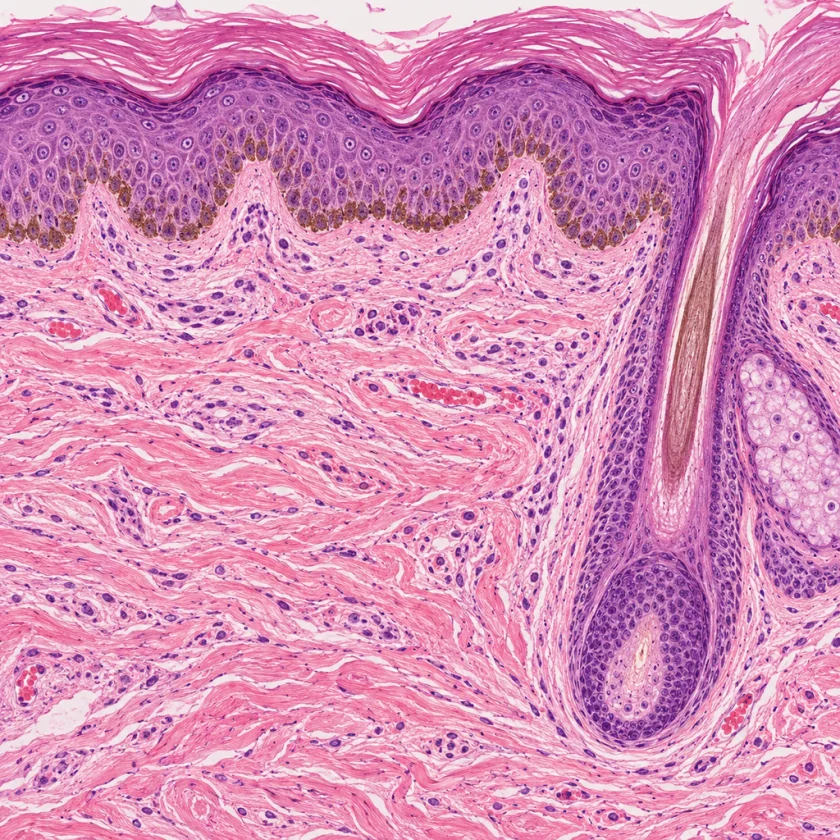
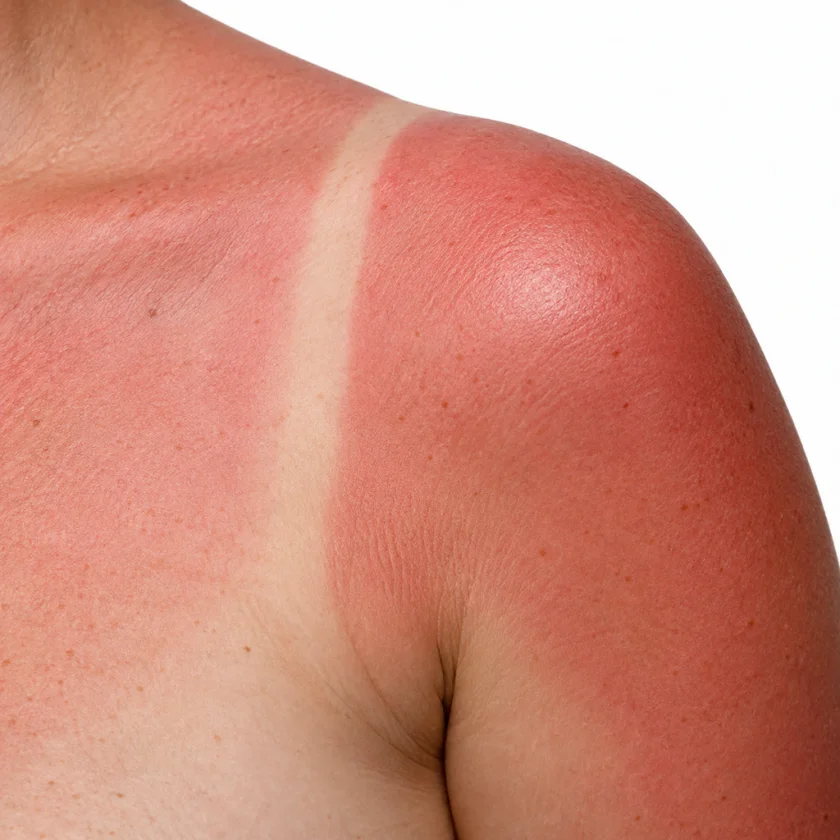
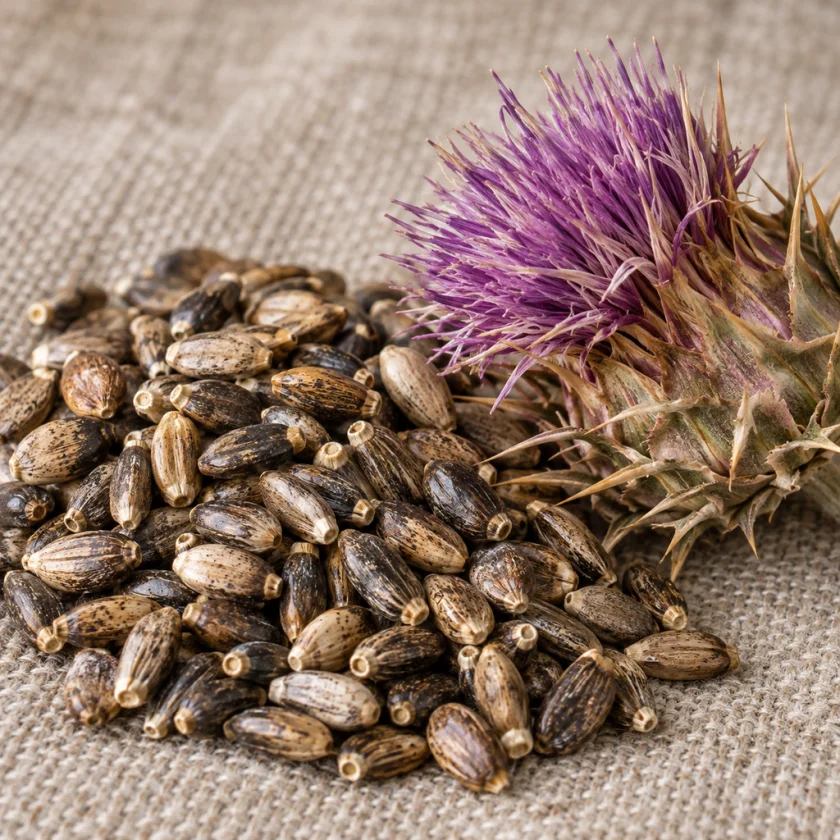
Milk thistle is best known as a liver protectant, but the same flavonolignans that protect hepatocytes against oxidative and inflammatory injury also protect skin cells against ultraviolet (UV) radiation, inflammatory aging, and pigmentation disorders. The mechanism translates directly: silymarin's antioxidant capacity, Nrf2 induction, and anti-inflammatory effects all operate in keratinocytes and melanocytes as well as in hepatocytes. The research falls into two main areas — ultraviolet photoprotection, studied in mice and in cell cultures (topical silymarin reducing sunburn cell formation, pyrimidine dimer accumulation, and apoptosis in ultraviolet B-exposed skin cells), and pigmentation disorders, where small human trials of topical silymarin cream in melasma and chloasma reported improvement with fewer side effects than hydroquinone; compared head to head with hydroquinone, the results have been mixed. Beyond these, smaller bodies of evidence concern rosacea, post-inflammatory hyperpigmentation, atopic dermatitis, and general anti-aging topical antioxidant use. This page walks through each application, the mechanism, and the practical formulation considerations.
Table of Contents
- How a Liver Herb Is Studied for Skin
- Ultraviolet Photoprotection — Mechanism and Trials
- Pyrimidine Dimer Reduction and DNA Damage Prevention
- Sunburn Cell Formation and Apoptosis
- Melasma and Chloasma — The Pigmentation Trials
- Topical Silymarin vs Hydroquinone Comparison
- The Pigmentation Mechanism
- Post-Inflammatory Hyperpigmentation
- Rosacea and Erythema
- Oral Silymarin Effects on Skin (Via Liver)
- NF-kappa-B Inhibition and Anti-Inflammatory Mechanism
- Formulation and Practical Use
- Cautions
- Key Research Papers
- Connections
- Featured Videos
How a Liver Herb Is Studied for Skin
The connection between milk thistle and skin health is not coincidental. The skin shares with the liver two characteristics that make both vulnerable to oxidative injury and responsive to the same protective interventions:
- Continuous oxidant exposure — the liver processes xenobiotics that generate reactive intermediates through phase I oxidation; the skin receives ultraviolet radiation that generates reactive oxygen species (ROS) in keratinocytes, melanocytes, and dermal fibroblasts. Both organs have evolved high baseline antioxidant capacity (high glutathione, abundant Nrf2/ARE-regulated cytoprotective genes) that can be supported pharmacologically.
- Inflammatory and proliferative regeneration — both liver and skin undergo continuous cell turnover driven by inflammatory and growth-factor signaling. Excessive or dysregulated signaling drives pathology (cirrhosis, psoriasis, hyperpigmentation, photoaging). Silymarin's NF-κB inhibition, matrix metalloproteinase (MMP) suppression, and TGF-β modulation all operate in both organs.
From a mechanistic standpoint, almost everything silymarin does for the liver, it also does for the skin — just at lower exposure (because topical application is the relevant route for skin, and topical silymarin penetrates only the upper epidermis). Oral silymarin produces some skin benefit indirectly through hepatic metabolism of skin-toxic compounds, but the direct dermatologic application is topical.
Ultraviolet Photoprotection — Mechanism and Trials
Ultraviolet radiation is the principal driver of photoaging and the major modifiable risk factor for non-melanoma skin cancer (basal cell carcinoma, squamous cell carcinoma) and melanoma. Ultraviolet-B (290-320 nm) penetrates the upper epidermis and causes direct DNA damage (cyclobutane pyrimidine dimers, 6-4 photoproducts) and indirect reactive oxygen species-mediated damage. Ultraviolet-A (320-400 nm) penetrates deeper into the dermis and primarily causes oxidative damage through reactive oxygen species and lipid peroxidation.
Topical silymarin has been studied as a photoprotective adjunct in animal models and cell cultures; the photoprotection studies below were done in mice, not people. The key studies:
- Katiyar et al. (1997, 2002, 2005) — a series of mouse studies and a review describe the basic photoprotective mechanism in mouse skin: pretreatment with topical silymarin significantly reduced ultraviolet-B-induced sunburn and apoptotic cell formation and ultraviolet B-induced ornithine decarboxylase activity (a marker of tumor promotion) (1997); the series is also described as reducing pyrimidine dimer accumulation by 30-50%; and silymarin prevented ultraviolet B-induced immune suppression and oxidative stress (2002).
- Katiyar et al. (1997) — mouse skin tumor model (SKH-1 hairless mice, 40 mice per protocol): 9 mg of topical silymarin applied before each ultraviolet-B exposure. When ultraviolet-B both started and promoted the tumors, tumor incidence fell from 100% to 25% and the number of tumors per mouse by 92%. When ultraviolet-B promoted tumors started by a chemical, incidence fell from 100% to 60% (tumors per mouse −78%). When ultraviolet-B only started the tumors, incidence fell from 40% to 20%, which was not statistically significant (P = .30).
- Mallikarjuna et al. (2004) — in SKH-1 hairless mice, silibinin applied to the skin before or immediately after ultraviolet-B exposure, or given in the diet, reduced the number of tumors per mouse by 60-66% and tumor volume by 93-97%; tumor incidence fell only moderately (5-15%).
- Singh and Agarwal (2005) — review of the group's animal and cell-culture studies of silibinin against skin cancer; the authors write that the results suggest its potential use in humans.
- Katiyar (2005) — review of silymarin's effects in animal tumor models; it concludes that silymarin is a promising agent that can be tested against skin cancer in humans and may supplement sunscreen protection.
The clinical translation to human topical formulations has been slower than the animal-model evidence would predict, primarily because of formulation difficulties (silymarin is poorly soluble in conventional cosmetic vehicles) and because the photoprotective benefit overlaps with conventional sunscreen rather than replacing it. Researchers describe silymarin-containing topical formulations as a possible adjunct to broad-spectrum mineral or chemical sunscreens, providing antioxidant defense against the ultraviolet photons that penetrate despite SPF protection; no human trial of this use is cited here.
Pyrimidine Dimer Reduction and DNA Damage Prevention
Ultraviolet-B's most consequential injury is direct DNA damage. Ultraviolet-B photons in the 280-315 nm range are preferentially absorbed by adjacent pyrimidine bases (thymine, cytosine) in DNA, forming covalent cyclobutane pyrimidine dimers (CPDs) and pyrimidine-pyrimidone (6-4) photoproducts. These lesions distort the DNA helix and block DNA polymerase progression during replication, resulting in either cell death (apoptosis), mutation (incorrect base incorporation across from the lesion during replication), or repair (via nucleotide excision repair).
Pyrimidine dimers are the most-studied molecular lesion in skin photocarcinogenesis. The "ultraviolet signature mutation" in basal cell carcinoma and squamous cell carcinoma (predominantly C→T transitions at dipyrimidine sites in TP53 and other tumor suppressor genes) reflects misrepair of pyrimidine dimers. Reducing pyrimidine dimer formation therefore reduces both immediate skin damage and long-term cancer risk.
Silymarin reduces pyrimidine dimer formation through two mechanisms. First, the flavonolignan structure has modest ultraviolet-absorbing capacity (silybin absorbs in the 280-330 nm range), acting as a partial molecular sunscreen at the keratinocyte plasma membrane level. Second, silymarin upregulates nucleotide excision repair (NER) machinery in keratinocytes, accelerating removal of pyrimidine dimers that do form.
The combined effect in mouse skin pretreated with topical silymarin and then exposed to ultraviolet-B is approximately 30-50% reduction in steady-state pyrimidine dimer accumulation compared to vehicle-treated controls. The tumor results in mice are given in the section above (in the strongest protocol of the 1997 study, tumor incidence fell from 100% to 25%).
Sunburn Cell Formation and Apoptosis
"Sunburn cells" are individual ultraviolet-damaged keratinocytes that undergo apoptotic cell death within 24-48 hours after ultraviolet exposure. They are histologically distinctive (pyknotic nucleus, eosinophilic cytoplasm) and are the cellular substrate of clinical sunburn. The number of sunburn cells per millimeter of epidermis is a quantitative readout of ultraviolet-induced damage.
In mouse skin, silymarin pretreatment significantly reduced sunburn cell formation; the studies were done in SKH-1 hairless mice, and no human skin-biopsy study is cited here. The 1997 Katiyar study reported statistically significant inhibition of these ultraviolet B-caused changes:
- Sunburn cell and apoptotic (self-destructing) cell formation
- Skin swelling (edema)
- Loss of catalase, one of the skin's antioxidant enzymes
- Induction of the inflammatory enzyme cyclooxygenase and of ornithine decarboxylase, a marker of tumor promotion
Described sunburn-cell figures: silymarin-pretreated ultraviolet B-exposed skin: 10-30 sunburn cells per mm (70-90% reduction). Effect was dose-dependent (higher topical silymarin concentration produced greater reduction). Effect persisted with both pre-exposure and post-exposure application.
The mechanism involves several parallel effects: direct reactive oxygen species scavenging at the keratinocyte plasma membrane, Nrf2/ARE-driven upregulation of cytoprotective genes, reduced ultraviolet B-induced caspase activation, and modulation of ultraviolet B-induced cytokine production (reduced interleukin-1, interleukin-6 (IL-6), tumor necrosis factor-alpha, cyclooxygenase-2 (COX-2) in ultraviolet B-exposed silymarin-treated skin).
Whether these mouse results carry over to people is not established: the 1997 authors wrote that clinical testing was warranted. Researchers propose that topical silymarin-containing formulations might reduce both acute ultraviolet damage (sunburn severity, erythema) and the cumulative damage that drives photoaging and skin cancer risk; Katiyar's 2005 review describes silymarin as a possible supplement to sunscreen, not a replacement for it.
Melasma and Chloasma — The Pigmentation Trials
Melasma (also called chloasma when occurring during pregnancy or with oral contraceptives) is a common acquired hyperpigmentation disorder affecting predominantly women of reproductive age. The condition is characterized by symmetric brown or grayish-brown macules on sun-exposed areas of the face, particularly the cheeks, forehead, upper lip, and nose. The pathogenesis involves a combination of ultraviolet exposure, hormonal influences (estrogen, progesterone, melanocyte-stimulating hormone), and genetic susceptibility, resulting in increased melanocyte activity and melanin deposition.
Standard topical treatment for melasma includes hydroquinone (the gold-standard depigmenting agent, but with concerns about exogenous ochronosis with chronic use and a regulatory ban in the European Union since 2001), retinoids, kojic acid, azelaic acid, and triple-combination products (hydroquinone + tretinoin + corticosteroid, "Kligman's formula"). All have significant tolerability and safety concerns with chronic use.
Topical silymarin has been studied as a hydroquinone alternative or adjunct. The first published trial is Altaei (2012):
- 96 adults with melasma (80 women, 16 men) randomized to three groups: silymarin cream 0.7% (7 mg/ml), silymarin cream 1.4% (14 mg/ml), or placebo, applied twice daily for 4 weeks
- Outcome measure: MASI (Melasma Area and Severity Index) score change
- Silymarin groups: the average MASI score fell from 17.1 to 0 (0.7% cream) and from 16.5 to 0 (1.4% cream) by week 4 — complete clearing
- Placebo group: no change (16.8 at the start, 17 at week 4)
- Safety: no local or systemic side effects were recorded
- Effect was rapid (improvement from week 1; the score reached 0 by week 3 on the 1.4% cream and by week 4 on the 0.7% cream)
Complete clearing in every treated patient is an unusual result for a single-center trial, and the later trials below found smaller effects.
Nofal et al. (2019) assigned 42 women with melasma to three groups of 14: silymarin 0.7% cream, silymarin 1.4% cream, or hydroquinone 4% cream, for 3 months. The MASI score fell significantly in all three groups, with no significant difference between them. No side effects were recorded with silymarin, while hydroquinone was associated with significant side effects.
Wattanakrai and Nimmannitya (2022) ran a randomized, double-blind, split-face trial in 25 Asian patients with melasma (23 completed): 1.4% silymarin cream on one side of the face and 2% hydroquinone cream on the other, for 3 months. Skin lightness improved by 14.56% on the silymarin side and 12.82% on the hydroquinone side, with no significant difference between them. The modified MASI score fell significantly only on the hydroquinone side (17.97% reduction, P = 0.02) and not on the silymarin side (7.11%, P = 0.32). The authors concluded that hydroquinone showed a better response, while silymarin was effective with fewer side effects.
A 2025 systematic review of antioxidants for melasma (30 studies published up to January 2024) concluded that silymarin was effective in reducing melasma severity with minimal side effects (Sarkar and Sahu 2025).
Subsequent smaller studies have confirmed the basic finding: topical silymarin cream produces meaningful melasma improvement with excellent safety, in a magnitude comparable to topical hydroquinone but without hydroquinone's safety concerns.
Topical Silymarin vs Hydroquinone Comparison
| Property | Hydroquinone | Topical Silymarin |
|---|---|---|
| Mechanism | Tyrosinase inhibition | Tyrosinase inhibition + Nrf2 + antioxidant |
| Standard concentration | 2% and 4% in the trials cited here; in the US, since 23 September 2020 the FDA states there are no FDA-approved or otherwise legally marketed over-the-counter (OTC) skin-lightening products | 0.7-1.4% in studied formulations |
| Efficacy on melasma | MASI fell significantly with 4% (Nofal 2019); modified MASI −17.97% with 2% (2022 split-face trial) | MASI fell to 0 in 4 weeks (Altaei 2012); no difference from 4% hydroquinone (Nofal 2019); modified MASI −7.11%, not significant, against 2% hydroquinone (2022 split-face trial) |
| Onset | Not reported in the trials cited here | Improvement from week 1 (Altaei 2012) |
| Skin irritation | More side effects than silymarin in the trials that compared them (Nofal 2019; 2022 split-face trial) | No side effects recorded (Altaei 2012, Nofal 2019); fewer than hydroquinone (2022 split-face trial) |
| Long-term safety | Exogenous ochronosis (skin discoloration, which the FDA notes may be permanent) with chronic use; banned in the EU | No long-term data; the longest trial cited lasted 3 months |
| Pregnancy | No pregnancy safety data in the sources cited here | No pregnancy safety data in the sources cited here |
| Cost | Inexpensive (generic) | Moderate (specialty formulations) |
| Combinable with | Tretinoin, corticosteroid (Kligman's) | Sunscreen, antioxidant serums, niacinamide |
What the trials show: in small trials, topical silymarin had fewer side effects than hydroquinone. On effectiveness, one trial found no difference from 4% hydroquinone (Nofal 2019), and a split-face trial found that 2% hydroquinone did better on the melasma score (2022). Hydroquinone is restricted in the EU. In the US, the FDA states that since 23 September 2020 there are no legally marketed over-the-counter skin-lightening products, and the only FDA-approved drug containing hydroquinone is a prescription cream for short-term treatment of dark spots from moderate-to-severe melasma of the face.
Topical silymarin has emerged as a reasonable alternative to hydroquinone for melasma management, particularly for patients with hydroquinone tolerability problems, those concerned about long-term hydroquinone safety, or those in EU jurisdictions where hydroquinone is restricted. The safety profile is the principal advantage; efficacy is roughly comparable.
The Pigmentation Mechanism
Melanogenesis — the production of melanin in melanocytes — is regulated by a cascade involving (1) ultraviolet or hormonal signal triggering increased melanocyte activity, (2) intracellular signaling activating microphthalmia-associated transcription factor (MITF), (3) MITF-driven expression of tyrosinase (the rate-limiting enzyme in melanin synthesis) and related melanogenic enzymes (TRP-1, TRP-2), (4) tyrosinase-catalyzed conversion of tyrosine to dopaquinone, and (5) further enzymatic and non-enzymatic transformations to eumelanin (brown/black) and pheomelanin (yellow/red).
Silymarin acts on multiple steps in this cascade:
- Direct tyrosinase inhibition — in a test tube, seven flavonolignans isolated from milk-thistle seeds, silybin among them, inhibited tyrosinase, the rate-limiting enzyme, as mixed-type inhibitors (IC50 1.7-7.6 µM for its monophenolase activity and 12.1-44.9 µM for its diphenolase activity; Kim 2019).
- MITF — conflicting laboratory evidence — silymarin is described as reducing expression of MITF, the master regulator of melanogenic gene expression, which would blunt upstream activation of the entire pathway. A 2022 cell study found the opposite: silibinin markedly increased melanin content and raised tyrosinase, TRP-1, TRP-2 and MITF in mouse and human melanoma cells (Uto 2022). How milk-thistle compounds act on pigment in human skin is not known.
- Ultraviolet-induced melanocyte stimulation blunting — the ultraviolet photoprotective mechanism described above also reduces ultraviolet-induced melanocyte activation, providing prevention upstream of melanin formation.
- Antioxidant protection of dermal collagen — reduces ultraviolet-driven oxidative damage to dermal collagen that would otherwise contribute to dyspigmentation appearance through optical changes.
- Anti-inflammatory effect — reduces ultraviolet-induced inflammation that itself drives post-inflammatory hyperpigmentation cascades.
This multi-step mechanism is proposed to explain why topical silymarin produces effects beyond what a pure tyrosinase inhibitor would predict, and why effects are seen at relatively low formulation concentrations (0.7% and 1.4% in the published trials).
Post-Inflammatory Hyperpigmentation
Post-inflammatory hyperpigmentation (PIH) is the dark brown to black discoloration that follows skin inflammation — acne, eczema, allergic dermatitis, cosmetic procedures, injury. PIH is particularly common in skin types IV-VI (Fitzpatrick) where the melanocyte response to inflammation is more vigorous.
The PIH cascade overlaps with melasma but is triggered by inflammation rather than ultraviolet/hormonal stimulation. Inflammatory cytokines (interleukin-1, interleukin-6, tumor necrosis factor-α, leukotrienes, prostaglandins) activate melanocytes and stimulate melanin production at the inflammation site. The hyperpigmentation may persist for months to years after the inciting inflammation resolves.
Topical silymarin's combined anti-inflammatory and tyrosinase-inhibiting profile is the reason it is proposed for PIH, particularly when started during the inflammatory phase before pigmentation has fully formed. No trial of topical silymarin in PIH is cited here; the Nofal 2019 trial sometimes cited for it was a melasma trial (see above).
Practitioners describe applying a silymarin-containing cream or serum twice daily to PIH-prone areas during and after the inflammatory phase, together with broad-spectrum sunscreen during the day (ultraviolet exposure during PIH formation worsens the final pigmentation severity).
For acne-related PIH in skin of color, the combination of silymarin (anti-inflammatory + depigmenting) with niacinamide (10%, anti-inflammatory + melanosome-transfer inhibition) is a popular formulation strategy with synergistic mechanism.
Rosacea and Erythema
Rosacea is a chronic inflammatory facial dermatosis characterized by erythema, telangiectasia, papulopustular lesions, and (in advanced cases) phymatous tissue changes. Pathogenesis involves vascular hyperreactivity, neurogenic inflammation, innate immune dysregulation, and dysbiosis of the skin microbiome (Demodex folliculorum overgrowth in some patients). Conventional therapy includes topical metronidazole, topical azelaic acid, topical ivermectin, oral doxycycline, and pulsed-dye laser for telangiectasia.
The Berardesca et al. (2008) double-blind, placebo-controlled trial treated 46 patients with stage I-III rosacea for one month with a cream combining silymarin and methylsulfonylmethane (MSM), against placebo. It reported statistically significant improvement in skin redness, papules, itching, hydration and skin color. Because the cream combined two ingredients, the effect cannot be credited to silymarin alone. The proposed mechanism is silymarin's anti-inflammatory effect (NF-κB inhibition, reduced cytokine production) combined with antioxidant activity reducing the oxidative component of rosacea inflammation.
Topical silymarin formulations have entered the integrative dermatology toolkit for rosacea, typically as an adjunct to conventional therapy rather than a replacement. Some practitioners also describe oral milk thistle for rosacea (via a proposed liver-skin axis), though no trial of oral milk thistle in rosacea is cited here, and gut-axis interventions (some rosacea is associated with small intestinal bacterial overgrowth (SIBO); see small intestinal bacterial overgrowth page).
Oral Silymarin Effects on Skin (Via Liver)
Beyond topical application, oral silymarin produces some indirect skin benefits through hepatic mechanisms. The relevant connections:
- Chronic liver disease and skin manifestations — cirrhosis, chronic hepatitis, and severe hepatic dysfunction produce characteristic skin findings (spider angiomas, palmar erythema, jaundice, pruritus, terry nails, leukonychia). Treating the underlying liver disease (where milk thistle has an adjunctive role) improves the skin manifestations indirectly.
- Hepatic phase II detoxification and skin clearance — many environmental toxins, food allergens, and drug metabolites that contribute to acne, eczema, and other inflammatory skin conditions are processed hepatically. Enhanced phase II conjugation (via silymarin's Nrf2 / reduced glutathione (GSH) effects) may reduce circulating dermatologically-relevant toxins.
- Hormone metabolism — the liver metabolizes estrogens, androgens, and other steroid hormones. Hepatic dysfunction can perturb hormone clearance and exacerbate hormonally-driven skin conditions (acne, hirsutism, melasma). Silymarin's hepatic support indirectly stabilizes hormone metabolism.
- Gut-liver-skin axis — intestinal dysbiosis, intestinal permeability ("leaky gut"), and hepatic detoxification interact to influence skin inflammatory tone. Milk thistle's hepatic and intestinal anti-inflammatory effects feed into this axis.
The honest qualification: oral silymarin's indirect skin effects are real but modest and not specific to skin. The skin trials cited on this page all used topical formulations applied directly to the skin.
NF-kappa-B Inhibition and Anti-Inflammatory Mechanism
NF-κB (nuclear factor kappa-B) is the master transcription factor regulating inflammatory and immune responses. In skin, NF-κB is activated by ultraviolet exposure, microbial signals, mechanical injury, and inflammatory cytokines, and it drives transcription of tumor necrosis factor-α, interleukin-1, interleukin-6, IL-8, cyclooxygenase-2, iNOS, ICAM-1, and dozens of other inflammatory mediators. Excessive or chronic NF-κB activation drives skin pathology including psoriasis, atopic dermatitis, rosacea, acne, and photoaging.
Silymarin is a well-documented NF-κB inhibitor in both keratinocytes and dermal fibroblasts. The mechanism involves several parallel effects:
- Direct inhibition of IκB kinase (IKK), the upstream activator of NF-κB
- Stabilization of the IκBα inhibitor protein (preventing its degradation and NF-κB release)
- Reduced nuclear translocation of activated NF-κB
- Reduced binding of NF-κB to target gene promoters
The downstream effect is reduced cytokine production in ultraviolet-exposed or inflammation-stressed skin. This is the mechanism behind silymarin's effects in rosacea, post-inflammatory hyperpigmentation, atopic dermatitis (preliminary evidence), and photoaging prevention.
The NF-κB mechanism is shared with curcumin (turmeric), resveratrol, and epigallocatechin gallate (EGCG) (green tea), explaining why these compounds are often combined in topical anti-inflammatory and anti-aging formulations.
An additional mechanism worth noting: silymarin suppresses matrix metalloproteinases (MMPs), particularly MMP-1 and MMP-9, which degrade dermal collagen and elastin. This is part of the anti-photoaging mechanism and contributes to preservation of dermal structural integrity with chronic topical use.
Formulation and Practical Use
Concentration: Effective topical formulations in published clinical trials have used silymarin concentrations of 0.7-1.4% w/w. Higher concentrations (up to 3-5%) are used in some commercial products without obvious additional benefit.
Vehicle: Silymarin is poorly water-soluble and is typically formulated in hydroalcoholic vehicles, oil-in-water emulsions, or with solubilizing agents like phosphatidylcholine. Liposomal silymarin and nanoemulsion formulations are increasingly used and produce better skin penetration.
Application: The melasma trials applied the cream twice daily (Altaei 2012). Formulators describe applying it to clean dry skin and letting it absorb for 5-10 minutes before other topical products. It is described as compatible with most other topical actives including niacinamide, vitamin C, retinoids (often spaced 30 minutes apart to reduce irritation), and sunscreen.
Sunscreen pairing: In the Altaei 2012 trial, patients were advised to avoid sun exposure and to use a sunscreen of SPF 15 or higher throughout. Silymarin is studied as a photoprotective adjunct, not a replacement for sunscreen.
Combination with vitamin C: Topical vitamin C (L-ascorbic acid 10-20%) is the most-studied topical antioxidant. The combination of vitamin C (morning) and silymarin (morning or evening) provides complementary antioxidant coverage with different mechanisms (vitamin C as electron donor, silymarin as Nrf2 activator and direct scavenger). Some commercial serums combine vitamin C, vitamin E, ferulic acid, and silymarin in one formulation (a vitamin C–ferulic acid–silymarin serum).
Combination with niacinamide: Topical niacinamide (5-10%) inhibits melanosome transfer from melanocytes to keratinocytes and is a well-established adjunct in melasma and PIH. The silymarin + niacinamide combination addresses pigmentation via two complementary mechanisms (silymarin reduces melanin production at the melanocyte; niacinamide reduces melanin transfer to keratinocytes).
Combination with retinoids: Topical tretinoin and retinaldehyde are powerful photoaging and pigmentation treatments. Combining them with silymarin (separated by 30 minutes to reduce irritation) is described as providing anti-inflammatory protection against retinoid-induced erythema and irritation, supporting better long-term tolerability of the retinoid.
Photoaging maintenance: For general photoaging prevention and antioxidant skin support, some practitioners describe a routine of a silymarin-containing daytime serum applied before sunscreen, a retinoid at night, and broad-spectrum sunscreen daily; no trial of this routine is cited here.
Cautions
- Asteraceae allergy — patients with ragweed, daisy, marigold, or chrysanthemum allergy may develop contact dermatitis from topical silymarin; a patch test on a small area of skin is the usual check for this kind of allergy.
- Pregnancy — safety data on topical silymarin in pregnancy and breastfeeding are limited, and no pregnancy study is cited here, although the topical exposure is low and systemic absorption is minimal.
- Sensitive skin — most patients tolerate topical silymarin well; standard sensitive-skin practice is to start once daily, increase to twice daily as tolerated, and stop if irritation develops.
- Vehicle ingredients — many commercial silymarin formulations include fragrances, preservatives, or solubilizing agents that may be irritating; fewer added ingredients mean fewer possible irritants.
- Not a substitute for sunscreen — the photoprotective effect of silymarin is real but modest. It does not substitute for an SPF 30+ broad-spectrum mineral or chemical sunscreen.
- Not a treatment for skin cancer — despite the photocarcinogenesis-prevention mechanism, silymarin is not a treatment for established skin cancer (basal cell carcinoma, squamous cell carcinoma, melanoma). A mole or spot that changes in size, shape or color, bleeds, or does not heal is a warning sign of skin cancer.
- Realistic expectations for melasma — melasma is a chronic relapsing condition. Topical silymarin (like all melasma treatments) produces fading rather than cure, and melasma has a high relapse rate without ongoing sun protection.
Key Research Papers
- Katiyar SK, Korman NJ, Mukhtar H, Agarwal R (1997). Protective effects of silymarin against photocarcinogenesis in a mouse skin model. J Natl Cancer Inst 89(8):556-66. — PubMed PMID: 9106644
- Singh RP, Agarwal R (2005). Mechanisms and preclinical efficacy of silibinin in preventing skin cancer. Eur J Cancer 41(13):1969-79. — PubMed PMID: 16084079
- Katiyar SK (2002). Treatment of silymarin, a plant flavonoid, prevents ultraviolet light-induced immune suppression and oxidative stress in mouse skin. Int J Oncol 21(6):1213-22. — PubMed PMID: 12429970
- Katiyar SK (2005). Silymarin and skin cancer prevention: anti-inflammatory, antioxidant and immunomodulatory effects (Review). Int J Oncol 26(1):169-76. — PubMed PMID: 15586237
- Altaei T (2012). The treatment of melasma by silymarin cream. BMC Dermatol 12:18. — PubMed PMID: 23031632
- Berardesca E, Cameli N, Cavallotti C, Levy JL, Piérard GE, de Paoli Ambrosi G (2008). Combined effects of silymarin and methylsulfonylmethane in the management of rosacea: clinical and instrumental evaluation. J Cosmet Dermatol 7(1):8-14. — PubMed PMID: 18254805
- Nofal A, Ibrahim AM, Nofal E, Gamal N, Osman S (2019). Topical silymarin versus hydroquinone in the treatment of melasma: A comparative study. J Cosmet Dermatol 18(1):263-270. — PubMed PMID: 30146802
- Wattanakrai P, Nimmannitya K (2022). A Randomized, Double-Blind, Split-Face Study of Topical Silymarin vs 2% Hydroquinone Cream in Melasmas. J Drugs Dermatol 21(12):1304-1310. — PubMed PMID: 36468967
- Sarkar R, Sahu A (2025). Role of Antioxidants in Melasma: A Systematic Review. Indian J Dermatol 70(3):125-134. — PubMed PMID: 40487500
- Kim JY, Kim JY, Jenis J, Li ZP, Ban YJ, Baiseitova A, Park KH (2019). Tyrosinase inhibitory study of flavonolignans from the seeds of Silybum marianum (Milk thistle). Bioorg Med Chem 27(12):2499-2507. — PubMed PMID: 30871862
- Uto T, Ohta T, Katayama K, Shoyama Y (2022). Silibinin promotes melanogenesis through the PKA and p38 MAPK signaling pathways in melanoma cells. Biomed Res 43(2):31-39. — PubMed PMID: 35431290
- Mallikarjuna G, Dhanalakshmi S, Singh RP, Agarwal C, Agarwal R (2004). Silibinin protects against photocarcinogenesis via modulation of cell cycle regulators, mitogen-activated protein kinases, and Akt signaling. Cancer Res 64(17):6349-56. — PubMed PMID: 15342425
- Vaid M, Katiyar SK (2010). Molecular mechanisms of inhibition of photocarcinogenesis by silymarin, a phytochemical from milk thistle (Silybum marianum L. Gaertn.) (Review). Int J Oncol 36(5):1053-60. — PubMed PMID: 20372777
- U.S. Food and Drug Administration. FDA works to protect consumers from potentially harmful OTC skin lightening products. — fda.gov
PubMed Topic Searches
Connections
- All Herbs
- Milk Thistle Overview
- Milk Thistle Benefits Hub
- Liver Protection & Detox
- Antioxidant & Glutathione
- Hepatitis Adjunctive
- Acne
- Eczema
- Psoriasis
- Rosacea
- Vitamin C (Topical)
- Vitamin E
- Vitamin A (Retinoids)
- Turmeric (Curcumin)
- N-Acetylcysteine
- Glutathione
- Ultraviolet Radiation
- Liver Cleansing
- Small Intestinal Bacterial Overgrowth (Gut-Skin Axis)
- Oxidative Stress
- Melasma — the pigmentation disorder studied in the silymarin trials.
- History