Vervain
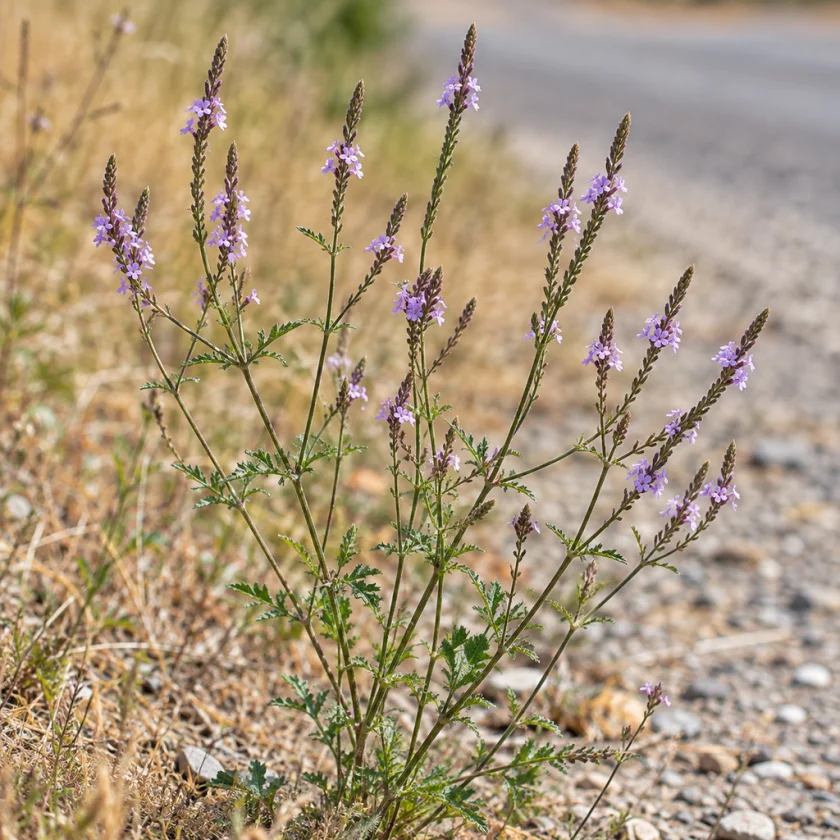
Vervain (Verbena officinalis) is a slender, unassuming plant you might walk right past on a roadside — small lilac flowers on wiry, branching stems — yet few herbs carry a heavier weight of legend. For thousands of years it was treated as sacred: a "herb of grace" that swept Roman altars clean, a plant the Druids gathered with ceremony, and, in medieval Christian lore, the "herb of the cross" said to have staunched Christ's wounds. Herbalists have long valued it as a gentle nervine — a calming tonic for anxiety, nervous tension, and restless sleep — and as a bitter that nudges digestion and the liver. This page explains what vervain actually is, which "vervain" we mean (the name is shared with two very different plants), where its calming reputation comes from, and what modern research does — and does not — show. The honest short version: it is a folklore-rich traditional remedy with genuinely interesting laboratory and animal findings, but almost no rigorous human trials. It is a pleasant, bitter tea for many people, with one caution that matters — pregnancy.
Table of Contents
What Vervain Is
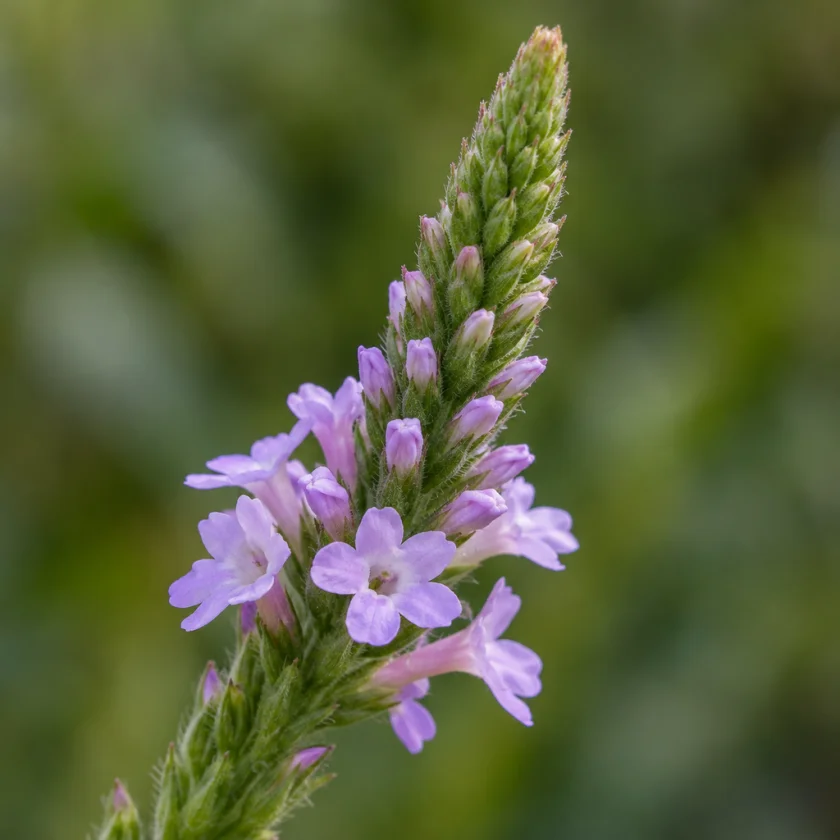
Vervain is a wayside perennial in the family Verbenaceae, native across Europe, North Africa, and much of Asia, and long naturalized elsewhere. It grows as a lean, upright plant a couple of feet tall, with stiff square-ish stems, deeply lobed lower leaves, and long thin spikes topped by tiny pale-lilac flowers that open a few at a time. There is nothing showy about it — no strong scent, no bold bloom — and that quiet plainness is part of why older writers found it a little mysterious: a humble weed treated as holy.
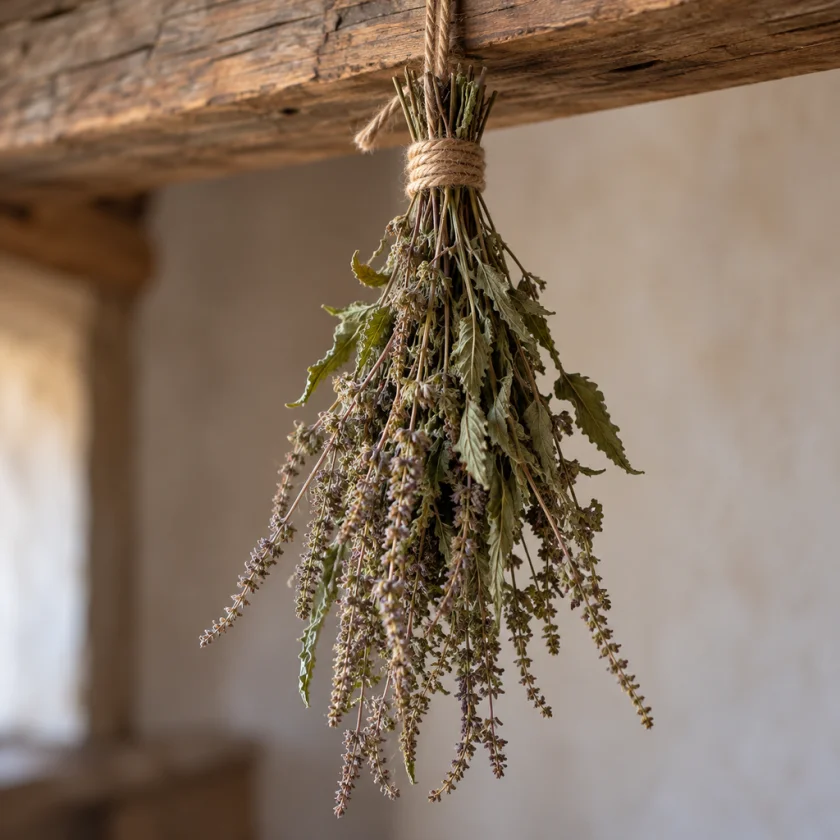
Botanically it is the "type species" of the genus Verbena, which is why it carries the epithet officinalis — the old apothecary's tag for "used in the workshop," meaning a recognized medicinal plant. In plain terms, vervain is the original garden-and-hedgerow herb that gave the whole verbena family its name. The parts used are the above-ground flowering tops and leaves, harvested when the plant is in bloom and dried for teas and tinctures.
Untangling the Vervain Names
"Vervain" is one of those common names that has been stretched over several unrelated plants, so it is worth being precise. This page is about common vervain, also called European vervain — Verbena officinalis. That is the plant of the classical and medieval legends and of traditional European herbalism.
- Blue vervain (Verbena hastata) is a taller North American cousin with denser, distinctly blue-violet flower spikes. It has its own place in Native American and Eclectic herbal tradition and is used similarly as a nervine and diaphoretic, but it is a different species. Interestingly, the iridoid hastatoside was first isolated from V. hastata and later found in V. officinalis too, so the two share some chemistry — but they are not interchangeable species.
- Lemon verbena (Aloysia citrodora, formerly Aloysia triphylla) is the fragrant, lemon-scented shrub grown for its aromatic leaves and calming tea. Despite the shared word "verbena," it is a different genus with a completely different aroma and profile. If a tea smells brightly of lemon, it is lemon verbena, not common vervain.
Common vervain, by contrast, is essentially scentless and noticeably bitter. The Latin name Verbena officinalis on a dried-herb label is what identifies this plant.
Herb of Grace: Folklore and History
Vervain's reputation runs far ahead of its pharmacology, and the history is genuinely charming. In ancient Rome, verbena referred to sacred branches carried by priests, and vervain was among the herbs used to purify altars, homes, and temples — a plant of ritual cleanliness dedicated to the gods. The Roman writer Pliny the Elder recorded that the Gauls' Druids held the herb in high esteem, gathering it with rites and using it in divination and lot-casting. From these associations come folk names like holy herb, herb of grace, Juno's tears, and enchanter's plant.
In medieval Christian Europe the legend was rechristened: vervain became the herb of the cross, believed to have grown on Calvary or to have been used to dress Christ's wounds, and was gathered with blessings to protect against ill fortune and to heal. Across many cultures it was hung over doorways, worn as a charm, and steeped for everything from headaches to melancholy. Later English herbalists — Gerard, Culpeper, and the folk tradition after them — kept it in the working apothecary as a nerve tonic and a remedy for "the vapours," fevers, and sluggish digestion.
None of this folklore is evidence of medical effect, and this page does not treat it as such. But it explains why vervain has been trusted for so long, and why it still turns up in modern calming and "nervous tension" blends: it carries centuries of reassurance along with its bitter leaves.
Traditional Uses
Strip away the legend and traditional Western herbalism uses vervain in a handful of fairly consistent ways.
A nervine for tension, low mood, and sleep
Its best-known role is as a relaxing nervine — a gentle herb for nervous exhaustion, everyday anxiety, irritability, tension headaches, and the kind of "wired but tired" restlessness that makes sleep difficult. Herbalists have reached for it during convalescence, stress, and low spirits, often blending it with calming partners such as lemon balm, chamomile, skullcap, or passionflower. It is considered mild rather than sedating — a settling background note rather than a knockout.
A digestive and liver bitter
Vervain's pronounced bitterness makes it a classic bitter tonic. Traditionally, a small cup of the bitter tea before or after meals was used to stimulate appetite, saliva and stomach secretions, ease sluggish digestion and bloating, and gently support the liver and bile flow. This is the same logic behind many European bitter herbs — the bitter taste itself is thought to prime the gut.
Fevers, headaches, and other folk uses
As a mild diaphoretic (a herb that encourages sweating), vervain was a traditional fever remedy, taken warm to help "break" a fever during colds and flu-like illness. It also has a long folk record for headache and migraine, and — notably — as a galactagogue, an herb to encourage milk flow in nursing mothers. That last use sits in tension with its pregnancy caution below: the same tradition that credits it with moving things along after birth also gave it a reputation as a uterine stimulant during pregnancy.
The Active Compounds
Vervain's chemistry is reasonably well mapped, and it points toward why the plant might calm and soothe — even though mapping chemistry is not the same as proving effect.
- Iridoid glycosides — the signature constituents. The two most characteristic are verbenalin (also called cornin) and hastatoside, along with related iridoids such as aucubin. These bitter compounds are the ones most tied to vervain's nervine and sleep reputation, and they are the focus of the animal sleep research discussed below.
- Phenylpropanoid glycosides — chiefly verbascoside (also known as acteoside) and isoverbascoside. Verbascoside is a well-studied antioxidant and anti-inflammatory molecule found in many medicinal plants, and it is one of vervain's more abundant actives.
- Flavonoids — including apigenin, luteolin, scutellarein, and their glycosides. Apigenin and luteolin are widely associated with mild calming and anti-inflammatory activity across the plant kingdom.
- Essential oil and others — a small volatile-oil fraction (with components such as citral and limonene reported), plus triterpenes and tannins. The tannins add astringency and are relevant to one of the safety cautions (iron absorption) noted later.
It is a genuinely interesting toolkit — bitters that may act on sleep pathways, plus antioxidant and anti-inflammatory molecules. The open question is whether enough of these compounds, at the doses in an ordinary cup of tea, do anything measurable in a human body.
What the Evidence Actually Shows
Here is the honest heart of the matter. Vervain's reputation rests overwhelmingly on tradition plus laboratory and animal research. Rigorous human clinical trials on Verbena officinalis for anxiety, sleep, or digestion are essentially lacking. So what follows is promising and worth knowing — but it is preclinical, and preclinical signals often fail to hold up in people.
Sleep and the iridoids
The most quoted finding is that vervain's iridoids may promote sleep. In a study of the plant's constituents, hastatoside and verbenalin were identified as sleep-promoting components, increasing non-REM sleep in animals. This is a real and intriguing result, and it lends some mechanistic plausibility to the centuries-old use of vervain as a bedtime nervine — but it is animal data, not a demonstration that a human cup of tea improves sleep.
Mood, calm, and the nervous system
An animal study found that an aqueous extract of vervain produced an antidepressant-like effect in rats, reducing behavioral markers of despair. Reviews also describe anxiolytic and neuroprotective signals in laboratory models, and molecular work suggests some constituents may interact with serotonin- and dopamine-related pathways. Again: encouraging, mechanistically coherent, and entirely preclinical.
Anti-inflammatory, antioxidant, and antimicrobial activity
Vervain leaf extracts and topical preparations have shown anti-inflammatory and analgesic activity in animal models, and the leaves have measurable antioxidant and antifungal activity in the lab. Much of this tracks the verbascoside content — a compound repeatedly shown to be antioxidant, anti-inflammatory, antimicrobial, and neuroprotective. Two important caveats: verbascoside is found in many plants (so "verbascoside is active" is not the same as "vervain tea is effective"), and cell-and-animal activity does not automatically translate into clinical benefit.
The bottom line on evidence
Vervain has a coherent, plausible story: bitter iridoids linked to sleep, verbascoside and flavonoids linked to anti-inflammatory and calming effects, all lining up with how the herb has been used for centuries. What is missing is the part that would let anyone promise results — well-designed human trials. Vervain's standing is that of a traditional and gentle herbal tea, not a proven treatment for any condition.
Forms and How It's Used
Vervain is simple to use, and how you take it is mostly a matter of taste and tolerance for bitterness.
- Tea (infusion) — the traditional form. Roughly a teaspoon or two of the dried herb steeped in hot water for about ten minutes, up to a few times a day. Expect it to be genuinely bitter; many people blend it with lemon balm, chamomile, mint, or a little honey to soften the edge. Taken before a meal it acts more as a digestive bitter; taken in the evening it is used as a calming nightcap.
- Tincture (liquid extract) — a concentrated alcohol extract taken as drops in water, convenient for consistent dosing and for blending into nervine formulas. Concentrations vary widely between products, and the label states each one's strength.
- Capsules and blends — vervain also appears in combination products, including some traditional cough and "nervous tension" formulas.
There is no established, evidence-based dose — because the human trials that would define one do not exist. Traditional amounts are modest. More is not better here: in excess, vervain's bitterness turns to nausea (see below). For calm or sleep, a small evening cup is the classic traditional approach.
Safety and Cautions
For most healthy adults, vervain is generally regarded as safe in the modest amounts found in teas and traditional preparations, with a long history of ordinary use and few reports of serious harm. That said, "traditional and gentle" is not the same as "risk-free," and there are real cautions.
Pregnancy — the one that matters most
Vervain has a long traditional reputation as a uterine stimulant and emmenagogue (an herb that promotes menstruation), and it was historically used to encourage labor and milk flow. That is the opposite of the calm, undisturbed uterus of a healthy pregnancy, which is why traditional sources list pregnancy as the main caution. There is no human safety data on vervain in pregnancy, and none on its use as a galactagogue while breastfeeding.
Interactions and other cautions
- Sedatives and central nervous system (CNS) depressants — because vervain is used for its calming, sleep-leaning effect, it could in theory add to the effect of sedatives, sleep medications, or alcohol. The combination has not been studied.
- Blood-pressure medication — vervain has shown blood-pressure-lowering activity in some reports, so it could add to the effect of antihypertensive drugs and lower blood pressure further.
- Iron absorption — vervain's tannins can bind minerals in the gut. Taken with meals or iron supplements, it may theoretically reduce iron absorption; taken between meals, it is kept apart from the iron in food.
- Hormone-sensitive conditions and anticoagulants — there is theoretical concern that vervain could interact with hormone-sensitive situations and with blood-thinning therapy. The data are thin, and no human study has tested either interaction.
- Large doses — too much vervain is a bitter irritant and can cause nausea, vomiting, or diarrhea. Its bitterness tends to limit how much people drink; traditional use is in modest amounts.
The interactions above — added sedation, added blood-pressure lowering, reduced iron absorption, and a theoretical effect with hormone-sensitive conditions and blood thinners — are the known concerns for people who take prescription medicines, have a chronic condition, or are pregnant or nursing.
The Honest Bottom Line
Vervain is a folklore-rich traditional nervine and digestive bitter — the humble "herb of grace" that classical priests, Druids, and medieval healers all treated as sacred. Its chemistry is real and interesting: bitter iridoids like verbenalin and hastatoside that animal studies tie to sleep, plus verbascoside and flavonoids with antioxidant and anti-inflammatory activity in the lab. Its calming and sleep reputation is genuinely plausible — but that reputation still rests on tradition and preclinical work, not on solid human trials. What it is, on the record: a gentle, bitter, storied tea that many people find settling, traditionally taken in modest amounts, with a pregnancy caution and no evidence that it treats a medical condition. Shorter: promising folklore-backed herb, thin human evidence, generally regarded as safe in modest amounts, traditionally kept out of pregnancy.
Key Research Papers
- Kubica P, Szopa A, Dominiak J, Łuczkiewicz M, Ekiert H. Verbena officinalis (Common Vervain) — A Review on the Investigations of This Medicinally Important Plant Species. Planta Medica. 2020;86(17):1241–1257. — the most comprehensive modern review of vervain's botany, chemistry, and pharmacology. — doi:10.1055/a-1232-5758
- Makino Y, Kondo S, Nishimura Y, Tsukamoto Y, Huang Z-L, Urade Y. Hastatoside and verbenalin are sleep-promoting components in Verbena officinalis. Sleep and Biological Rhythms. 2009;7(3):211–217. — identified vervain's two signature iridoids as sleep-promoting in animals; the mechanistic basis for its bedtime reputation. — doi:10.1111/j.1479-8425.2009.00405.x
- Rimpler H, Schäfer B. Hastatoside, a New Iridoid from Verbena hastata L. and Verbena officinalis L. Zeitschrift für Naturforschung C. 1979;34(5–6):311–318. — the original isolation of hastatoside, shared between blue vervain and common vervain. — doi:10.1515/znc-1979-5-601
- Schönbichler SA, Bittner LKH, Pallua JD, Popp M, Abel G, Bonn GK, Huck CW. Simultaneous quantification of verbenalin and verbascoside in Verbena officinalis by ATR-IR and NIR spectroscopy. Journal of Pharmaceutical and Biomedical Analysis. 2013;84:97–102. — measured the two key markers, verbenalin and verbascoside, that define vervain's active profile. — doi:10.1016/j.jpba.2013.04.038
- Casanova E, García-Mina JM, Calvo MI. Antioxidant and Antifungal Activity of Verbena officinalis L. Leaves. Plant Foods for Human Nutrition. 2008;63(3):93–97. — demonstrated measurable antioxidant and antifungal activity of vervain leaf extracts in the lab. — doi:10.1007/s11130-008-0073-0
- Calvo MI. Anti-inflammatory and analgesic activity of the topical preparation of Verbena officinalis L. Journal of Ethnopharmacology. 2006;107(3):380–382. — a topical vervain preparation reduced inflammation and pain in an animal model. — doi:10.1016/j.jep.2006.03.037
- Calvo MI, Vilalta N, San Julián A, Fernández M. Anti-inflammatory activity of leaf extract of Verbena officinalis L. Phytomedicine. 1998;5(6):465–467. — earlier animal work showing anti-inflammatory activity of the leaf extract. — doi:10.1016/S0944-7113(98)80043-3
- Bekara A, Amazouz A, Benyamina Douma T. Evaluating the Antidepressant Effect of Verbena officinalis L. (Vervain) Aqueous Extract in Adult Rats. Basic and Clinical Neuroscience. 2020;11(1):91–98. — an aqueous vervain extract showed antidepressant-like effects in rats (preclinical, not human). — doi:10.32598/bcn.11.1.3
- Chalchat JC, Garry RP. Chemical Composition of the Leaf Oil of Verbena officinalis L. Journal of Essential Oil Research. 1996;8(4):419–420. — characterized the volatile-oil fraction of vervain leaves. — doi:10.1080/10412905.1996.9700653
- Kuchekar M, Upadhye M, Kulkarni A, Zambare A, Shirke D, Kore P. Verbena officinalis (Verbenaceae): Pharmacology, Toxicology and role in female health. International Journal of Ayurvedic Medicine. 2022;13(2):296–304. — reviews the pharmacology and toxicology of vervain, including its traditional roles in women's health. — doi:10.47552/ijam.v13i2.2748
- Xiao Y, Ren Q, Wu L. The pharmacokinetic property and pharmacological activity of acteoside: A review. Biomedicine & Pharmacotherapy. 2022;153:113296. — a review of verbascoside/acteoside, one of vervain's most abundant actives (found in many plants). — doi:10.1016/j.biopha.2022.113296
- Marčetić M, Bufan B, Drobac M, et al. Multifaceted Biological Properties of Verbascoside/Acteoside: Antimicrobial, Cytotoxic, Anti-Inflammatory, and Immunomodulatory Effects. Antibiotics. 2025;14(7):697. — summarizes the antimicrobial and anti-inflammatory activity attributed to the verbascoside in vervain and related plants. — doi:10.3390/antibiotics14070697
Human clinical trials of Verbena officinalis for anxiety, sleep, or digestion are scarce. For the latest, browse PubMed: Verbena officinalis clinical and PubMed: verbenalin hastatoside sleep.
Connections
- All Herbs
- Lemon Balm
- Chamomile
- Skullcap
- Valerian
- Passionflower
- Lavender
- St. John's Wort
- Ashwagandha
- Holy Basil (Tulsi)
- Psychiatry & Mental Health
- Neurology
- Conditions on this site that reference this page: Iron-Deficiency Anemia · Insomnia