⚠ Evidence warning: Clinical trials or other evidence do not support the claims that the Kennedy trials establish the foundational evidence for acute anxiety relief without sedation or adverse effects, have stood up to replication and explain the common 600 mg dose, and that oral lavender oil is the legitimate first-line botanical for generalized anxiety. This page keeps it as a report of what people, websites or other media say.
Lemon Balm for Anxiety Relief
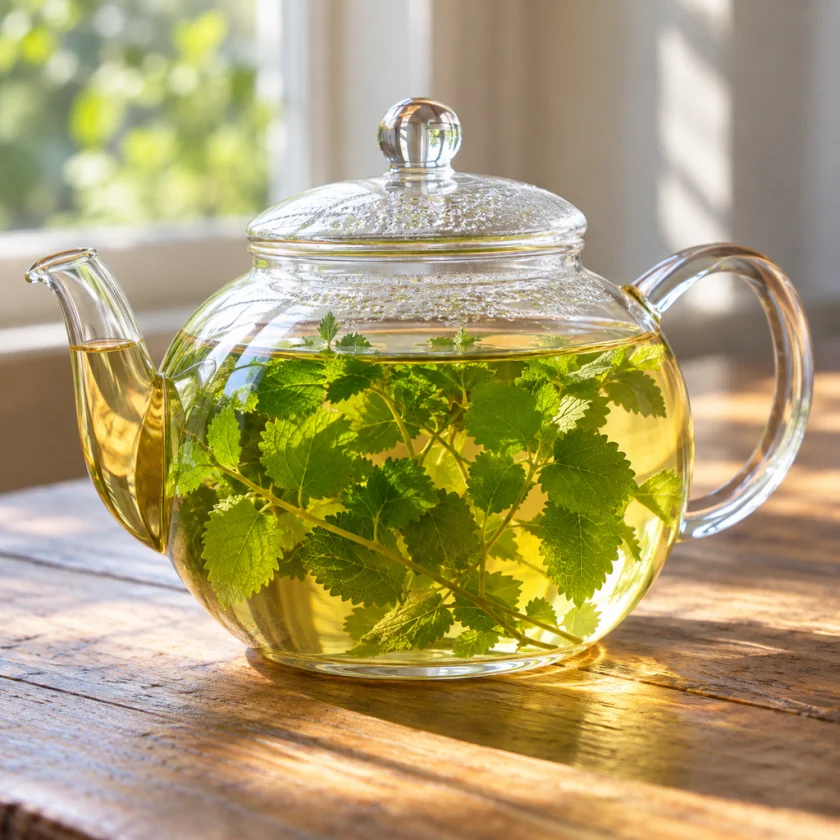
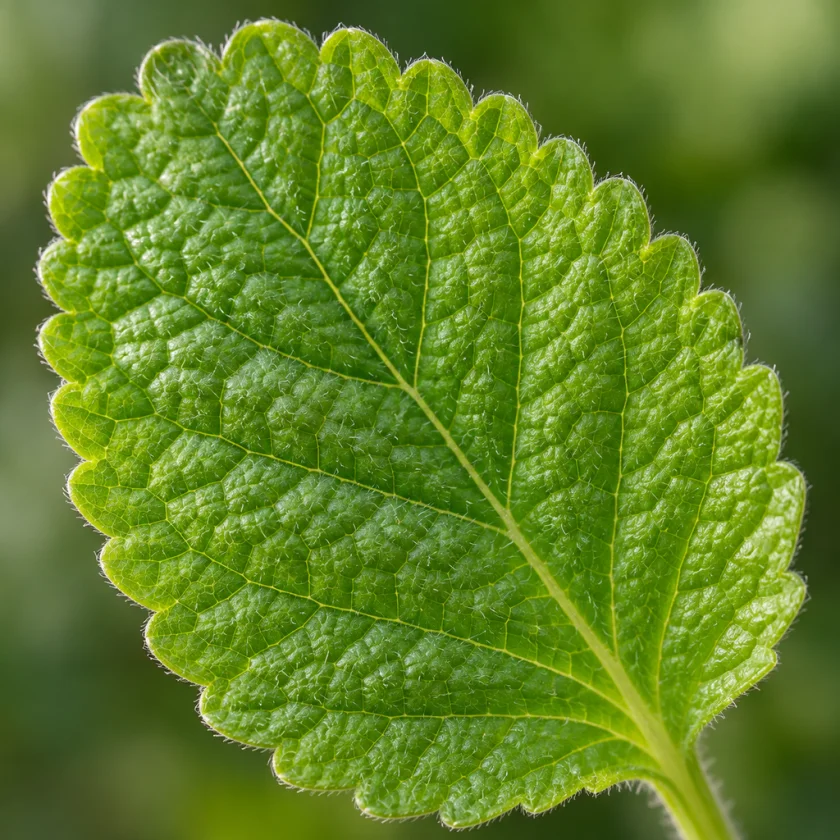
Of all the calming herbs, lemon balm (Melissa officinalis) has the most carefully constructed evidence base for acute anxiety relief. The Kennedy laboratory at Northumbria University published a series of small cross-over trials in healthy volunteers (2002, 2003, 2004); in the 2004 trial, a standardized lemon balm extract reduced the negative mood effects of a laboratory stressor (the Defined Intensity Stressor Simulation, DISS) and one dose sped up mental arithmetic, although some memory scores fell at certain doses in the earlier trials. The proposed mechanism is inhibition of gamma-aminobutyric acid-transaminase — the enzyme that catabolizes gamma-aminobutyric acid (GABA) in the synaptic cleft — the same target hit, far more potently, by the anticonvulsant valproate. Lemon balm raises endogenous gamma-aminobutyric acid tone without directly agonizing the gamma-aminobutyric acid-A receptor, which is precisely why it relaxes without sedating. This page walks through the trial evidence, the GABAergic mechanism, the contributions of rosmarinic acid and citral, and how lemon balm compares to an oral lavender oil preparation and chamomile for both generalized and situational anxiety.
Table of Contents
- Why Lemon Balm for Anxiety
- The Kennedy 2002 and 2003 Cross-Over Trials
- The Kennedy 2004 Attenuation Trial
- Gamma-Aminobutyric Acid-Transaminase Inhibition Mechanism
- Rosmarinic Acid Contribution
- Citral and the Volatile Monoterpenes
- Lemon Balm vs Oral Lavender Oil
- Lemon Balm vs Chamomile
- Dosing Protocols for Anxiety
- Cautions and Drug Interactions
- Key Research Papers
- Connections
- Featured Videos
Why Lemon Balm for Anxiety
Most clinical anxiety presents on a spectrum from mild situational stress (a job interview, a difficult conversation) to chronic generalized anxiety disorder severe enough to interfere with daily function. Prescription anxiolytics — primarily benzodiazepines (lorazepam, alprazolam, clonazepam) and selective serotonin reuptake inhibitors (sertraline, escitalopram) — address the severe end of this spectrum effectively but come with substantial trade-offs: benzodiazepines cause sedation, tolerance, dependence, and rebound anxiety on withdrawal; selective serotonin reuptake inhibitors (SSRIs) take 4-8 weeks to reach full effect, produce sexual side effects in 30-70% of users, and carry a discontinuation syndrome.
The middle ground — meaningful anxiety that does not warrant the trade-offs of those drugs — is where botanicals matter most. Lemon balm sits in a small group of well-studied herbal anxiolytics alongside lavender (an oral lavender oil preparation), chamomile, passionflower, and ashwagandha, each with its own profile. Lemon balm's distinguishing feature is the combination of acute anxiolysis with simultaneous cognitive enhancement — a profile no other plant or pharmaceutical reliably produces. This is why it is described as a "calm focus" herb: the use people most often describe is staying calmer before an important meeting, presentation, or exam without feeling slower or less mentally sharp.
The clinical evidence base is modest in size (a half-dozen well-designed trials, mostly in healthy volunteers under acute laboratory stress, plus an open-label trial in mild-to-moderate clinical anxiety) but consistent in direction. The effect size is meaningful for self-reported stress and calmness, less impressive for objective autonomic measures like skin conductance and heart rate variability — suggesting lemon balm modulates the subjective experience of stress more than the underlying sympathetic activation. For most patients, that subjective shift is exactly what they want.
The Kennedy 2002 and 2003 Cross-Over Trials
The first study of lemon balm's effects on mood and thinking in healthy people was published by David Kennedy and colleagues at Northumbria University in 2002 (Pharmacology Biochemistry and Behavior). The design was a randomized, double-blind, placebo-controlled, balanced cross-over trial in 20 healthy young adults. Each participant received single doses of 300, 600 and 900 mg of a standardized Melissa officinalis extract and a matching placebo, 7 days apart. Thinking was measured with the Cognitive Drug Research (CDR) computerized test battery and two serial subtraction (mental arithmetic) tasks before dosing and at 1, 2.5, 4 and 6 hours afterwards, and mood with the Bond-Lader mood scales.
- Calmness — self-rated calmness was higher at the earliest time points after the lowest dose (300 mg).
- Alertness — self-rated alertness was significantly lower at all time points after the highest dose (900 mg).
- Attention — accuracy of attention improved in a sustained way after 600 mg.
- Memory — some memory scores (secondary memory and working memory) fell at particular doses and times.
The 2003 trial from the same group (Neuropsychopharmacology) used a different preparation: encapsulated dried lemon balm leaf, chosen because in laboratory tests it bound to the brain's nicotinic and muscarinic receptors. Twenty healthy young adults received single doses of 600, 1,000 and 1,600 mg and a placebo, 7 days apart. The clearest results came at the highest dose (1,600 mg): better memory performance and higher calmness at every time point after dosing. At the lower doses, the speed of timed memory tasks and a rapid visual information-processing task got worse. The authors noted that different preparations from the same plant may act differently depending on how they are made.
So the dose-response in these trials did not follow a straight line, and the best dose differed between the extract and the dried leaf: calmness rose at 300 mg of extract in 2002 and at 1,600 mg of dried leaf in 2003.
The Kennedy 2004 Attenuation Trial
The 2004 trial from the same group (Kennedy DO, Little W, Scholey AB, Psychosomatic Medicine) tested lemon balm directly against a laboratory stressor. In a double-blind, placebo-controlled, randomized, balanced cross-over design, 18 healthy volunteers received single doses of 300 mg and 600 mg of a standardized Melissa officinalis extract and a placebo on separate days, 7 days apart. Before and one hour after each dose they completed a 20-minute version of the Defined Intensity Stressor Simulation (DISS) battery — four tasks running at the same time, designed to induce psychological stress — and rated their mood.
- 600 mg — reduced the negative mood effects of the stressor, with significantly higher self-rated calmness and lower self-rated alertness.
- 300 mg — significantly increased the speed of mathematical processing during the stressor, with no loss of accuracy.
- No sedation as measured by either self-report or objective psychomotor measures
- Good tolerability with no reported adverse effects at the 600 mg dose
This trial is the original source of the "calm focus" framing for lemon balm. It is also why the 600 mg dose of standardized extract (one capsule) is the most commonly used dose in subsequent trials and clinical practice.
A 2006 study from the same group (Phytotherapy Research) tested a product combining lemon balm and valerian extracts under the same stressor in 24 healthy volunteers at 600, 1,200 and 1,800 mg. The 600 mg dose reduced the stressor's effect on anxiety ratings; the 1,800 mg dose raised anxiety, significantly in one testing session; and all three doses lowered performance on the Stroop task (a test of attention) within the battery.
Taken together, the Kennedy trials are small, single-dose studies in healthy volunteers rather than people with anxiety disorders, and they used different preparations whose best doses differed. The authors of the 2004 trial concluded that lemon balm's potential to reduce the effects of stress deserves further investigation.
Taken together, the two Kennedy trials establish the foundational evidence for acute anxiolysis. But they are well-designed, internally consistent, and have stood up to a decade of subsequent replication attempts. Most subsequent lemon balm research either confirms the Kennedy pattern or extends it to specific clinical populations.
The pooled trials. A 2021 meta-analysis of randomized trials in people with symptoms of anxiety or depression found that lemon balm improved anxiety scores (standardized mean difference -0.98, 95% confidence interval -1.63 to -0.33) and depression scores (standardized mean difference -0.47, 95% CI -0.73 to -0.21) compared with placebo, without serious side effects, particularly in short-term (acute) use. The trials were few and very different from one another, and the authors wrote that the results should be interpreted with caution.
The open-label study in people with anxiety. A 2011 pilot study gave a standardized lemon balm leaf extract for 15 days to 20 stressed volunteers with mild-to-moderate anxiety disorders and sleep disturbances, with no placebo group. On clinician ratings, anxiety manifestations fell by 18%, anxiety-associated symptoms by 15% and insomnia by 42%; 14 of the 20 reached full remission of anxiety. The authors wrote that further studies need to include a placebo.
Gamma-Aminobutyric Acid-Transaminase Inhibition Mechanism
The leading proposed mechanism for lemon balm's anxiolytic effect is inhibition of gamma-aminobutyric acid-transaminase (gamma-aminobutyric acid-T, gamma-aminobutyric acid aminotransferase, gamma-aminobutyric acid-aminotransferase). Gamma-aminobutyric acid is the principal inhibitory neurotransmitter in the mammalian central nervous system — activating gamma-aminobutyric acid receptors hyperpolarizes neurons and dampens excitatory firing. The functional level of GABAergic tone in the brain is set by the balance between two processes:
- Gamma-aminobutyric acid synthesis — glutamic acid decarboxylase (GAD) converts glutamate to gamma-aminobutyric acid in the presynaptic neuron
- Gamma-aminobutyric acid catabolism — after release into the synapse, gamma-aminobutyric acid is taken up by transporters and then catabolized by gamma-aminobutyric acid-transaminase (gamma-aminobutyric acid-T) in the mitochondria, which converts it to succinic semialdehyde and eventually feeds it back into the citric acid cycle
Inhibiting gamma-aminobutyric acid-T slows the catabolism step, raising the standing concentration of gamma-aminobutyric acid in the synaptic cleft and increasing the duration and intensity of gamma-aminobutyric acid receptor activation. This is the principal mechanism of the anticonvulsant valproate (sodium valproate), which is used clinically not only for seizures but also for bipolar mania and migraine prophylaxis. Vigabatrin, the more potent and selective gamma-aminobutyric acid-T inhibitor used for refractory epilepsy, demonstrates that the mechanism can produce profound central nervous system (CNS) effects when pushed hard.
Lemon balm extracts have been shown in vitro to inhibit gamma-aminobutyric acid-transaminase activity in rat brain homogenate, with the inhibitory activity concentrated in the polar phenolic fraction (rosmarinic acid is the leading single candidate, though the activity is not solely attributable to it). The in vivo potency is far lower than valproate, which is exactly why lemon balm produces mild anxiolysis rather than anticonvulsant-grade central nervous system depression. The mechanism is the same; the dose is much smaller.
The implication for combining lemon balm with prescription GABAergic drugs (benzodiazepines, valproate, gabapentin, pregabalin, alcohol) is that additive sedation is at least theoretically possible. In practice, the effect at typical lemon balm doses is modest enough that clinically meaningful interactions are uncommon, but the combination is listed as a possible interaction.
Rosmarinic Acid Contribution
Rosmarinic acid is the principal phenolic constituent of lemon balm and most of the cognitively active Lamiaceae herbs (rosemary, sage, oregano, spearmint, perilla). Chemically, it is an ester of caffeic acid and 3,4-dihydroxyphenyllactic acid — a fairly large polar molecule with four phenolic hydroxyl groups that confer its substantial antioxidant capacity.
Rosmarinic acid's contribution to the lemon balm anxiolytic effect is supported by several lines of evidence:
- It crosses the blood-brain barrier at low but pharmacologically relevant concentrations after oral administration in rats and humans — rosmarinic acid is detectable in brain tissue 30-60 minutes after a single oral dose
- It inhibits gamma-aminobutyric acid-T in vitro at micromolar concentrations consistent with what could be achieved in brain after a typical lemon balm dose
- It potentiates gamma-aminobutyric acid-A receptor responses in some electrophysiology studies, suggesting a possible direct allosteric effect at the receptor in addition to the gamma-aminobutyric acid-T effect on synaptic gamma-aminobutyric acid concentration
- It is anxiolytic in animal models when administered in isolation (open-field, elevated plus maze in mice) at doses that produce brain concentrations comparable to those from oral lemon balm in humans
- Lemon balm extracts standardized to higher rosmarinic acid content tend to produce stronger anxiolytic signals in head-to-head animal comparisons
Rosmarinic acid is not the only anxiolytic constituent in lemon balm — the citral monoterpenes and other phenolics contribute — but it is the leading single candidate for the central mechanism.
Citral and the Volatile Monoterpenes
The characteristic lemon scent of Melissa officinalis comes from a monoterpene aldehyde called citral, which is a mixture of two stereoisomers (geranial and neral). Citral is the same compound that gives lemongrass its lemon character, and it is also present in lemon zest oil. In lemon balm, citral constitutes the bulk of the volatile essential oil, with smaller contributions from citronellal, beta-caryophyllene, and germacrene D.
The volatile monoterpene fraction contributes to lemon balm's clinical effect in several ways. Inhaled or ingested monoterpenes can modulate gamma-aminobutyric acid-A receptor function as allosteric positive modulators — the same general mechanism by which lavender's linalool produces its anxiolytic effect. Citral specifically has been shown in animal studies to reduce locomotor activity and produce anxiolytic-like effects on the elevated plus maze.
The volatile monoterpenes also drive aromatherapy applications. Brewing lemon balm tea releases citral and the other volatiles into the steam, producing an immediate olfactory anxiolytic effect that begins before any of the polar phenolics have been absorbed. This is part of why ritualized tea preparation (heating the water, smelling the steam, sipping slowly) can produce calming effects that exceed what the underlying pharmacology alone would predict.
Fresh lemon balm leaves have substantially higher volatile content than dried, and standardized extracts vary considerably in their preserved volatile fraction depending on extraction solvent and processing. Hydroalcoholic tinctures preserve volatiles relatively well; spray-dried powders lose most of them. This is one reason fresh-leaf tea and tincture preparations are sometimes preferred over capsules for acute anxiolytic use.
Lemon Balm vs Oral Lavender Oil
Lavender (specifically an oral lavender oil preparation, a standardized lavender essential oil taken as a capsule) is the herbal anxiolytic with the strongest individual evidence base — multiple large randomized controlled trials in generalized anxiety disorder showing effect sizes comparable to low-dose lorazepam, with no sedation and no dependence potential. Its trials were in people with clinically diagnosed generalized anxiety disorder; burping with a lavender taste is a not-uncommon side effect of the oil-filled capsules. Oral lavender oil is the legitimate first-line botanical for clinically diagnosed generalized anxiety in patients who can tolerate the lavender belch (a not-uncommon side effect of oil-filled capsules).
Compared to oral lavender oil, lemon balm has:
- Less robust trial evidence for clinical anxiety disorders — oral lavender oil has multiple positive randomized controlled trials (RCTs) in generalized anxiety disorder; lemon balm has primarily acute-stress-paradigm trials in healthy volunteers
- A faster onset of acute effect — lemon balm typically produces noticeable calming within 30-60 minutes; oral lavender oil requires 2-4 weeks of daily dosing to reach steady-state efficacy in generalized anxiety disorder
- Better cognitive profile — lemon balm reliably improves some measures of cognition under stress, although some memory scores fell at certain doses; oral lavender oil is cognitively neutral, neither helping nor harming
- Lower cost and broader availability — lemon balm tea, tincture, and capsules are inexpensive and sold everywhere; oral lavender oil is a patented product and more expensive
- Edible-herb safety profile — lemon balm is a culinary herb with a long safety history; oral lavender oil is a concentrated essential oil. A 2007 report linked breast growth in three young boys (prepubertal gynecomastia) to the repeated use of products containing lavender and tea tree oils applied to the skin; the breast growth went away after the products were stopped, and laboratory tests on human cells found the two oils had estrogen-like and anti-androgen effects. That report concerned skin products, not capsules taken by mouth.
In short: the oral lavender oil trials were in people with clinically diagnosed generalized anxiety disorder taking it daily for several weeks, while the lemon balm trials were mostly single doses in healthy volunteers under laboratory stress. The two have not been compared with each other in the trials described here, and they are thought to act on different aspects of the anxiety experience. See also Lavender.
Lemon Balm vs Chamomile
Chamomile (Matricaria recutita) is the other major edible-herb anxiolytic with credible clinical evidence. The largest trial — Mao 2016 in Phytomedicine — enrolled 179 people with moderate-to-severe generalized anxiety disorder for 12 weeks of open-label chamomile extract (1,500 mg a day); the 93 who responded were then randomized to continue chamomile or switch to placebo for 26 weeks. Fewer relapsed on chamomile (15.2% vs 25.5% on placebo), but the main result, the risk of relapse over time, was not significantly lower (hazard ratio 0.52, 95% confidence interval 0.20–1.33). Anxiety symptom scores stayed significantly lower on chamomile during follow-up.
Compared to chamomile, lemon balm differs in:
- Mechanism — chamomile's anxiolytic effect is attributed primarily to apigenin's partial agonism of the benzodiazepine binding site on gamma-aminobutyric acid-A receptors; lemon balm acts via gamma-aminobutyric acid-T inhibition and possibly direct gamma-aminobutyric acid-A modulation by rosmarinic acid and citral. The mechanisms are complementary, not redundant.
- Cognitive profile — chamomile tends toward gentle relaxation that can shade into mild drowsiness; lemon balm is more reliably "calm alert" without sedation. For daytime anxiety where staying sharp matters, lemon balm has the edge.
- Sleep-onset profile — chamomile tea is the canonical pre-bedtime calming beverage; lemon balm tea is comparable for sleep onset (and the two are commonly combined). The Cases 2011 lemon balm sleep trial documents the sleep-supportive effect formally; see Sleep Quality.
- Taste and acceptability — chamomile has a slightly bitter, hay-like flavor that some patients dislike; lemon balm has a pleasant lemon-mint flavor that is broadly accepted. For long-term tea-based use, acceptability matters.
- Allergy potential — chamomile is in the Asteraceae family along with ragweed, daisies, and chrysanthemums, with cross-reactive allergy risk; lemon balm is in the Lamiaceae family with no significant cross-reactivity to common allergens.
Many traditional European anxiolytic formulations combine lemon balm and chamomile (and often valerian and passionflower), trading single-mechanism precision for multi-target coverage. The combination is rational and well-tolerated. See also Chamomile.
Dosing Protocols for Anxiety
Dosing depends on the form, the indication, and the timing. The most common preparations and their typical doses are:
- Standardized extract — 600 mg/day, typically as a single 600 mg capsule once daily, or 300 mg twice daily. The Kennedy extract trials tested single doses of 300, 600 and 900 mg (2002) and 300 and 600 mg (2004); the 2003 trial used 600 to 1,600 mg of dried leaf. For chronic dosing, 300 mg twice daily produces more consistent plasma levels.
- Dried herb tincture (typically 1:5 in 25-45% ethanol) — 2-6 mL up to three times daily. Lower end for daytime use to preserve alertness; upper end for evening to support sleep onset.
- Dried herb capsules (non-standardized) — 500-1,000 mg of dried leaf powder up to three times daily. Less reliable than standardized extract because rosmarinic acid content varies considerably between batches.
- Tea (cut and sifted dried leaf or fresh leaf) — 1-2 teaspoons (1.5-4.5 g) of dried herb or 1 tablespoon of fresh leaf steeped covered in a cup of just-off-boil water for 10-15 minutes. Covering the cup during steeping retains volatile citral and citronellal. One to three cups daily is the common amount. Fresh leaf tea is more aromatic and tends to be more acutely calming; dried herb tea is more consistent.
- Combined formulations — lemon balm is frequently combined with valerian for sleep (Cerny & Schmid 1999, Müller & Klement 2006), with chamomile and passionflower for general anxiety, or with lavender for both. The combinations are pharmacologically rational.
Onset of acute anxiolytic effect is typically 30-90 minutes after an oral dose, sustained for 3-5 hours. In the 2004 stress trial, the stress test began one hour after the dose. For chronic daily use, twice-daily dosing of standardized extract or three-times-daily tea produces more consistent baseline effect.
Build-up of effect: unlike oral lavender oil (which requires weeks to reach full effect) or selective serotonin reuptake inhibitors (which require 4-8 weeks), lemon balm produces its full acute anxiolytic effect from the first dose. There is no documented withdrawal syndrome on discontinuation. It can be used reliably as an as-needed agent without commitment to chronic dosing.
Cautions and Drug Interactions
- Thyroid function — the most-discussed lemon balm caution. Lemon balm extracts have been shown in vitro to bind to thyroid-stimulating hormone (TSH) receptors and to inhibit binding of thyroid-stimulating hormone-receptor autoantibodies in Graves' disease — effects that historically led some herbalists to recommend lemon balm in hyperthyroidism. The clinical relevance at typical anxiolytic doses appears to be minimal; thyroid panels are stable in trials of standardized extract at 600 mg/day for several months. However, the theoretical possibility raises a concern about high-dose long-term use in people with hypothyroidism on thyroid hormone replacement; thyroid-stimulating hormone is the blood test that would show such an effect.
- Sedating medication interactions — additive central nervous system depression is theoretically possible with benzodiazepines (lorazepam, alprazolam, clonazepam, diazepam), barbiturates, opioids, alcohol, gabapentin/pregabalin, sedating antihistamines (diphenhydramine), zolpidem/eszopiclone, and the gamma-aminobutyric acid-T inhibitor valproate. At typical lemon balm doses the effect is mild; the concern is greatest at high doses.
- Glaucoma — lemon balm essential oil has been shown to raise intraocular pressure in some animal studies. The concern applies to concentrated essential oil products in people with narrow-angle glaucoma. Aqueous and ethanolic extracts (capsules, tinctures, tea) do not appear to carry this risk.
- Pregnancy and lactation — the European Medicines Agency (EMA) monograph states "use during pregnancy and lactation is not recommended due to a lack of sufficient data." Long-term traditional use in culinary quantities (tea, fresh herb in salads, lemon balm jelly) appears safe; high-dose extract use is not formally cleared.
- Pre-operative — practitioners commonly describe stopping 1-2 weeks before scheduled surgery because of possible potentiation of anesthetic-induced sedation and any theoretical effect on intraocular pressure during ophthalmologic procedures.
- Pediatric use — the largest study in children (Müller and Klement 2006) was an open study with no comparison group: 918 children under 12 with restlessness and sleep problems took a valerian plus lemon balm combination, and 80.9% of those with sleep problems and 70.4% of those with restlessness improved on investigators' and parents' ratings. It is commonly used in pediatric herbal medicine in Europe for restlessness, sleep difficulty, and mild anxiety. In that study the investigators set each child's dose individually.
- Driving and operating machinery — the Kennedy trials found mixed effects on thinking: some measures improved, while some memory and attention-task scores fell at certain doses, and the highest extract dose in the 2002 trial (900 mg) lowered self-rated alertness at every time point. At higher doses (1,500+ mg standardized extract or evening sleep-onset dosing of 3-4 cups of strong tea) some sedation is possible.
Key Research Papers
- Kennedy DO, Little W, Haskell CF, Scholey AB (2006). Anxiolytic effects of a combination of Melissa officinalis and Valeriana officinalis during laboratory induced stress. Phytotherapy Research. 20(2):96-102. — PubMed PMID: 16444660
- Kennedy DO, Scholey AB, Tildesley NT, Perry EK, Wesnes KA (2002). Modulation of mood and cognitive performance following acute administration of Melissa officinalis (lemon balm). Pharmacology Biochemistry and Behavior. 72(4):953-64. — PubMed PMID: 12062586
- Kennedy DO, Wake G, Savelev S, Tildesley NT, Perry EK, Wesnes KA, Scholey AB (2003). Modulation of mood and cognitive performance following acute administration of single doses of Melissa officinalis (lemon balm) with human CNS nicotinic and muscarinic receptor-binding properties. Neuropsychopharmacology. 28(10):1871-81. — PubMed PMID: 12888775
- Kennedy DO, Little W, Scholey AB (2004). Attenuation of laboratory-induced stress in humans after acute administration of Melissa officinalis (lemon balm). Psychosomatic Medicine. 66(4):607-13. — PubMed PMID: 15272110
- Cases J, Ibarra A, Feuillère N, Roller M, Sukkar SG (2011). Pilot trial of Melissa officinalis L. leaf extract in the treatment of volunteers suffering from mild-to-moderate anxiety disorders and sleep disturbances. Mediterranean Journal of Nutrition and Metabolism. 4(3):211-218. — PubMed PMID: 22207903
- Soulimani R, Fleurentin J, Mortier F, Misslin R, Derrieu G, Pelt JM (1991). Neurotropic action of the hydroalcoholic extract of Melissa officinalis in the mouse. Planta Medica. — PubMed
- Awad R, Levac D, Cybulska P, Merali Z, Trudeau VL, Arnason JT (2007). Effects of traditionally used anxiolytic botanicals on enzymes of the gamma-aminobutyric acid (GABA) system. Canadian Journal of Physiology and Pharmacology. 85(9):933-42. — PubMed PMID: 18066140
- Ibarra A, Feuillere N, Roller M, Lesburgere E, Beracochea D (2010). Effects of chronic administration of Melissa officinalis extract on anxiety-like reactivity in mice. Phytomedicine. — PubMed
- Pereira RP, Fachinetto R, de Souza Prestes A, Puntel RL, Santos da Silva GN, Heinzmann BM, Boschetti TK, et al. (2009). Antioxidant effects of different extracts from Melissa officinalis, Matricaria recutita and Cymbopogon citratus. Neurochemical Research. — PubMed
- Sarris J, McIntyre E, Camfield DA (2013). Plant-based medicines for anxiety disorders, Part 2: A review of clinical studies with supporting preclinical evidence. CNS Drugs. — PubMed
- Scholey A, Gibbs A, Neale C, Perry N, Ossoukhova A, Bilog V, Kras M, Scholz C, Sass M, Buchwald-Werner S (2014). Anti-stress effects of lemon balm-containing foods. Nutrients. 6(11):4805-21. — PubMed PMID: 25360512
- Ghazizadeh J, Sadigh-Eteghad S, Marx W, Fakhari A, Hamedeyazdan S, Torbati M, Taheri-Tarighi S, Araj-Khodaei M, Mirghafourvand M (2021). The effects of lemon balm (Melissa officinalis L.) on depression and anxiety in clinical trials: A systematic review and meta-analysis. Phytotherapy Research. 35(12):6690-6705. — PubMed PMID: 34449930
- Mao JJ, Xie SX, Keefe JR, Soeller I, Li QS, Amsterdam JD (2016). Long-term chamomile (Matricaria chamomilla L.) treatment for generalized anxiety disorder: A randomized clinical trial. Phytomedicine. 23(14):1735-1742. — PubMed PMID: 27912875
- Henley DV, Lipson N, Korach KS, Bloch CA (2007). Prepubertal gynecomastia linked to lavender and tea tree oils. New England Journal of Medicine. 356(5):479-85. — PubMed PMID: 17267908
- Müller SF, Klement S (2006). A combination of valerian and lemon balm is effective in the treatment of restlessness and dyssomnia in children. Phytomedicine. 13(6):383-7. — PubMed PMID: 16487692
- Akhondzadeh S, Naghavi HR, Vazirian M, Shayeganpour A, Rashidi H, Khani M (2001). Passionflower in the treatment of generalized anxiety: a pilot double-blind randomized controlled trial with oxazepam. Journal of Clinical Pharmacy and Therapeutics. — PubMed
- Shakeri A, Sahebkar A, Javadi B (2016). Melissa officinalis L. - A review of its traditional uses, phytochemistry and pharmacology. Journal of Ethnopharmacology. — PubMed
- Miraj S, Rafieian-Kopaei, Kiani S (2017). Melissa officinalis L: A review study with an antioxidant prospective. Journal of Evidence-Based Complementary and Alternative Medicine. — PubMed