Wormwood for Crohn's Disease and Inflammation
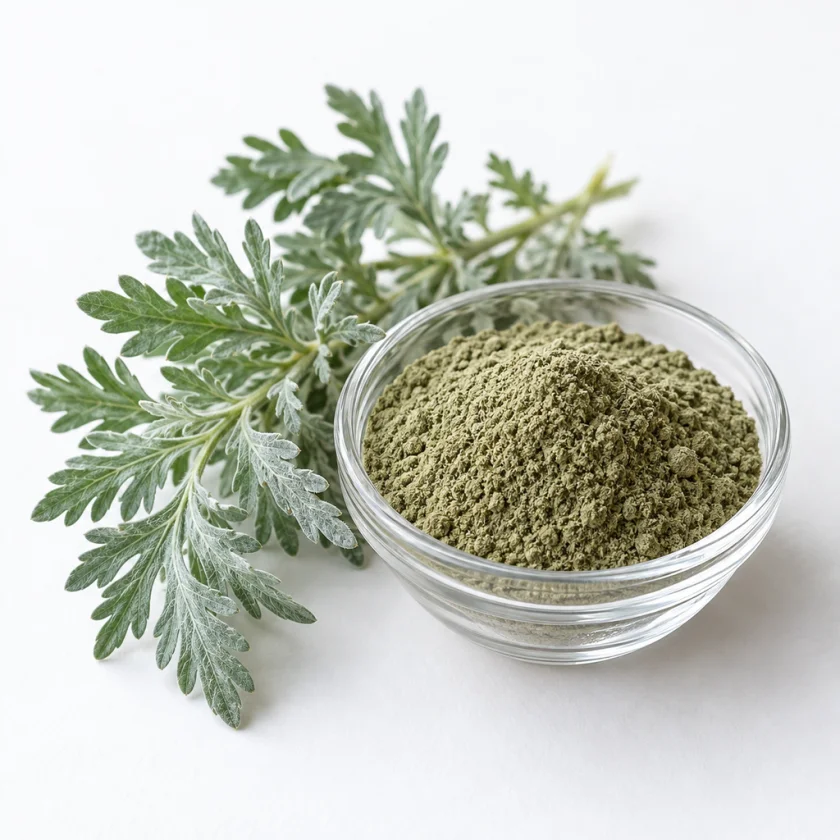
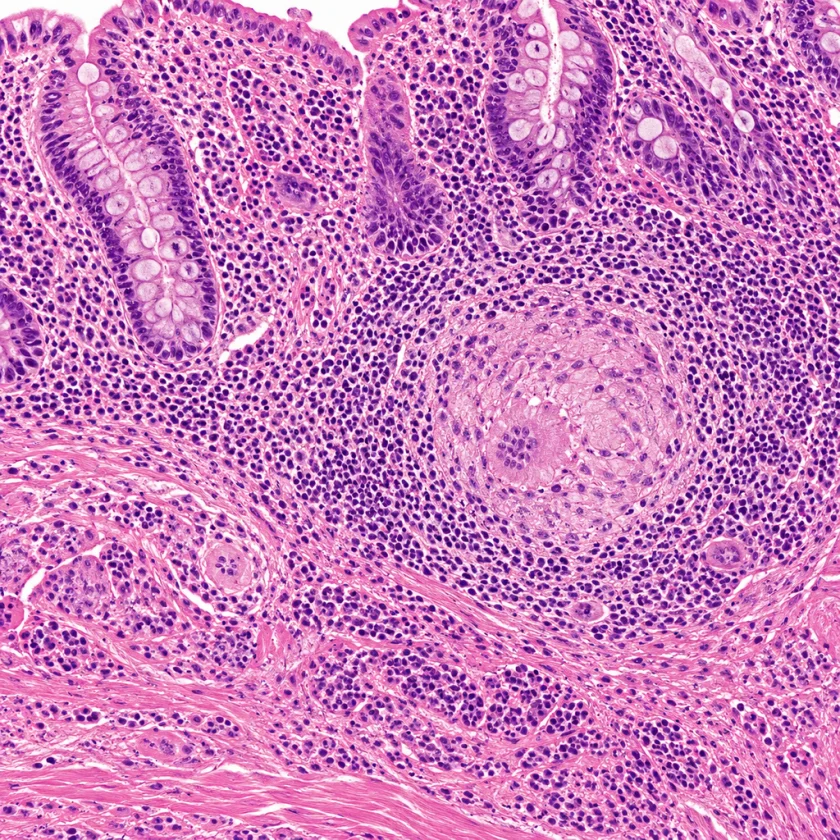
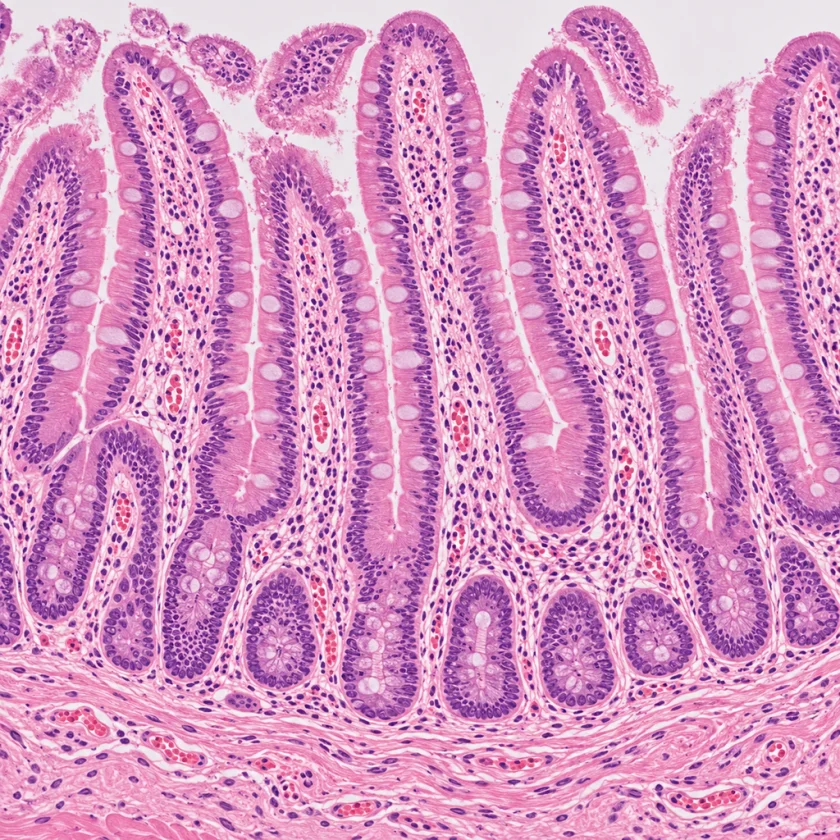
This is the one place where wormwood has genuine randomized human evidence, and it is worth spelling out exactly what that evidence is — because it is simultaneously more interesting than most herbal research and much smaller than the internet suggests. Two controlled trials, both from a German research group, both in Crohn's disease, reported that a wormwood preparation added to standard care allowed patients to come off corticosteroids while their symptoms continued to improve, and that it lowered the inflammatory cytokine tumor necrosis factor-alpha. Together those two studies involved sixty people (40 and 20).
That is a real finding and a thin base. This page walks through both trials, what preparation and dose were used, why steroid-sparing is the outcome that made gastroenterologists look twice, and how little independent replication has followed in the years since.
Table of Contents
- First: the Right Plant
- Crohn's Disease and Why Steroid-Sparing Matters
- The 2007 Double-Blind Placebo-Controlled Trial
- The 2010 Controlled Trial and Tumor Necrosis Factor-alpha
- How Strong Is This Evidence, Really
- Which Preparation and Dose Were Tested
- Plausible Mechanisms
- What Standard Crohn's Treatment Looks Like
- Wormwood and Standard Crohn's Treatment
- Ulcerative Colitis and Other Inflammatory Conditions
- Risks That Matter Specifically in Inflammatory Bowel Disease
- Key Research Papers
- Connections
- Featured Videos
First: the Right Plant
The trials described here used Artemisia absinthium — common wormwood, the bitter absinthe herb. They did not use Artemisia annua (sweet wormwood) and they had nothing to do with artemisinin. There is separate research interest in artemisinin derivatives for inflammatory conditions, but it is a different compound from a different species with a different safety profile, and it belongs on the Artemisia annua page. Findings for one species do not carry over to the other because of a shared common name.
Crohn's Disease and Why Steroid-Sparing Matters
Crohn's disease is a chronic immune-mediated inflammatory bowel disease that can affect any part of the digestive tract, from mouth to anus, typically in patches and often through the full thickness of the bowel wall. It runs in flares and remissions and it is not curable with current treatment; the goal of therapy is durable remission with healing of the bowel lining.
Corticosteroids — prednisone, prednisolone, budesonide — are excellent at putting out a flare and terrible as long-term therapy. Extended steroid use brings weight gain, mood and sleep disturbance, high blood sugar and steroid-induced diabetes, cataracts and glaucoma, thinning skin, adrenal suppression, infection risk and, most consequentially over years, bone loss. Because of this, modern guidelines treat steroids as a bridge and consider "steroid dependence" — the inability to taper without relapsing — a treatment failure in its own right.
That is the context that makes the wormwood trials interesting. Their primary claim is not "wormwood treats Crohn's disease." It is steroid-sparing: that patients on the herb were able to complete a steroid taper without the relapse that usually accompanies it. In inflammatory bowel disease (IBD) research, a credible steroid-sparing agent is a genuinely valuable thing, which is why a small phytotherapy trial got noticed at all.
The 2007 Double-Blind Placebo-Controlled Trial
The primary study is Omer, Krebs, Omer and Noor, "Steroid-sparing effect of wormwood (Artemisia absinthium) in Crohn's disease: a double-blind placebo-controlled study," published in Phytomedicine in 2007. Evidence tier: randomized clinical trial — small, run at five sites in Germany by one research group.
The design, in outline:
- 40 adults with Crohn's disease at five sites in Germany, 20 in each group: one group took a herbal blend containing wormwood herb (3 × 500 mg a day), the other a placebo.
- All participants were on a stable dose of corticosteroids at entry (the equivalent of 40 mg of prednisone a day or less, for at least 3 weeks) and continued their other Crohn's medication at the same dose — this was an add-on study, not a comparison of wormwood against drug therapy.
- Steroids were then tapered on a fixed schedule in both arms from week 2, so that every patient was off steroids by the start of week 10 — the mechanism of the whole experiment: reduce the drug in everybody and see which group holds.
- The study medicine was taken for 10 weeks, and patients were followed without it to week 20, with disease activity tracked by the Crohn's Disease Activity Index (CDAI) and a bowel-disease quality-of-life questionnaire, and mood assessed with the Hamilton Depression Scale.
The reported result: in the wormwood arm, symptoms improved steadily in 18 of 20 patients (90%) in spite of the steroid taper, and after 8 weeks 13 patients (65%) had almost complete remission of symptoms, against none in the placebo group; that remission lasted to week 20. Steroids had to be restarted after week 10 in 2 wormwood patients (10%) and in 16 placebo patients (80%), whose condition worsened as their steroid dose came down — the expected pattern when a steroid crutch is removed with nothing replacing it. The paper also reported improvement in mood scores in the wormwood group, which the authors noted was not simply explained by the improvement in bowel symptoms.
The 2010 Controlled Trial and Tumor Necrosis Factor-alpha
The follow-up is Krebs, Omer and Omer, "Wormwood (Artemisia absinthium) suppresses tumour necrosis factor alpha and accelerates healing in patients with Crohn's disease — a controlled clinical trial," Phytomedicine, 2010. Evidence tier: randomized clinical trial — very small.
This study enrolled 20 patients with active disease (a Crohn's Disease Activity Index, CDAI, of at least 200): 10 randomly selected patients took 3 × 750 mg of dried powdered wormwood a day for 6 weeks on top of their usual Crohn's treatment, kept at the same dose, and 10 served as the control group; people taking infliximab or similar drugs were excluded. It asked a mechanistic question rather than a purely symptomatic one. Alongside clinical activity it measured serum tumor necrosis factor-alpha, the pro-inflammatory cytokine that is the direct target of the anti-TNF biologic drugs (infliximab, adalimumab) that transformed inflammatory bowel disease treatment. Average serum tumor necrosis factor-alpha fell from 24.5 to 8.0 pg/ml over six weeks in the wormwood group, against 25.7 to 21.1 pg/ml in the control group. CDAI scores fell from 275 to below 175 with wormwood, and 8 of 10 wormwood patients reached remission (a CDAI below 170 or a 70-point drop) against 2 of 10 controls. Mood scores also improved. The abstract reports no endoscopic or bowel-lining measurement; the “healing” in the title refers to clinical remission.
Why this matters more than a symptom score: tumor necrosis factor-alpha is a hard biological readout that is difficult to move by suggestion. Mucosal healing, the outcome modern inflammatory bowel disease care aims at, was not measured in this trial. A herb that plausibly nudges the same axis as an anti-TNF drug is a legitimate research lead. Twenty patients is also, bluntly, twenty patients.
How Strong Is This Evidence, Really
Here is the honest audit. Every one of these points is a limitation, and none of them makes the finding worthless.
- Sample size. Forty and twenty participants. Trials this small produce unstable effect estimates and are prone to overstating benefit; regulators would treat either as a pilot.
- One research group. Both trials share authors. Independent replication by unrelated investigators is the thing that turns a promising result into a reliable one, and that step has largely not happened.
- Limited replication since. In the years after 2010, wormwood in Crohn's disease has been repeatedly cited in reviews of herbal therapy for inflammatory bowel disease — for example Ng and colleagues, "Systematic review: the efficacy of herbal therapy in inflammatory bowel disease," Alimentary Pharmacology & Therapeutics, 2013, and Langhorst and colleagues, "Systematic review of complementary and alternative medicine treatments in inflammatory bowel diseases," Journal of Crohn's and Colitis, 2015 — but citation is not replication. Reviews keep pointing at the same two small studies.
- Short duration. Weeks, not years. Crohn's disease is measured in decades. Nothing here speaks to maintenance of remission, and nothing speaks to the safety of taking a thujone-containing herb continuously for a long period.
- Add-on design. Every participant remained on conventional therapy. These trials never tested wormwood as a replacement for medication, so they say nothing about wormwood used in place of it.
- Specific preparations. The 2007 product was a herbal blend containing wormwood herb, and the 2010 product was dried powdered wormwood. A random capsule of dried wormwood from a shop is not the studied intervention.
The fair summary: a real, positive, biologically coherent randomized signal in a serious disease, at pilot scale, awaiting the replication that would make it actionable. That is a much better position than most herbs occupy and a much worse one than a proven therapy.
What the reviews concluded: the 2015 systematic review by Langhorst and colleagues searched four research databases up to March 2014 and found 26 randomized and 3 controlled trials of herbal medicine in inflammatory bowel disease. It reported that the best evidence was for herbal therapy — plantago ovata (psyllium) and curcumin for keeping ulcerative colitis in remission, and wormwood in Crohn's disease — and, because the trials were few and of mixed quality, it concluded that further in-depth research is necessary.
Which Preparation and Dose Were Tested
This section matters because the gap between the trial dose and the traditional bitters dose is large enough to change the safety conversation.
The trials used dried wormwood herb taken three times a day: the 2007 trial a herbal blend containing wormwood herb at 3 × 500 mg a day for 10 weeks, and the 2010 trial dried powdered wormwood at 3 × 750 mg a day for 6 weeks — roughly an order of magnitude more than the few drops of dilute tincture used as a pre-meal digestive bitter (see Wormwood for Digestion and the Bitter Reflex).
Three consequences follow:
- The thujone exposure is not trivial at trial dose. A whole-herb powder at grams per day for weeks delivers far more thujone than a splash of vermouth. The trials reported acceptable tolerability over their short duration; that is not the same as establishing safety for months or years. See Thujone, Absinthe and Dose Limits.
- Products are not interchangeable. Thujone and bitter-lactone content vary enormously with plant origin, chemotype and harvest — documented for the essential oil by Juteau and colleagues in Planta Medica, 2003. Two "wormwood 500 mg" capsules from different suppliers can differ substantially in the constituents that matter.
- Essential oil is not a shortcut to the trial dose. The oil was not what was tested, and drinking it has caused poisoning: acute renal failure from ingested wormwood oil is documented in the New England Journal of Medicine case report by Weisbord, Soule and Kimmel, 1997.
Plausible Mechanisms
How could a bitter herb affect immune-mediated bowel inflammation? Several routes are plausible; all are preliminary as applied to Crohn's disease in people.
- Sesquiterpene lactones and NF-kB. Wormwood is rich in sesquiterpene lactones, a class known more broadly for inhibiting NF-kB signalling — the master switch that drives transcription of tumor necrosis factor-alpha and other inflammatory mediators. This is the most cited candidate explanation and it fits the tumor necrosis factor-alpha result. It is inferred from the chemical class, not demonstrated for wormwood in human bowel tissue.
- Flavonoids and phenolic acids. The whole herb supplies quercetin-type flavonoids and chlorogenic-acid relatives with antioxidant and anti-inflammatory activity in cell systems.
- Bitter-receptor and gut-hormone effects. TAS2R receptors on enteroendocrine cells influence motility and hormone release, and some evidence suggests bitter signalling interacts with mucosal immune function. Speculative in this context.
- Effects on the gut microbiota. Wormwood extracts have antimicrobial activity in vitro, and microbial composition is central to Crohn's pathogenesis. Attractive, entirely untested here, and cuts both ways — an antimicrobial herb could as easily disturb a fragile microbiome as improve it.
- Mood as a mediator, or as an effect. The 2007 report of improved mood raises a real question. Thujone's activity at the gamma-aminobutyric acid-A receptor is central-nervous-system activity by definition, and the brain-gut axis is not a metaphor in inflammatory bowel disease. Whether the mood change contributed to the symptom improvement, resulted from it, or is a separate central effect is unresolved.
What Standard Crohn's Treatment Looks Like
Included because a page like this should never leave a reader thinking herbs are the state of the art. Crohn's treatment has improved enormously and the options are real:
- Corticosteroids (prednisone, prednisolone, or ileal-release budesonide) to induce remission in a flare — effective short-term, not for maintenance.
- Thiopurines (azathioprine, mercaptopurine) and methotrexate as conventional immunomodulators for maintenance.
- Anti-TNF biologics (infliximab, adalimumab) — the drugs that target the same cytokine the 2010 wormwood trial measured.
- Anti-integrin therapy (vedolizumab), gut-selective.
- Anti-interleukin therapy (ustekinumab targeting IL-12/23; risankizumab targeting IL-23).
- Oral small molecules such as the JAK inhibitor upadacitinib.
- Exclusive enteral nutrition, particularly well established in paediatric Crohn's disease as a genuine alternative to steroids for inducing remission.
- Surgery for strictures, fistulas, abscesses and disease unresponsive to medication — not a failure, often the right answer.
- Smoking cessation, which is one of the highest-value interventions in Crohn's disease specifically and is frequently underemphasized.
- Monitoring with faecal calprotectin, C-reactive protein (CRP), erythrocyte sedimentation rate (ESR) and periodic endoscopy, so that decisions are based on measured inflammation rather than how someone feels that week.
Wormwood, at its most optimistic reading, is a candidate adjunct that might help someone get off steroids. It is not on this list and does not belong on it yet.
Wormwood and Standard Crohn's Treatment
The steroid-sparing finding matters most to people who are steroid-dependent. These are the facts from the trials and from standard care that bear on combining the two:
- The evidence is two named papers. The two Phytomedicine trials (Omer 2007 and Krebs 2010) are small randomized trials reporting a steroid-sparing effect and a fall in tumor necrosis factor-alpha. The general statement that “wormwood helps Crohn's” goes further than what they tested.
- Both trials tested wormwood as an add-on, never a substitute. Every participant stayed on their other Crohn's medication. Stopping prescribed medication leaves inflammation untreated, and untreated Crohn's inflammation can lead to a stricture or an abscess.
- Wormwood contains thujone, a convulsant. Many clinicians do not expect a herbal bitter to contain one, and the preparation and dose decide how much thujone is taken.
- Other supplements add interaction and duplication risks. These risks are real in inflammatory bowel disease, and liver monitoring may already be in place because of thiopurines or methotrexate.
- Objective markers define success or failure. A defined trial period, an objective marker such as calprotectin or C-reactive protein, and a stopping rule are the tools used to judge any add-on. Open-ended self-experimentation in an inflammatory disease can let silent inflammation progress to permanent bowel damage.
- Feeling better is not proof of a healed bowel. Crohn's disease can be objectively active while someone feels well; this is precisely why calprotectin and endoscopy exist.
Ulcerative Colitis and Other Inflammatory Conditions
People reasonably ask whether the Crohn's result transfers. The honest answers:
- Ulcerative colitis: not tested with wormwood in any comparable trial. UC and Crohn's differ in distribution, depth, immunology and drug response — a result in one does not carry to the other. Other botanicals, notably curcumin as an adjunct to mesalamine, have better UC-specific evidence.
- Rheumatoid arthritis and other systemic inflammatory disease: no meaningful wormwood evidence. Tumor necrosis factor-alpha involvement in a disease is not a reason to expect a herb that may lower tumor necrosis factor-alpha in twenty bowel patients to help it.
- Irritable bowel syndrome: a different condition without the inflammation, and not the target of these trials. Peppermint oil has far better evidence there.
- Liver inflammation: the rodent hepatoprotection data (Amat, Upur and Blažeković, Journal of Ethnopharmacology, 2010) is preliminary and does not support human use.
Risks That Matter Specifically in Inflammatory Bowel Disease
The general wormwood cautions all apply — pregnancy, epilepsy, kidney disease, daisy-family allergy, the essential oil — and are set out in full on the safety page. Some points bite harder in inflammatory bowel disease:
- Absorption is not normal in active disease. Inflamed or resected bowel handles compounds unpredictably. A dose calibrated on healthy volunteers may not behave the same way.
- Pregnancy is a serious concern, and this population is disproportionately affected. Crohn's disease commonly presents in people of reproductive age. Wormwood's traditional use to bring on menstruation and abortion (its emmenagogue and abortifacient tradition) and thujone's developmental concerns are the reported reasons it is considered unsafe in pregnancy, while trying to conceive, and while breastfeeding.
- Liver monitoring overlaps with existing drugs. Thiopurines and methotrexate already require liver monitoring; adding a herb with an incompletely characterized hepatic profile makes any abnormal liver function test harder to attribute.
- Alcohol-based tinctures are a poor vehicle in liver disease and in anyone avoiding alcohol.
- Delayed escalation is the biggest hazard of all. The real harm of herbal self-treatment in Crohn's disease is rarely direct toxicity — it is months of unaddressed inflammation while someone tries alternatives, ending in a stricture or surgery that earlier escalation would have avoided.
- A severe flare is an emergency, not a herb question. Severe abdominal pain, fever, signs of bowel obstruction, heavy bleeding or feeling ill all over are signs that hospitals treat as urgent.
Key Research Papers
Papers checked against their PubMed record are linked by PMID; the others are linked as PubMed searches. Titles, journals and years are given for verification.
- Omer, Krebs, Omer and Noor, "Steroid-sparing effect of wormwood (Artemisia absinthium) in Crohn's disease: a double-blind placebo-controlled study," Phytomedicine, 2007;14(2-3):87-95 — the primary trial. Randomized clinical trial, 40 participants. — PubMed PMID: 17240130
- Krebs, Omer and Omer, "Wormwood (Artemisia absinthium) suppresses tumour necrosis factor alpha and accelerates healing in patients with Crohn's disease — a controlled clinical trial," Phytomedicine, 2010;17(5):305-9 — the follow-up with a biomarker endpoint. Randomized clinical trial, 20 participants. — PubMed PMID: 19962291
- Ng and colleagues, "Systematic review: the efficacy of herbal therapy in inflammatory bowel disease," Alimentary Pharmacology & Therapeutics, 2013 — positions wormwood among the IBD botanicals. Systematic review. — Search PubMed
- Langhorst and colleagues, "Systematic review of complementary and alternative medicine treatments in inflammatory bowel diseases," Journal of Crohn's and Colitis, 2015;9(1):86-106 — broader appraisal of complementary and alternative medicine, same two source trials. Systematic review. — PubMed PMID: 25518050
- Rahimi and colleagues, review of traditional Iranian medicine for inflammatory bowel disease, World Journal of Gastroenterology, 2010 — the ethnopharmacological context for bitter Artemisia use in gut disease. Traditional use only. — Search PubMed
- PubMed topic search: Artemisia absinthium and Crohn's disease, all study types — run this to see for yourself how short the list of primary trials still is. — Search PubMed
- Szopa and colleagues, "Artemisia absinthium L. — importance in the history of medicine, the latest advances in phytochemistry and therapeutical, cosmetological and culinary uses," Plants, 2020 — the sesquiterpene-lactone chemistry behind the anti-inflammatory hypothesis. Review. — Search PubMed
- Batiha and colleagues, "Bioactive compounds, pharmacological actions, and pharmacokinetics of wormwood (Artemisia absinthium)," Antibiotics, 2020 — pharmacology and what little is known of the pharmacokinetics. Review. — Search PubMed
- Amat, Upur and Blažeković, "In vivo hepatoprotective activity of the aqueous extract of Artemisia absinthium L. against chemically and immunologically induced liver injuries in mice," Journal of Ethnopharmacology, 2010 — preliminary (mice), including an immunologically induced injury model. — Search PubMed
- Höld and colleagues, "Alpha-thujone (the active component of absinthe): gamma-aminobutyric acid type A receptor modulation and metabolic detoxification," PNAS, 2000 — why a grams-per-day whole-herb dose is not a free lunch. — Search PubMed
- Weisbord, Soule and Kimmel, "Poison on line — acute renal failure caused by oil of wormwood purchased through the Internet," New England Journal of Medicine, 1997;337(12):825-7 — human, non-randomized (case report). — PubMed PMID: 9297113
- Lachenmeier, "Wormwood (Artemisia absinthium L.) — a curious plant with both neurotoxic and neuroprotective properties?," Journal of Ethnopharmacology, 2010 — explicitly weighs the Crohn's findings against the toxicity record. — Search PubMed
Connections
- All Herbs
- Crohn's Disease — the condition itself, diagnosis and treatment.
- Ulcerative Colitis — the other major inflammatory bowel disease, where wormwood is untested.
- Gastroenterology — digestive disease overview.
- Small Intestinal Bacterial Overgrowth — common overlap in Crohn's disease, especially after resection.
- Immunology — immune-mediated disease background.
- Wormwood — the main overview page.
- Wormwood Benefits Hub — all four deep dives.
- Thujone, Absinthe and Dose Limits — the safety ceiling on trial-level dosing.
- Wormwood for Digestion — how much smaller a bitters dose is.
- Artemisia annua (Sweet Wormwood) — the species these trials did not use.
- Boswellia — another botanical studied as an inflammatory bowel disease adjunct.
- Milk Thistle — liver support, relevant alongside inflammatory bowel disease drug monitoring.
- Chamomile — daisy-family relative; shares the allergy caution.
- High-Sensitivity C-Reactive Protein — inflammatory marker used to follow disease activity.
- Erythrocyte Sedimentation Rate Test — the other common inflammation marker.
- Liver Function Tests — monitoring while on immunomodulators and herbs.
- Epilepsy — contraindication that rules wormwood out entirely for some patients.
Educational information only, not medical advice. Wormwood is not an approved or established treatment for Crohn's disease. The two trials described here were small, came from a single research group, ran for weeks rather than years, and tested wormwood added to conventional therapy — never as a replacement for it. Stopping or reducing prescribed Crohn's medication leaves the inflammation untreated. Wormwood is considered unsafe in pregnancy and breastfeeding and for anyone with epilepsy or a seizure disorder, and drinking the essential oil has caused kidney failure. Crohn's inflammation can be active while someone feels well, which is why objective markers are used to follow it.