Wormwood — Benefits Deep Dive
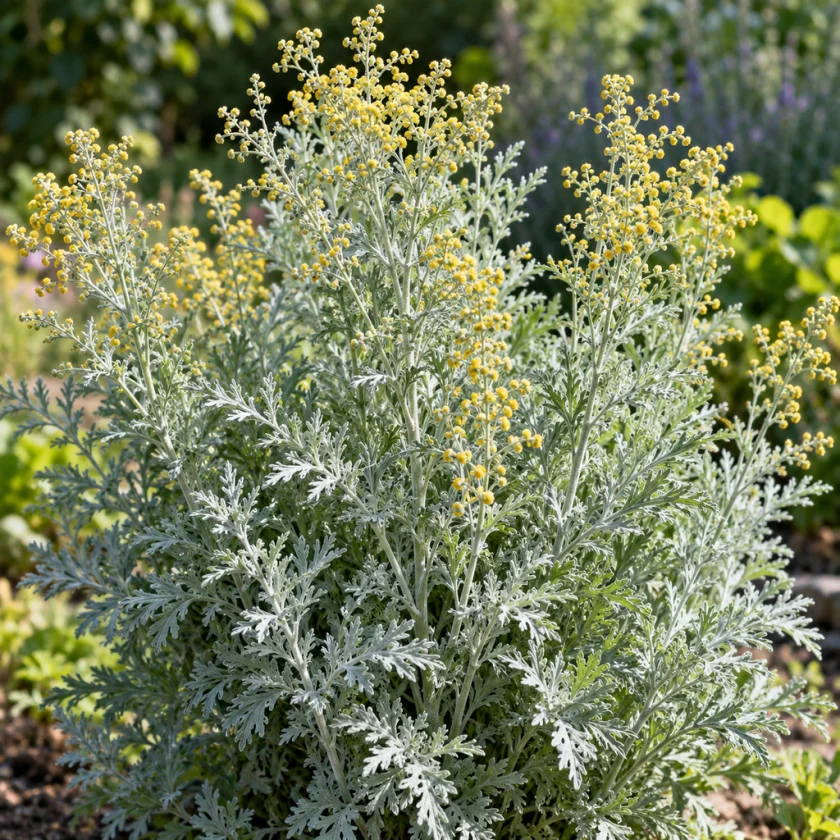
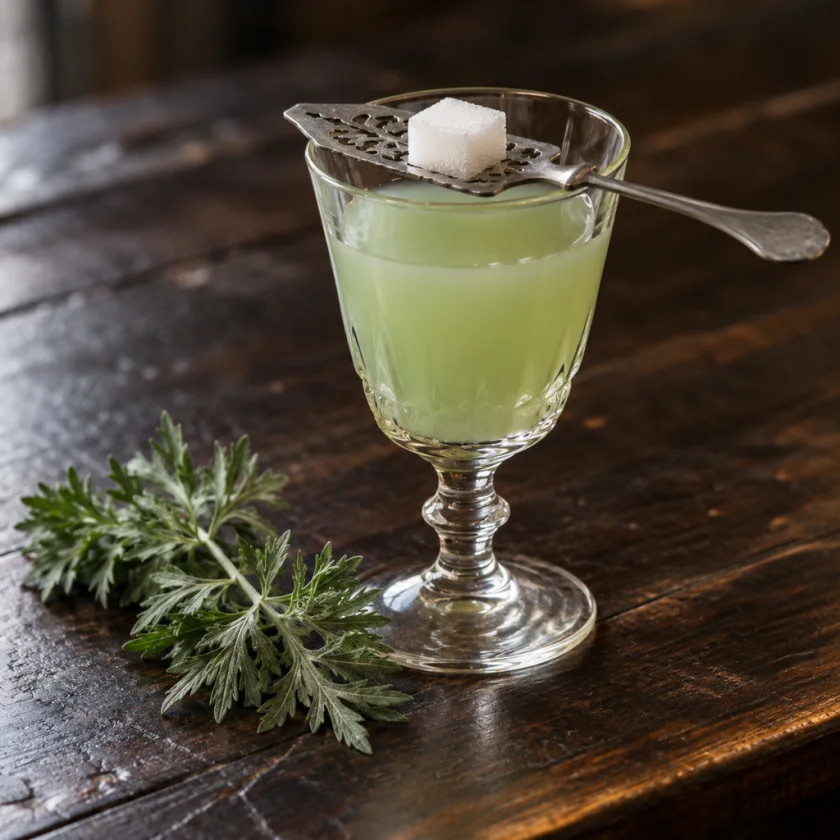
Wormwood (Artemisia absinthium) is an unusual herb to write a "benefits" page about, because it is one of the few plants in the herbal cabinet that can genuinely hurt you if you get the dose wrong — and it is surrounded by more folklore than almost any other. These deep dives take the herb apart claim by claim: what the bitter reflex really does, why a handful of small German trials in Crohn's disease are the most interesting clinical evidence wormwood has, why the "worm" in its name is history rather than proof, how to read the thujone story honestly in both directions, and what an Italian wormwood biscuit study does and does not show about glucagon-like peptide-1 (GLP-1), the hormone behind semaglutide, sold as Ozempic and Wegovy.
Before anything else, one correction that changes everything you will read elsewhere. Two different plants are called "wormwood." Artemisia absinthium — common wormwood, the silvery bitter herb of absinthe and vermouth — is the subject of these pages. Artemisia annua — sweet wormwood, qinghao — is a different species and the source of artemisinin, the compound behind modern antimalarial drugs. Common wormwood contains no meaningful artemisinin. Every claim you have read about "wormwood curing malaria," artemisinin dosing, or artesunate belongs to Artemisia annua and is not borrowed here. A product or article that does not print the Latin name gives no way to tell which of the two plants it means.
The second thing to hold onto: wormwood's usefulness and wormwood's toxicity live in different fractions of the same plant. The bitterness comes largely from absinthin and related sesquiterpene lactones. The danger comes from thujone in the aromatic essential oil. A few drops of a dilute tincture on the tongue and a teaspoon of concentrated wormwood oil are not the same substance in any practical sense. Almost every serious wormwood poisoning on record involves the oil or a very heavy extract.
Deep-Dive Articles
Wormwood for Digestion and the Bitter Reflex
The oldest and most defensible use. What bitter taste receptors do in the stomach and gut, why timing matters more than dose, what human trials on bitters actually show, and the five mistakes that turn a traditional aperitif herb into a hazard.
Read the deep dive →Wormwood for Crohn's Disease and Inflammation
The strongest clinical signal wormwood has: two small double-blind and controlled German trials reporting steroid tapering and lower tumor necrosis factor-alpha. The trial sizes, what preparation was tested, and the honest problem of near-zero independent replication.
Read the deep dive →Wormwood for Parasites: Evidence and Limits
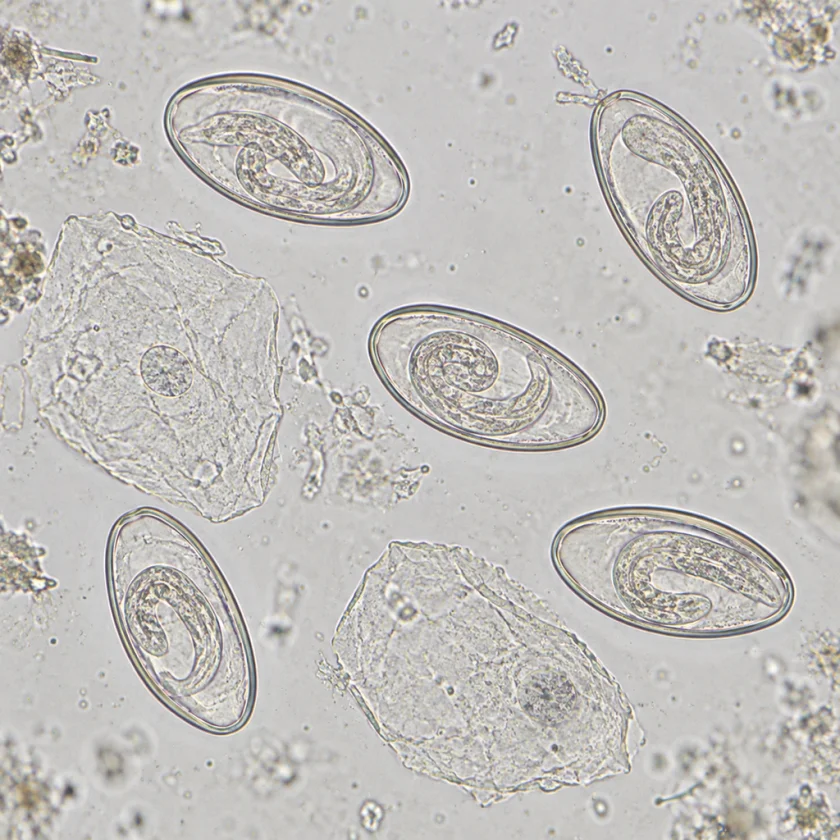
The name is history, not data. Animal and test-tube findings laid out plainly, the near-total absence of human trials, and — because this matters — the actual drugs that cure the actual parasites, named by organism.
Read the deep dive →Wormwood Safety: Thujone, Absinthe and Dose Limits
Both halves of the truth. Thujone is a real gamma-aminobutyric acid-A antagonist and a real convulsant in quantity; the absinthe-madness epidemic was mostly 60–75% alcohol and adulterants. Plus the EU and US thujone limits, pregnancy, epilepsy and the essential-oil rule.
Read the deep dive →Wormwood and Glucagon-Like Peptide-1 (GLP-1): The Ozempic and Wegovy Hormone
An Italian team hid wormwood extract in a dark chocolate biscuit to test hunger, ghrelin and glucagon-like peptide-1 — the hormone behind Ozempic and Wegovy. What the small study reported, what bitter-compound trials show, and why the same hormone does not mean the same effect.
Read the deep dive →Table of Contents
What These Pages Change
The main Wormwood page is the overview: what the plant is, its chemistry, its traditions, and the short version of the safety rules. These deep dives go past that in the places where the detail actually changes the picture for a reader.
- Digestion is where wormwood's reputation is most defensible and least dramatic. The interesting question is not "does it work" but what does a bitter physically do, and the answer — bitter receptors on enteroendocrine cells, effects on gastric emptying, motility and hunger signalling — is a real and active field of research that has almost nothing to do with wormwood specifically.
- Crohn's disease is where wormwood has real randomized human data, and where the number of participants is small enough that a single page can walk you through essentially the entire clinical literature.
- Parasites is where the gap between reputation and evidence is widest, and where being vague is genuinely dangerous — a treatable infection left untreated while someone drinks bitter tea is a bad outcome that herbal writing helps cause.
- Thujone is where two opposite kinds of misinformation collide: "absinthe drove artists mad" on one side, and "thujone was totally exonerated, wormwood is harmless" on the other. Neither is right.
How the Evidence Is Labelled
Every substantive claim across the digestion, Crohn's disease, parasites and thujone deep dives carries one of four tags, and they are used consistently so you can skim for them:
- Randomized clinical trial — humans, randomized, with a control group. Wormwood has very little of this, and what exists is small.
- Human, non-randomized — case series, open-label work, case reports. Useful for harms, weak for benefits.
- Preliminary — animal studies, cell culture, isolated tissue, chemical assays. This is the bulk of the wormwood literature. It establishes plausibility, never efficacy.
- Traditional use only — documented historical or ethnobotanical use with no modern controlled testing. Worth recording; not worth treating as a result.
Where a claimed traditional use carries documented harm — wormwood in pregnancy is the clearest example — the harm is stated next to the claim rather than the claim being quietly dropped.
The Five Claims at a Glance
- Digestive bitter / appetite stimulant. Strong mechanistic rationale, long documented tradition, and essentially no modern randomized trials of wormwood itself for dyspepsia or appetite. Verdict: plausible, traditional, low-dose-only. The generic bitter-receptor science is better established than the herb-specific evidence.
- Crohn's disease / inflammation. Two small controlled German trials (roughly 40 and 20 participants) reporting steroid-sparing effects and reduced tumor necrosis factor-alpha, both from one research group, with limited independent replication in the years since. Verdict: the most interesting real evidence wormwood has, and still preliminary. In both trials wormwood was given alongside the patients' usual Crohn's medicines, not in place of them.
- Parasites / antimicrobial. Encouraging in-vitro and rodent findings including work against Trichinella spiralis and ovine nematodes; human trial evidence against specific human parasites is thin to absent. Verdict: no human trial has shown wormwood curing a diagnosed parasitic infection, while the proven drugs are cheap, short-course and highly effective.
- Thujone toxicity. Well characterized: alpha-thujone is a gamma-aminobutyric acid-A receptor antagonist and a convulsant at sufficient dose, rapidly metabolized at low exposure. The nineteenth-century "absinthism" epidemic was overwhelmingly high-proof alcohol plus adulterants, and pre-ban bottles contained far less thujone than legend claimed. Verdict: both true — and the danger is concentrated in the essential oil.
- Glucagon-like peptide-1 (GLP-1) / appetite. An Italian team hid an encapsulated wormwood extract in a dark chocolate biscuit to test hunger, ghrelin and glucagon-like peptide-1, the hormone behind Ozempic and Wegovy; press reports of a 2025 conference talk said 11 healthy volunteers felt less hungry, but no peer-reviewed results have appeared yet. Verdict: preliminary — no study has shown that wormwood causes weight loss, and the same hormone does not mean the same effect as the weekly drug.
Key Research Papers
The site's citation policy is to link PubMed topic and title searches rather than numeric identifiers, so that a link always lands you on the live record set rather than on whatever a stale ID now points at. Titles, journals and years are given in the text so you can confirm you are reading the paper we meant.
Crohn's disease and inflammation
- Omer and colleagues, "Steroid-sparing effect of wormwood (Artemisia absinthium) in Crohn's disease: a double-blind placebo-controlled study," Phytomedicine, 2007 — the primary randomized trial. Randomized clinical trial, small. — Search PubMed
- Krebs, Omer and Omer, "Wormwood (Artemisia absinthium) suppresses tumour necrosis factor alpha and accelerates healing in patients with Crohn's disease," Phytomedicine, 2010 — the follow-up controlled trial with a biomarker endpoint. Randomized clinical trial, very small. — Search PubMed
- Ng and colleagues, "Systematic review: the efficacy of herbal therapy in inflammatory bowel disease," Alimentary Pharmacology & Therapeutics, 2013 — places wormwood among other IBD botanicals. — Search PubMed
- Langhorst and colleagues, "Systematic review of complementary and alternative medicine treatments in inflammatory bowel diseases," Journal of Crohn's and Colitis, 2015. — Search PubMed
Thujone pharmacology and the absinthe question
- Höld and colleagues, "Alpha-thujone (the active component of absinthe): gamma-aminobutyric acid type A receptor modulation and metabolic detoxification," PNAS, 2000 — the landmark mechanism paper. Preliminary (receptor and animal work), but definitive on mechanism. — Search PubMed
- Lachenmeier and colleagues, "Chemical composition of vintage preban absinthe with special reference to thujone…," Journal of Agricultural and Food Chemistry, 2008 — measured surviving pre-ban bottles. — Search PubMed
- Lachenmeier and colleagues, "Thujone — cause of absinthism?," Forensic Science International, 2006. — Search PubMed
- Padosch, Lachenmeier and Kröner, "Absinthism: a fictitious 19th century syndrome with present impact," Substance Abuse Treatment, Prevention, and Policy, 2006. — Search PubMed
- Dettling and colleagues, "Absinthe: attention performance and mood under the influence of thujone," Journal of Studies on Alcohol, 2004 — a controlled human exposure study. Randomized clinical trial (small, acute). — Search PubMed
Toxicity and case reports
- Weisbord, Soule and Kimmel, "Poison on line — acute renal failure caused by oil of wormwood purchased through the Internet," New England Journal of Medicine, 1997 — the case that anchors the essential-oil rule. Human, non-randomized (case report). — Search PubMed
- Lachenmeier, "Wormwood (Artemisia absinthium L.) — a curious plant with both neurotoxic and neuroprotective properties?," Journal of Ethnopharmacology, 2010. — Search PubMed
- PubMed topic search: Artemisia absinthium toxicity, seizure, case reports. — Search PubMed
Parasites and antimicrobial activity
- Caner and colleagues, "Comparison of the effects of Artemisia vulgaris and Artemisia absinthium growing in western Anatolia against trichinellosis…," Experimental Parasitology, 2008 — preliminary (rats). — Search PubMed
- Tariq and colleagues, "Anthelmintic activity of extracts of Artemisia absinthium against ovine nematodes," Veterinary Parasitology, 2009 — preliminary (sheep parasites). — Search PubMed
- Juteau and colleagues, "Composition and antimicrobial activity of the essential oil of Artemisia absinthium from Croatia and France," Planta Medica, 2003 — documents how wildly the thujone content varies by origin. — Search PubMed
- PubMed topic search: Artemisia absinthium antiparasitic human clinical trials — run it; the emptiness of the result is the finding. — Search PubMed
Chemistry, bitters and general pharmacology
- Szopa and colleagues, "Artemisia absinthium L. — importance in the history of medicine, the latest advances in phytochemistry and therapeutical, cosmetological and culinary uses," Plants, 2020 — the most complete modern review. — Search PubMed
- Batiha and colleagues, "Bioactive compounds, pharmacological actions, and pharmacokinetics of wormwood (Artemisia absinthium)," Antibiotics, 2020. — Search PubMed
- Bora and Sharma, "The genus Artemisia: a comprehensive review," Pharmaceutical Biology, 2011 — useful precisely because it keeps the species apart. — Search PubMed
- Sternini, Anselmi and Rozengurt, "Enteroendocrine cells: a site of 'taste' in gastrointestinal chemosensing," Current Opinion in Endocrinology, Diabetes and Obesity, 2008 — the biology behind the bitter reflex. — Search PubMed
- Amat, Upur and Blažeković, "In vivo hepatoprotective activity of the aqueous extract of Artemisia absinthium L.…," Journal of Ethnopharmacology, 2010 — preliminary (mice). — Search PubMed
External Resources
- Memorial Sloan Kettering — About Herbs: Wormwood — an herb monograph written for clinicians that is careful about the absinthium / annua distinction.
- U.S. National Center for Complementary and Integrative Health — Herbs at a Glance — US National Center for Complementary and Integrative Health.
- EUR-Lex — Regulation (EC) No 1334/2008 on flavourings — the instrument that sets the EU thujone caps for wormwood-containing drinks.
- US Alcohol and Tobacco Tax and Trade Bureau (TTB) — administers the American "thujone-free" requirement for absinthe.
- PubChem — thujone — structures, properties and toxicology references for both isomers.
- Crohn's & Colitis Foundation — patient-facing treatment information for inflammatory bowel disease (IBD).
- U.S. Centers for Disease Control and Prevention — Parasites — diagnosis and the recommended drug for each organism.
- Epilepsy Foundation — relevant to the seizure-threshold caution.
- Kew — Plants of the World Online — authoritative botanical names, for checking which Artemisia you actually have.
- MedlinePlus — plain-language health information from the US National Library of Medicine.
Connections
- All Herbs
- Wormwood — the main overview page these deep dives expand.
- Artemisia annua (Sweet Wormwood) — the other wormwood; artemisinin and antimalarial evidence belong there.
- Mugwort — a third Artemisia, also thujone-bearing, also contraindicated in pregnancy.
- Black Walnut — the traditional partner herb in "parasite cleanse" formulas.
- Clove — the third herb in the classic three-part anti-parasite blend.
- Dandelion — a far gentler bitter for everyday digestive use.
- Blessed Thistle — another classic European bitter tonic.
- Fennel — carminative usually paired with bitters to soften them.
- Peppermint — antispasmodic for bloating and cramping.
- Ginger — warming digestive with real trial support for nausea.
- Chamomile — fellow daisy-family herb; shares the Asteraceae allergy caution.
- Milk Thistle — liver-support herb often mentioned alongside wormwood.
- Sage — the other common kitchen herb whose oil is thujone-rich.
- Yarrow — bitter aromatic with overlapping traditional uses.
- Artichoke — a food-grade bitter with better clinical evidence for dyspepsia.
- Crohn's Disease — the condition with wormwood's only real randomized data.
- Ulcerative Colitis — the other major inflammatory bowel disease, where wormwood has not been tested.
- Gastroenterology — digestive conditions overview.
- Parasites — the organisms behind the herb's name.
- Epilepsy — a firm contraindication, because thujone lowers the seizure threshold.
- Alcohol Use Disorder — the actual cause of most historical "absinthism."
This page is educational and is not medical advice. Wormwood is not an established treatment for any disease. The facts behind its main warnings: alpha-thujone, the nerve-active compound in wormwood oil, blocks the brain's main calming receptor (the gamma-aminobutyric acid type A, or GABA-A, receptor) and causes poisoning signs in mice like those of a classic convulsant (Höld and colleagues, 2000); a review of the nineteenth-century record concluded that wormwood oil is "a potent agent to cause seizures" (Padosch and colleagues, 2006), which is why epilepsy and any seizure disorder are listed as contraindications; swallowing wormwood oil bought online caused acute kidney failure in a published case (Weisbord and colleagues, 1997); and the European Union herbal monograph on wormwood states that there are no or limited data on use in pregnancy and breastfeeding and that use is not recommended during them. In the two Crohn's disease trials, wormwood was given alongside the patients' usual medicines, not in place of them.