Tea Tree (Melaleuca alternifolia)
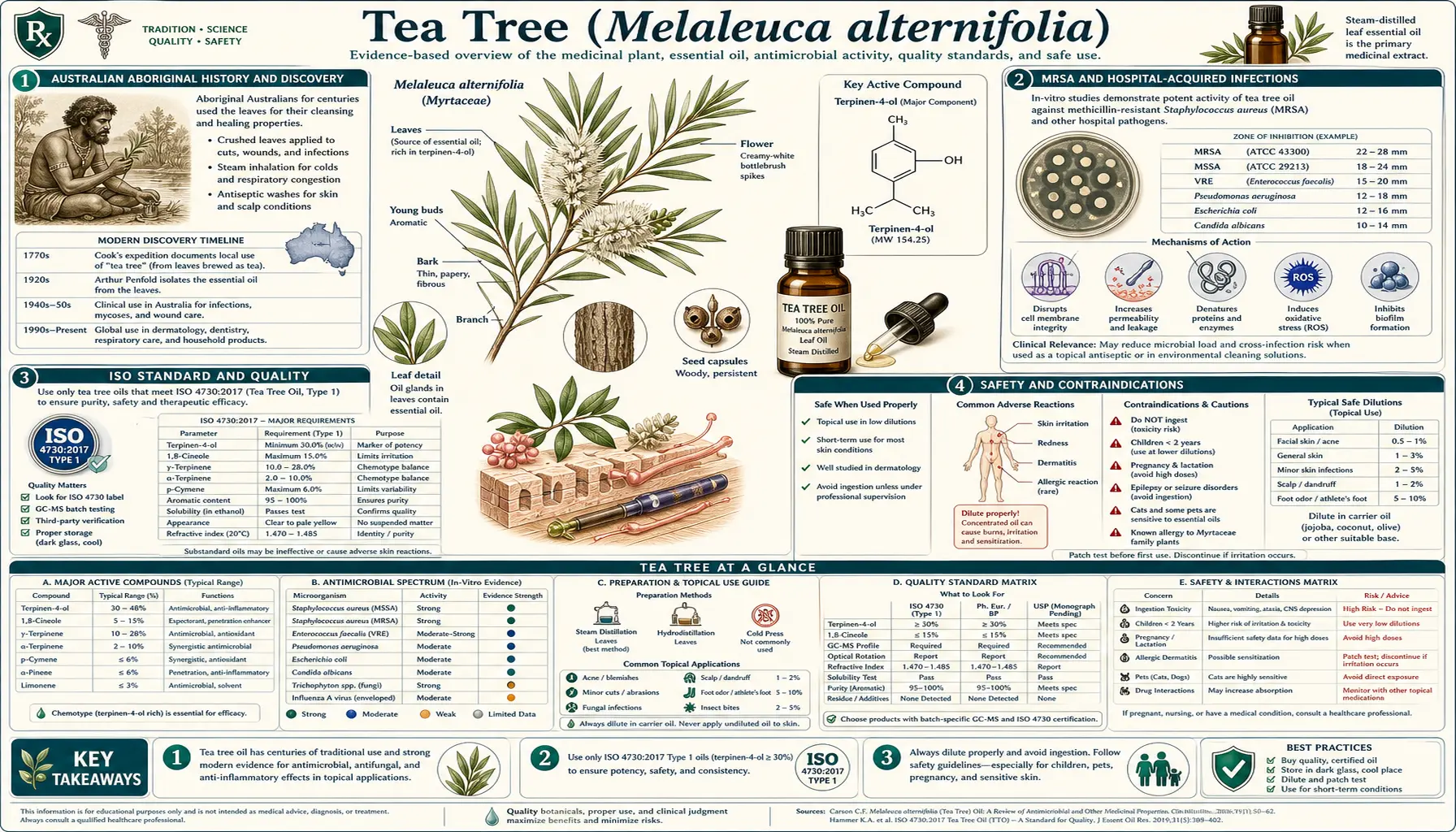
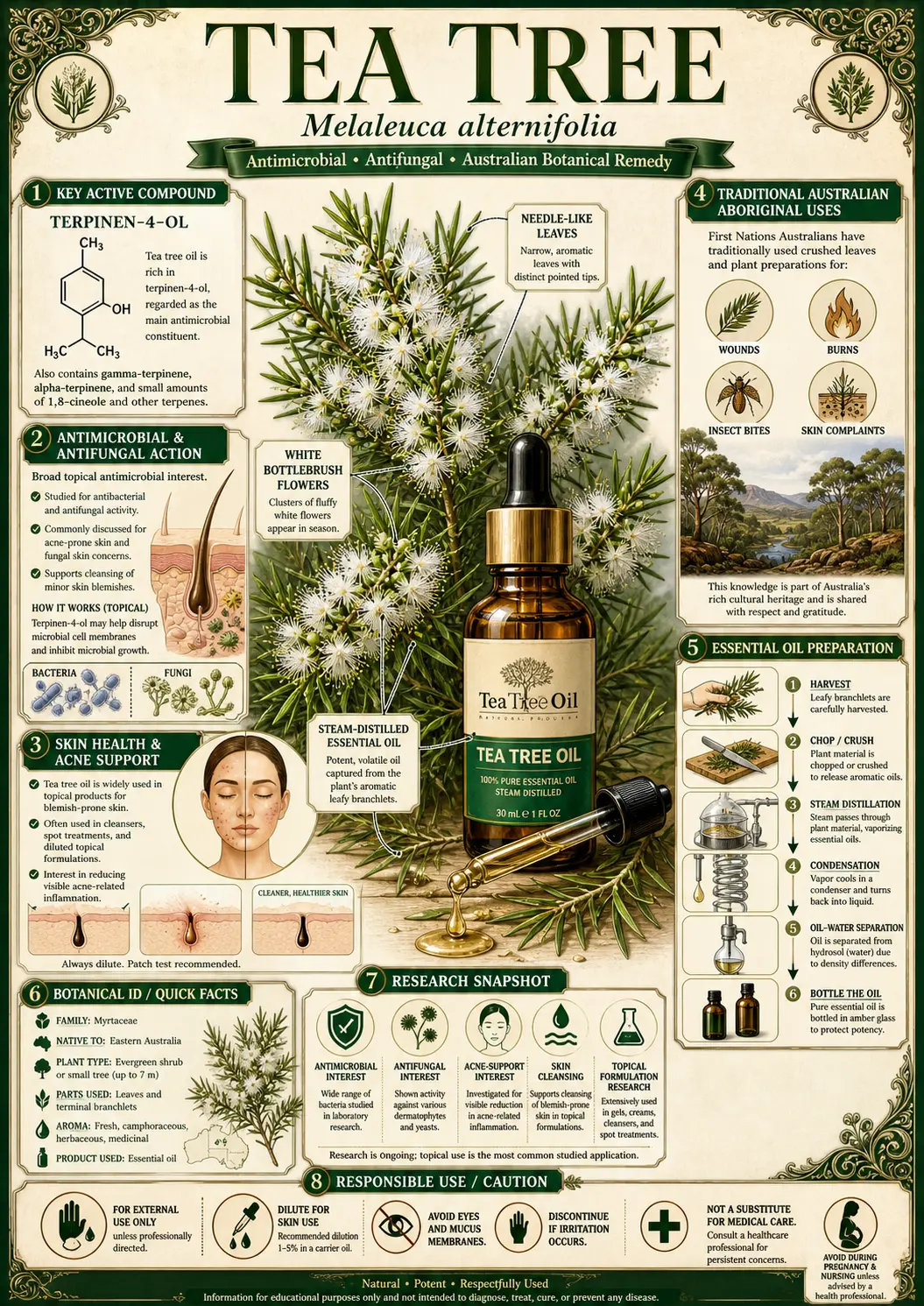
Table of Contents
- Australian Aboriginal History and Discovery
- Key Antibacterial Compounds
- Mechanism of Antibacterial Action
- Bacteria Targeted
- Research Studies and Clinical Evidence
- Methicillin-Resistant Staphylococcus Aureus and Hospital-Acquired Infections
- Wound Care and Skin Infections
- Acne Treatment Research
- Oral Health Applications
- Respiratory Applications
- ISO Standard and Quality
- Synergistic Effects
- Other Health Benefits
- Forms and Preparations
- Dosage Used in Research and Practice
- Safety and Contraindications
- Key Research Papers
- Featured Videos
Australian Aboriginal History and Discovery
Tea tree oil derives from Melaleuca alternifolia, a small paperbark tree native to one corner of the world: the swampy lowlands of northeastern New South Wales, Australia. The Bundjalung Aboriginal peoples of that region traditionally crushed its leaves to treat wounds, coughs, and skin complaints, and the plant later took the colonial name "tea tree" before a Sydney museum chemist, Arthur Penfold, measured its germ-killing power in the 1920s and launched a small industry. — the fuller story is told in the dedicated History & Traditional Use article.
Key Antibacterial Compounds
Tea tree oil is a complex mixture of approximately 100 different chemical compounds, predominantly monoterpenes and their associated alcohols. The antibacterial efficacy of the oil depends on the concentration and ratio of these individual constituents, which can vary considerably depending on the chemotype, geographic origin, harvesting time, and distillation method. Four compounds in particular account for the majority of the oil's antibacterial potency.
Terpinen-4-ol
Terpinen-4-ol is the principal active antibacterial component of tea tree oil, typically comprising 30-48% of high-quality oil. It is a monoterpene alcohol that demonstrates the strongest broad-spectrum antimicrobial activity among all tea tree oil constituents. Studies have shown that terpinen-4-ol alone can account for much of the antibacterial action attributed to the whole oil. It disrupts bacterial cell membranes, causes leakage of intracellular contents, and inhibits respiration in bacterial cells. The 2017 edition of the ISO 4730 standard requires a minimum terpinen-4-ol content of 35% (the 2004 edition set 30%).
1,8-Cineole (Eucalyptol)
1,8-Cineole, also known as eucalyptol, is present in tea tree oil at up to 10% under the 2017 edition of the ISO 4730 standard (up to 15% under the 2004 edition). While it contributes to the oil's antimicrobial properties and provides notable anti-inflammatory and mucolytic effects, high concentrations of 1,8-cineole are considered undesirable because they increase the risk of skin irritation and sensitization. The 2017 edition of ISO 4730 sets a maximum limit of 10% for 1,8-cineole. Oils with lower cineole content are preferred for topical therapeutic applications.
Alpha-Terpineol
Alpha-terpineol is a monoterpene alcohol that typically constitutes 1.5-8% of tea tree oil. It contributes to the overall antimicrobial activity and possesses its own independent antibacterial and antifungal properties. Research published in the Journal of Applied Microbiology has demonstrated that alpha-terpineol shows particular effectiveness against gram-positive bacteria and enhances the activity of terpinen-4-ol when present in the natural ratio found in whole tea tree oil.
Gamma-Terpinene
Gamma-terpinene is a monoterpene hydrocarbon making up 10-28% of tea tree oil. While its direct antibacterial activity is weaker than that of the terpene alcohols, gamma-terpinene serves as a biosynthetic precursor to terpinen-4-ol and contributes to the lipophilic nature of the oil, which facilitates penetration of bacterial cell membranes. It acts synergistically with the alcohol components, and its presence in the proper ratio is considered important for the full spectrum of antimicrobial activity demonstrated by the whole oil.
Mechanism of Antibacterial Action
Membrane Disruption
The primary mechanism by which tea tree oil exerts its antibacterial effect is through disruption of the bacterial cell membrane. The hydrophobic terpene components of the oil, particularly terpinen-4-ol, partition into the lipid bilayer of the bacterial cytoplasmic membrane, intercalating between the phospholipid molecules. This insertion causes structural disorganization of the membrane, increasing its fluidity and permeability. As a result, the membrane loses its ability to function as a selective barrier, leading to the uncontrolled leakage of ions (particularly potassium), adenosine triphosphate (ATP), and other small molecules essential for cell viability. Studies using electron microscopy have confirmed that tea tree oil causes visible disruption and blebbing of bacterial cell membranes, with loss of membrane integrity being the proximate cause of cell death in most susceptible organisms.
Respiratory Chain Inhibition
Beyond membrane disruption, tea tree oil components interfere with bacterial cellular respiration. Research has demonstrated that terpinen-4-ol and other constituents inhibit oxygen consumption in bacteria by disrupting the electron transport chain in the cytoplasmic membrane. This inhibition of oxidative phosphorylation deprives the bacterium of its primary source of adenosine triphosphate, leading to energy depletion. The dual action of membrane disruption and respiratory inhibition means that bacteria are attacked simultaneously through multiple pathways, which helps explain why resistance to tea tree oil develops far less readily than resistance to single-target conventional antibiotics.
Protein Denaturation
At higher concentrations, tea tree oil components cause denaturation of bacterial proteins, including critical enzymes and structural proteins. The terpene compounds interact with the hydrophobic domains of proteins, disrupting their tertiary and quaternary structures and rendering them nonfunctional. This mechanism is particularly important at bactericidal concentrations and contributes to the irreversible damage sustained by bacterial cells upon exposure. Studies have shown that tea tree oil causes the coagulation of cytoplasmic contents in treated bacterial cells, consistent with widespread protein denaturation and loss of cellular organization.
Bacteria Targeted
Tea tree oil demonstrates broad-spectrum antibacterial activity against a wide range of gram-positive and gram-negative organisms. The following are among the most clinically significant bacteria against which tea tree oil has shown documented efficacy.
- Staphylococcus aureus — Tea tree oil is effective against both methicillin-sensitive (MSSA) and methicillin-resistant strains. Minimum inhibitory concentrations (MICs) typically range from 0.25-0.5% (v/v). The oil has shown activity against clinical isolates from wound infections, bloodstream infections, and nasal carriage.
- Methicillin-Resistant Staphylococcus aureus (MRSA) — Numerous studies have confirmed that methicillin-resistant Staphylococcus aureus strains show no cross-resistance to tea tree oil despite their resistance to beta-lactam antibiotics. MICs for methicillin-resistant Staphylococcus aureus are generally comparable to those for susceptible S. aureus strains, typically 0.25-1.0% (v/v), because the mechanism of action is entirely different from that of conventional antibiotics.
- Streptococcus pyogenes — The causative agent of strep throat, impetigo, cellulitis, and necrotizing fasciitis, S. pyogenes is highly susceptible to tea tree oil with MICs reported as low as 0.12-0.5% (v/v). This sensitivity supports the use of tea tree oil in topical applications for skin infections caused by group A streptococci.
- Escherichia coli — As a gram-negative bacterium with an outer membrane that provides an additional permeability barrier, E. coli is somewhat less susceptible than gram-positive organisms but remains sensitive to tea tree oil at MICs of 0.25-1.0% (v/v). The terpene components can penetrate the outer membrane, particularly in the presence of chelating agents.
- Pseudomonas aeruginosa — This intrinsically resistant gram-negative opportunistic pathogen is the most resistant of the commonly tested bacteria, with MICs typically ranging from 1.0-8.0% (v/v). While higher concentrations are required, tea tree oil still demonstrates activity, which is notable given the organism's extensive resistance to conventional antibiotics.
- Cutibacterium acnes (formerly Propionibacterium acnes) — The anaerobic bacterium primarily responsible for inflammatory acne vulgaris is highly susceptible to tea tree oil, with MICs of 0.06-0.5% (v/v). This high sensitivity underpins the clinical efficacy of tea tree oil in acne treatment formulations.
Research Studies and Clinical Evidence
The antibacterial properties of tea tree oil have been the subject of extensive scientific investigation over the past three decades, with a substantial body of both in vitro and clinical evidence supporting its therapeutic use. The most comprehensive review of this evidence was published by Carson, Hammer, and Riley in Clinical Microbiology Reviews (2006), which systematically evaluated the antimicrobial activity of Melaleuca alternifolia oil. This landmark review analyzed over 100 studies and concluded that tea tree oil possesses significant in vitro activity against a broad range of bacteria, fungi, and viruses, and that the clinical evidence supports its use in several topical applications.
A key study by Carson, Cookson, Farrelly, and Riley published in the Journal of Antimicrobial Chemotherapy (1995) tested 66 isolates of S. aureus (64 of them methicillin-resistant and 33 mupirocin-resistant) and found that all were susceptible to tea tree oil; for 60 Australian isolates the minimum inhibitory concentration was 0.25% and the minimum bactericidal concentration 0.50% (v/v).
Research by Banes-Marshall, Cawley, and Phillips in the British Journal of Biomedical Science (2001) tested tea tree oil against microorganisms isolated from leg ulcers and pressure sores, including methicillin-resistant and other S. aureus, streptococci, coagulase-negative staphylococci, Pseudomonas and coliform bacilli. S. aureus and Candida were the most susceptible (minimum inhibitory concentrations of 0.5% and minimum bactericidal concentrations of 1%), while P. aeruginosa and the faecal streptococci, at more than 8%, were resistant. Time-kill studies have shown that tea tree oil at 0.5% concentration produces a greater than 3 log reduction in S. aureus viable counts within 30 minutes, indicating rapid bactericidal activity.
Methicillin-Resistant Staphylococcus Aureus and Hospital-Acquired Infections
The activity of tea tree oil against methicillin-resistant Staphylococcus aureus (MRSA) has attracted considerable attention from the medical community, given the global crisis of antibiotic resistance and the significant morbidity and mortality associated with methicillin-resistant Staphylococcus aureus infections in hospital settings. Because tea tree oil acts through physical disruption of cell membranes rather than targeting specific metabolic pathways, the resistance mechanisms that render methicillin-resistant Staphylococcus aureus impervious to beta-lactam antibiotics are irrelevant to the oil's mode of action.
Decolonization studies have explored the use of tea tree oil to eliminate methicillin-resistant Staphylococcus aureus nasal and skin carriage in hospitalized patients and healthcare workers. A randomized controlled trial by Dryden, Dailly, and Crouch published in the Journal of Hospital Infection (2004) compared a five-day tea tree oil regimen (10% tea tree cream and 5% tea tree body wash) against standard treatment (2% mupirocin nasal ointment, 4% chlorhexidine soap and 1% silver sulfadiazine cream) for methicillin-resistant Staphylococcus aureus decolonization in hospital patients. Overall, 41% of the tea tree group (46 of 110) and 49% of the standard group (56 of 114) were cleared, with no significant difference between the regimens. Mupirocin was more effective at clearing nasal carriage (78% versus 47% for tea tree cream), while tea tree was more effective than chlorhexidine or silver sulfadiazine at clearing superficial skin sites and skin lesions.
Several hospitals in Australia and the United Kingdom have adopted tea tree oil-based products as part of their methicillin-resistant Staphylococcus aureus control strategies. The Lismore Base Hospital in New South Wales, located in the region where M. alternifolia grows natively, incorporated tea tree oil-based hand washes, body washes, and wound care products into its infection control protocols. In the UK, a number of UK National Health Service (NHS) trusts have trialed tea tree oil-based preparations for methicillin-resistant Staphylococcus aureus decolonization, particularly in long-term care settings where recurrent methicillin-resistant Staphylococcus aureus carriage is common. While tea tree oil has not replaced conventional decolonization agents, it is increasingly recognized as a useful adjunct, particularly for patients who have failed standard mupirocin-based protocols or who have developed mupirocin resistance.
Wound Care and Skin Infections
Tea tree oil has a well-documented history of use in wound care, extending from its traditional Aboriginal applications to modern clinical practice. The oil's combination of antibacterial, anti-inflammatory, and wound-healing properties makes it particularly well-suited for the management of minor wounds and skin infections. Studies have demonstrated that tea tree oil not only eliminates bacteria from wound sites but also reduces inflammation and promotes the migration of immune cells to the area, accelerating the healing process.
For burns, tea tree oil has been investigated as a topical antimicrobial agent to prevent wound infection, a leading cause of morbidity and mortality in burn patients. Research published in Burns has shown that tea tree oil at 5% concentration in an aqueous cream base effectively inhibits the growth of common burn wound pathogens including S. aureus and S. pyogenes. The oil's ability to penetrate damaged skin tissue and maintain antibacterial activity in the presence of wound exudate adds to its practical utility in burn wound management.
For cuts, abrasions, and abscesses, diluted tea tree oil (typically 5-10% in a carrier) applied directly to the affected area has shown clinical benefit in reducing infection rates and promoting healing. In a small quasi-experimental study by Chin and Cordell in the Journal of Alternative and Complementary Medicine (2013), 10 volunteers with wounds infected by S. aureus were treated with the fumes of tea tree oil through a dressing alongside conventional treatment; healing time decreased in all but one of them, and the authors concluded that further study is warranted. Post-surgical wound applications have also been studied, with a pilot study demonstrating that tea tree oil-impregnated dressings reduced surgical site infections and improved healing times compared to standard dressings in a small cohort of patients undergoing minor surgical procedures.
Acne Treatment Research
Acne vulgaris is one of the best-studied clinical applications of tea tree oil. The condition is driven in large part by colonization and overgrowth of Cutibacterium acnes within sebaceous follicles, and tea tree oil's potent activity against this organism provides a clear mechanistic rationale for its use. Beyond direct antibacterial effects, tea tree oil also reduces sebaceous gland activity and exerts anti-inflammatory effects that help control the redness and swelling associated with inflammatory acne lesions.
The most frequently cited acne study is a single-blind, randomized clinical trial conducted by Bassett, Pannowitz, and Barnetson, published in the Medical Journal of Australia (1990). This trial compared 5% tea tree oil gel with 5% benzoyl peroxide lotion in 124 patients with mild to moderate acne. Both treatments significantly reduced the number of inflamed and non-inflamed lesions over a 3-month period. While benzoyl peroxide showed a faster onset of action, tea tree oil produced fewer side effects — patients in the benzoyl peroxide group reported significantly more scaling, dryness, itching, and burning. The overall improvement at the end of the study was comparable between the two groups, leading the authors to conclude that tea tree oil was an effective alternative with a better side-effect profile.
A more recent randomized, double-blind, placebo-controlled pilot study by Enshaieh, Jooya, Siadat, and Iraji, published in the Indian Journal of Dermatology, Venereology and Leprology (2007), evaluated 5% tea tree oil gel versus placebo in 60 patients with mild to moderate acne over 45 days. The tea tree oil group showed a 3.55 times greater improvement in total lesion count and a 5.75 times greater improvement in acne severity index compared to placebo, with both differences reaching statistical significance. These findings provided strong evidence for the efficacy of topical tea tree oil as a monotherapy for mild to moderate acne.
Oral Health Applications
The antibacterial properties of tea tree oil extend to oral pathogens, and several studies have investigated its potential applications in dental and oral hygiene. The oral cavity harbors over 700 species of bacteria, many of which contribute to dental caries, periodontal disease, and halitosis. Tea tree oil has demonstrated in vitro activity against key oral pathogens including Streptococcus mutans (the primary causative agent of dental caries), Porphyromonas gingivalis and Aggregatibacter actinomycetemcomitans (major periodontal pathogens), and Fusobacterium nucleatum (associated with halitosis).
Tea tree oil has also been studied in oral-care products. A study by Soukoulis and Hirsch published in the Australian Dental Journal (2004) compared a 2.5% tea tree oil gel with a 0.2% chlorhexidine gel and a placebo gel, brushed on twice daily for eight weeks by 49 adults with severe chronic gingivitis. The tea tree oil group had significant reductions in the gingival index and papillary bleeding index, but tea tree oil did not reduce plaque scores, which tended to rise over the later weeks; the authors suggested the gel may prove a useful non-toxic adjunct to periodontal therapy.
Tea tree oil has also been investigated for its potential to inhibit the adhesion of oral bacteria to surfaces, a critical first step in dental plaque and biofilm formation. In vitro studies have demonstrated that sub-inhibitory concentrations of tea tree oil reduce the adhesion of S. mutans to glass and hydroxyapatite surfaces, suggesting that the oil may help prevent plaque formation even at concentrations below those needed to kill bacteria outright. These properties support the inclusion of tea tree oil in toothpastes, mouthwashes, and dental gels, though tea tree oil is poisonous when swallowed.
Respiratory Applications
Steam inhalation with tea tree oil has been used traditionally and in modern complementary practice for the management of upper respiratory tract infections, including sinusitis, bronchitis, and the common cold. When the oil is added to hot water and the steam is inhaled, the volatile terpene compounds are delivered directly to the mucous membranes of the nasal passages, sinuses, and airways, where they exert direct antibacterial and anti-inflammatory effects on the respiratory epithelium.
The 1,8-cineole component of tea tree oil, while limited to 10% or less in oil meeting the 2017 ISO 4730 standard, contributes mucolytic and expectorant properties that help thin and mobilize respiratory secretions. Combined with the broad-spectrum antibacterial activity of terpinen-4-ol and other terpene alcohols, steam inhalation can help address both the infectious and congestive components of upper respiratory conditions. Studies have shown that inhaled terpenes from tea tree oil reduce inflammatory cytokines in the airway mucosa and improve mucociliary clearance.
For sinus infections, tea tree oil inhalation has been studied as an adjunct to conventional treatment. Undiluted tea tree oil put directly into the nasal passages can irritate the lining of the nose, so dilute formulations (typically 1-2 drops of essential oil added to a bowl of steaming water, inhaled for 5-10 minutes) are widely used. Some practitioners recommend adding tea tree oil to saline nasal irrigation solutions at very low concentrations, though clinical trial evidence for this specific application remains limited. The antibacterial activity of inhaled tea tree oil vapors against common sinus pathogens such as Haemophilus influenzae and Moraxella catarrhalis has been demonstrated in vapor-phase susceptibility testing.
ISO Standard and Quality
The International Organization for Standardization has established ISO 4730 as the quality standard for tea tree oil (Melaleuca alternifolia, M. linariifolia, and M. dissitiflora oil). This standard, first published in 1996, was revised in 2017 and amended in 2018 (ISO 4730:2017/Amd 1:2018); it specifies the physical and chemical characteristics that tea tree oil must meet to be considered of acceptable quality for therapeutic and commercial use. The standard serves as the global benchmark for tea tree oil quality and is referenced by pharmacopoeias, regulatory bodies, and the tea tree oil industry worldwide.
The most critical parameter defined by ISO 4730 is the minimum terpinen-4-ol content, set at 35% in the 2017 edition (30% in the 2004 edition). Oils with terpinen-4-ol levels below this threshold are considered substandard and unlikely to deliver the expected antibacterial efficacy. High-quality tea tree oils typically contain 36-42% terpinen-4-ol, with premium oils exceeding 40%. The standard also sets a maximum limit of 10% for 1,8-cineole (15% in the 2004 edition), as elevated levels of this compound increase the risk of skin irritation without proportionally enhancing antibacterial activity.
Additional parameters in the 2004 edition of ISO 4730, as listed in a 2006 review, include acceptable ranges for alpha-terpinene (5-13%), gamma-terpinene (10-28%), p-cymene (0.5-12%), alpha-terpineol (1.5-8%), and aromadendrene (trace-7%). Gas chromatographic analysis is the standard method for compositional verification. Some products state compliance with ISO 4730 and provide batch-specific certificates of analysis that show the measured composition. Adulteration with synthetic terpinen-4-ol, cheaper eucalyptus oils, or other Melaleuca species oils is a recognized problem in the market, and ISO compliance helps ensure product authenticity and therapeutic reliability.
Synergistic Effects
With Eucalyptus Oil
Combinations of tea tree oil and eucalyptus oil (Eucalyptus globulus) have demonstrated synergistic antibacterial effects that exceed the activity of either oil used alone. Both oils share the component 1,8-cineole, but their differing terpene profiles create complementary mechanisms of membrane disruption. Studies using checkerboard assays have shown fractional inhibitory concentration (FIC) indices below 0.5 for tea tree and eucalyptus oil combinations against S. aureus and E. coli, indicating true synergy rather than merely additive effects. This combination is particularly useful in respiratory applications, where eucalyptus provides superior mucolytic activity while tea tree oil contributes stronger direct antibacterial potency.
With Lavender Oil
Tea tree oil and lavender oil (Lavandula angustifolia) are frequently combined in topical wound care and skin treatment formulations. Lavender oil contributes its own antibacterial properties (particularly against gram-positive organisms) along with notable analgesic and wound-healing effects. The combination has been studied for burn wound care and shown to reduce bacterial colonization while simultaneously promoting tissue repair and reducing pain. The complementary anti-inflammatory profiles of the two oils — tea tree oil acting primarily through suppression of pro-inflammatory cytokines and lavender through modulation of immune cell activity — provide enhanced overall anti-inflammatory efficacy.
With Conventional Antibiotics
Perhaps the most clinically significant synergistic findings involve combinations of tea tree oil with conventional antibiotics. A 2023 laboratory study on three methicillin-resistant Staphylococcus aureus strains found tea tree oil combined with oxacillin acted synergistically in most tests, and it has been proposed that sub-inhibitory concentrations of tea tree oil can restore the susceptibility of methicillin-resistant Staphylococcus aureus to oxacillin, effectively reversing methicillin resistance. Synergistic interactions have also been reported between tea tree oil and gentamicin against S. aureus, and between tea tree oil and ciprofloxacin against P. aeruginosa. The mechanism is believed to involve tea tree oil-mediated membrane disruption facilitating increased intracellular accumulation of the antibiotic. These findings suggest that tea tree oil could potentially serve as an antibiotic adjuvant, though clinical trials of combination therapy are still in early stages.
Other Health Benefits
Antifungal Properties
Tea tree oil possesses broad-spectrum antifungal activity against dermatophytes, yeasts, and other pathogenic fungi. It is effective against Candida albicans (the primary cause of oral and vaginal thrush), Trichophyton rubrum and T. mentagrophytes (the major causes of athlete's foot and nail fungus), Malassezia furfur (the yeast responsible for dandruff and seborrheic dermatitis), and Aspergillus niger. In clinical trials, 25% and 50% tea tree oil solutions were tested for athlete's foot between the toes (the 50% solution cleared the fungus in 64% of people versus 31% on placebo, and 3.8% of those using tea tree oil developed moderate to severe dermatitis); a 10% cream eased athlete's foot symptoms but cleared the fungus no better than placebo; and for toenail fungus, 100% tea tree oil applied for 6 months gave a culture cure in 18% versus 11% with clotrimazole.
Antiviral Properties
Tea tree oil has shown in vitro antiviral activity against several viruses of clinical significance, including herpes simplex virus type 1 (HSV-1) and type 2 (HSV-2), influenza virus, and tobacco mosaic virus. The antiviral mechanism appears to involve direct disruption of the viral envelope, similar to its action on bacterial cell membranes. Studies by Schnitzler, Schon, and Reichling published in Pharmazie (2001) demonstrated that tea tree oil inhibits the replication of HSV-1 and HSV-2 in cell culture, with maximal antiviral effects observed when the oil was applied before viral adsorption to host cells.
Anti-inflammatory Properties
Tea tree oil, particularly the terpinen-4-ol component, exerts significant anti-inflammatory effects through suppression of the production of pro-inflammatory mediators. Studies have demonstrated that terpinen-4-ol inhibits the production of tumor necrosis factor-alpha, interleukin-1-beta, interleukin-8 (IL-8), and prostaglandin E2 (PGE2) by activated monocytes and macrophages. These anti-inflammatory properties contribute to the therapeutic benefit of tea tree oil in conditions where both infection and inflammation are present, such as acne, wound infections, and gingivitis.
Forms and Preparations
- Pure Essential Oil — 100% tea tree oil (ISO 4730 compliant) is available as the undiluted essential oil. This is the most concentrated form and is normally diluted before it is put on the skin. Typically supplied in dark glass bottles (amber or cobalt blue) to protect against light degradation.
- Diluted Solutions — Pre-diluted tea tree oil solutions (typically 5-15% in a carrier oil such as jojoba, coconut, or almond oil) are available for direct topical application. These provide a ready-to-use preparation at therapeutically relevant concentrations.
- Creams and Ointments — Tea tree oil incorporated into aqueous cream, petroleum jelly, or other emollient bases at concentrations of 5-10% for general skin applications; the higher strengths tested for fungal infections were solutions (25-50%) and the undiluted oil. These formulations provide sustained contact with the affected area and reduce the risk of skin irritation.
- Soaps and Body Washes — Liquid soaps and body washes containing 5-10% tea tree oil are used for general hygiene and as part of methicillin-resistant Staphylococcus aureus decolonization protocols. The surfactant base helps distribute the oil evenly across the skin and enhances its contact with microorganisms.
- Mouthwash — Oral rinse formulations containing 0.2-1.0% tea tree oil, often combined with other ingredients such as xylitol or aloe vera. Used for gingivitis, dental plaque reduction, and oral hygiene. It is used as a rinse only; tea tree oil is poisonous when swallowed.
- Shampoos — Tea tree oil shampoos containing 5% concentration are used for dandruff, seborrheic dermatitis, and scalp fungal infections. Clinical trials have shown significant improvement in dandruff severity with regular use of 5% tea tree oil shampoo.
- Suppositories and Pessaries — Vaginal pessaries containing tea tree oil at 200mg concentration have been investigated for the treatment of vaginal candidiasis in preliminary studies.
Dosage Used in Research and Practice
Tea tree oil is strictly for external use. Appropriate concentrations vary by application, and proper dilution is essential for both safety and efficacy.
- General skin antisepsis: 5% tea tree oil in a suitable carrier (aqueous cream, carrier oil, or lotion base). This concentration is effective against common skin pathogens while minimizing the risk of irritation for most individuals.
- Acne treatment: 5% tea tree oil gel, applied once or twice daily to affected areas. Clinical trials have established this concentration as effective and well-tolerated for mild to moderate acne.
- Wound care: 5-10% tea tree oil in an aqueous cream base or incorporated into wound dressings. The European Medicines Agency’s herbal committee lists tea tree oil preparations for small superficial wounds, in adults and adolescents over 12.
- Fungal skin infections (athlete's foot): trials used a 10% tea tree oil cream, which eased symptoms but cleared the fungus no better than placebo, and 25% or 50% tea tree oil solutions applied twice daily for 4 weeks, with the 50% solution clearing the fungus in 64% of people versus 31% on placebo.
- Nail fungus (onychomycosis): the nail trial used 100% tea tree oil applied twice daily for 6 months, with a culture cure in 18% of people versus 11% with 1% clotrimazole solution. The 100% oil can be applied with a cotton swab directly to affected nails.
- Mouthwash: 0.2-1.0% solution, used as a rinse for 30-60 seconds then spat out. Never swallowed.
- Steam inhalation: 2-3 drops of pure essential oil added to a bowl of steaming water, inhaled for 5-10 minutes with a towel draped over the head.
- Dilution ratios with carrier oils: For general topical use, a 5% dilution equals approximately 3 drops of tea tree essential oil per teaspoon (5 ml) of carrier oil. A 10% dilution equals approximately 6 drops per teaspoon. A 2% dilution for sensitive skin equals approximately 1 drop per teaspoon.
Safety and Contraindications
Tea tree oil is poisonous when swallowed. Oral ingestion of tea tree oil, even in small amounts, can cause serious adverse effects including confusion, ataxia (loss of muscle coordination), drowsiness, central nervous system depression, vomiting, diarrhea, and in severe cases, coma. Cases of tea tree oil poisoning have been reported in both children and adults following accidental or intentional ingestion. Tea tree oil products are labelled for external use only, and keeping them out of children’s reach prevents accidental swallowing.
Skin sensitivity and allergic contact dermatitis are the most commonly reported adverse effects of topical tea tree oil use. The risk of sensitization increases with the use of undiluted or highly concentrated oil, repeated applications to damaged skin, and exposure to oxidized or degraded oil. Tea tree oil oxidizes readily upon exposure to air, light, and heat, and oxidation products (particularly peroxides and epoxides of terpene compounds) are significantly more allergenic than the fresh oil. Sensitization is less likely with oil stored in tightly sealed dark glass containers, used within the manufacturer's stated shelf life (typically 1-2 years after opening), and diluted before application. A patch test — a small amount on a small area of intact skin before first use — shows whether the skin reacts.
Tea tree oil is toxic to cats and dogs. Cats are particularly susceptible because they lack the hepatic glucuronyl transferase enzymes needed to metabolize terpenes. Even small topical exposures in cats can cause tremors, ataxia, hypothermia, depression, and potentially fatal liver failure. Dogs are less sensitive but can also develop toxicity symptoms from ingestion or dermal absorption of concentrated tea tree oil. Undiluted tea tree oil applied to animals carries the highest risk, and the same poisoning can follow from tea tree products used on or near pets. There is not enough safety data on tea tree oil in pregnancy or breastfeeding. The research raises a concern for people with known allergies to plants in the Myrtaceae family. For children under 6 years, the concern raised for inhaled tea tree oil is breathing difficulty (respiratory distress) from the terpenes. The European Medicines Agency’s herbal committee lists tea tree oil medicines only for adults and adolescents over 12, only for use on the skin and the lining of the mouth, and for no longer than 1 month when treating small boils or athlete's foot; it also notes that burn-like skin reactions have been reported rarely.
Key Research Papers
- Carson CF, Hammer KA, Riley TV. Melaleuca alternifolia (tea tree) oil: a review of antimicrobial and other medicinal properties. Clinical Microbiology Reviews. 2006;19(1):50-62.
- Hammer KA, Carson CF, Riley TV. Susceptibility of transient and commensal skin flora to the essential oil of Melaleuca alternifolia (tea tree oil). American Journal of Infection Control. 1996;24(3):186-189.
- Hammer KA, Carson CF, Riley TV. In-vitro activity of essential oils, in particular Melaleuca alternifolia (tea tree) oil and tea tree oil products, against Candida spp. Journal of Antimicrobial Chemotherapy. 1998;42(5):591-595.
- Hammer KA, Carson CF, Riley TV. In vitro activities of ketoconazole, econazole, miconazole, and Melaleuca alternifolia (tea tree) oil against Malassezia species. Antimicrobial Agents and Chemotherapy. 2000;44(2):467-469.
- Dryden MS, Dailly S, Crouch M. A randomized, controlled trial of tea tree topical preparations versus a standard topical regimen for the clearance of MRSA colonization. Journal of Hospital Infection. 2004;56(4):283-286.
- Bassett IB, Pannowitz DL, Barnetson RS. A comparative study of tea-tree oil versus benzoylperoxide in the treatment of acne. Medical Journal of Australia. 1990;153(8):455-458.
- Enshaieh S, Jooya A, Siadat AH, Iraji F. The efficacy of 5% topical tea tree oil gel in mild to moderate acne vulgaris: a randomized, double-blind placebo-controlled study. Indian Journal of Dermatology, Venereology and Leprology. 2007;73(1):22-25.
- Soukoulis S, Hirsch R. The effects of a tea tree oil-containing gel on plaque and chronic gingivitis. Australian Dental Journal. 2004;49(2):78-83.
- Schnitzler P, Schon K, Reichling J. Antiviral activity of Australian tea tree oil and eucalyptus oil against herpes simplex virus in cell culture. Pharmazie. 2001;56(4):343-347.
- Penfold AR, Grant R. The germicidal values of some Australian essential oils and their pure constituents. Journal of the Royal Society of New South Wales. 1925;59:346-349.
- Banes-Marshall L, Cawley P, Phillips CA. In vitro activity of Melaleuca alternifolia (tea tree) oil against bacterial and Candida spp. isolates from clinical specimens. British Journal of Biomedical Science. 2001;58(3):139-145.
- International Organization for Standardization. ISO 4730:2017. Oil of Melaleuca, terpinen-4-ol type (tea tree oil). Geneva: ISO; 2017.
- Carson CF, Cookson BD, Farrelly HD, Riley TV. Susceptibility of methicillin-resistant Staphylococcus aureus to the essential oil of Melaleuca alternifolia. Journal of Antimicrobial Chemotherapy. 1995;35(3):421-424. — PubMed PMID: 7782258
- Chin KB, Cordell B. The effect of tea tree oil (Melaleuca alternifolia) on wound healing using a dressing model. Journal of Alternative and Complementary Medicine. 2013;19(12):942-945. — PubMed PMID: 23848210
- Satchell AC, Saurajen A, Bell C, Barnetson RS. Treatment of interdigital tinea pedis with 25% and 50% tea tree oil solution: a randomized, placebo-controlled, blinded study. Australasian Journal of Dermatology. 2002;43(3):175-178. — PubMed PMID: 12121393
- Buck DS, Nidorf DM, Addino JG. Comparison of two topical preparations for the treatment of onychomycosis: Melaleuca alternifolia (tea tree) oil and clotrimazole. Journal of Family Practice. 1994;38(6):601-605. — PubMed PMID: 8195735
- Tong MM, Altman PM, Barnetson RS. Tea tree oil in the treatment of tinea pedis. Australasian Journal of Dermatology. 1992;33(3):145-149. — PubMed PMID: 1303075
- Iseppi R, Condò C, Messi P. Synergistic inhibition of methicillin-resistant Staphylococcus aureus (MRSA) by Melaleuca alternifolia Chell (tea tree) and Eucalyptus globulus Labill. essential oils in association with oxacillin. Antibiotics (Basel). 2023;12(5):846. — PubMed PMID: 37237749
- Nascimento T, Gomes D, Simões R, da Graça Miguel M. Tea tree oil: properties and the therapeutic approach to acne — a review. Antioxidants (Basel). 2023;12(6):1264. — PubMed PMID: 37371994
PubMed Topic Searches
The following are topic-level PubMed search links covering the main evidence streams for Tea Tree (Melaleuca alternifolia). Each link resolves to a curated PubMed query so that the most current randomized trials, meta-analyses, and mechanistic studies can be reviewed directly from the National Library of Medicine.
- Tea tree oil for acne vulgaris: clinical trials. — PubMed: tea tree oil acne
- Antibacterial activity of tea tree oil against MRSA. — PubMed: Melaleuca alternifolia antibacterial MRSA
- Tea tree oil in tinea pedis and onychomycosis. — PubMed: tea tree oil fungal tinea
- Tea tree oil in dandruff and seborrheic dermatitis. — PubMed: tea tree oil dandruff seborrheic
- Terpinen-4-ol: antimicrobial mechanism of action. — PubMed: terpinen-4-ol mechanism antimicrobial
- Tea tree oil for Demodex blepharitis. — PubMed: tea tree oil demodex blepharitis
- Tea tree oil in wound healing and skin infections. — PubMed: tea tree oil wound healing
- Anti-inflammatory effects of tea tree oil constituents. — PubMed: tea tree oil anti-inflammatory
- Antiviral activity of Melaleuca alternifolia. — PubMed PMID: 19843207
- Tea tree oil contact dermatitis and dermal safety. — PubMed: tea tree oil safety dermatitis contact
- Tea tree oil in head lice infestation. — PubMed: tea tree oil head lice pediculosis
- Tea tree oil for oral candidiasis. — PubMed: tea tree oil oral candida
External Authoritative Resources
Connections
- All Herbs
- Tea Tree Benefits Deep Dive
- Eucalyptus
- Acne
- Thyme
- Oregano
- Neem
- Antibacterial Herbs
- Staphylococcus Aureus
- Lavender
- Fungal Infections
- Eczema
- Psoriasis
- Garlic
- Silver Nanoparticles
- Manuka Honey
- Cellulitis
- Olive Leaf
- Pseudomonas Aeruginosa
- Clove
- Conditions on this site that reference this page: Staph Skin Infections · Staphylococcus Aureus Infections · Methicillin-Resistant Staphylococcus Aureus Decolonization, Hand Hygiene, and Hospital Infection · Staphylococcus Aureus Treatment and Prevention · Athlete's Foot (Tinea Pedis) · Ringworm (Tinea) · Rosacea · Scabies