⚠ Evidence warning: Clinical trials or other evidence do not support the claims that andrographolide works synergistically with named antibiotics and restores their effect, speeds clearing of tonsil and throat inflammation, and blocks the staphylococcal biofilm matrix, that the Siberian ginseng combination beats andrographis alone, that andrographis is generally safe for up to 12 weeks, and that allergic reactions are rare and mainly affect people with Acanthaceae allergies. This page keeps it as a report of what people, websites or other media say.
Andrographis (Andrographis paniculata) — "King of Bitters"
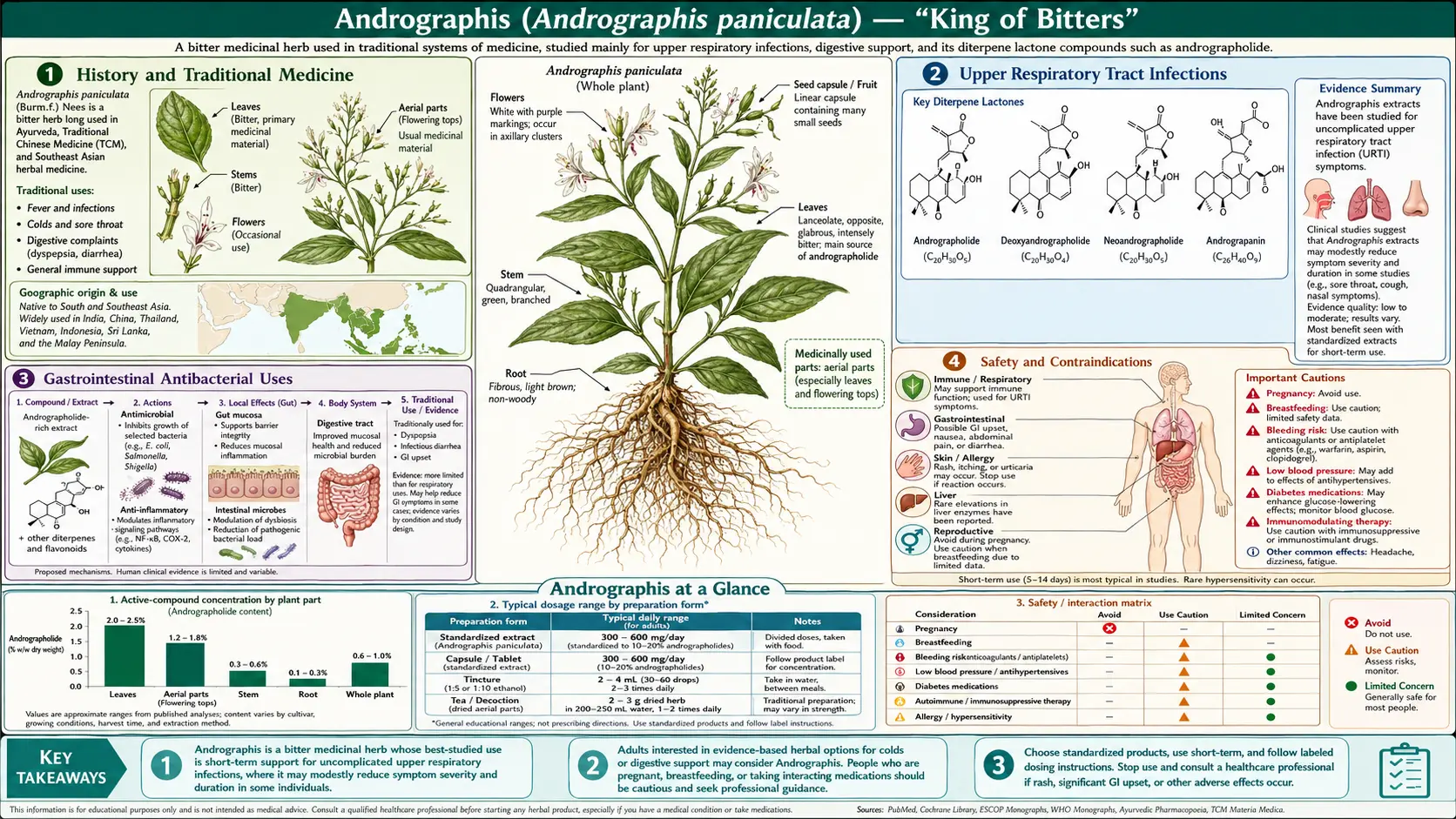
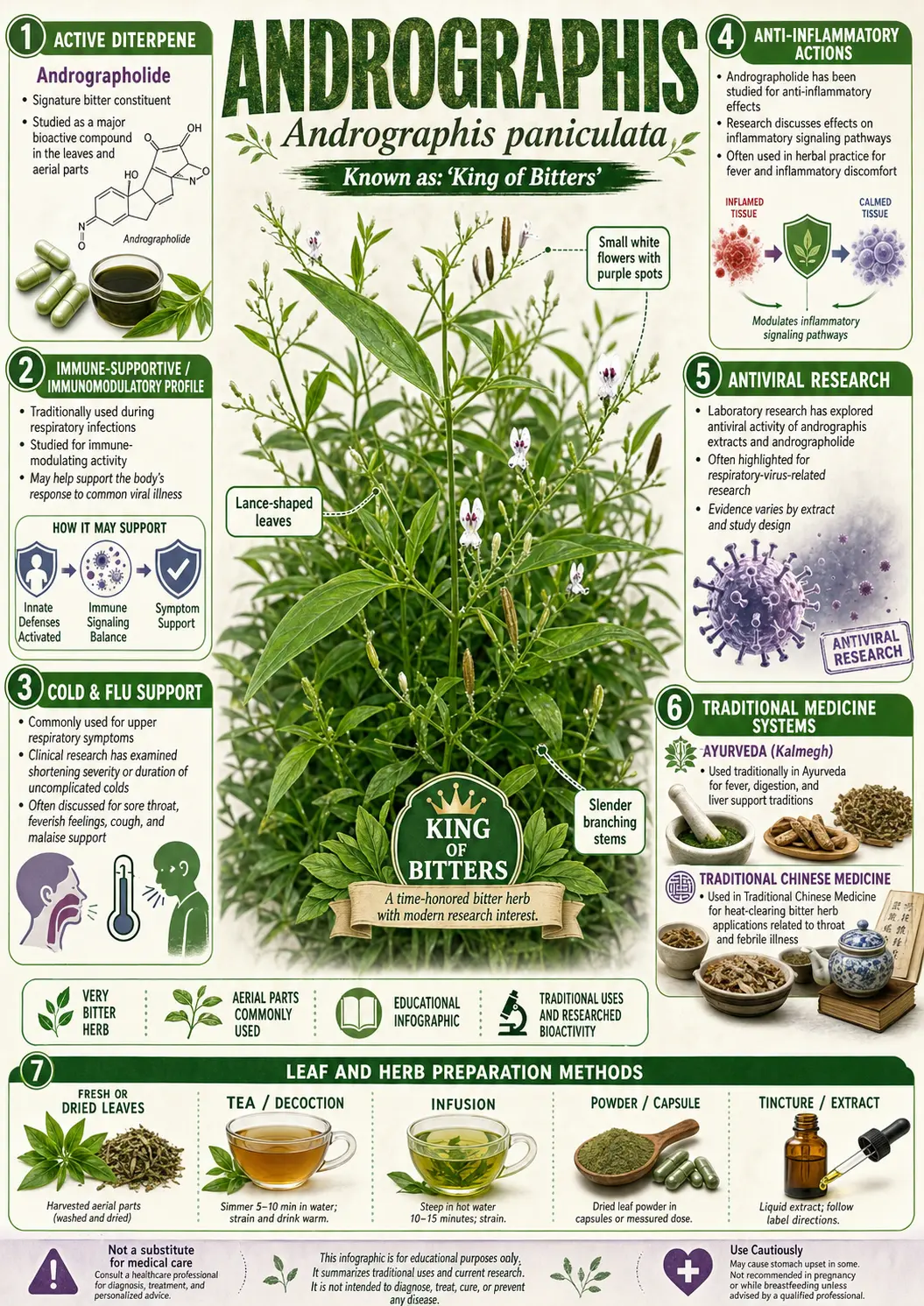
Table of Contents
- History and Traditional Medicine
- Key Antibacterial Compounds
- Mechanism of Antibacterial Action
- Bacteria Targeted
- Research Studies and Clinical Evidence
- Upper Respiratory Tract Infections
- Biofilm Disruption Research
- Enhancing Antibiotic Efficacy
- Immune System Modulation
- Gastrointestinal Antibacterial Uses
- Synergistic Effects
- Other Health Benefits
- Forms and Preparations
- Doses Used in Trials and Traditional Practice
- Safety and Contraindications
- Key Research Papers
- Featured Videos
History and Traditional Medicine
Andrographis paniculata, the intensely bitter “King of Bitters,” has a long, documented place in the traditional medicine of South and Southeast Asia, where it is known as Kalmegh in Ayurveda, Nilavembu in the Siddha tradition, and Chuan Xin Lian in Traditional Chinese Medicine, and used chiefly for fevers, liver complaints, colds, and infections. Its bitter principle, andrographolide, was first isolated and named by the chemist K. Gorter in 1911, the milestone that opened the way from folk remedy to modern laboratory study — the fuller story is told in the dedicated History & Traditional Use article.
Key Antibacterial Compounds
The antibacterial activity of andrographis derives from a rich and complex phytochemistry centered on a class of compounds known as labdane diterpenoids, along with various flavonoids, polyphenols, and xanthones. Research has identified the following primary bioactive constituents responsible for the herb's antimicrobial effects:
Andrographolide
Andrographolide is the principal bioactive compound in andrographis, typically comprising 1-4% of the dried plant by weight, with the highest concentrations found in the leaves. This bicyclic diterpenoid lactone is responsible for the plant's extreme bitterness and serves as the primary marker compound for standardized extracts. Andrographolide has demonstrated broad-spectrum antibacterial activity in numerous in vitro and in vivo studies. Its chemical structure features an alpha-alkylidene gamma-butyrolactone moiety, a key pharmacophore that enables it to interact with multiple bacterial targets simultaneously. Research published in the Journal of Ethnopharmacology has confirmed that andrographolide disrupts bacterial cell membrane integrity, inhibits bacterial enzyme systems, and interferes with biofilm formation pathways. The compound also demonstrates significant anti-quorum sensing activity, disrupting the chemical communication systems that bacteria use to coordinate virulence factor production.
14-Deoxy-11,12-didehydroandrographolide
14-Deoxy-11,12-didehydroandrographolide (commonly abbreviated as 14-deoxyandrographolide) is the second most abundant diterpenoid in andrographis. While structurally similar to andrographolide, it exhibits distinct pharmacological properties, including enhanced activity against certain gram-negative bacteria. Studies published in Phytochemistry have shown that this compound demonstrates particularly strong activity against enteric pathogens, making it a significant contributor to the herb's traditional use in treating gastrointestinal infections. The compound's deoxy configuration at C-14 appears to enhance its lipophilicity, potentially improving its ability to penetrate bacterial cell membranes.
Neoandrographolide
Neoandrographolide is a diterpene glycoside unique to andrographis that exhibits notable antibacterial and anti-inflammatory properties. Unlike andrographolide, neoandrographolide contains a glucose moiety, which influences its pharmacokinetics and tissue distribution. Research in the Journal of Natural Products has demonstrated that neoandrographolide possesses significant activity against both gram-positive and gram-negative bacteria, with a mechanism of action that appears to differ from that of andrographolide. The compound has shown particular promise in reducing inflammatory responses triggered by bacterial infections, suggesting a dual action — directly targeting bacteria while simultaneously modulating the host's inflammatory cascade.
Andrographiside
Andrographiside is another diterpene glycoside found in andrographis that contributes to the plant's overall antibacterial profile. While less potent than andrographolide in direct antibacterial assays, andrographiside demonstrates important synergistic effects when combined with the plant's other bioactive compounds. Research suggests that andrographiside enhances the bioavailability and cellular uptake of andrographolide, effectively potentiating its antibacterial effects. This synergistic relationship helps explain why whole-plant extracts often demonstrate superior antibacterial activity compared to isolated andrographolide alone.
Beyond these primary diterpenoids, andrographis contains numerous flavonoids (including 5-hydroxy-7,8,2',3'-tetramethoxyflavone and 5-hydroxy-7,8-dimethoxyflavanone), polyphenols, and xanthones that contribute to its overall antimicrobial activity through complementary mechanisms. The collective action of these compounds produces what pharmacologists describe as a "phytochemical synergy" — an effect that is greater than the sum of individual compound activities.
Mechanism of Antibacterial Action
Andrographis exerts its antibacterial effects through multiple, interconnected mechanisms that collectively compromise bacterial viability and virulence. This multi-target approach is particularly significant in the context of growing antibiotic resistance, as it makes it far more difficult for bacteria to develop resistance to the herb's effects.
Biofilm Disruption
One of the most clinically relevant mechanisms of andrographis is its ability to disrupt bacterial biofilms. Biofilms are structured communities of bacteria enclosed within a self-produced matrix of extracellular polymeric substances (EPS), including polysaccharides, proteins, and extracellular DNA. Bacteria within biofilms are up to 1,000 times more resistant to antibiotics than their planktonic (free-floating) counterparts, making biofilm-associated infections extremely difficult to treat with conventional antibiotics. Andrographolide has been shown to inhibit the formation of new biofilms by interfering with the initial adhesion of bacteria to surfaces and by suppressing the production of EPS matrix components. Furthermore, it can penetrate and disperse established biofilms, exposing the embedded bacteria to immune attack and restoring their sensitivity to antibiotics.
Quorum Sensing Inhibition
Quorum sensing (QS) is a cell-density-dependent communication system used by bacteria to coordinate gene expression and regulate collective behaviors, including biofilm formation, virulence factor production, and antibiotic resistance mechanisms. Andrographolide has been identified as a potent quorum sensing inhibitor (QSI) that disrupts bacterial communication without directly killing bacteria — an approach known as anti-virulence therapy. Research published in Frontiers in Microbiology has demonstrated that andrographolide interferes with acyl-homoserine lactone (AHL)-mediated quorum sensing in gram-negative bacteria and with autoinducing peptide (AIP)-mediated signaling in gram-positive bacteria. By disrupting quorum sensing, andrographis effectively "disarms" bacteria, reducing their pathogenicity while leaving them more vulnerable to host immune defenses and conventional antibiotics.
Bacterial Virulence Factor Suppression
Beyond disrupting biofilms and quorum sensing, andrographis compounds directly suppress the production and secretion of key bacterial virulence factors. These include toxins, hemolysins, proteases, lipases, and siderophores that bacteria deploy to damage host tissues, evade immune responses, and acquire essential nutrients. Studies have shown that andrographolide reduces the production of alpha-hemolysin and Panton-Valentine leukocidin (PVL) in Staphylococcus aureus, significantly diminishing the bacterium's ability to lyse host cells and evade phagocytic killing. Similarly, andrographolide suppresses the type III secretion system (T3SS) in Pseudomonas aeruginosa, a needle-like apparatus that the bacterium uses to inject toxins directly into host cells.
Synergy with Conventional Antibiotics
Perhaps the most therapeutically promising mechanism is the ability of andrographis compounds to enhance the efficacy of conventional antibiotics. Andrographolide has been shown to increase the permeability of bacterial cell membranes, facilitating greater antibiotic uptake. It also inhibits bacterial efflux pumps — protein complexes that bacteria use to expel antibiotics from their cells, a major mechanism of antibiotic resistance. Synergistic interactions have been documented between andrographolide and multiple antibiotic classes, including beta-lactams, aminoglycosides, fluoroquinolones, and tetracyclines. In some cases, combining andrographolide with antibiotics reduced the minimum inhibitory concentration (MIC) of the antibiotic, potentially allowing lower doses and reducing the risk of antibiotic side effects and resistance development. Laboratory work has tested this: a 2011 study found that a synthetic andrographolide derivative (14-alpha-lipoyl andrographolide) worked synergistically with several antibiotics against biofilm formation by Pseudomonas aeruginosa (PubMed PMID: 21422201), and a 2019 mouse study reported added benefit when andrographolide sulfonate was given with the antibiotic imipenem for Klebsiella pneumoniae pneumonia (PubMed PMID: 31220744). No human trial has tested the combination.
Bacteria Targeted
Andrographis has demonstrated antibacterial activity against a wide spectrum of pathogenic bacteria in laboratory and clinical studies. The following species have been most extensively investigated:
Staphylococcus aureus
Staphylococcus aureus, including methicillin-resistant strains (methicillin-resistant Staphylococcus aureus, MRSA), is one of the bacteria most susceptible to andrographis compounds. Studies published in the Journal of Ethnopharmacology have reported minimum inhibitory concentration values of andrographolide against S. aureus ranging from 15.6 to 125 micrograms per milliliter, depending on the strain and extract preparation. Andrographolide has been shown to inhibit S. aureus biofilm formation by up to 80% at sub-inhibitory concentrations and to reduce the expression of key virulence genes including hla (alpha-hemolysin), sea (staphylococcal enterotoxin A), and agrA (accessory gene regulator). Importantly, andrographis extracts have demonstrated activity against clinical methicillin-resistant Staphylococcus aureus isolates, raising the possibility of adjunctive use in treating drug-resistant staphylococcal infections.
Escherichia coli
Escherichia coli, particularly pathogenic strains causing urinary tract infections, traveler's diarrhea, and neonatal meningitis, is significantly inhibited by andrographis compounds. Research has shown that andrographolide disrupts the outer membrane integrity of E. coli, increasing its permeability and leading to the leakage of intracellular contents. The compound also inhibits the adhesion of uropathogenic E. coli (UPEC) to urinary tract epithelial cells by downregulating the expression of type 1 fimbriae, a major adhesion factor. Studies in Microbial Pathogenesis documented minimum inhibitory concentration values of 31.25 to 250 micrograms per milliliter for various andrographis extract fractions against multiple E. coli strains.
Pseudomonas aeruginosa
Pseudomonas aeruginosa is a notoriously drug-resistant gram-negative bacterium responsible for severe hospital-acquired infections, particularly in immunocompromised patients and those with cystic fibrosis. Andrographis has shown particular promise against P. aeruginosa through its anti-quorum sensing and anti-biofilm activities. Andrographolide has been demonstrated to inhibit the production of pyocyanin, elastase, and rhamnolipid — three major virulence factors of P. aeruginosa — by interfering with the Las and Rhl quorum sensing circuits. While direct bactericidal activity against P. aeruginosa requires relatively high concentrations, the anti-virulence approach at sub-MIC concentrations represents a highly promising therapeutic strategy.
Bacillus subtilis
Bacillus subtilis, a gram-positive spore-forming bacterium, has been consistently shown to be highly susceptible to andrographis extracts. Studies report minimum inhibitory concentration values as low as 7.8 micrograms per milliliter for purified andrographolide against B. subtilis, making it one of the most sensitive organisms tested. The bacterium's relatively simple cell wall structure, compared to gram-negative organisms, appears to facilitate the entry of andrographis diterpenoids. Research in Fitoterapia has demonstrated that andrographis leaf extracts cause significant morphological changes in B. subtilis cells, including cell wall disruption and cytoplasmic leakage.
Salmonella typhimurium
Salmonella typhimurium, a major foodborne pathogen causing gastroenteritis and typhoid-like illness, has been studied with andrographolide mainly in animals. Andrographolide has been shown to modulate the host immune response to Salmonella infection, enhancing macrophage bactericidal activity while reducing excessive inflammation that contributes to tissue damage.
Klebsiella pneumoniae
Klebsiella pneumoniae, an increasingly drug-resistant pathogen causing pneumonia, urinary tract infections, and bloodstream infections, has been the subject of several andrographis studies. Research has demonstrated that andrographolide inhibits the formation of the thick polysaccharide capsule that is a hallmark of virulent K. pneumoniae strains and a key factor in their resistance to phagocytosis and serum killing. Studies published in the Indian Journal of Pharmaceutical Sciences have reported synergistic interactions between andrographis extracts and carbapenems against carbapenem-resistant K. pneumoniae (CRKP), a pathogen classified by the World Health Organization (WHO) as a critical priority for new antibiotic development.
Research Studies and Clinical Evidence
The antibacterial properties of andrographis have been the subject of extensive scientific investigation, spanning in vitro laboratory studies, animal models, and human clinical trials. The antibacterial findings described on this page come from laboratory and animal studies; the human trials concern colds, sore throats and other respiratory infections and are described in the next section.
Upper Respiratory Tract Infections
The most extensively studied clinical application of andrographis is in the treatment and prevention of upper respiratory tract infections (URTIs), including the common cold, pharyngotonsillitis, and sinusitis. This body of clinical evidence represents the strongest support for the therapeutic use of andrographis in modern medicine.
Common Cold Clinical Trials
A 2017 systematic review and meta-analysis published in PLoS ONE (Hu and colleagues) pooled 33 randomized controlled trials (7,175 patients) of andrographis for acute respiratory tract infections. Andrographis, alone or in herbal mixtures, improved cough and sore throat compared with placebo, and improved overall symptoms compared with placebo, usual care and other herbal therapies; compared with usual care it also shortened the duration of cough, sore throat and sick leave. No major side effects were reported, and minor ones were mainly digestive. The authors rated the methodological quality of the trials as overall poor.
A double-blind, placebo-controlled trial published in Phytomedicine (Saxena and colleagues, 2010) gave 223 patients with uncomplicated upper respiratory tract infections either a standardized andrographis extract (200 mg a day) or placebo for five days. Symptom scores were the same in both groups at days 1 and 3; at day 5 every symptom except earache had improved significantly more in the andrographis group, and overall symptom scores fell significantly more than with placebo. Both groups had only a few minor side effects, with no significant difference between them.
Pharyngotonsillitis
A randomized, double-blind trial published in the Journal of the Medical Association of Thailand (Thamlikitkul and colleagues, 1991) enrolled 152 adults with pharyngotonsillitis and gave them acetaminophen (paracetamol), 3 grams a day of andrographis, or 6 grams a day of andrographis for seven days. At day 3, acetaminophen and the 6-gram dose relieved fever and sore throat significantly better than the 3-gram dose; by day 7 the clinical effects did not differ. Importantly, the andrographis group showed faster resolution of tonsillar and pharyngeal inflammation, suggesting an anti-infective mechanism beyond simple symptom relief. Mild, self-limiting side effects occurred in about 20 percent of each group.
Sinusitis
Clinical investigations into andrographis for sinusitis have shown that the herb's anti-inflammatory and mucolytic properties complement its antibacterial action. A pilot study in patients with acute sinusitis found that andrographis extract reduced nasal congestion and facial pain scores while decreasing nasal secretion viscosity. Researchers proposed that andrographolide's ability to inhibit the NF-kB inflammatory pathway, combined with its antibacterial effects against common sinusitis pathogens including S. aureus and Streptococcus pneumoniae, provides a multimodal therapeutic approach.
Andrographis and Siberian Ginseng Combination Studies
A fixed-combination product of a standardized andrographis extract and Eleutherococcus senticosus (Siberian ginseng) extract has been the subject of numerous clinical trials conducted primarily in Sweden and the former Soviet Union. A series of randomized, double-blind, placebo-controlled studies demonstrated that the combination significantly reduced the severity and duration of common cold symptoms and prevented the development of complications such as sinusitis and bronchitis. In a trial involving 185 patients (Gabrielian and colleagues, 2002, Phytomedicine; 95 on the combination and 90 on placebo for five days), the total symptom score improved significantly more with the combination than with placebo, including in the patients with sinusitis; headache, nasal and throat symptoms and general malaise improved most, while cough and eye symptoms did not differ significantly between the groups.
Biofilm Disruption Research
Bacterial biofilms represent one of the most significant challenges in modern medicine, contributing to chronic and recurrent infections, device-related infections, and antibiotic treatment failure. The ability of andrographis to target biofilms at multiple stages of their development has attracted considerable research interest. Andrographolide interfered with the production of polysaccharide intercellular adhesin (PIA), a key component of the staphylococcal biofilm matrix, by downregulating the icaADBC gene operon. This anti-adhesion effect was observed at concentrations well below the minimum inhibitory concentration, indicating that biofilm inhibition occurs through a mechanism distinct from direct bactericidal activity.
Studies on mixed-species biofilms, which more accurately reflect the clinical reality of many chronic infections, have shown that andrographolide disrupts interspecies interactions within these complex microbial communities. Research in Applied and Environmental Microbiology demonstrated that andrographolide reduced the biomass of dual-species biofilms containing S. aureus and Candida albicans by inhibiting the cross-kingdom quorum sensing interactions that stabilize these polymicrobial communities.
The implications of these findings extend to medical device-associated infections. In vitro studies using catheter and implant materials coated with andrographolide have shown significant reductions in bacterial colonization, suggesting potential applications in infection-resistant medical device coatings.
Enhancing Antibiotic Efficacy
The ability of andrographis compounds to potentiate the effects of conventional antibiotics represents one of the most therapeutically significant findings in recent andrographis research. This synergistic potential is especially relevant in the context of the global antibiotic resistance crisis.
Sub-MIC Synergy Studies
Systematic synergy studies using checkerboard and time-kill assays have documented significant interactions between andrographolide and multiple antibiotic classes. Synergistic interactions were observed with ampicillin, oxacillin, gentamicin, and ciprofloxacin against methicillin-resistant Staphylococcus aureus. The most pronounced synergy was with oxacillin, effectively restoring the susceptibility of resistant strains to levels within the therapeutic range.
A 2023 laboratory study in Microbiology Spectrum (Ma and colleagues) examined how andrographolide restores the sensitivity of methicillin-resistant Staphylococcus aureus to beta-lactam antibiotics. Andrographolide bound to the bacterial beta-lactamase enzyme BlaZ and impaired its action, weakened the bacterial cell wall (combined with penicillin G it caused cell-wall roughness and even disintegration, which the same concentration of penicillin G alone did not), and lowered the expression of the resistance genes mecA and blaZ and of the regulator gene sarA. The transcriptional repression of mecA has been attributed to interference with the MecI/MecR1 regulatory system, providing a mechanistic explanation for the restored beta-lactam sensitivity.
Restoring Antibiotic Sensitivity
Beyond synergistic interactions, andrographolide has demonstrated the ability to restore antibiotic sensitivity in resistant bacteria through inhibition of efflux pumps. Bacterial efflux pumps are membrane transport proteins that actively export antibiotics from bacterial cells, reducing intracellular drug concentrations below effective levels. Research published in Journal of Antimicrobial Chemotherapy has shown that andrographolide inhibits the NorA efflux pump in S. aureus and the AcrAB-TolC efflux system in E. coli, two of the most clinically significant efflux-mediated resistance mechanisms. By blocking these pumps, andrographolide increases the intracellular accumulation of antibiotics, restoring their bactericidal activity.
Studies using ethidium bromide efflux assays have confirmed that andrographolide-treated bacteria retain significantly higher levels of intracellular fluorescent compounds, providing direct evidence of efflux pump inhibition. The dual mechanism of action — efflux pump inhibition combined with membrane permeabilization — creates conditions that dramatically increase antibiotic efficacy against otherwise resistant organisms.
Immune System Modulation
The antibacterial effectiveness of andrographis extends beyond direct antimicrobial activity to encompass profound modulation of host immune responses. This immunomodulatory action enhances the body's natural ability to combat bacterial infections and is considered a key component of the herb's therapeutic mechanism.
Phagocytosis Enhancement
Andrographolide has been shown to significantly enhance the phagocytic capacity of macrophages and neutrophils, the frontline cells of innate immunity responsible for engulfing and destroying bacterial pathogens. Research published in International Immunopharmacology demonstrated that andrographolide increases macrophage phagocytosis by up to 40% through activation of the p38 MAPK signaling pathway. The compound also enhances the oxidative burst response of neutrophils, increasing the production of reactive oxygen species (ROS) that kill engulfed bacteria. Studies using peritoneal macrophages from mice treated with andrographolide showed enhanced clearance of E. coli and S. aureus in phagocytosis assays, confirming in vivo relevance.
Cytokine Regulation
One of the most sophisticated aspects of andrographis immunology is its bidirectional regulation of cytokine production. During the early stages of infection, andrographolide enhances the production of pro-inflammatory cytokines including interleukin-2 (IL-2) and interferon-gamma (IFN-gamma), promoting robust immune activation against invading pathogens. However, during the later stages of infection and in conditions of excessive inflammation, andrographolide suppresses the overproduction of pro-inflammatory cytokines including tumor necrosis factor-alpha, interleukin-1-beta, and interleukin-6 (IL-6) by inhibiting the NF-kB signaling pathway. This context-dependent immunomodulation helps prevent the tissue damage caused by excessive inflammatory responses while maintaining effective antimicrobial immunity.
Natural Killer Cell Activation
Andrographolide activates natural killer (NK) cells, a critical component of innate immunity that plays an important role in early defense against intracellular bacterial pathogens. Research published in Planta Medica showed that andrographolide enhanced natural killer cell cytotoxic activity by upregulating the expression of activating receptors (NKG2D and NKp46) and increasing the production of perforin and granzymes. Natural killer cells activated by andrographolide demonstrated enhanced killing of cells infected with intracellular bacteria including Salmonella and Listeria species, suggesting a role in combating infections that evade extracellular immune defenses.
Additional studies have shown that andrographolide enhances the maturation and antigen-presenting capacity of dendritic cells, promoting more effective adaptive immune responses to bacterial infections. This comprehensive immune modulation — spanning innate and adaptive immunity — helps explain the clinical efficacy of andrographis in treating infections that may not be fully accounted for by its direct antibacterial activity alone.
Gastrointestinal Antibacterial Uses
The use of andrographis for gastrointestinal infections has deep roots in Ayurvedic and Traditional Chinese Medicine, where it has been a primary remedy for diarrhea, dysentery, and intestinal parasites for centuries. Modern research has begun to elucidate the mechanisms underlying these traditional applications.
In Ayurvedic practice, Kalmegh is classified among the principal herbs for treating "atisara" (diarrhea) and "pravahika" (dysentery). The herb's extreme bitterness was traditionally believed to strengthen "agni" (digestive fire) and destroy "ama" (toxins) in the gastrointestinal tract. Ayurvedic practitioners continue to prescribe andrographis decoctions and powders for acute infectious diarrhea, and the herb features prominently in several classical Ayurvedic formulations for gastrointestinal complaints.
Modern studies have confirmed that andrographis extracts demonstrate significant activity against common gastrointestinal pathogens. Research published in the Indian Journal of Experimental Biology showed that ethanol extracts of andrographis leaves inhibited the growth of enterotoxigenic E. coli (ETEC) and Vibrio cholerae at concentrations achievable through oral dosing. The extracts also reduced cholera toxin production by V. cholerae in a dose-dependent manner, suggesting both bacteriostatic and anti-virulence mechanisms.
Studies on Helicobacter pylori, the bacterium responsible for gastric ulcers and a significant risk factor for gastric cancer, have shown that andrographolide inhibits H. pylori growth and suppresses the bacterium's urease activity — a key virulence factor that enables colonization of the acidic gastric environment. Research in the World Journal of Gastroenterology demonstrated that andrographolide also protects gastric epithelial cells from H. pylori-induced apoptosis, providing a cytoprotective effect alongside its antibacterial action.
Animal studies using mouse models of bacterial enteritis have shown that oral administration of andrographis extract reduces intestinal bacterial load, decreases inflammatory cell infiltration in the intestinal mucosa, and restores normal intestinal barrier function. The herb's anti-secretory properties — its ability to reduce excessive fluid secretion in the intestinal lumen — complement its antibacterial effects in the treatment of secretory diarrhea.
Synergistic Effects
With Siberian Ginseng
The combination of andrographis extract with Eleutherococcus senticosus (Siberian ginseng) in a fixed-combination formulation represents one of the most well-studied herbal combinations for respiratory infections. Siberian ginseng contributes adaptogenic properties, enhancing the body's non-specific resistance to stress and infection. The formulation pairs these with the direct antibacterial and immune-stimulating effects of andrographis, with the aim of activity beyond what either herb would give alone.
Pharmacological studies suggest that Siberian ginseng's eleutherosides enhance the absorption and bioavailability of andrographolide, potentially by modulating intestinal transporters and first-pass hepatic metabolism. Additionally, Siberian ginseng's immunostimulatory effects, mediated through polysaccharides and eleutherosides, complement and amplify the immunomodulatory actions of andrographolide. Clinical trials of the andrographis and Siberian ginseng combination have consistently shown superior outcomes compared to andrographis alone.
With Conventional Antibiotics
As detailed in the section on enhancing antibiotic efficacy, andrographis demonstrates significant synergistic interactions with multiple classes of conventional antibiotics. The clinical implications of these findings are substantial. Combination therapy with andrographis and conventional antibiotics could potentially allow lower antibiotic doses to be used, reducing dose-dependent side effects while maintaining or enhancing antibacterial efficacy. This approach could also extend the useful life of existing antibiotics by reducing the selective pressure that drives resistance development.
The combinations reported so far come from laboratory and animal studies (see the section on enhancing antibiotic efficacy above).
- Andrographolide + beta-lactams (ampicillin, oxacillin) against methicillin-resistant Staphylococcus aureus: 8- to 16-fold minimum inhibitory concentration reductions
- Andrographolide + aminoglycosides (gentamicin) against E. coli and P. aeruginosa: 4- to 8-fold minimum inhibitory concentration reductions
- Andrographolide + fluoroquinolones (ciprofloxacin) against resistant S. aureus: 4-fold minimum inhibitory concentration reduction
- Andrographolide + carbapenems (meropenem) against carbapenem-resistant K. pneumoniae: 4-fold minimum inhibitory concentration reduction
While these synergistic effects have been reported in laboratory and animal studies, clinical trials evaluating the combined use of andrographis with conventional antibiotics in human patients are still needed to establish dosing protocols, safety profiles, and clinical efficacy in real-world treatment scenarios.
Other Health Benefits
While this article focuses on the antibacterial properties of andrographis, the herb possesses a remarkably diverse pharmacological profile with well-documented benefits across multiple organ systems:
- Anti-inflammatory: Andrographolide is a potent inhibitor of the NF-kB inflammatory signaling pathway, reducing the production of pro-inflammatory mediators including prostaglandins, leukotrienes, and nitric oxide. Clinical studies have demonstrated efficacy in reducing inflammatory markers in conditions including rheumatoid arthritis and ulcerative colitis. A 2009 trial published in Clinical Rheumatology (Burgos and colleagues) gave 60 people with active rheumatoid arthritis tablets of andrographis extract (30% total andrographolides) or placebo three times a day for 14 weeks. Joint pain, the main outcome, fell more with andrographis than with placebo, but the difference was not statistically significant; the numbers of tender and swollen joints fell significantly within the andrographis group, and the authors called for a larger and longer trial.
- Hepatoprotective: Andrographis has been shown to protect the liver against damage from toxins, drugs, alcohol, and infections. The herb enhances the activity of hepatic antioxidant enzymes (superoxide dismutase, catalase, glutathione peroxidase) and promotes liver cell regeneration. In Ayurvedic medicine, andrographis has long been used to treat jaundice and liver disorders, and modern studies have confirmed its ability to normalize elevated liver enzyme levels in patients with drug-induced hepatotoxicity.
- Antiviral: Beyond its antibacterial properties, andrographis demonstrates significant antiviral activity against multiple viruses including influenza, human immunodeficiency virus (HIV), hepatitis B and C, herpes simplex, and Chikungunya virus. Andrographolide has been shown to inhibit viral replication by interfering with viral protease enzymes and by activating host antiviral defense mechanisms including the interferon pathway.
- Antipyretic: Traditional use of andrographis as a fever-reducing agent has been validated by modern pharmacological studies showing that andrographolide reduces body temperature in febrile states by inhibiting prostaglandin E2 synthesis in the hypothalamus. Clinical trials have confirmed antipyretic efficacy comparable to acetaminophen (paracetamol) in patients with pharyngotonsillitis and other febrile illnesses.
- Antimalarial: Andrographis has been used traditionally in several malaria-endemic regions for the treatment and prevention of malaria. Laboratory studies have confirmed that andrographolide and its derivatives inhibit the growth of Plasmodium falciparum, the parasite responsible for the most severe form of malaria. While the herb alone is not sufficiently potent to replace artemisinin-based combination therapies, it shows promise as an adjunctive agent, and analogs of andrographolide with enhanced antimalarial activity are under development.
Forms and Preparations
Andrographis is available in numerous forms, each with its own advantages regarding bioavailability, convenience, and suitability for different therapeutic applications:
- Standardized extract: The most commonly used and best-studied form for therapeutic purposes. Quality standardized extracts typically contain 10-30% andrographolide, with most clinical trials using extracts standardized to contain at least 20% andrographolide. Standardization ensures consistent dosing and reproducible therapeutic effects. Standardized extracts are sold under several brand names.
- Powder (Churna): Whole-herb powder retains the full spectrum of bioactive compounds and reflects the traditional Ayurvedic preparation method. The powder is intensely bitter and is typically mixed with honey or taken in capsules. Ayurvedic practitioners argue that whole-herb preparations offer superior therapeutic effects due to the synergistic interactions among the plant's many bioactive compounds, though the andrographolide content is lower and more variable than in standardized extracts.
- Tincture: Alcohol-based tinctures (typically 1:5 in 45-60% ethanol) provide good extraction of the lipophilic diterpenoids and offer rapid absorption. Tinctures allow flexible dosing and have a long shelf life. However, the alcohol content may be unsuitable for some patients, and standardization to specific andrographolide levels is less common than with solid extracts.
- Capsules and tablets: Commercially available capsules and tablets typically contain either standardized extract or whole-herb powder. Enteric-coated preparations may reduce the intense bitterness experienced with conventional formulations and protect acid-sensitive compounds from degradation in the stomach. Some manufacturers offer enhanced-bioavailability formulations using cyclodextrin inclusion complexes or phytosomal delivery systems.
- Traditional decoction (Kashayam): The traditional preparation involves boiling dried andrographis herb in water (typically 1 part herb to 16 parts water, reduced to one-quarter volume). This decoction extracts primarily the water-soluble compounds and yields lower andrographolide content than alcohol-based preparations. However, traditional practitioners maintain that the decoction form is optimal for gastrointestinal infections and liver disorders, as it allows direct contact of the active compounds with the digestive tract mucosa. In the Siddha tradition, the Nilavembu Kudineer decoction combines andrographis with eight other herbs for enhanced therapeutic effects.
Doses Used in Trials and Traditional Practice
Doses of andrographis depend on the form of preparation, the standardization level, and the clinical indication. All dosages below refer to adult use. Extracts are standardized to their andrographolide content, which is regarded as the primary determinant of therapeutic activity.
Acute Infections (Short-Term Use, 7-14 Days)
- Standardized extract (20-30% andrographolide): 200-400 mg three times daily, providing 120-240 mg of total andrographolide per day. Clinical trials for upper respiratory infections have typically used 48-60 mg andrographolide daily, divided into three doses.
- Whole-herb powder: 1-3 grams three times daily.
- Tincture (1:5): 2-5 mL three times daily.
- Traditional decoction: 30-60 mL of concentrated decoction two to three times daily.
- Andrographis and Siberian ginseng combination tablets: The standard dose used in clinical trials is 4 tablets three times daily (each tablet containing 85 mg standardized andrographis extract).
Maintenance and Preventive Dosing
- Standardized extract: 100-200 mg once or twice daily, providing 40-80 mg of total andrographolide per day.
- Whole-herb powder: 500 mg to 1 gram twice daily.
- Tincture: 1-2 mL twice daily.
For acute upper respiratory infections, andrographis is taken as early as possible after symptoms begin — the aim being within 36-48 hours. Clinical studies suggest that andrographis is most effective when started early in the course of illness. Maintenance dosing is used by some people during cold and flu season for prevention; there is little safety information on use beyond 8-12 weeks.
The timing of doses in relation to meals can affect absorption. Taking andrographis with food may reduce gastrointestinal irritation but can also decrease the rate of andrographolide absorption. For maximal absorption, the extract may be taken between meals with water; people who get stomach upset often take it with a light meal instead.
Safety and Contraindications
Andrographis is generally considered safe when used at recommended doses for short-term periods (up to 12 weeks). In clinical trials of short courses, side effects were mostly mild; in the 2017 review of 33 trials they were mainly digestive. Regulators have been more cautious. In 2013 the European Medicines Agency's Committee on Herbal Medicinal Products concluded that a European herbal monograph on andrographis leaf “cannot be established at present”, because the legal requirements for recognised efficacy with an acceptable level of safety, or for a long enough period of traditional use, were not fulfilled. Serious allergic reactions are described below. The main precautions and contraindications reported are:
- Extreme bitterness: The intensely bitter taste of andrographis is the most common complaint and can cause nausea, vomiting, and appetite loss in some individuals. Encapsulated preparations, enteric-coated tablets, and honey-mixed formulations can help mitigate this issue. Some patients develop an aversion to the taste over time, limiting compliance with prolonged treatment regimens.
- Pregnancy: Andrographis is traditionally treated as contraindicated during pregnancy. Animal studies have demonstrated that andrographolide has anti-fertility and abortifacient effects, including inhibition of embryo implantation and induction of uterine contractions. How it would act is not settled: a 1999 rat study (Panossian and colleagues) found that andrographis leaf extract given during the first 19 days of pregnancy, at 30 to 300 times the human daily dose, had no effect on the raised blood level of progesterone, the hormone that maintains pregnancy. The precaution covers all forms of the herb and applies to women who are pregnant or planning to become pregnant.
- Autoimmune conditions: Due to its potent immunomodulatory effects, andrographis may theoretically exacerbate autoimmune conditions including lupus, rheumatoid arthritis, multiple sclerosis, and type 1 diabetes by further stimulating an already overactive immune system. The concern is theoretical, based on the herb's immune-stimulating effects, while some studies have shown anti-inflammatory benefits in rheumatoid arthritis.
- Blood thinners (anticoagulant and antiplatelet medications): Andrographolide has demonstrated antiplatelet and anticoagulant properties in laboratory studies, including inhibition of platelet activating factor (PAF) and thromboxane A2 synthesis. Concurrent use with warfarin, heparin, aspirin, clopidogrel, or other anticoagulant or antiplatelet medications may increase the risk of bleeding. The same antiplatelet effect is the reason for the usual precaution of stopping the herb at least two weeks before planned surgery.
- Fertility concerns: Beyond its effects on pregnancy, andrographis may affect fertility in both men and women. Animal studies have shown that high-dose andrographolide can reduce sperm count and motility in male rats and disrupt the estrous cycle in female rats. Human reproductive toxicity has not been established at typical therapeutic doses; these animal findings are the reason for caution among couples actively trying to conceive.
- Blood pressure medications: Andrographis has been shown to lower blood pressure in both animal and human studies. Concurrent use with antihypertensive medications (including angiotensin-converting enzyme inhibitors (ACE inhibitors), angiotensin receptor blockers, calcium channel blockers, and beta-blockers) may produce additive hypotensive effects, potentially causing dizziness, lightheadedness, or fainting. Close blood pressure checks and dose adjustments are the measures used when the two are combined.
Additional precautions include potential interactions with immunosuppressant medications (andrographis may counteract their effects), liver-metabolized drugs (andrographolide may affect cytochrome P450 enzyme activity), and hypoglycemic agents (additive blood sugar lowering effects). Serious allergic reactions have been reported. Allergic reactions, while rare, have been reported, particularly in individuals with known allergies to plants in the Acanthaceae family. Thai national drug-safety monitoring data from 2001 to 2012 (Suwankesawong and colleagues, 2014) held 106 reports of allergic-type reactions in which andrographis was the only suspected cause; 88 percent of these people had no previously documented drug allergy. Eighteen reports were serious, 16 of them needing hospital care, and 13 reports described critical reactions: anaphylactic shock (5 cases), anaphylactic reactions (4) and angioedema, a fast swelling of the face, lips or throat (4). Symptoms began between 5 minutes and 1 day after a dose, at doses from 352 mg to 1,750 mg. In Australia, as summarised by pharmacologist Ian Musgrave (The Conversation, April 2026, republished in Medicine Today), the medicines regulator (the Therapeutic Goods Administration, TGA) has required a label warning that andrographis may cause allergic reactions in some people since a roll-out between December 2019 and May 2020; it received a report in June 2024 of a death from anaphylaxis after taking andrographis, and it has proposed removing andrographis from its list of low-risk ingredients permitted in listed medicines. Swelling of the lips, tongue or throat, wheezing, trouble breathing, a widespread rash or fainting soon after a dose are signs of anaphylaxis, which hospitals treat as an emergency.
Key Research Papers
- Akbar S. Andrographis paniculata: A Review of Pharmacological Activities and Clinical Effects. Alternative Medicine Review. 2011;16(1):66-77.
- Burgos RA, Hancke JL, Bertoglio JC, Aguirre V, Arriagada S, Calvo M, Cáceres DD. Efficacy of an Andrographis paniculata composition for the relief of rheumatoid arthritis symptoms: a prospective randomized placebo-controlled trial. Clinical Rheumatology. 2009;28(8):931-946. PubMed PMID: 19408036
- Coon JT, Ernst E. Andrographis paniculata in the Treatment of Upper Respiratory Tract Infections: A Systematic Review of Safety and Efficacy. Planta Medica. 2004;70(4):293-298.
- European Medicines Agency, Committee on Herbal Medicinal Products. Public statement on Andrographis paniculata Nees, folium (EMA/HMPC/709282/2012). 17 September 2013. EMA public statement (PDF)
- Gabrielian ES, Shukarian AK, Goukasova GI, Chandanian GL, Panossian AG, Wikman G, Wagner H. A double blind, placebo-controlled study of Andrographis paniculata fixed combination Kan Jang in the treatment of acute upper respiratory tract infections including sinusitis. Phytomedicine. 2002;9(7):589-597. PubMed PMID: 12487322
- Hu XY, Wu RH, Logue M, et al. Andrographis paniculata (Chuan Xin Lian) for Symptomatic Relief of Acute Respiratory Tract Infections in Adults and Children: A Systematic Review and Meta-Analysis. PLoS ONE. 2017;12(8):e0181780.
- Jayakumar T, Hsieh CY, Lee JJ, Sheu JR. Experimental and Clinical Pharmacology of Andrographis paniculata and Its Major Bioactive Phytoconstituent Andrographolide. Evidence-Based Complementary and Alternative Medicine. 2013;2013:846740.
- Lim JC, Chan TK, Ng DS, Sagineedu SR, Stanslas J, Wong WS. Andrographolide and its analogues: versatile bioactive molecules for combating inflammation and cancer. Clinical and Experimental Pharmacology and Physiology. 2012;39(3):300-310. PubMed PMID: 22017767
- Ma Q, Wang G, Li N, Wang X, Kang X, Mao Y, Wang G. Insights into the Effects and Mechanism of Andrographolide-Mediated Recovery of Susceptibility of Methicillin-Resistant Staphylococcus aureus to β-Lactam Antibiotics. Microbiology Spectrum. 2023;11(1):e0297822. PubMed PMID: 36602386
- Musgrave I. What is andrographis, the cold and flu ingredient the TGA says can be fatal? The Conversation, 10 April 2026; republished in Medicine Today. Medicine Today article
- Melchior J, Palm S, Wikman G. Controlled Clinical Study of Standardized Andrographis paniculata Extract in Common Cold: A Pilot Trial. Phytomedicine. 1996;3(4):315-318.
- Panossian A, Kochikian A, Gabrielian E, Muradian R, Stepanian H, Arsenian F, Wagner H. Effect of Andrographis paniculata extract on progesterone in blood plasma of pregnant rats. Phytomedicine. 1999;6(3):157-161. PubMed PMID: 10439479
- Poolsup N, Suthisisang C, Prathanturarug S, et al. Andrographis paniculata in the Symptomatic Treatment of Uncomplicated Upper Respiratory Tract Infection: Systematic Review of Randomized Controlled Trials. Journal of Clinical Pharmacy and Therapeutics. 2004;29(1):37-45.
- Rajagopal S, Kumar RA, Deevi DS, et al. Andrographolide, a Potential Cancer Therapeutic Agent Isolated from Andrographis paniculata. Journal of Experimental Therapeutics and Oncology. 2003;3(3):147-158.
- Sareer O, Ahmad S, Umar S. Andrographis paniculata: A Critical Appraisal of Extraction, Isolation, and Quantification of Andrographolide and Other Active Constituents. Natural Product Research. 2014;28(23):2081-2101.
- Saxena RC, Singh R, Kumar P, et al. A Randomized Double Blind Placebo Controlled Clinical Evaluation of Extract of Andrographis paniculata (KalmCold) in Patients with Uncomplicated Upper Respiratory Tract Infection. Phytomedicine. 2010;17(3-4):178-185.
- Singha PK, Roy S, Dey S. Antimicrobial Activity of Andrographis paniculata. Fitoterapia. 2003;74(7-8):692-694.
- Suwankesawong W, Saokaew S, Permsuwan U, Chaiyakunapruk N. Characterization of hypersensitivity reactions reported among Andrographis paniculata users in Thailand using Health Product Vigilance Center (HPVC) database. BMC Complementary and Alternative Medicine. 2014;14:515. PubMed PMID: 25539642
- Tan WSD, Liao W, Zhou S, Wong WSF. Is There a Future for Andrographolide to Be an Anti-Inflammatory Drug? Deciphering Its Major Mechanisms of Action. Biochemical Pharmacology. 2017;139:71-81.
- Thamlikitkul V, Dechatiwongse T, Theerapong S, Chantrakul C, Boonroj P, Punkrut W, Ekpalakorn W, Boontaeng N, Taechaiya S, Petcharoen S, et al. Efficacy of Andrographis paniculata, Nees for pharyngotonsillitis in adults. Journal of the Medical Association of Thailand. 1991;74(10):437-442. PubMed PMID: 1797953
- Wangchuk P, Keller PA, Pyne SG, et al. Evaluation of an Ethnopharmacologically Selected Bhutanese Medicinal Plants for Their Major Classes of Phytochemicals and Biological Activities. Journal of Ethnopharmacology. 2011;137(1):730-742.
- World Health Organization. WHO Monographs on Selected Medicinal Plants, Volume 2: Herba Andrographidis. Geneva: WHO; 2002:12-24.
PubMed Topic Searches
The following PubMed topic searches aggregate the peer-reviewed literature underpinning the claims above. Each link opens a live PubMed query so the result set stays current as new research is published.
- PubMed: Upper respiratory infection
- PubMed: Andrographolide anti-inflammatory
- PubMed: Common cold randomized trial
- PubMed: Influenza antiviral
- PubMed: Andrographolide cancer apoptosis
- PubMed: Ulcerative colitis
- PubMed: Rheumatoid arthritis
- PubMed: Hepatoprotective
- PubMed: Diabetes and glycemic control
- PubMed: Systematic review and meta-analysis
- PubMed: Pharmacokinetics and bioavailability
Connections
- All Herbs
- Andrographis Benefits Deep Dive
- Influenza
- Immune Boosting
- Echinacea
- Turmeric
- Vitamin C
- Vitamin D3
- Japanese Knotweed
- Elderberry
- Milk Thistle
- Sinusitis
- Ginseng
- Arthritis
- Urinary Tract Infections
- Staphylococcus Aureus
- Pneumonia
- Lyme Disease
- Escherichia Coli
- Tuberculosis
- Conditions on this site that reference this page: Bacillus subtilis · Klebsiella pneumoniae · Pseudomonas aeruginosa in Cystic Fibrosis Lung Infections · Multidrug Resistance and Novel Therapies for Pseudomonas · Pseudomonas aeruginosa · Salmonella typhimurium · Psoriasis · Crohn's Disease