⚠ Evidence warning: Clinical trials or other evidence do not support the claims that overnight oats keep more resistant starch and give lower blood glucose responses, about 10–20% lower by continuous glucose monitor data, than hot-cooked oats, and that an overnight-oats serving gives a flat glucose curve in most metabolically healthy adults. This page keeps it as a report of what people, websites or other media say.
Oats: Steel-Cut vs Rolled
The oat-processing spectrum runs from intact whole groats (uncut whole kernels) through steel-cut (groats chopped into 2–3 pieces), rolled "old-fashioned" (steamed and pressed between rollers into thin flakes), quick-cooking rolled (smaller flakes, more steaming), and instant (fully pre-cooked, finely milled, dried). Each step shortens cooking time and increases convenience but also degrades the molecular weight of the beta-glucan polymer, gelatinizes more starch, increases the glycemic index, reduces satiety, and progressively eliminates the cholesterol-lowering and glycemic-control benefits that make oats nutritionally distinctive. The choice between steel-cut and rolled is largely a convenience-versus-time trade-off (both retain most benefits); the choice between rolled and instant is a benefits-versus-convenience trade-off where the convenience costs essentially all of the metabolic benefit. This page maps the processing spectrum step by step, the nutritional consequences of each, the cooking-time and ratio trade-offs, the sourcing concerns (glyphosate residue, gluten cross-contamination), and how each oat form fits different uses.
Table of Contents
- The Full Processing Spectrum — From Groat to Instant
- Nutritional Comparison Across Forms
- Cooking Time and Ratio Trade-offs
- Overnight Oats as a Convenience Compromise
- Oat Bran — The Concentrated Beta-Glucan Source
- Glyphosate Residue in Conventional and Organic Oats
- Gluten Cross-Contamination and Certified Gluten-Free Oats
- How Each Oat Form Fits Different Uses
- Cost Per Serving Comparison
- Storage and Rancidity
- Cautions
- Key Research Papers
- Connections
- Featured Videos
The Full Processing Spectrum — From Groat to Instant
All oat products start with the same agricultural raw material: the harvested oat seed (called the "groat" once the inedible outer hull has been removed). The groat consists of three layers: the outer bran (rich in beta-glucan and most of the avenanthramides), the starchy endosperm (carbohydrate and protein), and the germ (lipids and vitamins). The differences between oat product forms reflect different sequences of mechanical processing applied to the groat:
- Whole oat groats — the intact dehulled kernel, with no further processing. Cooks in 50–60 minutes (or overnight in a slow cooker). Texture is chewy, nutty, distinctly grain-like. Found in bulk bins, health-food stores, and some specialty grocers. The least processed and slowest-cooking form.
- Steel-cut oats (also called Irish oats or pinhead oats) — groats chopped into 2–3 pieces by passing through steel blades. This produces a smaller particle that cooks faster but retains most of the cell-wall integrity. Cooks in 20–30 minutes. Texture is chewy and nutty. The standard "high-end" oat for serious porridge.
- Scottish oats — groats ground (rather than cut) into coarse uneven flour. Faster-cooking than steel-cut (10–15 minutes) but more starchy and porridge-like in texture. Less common in U.S. markets.
- Rolled oats (old-fashioned, regular) — groats steamed (typically at 215–220 deg F for several minutes to soften and partially gelatinize), then pressed flat between heavy steel rollers into thin flakes (~0.5 mm thick). Cooks in 5–10 minutes on the stovetop. The standard everyday oat form in U.S. and Canadian markets.
- Quick-cooking rolled oats — same process as old-fashioned but with thinner rolling and longer steaming, producing smaller, thinner flakes that cook in 2–3 minutes.
- Instant oats — pre-cooked rolled oats that have been fully gelatinized in steam, then dried, often with additional fine milling and sometimes pre-treatment with alpha-amylase enzymes. Single-serve packets typically include added sugar, salt, dehydrated fruit, and flavorings. Re-hydrate in 30–60 seconds with hot water or 1–2 minutes in the microwave.
- Oat flour — finely ground rolled oats or groats. Used in baking. The fineness of grind determines glycemic behavior — coarsely ground oat flour retains some structural integrity; finely ground oat flour behaves nearly identically to refined wheat flour from a glycemic standpoint.
- Oat bran — isolated outer layers of the groat, separated by sieving from the endosperm. Contains 2–3 times the beta-glucan concentration of the whole groat. Cooks in 1–3 minutes. Excellent for fortifying other oat preparations or hot cereals.
- Steel-cut quick-cooking — a hybrid product (a recent innovation, sold as quick-cooking steel-cut oats) that steam-treats steel-cut oats to reduce cooking time to ~5 minutes while preserving much of the texture. It sits between steel-cut and rolled oats in both speed and structure.
Each processing step from whole groat downward represents a trade-off — faster cooking, smaller particle, more gelatinized starch, lower glycemic-control benefit, lower satiety. The first big step (groat to steel-cut) costs essentially nothing nutritionally. The second big step (rolled to instant) costs nearly everything.
Nutritional Comparison Across Forms
Per typical cooked serving (1 cup cooked, ~40 g dry weight equivalent), nutritional values across forms:
- Calories: approximately 150–160 across all forms (the calorie content of oat groats is conserved through processing).
- Carbohydrate: approximately 27–30 g across all forms.
- Dietary fiber: approximately 4 g across most whole-form types; instant single-serve packets often have slightly less due to added sugar diluting fiber per serving.
- Beta-glucan (soluble fiber sub-component): approximately 2 g for whole groats, steel-cut, rolled old-fashioned; approximately 1.5–1.8 g for quick-cooking rolled; approximately 1.5 g labeled for instant (but at substantially degraded molecular weight and therefore much-reduced functional viscosity).
- Protein: approximately 5–6 g across all forms.
- Fat: approximately 2.5–3 g across all forms.
- Glycemic index: 45 (whole groats), 53–55 (steel-cut), 55–58 (rolled old-fashioned), 65–72 (quick-cooking rolled), 79–83 (instant).
- Satiety index (Holt 1995): oat porridge from old-fashioned rolled scored 209 on the satiety index (white bread = 100), the second-highest among 38 foods tested. Instant oatmeal would score substantially lower, though precise figures are not available in the same standardized format.
The macronutrient composition is essentially identical across forms; the differences are entirely in the bioavailability and kinetics of carbohydrate absorption and the functional viscosity of the soluble fiber.
"Viscosity" means how thick and slow-moving the beta-glucan makes the food once it is wet in the gut. Long, unbroken beta-glucan chains (high molecular weight) make a thick gel; chains broken by processing make a thin one. A 2009 Canadian study (Regand and colleagues) made four foods that each held the same 4 g of oat beta-glucan — crisp bread, granola, porridge and pasta — and measured blood sugar in volunteers after each. Porridge and granola kept their beta-glucan long and thick and did the most to flatten the blood-sugar peak; in the bread and pasta the beta-glucan was broken down and did less (the pastas still gave the lowest peaks of all, as pasta is known to). Across these foods and earlier data, 73% of beta-glucan's effect on the blood-sugar peak was explained by chain length multiplied by the amount dissolved. A 2010 study from the same group (Tosh and colleagues) showed the same thing in the lab: when harsher processing of an oat bran cereal shortened the beta-glucan from 1,930,000 to 251,000 g/mol, the thickness of the digested extract fell from 2,900 to 131 mPa·s, and the oat cell walls broke apart.
Cooking Time and Ratio Trade-offs
Typical cooking ratios and times:
- Whole oat groats: 1 part oats to 3 parts water; bring to boil, reduce to low simmer, cover, cook 50–60 min. Or 8 hours in slow cooker on low. Yields chewy, distinctly grain-like texture.
- Steel-cut oats: 1 part oats to 3–4 parts water; bring to boil, reduce to medium-low simmer, stir occasionally, cook 20–30 min. Can be sped up by overnight soaking (reduces cook time to ~10 min) or by pressure cooker (3–5 min at high pressure plus natural release).
- Rolled oats (old-fashioned): 1 part oats to 2 parts water/milk; bring liquid to boil, add oats, simmer 5–7 min stirring occasionally. Yields creamy porridge.
- Quick-cooking rolled oats: same ratio as old-fashioned, but cook 2–3 min. Yields softer, more uniform porridge.
- Instant oats: packet directions typically call for adding 2/3 cup hot water and stirring; some require microwaving 30–60 sec. Yields very soft, almost creamy texture.
Time-saving tips for steel-cut without sacrificing texture:
- Overnight soak: combine steel-cut oats with 4x water in a pot, cover, leave overnight. In the morning, the oats have absorbed most of the water and softened; cook 10 min to finish.
- Batch cook on Sunday: make a full week of steel-cut oats in one ~30 min session, portion into glass containers, refrigerate. Reheat with a splash of water/milk in 1–2 min on stovetop or 30 sec in microwave.
- Pressure cooker / electric multicooker: 1 part steel-cut to 3 parts water, 3 min on high pressure, 10 min natural release. Total active time ~5 min.
- Pre-toast the steel-cut in a dry pan for 2 min before adding water — produces a nuttier flavor without changing cook time.
Overnight Oats as a Convenience Compromise
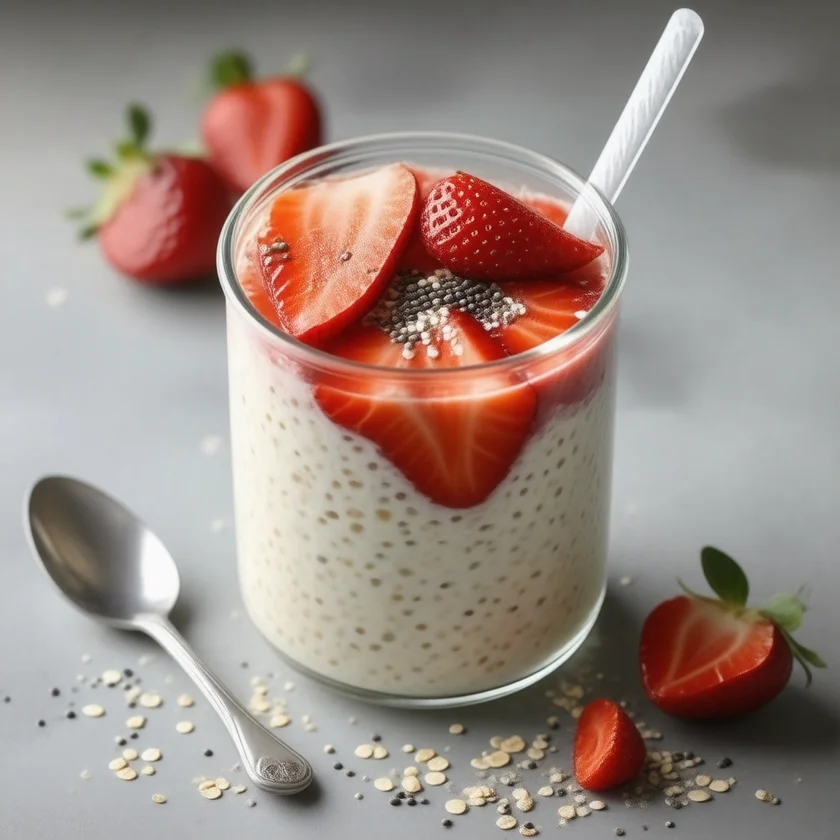
Overnight oats — uncooked rolled oats soaked in liquid (typically milk, yogurt, or plant milk) overnight in the refrigerator — have become a popular compromise between the convenience of instant oats and the structure-preserving benefits of whole-form oats. The cold soaking gradually hydrates the oats without gelatinizing the starch, producing a creamy texture that is ready to eat from the refrigerator with no cooking required. The metabolic profile of overnight oats sits between rolled-cooked and steel-cut, generally closer to rolled-cooked. The starch granules remain in their original semi-crystalline form rather than being gelatinized by heat, which preserves more resistant-starch character and produces slightly lower postprandial glucose responses than freshly hot-cooked oats. Some continuous glucose monitor (CGM) data suggest that overnight oats produce 10–20% lower postprandial glucose area under the curve (AUC) compared to the same oats cooked on the stovetop.
The closest published test of uncooked rolled oats is a 1995 Swedish study from Lund University (Granfeldt and colleagues, nine healthy men aged 65–70). "Raw" rolled oats eaten as muesli and the same rolled oats boiled into porridge both gave high blood-sugar and insulin responses, no different from white wheat bread. Boiled whole, intact oat kernels gave low responses. The researchers concluded that neither the partly uncooked (incompletely gelatinized) starch in raw rolled oats nor the oats' natural thick fiber lowered the blood-sugar rise; the intact kernel structure did. The study did not test oats soaked overnight.
A common overnight-oats formula:
- 1/2 cup old-fashioned rolled oats
- 1/2 cup unsweetened Greek yogurt or full-fat dairy milk
- 1 tbsp chia seeds (additional soluble fiber, omega-3 alpha-linolenic acid, ALA)
- 1 tsp cinnamon
- 1 tbsp natural almond butter or 1/4 cup unsalted walnuts (protein and fat to blunt glycemic response)
- 1/2 cup berries (low glycemic, polyphenol contribution)
- Optional: 1 tbsp ground flaxseed for additional omega-3 alpha-linolenic acid and lignans
The mix is combined in a jar, refrigerated overnight and eaten cold or gently warmed in the morning. It provides ~2 g beta-glucan, ~25 g protein and ~12 g fiber, and a flat postprandial glucose curve in most metabolically healthy adults.
Oat Bran — The Concentrated Beta-Glucan Source
Oat bran is the isolated outer layer of the oat groat, separated from the endosperm by sieving after milling. Because beta-glucan is concentrated in the bran layer (subaleurone region of the cell walls), oat bran contains 2–3 times the beta-glucan concentration of whole-grain oat products on a per-weight basis. One half-cup of pure oat bran (~30 g dry) delivers approximately 3 g of beta-glucan — the full U.S. Food and Drug Administration-validated daily dose — in a single serving.
Oat bran cooks in 1–3 minutes with a 1:3 oats-to-water ratio, producing a smooth porridge with a denser mouthfeel than whole-oat porridge. It can also be sprinkled (1–2 tbsp) on top of cooked rolled oats, mixed into smoothies, baked into muffins or bread, or stirred into Greek yogurt. A 1991 trial in the Journal of the American Medical Association (Davidson and colleagues) helped establish the cholesterol-lowering effect of oats. It gave 156 adults with high LDL ("bad") cholesterol either oatmeal or oat bran at 28, 56 or 84 g a day (dry weight), or a wheat farina control, for 6 weeks. LDL fell 10.1% on 84 g of oatmeal, 15.9% on 56 g of oat bran and 11.5% on 84 g of oat bran. At the same 56 g amount, oat bran lowered LDL significantly more than oatmeal; the fat content of the diets did not differ, and the authors concluded that oat bran's higher beta-glucan content most likely explained the difference.
A 2014 meta-analysis of 28 randomized trials (Whitehead and colleagues) found that eating at least 3 g of oat beta-glucan a day lowered LDL cholesterol by 0.25 mmol/L and total cholesterol by 0.30 mmol/L compared with control diets, with no change in HDL ("good") cholesterol or triglycerides. The fall in LDL was larger in people who started with higher LDL. Across the trials, doses from 3.0 to 12.4 g a day and treatment lasting 2 to 12 weeks did not change the size of the effect.
Oat bran is widely available in U.S. supermarkets and online, under several national brands and as store brands. Products labeled "100% pure oat bran" contain no added sugars or flavorings.
In cholesterol-lowering diets, 1 tablespoon of oat bran is often mixed into a daily bowl of rolled oats or Greek yogurt; this is described as raising the daily beta-glucan dose from ~2 g (a single rolled-oats serving) to ~3 g (the U.S. Food and Drug Administration-validated threshold for lipid effect) at essentially zero added prep time.
Glyphosate Residue in Conventional and Organic Oats
Conventional oat farming in North America commonly uses pre-harvest application of the herbicide glyphosate to desiccate the crop — the herbicide kills the plant uniformly so harvesting can be completed in a single pass when grain moisture content is at the target level. This practice, called "desiccation" or "harvest aid" application, is most common in northern regions (Canada, North Dakota, Minnesota) where the growing season is short and uniform ripening is difficult.
The practical consequence is that detectable glyphosate residues are common in commercial oat products. Testing reports published in 2018 and 2019 by an environmental advocacy group found measurable glyphosate residues in 43 of 45 conventional oat-based products tested, with residue levels in some conventional instant oatmeals and oat breakfast cereals above the group's own suggested limit of 160 ppb for children's products. Organic oat products and some conventional products made without pre-harvest glyphosate use showed no detectable residue.
The clinical significance of these residues for adult consumers remains genuinely contested. The U.S. Environmental Protection Agency (EPA) tolerance for glyphosate in oats is 30 parts per million (30,000 ppb), far above the advocacy group's 160 ppb figure. Glyphosate has not been definitively classified as a human carcinogen by U.S. regulatory agencies, though International Agency for Research on Cancer (IARC) classified it as "probably carcinogenic to humans" (Group 2A) in 2015 based primarily on non-Hodgkin lymphoma epidemiology in agricultural workers with heavy occupational exposure. The general consumer exposure from food residue is dramatically lower than the occupational exposure that drove the International Agency for Research on Cancer concern.
Certified organic standards do not allow synthetic herbicides such as glyphosate, so certified organic oats are not desiccated with it before harvest. Certified organic steel-cut and rolled oats are widely sold, under national brands and as store brands, at approximately a 50–100% price premium over conventional equivalents.
Gluten Cross-Contamination and Certified Gluten-Free Oats
Oats themselves do not contain the gluten proteins (gliadin in wheat, hordein in barley, secalin in rye) that trigger celiac disease. They contain a distinct oat-specific prolamin called avenin, which the great majority of celiac patients tolerate without an immune response. A 2017 systematic review and meta-analysis (Pinto-Sanchez and colleagues) concluded that pure oats are safe for the majority of celiac patients. It pooled 28 studies, including 8 controlled trials (6 of them randomized) with 661 patients, all using pure, uncontaminated oats. Eating oats for 12 months did not change symptoms, gut biopsy (histology) findings, immune-cell counts in the gut lining or blood antibody tests, and the results were the same in adults and children. The authors also stated what is not known: the overall quality of the evidence was low, there were few studies for many outcomes and from few regions, and large double-blind trials using ordinary oats from different regions have not yet been done.
The problem is cross-contamination. Conventional oat crops are often grown in rotation with wheat or barley, harvested with the same combines, transported in the same trucks, and processed in the same mills. Random testing of conventional oat products commonly finds gluten contamination at 50–500 ppm — well above the U.S. Food and Drug Administration (FDA)'s 20 ppm threshold for "gluten-free" labeling. For a celiac patient, regular consumption of contaminated oats produces continued immune activation and villous atrophy indistinguishable from continued wheat exposure.
The industry's answer is "certified gluten-free" oats — products from dedicated oat operations that grow oats in gluten-free fields, harvest with dedicated equipment, transport in dedicated trucks, and process in dedicated mills. Several brands sell them, in whole groat, steel-cut and rolled forms. These products are tested to < 20 ppm gluten and carry the certified-gluten-free label.
A small subset of celiac patients react to avenin itself with an immune response similar to the one gluten causes. For these patients, even certified gluten-free oats can cause symptoms and continued villous atrophy. The oat studies in people with celiac disease followed symptoms, blood antibody tests (such as anti-tissue transglutaminase immunoglobulin A, anti-tTG IgA) and gut biopsies to detect this reaction; people who react this way stay off oats permanently.
How Each Oat Form Fits Different Uses
How the forms compare for different uses:
- Most metabolic benefit (cholesterol, blood sugar), 30+ minutes of morning time: organic steel-cut oats keep the most structure; soaked overnight, they cook in ~10 min of active time.
- Most metabolic benefit, 5–10 minutes of morning time: organic old-fashioned rolled oats cook on the stovetop at a 1:2 ratio. Oat bran stirred in raises the day's beta-glucan toward ~3 g.
- Most convenience: overnight oats made on Sunday for the week, from old-fashioned rolled oats, full-fat Greek yogurt, chia seeds, berries and almond butter. Uncooked rolled oats gave the same blood-sugar response as rolled-oat porridge in the 1995 Lund study (see Overnight Oats above).
- Batch cooking: a Sunday batch of steel-cut oats in an electric pressure cooker (3 min high pressure + 10 min natural release), divided into 5 single-serve glass containers, covers the weekday breakfasts and reheats with a splash of water/milk.
- Travel and emergencies: plain (unsweetened, unflavored) instant oat packets, sold under national brands and as store brands. Much of the metabolic benefit is lost, but they carry less added sugar and fat than a pastry or fast-food egg sandwich.
- Baking (cookies, muffins, granola bars): old-fashioned rolled oats are the standard. Instant oats give a texture that is too soft, and quick-cooking oats are used only where a recipe calls for them.
- Thickening soups, smoothies or meatloaf: oat bran or quick-cooking rolled oats — the smaller particle size and faster hydration are advantages in these uses.
- Most beta-glucan per calorie: pure oat bran, mixed into smoothies, Greek yogurt or whole-oat porridge.
Cost Per Serving Comparison
Approximate U.S. retail prices, 2026, per serving (~40 g dry weight):
- Generic conventional rolled oats (1.5 kg canister): $0.06 per serving — the cheapest breakfast on the supermarket shelf.
- Generic conventional steel-cut oats: $0.10–0.15 per serving.
- Organic rolled oats (national brand): $0.12–0.18 per serving.
- Organic certified gluten-free steel-cut oats (national brand): $0.25–0.35 per serving.
- Flavored instant oatmeal single-serve packets (national brand): $0.50–0.80 per packet.
- Commercial oat-based ready-to-eat cereal (oat rings, oat-bran flakes): $0.40–0.70 per serving.
- Commercial oat milk (1/2 cup serving): $0.30–0.60.
The economics strongly favor whole-form home-cooked oats — instant or ready-to-eat oat products cost 4–10x more per serving for their convenience and flavor while delivering a fraction of the metabolic benefit. Plain rolled oats from a bulk canister, with self-added cinnamon, fresh berries, and Greek yogurt, is one of the best cost-to-nutrition ratios in the entire grocery store.
Storage and Rancidity
Oats contain ~3 g of fat per 40 g serving, including a measurable polyunsaturated fraction. These fats are vulnerable to oxidative rancidity over time, particularly when oats are exposed to air, heat, and light. Whole-form oats (whole groats, steel-cut) have less surface area exposed and store longer than rolled or instant forms.
How each form keeps:
- Rolled and steel-cut oats: keep best in an airtight container (the original canister, sealed glass jar, or vacuum-sealed bag) at room temperature in a cool dark cabinet. Shelf life ~12 months from the manufacturing date printed on the package. Beyond 12 months they remain safe but flavor degrades.
- Whole oat groats: longer shelf life, up to 18–24 months in airtight storage.
- Oat bran: shorter shelf life due to the concentrated fat content of the bran layer. Keeps best refrigerated after opening, for about 6 months.
- Long-term storage (1+ years): frozen in airtight bags, oats keep; they freeze indefinitely without quality loss.
- Signs of rancidity: stale or "crayon-like" smell when the canister is first opened, bitter or off-flavor in cooked porridge. These come from the oxidized fats.
Cautions
- Instant flavored oatmeal packets typically contain 12–20 g of added sugar per packet — nearly the entire daily added-sugar budget for a child or significant fraction for an adult. They are not a nutritional equivalent of plain oats.
- "Heart healthy" labeling on oat-based ready-to-eat cereals can be technically valid (meeting the U.S. Food and Drug Administration 0.75 g beta-glucan per serving threshold) while delivering essentially no functional viscosity. The ingredient list, not the front-of-package claim, shows what the product contains.
- Oat milk in coffee and glycemic control: the enzymatic hydrolysis used in commercial oat milk production breaks oat starch into sugars, which makes oat milk a higher-glycemic-index option than most consumers realize.
- Celiac disease: the trials that found oats safe used pure, uncontaminated oats, the kind sold as certified gluten-free. Cross-contamination is the rule rather than the exception in conventional oat supply chains.
- Glyphosate residue in conventional oats remains a contested risk; certified organic oats are grown without it.
- Children served daily oat-based breakfasts have the longest cumulative exposure to whatever the oats carry, added sugar or herbicide residue, while their organ systems are still developing; plain, organic, whole-form oats carry the least of both.
Key Research Papers
- Tosh SM, Brummer Y, Miller SS, Regand A, Defelice C et al., processing affects the physicochemical properties of beta-glucan in oat bran cereal (J Agric Food Chem 2010;58:7723-30) — PubMed PMID: 20527967
- Regand A, Tosh SM, Wolever TM, Wood PJ, physicochemical properties of beta-glucan in differently processed oat foods influence glycemic response (J Agric Food Chem 2009;57:8831-8) — PubMed PMID: 19728711
- Granfeldt Y, Hagander B, Björck I, metabolic responses to starch in oat and wheat products, on the importance of food structure, incomplete gelatinization or presence of viscous dietary fibre (Eur J Clin Nutr 1995;49:189-99) — PubMed PMID: 7774535
- Davidson MH, Dugan LD, Burns JH, Bova J, Story K et al., the hypocholesterolemic effects of beta-glucan in oatmeal and oat bran, a dose-controlled study (JAMA 1991;265:1833-9) — PubMed PMID: 2005733
- Whitehead A, Beck EJ, Tosh S, Wolever TM, cholesterol-lowering effects of oat β-glucan, a meta-analysis of randomized controlled trials (Am J Clin Nutr 2014;100:1413-21) — PubMed PMID: 25411276
- Pinto-Sanchez MI, Causada-Calo N, Bercik P, Ford AC, Murray JA et al., safety of adding oats to a gluten-free diet for patients with celiac disease, systematic review and meta-analysis of clinical and observational studies (Gastroenterology 2017;153:395-409) — PubMed PMID: 28431885
- Comino I, Real A, de Lorenzo L, Cornell H, Lopez-Casado MA et al., diversity in oat potential immunogenicity, basis for the selection of oat varieties safe for celiac disease (Gut 2011;60:915-22) — PubMed PMID: 21317420
- Rasane P, Jha A, Sabikhi L, Kumar A, Unnikrishnan VS, nutritional advantages of oats and opportunities for its processing as value added foods, review (J Food Sci Technol 2015;52:662-75) PubMed PMID: 25694675
- Holt SH, Brand-Miller JC, Petocz P, Farmakalidis E, a satiety index of common foods (Eur J Clin Nutr 1995;49:675-90) — PubMed PMID: 7498104
- Wood PJ, cereal beta-glucans in diet and health (J Cereal Sci 2007;46:230-8) PubMed: Wood beta-glucan
- Aune D, Keum N, Giovannucci E, Fadnes LT, Boffetta P et al., whole grain consumption and risk of cardiovascular disease, cancer, and all cause and cause specific mortality (BMJ 2016;353:i2716) — PubMed PMID: 27301975
- Atkinson FS, Foster-Powell K, Brand-Miller JC, international tables of glycemic index and glycemic load values 2008 (Diabetes Care 2008;31:2281-3) — PubMed PMID: 18835944