Prostatitis
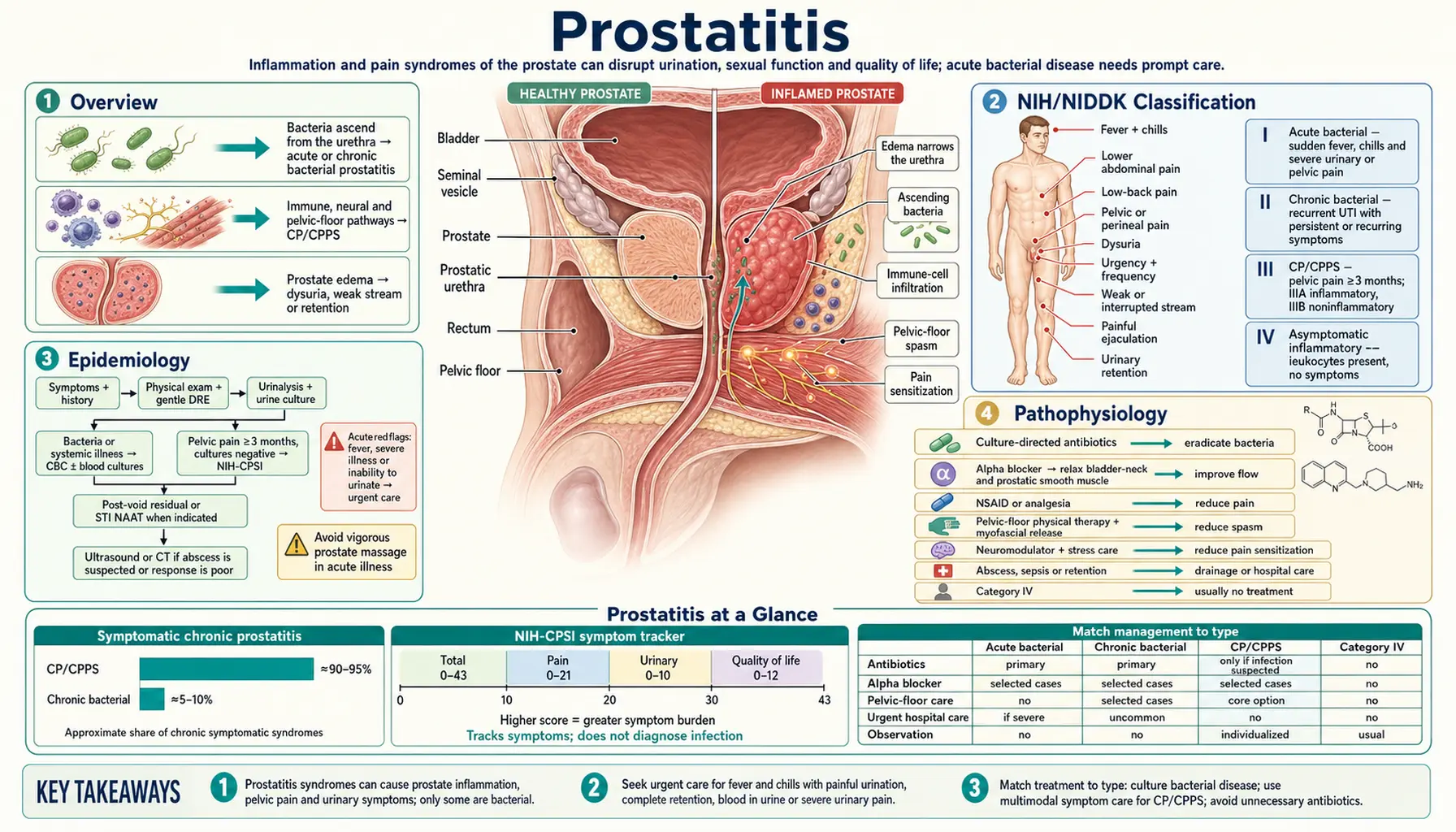
Table of Contents
- Overview
- NIH/NIDDK Classification
- Epidemiology
- Pathophysiology
- Clinical Presentation
- Diagnosis and NIH-CPSI Score
- Treatment
- Complications
- Prognosis
- Prevention
- Recent Research
- References
- Connections
- Featured Videos
1. Overview
Prostatitis is an umbrella term covering a heterogeneous group of conditions affecting the prostate gland, characterized by pelvic pain, lower urinary tract symptoms, and — in some forms — signs of infection. It is the most common urological diagnosis in men under 50 and the third most common in men over 50, accounting for approximately 2 million outpatient visits in the United States annually. Despite its prevalence, prostatitis remains one of the most poorly understood and challenging conditions in urology, particularly its chronic forms.
The clinical landscape changed substantially with the adoption of the NIH/NIDDK consensus classification in 1999, which replaced the imprecise older two-category system (acute and chronic bacterial prostatitis) with a four-category framework that explicitly acknowledges the majority category — chronic prostatitis/chronic pelvic pain syndrome (CP/CPPS, Type III) — in which no infectious etiology can be identified. This conceptual shift has driven research toward neurogenic inflammation, pelvic floor dysfunction, and central sensitization as mechanistic contributors distinct from bacterial infection.
2. NIH/NIDDK Classification
The National Institutes of Health / National Institute of Diabetes and Digestive and Kidney Diseases consensus classification divides prostatitis into four types based on clinical presentation, bacteriological findings, and inflammatory markers:
Type I: Acute Bacterial Prostatitis
An acute infection of the prostate gland presenting as a systemic illness. Men develop sudden-onset fever, chills, malaise, and perineal or low back pain accompanied by obstructive and irritative lower urinary tract symptoms (LUTS). Digital rectal examination reveals a tender, warm, boggy, swollen prostate. Prostatic massage is contraindicated in acute prostatitis because of the risk of precipitating bacteremia and sepsis. The most common causative organisms are gram-negative Enterobacteriaceae — Escherichia coli accounts for approximately 65–80% of cases, with Klebsiella, Proteus, Pseudomonas aeruginosa, and Enterococcus faecalis accounting for most of the remainder. Sexually transmitted organisms (Neisseria gonorrhoeae, Chlamydia trachomatis) should be considered in younger sexually active men. Hospitalization with intravenous antibiotics is indicated when systemic toxicity, urinary retention, or sepsis is present.
Type II: Chronic Bacterial Prostatitis
A recurrent bacterial infection of the prostate causing relapsing urinary tract infections with the same organism isolated on successive cultures. Men may have mild perineal discomfort and LUTS between episodes or be relatively asymptomatic except during acute exacerbations. The diagnosis rests on localization of bacteria to prostatic secretions using the Meares-Stamey 4-glass test or the simplified 2-glass (pre- and post-massage) test — demonstrating a significantly higher bacterial colony count in prostatic secretions or post-massage urine (VB3) than in voided bladder specimens (VB1, VB2). Type II accounts for approximately 5–10% of all prostatitis cases. The bacteria persist in prostatic ductal secretions partially because antibiotics achieve subtherapeutic concentrations in prostatic tissue and because bacterial biofilm formation on prostatic calculi creates antibiotic-inaccessible reservoirs.
Type III: Chronic Prostatitis / Chronic Pelvic Pain Syndrome (CP/CPPS)
The dominant category, comprising approximately 90% of all prostatitis cases. Defined by chronic pelvic pain lasting at least 3 months in the absence of a demonstrable bacterial infection by standard culture methods. Etiology remains incompletely understood and is likely multifactorial — proposed mechanisms include autoimmune inflammation directed at prostatic antigens, pelvic floor myofascial dysfunction, intraprostatic ductal reflux of urine, neurogenic inflammation, and central sensitization with nociceptive hypersensitivity.
Type III is subclassified based on the presence or absence of white blood cells (WBCs) in expressed prostatic secretions (EPS), post-massage urine (VB3), or semen:
- Type IIIa (Inflammatory CP/CPPS): Elevated WBCs (>10 leukocytes per high-power field in EPS, or >1 million WBCs/mL in semen) — suggesting a local inflammatory process even without culturable bacteria. Thought to be mediated by autoimmune mechanisms or occult infection with organisms not detectable by standard cultures (Chlamydia, anaerobes, Trichomonas).
- Type IIIb (Noninflammatory CP/CPPS): Normal WBC counts in all specimens — no evidence of either bacterial infection or local inflammation. Symptoms may be driven primarily by pelvic floor muscle hypertonicity, pudendal nerve irritation, or central pain sensitization. This group tends to respond better to non-antibiotic interventions.
Type IV: Asymptomatic Inflammatory Prostatitis
An incidental finding of prostatic inflammation — detected histologically on prostate biopsy performed for elevated PSA or as an incidental pathological finding — without any symptoms attributable to the prostate. Men have no pelvic pain and no LUTS. Type IV does not require treatment in most circumstances; its clinical significance lies mainly in its contribution to PSA elevation (which may confound prostate cancer screening) and possible long-term effects on fertility through sperm function impairment.
3. Epidemiology
Prostatitis affects approximately 2–16% of the male population at any given time, depending on the diagnostic criteria and population studied. Lifetime prevalence is estimated at 11–16% in most population-based studies. It is the most common urological diagnosis in men under 50, with the highest incidence in the 20–40-year-old age group for CP/CPPS, and acute bacterial prostatitis having a peak in the 20–40 and 70–80-year age groups.
CP/CPPS (Type III) has a significant negative impact on quality of life comparable to that of myocardial infarction, unstable angina, and active Crohn's disease, as measured by validated health-related QOL instruments. Comorbid depression, anxiety, and sexual dysfunction are highly prevalent — approximately 50–70% of men with CP/CPPS have clinically significant depressive symptoms. The condition is frequently misdiagnosed or underdiagnosed, and many men consult multiple physicians before receiving a correct diagnosis, with an average delay of 3–5 years.
Risk factors for acute bacterial prostatitis include recent urological instrumentation (catheterization, cystoscopy, transrectal prostate biopsy), urinary tract infections, benign prostatic hyperplasia (BPH) causing urinary stasis, unprotected anal intercourse, and immunosuppression. Transrectal ultrasound-guided prostate biopsy carries a post-procedure acute prostatitis/sepsis rate of approximately 0.5–1%, a rate that has increased with rising fluoroquinolone-resistant E. coli.
4. Pathophysiology
Bacterial Prostatitis (Types I and II)
In acute and chronic bacterial prostatitis, gram-negative uropathogens ascend the urethra to infect the prostatic ducts. In Type I, a robust inflammatory response — characterized by neutrophilic infiltration, edema, and microabscess formation — produces the systemic sepsis syndrome. In Type II, bacterial persistence despite antibiotic treatment is explained by the unique pharmacokinetic properties of the prostate: the lipid-based, mildly acidic prostatic fluid creates a pH barrier limiting aminoglycoside and beta-lactam penetration, while lipophilic agents (fluoroquinolones, trimethoprim, macrolides) achieve superior prostatic tissue concentrations. Bacterial biofilm formation on prostatic calculi — intraprostatic calcifications detected by ultrasound in up to 75% of middle-aged men — creates antibiotic-refractory bacterial niches that seed recurrent infection.
CP/CPPS: Neurogenic and Myofascial Mechanisms
In CP/CPPS, intraprostatic ductal reflux of urine into prostatic acini — driven by high-pressure voiding against a dyssynergic external urethral sphincter — deposits urine metabolites (urate crystals, lipid A) that trigger a chemical inflammation without bacterial infection. This drives mast cell degranulation, release of substance P and calcitonin gene-related peptide (CGRP) from prostatic afferents, and neurogenic inflammation that sensitizes pelvic afferent nerves. Over time, peripheral sensitization can progress to central sensitization — an amplified, self-sustaining pain state mediated by spinal cord N-methyl-D-aspartate (NMDA) receptor upregulation and descending pain facilitation — explaining why CP/CPPS pain often exceeds the apparent tissue injury and why many men develop widespread pelvic and perineal allodynia beyond the prostate itself.
Pelvic floor hypertonicity — elevated resting tone of the levator ani, obturator internus, and piriformis muscles with associated myofascial trigger points in the perineum — is present in the majority of men with CP/CPPS and is both a consequence and potential driver of pain. Trigger point palpation reproduces referred pain into the prostate, rectum, and genitalia in most affected men.
5. Clinical Presentation
Acute Bacterial Prostatitis (Type I)
The presentation is dramatic and typically brings men to urgent care or the emergency department. Hallmarks include:
- Fever (>38°C) and rigors — present in the majority
- Acute perineal, rectal, or suprapubic pain, often severe
- Obstructive LUTS: hesitancy, weak stream, incomplete bladder emptying, acute urinary retention (in 10–20%)
- Irritative LUTS: urgency, frequency, dysuria
- Tender, warm, boggy, exquisitely tender prostate on digital rectal examination (DRE) — palpated gently; massage is contraindicated
- Systemic sepsis in severe cases: hypotension, tachycardia, altered mental status (requires ICU-level care)
Chronic Bacterial Prostatitis (Type II)
The pattern is recurrent symptomatic UTIs — dysuria, frequency, urgency — caused by the same organism repeatedly emerging from the prostatic reservoir. Between episodes, men may have mild, intermittent perineal discomfort or be entirely asymptomatic. Prostate is usually non-tender on DRE during asymptomatic intervals. PSA may be mildly elevated during episodes and normalizes with treatment.
CP/CPPS (Type III)
Symptoms span three domains and are assessed by the NIH Chronic Prostatitis Symptom Index (NIH-CPSI):
- Pain (0–21 points): Perineal pain or discomfort (most characteristic — present in 63%), testicular pain (58%), penile/tip-of-penis pain (40%), suprapubic pain (34%), pain with ejaculation (45% — often the most distressing symptom), and rectal or lower back pain. Pain is typically described as an aching, pressure, or burning sensation rather than sharp. Ejaculatory pain and post-ejaculatory pelvic discomfort lasting hours are highly specific for this condition.
- Urinary symptoms (0–10 points): Voiding dysfunction (obstructive and irritative LUTS) present in 50–60%; usually less severe than in BPH but may overlap significantly. Post-void dribbling and urinary urgency are common.
- Quality of life impact (0–12 points): Interference with daily activities, impact on work and relationships, and overall sense of well-being. Total NIH-CPSI scores range from 0 to 43; scores of 0–14 indicate mild, 15–29 moderate, and 30–43 severe symptoms.
6. Diagnosis and NIH-CPSI Score
History and Physical Examination
The cornerstone of prostatitis diagnosis is a careful history characterizing pain location, character, duration, and relationship to urination and ejaculation. All men with suspected prostatitis require DRE — in acute prostatitis to identify the characteristic tender boggy prostate; in CP/CPPS to assess pelvic floor muscle tenderness and exclude other palpable abnormalities including nodules or induration raising concern for prostate cancer.
Urine Cultures and Meares-Stamey Localization
Mid-stream urine culture and sensitivity is mandatory in acute prostatitis. For Type II diagnosis, the Meares-Stamey 4-glass test localizes infection to the prostate: VB1 (first 10 mL — urethral flora), VB2 (midstream — bladder flora), EPS (expressed prostatic secretions after prostate massage), and VB3 (post-massage urine). A 10-fold or greater colony-count excess in EPS or VB3 compared to VB1/VB2 confirms prostatic localization. In clinical practice, the simplified 2-glass test (pre-massage VB2 vs. post-massage VB3) has acceptable diagnostic performance and is more practical. Prostate massage and 4-glass testing must not be performed in suspected acute prostatitis.
NIH Chronic Prostatitis Symptom Index (NIH-CPSI)
The NIH-CPSI is a validated 9-question instrument measuring pain (questions 1–4, 0–21 points), urinary symptoms (questions 5–6, 0–10 points), and quality of life impact (questions 7–9, 0–12 points). Total score ranges from 0 to 43. It is the primary outcome measure in clinical trials and is essential for tracking treatment response over time. A change of 6 points in total score represents a clinically meaningful difference. The UPOINT (Urinary, Psychosocial, Organ-specific, Infection, Neurological/systemic, Tenderness of pelvic floor) phenotyping system, developed by Shoskes and Nickel, categorizes CP/CPPS domains to guide individualized multimodal therapy, with each domain addressed by a specific intervention.
Additional Investigations
- PSA: Markedly elevated in acute prostatitis (often 10–100-fold above baseline); mildly elevated in chronic bacterial prostatitis; normal or mildly elevated in CP/CPPS. PSA should not be used for prostate cancer screening during active prostatitis — defer testing until 8–12 weeks after resolution.
- Urinalysis and microscopy: Pyuria and bacteriuria in acute and chronic bacterial prostatitis; WBCs in EPS or post-massage urine distinguish Type IIIa from IIIb.
- Transrectal ultrasound (TRUS): Not required for routine diagnosis but useful to identify prostatic abscess (requiring drainage) complicating acute bacterial prostatitis, prostatic calculi in chronic bacterial prostatitis, and seminal vesicle abnormalities in Type IIIa.
- Sexually transmitted infection (STI) screening: Urethral swab or first-catch urine for Chlamydia and gonorrhea in sexually active men under 35 presenting with urethritis-like symptoms.
- Semen analysis and culture: Leukocytospermia (>1 million WBCs/mL) in semen supports Type IIIa and may predict response to anti-inflammatory or antibiotic therapy; relevant in men with fertility concerns.
7. Treatment
Type I: Acute Bacterial Prostatitis
Men with fever, systemic toxicity, or suspected sepsis require hospitalization and intravenous antibiotics. First-line regimens include:
- IV ceftriaxone 2 g every 24 hours plus metronidazole if anaerobic coverage is warranted (prostate abscess, recent instrumentation with polymicrobial exposure). Ceftriaxone is preferred over fluoroquinolones in many centers due to rising fluoroquinolone resistance among uropathogens.
- Gentamicin (aminoglycoside) may be added for suspected gram-negative sepsis pending culture results, with monitoring of renal function.
- Ampicillin-sulbactam or piperacillin-tazobactam as broad-spectrum options for severely ill patients.
Once the patient is afebrile and hemodynamically stable for 24–48 hours, therapy is stepped down to oral fluoroquinolone (ciprofloxacin 500 mg twice daily or levofloxacin 500 mg once daily) for a total treatment duration of 4 weeks. Fluoroquinolones achieve excellent prostatic tissue concentrations (tissue-to-plasma ratio 2–10-fold) and remain preferred for oral step-down when local susceptibility patterns allow. Acute urinary retention is managed with suprapubic catheterization rather than urethral catheterization (which is painful and risks further bacteremia) or with alpha-blocker plus watchful waiting for mild obstruction. Prostatic abscess, complicating approximately 0.5–2.5% of acute prostatitis cases (more common in diabetics and immunocompromised men), requires TRUS-guided aspiration or transurethral drainage in addition to prolonged antibiotic therapy.
Type II: Chronic Bacterial Prostatitis
Oral fluoroquinolones remain the cornerstone of therapy. Standard regimens are:
- Ciprofloxacin 500 mg twice daily for 4–6 weeks — clinical cure rate 70–80% for fluoroquinolone-susceptible organisms
- Levofloxacin 500 mg once daily for 4–6 weeks — equivalent efficacy, once-daily dosing improving adherence
- Trimethoprim-sulfamethoxazole is an alternative for fluoroquinolone-resistant or intolerant patients, though its prostatic penetration is somewhat inferior to fluoroquinolones for gram-negatives
For men with prostatic calculi harboring recurrent infection, long-term low-dose suppressive therapy (trimethoprim 100 mg or ciprofloxacin 250 mg at bedtime) may reduce recurrence frequency if the initial curative course fails. Radical transurethral resection of the prostate (TURP) to remove calculi-bearing tissue is rarely indicated but can achieve bacteriological cure in highly selected men with intractable recurrence despite prolonged antibiotic courses.
Type III: Chronic Prostatitis / CP/CPPS
Given the complex, multifactorial pathophysiology of CP/CPPS, no single treatment is universally effective. The UPOINT phenotyping framework supports individualized multimodal therapy targeting each symptomatic domain.
Alpha-Blockers
Alpha-1-adrenoceptor antagonists (tamsulosin 0.4 mg, alfuzosin 10 mg, terazosin 5–10 mg) relax smooth muscle in the prostate, urethra, and bladder neck, reducing intraprostatic ductal pressure and urinary outflow resistance. In the landmark MTOPS trial and subsequent CP/CPPS trials, alpha-blockers showed modest but significant symptom improvement (NIH-CPSI reduction of 4–6 points) in alpha-blocker-naive men with predominantly voiding symptoms, with the greatest benefit in newly diagnosed patients. The 6-month UPOINT-directed Shoskes trial demonstrated that UPOINT-guided combination therapy — incorporating alpha-blockers for urinary domain, quercetin for organ-specific inflammation, and physiotherapy for pelvic floor tenderness — improved NIH-CPSI by a mean of 11.4 points, compared to 3.7 points for standard care.
Antibiotics (Empiric Course)
A 4–6-week empiric course of fluoroquinolone is typically prescribed for newly diagnosed CP/CPPS, based on the rationale that occult infection with culture-negative organisms (Chlamydia, Trichomonas, mycoplasmas) or biofilm-producing bacteria may be present in a proportion of patients. Meta-analyses suggest a modest benefit for antibiotic-naive men completing the initial empiric course; however, repeated antibiotic courses in men who fail to respond are not beneficial and expose patients to antimicrobial resistance and fluoroquinolone adverse effects (tendinopathy, neuropathy, aortic aneurysm). Antibiotics should not be continued beyond the initial empiric trial in men who fail to respond.
Anti-Inflammatory and Neuromodulatory Agents
- NSAIDs and COX-2 inhibitors: Rofecoxib (withdrawn), celecoxib, and other NSAIDs reduce inflammatory prostaglandin-mediated pain in Type IIIa but provide limited sustained benefit; used as adjuncts for acute pain flares.
- Quercetin: A flavonoid with anti-inflammatory, antioxidant, and mast-cell-stabilizing properties; a small randomized controlled trial (Shoskes et al., 1999) demonstrated a 25% reduction in NIH-CPSI scores versus placebo; recommended in the UPOINT organ-specific domain for Type IIIa.
- Pregabalin and gabapentin: Neuromodulators targeting voltage-gated calcium channels that reduce central sensitization-mediated pain; a randomized trial of pregabalin in CP/CPPS (Pontari et al., 2010) did not meet its primary endpoint but showed benefit in a subset with neuropathic pain characteristics.
- 5-alpha-reductase inhibitors (finasteride, dutasteride): Reduce prostatic volume and may decrease intraprostatic inflammation; randomized trials show modest long-term benefit (NIH-CPSI reduction over 6–12 months) with limited short-term efficacy.
- Phytotherapy (pollen extract, quercetin, rye pollen): Cernilton (rye grass pollen extract) demonstrated modest superiority over placebo in a randomized trial; used in some European guidelines as a complementary option.
Pelvic Floor Physiotherapy and Myofascial Release
Pelvic floor physical therapy targeting myofascial trigger points in the levator ani, obturator internus, and perineal muscles is increasingly recognized as a central therapeutic strategy for CP/CPPS — particularly the IIIb phenotype and men with demonstrable pelvic floor tenderness (UPOINT "T" domain). A randomized trial by FitzGerald et al. comparing myofascial physical therapy to global therapeutic massage demonstrated significantly greater responder rates (57% vs. 21% with >6-point NIH-CPSI reduction) with myofascial therapy. Therapy typically involves 10–12 sessions of intrapelvic trigger point release plus home stretching exercises. This approach is now recommended in major urology guidelines as first-line therapy for men with pelvic floor tenderness.
Neuromodulation
Sacral neuromodulation (percutaneous tibial nerve stimulation, sacral nerve stimulation) and magnetic pelvic floor stimulation target the neurogenic component of CP/CPPS by modulating afferent input at the sacral nerve level. Small studies and case series report 40–60% response rates; data from larger randomized trials are limited but promising. Neuromodulation is typically reserved for refractory cases failing multiple pharmacological and physiotherapy approaches.
Psychological Support
Given the high prevalence of comorbid depression, anxiety, and catastrophizing in CP/CPPS, psychological interventions — cognitive-behavioral therapy (CBT), mindfulness-based stress reduction (MBSR), and pain psychology — are integral components of multimodal management. Men with high psychosocial symptom burden in the UPOINT "P" domain benefit from formal psychological referral alongside physical and pharmacological therapies.
8. Complications
- Prostatic abscess: A suppurative complication of acute bacterial prostatitis, occurring in approximately 0.5–2.5% of cases — most commonly in diabetics, immunocompromised patients, and those with urinary obstruction. Presents with failure to respond to appropriate IV antibiotics, persistent fever, and fluctuant perineal mass. Diagnosed by TRUS or CT; treated by transperineal or transrectal aspiration or transurethral unroofing. Staphylococcus aureus should be considered in post-instrumentation or dialysis patients.
- Septicemia and septic shock: Inadequately treated acute bacterial prostatitis can progress to gram-negative bacteremia, sepsis syndrome, and multi-organ failure. Urgent blood cultures, broad-spectrum IV antibiotics, and intensive supportive care are required. Urological emergencies including acute urinary retention require suprapubic catheterization rather than urethral manipulation that risks bacteremia.
- Male infertility and sexual dysfunction: Leukocytospermia associated with Type IIIa prostatitis impairs sperm motility and DNA integrity through oxidative stress (reactive oxygen species from activated neutrophils and macrophages in semen). Ejaculatory pain and post-ejaculatory pelvic discomfort cause secondary sexual dysfunction including avoidance of intercourse, loss of libido, and erectile dysfunction in a substantial proportion of men with CP/CPPS. Treatment of underlying prostatitis may improve semen parameters and sexual function.
- Chronic pain syndrome and central sensitization: A proportion of men with CP/CPPS develop a self-perpetuating chronic pain state characterized by widespread allodynia, referred pain beyond the pelvis, and features of complex regional pain syndrome. Once central sensitization is established, conventional prostate-directed therapies are largely ineffective; management shifts to pain neuroscience education, neuromodulation, and psychological therapy.
- Antibiotic resistance: The frequent and often inappropriate use of fluoroquinolones in prostatitis has contributed to rising fluoroquinolone resistance among uropathogens globally. Fluoroquinolone-resistant E. coli now accounts for 20–40% of prostatitis isolates in some regions, complicating empiric treatment selection and increasing the reliance on culture-directed therapy with broader-spectrum agents.
- PSA elevation and prostate cancer misattribution: Prostatitis — particularly acute and Type III — causes PSA elevations that can trigger unnecessary prostate biopsy. Clinicians should defer PSA measurement until 8–12 weeks after resolution of symptomatic prostatitis. Histological prostatitis on biopsy (Type IV) is not an indication for treatment but may explain PSA-based biopsy triggers.
9. Prognosis
For acute bacterial prostatitis (Type I), the prognosis with prompt appropriate antibiotic therapy is excellent. The vast majority of men treated with IV antibiotics followed by an adequate oral course experience complete resolution. Approximately 10–13% progress to chronic bacterial prostatitis if the initial course is inadequate or if prostatic calculi provide antibiotic-inaccessible bacterial reservoirs. Prostatic abscess carries a higher morbidity — requiring drainage procedures — but is rarely fatal with modern management.
For chronic bacterial prostatitis (Type II), fluoroquinolone therapy achieves bacteriological cure in approximately 70–80% of men with susceptible organisms after a 4–6-week course. Recurrence rates are 20–30% over 5 years, mainly in men with prostatic calculi or recurrent UTI predisposing conditions. Long-term suppressive antibiotic therapy reduces recurrence frequency but rarely achieves permanent cure in the setting of calculi.
For CP/CPPS (Type III), the prognosis is guarded. Approximately 30–50% of men treated with any single agent report clinically meaningful improvement (NIH-CPSI reduction >6 points). Multimodal UPOINT-directed therapy achieves response rates of 50–70% in well-phenotyped patients. A significant proportion of men experience a chronic relapsing-remitting course with long-term pain persisting for years to decades. Early identification and treatment — before central sensitization becomes established — is associated with better long-term outcomes. Comorbid depression, anxiety, and catastrophizing are independent negative prognostic factors for treatment response.
10. Prevention
- Antibiotic prophylaxis before urological procedures: Pre-procedural rectal swab culture and targeted antibiotic prophylaxis before transrectal prostate biopsy reduces post-biopsy sepsis rates — particularly important given rising fluoroquinolone resistance. The TREXIT study and EAU guidelines support augmented prophylaxis (ciprofloxacin plus gentamicin, or targeted therapy based on rectal swab) for men colonized with fluoroquinolone-resistant organisms. Transperineal biopsy approaches, which avoid the rectal mucosa, are associated with significantly lower infectious complication rates.
- Treatment of urinary obstruction: BPH-associated bladder outlet obstruction predisposes to urinary stasis and ascending bacterial infection of the prostate. Timely medical or surgical management of BPH reduces the risk of acute bacterial prostatitis and recurrent UTI.
- Safe sexual practices: Use of condoms reduces the risk of sexually transmitted organisms (Chlamydia, Neisseria gonorrhoeae) seeding the prostate in younger men. Empiric STI coverage is appropriate in men presenting with acute prostatitis who are sexually active and under 35.
- Pelvic floor wellness: Avoidance of prolonged sitting on hard surfaces, regular pelvic floor stretching, and management of constipation may reduce the pelvic floor muscle hypertonicity that contributes to CP/CPPS recurrence and flares.
- Prompt treatment of acute episodes: Complete treatment of acute bacterial prostatitis with an adequate antibiotic course (4 weeks minimum) reduces the risk of progression to chronic bacterial prostatitis. Premature discontinuation of therapy at symptom resolution — before eradication of bacteria from prostatic tissue — is a common preventable cause of chronification.
11. Recent Research
UPOINT Phenotyping and Multimodal Therapy: The UPOINT clinical phenotyping system developed by Shoskes and Nickel classifies CP/CPPS into six domains — Urinary, Psychosocial, Organ-specific, Infection, Neurological/systemic, and Tenderness (pelvic floor) — enabling individualized domain-targeted therapy. A 6-month prospective trial demonstrated that UPOINT-directed combination therapy achieved significantly greater NIH-CPSI reduction than standard single-agent treatment (mean 11.4 vs. 3.7 points), with response rates of 84% versus 32% for clinically meaningful improvement. UPOINT phenotyping is now endorsed by the European Association of Urology guidelines for guiding multimodal CP/CPPS management.
Myofascial Physical Therapy (FitzGerald et al., 2009 and 2013): Two landmark randomized controlled trials by FitzGerald and colleagues demonstrated the superiority of therapist-administered myofascial physical therapy over global therapeutic massage for men with CP/CPPS and demonstrable pelvic floor tenderness. The 2013 multicenter RCT achieved a 57% responder rate with myofascial therapy versus 21% with global massage, with improvements sustained at 12 months. These findings established pelvic floor physical therapy as a first-line, evidence-based option in urological guidelines.
The MAPP Research Network: The Multidisciplinary Approach to the Study of Chronic Pelvic Pain (MAPP) consortium funded by NIDDK has provided pivotal insights into the systemic nature of CP/CPPS, demonstrating through neuroimaging studies (fMRI, structural MRI) that men with CP/CPPS show abnormal central pain processing — reduced gray matter volume in pain-modulating brain regions (thalamus, insula, anterior cingulate), altered functional connectivity, and amplified central sensitization — compared to healthy controls. These findings validate central sensitization as a major CP/CPPS mechanism and suggest that brain-targeted interventions (neuromodulation, CBT) are mechanistically rational. The MAPP network also demonstrated that CP/CPPS commonly co-occurs with other chronic pain conditions including irritable bowel syndrome, fibromyalgia, and interstitial cystitis, reinforcing its systemic rather than purely prostatic nature.
Microbiome and CP/CPPS: Emerging metagenomic studies suggest that the urinary and prostatic microbiome — distinct from the gut microbiome — may play a pathogenic role in CP/CPPS. Men with CP/CPPS show reduced Lactobacillus dominance and enrichment of potentially inflammatory genera (Prevotella, Streptococcus, Veillonella) in prostatic secretions compared to controls, suggesting that dysbiotic low-grade infection or commensals driving immune activation may contribute to type IIIa inflammation. These findings are preliminary but may open avenues for probiotic or microbiome-modulating therapies.
Fluoroquinolone Safety in Chronic Prostatitis: Ongoing pharmacovigilance has highlighted serious adverse effects of long-term fluoroquinolone use — including tendinopathy, peripheral neuropathy, aortic dissection, and central nervous system effects — with risk increasing with cumulative dose and duration. FDA black-box warnings now mandate restriction of fluoroquinolones to indications where no alternatives exist; their routine use for empiric CP/CPPS treatment without culture evidence of infection is increasingly questioned. This has intensified interest in non-antibiotic multimodal CP/CPPS strategies.
12. References
- Krieger JN, Nyberg L Jr, Nickel JC. 1999 — PMID: 10422990 — NIH consensus definition and classification of prostatitis. JAMA. 1999;282(3):236-237.
- Search PubMed — Demographic and clinical characteristics of men with chronic prostatitis: the National Institutes of Health chronic prostatitis cohort study. J Urol. 2002;168(2):593-598.
- Search PubMed — The National Institutes of Health chronic prostatitis symptom index (NIH-CPSI): development and validation of a new outcome measure. J Urol. 1999;162(2):369-375.
- Search PubMed — Quercetin in men with category III chronic prostatitis: a preliminary prospective, double-blind, placebo-controlled trial. Urology. 1999;54(6):960-963.
- Search PubMed — Randomized multicenter feasibility trial of myofascial physical therapy for the treatment of urological chronic pelvic pain syndromes. J Urol. 2009;182(2):570-580.
- Search PubMed — Clinical phenotyping of women with interstitial cystitis/painful bladder syndrome: a key to classification and potentially improved management. J Urol. 2009;182(1):155-160.
- Search PubMed — Mechanisms in prostatitis/chronic pelvic pain syndrome. J Urol. 2008;179(5 Suppl):S61-67.
- Search PubMed — National Institutes of Health chronic prostatitis symptom index (NIH-CPSI) symptom evaluation in multinational cohorts of patients with chronic prostatitis/chronic pelvic pain syndrome. Eur Urol. 2013;63(5):953-959.
- Search PubMed — Clinical phenotyping of patients with chronic prostatitis/chronic pelvic pain syndrome and correlation with symptom severity. Urology. 2009;73(3):538-542.
- Search PubMed — Contemporary management of acute bacterial prostatitis. Eur Urol. 2016;70(2):339-349.
- Search PubMed — Ciprofloxacin or tamsulosin in men with chronic prostatitis/chronic pelvic pain syndrome: a randomized, double-blind trial. Ann Intern Med. 2004;141(8):581-589.
- Search PubMed — Symptoms and pain distribution in patients with chronic prostatitis/chronic pelvic pain syndrome. World J Urol. 2009;27(3):415-419.
Connections
- Urology
- Benign Prostatic Hyperplasia
- Erectile Dysfunction
- Urinary Tract Infections
- Kidney Stones
- Bladder Cancer
- Overactive Bladder
- Interstitial Cystitis
- Urinalysis
- Zinc
- Saw Palmetto
- All Conditions