Drug-Induced Lupus
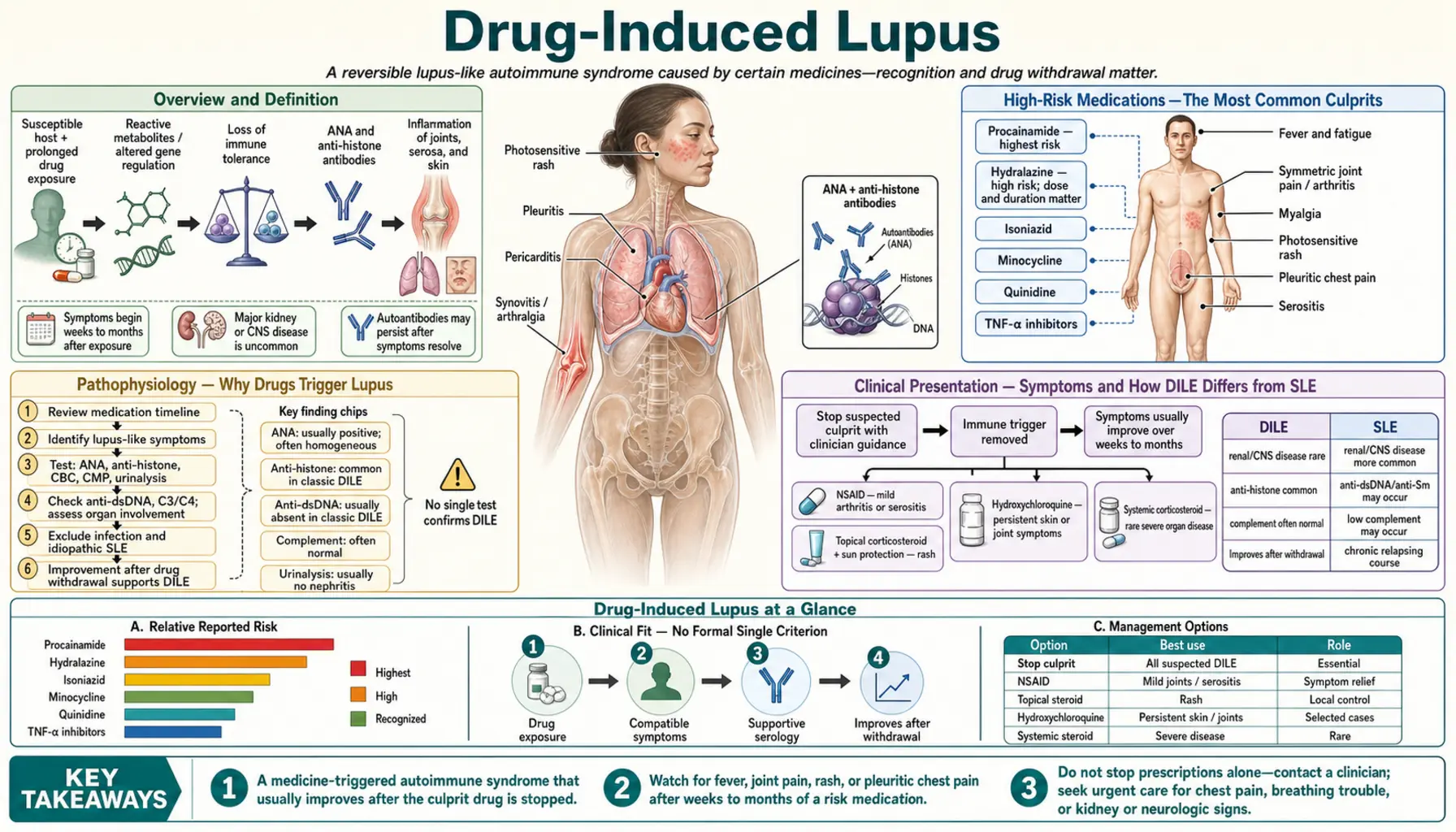
Drug-induced lupus erythematosus (DILE or DIL) is a lupus-like syndrome caused by specific medications — and, critically, one that resolves when the offending drug is stopped. For patients who receive a diagnosis of drug-induced lupus, this distinction is enormously reassuring: unlike idiopathic systemic lupus erythematosus (SLE), which is a lifelong autoimmune disease requiring ongoing management, DILE is curable by identifying and discontinuing the responsible medication. Understanding which drugs carry the highest risk, why some people are genetically more susceptible, what the clinical features look like, how DILE differs from true SLE, and what recovery entails gives patients and their families the knowledge needed to navigate this condition confidently.
Table of Contents
- Overview and Definition
- High-Risk Medications — The Most Common Culprits
- Pathophysiology — Why Drugs Trigger Lupus
- Clinical Presentation — Symptoms and How DILE Differs from SLE
- Diagnostic Criteria and Laboratory Testing
- How to Distinguish Drug-Induced Lupus from SLE
- Treatment and Management
- Subacute Cutaneous Lupus — Drug-Triggered Variant
- Prognosis — Recovery and Long-Term Outlook
- Key Research Papers
- Connections
- Featured Videos
Overview and Definition
Drug-induced lupus erythematosus (DILE, also abbreviated DIL) is a lupus-like autoimmune syndrome triggered by specific medications. It mimics idiopathic systemic lupus erythematosus (SLE) in many features but has a set of critical distinctions that change its entire prognosis: DILE resolves when the offending drug is stopped, whereas true SLE is a lifelong condition.
The clinical profile of DILE differs from SLE in several important ways:
- Age at onset: DILE tends to occur in older adults (mean age 50–70 years), reflecting the age groups most likely to be taking the implicated medications long-term. SLE, by contrast, typically first appears in women of childbearing age (15–45 years).
- Sex distribution: SLE has a striking 9:1 female predominance. DILE has a roughly equal sex distribution — because some of the highest-risk drugs (e.g., procainamide, hydralazine) were historically prescribed more often to men for cardiovascular conditions.
- Disease severity: DILE is generally milder than SLE. Renal involvement (lupus nephritis) is rare in classic DILE, occurring in fewer than 5% of cases. Central nervous system involvement — seizures, psychosis, cognitive impairment — is very rare. This milder phenotype reflects the different immunological mechanism at work.
- Autoantibody profile: The hallmark of classic DILE is the presence of antihistone antibodies (AHA) in over 95% of cases. These are nearly always negative or absent in SLE at such high frequency. Conversely, anti-double-stranded DNA (anti-dsDNA) antibodies — the most specific marker for SLE — are typically absent in classic DILE. Anti-Smith (anti-Sm) antibodies, which are 100% specific for SLE, are also absent in DILE.
- Reversibility: This is the defining characteristic. Clinical symptoms typically resolve within weeks to a few months of discontinuing the causative drug. Laboratory abnormalities (such as elevated ANA titer) may persist longer but normalize over months to years.
DILE is estimated to account for 3–10% of all lupus diagnoses in the United States, with an estimated 15,000–30,000 new cases per year. This is almost certainly an undercount, because many mild cases go unrecognized — particularly when patients and clinicians don't connect new joint pain or a rash to a medication started months earlier. More than 100 drugs have been implicated, but a much smaller group accounts for the vast majority of cases.
High-Risk Medications — The Most Common Culprits
Drugs implicated in DILE span many therapeutic categories. The risk is not uniform — some agents carry very high rates of ANA development and clinical disease; others are rare causes. The list is conventionally divided by strength of evidence.
Group 1 — Definite (Highest Risk)
Procainamide (antiarrhythmic): Historically the most studied and highest-risk drug for DILE. ANA develops in 50–75% of long-term users; overt clinical DILE occurs in 20–30%. Procainamide is now rarely prescribed in the US due to the availability of safer antiarrhythmics, but its historical prominence shaped most of what we understand about the acetylation pathway and DILE mechanisms. Slow acetylators (see Pathophysiology section) are at substantially higher risk. DILE typically develops after months of continuous use.
Hydralazine (vasodilator/antihypertensive): DILE occurs in 5–10% of long-term users. Risk is strongly dose-dependent — cumulative doses above 100 grams significantly increase risk, translating to roughly 100mg/day for 3 years. Women and those with the HLA-DR4 genotype face the highest risk. Hydralazine is still used for heart failure and hypertension in pregnancy, so DILE from this drug remains clinically relevant today. Onset is typically 1–3 years after starting the drug.
Isoniazid (first-line tuberculosis treatment): ANA develops in 20–25% of isoniazid users; clinical DILE occurs in a smaller percentage. Given the global burden of tuberculosis and the long durations of isoniazid preventive therapy (6–12 months), isoniazid-induced DILE is an important consideration in TB programs.
Minocycline (tetracycline antibiotic, widely used for acne): One of the most clinically important causes of DILE today because minocycline is prescribed to millions of young people for acne, often for prolonged periods. Minocycline-induced DILE has a distinct profile: it disproportionately affects young women; it is associated with hepatitis (elevated liver enzymes, sometimes jaundice) in addition to arthritis and rash; it is associated with perinuclear-ANCA (pANCA) positivity in addition to AHA and ANA; and resolution can be unusually slow — taking 6–12 months or longer, unlike most DILE which resolves in weeks.
Methyldopa (older antihypertensive): ANA develops in approximately 25% of users; clinical DILE is less frequent. Now infrequently prescribed, but used in some settings for hypertension in pregnancy.
Group 2 — Probable
These drugs have sufficient case evidence to establish a causal relationship but lack the controlled study data of Group 1: quinidine (antiarrhythmic; ANA in 30%), chlorpromazine (antipsychotic), penicillamine (formerly used in RA), carbamazepine (anticonvulsant), phenytoin (anticonvulsant), and terbinafine (antifungal — also associated with SCLE subtype, discussed separately).
Group 3 — Anti-TNF Biologic-Induced DILE
TNF inhibitors — infliximab, etanercept, adalimumab, certolizumab, golimumab — represent a distinct subtype of DILE that is increasingly recognized as anti-TNF therapy has expanded in use for rheumatoid arthritis, inflammatory bowel disease, psoriasis, and other conditions.
Anti-TNF-induced DILE is notable for several features that differentiate it from classic DILE:
- ANA develops in 50–80% of patients on anti-TNF therapy over time.
- Clinical DILE occurs in approximately 0.5–1% — uncommon, but given the millions of patients on these drugs, the absolute numbers are significant.
- Unlike classic DILE, anti-TNF DILE may be anti-dsDNA positive — blurring the distinction from SLE.
- Renal involvement is more common than in classic DILE — true lupus nephritis can occur.
- The condition develops in patients already being treated for an autoimmune disease (most commonly RA), which can make diagnosis challenging.
- Management requires stopping the anti-TNF agent and finding alternative disease therapy — a non-trivial clinical decision when the patient has severe underlying RA or Crohn's disease.
Group 4 — Immune Checkpoint Inhibitor (ICI)-Related Lupus
A new and growing category as cancer immunotherapy expands. Anti-PD-1 agents (nivolumab, pembrolizumab), anti-PD-L1 agents (atezolizumab, durvalumab), and anti-CTLA-4 agents (ipilimumab) unleash the immune system to fight cancer — but can simultaneously trigger immune-mediated adverse events that include lupus-like syndromes. Unlike classic DILE, ICI-related immune adverse events may not fully resolve with drug discontinuation and may require active immunosuppression. Managing ICI-related lupus requires close collaboration between the oncologist and rheumatologist, because stopping immunotherapy carries cancer treatment implications.
Pathophysiology — Why Drugs Trigger Lupus
Several distinct mechanisms explain how different drugs induce a lupus-like syndrome. Not all DILE drugs work through the same pathway — which is why the clinical subtypes differ.
The Acetylation Pathway — Slow vs. Fast Acetylators
The N-acetyltransferase 2 (NAT2) enzyme is responsible for metabolizing (acetylating) many drugs in the liver. Humans are genetically classified as either slow acetylators or fast acetylators based on which NAT2 variants they carry. Slow acetylators build up higher concentrations of reactive, non-acetylated drug metabolites — and it is these metabolites that drive DILE.
In slow acetylators, reactive metabolites of drugs like procainamide and hydralazine bind to DNA and nuclear proteins (particularly histones), forming drug-DNA and drug-protein adducts. These modified nuclear antigens become immunogenic — the immune system recognizes them as foreign and mounts an antibody response against them. This is why antihistone antibodies are the hallmark of DILE from these drugs. Approximately 50% of Northern Europeans and Americans are slow acetylators; the rate varies significantly by ethnicity (approximately 90% of Japanese and East Asians are fast acetylators, making procainamide DILE much rarer in those populations).
DNA Methylation Disruption
A second mechanistic pathway involves epigenetic changes — specifically, loss of DNA methylation in T lymphocytes. Procainamide directly inhibits DNA methyltransferase I (DNMT1), the enzyme responsible for maintaining methylation marks across cell divisions. When DNMT1 is inhibited, T cells progressively lose methylation at gene promoters that are normally silenced, including the gene for LFA-1 (ITGAL) — a surface adhesion molecule. T cells overexpressing LFA-1 become autoreactive: they can now adhere to and kill antigen-presenting cells without requiring antigen-specific activation, driving autoimmunity.
Hydralazine follows a parallel pathway: it inhibits the ERK signaling cascade upstream of DNMT1, reducing DNA methylation indirectly. This unified epigenetic mechanism — drug-induced T cell DNA hypomethylation → LFA-1 overexpression → autoreactivity — is now considered a central explanation for why these chemically disparate drugs (an antiarrhythmic and a vasodilator) both cause the same clinical syndrome.
Anti-TNF Biologic Mechanism
TNF normally suppresses autoreactive B cells and promotes regulatory T cells (Tregs). When TNF is pharmacologically blocked, these inhibitions are released: autoreactive B cells proliferate and produce autoantibodies (ANA, anti-dsDNA), and the balance shifts toward autoimmunity. TNF blockade may also enhance type I interferon signaling — a pathway that is central to SLE pathogenesis — which explains why anti-TNF DILE more closely resembles SLE than classic DILE does.
Reactive Metabolites and Cytochrome P450
For some drugs (including minocycline and certain antifungals), hepatic cytochrome P450 enzymes generate reactive intermediate metabolites during drug breakdown. These reactive species can bind to cellular proteins, creating novel protein-drug conjugates (neoantigens) that the immune system recognizes as foreign. In genetically susceptible individuals with impaired detoxification of these reactive intermediates, sustained neoantigen exposure drives the autoimmune response that manifests clinically as DILE.
Clinical Presentation — Symptoms and How DILE Differs from SLE
DILE produces a recognizable clinical syndrome that overlaps substantially with SLE — which is precisely why it can be mistaken for true lupus. Understanding which features are typical of DILE and which are characteristic of SLE but rare in DILE is the key to accurate diagnosis.
Musculoskeletal Features — The Most Prominent Symptoms
Arthralgia and arthritis are the most common features of DILE, present in 80–95% of patients. The joint involvement is typically symmetric and polyarticular — similar to SLE — with the hands, wrists, elbows, and knees most commonly affected. Morning stiffness is common. The arthritis is inflammatory but not erosive, meaning it rarely causes permanent joint damage. This is an important reassurance for patients who fear developing the joint destruction seen in rheumatoid arthritis.
Myalgia (diffuse muscle aching) is common, often accompanying the arthralgias and contributing to the overall sense of fatigue and malaise.
Serositis — inflammation of the serous membranes lining the chest and heart — occurs in 25–50% of patients and represents the most common serious manifestation of DILE. Pleuritis (inflamed pleura) causes sharp chest pain that worsens with deep breathing or lying flat; patients may describe it as a "stabbing" or "sharp" pain when they take a deep breath. Pericarditis (inflamed pericardium) causes positional chest pain, worse when lying down and better when leaning forward.
Constitutional Symptoms
Fatigue, malaise, and low-grade fever occur in 50–80% of patients during active DILE. These systemic symptoms often precede or accompany the joint involvement. Significant weight loss is less common in DILE than in SLE.
Skin Features — Present but Different from SLE
The classic malar (butterfly) rash of SLE can occur in DILE but is less common — present in approximately 30–40% of DILE patients compared with 55% of SLE patients. Photosensitivity (skin reactions to sun exposure) can occur but is also less prominent than in SLE.
Discoid rash — the scarring, coin-shaped lesions of discoid lupus — is very rare in DILE. In SLE, discoid lesions occur in about 25% of patients and can cause permanent scarring and hair loss. Their near-absence in DILE is a useful distinguishing feature.
What Is Characteristically Rare in DILE — The Absence Pattern
Equally important as what DILE causes is what it typically does not cause:
- Renal disease (lupus nephritis): Occurs in fewer than 5% of classic DILE cases. In SLE, lupus nephritis occurs in approximately 50% of patients and is a leading cause of organ failure and death. If a patient taking a potentially causative drug develops nephritis, consider anti-TNF DILE (where nephritis is more common) or true SLE.
- Central nervous system involvement: Neuropsychiatric lupus — including psychosis, seizures, organic brain syndrome, and cognitive dysfunction — occurs in approximately 25% of SLE patients but is very rare in DILE. Its presence strongly favors SLE.
- Oral ulcers: Common in SLE (painful ulcers on the palate or buccal mucosa); less common in DILE.
- Raynaud's phenomenon: Episodic color changes in fingers/toes in response to cold or stress; seen in SLE and other connective tissue diseases, but less common in DILE.
- Severe cytopenias: Autoimmune hemolytic anemia, thrombocytopenia, and severe leukopenia occur in SLE; mild leukopenia or lymphopenia can occur in DILE, but severe cytopenia is not a typical DILE feature.
Minocycline DILE — A Distinct Subtype
Minocycline-induced DILE deserves special mention because of its unique features. In addition to arthritis and constitutional symptoms, patients often develop hepatitis — elevated liver enzymes, sometimes accompanied by jaundice. This hepatic involvement is not typical of other forms of DILE. Minocycline DILE also tends to affect younger patients (reflecting the acne-treatment population), shows pANCA positivity (unusual for other DILE types), and has a characteristically slow resolution — patients may not fully recover for 6–12 months after stopping minocycline, and some require hydroxychloroquine or low-dose prednisone for a period.
Diagnostic Criteria and Laboratory Testing
There are no formally validated diagnostic criteria specifically for DILE. Diagnosis requires three elements to be present simultaneously: (1) exposure to an offending drug temporally preceding symptoms; (2) clinical features consistent with lupus; and (3) improvement of symptoms after drug discontinuation. Because the third criterion requires a therapeutic trial (stopping the drug), diagnosis is sometimes only confirmed retrospectively after recovery.
Autoantibody Testing — The Most Important Lab Component
Antinuclear antibody (ANA): Positive in virtually all DILE patients, typically at high titer (1:160 or higher) with a homogeneous pattern on indirect immunofluorescence (IIF). ANA alone cannot distinguish DILE from SLE — it is elevated in both. ANA testing is the appropriate first-line autoantibody screen.
Antihistone antibodies (AHA): The most characteristic laboratory marker of classic DILE. Present in over 95% of procainamide and hydralazine DILE, and in 50–90% of other classic DILE types. However, AHA is not specific to DILE — approximately 30% of SLE patients also have AHA. High AHA in the context of drug exposure and appropriate symptoms strongly supports DILE; its absence should prompt consideration of SLE or other diagnoses.
Anti-double-stranded DNA (anti-dsDNA): Negative in classic DILE — this is a key distinguishing feature. Anti-dsDNA is present in 60–80% of SLE patients and is highly specific for SLE (especially at high titers). If anti-dsDNA is positive, consider SLE or anti-TNF-induced DILE (where dsDNA positivity can occur).
Anti-Smith (anti-Sm) antibody: 100% specific for SLE — effectively absent in DILE. Positive anti-Sm confirms SLE and rules out DILE.
Anti-Ro/SSA: Positive in the subacute cutaneous lupus (SCLE) subtype of drug-induced lupus, as well as in Sjögren's syndrome and a subset of SLE. Relevant for drug-triggered SCLE (see separate section).
Complement Levels — A Useful Differentiator
In active SLE, complement proteins (C3, C4, CH50) are typically consumed by immune complex deposition in tissues, resulting in low complement levels. This complement consumption is characteristic of active SLE with renal or systemic involvement. In DILE, complement levels are usually normal — an important distinguishing feature when the clinical picture is ambiguous.
Complete Blood Count
Mild cytopenias — leukopenia (low white cell count), lymphopenia (low lymphocytes), or mild normocytic anemia — can occur in DILE. Severe hemolytic anemia (Coombs-positive) is unusual and should prompt consideration of SLE. Thrombocytopenia (low platelets) can occur but is typically mild in DILE.
Urinalysis and Renal Function
Urinalysis should be checked in all suspected DILE cases to look for hematuria (blood in urine), proteinuria (protein in urine), and red cell casts — signs of glomerulonephritis (lupus nephritis). In classic DILE, these are typically absent. Their presence should prompt nephrology referral and consideration of renal biopsy to distinguish DILE from SLE with nephritis or to characterize anti-TNF DILE with renal involvement.
Establishing the Drug-Time Relationship
A careful medication timeline is essential and often requires patient detective work. Key questions: When was each medication started? When did symptoms first appear? Was the drug dose changed before symptom onset? The latency between drug initiation and DILE onset is variable: typically weeks to months for procainamide; 1–3 years for hydralazine; months to a year or more for minocycline; months to years for anti-TNF agents. This temporal variable means some patients may not immediately connect their symptoms to a drug they have been taking "forever without problems."
How to Distinguish Drug-Induced Lupus from SLE
The differential diagnosis between DILE and SLE is one of the most clinically important distinctions in lupus medicine, because the treatment implications are completely different. The following features, taken together, usually allow a confident differentiation.
Feature Comparison: DILE vs. SLE
| Feature | Drug-Induced Lupus (DILE) | Systemic Lupus Erythematosus (SLE) |
|---|---|---|
| Age at onset | Mean 50–70 years | Mean 15–45 years |
| Sex ratio | Approximately equal (1:1) | 9:1 female predominance |
| Renal disease | Rare (<5% classic; higher in anti-TNF) | ~50% (major cause of morbidity) |
| CNS involvement | Very rare | ~25% |
| Malar rash | Less common (30–40%) | ~55% |
| Discoid rash | Very rare | ~25% |
| Antihistone Ab (AHA) | >95% (classic DILE) | ~30% |
| Anti-dsDNA | Negative (classic); may be positive in anti-TNF DILE | Positive in 60–80% |
| Anti-Smith (anti-Sm) | Negative | Positive in 25–30% (highly specific) |
| Complement (C3/C4) | Usually normal | Often low in active disease |
| Resolves when drug stopped | Yes — weeks to months | No — persists lifelong |
| Causative drug exposure | Present and temporally related | Not causally linked to a drug |
Common Diagnostic Pitfalls
Anti-TNF DILE mimics SLE: A patient with RA on infliximab or adalimumab who develops anti-TNF DILE may have anti-dsDNA positivity, complement consumption, and even renal involvement — features that look more like SLE than classic DILE. In this context, the diagnosis depends heavily on the temporal relationship to drug exposure and, importantly, on whether stopping the anti-TNF agent leads to resolution. Do not dismiss this as "simple DILE" and fail to monitor renal function.
Worsening of pre-existing SLE: A patient with known SLE starts a new medication, and their SLE worsens. This may be disease progression, not DILE. DILE requires new lupus-like symptoms in a patient without prior SLE, appearing after drug initiation.
ANA persistence after drug discontinuation: ANA can remain positive for years after DILE has clinically resolved. Do not interpret a persistently elevated ANA titer post-drug-discontinuation as evidence of ongoing disease or as grounds to restart therapy. Track symptoms, not the ANA number alone.
Pre-existing ANA positivity: Low-titer ANA is found in approximately 5–15% of the healthy population. A patient who is already ANA-positive at baseline who develops lupus-like symptoms may have either SLE unmasked by the drug or true DILE — the distinction is complex and requires specialist input.
Treatment and Management
The primary treatment for drug-induced lupus is straightforward in principle and profoundly effective: stop the offending drug. This single intervention is curative in the vast majority of classic DILE cases. The clinical challenge lies in identifying which drug is responsible, managing symptoms while resolution occurs, and planning an alternative therapy for the underlying condition the offending drug was treating.
Drug Discontinuation — The Core Treatment
When the causative drug is stopped, constitutional symptoms (fatigue, fever) and musculoskeletal symptoms (arthralgia, myalgia, serositis) typically begin improving within days to a few weeks. Most patients achieve full symptomatic resolution within 4–12 weeks. Laboratory abnormalities normalize more slowly: ANA and AHA may persist for months to years after the drug is stopped, even in patients who are completely symptom-free. This is normal and does not indicate persistent disease or require ongoing treatment.
For the underlying condition that the causative drug was treating, an alternative medication must be identified. This requires coordination with the prescribing physician — for example, replacing hydralazine with a different antihypertensive class, or replacing procainamide with a different antiarrhythmic. Given the risk of recurrence with re-exposure to the same drug, re-challenge is generally contraindicated.
NSAIDs for Musculoskeletal Symptoms
Non-steroidal anti-inflammatory drugs (NSAIDs) — ibuprofen, naproxen, or diclofenac — provide effective relief for joint pain, stiffness, and mild serositis during the recovery period. They reduce inflammation and improve comfort while the autoimmune process winds down after drug discontinuation. Use at the lowest effective dose for the shortest necessary duration, with gastroprotection (a proton pump inhibitor) if needed.
Hydroxychloroquine for Persistent Arthritis and Rash
Hydroxychloroquine (Plaquenil) at 200–400mg/day is the agent most commonly added when arthritis, rash, or fatigue persist beyond a few weeks despite stopping the offending drug, or when minocycline DILE requires a more prolonged management plan. Hydroxychloroquine has a well-established safety profile, mild immunomodulatory and anti-inflammatory effects, and is well tolerated long-term. Annual ophthalmologic monitoring (for the rare risk of retinal toxicity) is recommended for patients on long-term hydroxychloroquine — though for DILE, the course is usually finite (months, not years).
Corticosteroids for Significant Serositis
Significant pleuritis (causing substantial pain and dyspnea) or pericarditis may warrant a short course of oral prednisone (typically 10–20mg/day, tapered over 4–6 weeks) to reduce inflammation more rapidly than NSAIDs can achieve. Corticosteroids are effective but are not needed in most DILE cases; their risks (hyperglycemia, bone loss, infection susceptibility, mood changes) justify reserving them for cases with more significant serositis or systemic symptoms not responding to NSAIDs and drug discontinuation alone.
Anti-TNF DILE and ICI-Related Lupus — More Complex Management
Anti-TNF biologic-induced DILE with renal involvement or significant systemic features may require corticosteroids at higher doses (prednisone 0.5–1 mg/kg/day) and, in some cases, additional immunosuppressive therapy (hydroxychloroquine, azathioprine, or mycophenolate mofetil) before tapering. Stopping the anti-TNF agent is still the cornerstone, but resolution may be slower and more incomplete than in classic DILE.
For immune checkpoint inhibitor (ICI)-related lupus, management is particularly complex because permanently stopping immunotherapy has cancer treatment implications. Mild ICI-related immune adverse events may be managed with corticosteroids while considering whether to restart immunotherapy at reduced frequency; severe or life-threatening events typically require permanent discontinuation. These decisions must be made collaboratively between oncologist and rheumatologist, with the patient's cancer prognosis as a central consideration.
Monitoring After Drug Discontinuation
Clinical follow-up should confirm ongoing symptom resolution. Persistent symptoms beyond 4–6 months after stopping the offending drug should prompt reconsideration of the diagnosis — is this actually SLE that was unmasked rather than truly induced by the drug? ANA monitoring is not particularly useful because it can remain elevated for years; tracking symptoms and functional status is more informative. Renal function (BUN, creatinine, urinalysis) should be checked at diagnosis and again at follow-up in anti-TNF DILE or any case with uncertain renal status.
Re-Exposure Guidance
Re-exposure to the causative drug is generally contraindicated — most patients will relapse if the same drug is restarted. Cross-reactivity within drug classes varies: a patient who developed DILE from infliximab may or may not develop it with a different anti-TNF agent; careful monitoring is required if an alternative biologic is necessary. There are no validated predictors of cross-reactivity risk, so individualized assessment with specialist guidance is essential.
Subacute Cutaneous Lupus — Drug-Triggered Variant
Subacute cutaneous lupus erythematosus (SCLE) is a photosensitive skin condition that represents a distinct form of lupus — one that can be either idiopathic or drug-triggered. It deserves separate discussion because its clinical presentation, the drugs that cause it, and its management differ from classic systemic DILE.
What SCLE Looks Like
SCLE produces a characteristic photosensitive rash on sun-exposed areas — the upper back, shoulders, chest, and outer arms — that is notably different from the facial butterfly rash of SLE. The rash appears in two morphological forms: annular (ring-shaped lesions with a scaly border and central clearing) or psoriasiform (scaly, plaque-like lesions resembling psoriasis). The face is typically spared or less prominently affected. Critically, SCLE heals without scarring — distinguishing it from discoid lupus, which leaves permanent scarring and hair loss.
Anti-Ro/SSA antibodies are present in over 80% of SCLE patients — both idiopathic and drug-triggered. This autoantibody is central to SCLE pathogenesis: anti-Ro/SSA may directly mediate photosensitivity by becoming exposed on the surface of UV-damaged keratinocytes, triggering an immune attack on sun-exposed skin.
Drugs That Trigger SCLE
- Hydrochlorothiazide (HCTZ) — thiazide diuretics are the most common cause of drug-triggered SCLE; very widely prescribed for hypertension
- Calcium channel blockers — diltiazem and other calcium channel blockers
- ACE inhibitors and angiotensin receptor blockers
- Proton pump inhibitors (PPIs) — omeprazole, pantoprazole, lansoprazole; among the most widely used medications in the world
- Terbinafine — oral antifungal for nail infections; one of the more potent SCLE triggers
- Taxanes — docetaxel (chemotherapy)
- TNF inhibitors — also trigger SCLE in addition to systemic DILE
Management of Drug-Triggered SCLE
Stopping the causative drug is the primary treatment. Strict photoprotection is essential — broad-spectrum sunscreen (SPF 50+) and protective clothing on sun-exposed areas, because UV light drives the rash even after the drug is discontinued. Topical corticosteroids reduce rash severity during the resolution period. Hydroxychloroquine (200–400 mg/day) is the systemic treatment of choice for persistent or extensive SCLE, and is often continued for 6–12 months until the rash fully resolves. Anti-Ro/SSA antibodies can persist after resolution — like ANA in classic DILE, they are not a marker of ongoing clinical activity. Approximately 10% of patients with SCLE (idiopathic or drug-triggered) may develop features of SLE over time, warranting ongoing rheumatologic surveillance.
Prognosis — Recovery and Long-Term Outlook
The prognosis for drug-induced lupus is fundamentally different from — and far better than — the prognosis for SLE, and patients deserve to hear this clearly. The word "lupus" carries considerable fear, and many patients who are told they have drug-induced lupus imagine a lifetime of immune suppression, organ damage, and monitoring. For classic DILE, that picture is wrong.
Classic DILE — Excellent Prognosis
When procainamide, hydralazine, isoniazid, or most other classic culprits are stopped, the prognosis is excellent. Constitutional symptoms (fever, fatigue, malaise) typically resolve within 1–2 weeks. Joint pain and stiffness improve over 2–6 weeks. Serositis (pleuritis, pericarditis) usually resolves within 4–8 weeks. The vast majority of patients achieve complete symptom resolution within 3 months of stopping the drug, without requiring any long-term immunosuppressive therapy.
Laboratory markers normalize more slowly: ANA titers decline over months to a few years; antihistone antibodies may persist for 12–18 months. This prolonged laboratory persistence does not mean the patient continues to have DILE — it reflects the slow clearance of autoantibodies from the circulation after the immune stimulus is removed. Clinicians and patients should not be misled by a persistently elevated ANA into concluding that treatment is still required.
Minocycline DILE — Slower but Complete Recovery
Minocycline-induced DILE follows a slower resolution trajectory. Hepatitis and arthritis may take 6–12 months to fully resolve after minocycline discontinuation. Some patients require a course of hydroxychloroquine or low-dose prednisone during this extended recovery period. Liver function tests should be monitored until normalization is confirmed. Long-term prognosis remains excellent — full recovery is the rule.
Anti-TNF DILE — Resolution with Caveats
Anti-TNF biologic-induced DILE generally resolves after stopping the biologic, but resolution may be slower than classic DILE, and cases with renal involvement require closer follow-up and active management. The immediate clinical challenge is finding an alternative therapy for the underlying RA, psoriasis, or IBD — conditions that may require other biologics (non-TNF mechanisms: abatacept, rituximab, IL-6 inhibitors) or traditional DMARDs.
ICI-Related Lupus — The Most Uncertain Prognosis
Immune checkpoint inhibitor-related lupus has the most variable and potentially persistent course. Not all cases resolve with drug discontinuation; some require ongoing immunosuppression. The trade-off between cancer treatment and immune adverse event management must be individualized. Prognosis depends on the severity of lupus-like features, the type of cancer, and the availability of alternative cancer treatments.
Progression to True SLE — Rare but Possible
Progression from DILE to true SLE is rare — estimated in fewer than 5% of cases. Risk factors that may predict this uncommon outcome include: anti-dsDNA positivity at presentation; evidence of renal involvement; young women; and no clear temporal relationship between drug exposure and symptom onset (which raises the possibility that the drug unmasked, rather than caused, underlying SLE). These patients warrant long-term rheumatologic follow-up even after drug discontinuation.
What to Tell Patients
Patients with classic DILE should be told directly: you do not have the same disease as people with systemic lupus erythematosus. Stopping this medication should cure your symptoms. You will not need lifelong immune suppression. You should inform all future prescribers about which drug caused this reaction. Carry this information with you — a medical alert bracelet or card identifying the causative drug is a reasonable precaution. If you need to take a drug in the same class again in the future, your rheumatologist should be involved in the decision.
Key Research Papers
- Search PubMed
- Search PubMed
- Search PubMed
- Search PubMed
- Search PubMed
- Search PubMed
- Search PubMed
- Search PubMed
- Search PubMed
- Search PubMed
- Search PubMed
- Search PubMed
Connections
- Rheumatology
- Lupus (SLE)
- Rheumatoid Arthritis
- Mixed Connective Tissue Disease
- Antiphospholipid Syndrome
- Sjögren's Syndrome
- Dermatomyositis
- Vasculitis
- Polymyositis