Magnesium, Riboflavin, and Supplements for Migraine
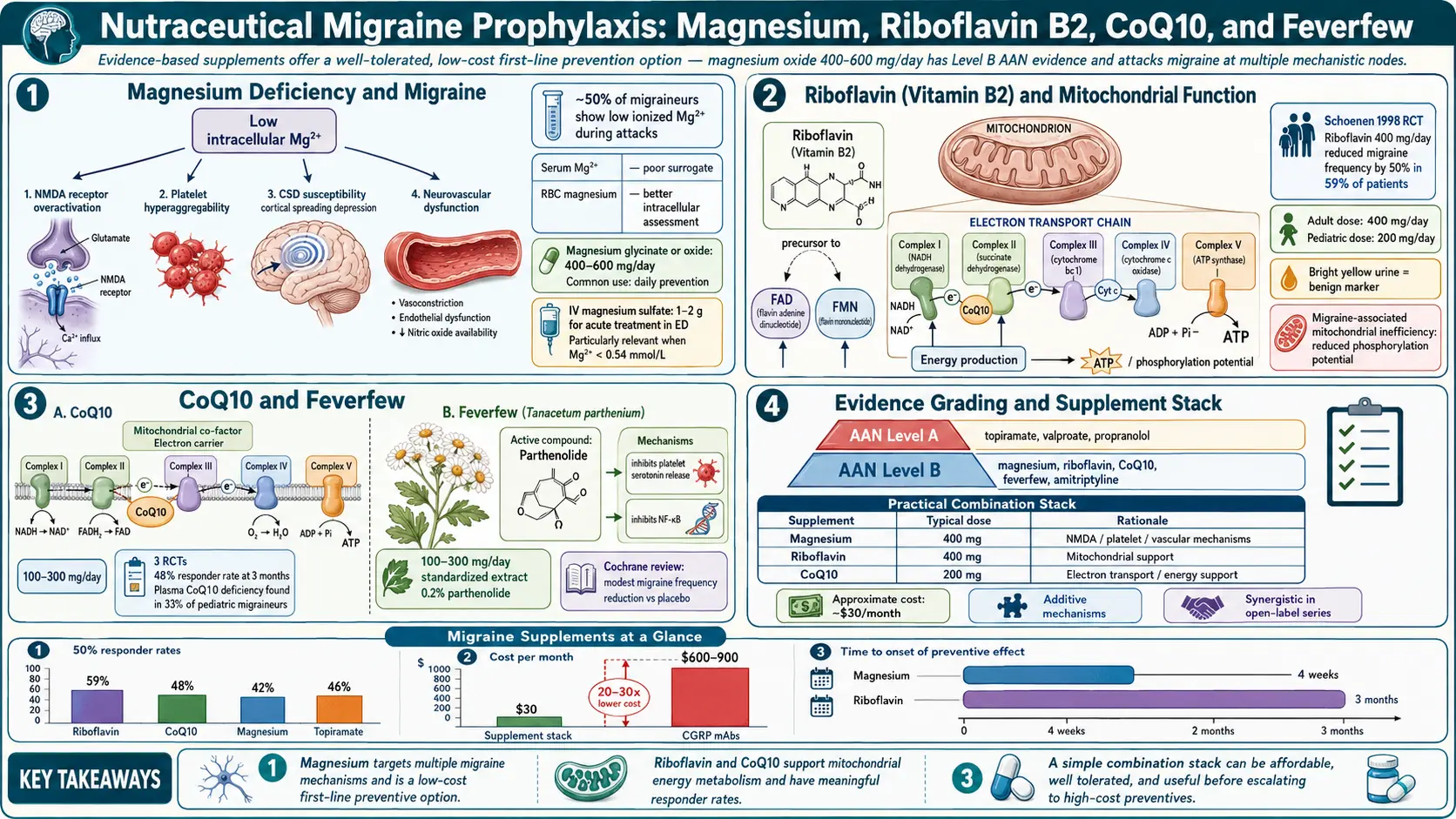
Table of Contents
- Where Supplements Fit in the Migraine Research
- The AAN/AHS 2012 Grades (Guideline Retired in 2015)
- What "Works" Means in the Trials
- Magnesium — Two 1996 Trials That Disagree
- Riboflavin (Vitamin B2) — The Mitochondrial Vitamin
- Feverfew — Mixed Trial Evidence
- CoQ10 — Small Trials, Mixed Meta-Analyses
- Butterbur — Trial Results and Liver-Safety Findings
- Melatonin — Two Trials, Two Results
- Vitamin D, Omega-3s, B12/Folate, and Iron
- Combinations and One-at-a-Time Testing
- Pregnancy, Breastfeeding, and Children: What the Studies Cover
- Reported Drug Interactions
- Product Quality — What Label Testing Has Found
- Why "Natural" Does Not Equal "Safe"
- Key Research Papers
- Connections
- Featured Videos
Where Supplements Fit in the Migraine Research
Several supplements have been tested for migraine prevention in randomized, placebo-controlled trials. In 2012 the American Academy of Neurology (AAN) and the American Headache Society (AHS) published a joint guideline that graded nutraceuticals and other complementary treatments for preventing episodic migraine in adults. The AAN retired that guideline in 2015 over safety concerns with butterbur, one of the treatments it graded, so its grades are now historical. The same year, 2012, the Canadian Headache Society guideline gave a strong recommendation to magnesium citrate, riboflavin, coenzyme Q10 and butterbur.
The trials behind these grades are small, mostly a few dozen to a few hundred patients followed for three to four months, and several of them disagree with one another. This article sets out what each trial and review reported for magnesium, riboflavin, feverfew, CoQ10, butterbur, melatonin and a few nutrients studied in people with low levels, including the safety findings. It reports research; it is not a treatment plan. Decisions about medicines and supplements belong with a clinician.
The AAN/AHS 2012 Grades (Guideline Retired in 2015)
The 2012 guideline (Holland et al., Neurology) reviewed studies published from June 1999 to May 2009 and graded:
- Level A (effective): butterbur (Petasites).
- Level B (probably effective): fenoprofen, ibuprofen, ketoprofen, naproxen, naproxen sodium, a feverfew extract, magnesium, riboflavin and subcutaneous histamine.
- Level C (possibly effective): cyproheptadine, CoQ10, estrogen, mefenamic acid and flurbiprofen.
- Conflicting or inadequate data: aspirin, indomethacin, omega-3 and hyperbaric oxygen.
The guideline has been retired. According to the retirement notice now printed with it, the AAN Board of Directors retired the guideline on September 16, 2015, "due to serious safety concerns with a preventative treatment, butterbur, recommended by this guideline." The notice states that the recommendations and conclusions of retired guidelines are considered no longer valid and no longer supported by the AAN, and remain available for reference only. The Level B grades for magnesium, riboflavin and feverfew and the Level C grade for CoQ10 are therefore historical gradings, not current AAN positions.
The 2012 Canadian Headache Society guideline (Pringsheim et al.), which used the GRADE system, gave a strong recommendation to 11 prophylactic treatments: topiramate, propranolol, nadolol, metoprolol, amitriptyline, gabapentin, candesartan, butterbur, riboflavin, coenzyme Q10 and magnesium citrate. A 2019 review of vitamins and minerals for migraine prevention (Okoli et al.) reached a more cautious conclusion for adults: "based on insufficient evidence, it is unknown if coenzyme Q10 and magnesium are effective for migraine prophylaxis in adults." The full profile of butterbur, including its liver-safety history, is covered in the Herbs section.
What "Works" Means in the Trials
Migraine prevention trials usually report the change in attacks or migraine days a month, and the share of "responders" — patients whose attacks or headache days fell by at least half. Placebo groups improve too, often substantially, so the useful number is the difference between the groups. A few results reported in the trial abstracts:
- Riboflavin (Schoenen 1998): responders for headache days, 59% with riboflavin vs 15% with placebo.
- Magnesium (Peikert 1996): attack frequency fell by 41.6% with magnesium vs 15.8% with placebo; in a second trial the same year (Pfaffenrath 1996), responders were 28.6% with magnesium vs 29.4% with placebo.
- CoQ10 (Sandor 2005): responders for attack frequency, 47.6% vs 14.4%.
- Feverfew (Diener 2005): attacks fell by 1.9 a month with the extract vs 1.3 with placebo.
- Butterbur (Lipton 2004): responders after 4 months, 68% with 75 mg twice daily vs 49% with placebo.
How long the trials ran. The trials compared a 4-week headache-diary baseline with the later months of treatment: Peikert 1996 measured weeks 9 to 12 of a 12-week course, Schoenen 1998 ran for 3 months, Sandor 2005 compared outcomes in the third month, Diener 2005 treated for 16 weeks, and Lipton 2004 for 4 months. The trials did not test how soon an effect appears.
Magnesium — Two 1996 Trials That Disagree
Proposed mechanism. Ramadan et al. (1989) measured low brain magnesium during migraine attacks by magnetic resonance spectroscopy. A 1995 review by Welch and Ramadan summarized evidence of reduced intracellular free magnesium and disordered mitochondrial energy metabolism in people with migraine and proposed that these changes make neurons less stable between attacks. ATP is biologically active largely as a magnesium-ATP complex. Whether supplements raise brain magnesium in people with migraine has not been shown in the trials, which measured headaches.
The positive trial. Peikert, Wilimzig and Köhne-Volland (Cephalalgia 1996) gave 81 adults with migraine (a mean of 3.6 attacks a month) 600 mg (24 mmol) of magnesium as trimagnesium dicitrate daily, or placebo, for 12 weeks. In weeks 9 to 12, attack frequency fell by 41.6% with magnesium and by 15.8% with placebo (p < 0.05). Migraine days and use of acute medication also fell significantly with magnesium; duration and intensity of attacks did not differ significantly. Diarrhea occurred in 18.6% and gastric irritation in 4.7%.
The negative trial. Pfaffenrath et al. (Cephalalgia 1996) tested 10 mmol of magnesium twice daily against placebo for 12 weeks in patients with two to six attacks a month of migraine without aura. A planned interim analysis of 69 patients found 10 responders in each group (28.6% with magnesium, 29.4% with placebo), and no benefit on migraine days or attacks; as set out in the protocol, this was a major reason to stop the trial. Mild adverse events, mainly soft stools and diarrhea, were reported by 45.7% of the magnesium group and 23.5% of the placebo group.
Results as reported in each trial abstract. Peikert 1996 reported the percentage fall in attack frequency in weeks 9 to 12; Pfaffenrath 1996 reported the share of patients with at least a 50% reduction in the intensity or duration of attacks.
The meta-analyses. Chiu et al. (Pain Physician 2016) pooled 10 randomized trials of oral magnesium for prevention (789 participants) and found that oral magnesium significantly reduced the frequency and intensity of migraine (odds ratios 0.20 and 0.27); the authors note as a limitation that some included studies did not use adequate randomization. The 2019 Okoli review quoted above concluded that it is unknown whether magnesium is effective for prevention in adults.
Children. In a randomized, double-blind trial in children aged 3 to 17 (Wang et al., Headache 2003), 58 children received magnesium oxide 9 mg/kg a day in three doses with food and 60 received placebo, for 16 weeks. Headache frequency fell significantly over time with magnesium oxide but not with placebo, yet the two trends did not differ significantly from each other (P = .88); headache severity was significantly lower with magnesium oxide. The authors wrote that the study "does not unequivocally determine" whether magnesium oxide is better than placebo.
Forms. The positive adult trial used trimagnesium dicitrate, and the pediatric trial used magnesium oxide. In a 60-day randomized comparison in 46 healthy adults at 300 mg of elemental magnesium a day (Walker et al. 2003), magnesium citrate and an amino-acid chelate were absorbed better than magnesium oxide, judged by urinary magnesium, and magnesium oxide produced no differences compared with placebo.
Side effects and kidney function. Diarrhea and soft stools were the adverse effects reported in the adult trials (figures above). A 2023 clinical review of hypermagnesemia (Aal-Hamad et al.) describes it as uncommon but potentially life-threatening, and names people with impaired kidney function and those taking magnesium-containing medicines or supplements as the high-risk groups.
Riboflavin (Vitamin B2) — The Mitochondrial Vitamin
Mechanism. Riboflavin is the precursor of flavin mononucleotide (FMN) and flavin adenine dinucleotide (FAD), the cofactors of Complexes I and II of the mitochondrial respiratory chain. Small phosphorus-31 magnetic resonance spectroscopy studies have reported reduced brain energy reserves in people with migraine, and the Schoenen trial abstract opens: "A deficit of mitochondrial energy metabolism may play a role in migraine pathogenesis." That remains a hypothesis; the trials measured headaches, not brain energy.
The placebo-controlled trial. Schoenen, Jacquy and Lenaerts (Neurology 1998) randomized 55 patients with migraine to riboflavin 400 mg a day or placebo for 3 months. Riboflavin was superior to placebo for attack frequency (p = 0.005) and headache days (p = 0.012); 59% of the riboflavin group and 15% of the placebo group cut their headache days by at least half (number needed to treat 2.3). The abstract does not report the average number of attacks a month in each group.
The open-label study. The often-quoted fall "from 4 to 2 a month" comes from a different study, Boehnke et al. 2004 (European Journal of Neurology), an open-label study in a specialist clinic with no placebo group: with riboflavin 400 mg a day, headache frequency fell from 4 days a month at baseline to 2 days a month after 3 and 6 months.
Children. Two placebo-controlled trials in children did not find a benefit on migraine attacks: riboflavin 200 mg a day (MacLennan et al. 2008; 12 of 27 children on riboflavin and 14 of 21 on placebo had at least a 50% reduction, not significant) and 50 mg a day (Bruijn et al. 2010).
Side effects. Schoenen 1998 reported three minor adverse events — diarrhea and polyuria with riboflavin, abdominal cramps with placebo. High doses turn urine bright yellow because the kidneys clear much of the absorbed vitamin; the color is harmless and is not counted as an adverse event in the trials. The trials were small and short, so rare or long-term effects would not be detected. Full detail is on the riboflavin and migraine pages in the Vitamins section.
Feverfew — Mixed Trial Evidence
What it is. Tanacetum parthenium, a daisy-family herb with a long history of folk use for fevers and headache. Parthenolide, a sesquiterpene lactone, is the constituent most often studied.
The largest trial. Diener et al. (Cephalalgia 2005) tested a CO2-extracted standardized feverfew extract at 6.25 mg three times daily against placebo for 16 weeks (170 patients in the intention-to-treat analysis). Migraine attacks fell from a baseline of 4.76 a month by 1.9 with the extract and by 1.3 with placebo (P = 0.0456). Adverse events possibly related to the study medication occurred in 8.4% with the extract and 10.2% with placebo.
The Cochrane review. Wider, Pittler and Ernst (Cochrane, 2015) included six double-blind trials (561 patients). The results could not be pooled. The authors describe the difference of 0.6 attacks a month in the largest trial as adding some positive evidence to "mixed and inconclusive" earlier findings: three positive trials were small (17 to 60 participants), and two rigorous trials (50 and 147 participants) found no significant difference from placebo. They rate the evidence as low quality, needing confirmation in larger rigorous trials. Adverse events in the trials were mild and transient, most often gastrointestinal complaints and mouth ulcers, and the reviewers found no major safety concerns.
Safety statements. The U.S. National Center for Complementary and Integrative Health (NCCIH) states that feverfew should not be taken during pregnancy "because it may affect uterine contractions," that people sensitive to ragweed and related plants may have allergic reactions to it, that chewing the fresh leaves can cause mouth sores, and that feverfew "may slow blood clotting."
CoQ10 — Small Trials, Mixed Meta-Analyses
Mechanism. Coenzyme Q10 carries electrons from Complexes I and II to Complex III of the mitochondrial respiratory chain, the same system riboflavin's cofactors serve. The rationale for testing it is the same energy-reserve hypothesis.
Evidence. In the first randomized trial (Sandor et al. 2005, 42 patients), CoQ10 100 mg three times daily was superior to placebo in the third month; the 50% responder rate for attack frequency was 47.6% with CoQ10 and 14.4% with placebo. In children, an uncontrolled series (Hershey et al. 2007) reported improvement after supplementation in those with low CoQ10 levels, but the randomized, placebo-controlled pediatric trial that followed (Slater et al. 2011) found no difference from placebo at day 224. Four meta-analyses (2019–2021) disagree: Parohan 2020 and Sazali 2021 found fewer attacks a month (1.87 and 1.52 fewer than placebo); Zeng 2019 found no significant effect on attacks a month but fewer migraine days; and the Okoli 2019 adults-only analysis of two trials found no significant effect on frequency, duration or severity. The 2012 AAN/AHS grade was Level C (possibly effective).
Doses studied. Sandor 2005 used 100 mg three times daily (300 mg a day); Slater 2011 used 100 mg a day in children; Hershey 2007 used 1 to 3 mg/kg a day as part of a wider treatment plan. CoQ10 was described as well tolerated in the Sandor trial. The full trial-by-trial account is on the CoQ10 for migraine page.
Butterbur — Trial Results and Liver-Safety Findings
Butterbur (Petasites hybridus) is the most complicated entry in the list: it had the strongest grade in the 2012 AAN/AHS guideline, and its safety problems are the reason that guideline was retired.
The trial evidence. In a three-arm randomized trial in 245 patients (Lipton et al., Neurology 2004), a standardized butterbur root extract at 75 mg twice daily reduced attack frequency by 48% over 4 months, against 26% with placebo (p = 0.0012, per-protocol analysis); 50 mg twice daily (36%) was not significantly better than placebo. Responders were 68% with 75 mg twice daily and 49% with placebo. The most frequent possibly related adverse effects were mild gastrointestinal events, mainly burping.
Pyrrolizidine alkaloids and the liver. The butterbur plant contains pyrrolizidine alkaloids (PAs). NCCIH states that PAs "can damage the liver and lungs and may cause cancer," that only products processed to remove PAs and labeled or certified PA-free should be considered for use, and that there have been "rare cases of liver injury associated with products that were reported to be PA-free." The NIH LiverTox database states that preparations processed to remove PAs do not appear to cause liver injury, but that clinically apparent liver injury has been reported with several commercial preparations, suspected to be due to residual PA contamination.
Case reports with one defined extract. A 2019 analysis of spontaneous reports of herbal-induced liver injury with a defined butterbur root extract (Anderson and Borlak, Journal of Clinical Medicine) found that most patients had mild changes in liver blood tests, but nine developed severe liver injury (average time to onset 103 days); the cases resolved after the extract was stopped, although two patients required liver transplantation. Causality was rated likely in 3 cases, possible in 13, unlikely in 8, and unclassifiable or unclassified in 24, and 22 patients reported other medicines that can harm the liver. The authors conclude that such cases are rare, idiosyncratic and frequently confounded by co-medications. The paper discloses that the mechanistic safety studies it reports were funded by the extract’s manufacturer and that one author served as a paid scientific advisor to it.
Regulatory history. The AAN retired its 2012 guideline in 2015 citing "serious safety concerns" with butterbur; NCCIH describes this as the AAN stopping its recommendation "because of serious concerns about its safety." NCCIH also states that butterbur products containing PAs should not be used in pregnancy or breastfeeding, that little is known about PA-free products in pregnancy, and that butterbur may cause allergic reactions in people allergic to ragweed, chrysanthemums, marigolds and daisies.
Melatonin — Two Trials, Two Results
A positive trial. Gonçalves et al. (Journal of Neurology, Neurosurgery and Psychiatry 2016) randomized 196 adults to melatonin 3 mg, amitriptyline 25 mg or placebo; 178 took a study medication and were followed for 12 weeks. Migraine headache days fell by 2.7 a month with melatonin, 2.2 with amitriptyline and 1.1 with placebo. Melatonin was significantly better than placebo (p = 0.009) and not significantly different from amitriptyline (p = 0.19), and it was better tolerated than amitriptyline.
A negative trial. In a randomized, double-blind crossover trial in 48 adults (Alstadhaug et al., Neurology 2010), a prolonged-release melatonin at 2 mg an hour before bedtime for 8 weeks reduced attacks from 4.2 to 2.8 a month, but the fall with placebo was almost equal (p = 0.497); the authors concluded it had no significant effect over placebo.
The two trials used different products, doses and designs, so they do not settle the question between them.
Safety statements. NCCIH lists headache, dizziness, nausea and sleepiness as mild effects reported in short-term studies, notes a lack of research on melatonin in pregnancy and breastfeeding, and states that people with epilepsy and those taking blood thinners "need to be under medical supervision" when taking melatonin.
Vitamin D, Omega-3s, B12/Folate, and Iron
These nutrients have been studied mostly in people with low levels or particular genetic variants, and the evidence is less direct than for the supplements above.
Vitamin D. A 2020 meta-analysis of observational studies (Liampas et al.) found lower serum 25-hydroxyvitamin D in people with migraine (952 patients) than in healthy controls, with very high heterogeneity between studies. A 2021 meta-analysis of six randomized trials (301 patients; Hu et al.) found fewer headache attacks a month (mean difference −2.74) and fewer headache days a month (−1.56) with vitamin D supplementation, with no significant effect on attack duration or severity.
Omega-3 fatty acids (EPA/DHA). In a 16-week randomized trial in 182 adults with frequent migraine (Ramsden et al., BMJ 2021), participants received foods supplying two thirds of their daily food energy, following one of three diets. Compared with the control diet, a diet raising EPA+DHA to 1.5 g a day while lowering linoleic acid reduced headache days by 4.0 a month, and a diet raising EPA+DHA alone reduced them by 2.0; neither diet significantly improved the HIT-6 quality-of-life score, a primary endpoint. This was a whole-diet trial, not a fish-oil capsule trial.
B12 and folate — the MTHFR question. A 2019 meta-analysis of 26 studies (Liu et al., Headache; 10,228 people with migraine and 28,608 controls) found that the 677T allele and TT genotype of the MTHFR C677T variant were associated with migraine with aura but not migraine without aura, mainly in Caucasian populations. In a 6-month randomized, placebo-controlled trial in 206 women with migraine with aura (Menon et al. 2012), daily vitamins B6, folic acid (B9) and B12 lowered homocysteine and reduced headache severity and the share with high migraine disability; carriers of the C allele of MTHFR C677T responded more than women with the TT genotype. Routine MTHFR testing is not part of the guidelines described on this page.
Iron. In a study of 127 consecutive patients with iron-deficiency anemia (Pamuk et al. 2016), 36.2% met the criteria for migraine; there was no comparison group without anemia. No trial of iron repletion for migraine is cited on this page.
Combinations and One-at-a-Time Testing
Each of the single-supplement trials above tested one agent against placebo, which is how they could attribute any change to that agent. When several are started at once, it is not possible to tell afterwards which one made a difference.
Two trials tested combinations directly:
- Maizels et al. 2004 (Headache) — riboflavin 400 mg, magnesium 300 mg and feverfew 100 mg a day against a "placebo" of riboflavin 25 mg for 3 months. Of 49 patients who completed the trial, 42% on the combination and 44% on the control had at least a 50% reduction in migraines (P = .87); both groups improved from baseline.
- Gaul et al. 2015 (Journal of Headache and Pain) — 130 adults received a fixed combination of magnesium, riboflavin and CoQ10 or placebo for 3 months. Migraine days a month fell from 6.2 to 4.4 with the supplement and from 6.2 to 5.2 with placebo, a difference that was not significant (p = 0.23); pain intensity and the HIT-6 burden score improved more with the supplement.
No trial cited on this page tests whether combining these supplements works better than any one of them alone, or tests a sequence of adding one at a time.
Pregnancy, Breastfeeding, and Children: What the Studies Cover
Pregnancy and breastfeeding. None of the migraine trials cited on this page enrolled pregnant or breastfeeding women.
- Magnesium and riboflavin — both are nutrients needed in pregnancy, but the high doses used in the migraine trials (600 mg magnesium, 400 mg riboflavin) were not tested in pregnant women in the studies cited here.
- CoQ10 — not studied for migraine in pregnancy. In a randomized, placebo-controlled trial in 235 women at increased risk of pre-eclampsia (Teran et al. 2009), CoQ10 200 mg a day from 20 weeks to delivery was associated with less pre-eclampsia (14.4% vs 25.6%).
- Feverfew — NCCIH states it should not be taken during pregnancy because it may affect uterine contractions.
- Butterbur — NCCIH states that products containing PAs should not be used in pregnancy or breastfeeding, and that little is known about PA-free products.
- Melatonin — NCCIH notes a lack of research on safety in pregnancy and breastfeeding.
Children. The pediatric trials are fewer and mostly negative or inconclusive:
- Magnesium oxide 9 mg/kg a day (Wang 2003) — headache days fell over time but the trend did not differ significantly from placebo; severity was lower.
- Riboflavin 200 mg a day (MacLennan 2008) and 50 mg a day (Bruijn 2010) — no benefit on migraine attacks compared with placebo.
- CoQ10 100 mg a day (Slater 2011) — no difference from placebo at day 224; 1 to 3 mg/kg a day in the uncontrolled Hershey 2007 series.
- Butterbur — NCCIH states that several studies, including in children and adolescents, reported PA-free products seem to be safe when taken by mouth for up to 16 weeks.
- Feverfew — no pediatric feverfew trial is cited on this page.
Decisions about supplements for children belong with the child’s clinician.
Reported Drug Interactions
- Magnesium + fluoroquinolone antibiotics — the U.S. prescribing information for ciprofloxacin directs that it be given at least 2 hours before or 6 hours after magnesium/aluminum antacids and other products containing multivalent cations.
- Magnesium + tetracyclines — doxycycline prescribing information states that absorption of tetracyclines is impaired by antacids containing aluminum, calcium or magnesium.
- Magnesium + levothyroxine — levothyroxine prescribing information lists antacids such as aluminum and magnesium hydroxides among products that can reduce levothyroxine absorption.
- Magnesium + bisphosphonates — alendronate prescribing information states that calcium supplements, antacids and oral medications containing multivalent cations interfere with its absorption, and instructs patients to wait at least one-half hour after alendronate before taking any other oral medicine.
- CoQ10 + warfarin — a 1994 report described a reduced effect of warfarin attributed to CoQ10 (Spigset 1994); in a randomized, double-blind, placebo-controlled crossover trial in 24 patients on stable long-term warfarin (Engelsen et al. 2003), CoQ10 100 mg a day for four weeks did not change the INR or the warfarin dose.
- Feverfew — NCCIH states that feverfew may slow blood clotting, that it "may interact with some medicines, including those used for migraine," and that it should be stopped at least 2 weeks before scheduled surgery.
- Melatonin — NCCIH states that people with epilepsy and those taking blood thinners need medical supervision when taking melatonin.
- Riboflavin — none of the riboflavin trials cited here was designed to test interactions with migraine medicines, and their abstracts report none. Absence of reported interactions in small trials is not the same as evidence of no interaction.
Product Quality — What Label Testing Has Found
Independent testing has found supplements whose contents differ from their labels. Two findings relevant to migraine:
- Melatonin. In a 2017 analysis of 31 supplements (Erland and Saxena, Journal of Clinical Sleep Medicine), melatonin content ranged from −83% to +478% of the labeled amount, lot-to-lot variation within one product reached 465%, more than 71% of products were not within 10% of the label claim, and 26% contained serotonin. NCCIH also cites a 2023 study in which 22 of 25 melatonin gummy products were inaccurately labeled.
- Butterbur. LiverTox attributes the reported liver injury with some commercial butterbur preparations to suspected residual pyrrolizidine-alkaloid contamination, and NCCIH notes rare liver injury even with products reported to be PA-free.
The trials on this page each used one defined preparation — trimagnesium dicitrate in Peikert 1996, a CO2-extracted standardized feverfew extract in Diener 2005, a standardized butterbur root extract in Lipton 2004 — so their results may not transfer to other products. Independent third-party testing programs check whether a product contains what its label states; they do not test whether it works. Multi-ingredient products have been tested in only the two combination trials described above, neither of which met its primary endpoint.
Why "Natural" Does Not Equal "Safe"
Butterbur is the clearest example in migraine research of a plant-derived treatment whose safety record changed its standing: the grade it held in the 2012 guideline was the reason the guideline was retired. It is not the only herbal product linked to liver injury; the NIH LiverTox database documents liver injury reports for many herbal and dietary supplements. Among the supplements on this page, the trials also report diarrhea with magnesium, mouth ulcers with feverfew and interactions that appear in drug labels.
"Natural" describes where a molecule came from, not what it does in the body. The questions the research on this page addresses for each supplement are the same ones asked of a prescription medicine:
- What is the proposed mechanism, and has it been shown in people?
- What do the placebo-controlled trials show, and do they agree?
- What dose and preparation did the trials use?
- What side effects and rare but serious risks have been reported?
- What interactions are listed with other medicines?
- How long did the trials run, and what is not known about longer use?
Key Research Papers
- Holland S, Silberstein SD, Freitag F, et al. Evidence-based guideline update: NSAIDs and other complementary treatments for episodic migraine prevention in adults. Report of the Quality Standards Subcommittee of the AAN and the AHS. Neurology. 2012;78(17):1346–1353. Retired by the AAN on September 16, 2015 (retirement notice printed with the PMC copy, PMC3335449). — doi:10.1212/WNL.0b013e3182535d0c
- Peikert A, Wilimzig C, Köhne-Volland R. Prophylaxis of migraine with oral magnesium: results from a prospective, multi-center, placebo-controlled and double-blind randomized study. Cephalalgia. 1996;16(4):257–263. — doi:10.1046/j.1468-2982.1996.1604257.x
- Schoenen J, Jacquy J, Lenaerts M. Effectiveness of high-dose riboflavin in migraine prophylaxis: a randomized controlled trial. Neurology. 1998;50(2):466–470. — doi:10.1212/WNL.50.2.466
- Diener HC, Pfaffenrath V, Schnitker J, et al. Efficacy and safety of 6.25 mg t.i.d. feverfew CO2-extract (MIG-99) in migraine prevention — a randomized, double-blind, multicentre, placebo-controlled study. Cephalalgia. 2005;25(11):1031–1041. — doi:10.1111/j.1468-2982.2005.00950.x
- Pfaffenrath V, Wessely P, Meyer C, et al. Magnesium in the prophylaxis of migraine — a double-blind placebo-controlled study. Cephalalgia. 1996;16(6):436–440. — PubMed PMID: 8902254
- Chiu HY, Yeh TH, Huang YC, et al. Effects of intravenous and oral magnesium on reducing migraine: a meta-analysis of randomized controlled trials. Pain Physician. 2016;19(1):E97–E112. — PubMed PMID: 26752497
- Okoli GN, Rabbani R, Kashani HH, et al. Vitamins and minerals for migraine prophylaxis: a systematic review and meta-analysis. Canadian Journal of Neurological Sciences. 2019;46(2):224–233. — PubMed PMID: 30764890
- Pringsheim T, Davenport W, Mackie G, et al. Canadian Headache Society guideline for migraine prophylaxis. Canadian Journal of Neurological Sciences. 2012;39(2 Suppl 2):S1–S59. — PubMed PMID: 22683887
- Wang F, Van Den Eeden SK, Ackerson LM, et al. Oral magnesium oxide prophylaxis of frequent migrainous headache in children: a randomized, double-blind, placebo-controlled trial. Headache. 2003;43(6):601–610. — PubMed PMID: 12786918
- Walker AF, Marakis G, Christie S, et al. Mg citrate found more bioavailable than other Mg preparations in a randomised, double-blind study. Magnesium Research. 2003;16(3):183–191. — PubMed PMID: 14596323
- Aal-Hamad AH, Al-Alawi AM, Kashoub MS, et al. Hypermagnesemia in clinical practice. Medicina (Kaunas). 2023;59(7):1190. — PubMed PMID: 37512002
- Ramadan NM, Halvorson H, Vande-Linde A, et al. Low brain magnesium in migraine. Headache. 1989;29(7):416–419. — PubMed PMID: 2759849
- Welch KM, Ramadan NM. Mitochondria, magnesium and migraine. Journal of the Neurological Sciences. 1995;134(1–2):9–14. — PubMed PMID: 8747836
- Boehnke C, Reuter U, Flach U, et al. High-dose riboflavin treatment is efficacious in migraine prophylaxis: an open study in a tertiary care centre. European Journal of Neurology. 2004;11(7):475–477. — PubMed PMID: 15257686
- MacLennan SC, Wade FM, Forrest KM, et al. High-dose riboflavin for migraine prophylaxis in children: a double-blind, randomized, placebo-controlled trial. Journal of Child Neurology. 2008;23(11):1300–1304. — PubMed PMID: 18984840
- Bruijn J, Duivenvoorden H, Passchier J, et al. Medium-dose riboflavin as a prophylactic agent in children with migraine: a preliminary placebo-controlled, randomised, double-blind, cross-over trial. Cephalalgia. 2010;30(12):1426–1434. — PubMed PMID: 20974610
- Wider B, Pittler MH, Ernst E. Feverfew for preventing migraine. Cochrane Database of Systematic Reviews. 2015;(4):CD002286. — PubMed PMID: 25892430
- Sándor PS, Di Clemente L, Coppola G, et al. Efficacy of coenzyme Q10 in migraine prophylaxis: a randomized controlled trial. Neurology. 2005;64(4):713–715. — PubMed PMID: 15728298
- Hershey AD, Powers SW, Vockell AL, et al. Coenzyme Q10 deficiency and response to supplementation in pediatric and adolescent migraine. Headache. 2007;47(1):73–80. — PubMed PMID: 17355497
- Slater SK, Nelson TD, Kabbouche MA, et al. A randomized, double-blinded, placebo-controlled, crossover, add-on study of CoEnzyme Q10 in the prevention of pediatric and adolescent migraine. Cephalalgia. 2011;31(8):897–905. — PubMed PMID: 21586650
- Parohan M, Sarraf P, Javanbakht MH, et al. Effect of coenzyme Q10 supplementation on clinical features of migraine: a systematic review and dose-response meta-analysis of randomized controlled trials. Nutritional Neuroscience. 2020;23(11):868–875. — PubMed PMID: 30727862
- Zeng Z, Li Y, Lu S, et al. Efficacy of CoQ10 as supplementation for migraine: a meta-analysis. Acta Neurologica Scandinavica. 2019;139(3):284–293. — PubMed PMID: 30428123
- Sazali S, Badrin S, Norhayati MN, et al. Coenzyme Q10 supplementation for prophylaxis in adult patients with migraine — a meta-analysis. BMJ Open. 2021;11(1):e039358. — PubMed PMID: 33402403
- Lipton RB, Göbel H, Einhäupl KM, et al. Petasites hybridus root (butterbur) is an effective preventive treatment for migraine. Neurology. 2004;63(12):2240–2244. — PubMed PMID: 15623680
- Anderson N, Borlak J. Hepatobiliary events in migraine therapy with herbs — the case of Petadolex, a Petasites hybridus extract. Journal of Clinical Medicine. 2019;8(5):652. — PubMed PMID: 31083451
- LiverTox: Clinical and Research Information on Drug-Induced Liver Injury. Butterbur. Bethesda (MD): National Institute of Diabetes and Digestive and Kidney Diseases; updated 2019. — PubMed PMID: 31643329
- National Center for Complementary and Integrative Health. Butterbur; Feverfew; Melatonin: What You Need To Know. — nccih.nih.gov/health/butterbur, nccih.nih.gov/health/feverfew, nccih.nih.gov/health/melatonin-what-you-need-to-know
- Gonçalves AL, Martini Ferreira A, Ribeiro RT, et al. Randomised clinical trial comparing melatonin 3 mg, amitriptyline 25 mg and placebo for migraine prevention. Journal of Neurology, Neurosurgery and Psychiatry. 2016;87(10):1127–1132. — PubMed PMID: 27165014
- Alstadhaug KB, Odeh F, Salvesen R, et al. Prophylaxis of migraine with melatonin: a randomized controlled trial. Neurology. 2010;75(17):1527–1532. — PubMed PMID: 20975054
- Erland LA, Saxena PK. Melatonin natural health products and supplements: presence of serotonin and significant variability of melatonin content. Journal of Clinical Sleep Medicine. 2017;13(2):275–281. — PubMed PMID: 27855744
- Liampas I, Siokas V, Brotis A, et al. Vitamin D serum levels in patients with migraine: a meta-analysis. Revue Neurologique (Paris). 2020;176(7–8):560–570. — PubMed PMID: 32241571
- Hu C, Fan Y, Wu S, et al. Vitamin D supplementation for the treatment of migraine: a meta-analysis of randomized controlled studies. American Journal of Emergency Medicine. 2021;50:784–788. — PubMed PMID: 34879503
- Ramsden CE, Zamora D, Faurot KR, et al. Dietary alteration of n-3 and n-6 fatty acids for headache reduction in adults with migraine: randomized controlled trial. BMJ. 2021;374:n1448. — PubMed PMID: 34526307
- Liu L, Yu Y, He J, et al. Effects of MTHFR C677T and A1298C polymorphisms on migraine susceptibility: a meta-analysis of 26 studies. Headache. 2019;59(6):891–905. — PubMed PMID: 31045246
- Menon S, Lea RA, Roy B, et al. Genotypes of the MTHFR C677T and MTRR A66G genes act independently to reduce migraine disability in response to vitamin supplementation. Pharmacogenetics and Genomics. 2012;22(10):741–749. — PubMed PMID: 22926161
- Pamuk GE, Top MŞ, Uyanık MŞ, et al. Is iron-deficiency anemia associated with migraine? Is there a role for anxiety and depression? Wiener Klinische Wochenschrift. 2016;128(Suppl 8):576–580. — PubMed PMID: 25854909
- Maizels M, Blumenfeld A, Burchette R. A combination of riboflavin, magnesium, and feverfew for migraine prophylaxis: a randomized trial. Headache. 2004;44(9):885–890. — PubMed PMID: 15447697
- Gaul C, Diener HC, Danesch U, et al. Improvement of migraine symptoms with a proprietary supplement containing riboflavin, magnesium and Q10: a randomized, placebo-controlled, double-blind, multicenter trial. Journal of Headache and Pain. 2015;16:516. — PubMed PMID: 25916335
- Spigset O. Reduced effect of warfarin caused by ubidecarenone. Lancet. 1994;344(8933):1372–1373. — PubMed PMID: 7968059
- Engelsen J, Nielsen JD, Hansen KF. Effect of coenzyme Q10 and Ginkgo biloba on warfarin dosage in patients on long-term warfarin treatment. A randomized, double-blind, placebo-controlled cross-over trial. (Article in Danish, English abstract.) Ugeskrift for Laeger. 2003;165(18):1868–1871. — PubMed PMID: 12772396
- Teran E, Hernandez I, Nieto B, et al. Coenzyme Q10 supplementation during pregnancy reduces the risk of pre-eclampsia. International Journal of Gynaecology and Obstetrics. 2009;105(1):43–45. — PubMed PMID: 19154996
- U.S. prescribing information (DailyMed) for ciprofloxacin tablets, doxycycline hyclate tablets, levothyroxine sodium tablets and alendronate sodium tablets — drug-interaction and administration sections. — dailymed.nlm.nih.gov
PubMed Topic Searches
For further reading, the following PubMed topic searches return current peer-reviewed work on nutraceutical migraine prevention:
- PubMed: Magnesium and migraine prevention
- PubMed: Riboflavin and migraine prophylaxis
- PubMed: Coenzyme Q10 and migraine
- PubMed: Feverfew MIG-99 and migraine
- PubMed: Butterbur, Petasites, migraine, and hepatotoxicity
- PubMed: Melatonin and migraine prevention
- PubMed: Vitamin D and migraine
- PubMed: Omega-3 fatty acids (EPA/DHA) and migraine
- PubMed: MTHFR, methylfolate, and migraine with aura
- PubMed: Ferritin, iron deficiency, and migraine
Connections
- Pain & Allergy
- Magnesium
- Migraine Overview
- Vitamin B2 (Riboflavin)
- Chronic Migraine and Medication Overuse
- Menstrual Migraine and Hormonal Triggers
- Diet Triggers and Elimination Protocol
- CGRP Inhibitors and Preventives
- Triptans and Gepants — Acute Treatment
- Vestibular Migraine
- Aura and Visual Disturbances
- Riboflavin and Migraine Prevention
- Magnesium and Sleep
- Headache
- Insomnia
- Magnesium Glycinate
- Omega-3 Fatty Acids
- Magnesium Replenishment
- Migraine in Pregnancy and Breastfeeding
- Butterbur — the full profile, including the pyrrolizidine-alkaloid liver toxicity that drove it out of routine use.
- Covered in depth on its own page: Feverfew