Natural Mast Cell Stabilizers for MCAS
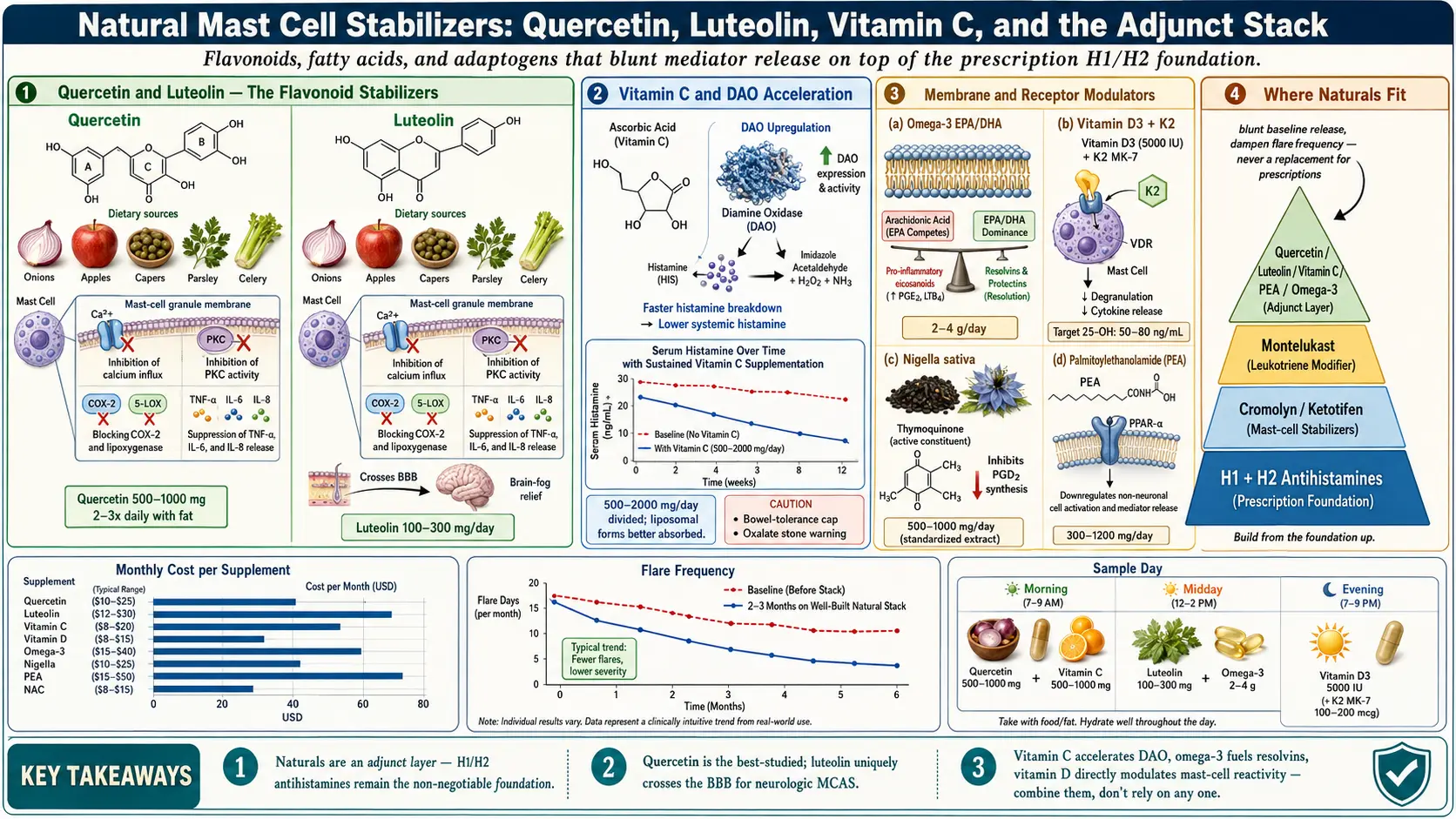
Table of Contents
- Where Natural Stabilizers Fit in MCAS Treatment
- Quercetin — Cell Studies and Small Human Trials
- Luteolin — Cell and Animal Studies, One Open-Label Trial
- Vitamin C — Blood Histamine Studies
- Nigella Sativa (Black Seed / Black Cumin)
- Holy Basil (Tulsi) — Stress Trials and Animal Data
- Vitamin D — Mast-Cell Studies and Urticaria Trials
- Omega-3 Fatty Acids (EPA/DHA)
- Palmitoylethanolamide (PEA) — Pain Trials, No MCAS Trials
- Bromelain — From Pineapple Stem
- N-Acetylcysteine (NAC) — Glutathione Precursor
- Combined Regimens — What Has Been Studied
- What the Evidence Does Not Show
- Product Quality — What Testing and Labels Show
- Introducing Supplements — What Is and Is Not Known
- Key Research Papers
- Connections
- Featured Videos
1. Where Natural Stabilizers Fit in MCAS Treatment
Mast cell activation syndrome (MCAS) has consensus diagnostic criteria. Under the criteria described in a 2020 review, MCAS is diagnosed when severe systemic mast-cell activation is shown by a substantial increase in serum tryptase above the person’s own baseline, and the symptoms are recurrent, involve more than one organ system and respond to drugs that stabilise mast cells or target their mediators. MCAS is then classed as primary (KIT-mutated, clonal mast cells), secondary (an underlying IgE-dependent allergy or other triggering condition) or idiopathic (Valent 2020). A 2021 critical review notes that alternative diagnostic criteria often lack specificity and validation, and that an increasing number of patients are given a misdiagnosis of MCAS based on nonspecific criteria, which can delay recognition of the conditions actually responsible (Gülen 2021). The prescription drugs that block mast-cell mediators or stabilise mast cells are covered on the H1 and H2 Blocker Stacks and Cromolyn and Ketotifen pages.
The compounds on this page are often called natural mast cell stabilizers. The evidence behind that name comes mostly from cultured cells and animals. A PubMed search (October 2026) found no clinical trial of any of them — quercetin, luteolin, vitamin C, nigella, holy basil, vitamin D, omega-3 fatty acids, palmitoylethanolamide (PEA), bromelain or N-acetylcysteine (NAC) — in people diagnosed with MCAS, and no study testing whether any of them allows the dose of a prescription mast-cell drug to be lowered. The human trials that do exist are small and were done in other conditions, such as pollen allergy, asthma, chronic urticaria or chronic pain.
Each section below states the level of evidence — cell, animal or human — and the condition in which it was studied. The doses mentioned are the ones the cited studies used, reported as study details, not instructions.
2. Quercetin — Cell Studies and Small Human Trials
Quercetin is a dietary flavonol. A 2016 review names onions, broccoli, apples, berries, grapes, some herbs, tea and wine as its main food sources (Mlcek 2016). A 2020 review covers its effects in allergic asthma, allergic rhinitis and atopic dermatitis (Jafarinia 2020). Quercetin is covered in more depth on the Quercetin for Allergy and Histamine page.
Mechanism (Cell Studies)
In human cord-blood-derived mast cells activated with anti-IgE, 100 µM quercetin and kaempferol inhibited the release of IL-6, IL-8 and TNF by 82–93%; quercetin, kaempferol and myricetin inhibited tryptase release by 79–96% and histamine release by 52–77%. The flavonols also suppressed the rise in intracellular calcium and inhibited phosphorylation of protein kinase C theta (Kempuraj 2005). In human cultured mast cells, quercetin and luteolin both strongly inhibited calcium influx and protein kinase C activity, and inhibited the release of histamine, leukotrienes, prostaglandin D2 and GM-CSF (Kimata 2000). Quercetin and cromolyn, both at 100 µM, were similarly effective in inhibiting histamine and prostaglandin D2 secretion from cultured human mast cells; quercetin was more effective than cromolyn in inhibiting IL-8 and TNF release from mast cells stimulated by substance P, and it worked when added before the trigger, whereas cromolyn had to be added together with the trigger (Weng 2012). A 2016 review lists inhibition of lipoxygenase among the actions attributed to quercetin (Mlcek 2016). All of these are laboratory results.
Human Evidence
The human trials are small, and none was done in MCAS:
- Pollen allergy — in 20 people with Japanese cedar pollinosis taking two capsules daily of 100 mg enzymatically modified isoquercitrin (EMIQ, a quercetin glycoside) or placebo for 8 weeks, total eye-symptom and eye-itching scores were significantly lower with EMIQ; the total nasal score only trended lower (p = 0.06, weeks 4–5), and serum IgE and cytokines were not significantly lowered (Kawai 2009). In 24 people taking 100 mg EMIQ or placebo for 8 weeks, starting 4 weeks before pollen release, the combined eye-symptom and medication score was significantly lower with EMIQ, with no significant difference in nasal symptoms (Hirano 2009). In 66 adults with pollen-allergy symptoms taking 200 mg/day of quercetin in a lecithin-based formulation or placebo for 4 weeks, several quality-of-life questionnaire scores, including eye itching, sneezing, nasal discharge and sleep disorder, improved compared with placebo (Yamada 2022).
- Chronic prostatitis / chronic pelvic pain — in a randomized double-blind trial in 30 men, quercetin 500 mg twice daily for one month improved the mean NIH symptom score from 21.0 to 13.1 (P = 0.003), while placebo changed it from 20.2 to 18.8 (not significant); 15 quercetin and 13 placebo patients were evaluated (Shoskes 1999).
- Interstitial cystitis — in an open-label 4-week study of 22 patients given a quercetin supplement equivalent to 500 mg of quercetin twice a day, the 20 who completed improved on all three measures used; the study had no placebo group (Katske 2001).
- Chronic fatigue — in a double-blind placebo-controlled trial in 78 adults reporting chronic fatigue symptoms, 500 mg/day of a lecithin-based quercetin formulation for two months improved fatigue scores compared with placebo (Rondanelli 2023). The participants reported fatigue symptoms; the abstract does not describe a diagnosis of chronic fatigue syndrome.
No clinical trial of quercetin in MCAS was found in a PubMed search (October 2026).
Forms Studied
- Plain quercetin — a 2019 pharmacokinetic paper describes poor solubility and low oral absorption as quercetin’s major drawbacks (Riva 2019).
- Lecithin-based (phytosome) formulation — in a crossover study in 12 healthy volunteers, it produced plasma quercetin levels up to 20 times those usually obtained with unformulated quercetin, with no notable side effects (Riva 2019). The same type of formulation was used in the Yamada 2022 and Rondanelli 2023 trials.
- EMIQ (enzymatically modified isoquercitrin) — in people, its absorption was significantly higher than that of isoquercitrin or rutin (Murota 2010). EMIQ is the form used in the two cedar-pollen trials.
Combination Forms
Quercetin is also sold combined with bromelain and vitamin C. In the open-label follow-up of the 1999 prostatitis trial, 17 men received a supplement containing quercetin with bromelain and papain, which the authors describe as enhancing bioflavonoid absorption (Shoskes 1999). No human pharmacokinetic study measuring quercetin absorption with and without bromelain was found in a PubMed search (October 2026).
Safety and Drug-Interaction Findings
In 18 healthy men, 500 mg/day of quercetin for 13 days lowered blood levels of the CYP3A substrate midazolam, which the authors interpret as induction (not inhibition) of CYP3A activity, more prominent in carriers of the CYP3A5*1 allele (Duan 2012). A 2018 safety review found that adverse effects of supplemental quercetin have rarely been reported in human intervention studies and were mild; quercetin supplements are frequently marketed in daily doses of up to 1000 mg, and adequate data on long-term use (more than 12 weeks) of 1000 mg or more are not available. Animal studies raised possible concerns about enhanced kidney damage in a previously damaged kidney and promotion of tumour development, especially in estrogen-dependent cancer, and animal and human studies showed interactions with certain drugs that altered their bioavailability (Andres 2018).
3. Luteolin — Cell and Animal Studies, One Open-Label Trial
Luteolin is a flavonoid found in many fruits, vegetables and herbs (Hao 2022), structurally related to quercetin.
Mechanism (Cell and Animal Studies)
In human cultured mast cells, luteolin inhibited the release of histamine, leukotrienes, prostaglandin D2 and GM-CSF and strongly inhibited calcium influx and protein kinase C activation; quercetin did so to a similar degree in the same experiments, and the authors describe luteolin as a potent inhibitor of human mast cell activation (Kimata 2000). In a cultured human mast-cell line, luteolin was significantly more potent than cromolyn at the same concentration in inhibiting the release of histamine, tryptase, metalloproteinase-9 and VEGF, and it inhibited IL-1β, IL-6, IL-8 and TNF, on which cromolyn had no effect (Tsilioni 2024). In mice, luteolin reduced paw swelling and serum histamine, TNF, MCP-1, IL-8 and IL-13 in models of FcεRI- and MRGPRX2-mediated mast-cell reactions (Hao 2022).
Blood-Brain Barrier and “Brain Fog”
The claim that luteolin crosses the blood-brain barrier better than quercetin is not supported by the comparison found: in a laboratory blood-brain-barrier model, luteolin and quercetin both showed medium permeability (Shimazu 2021). A 2015 review proposes that the “brain fog” reported in conditions including mastocytosis, POTS and chronic fatigue syndrome may be due to inflammatory molecules, including histamine released from mast cells, and reports that a liposomal luteolin formulation in olive fruit extract improved attention in children with autism spectrum disorder and brain fog in patients with mastocytosis (Theoharides 2015). A review is not a trial.
Human Evidence
The trial found is an open-label, 26-week study in 50 children with autism spectrum disorder, given a formulation containing luteolin (100 mg per capsule), quercetin (70 mg) and rutin (30 mg) in olive kernel oil, at 1 capsule per 10 kg of body weight per day. In the 40 children who completed it, adaptive-behaviour scores improved and aberrant-behaviour subscale scores fell by 26.6–34.8%; 27 of the 50 had a transient increase in irritability. There was no placebo group (Taliou 2013). No clinical trial of luteolin in MCAS was found in a PubMed search (October 2026).
4. Vitamin C — Blood Histamine Studies
Human Evidence
In 10 healthy adults, 2 g/day of vitamin C for two weeks lowered blood histamine by 38% compared with baseline and withdrawal values; a single 2 g dose did not change blood histamine 4 hours later (Johnston 1992). In 89 patients with allergic (19) or infectious (70) diseases, an intravenous infusion of 7.5 g of ascorbic acid lowered serum histamine, and the fall was larger in the patients with allergic diseases (Hagel 2013). Neither study was done in MCAS or measured mast-cell degranulation. The claim that vitamin C speeds up diamine oxidase, the enzyme that breaks down histamine, was not supported by any human study found in a PubMed search (October 2026), and no clinical trial of vitamin C in MCAS was found in that search.
Kidney Stones
In US cohorts of 156,735 women and 40,536 men followed for a median of about 11 years, supplemental vitamin C of 1000 mg/day or more was associated with a higher risk of kidney stones in men (hazard ratio 1.19) but not in women (Ferraro 2016).
5. Nigella Sativa (Black Seed / Black Cumin)
Mechanism (Cell Studies)
Thymoquinone is described as the active principle of Nigella sativa seeds. In rat peritoneal mast cells, nigellone, a polymer of thymoquinone, inhibited histamine release triggered by antigen, compound 48/80 and a calcium ionophore, apparently by lowering intracellular calcium and inhibiting protein kinase C (Chakravarty 1993).
Human Evidence
- Allergic rhinitis — a 2024 meta-analysis of 8 randomized trials found a higher total effective rate and better nasal-symptom scores with Nigella sativa than with control; adverse effects were transient and did not differ between groups. The authors note that the small number of studies and lower quality of trial design may affect the stability of the results (He 2024).
- Asthma — in a randomized double-blind trial in 80 adults with asthma, Nigella sativa oil capsules 500 mg twice daily for 4 weeks improved the Asthma Control Test score (21.1 vs 19.6, p = 0.044) and lowered blood eosinophils compared with placebo; the improvement in lung function was not significant (Koshak 2017).
- Mixed allergic diseases — four studies in a total of 152 patients with allergic rhinitis, bronchial asthma or atopic eczema, given the oil at 40–80 mg/kg/day, reported lower subjective symptom scores (Kalus 2003).
- Hand eczema — in a randomized trial of ointments applied to the skin, Nigella and betamethasone both improved hand eczema faster than a moisturising base cream, with no significant difference between Nigella and betamethasone (Yousefi 2013). This was topical use, not an oral supplement.
No clinical trial of Nigella sativa in MCAS was found in a PubMed search (October 2026).
Safety Findings
A 2026 case report describes a large subcutaneous haematoma in a 51-year-old man taking Nigella sativa oil (after an increase to 2000 mg/day) during a clinical trial, while also receiving dual antiplatelet therapy and chemotherapy and with a low platelet count; the authors rate it a possible adverse drug reaction in a patient with several other bleeding risk factors (Arab 2026).
6. Holy Basil (Tulsi) — Stress Trials and Animal Data
A 2020 review describes psychological stress as worsening asthma, atopic dermatitis and mastocytosis through mast cells stimulated by neuropeptides, especially corticotropin-releasing hormone (CRH), neurotensin and substance P (Theoharides 2020). Holy basil (Ocimum sanctum / Ocimum tenuiflorum) has been tested in people for stress, not for mast-cell disease.
Human Evidence
In an 8-week randomized double-blind trial in 100 adults experiencing stress, 125 mg of a standardized holy basil extract twice daily improved perceived-stress and insomnia scores compared with placebo; hair cortisol was lower at week 8, and salivary cortisol and blood pressure were lower after a laboratory stress test (Lopresti 2022). A 2017 systematic review identified 24 human studies of tulsi; all reported favourable clinical outcomes and none reported significant adverse events, and the authors call for further studies to clarify dose and dose form (Jamshidi 2017).
Mast-Cell Evidence (Animal)
In rats, injected holy basil seed oil decreased the percentage of histamine released from peritoneal mast cells of sensitized animals (Mediratta 2002). No study has tested whether holy basil changes stress-related flares in MCAS, and no clinical trial of holy basil in MCAS was found in a PubMed search (October 2026).
7. Vitamin D — Mast-Cell Studies and Urticaria Trials
Mechanism (Cell and Animal Studies)
Mouse and human mast cells can convert 25-hydroxyvitamin D3 to its active form, 1α,25-dihydroxyvitamin D3; both metabolites suppressed IgE-induced mast-cell mediator production in a vitamin D receptor–dependent way in cultured cells, and vitamin D3 metabolites applied to the skin reduced IgE-mediated skin swelling in mice (Yip 2014).
Urticaria
A 2021 meta-analysis found lower 25-hydroxyvitamin D levels in people with urticaria than in controls (mean difference −9.35 ng/mL across 17 studies) and, in six supplementation trials, a reduction in urticaria symptom scores (Li 2021). In a 12-week randomized trial in 42 people with chronic urticaria, all of whom also received a standardized three-drug therapy, 4000 IU/day of vitamin D3 was followed by a further 40% fall in total symptom scores, not seen with 600 IU/day; the difference between the groups at week 12 was a trend (P = .052), and allergy-medication use did not differ between groups (Rorie 2014).
MCAS
The one MCAS study of vitamin D status found does not show widespread deficiency: in 100 German patients with MCAS, 53% had vitamin D levels above 30 ng/mL and 34% below 20 ng/mL, compared with 8% and 75% in the German general population. The authors conclude that this argues against an essential contribution of vitamin D deficiency to MCAS in Germany, while not excluding smaller effects (Wirz 2017). No trial of vitamin D supplementation in MCAS was found in a PubMed search (October 2026).
8. Omega-3 Fatty Acids (EPA/DHA)
Mechanism (Cell and Animal Studies)
Arachidonic acid is the precursor of the pro-inflammatory prostaglandins and leukotrienes, but arachidonic, docosahexaenoic (DHA) and eicosapentaenoic (EPA) acids can also be metabolized into specialized pro-resolving mediators with anti-inflammatory properties; a 2025 review describes mast cells both producing these mediators and responding to them (Fukuishi 2025). In mice, oral protectin D1, a mediator derived from DHA, suppressed IgE-mediated skin reactions and systemic anaphylaxis and inhibited mast-cell degranulation (Yoon 2025). That study gave the mediator itself, not fish oil.
Human Evidence
No clinical trial of omega-3 fatty acids in MCAS was found in a PubMed search (October 2026).
9. Palmitoylethanolamide (PEA) — Pain Trials, No MCAS Trials
Mechanism (Animal Studies)
PEA is an endogenous lipid, the amide of ethanolamine and palmitic acid; a 2005 review identifies the receptor PPAR-α as mediating its anti-inflammatory actions (LoVerme 2005). The term “autacoid local inflammation antagonism” (ALIA) comes from a 1993 study in young rats in which N-acylethanolamines, the lipid family PEA belongs to, given systemically, reduced mast-cell degranulation caused by substance P injected into the ear (Aloe 1993).
Human Evidence
The human trials are in pain. A 2023 meta-analysis of 11 double-blind randomized trials (774 patients) found lower pain scores with PEA than with comparators and no major side effects attributed to PEA (Lang-Illievich 2023). A 2025 meta-analysis of 18 randomized trials (1196 patients) found reduced pain at 6, 8 and 24–26 weeks, across nociceptive, neuropathic and nociplastic pain (Viña 2025). In a 12-week randomized trial in 54 people with irritable bowel syndrome, PEA with polydatin (200 mg/20 mg twice daily) improved abdominal pain compared with placebo but did not significantly change the mucosal mast-cell count (Cremon 2017). No clinical trial of PEA in MCAS was found in a PubMed search (October 2026).
10. Bromelain — From Pineapple Stem
Bromelain is a family of protein-digesting enzymes from the pineapple plant (Gläser 2006).
Mast-Cell Evidence (Animal)
In diabetic rats with skin wounds, injected bromelain sped wound healing, increased the total number of mast cells and reduced the count of degranulated mast cells (Fathi 2022). No clinical trial of bromelain in MCAS was found in a PubMed search (October 2026).
Combinations
Bromelain is frequently combined with quercetin in a single product; the absorption evidence is described in the quercetin section above.
Platelet Findings
In laboratory studies with human platelets, bromelain prevented thrombin-induced platelet aggregation (Metzig 1999) and reduced ADP- and TRAP-6-induced aggregation (Gläser 2006); bromelain given by mouth reduced thrombus formation in rat blood vessels (Metzig 1999). No human study of bromelain with anticoagulant drugs or around surgery was found in a PubMed search (October 2026).
11. N-Acetylcysteine (NAC) — Glutathione Precursor
NAC acts as a precursor of L-cysteine for the synthesis of glutathione; a 2014 review concludes that NAC is not a powerful antioxidant in its own right, that its strength is the targeted replenishment of glutathione in deficient cells, and that it is likely to be ineffective in cells replete in glutathione (Rushworth 2014). A 2021 review proposes that NAC can promote hydrogen sulfide production in mast cells and that hydrogen sulfide opposes mast-cell activation (McCarty 2021); this is a proposed mechanism, not an effect measured in people. No clinical trial of NAC in MCAS was found in a PubMed search (October 2026).
Regulatory Note
In August 2022 the US Food and Drug Administration announced a final guidance stating its intent to exercise enforcement discretion for the sale and distribution of certain products that contain NAC and are labeled as dietary supplements (Federal Register, 2 August 2022).
12. Combined Regimens — What Has Been Studied
No study testing a combined daily regimen of these supplements in MCAS was found in a PubMed search (October 2026). A 2025 case report describes a 42-year-old woman with complex regional pain syndrome, hypermobile Ehlers-Danlos syndrome and a family history of MCAS whose treatment included montelukast, cromolyn and a gastrointestinal regimen that included quercetin with bromelain; her course was followed over six months, during which her health declined (Shabbir 2025). A single case report cannot show whether any one element helped.
The doses on this page are the ones the cited studies used. Decisions about medicines and supplements belong with a clinician.
13. What the Evidence Does Not Show
- No comparison with prescription drugs in MCAS — no study comparing these supplements with H1 and H2 antihistamines or prescription mast-cell stabilizers in people with MCAS, or testing them as replacements, was found in a PubMed search (October 2026). The only quercetin–cromolyn and luteolin–cromolyn comparisons found are in cultured cells (Weng 2012, Tsilioni 2024).
- No data in acute flares — no study of any of these compounds during acute MCAS flares or anaphylaxis was found in that search.
- “Natural” does not mean free of effects — the sections above report a drug interaction (quercetin and CYP3A), platelet effects in laboratory studies (bromelain), a bleeding case report (Nigella sativa with antiplatelet drugs) and a higher kidney-stone risk in men taking high-dose vitamin C supplements.
- Triggers — diet, sleep, stress, environmental exposures and infections are covered on the Triggers and Flare Management page.
14. Product Quality — What Testing and Labels Show
- Adulteration and testing — a 2025 review describes adulteration as a continuous problem for dietary supplements. US manufacturers are required to follow good manufacturing practices, including quality-control testing for identity, purity, strength and composition and limits on contaminants; certification or verification programs, supplier quality agreements and third-party testing are among the tools the review lists for reducing adulteration risk (Ma 2025).
- Different forms of the same compound — products with the same main ingredient can differ in form; plain quercetin, EMIQ and a lecithin-based formulation were absorbed differently in the studies described above (Riva 2019, Murota 2010).
- Inactive ingredients — products also differ in fillers, dyes and capsule materials. No study of reactions to supplement inactive ingredients in people with MCAS was found in a PubMed search (October 2026).
- Single-ingredient and combination products — with a single-ingredient product, a reaction can be traced to one compound; with a combination product, the cause stays unclear.
15. Introducing Supplements — What Is and Is Not Known
No published study testing a schedule for introducing supplements in MCAS was found in a PubMed search (October 2026). Trigger diaries — recording symptoms, timing and suspected triggers — are described on the Triggers and Flare Management page.
Because products from different makers differ in form and in inactive ingredients, a reaction to one product is not necessarily a reaction to its main compound: two quercetin products from different makers are, in a meaningful sense, different products.
Key Research Papers
- Mlcek J, Jurikova T, Skrovankova S, Sochor J (2016). Quercetin and Its Anti-Allergic Immune Response. Molecules 21(5):623. — PubMed PMID: 27187333 (corrected 2026-10-14: this entry previously gave the journal as Nutrients 8(3):167 with a DOI that resolves to a different paper, Li et al., “Quercetin, Inflammation and Immunity”)
- Jafarinia M, Sadat Hosseini M, Kasiri N, et al. (2020). Quercetin with the potential effect on allergic diseases. Allergy, Asthma & Clinical Immunology 16:36. — doi:10.1186/s13223-020-00434-0
- Theoharides TC, Stewart JM, Hatziagelaki E, Kolaitis G. Brain “fog,” inflammation and obesity: key aspects of neuropsychiatric disorders improved by luteolin. Frontiers in Neuroscience. 2015;9:225. — doi:10.3389/fnins.2015.00225
- Yip KH, Kolesnikoff N, Yu C, et al. Mechanisms of vitamin D3 metabolite repression of IgE-dependent mast cell activation. J Allergy Clin Immunol. 2014;133(5):1356–1364. — doi:10.1016/j.jaci.2013.11.030
- Valent P, Akin C, Nedoszytko B, et al. (2020). Diagnosis, Classification and Management of Mast Cell Activation Syndromes (MCAS) in the Era of Personalized Medicine. International Journal of Molecular Sciences 21(23):9030. — PubMed PMID: 33261124
- Gülen T, Akin C, Bonadonna P, et al. (2021). Selecting the Right Criteria and Proper Classification to Diagnose Mast Cell Activation Syndromes: A Critical Review. Journal of Allergy and Clinical Immunology: In Practice 9(11):3918–3928. — PubMed PMID: 34166845
- Weng Z, Zhang B, Asadi S, et al. (2012). Quercetin is more effective than cromolyn in blocking human mast cell cytokine release and inhibits contact dermatitis and photosensitivity in humans. PLoS ONE 7(3):e33805. — PubMed PMID: 22470478
- Kempuraj D, Madhappan B, Christodoulou S, et al. (2005). Flavonols inhibit proinflammatory mediator release, intracellular calcium ion levels and protein kinase C theta phosphorylation in human mast cells. British Journal of Pharmacology 145(7):934–44. — PubMed PMID: 15912140
- Kimata M, Shichijo M, Miura T, et al. (2000). Effects of luteolin, quercetin and baicalein on immunoglobulin E-mediated mediator release from human cultured mast cells. Clinical and Experimental Allergy 30(4):501–8. — PubMed PMID: 10718847
- Kawai M, Hirano T, Arimitsu J, et al. (2009). Effect of enzymatically modified isoquercitrin, a flavonoid, on symptoms of Japanese cedar pollinosis: a randomized double-blind placebo-controlled trial. International Archives of Allergy and Immunology 149(4):359–68. — PubMed PMID: 19295240
- Hirano T, Kawai M, Arimitsu J, et al. (2009). Preventative effect of a flavonoid, enzymatically modified isoquercitrin on ocular symptoms of Japanese cedar pollinosis. Allergology International 58(3):373–82. — PubMed PMID: 19454839
- Yamada S, Shirai M, Inaba Y, et al. (2022). Effects of repeated oral intake of a quercetin-containing supplement on allergic reaction: a randomized, placebo-controlled, double-blind parallel-group study. European Review for Medical and Pharmacological Sciences 26(12):4331–4345. — PubMed PMID: 35776034
- Shoskes DA, Zeitlin SI, Shahed A, et al. (1999). Quercetin in men with category III chronic prostatitis: a preliminary prospective, double-blind, placebo-controlled trial. Urology 54(6):960–3. — PubMed PMID: 10604689
- Katske F, Shoskes DA, Sender M, et al. (2001). Treatment of interstitial cystitis with a quercetin supplement. Techniques in Urology 7(1):44–6. — PubMed PMID: 11272677
- Rondanelli M, Riva A, Petrangolini G, et al. (2023). Two-month period of 500 mg lecithin-based delivery form of quercetin daily dietary supplementation counterbalances chronic fatigue symptoms: A double-blind placebo controlled clinical trial. Biomedicine & Pharmacotherapy 167:115453. — PubMed PMID: 37716119
- Riva A, Ronchi M, Petrangolini G, et al. (2019). Improved Oral Absorption of Quercetin from Quercetin Phytosome®, a New Delivery System Based on Food Grade Lecithin. European Journal of Drug Metabolism and Pharmacokinetics 44(2):169–177. — PubMed PMID: 30328058
- Murota K, Matsuda N, Kashino Y, et al. (2010). alpha-Oligoglucosylation of a sugar moiety enhances the bioavailability of quercetin glucosides in humans. Archives of Biochemistry and Biophysics 501(1):91–7. — PubMed PMID: 20638359
- Duan KM, Wang SY, Ouyang W, et al. (2012). Effect of quercetin on CYP3A activity in Chinese healthy participants. Journal of Clinical Pharmacology 52(6):940–6. — PubMed PMID: 21680781
- Andres S, Pevny S, Ziegenhagen R, et al. (2018). Safety Aspects of the Use of Quercetin as a Dietary Supplement. Molecular Nutrition & Food Research 62(1). — PubMed PMID: 29127724
- Tsilioni I, Theoharides T (2024). Luteolin Is More Potent than Cromolyn in Their Ability to Inhibit Mediator Release from Cultured Human Mast Cells. International Archives of Allergy and Immunology 185(8):803–809. — PubMed PMID: 38588651
- Hao Y, Che D, Yu Y, et al. (2022). Luteolin inhibits FcεRΙ- and MRGPRX2-mediated mast cell activation by regulating calcium signaling pathways. Phytotherapy Research 36(5):2197–2206. — PubMed PMID: 35315143
- Shimazu R, Anada M, Miyaguchi A, et al. (2021). Evaluation of Blood-Brain Barrier Permeability of Polyphenols, Anthocyanins, and Their Metabolites. Journal of Agricultural and Food Chemistry 69(39):11676–11686. — PubMed PMID: 34555897
- Taliou A, Zintzaras E, Lykouras L, et al. (2013). An open-label pilot study of a formulation containing the anti-inflammatory flavonoid luteolin and its effects on behavior in children with autism spectrum disorders. Clinical Therapeutics 35(5):592–602. — PubMed PMID: 23688534
- Johnston CS, Martin LJ, Cai X (1992). Antihistamine effect of supplemental ascorbic acid and neutrophil chemotaxis. Journal of the American College of Nutrition 11(2):172–6. — PubMed PMID: 1578094
- Hagel AF, Layritz CM, Hagel WH, et al. (2013). Intravenous infusion of ascorbic acid decreases serum histamine concentrations in patients with allergic and non-allergic diseases. Naunyn-Schmiedeberg’s Archives of Pharmacology 386(9):789–93. — PubMed PMID: 23666445
- Ferraro PM, Curhan GC, Gambaro G, et al. (2016). Total, Dietary, and Supplemental Vitamin C Intake and Risk of Incident Kidney Stones. American Journal of Kidney Diseases 67(3):400–7. — PubMed PMID: 26463139
- Chakravarty N (1993). Inhibition of histamine release from mast cells by nigellone. Annals of Allergy 70(3):237–42. — PubMed PMID: 7680846
- He Y, Hu X, Chang L, et al. (2024). Meta-analysis of randomized controlled trials assessing the efficacy of nigella sativa supplementation for allergic rhinitis treatment. Frontiers in Pharmacology 15:1417013. — PubMed PMID: 39372205
- Koshak A, Wei L, Koshak E, et al. (2017). Nigella sativa Supplementation Improves Asthma Control and Biomarkers: A Randomized, Double-Blind, Placebo-Controlled Trial. Phytotherapy Research 31(3):403–409. — PubMed PMID: 28093815
- Kalus U, Pruss A, Bystron J, et al. (2003). Effect of Nigella sativa (black seed) on subjective feeling in patients with allergic diseases. Phytotherapy Research 17(10):1209–14. — PubMed PMID: 14669258
- Yousefi M, Barikbin B, Kamalinejad M, et al. (2013). Comparison of therapeutic effect of topical Nigella with Betamethasone and Eucerin in hand eczema. Journal of the European Academy of Dermatology and Venereology 27(12):1498–504. — PubMed PMID: 23198836
- Arab A, Ramezaninejad S, Salehifar E (2026). Extensive Subcutaneous Hematoma in a Patient Receiving Nigella sativa Oil, Dual Antiplatelet Therapy, and Oxaliplatin-Based Chemotherapy: A Case Report. Hospital Pharmacy published online 2026. — PubMed PMID: 42682876
- Theoharides TC (2020). The impact of psychological stress on mast cells. Annals of Allergy, Asthma & Immunology 125(4):388–392. — PubMed PMID: 32687989
- Lopresti AL, Smith SJ, Metse AP, et al. (2022). A randomized, double-blind, placebo-controlled trial investigating the effects of an Ocimum tenuiflorum (Holy Basil) extract (Holixer(TM)) on stress, mood, and sleep in adults experiencing stress. Frontiers in Nutrition 9:965130. — PubMed PMID: 36185698
- Jamshidi N, Cohen MM (2017). The Clinical Efficacy and Safety of Tulsi in Humans: A Systematic Review of the Literature. Evidence-Based Complementary and Alternative Medicine 2017:9217567. — PubMed PMID: 28400848
- Mediratta PK, Sharma KK, Singh S (2002). Evaluation of immunomodulatory potential of Ocimum sanctum seed oil and its possible mechanism of action. Journal of Ethnopharmacology 80(1):15–20. — PubMed PMID: 11891082
- Wirz S, Hertfelder HJ, Seidel H, et al. (2017). Lower prevalence of vitamin D insufficiency in German patients with systemic mast cell activation syndrome compared with the general population. Zeitschrift für Gastroenterologie 55(12):1297–1306. — PubMed PMID: 29212100
- Li Y, Cao Z, Guo J, et al. (2021). Effects of Serum Vitamin D Levels and Vitamin D Supplementation on Urticaria: A Systematic Review and Meta-Analysis. International Journal of Environmental Research and Public Health 18(9):4911. — PubMed PMID: 34062998
- Rorie A, Goldner WS, Lyden E, et al. (2014). Beneficial role for supplemental vitamin D3 treatment in chronic urticaria: a randomized study. Annals of Allergy, Asthma & Immunology 112(4):376–82. — PubMed PMID: 24507460
- Fukuishi N, Takahama K, Kurosaki H, et al. (2025). The Role of Endogenous Specialized Proresolving Mediators in Mast Cells and Their Involvement in Inflammation and Resolution. International Journal of Molecular Sciences 26(4):1491. — PubMed PMID: 40003957
- Yoon J, Kim D, Jeong NH, et al. (2025). Protectin D1, an omega-3-derived lipid mediator, resolves mast cell-driven allergic inflammation via FcεRⅠ signaling. Biomedicine & Pharmacotherapy 187:118060. — PubMed PMID: 40253829
- LoVerme J, La Rana G, Russo R, et al. (2005). The search for the palmitoylethanolamide receptor. Life Sciences 77(14):1685–98. — PubMed PMID: 15963531
- Aloe L, Leon A, Levi-Montalcini R (1993). A proposed autacoid mechanism controlling mastocyte behaviour. Agents and Actions 39 Spec No:C145–7. — PubMed PMID: 7505999
- Lang-Illievich K, Klivinyi C, Lasser C, et al. (2023). Palmitoylethanolamide in the Treatment of Chronic Pain: A Systematic Review and Meta-Analysis of Double-Blind Randomized Controlled Trials. Nutrients 15(6):1350. — PubMed PMID: 36986081
- Viña I, López-Moreno M (2025). Meta-Analysis of Palmitoylethanolamide in Pain Management: Addressing Literature Gaps and Enhancing Understanding. Nutrition Reviews 83(7):e1604–e1618. — PubMed PMID: 39798151
- Cremon C, Stanghellini V, Barbaro MR, et al. (2017). Randomised clinical trial: the analgesic properties of dietary supplementation with palmitoylethanolamide and polydatin in irritable bowel syndrome. Alimentary Pharmacology & Therapeutics 45(7):909–922. — PubMed PMID: 28164346
- Gläser D, Hilberg T (2006). The influence of bromelain on platelet count and platelet activity in vitro. Platelets 17(1):37–41. — PubMed PMID: 16308185
- Metzig C, Grabowska E, Eckert K, et al. (1999). Bromelain proteases reduce human platelet aggregation in vitro, adhesion to bovine endothelial cells and thrombus formation in rat vessels in vivo. In Vivo 13(1):7–12. — PubMed PMID: 10218125
- Fathi AN, Babaei S, Babaei S, et al. (2022). Effect of bromelain on mast cell numbers and degranulation in diabetic rat wound healing. Journal of Wound Care 31(Sup8):S4–S11. — PubMed PMID: 36004940
- Rushworth GF, Megson IL (2014). Existing and potential therapeutic uses for N-acetylcysteine: the need for conversion to intracellular glutathione for antioxidant benefits. Pharmacology & Therapeutics 141(2):150–9. — PubMed PMID: 24080471
- McCarty MF, Lerner A, DiNicolantonio JJ, et al. (2021). Nutraceutical Aid for Allergies - Strategies for Down-Regulating Mast Cell Degranulation. Journal of Asthma and Allergy 14:1257–1266. — PubMed PMID: 34737578
- Shabbir Z, Mazdeyasnan L, McLain M (2025). A Case of Complex Regional Pain Syndrome With Hypermobile Ehlers-Danlos Syndrome and Mast Cell Activation Syndrome: The Role of Unconventional Therapies. Cureus 17(7):e87898. — PubMed PMID: 40809669
- Ma C, Monagas M, Bronstein L, et al. (2025). Dietary Supplement Adulteration: Laboratory Approaches to Risk Mitigation. Journal of Natural Products 88(8):2029–2040. — PubMed PMID: 40700739
PubMed Topic Searches
Live PubMed searches for the peer-reviewed literature on natural mast cell stabilizers and related MCAS adjuncts.
- PubMed: Quercetin and mast cells
- PubMed: Luteolin, mast cells, and MCAS
- PubMed: Vitamin C and histamine
- PubMed: Nigella sativa and allergic disease
- PubMed: Vitamin D and mast cells
- PubMed: PEA (palmitoylethanolamide) and mast cells
- PubMed: Natural mast cell stabilizers
- PubMed: Omega-3s and mast cell inflammation