Hepatitis A
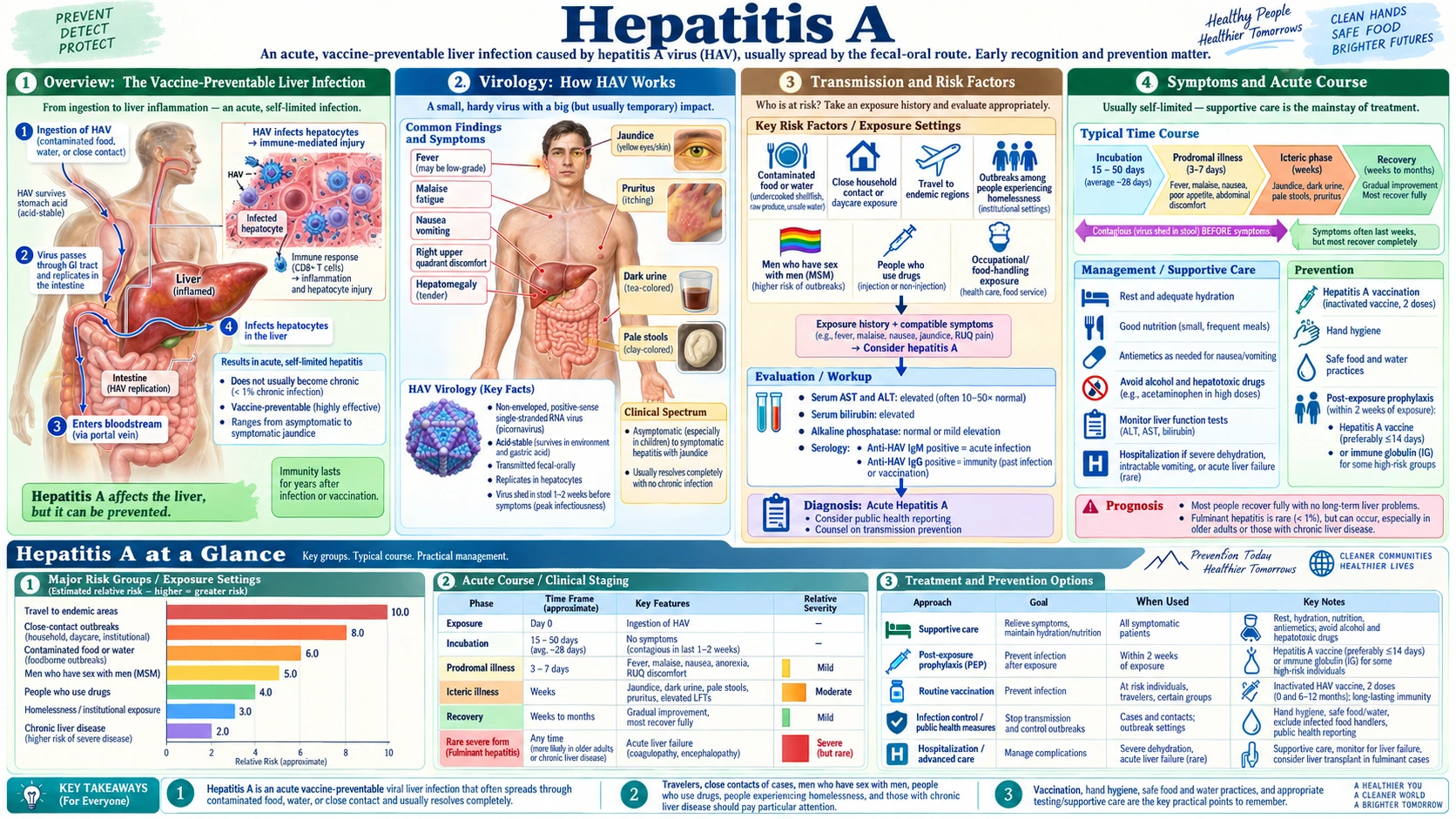
Table of Contents
- Overview: The Vaccine-Preventable Liver Infection
- Virology: How HAV Works
- Transmission and Risk Factors
- Symptoms and Acute Course
- Diagnosis
- Management and Treatment
- Fulminant Hepatitis: When HAV Becomes Life-Threatening
- Vaccination and Post-Exposure Prevention
- Special Populations
- Public Health and Outbreaks
- Key Research Papers
- Connections
- Featured Videos
Overview: The Vaccine-Preventable Liver Infection
Hepatitis A is a liver infection caused by the hepatitis A virus (HAV) — a single-stranded RNA picornavirus belonging to the family Picornaviridae, genus Hepatovirus. It is one of the most common vaccine-preventable infections in the world, yet it continues to cause substantial illness globally and, in vulnerable populations, life-threatening liver failure.
Globally, the World Health Organization estimates approximately 1.5 million clinical cases of hepatitis A occur each year, with many more mild or silent infections going undiagnosed. In developing nations, where sanitation infrastructure is limited, HAV exposure during childhood is so universal that virtually the entire adult population carries lifelong immunity from prior infection — but this means children bear the burden of disease. In higher-income countries, improved sanitation has reduced childhood exposure, leaving larger numbers of susceptible adults who can experience more severe illness when finally exposed.
The United States saw a jarring reminder of HAV's continued power beginning in 2016, when multistate outbreaks of unprecedented scale swept through homeless populations and people who use drugs. By September 23, 2022, the U.S. Centers for Disease Control and Prevention (CDC) counted outbreaks in 37 states, with about 44,650 cases, 27,250 hospitalizations and 415 deaths. These outbreaks, unlike the historical pattern of restaurant-associated food-handler exposures or travel-related cases, spread through social networks and drug-use behaviors in ways that were harder to interrupt.
What makes hepatitis A distinct from its hepatitis B and C counterparts is its fundamentally different natural history. HAV causes acute, self-limited illness — it does not establish chronic infection, does not integrate into the host genome, and does not create a carrier state. Once you recover from hepatitis A, you have lifelong immunity. In the overwhelming majority of healthy adults, the illness resolves completely within 2–4 weeks, though fatigue can persist for months. The exception — and it is a critical one — is patients with pre-existing liver disease, older adults, and the immunocompromised, in whom HAV can trigger fulminant hepatic failure (sudden liver failure), which can kill. In a US series of 29 adults with this kind of liver failure, 55% recovered on their own, 31% had a liver transplant and 14% had died at 3 weeks.
The incubation period from exposure to symptoms is 15 to 50 days, with an average of 28 days — longer than most people expect. HAV is extraordinarily stable in the environment: it survives on surfaces for weeks, resists acidic conditions (including stomach acid), and is not inactivated by bile or detergents. It is inactivated by boiling (1 minute), chlorination, and ultraviolet (UV) radiation, which is why water treatment and food safety practices are so important.
Virology: How HAV Works
Understanding HAV's biology explains why it behaves so differently from hepatitis B and C — and why a vaccine is both possible and highly effective.
Viral Structure
HAV is a non-enveloped virus with an icosahedral protein capsid surrounding a single strand of positive-sense RNA. The absence of a lipid envelope is the key to its environmental toughness. Enveloped viruses like hepatitis B and C are relatively fragile because detergents, bile salts, and organic solvents disrupt their lipid coat. The virus shed in stool has no such coat — it survives in bile (which is why fecal shedding is so efficient), in seawater, on food surfaces, and on hands. The protein capsid is robust enough to resist a wide range of temperatures and pH conditions, contributing to HAV's remarkable ability to persist in shellfish, on produce, and in sewage-contaminated water.
That textbook picture has a wrinkle. A 2013 study in Nature found that HAV leaving infected cells is cloaked in membranes taken from the host cell. These enveloped forms, called eHAV, are fully infectious and circulate in the blood of infected people. The cloak shields the virus from neutralizing antibodies, which probably helps it spread within the liver. The same laboratory work found that antibodies against the virus's protein shell still restrict replication after infection with eHAV. The authors offered this as a possible explanation for how vaccine and antibody can prevent disease when given as late as 2 weeks after exposure, when the virus is already replicating in the liver.
Replication and Liver Targeting
After oral ingestion, HAV passes through the stomach and small intestine, where it is absorbed and enters the portal circulation. The virus travels to the liver, where it specifically infects hepatocytes — the main working cells of the liver. Inside the hepatocyte, HAV uses the cell's ribosomes to translate its RNA genome into a single large polyprotein, which is then cleaved into structural and non-structural proteins needed for new viral assembly. Newly assembled virions are secreted into bile and released into the intestinal lumen, beginning fecal shedding before the patient becomes symptomatic.
Immune-Mediated Damage: The Virus Is Not the Killer
One of the most counterintuitive and clinically important facts about HAV is that the virus itself is not directly cytopathic — it does not kill hepatocytes by its mere presence. The liver damage in hepatitis A is caused by the cytotoxic T-lymphocyte (CTL) immune response against HAV-infected hepatocytes. The immune system recognizes viral antigens displayed on infected hepatocyte surfaces and destroys those cells to eliminate the viral factory.
This immune-mediated mechanism explains several clinical observations: symptoms and jaundice appear not at peak viremia, but roughly 2–3 weeks later, when the immune response is peaking. The prodrome — fatigue, malaise, nausea — actually begins as the immune response ramps up. Paradoxically, a stronger immune response produces more symptoms but also clears the virus more efficiently. Children under six years old, who have immature immune systems, are frequently completely asymptomatic — they shed virus and spread it without knowing they are infected.
Why No Chronic Infection
Unlike hepatitis B virus (HBV) and HCV, HAV does not integrate into the host genome and cannot establish a reservoir that persists after the acute infection resolves. Once the immune system clears all infected hepatocytes and neutralizes circulating virus, the infection is gone completely. The immune response generates long-lived memory B cells and plasma cells that produce anti-HAV immunoglobulin G (IgG) antibodies, providing lifelong protection against reinfection. This clean resolution makes HAV both vaccine-preventable and self-limiting in most people.
Fecal shedding of virus — which drives transmission — is highest during the late incubation period, approximately 1–2 weeks before symptoms begin, and continues into the first week of jaundice. This means that infected people are at their most infectious before they or anyone around them knows they are sick, which is why hepatitis A spreads so efficiently in communities.
Transmission and Risk Factors
HAV spreads primarily by the fecal-oral route — contaminated fecal material enters the mouth, usually through contaminated food, water, or direct contact with an infected person. Understanding the specific pathways helps explain both who is at risk and how outbreaks can be prevented.
Contaminated Food and Water
- Shellfish — raw or undercooked bivalve mollusks (oysters, clams, mussels) are a classic and recurring source of HAV outbreaks. Bivalves are filter feeders that concentrate viruses from the surrounding water, including sewage-contaminated coastal waters. A single oyster can concentrate HAV to levels thousands of times higher than the surrounding water. The virus is not killed by brief cooking; the 2020 Advisory Committee on Immunization Practices (ACIP) report states that heating foods above 85°C (185°F) for 1 minute inactivates it. Food-safety descriptions for shellfish list boiling for at least 1 minute or steam-cooking for 4–9 minutes until the shells open and the meat reaches 85°C.
- Fresh produce — strawberries, scallions (green onions), raspberries, and leafy greens have all been linked to large HAV outbreaks when irrigated with contaminated water or handled by infected workers during harvesting, processing, or packaging. A 2016 US multistate outbreak was linked to frozen strawberries imported from Egypt. In Europe, frozen strawberries from one Polish producer were linked to 20 cases in Sweden and 14 in Austria in 2018, and 65 cases in Germany from October 2018 to January 2020 were traced to frozen strawberry cake; that producer had received strawberries from Egypt. Food outbreaks continue: in 2022–2023, fresh and frozen organic strawberries from a single grower caused 39 reported cases in the US and Canada, with 21 hospitalizations and no reported deaths.
- Food handlers — an infected food handler shedding virus in a restaurant kitchen can expose hundreds of people before being diagnosed. Because shedding peaks before symptoms, food handlers often don't know they are infectious. Post-exposure vaccination campaigns targeting restaurant patrons are a common public health response.
- Contaminated water — waterborne outbreaks occur in settings with inadequate water treatment or when flooding contaminates municipal water supplies with sewage. HAV can survive in water for weeks under cold conditions. Routine chlorination at levels used in municipal treatment inactivates HAV.
Person-to-Person Contact
- Household and close contact — people living with or providing care for an infected person are at high risk through direct contact, shared items, and fecal contamination of surfaces. Diaper-changing in households with infected infants is a significant exposure route.
- Sexual contact — oral-anal sexual contact (rimming) is an established and important route of HAV transmission, particularly among men who have sex with men (MSM). This route contributed significantly to the US outbreaks that began in 2016 and previous European outbreaks in MSM communities.
- Childcare centers — young children, especially those not yet toilet-trained, are often asymptomatic but effective spreaders. HAV outbreaks in daycare settings were historically common in the US before universal childhood vaccination was implemented in 2006.
Injection Drug Use
People who inject drugs are at elevated risk through both fecal-oral routes (contaminated drug paraphernalia, poor sanitation in settings where drugs are used) and potentially through trace blood contamination of shared equipment. The US outbreaks that began in 2016 were the first in which injection drug use played a central amplifying role in HAV spread at a national scale, a pattern previously unusual for this primarily fecal-oral pathogen.
International Travel
Travel to regions with high HAV endemicity is a well-established risk factor. High-risk destinations include much of Central America, South America, the Caribbean, Africa, the Middle East, Eastern Europe, and most of Asia. The risk increases with duration of stay, access to safe water and food, and lodging conditions. ACIP 2020 describes a first dose as soon as travel to a high-risk destination is considered; protection begins within 2 weeks of the first dose.
Symptoms and Acute Course
Hepatitis A typically follows a predictable course, though the severity and duration vary considerably by age. Children under six are often completely asymptomatic; older children and adults are increasingly likely to develop frank illness.
Prodromal Phase (Days 1–7 Before Jaundice)
The illness begins with a prodromal phase lasting approximately 3–7 days, characterized by constitutional and gastrointestinal symptoms that can easily be mistaken for a flu-like illness or food poisoning:
- Fatigue and malaise — often profound and out of proportion to other symptoms; may be the first symptom noticed
- Anorexia — loss of appetite, often complete aversion to food, which can be severe
- Nausea and vomiting — common; can contribute to dehydration in severe cases
- Low-grade fever — typically 38–39°C; high fever points clinicians toward other diagnoses
- Right upper quadrant pain or tenderness — the liver capsule stretches as the liver becomes inflamed and enlarged
- Myalgias — muscle aches, contributing to the flu-like presentation
During this prodromal phase, fecal shedding of HAV is at its highest, and liver enzyme levels (alanine aminotransferase (ALT) and aspartate aminotransferase (AST)) are rising rapidly — but jaundice has not yet appeared. This is the period of greatest transmission risk.
Icteric Phase (Jaundice; Typically Weeks 1–3)
Jaundice develops as bilirubin accumulates in the bloodstream due to impaired hepatocyte function and cholestasis. The full picture of icteric hepatitis A includes:
- Jaundice — yellowing of the sclerae (whites of the eyes) typically appears before skin yellowing; most prominent in fair-skinned individuals
- Dark urine ("tea-colored" or "cola-colored") — conjugated bilirubin spills into the urine; this is often noticed before jaundice of the skin is obvious and prompts medical attention
- Pale or clay-colored stools — reduced bile excretion into the intestine causes stools to lose their normal brown pigment
- Pruritus (itching) — bile salts depositing in skin cause intense itching, particularly with the cholestatic variant
- Hepatomegaly — the liver is typically tender and enlarged on examination
- Splenomegaly — occurs in a subset of patients, consistent with a systemic immune response
Many patients feel their worst just as jaundice appears, then gradually improve over the following 1–2 weeks as the immune response brings the infection under control. Peak alanine aminotransferase/aspartate aminotransferase typically occur at or just before jaundice onset and can reach 1,000–5,000 international units (IU)/L or higher — dramatically elevated compared to normal (typically <40 international units/L).
Age Differences in Severity
Age profoundly shapes the hepatitis A experience:
- Children under 6 years — approximately 70% are asymptomatic or have only mild nonspecific illness without jaundice. They shed virus efficiently and are often the unwitting source of household and daycare outbreaks.
- Older children and adults — approximately 70–80% develop jaundice and symptomatic illness. Severity increases with age: adults over 50 have more prolonged illness and higher rates of complications.
- Elderly adults — more likely to require hospitalization; higher rates of fulminant hepatitis; longer recovery.
Resolution
Most patients with hepatitis A recover completely within 2–4 weeks of jaundice onset, though fatigue can persist for weeks to months. Liver enzyme elevations can occasionally persist for 6 months or longer without indicating chronic disease — HAV does not cause chronic hepatitis.
Relapsing Hepatitis A
An estimated 10–15% of patients experience one or more relapses within 6 months of the initial illness — a pattern called relapsing hepatitis A. Each relapse produces a recurrence of symptoms and liver enzyme elevations, with renewed fecal shedding of HAV. The mechanism is not fully understood but may involve viral persistence in the intestinal tract with re-seeding of the liver. Importantly, relapsing hepatitis A resolves completely without progressing to chronic disease; each relapse is self-limited, though the cumulative illness course can last 4–6 months.
Cholestatic Hepatitis A
A variant characterized by prolonged jaundice exceeding 12 weeks, with disproportionately elevated alkaline phosphatase and gamma-glutamyl transferase (GGT) compared to transaminases. Patients experience significant pruritus. This cholestatic pattern resolves completely; some patients have responded to short courses of corticosteroids, though this approach is not universally recommended. The prognosis remains excellent.
Diagnosis
Hepatitis A is diagnosed through serology — blood tests that detect antibodies the immune system produces against HAV. Liver enzyme testing confirms the degree of hepatic inflammation. The clinical presentation (jaundice + travel history or known exposure + recent shellfish consumption) raises suspicion, but serology confirms it.
Key Serologic Tests
- Anti-HAV immunoglobulin M (IgM) — this is the diagnostic test for current or recent hepatitis A infection. Immunoglobulin M (IgM) antibodies become detectable at the onset of symptoms and remain positive for approximately 4–6 months. A positive anti-HAV immunoglobulin M in a patient with acute hepatitis is highly sensitive and specific for HAV infection. It does not remain positive for life; a negative result essentially rules out acute HAV in a symptomatic patient.
- Anti-HAV immunoglobulin G (total anti-HAV) — immunoglobulin G (IgG) antibodies appear shortly after immunoglobulin M and persist for life, providing long-term immunity. A positive anti-HAV immunoglobulin G without positive immunoglobulin M indicates past infection or successful vaccination — it cannot distinguish between the two. It does not indicate current disease. Most commercially available "hepatitis A immunity" tests detect total anti-HAV (immunoglobulin G predominant).
Liver Enzymes and Bilirubin
Liver chemistry in acute hepatitis A is characteristic:
- Alanine aminotransferase and aspartate aminotransferase — dramatically elevated, typically peaking at 1,000–5,000 international units/L (normal <40 international units/L). Alanine aminotransferase typically exceeds aspartate aminotransferase, consistent with viral hepatitis (unlike alcoholic hepatitis where aspartate aminotransferase:alanine aminotransferase >2). Alanine aminotransferase can remain mildly elevated for months after clinical recovery.
- Bilirubin (total and direct/conjugated) — elevated, with both conjugated (direct) and unconjugated (indirect) fractions rising. The degree of bilirubin elevation roughly corresponds to the severity of jaundice.
- Alkaline phosphatase and gamma-glutamyl transferase — typically only modestly elevated in standard acute HAV; more prominently elevated in the cholestatic variant.
- International normalized ratio (INR) (prothrombin time) — a critical monitoring value. Rising international normalized ratio (above 1.5) signals impaired synthetic function of the liver and warrants urgent specialist referral and consideration of hospitalization or liver transplant center transfer. International normalized ratio is the most important marker for impending fulminant hepatic failure.
HAV RNA by Polymerase Chain Reaction
Molecular testing for HAV RNA is not needed for clinical diagnosis but is used in outbreak investigations and research to confirm transmission chains, genotype the strain, and detect viremia in atypical presentations. HAV RNA is detectable in blood and stool during the pre-symptomatic and early symptomatic phases, but is not a standard clinical diagnostic test.
Differential Diagnosis
Any cause of acute hepatitis can mimic hepatitis A. Key alternatives to consider in an acute hepatitis presentation include:
- Other viral hepatitis: hepatitis B (anti-HBc immunoglobulin M), hepatitis E (particularly in pregnant women and travelers; anti-HEV immunoglobulin M), Epstein-Barr virus (heterophile antibody, Epstein-Barr virus (EBV) serology), cytomegalovirus
- Drug-induced liver injury (DILI) — a thorough medication and supplement history is essential; acetaminophen, nonsteroidal anti-inflammatory drugs (NSAIDs), antibiotics, statins, herbal supplements
- Alcoholic hepatitis — aspartate aminotransferase:alanine aminotransferase >2 ratio, history of heavy alcohol use
- Autoimmune hepatitis — may mimic acute viral hepatitis; anti-smooth muscle antibody, antinuclear antibody (ANA), immunoglobulin G levels
- Ischemic hepatitis — dramatic transaminase rise in context of cardiac or hemodynamic event
The anti-HAV immunoglobulin M test is definitive — a positive result in the clinical context of acute hepatitis essentially confirms hepatitis A and narrows the workup considerably.
Management and Treatment
There is no specific antiviral treatment for hepatitis A. No direct antivirals against HAV are available or needed for the vast majority of patients. Management is supportive care aimed at maintaining hydration, managing symptoms, avoiding further liver injury, and monitoring closely for the rare but serious complication of fulminant hepatic failure.
Supportive Care at Home
- Rest as needed — enforced strict bed rest is not beneficial and is not part of standard care. People generally rest when they feel fatigued and resume normal activity as tolerated. Most do not need to be confined to bed.
- Hydration — nausea and vomiting can impair oral intake. Small, frequent sips of clear fluids help. Oral rehydration solutions are useful when appetite is poor. Intravenous fluids may be needed if oral intake fails.
- Alcohol — alcohol is directly hepatotoxic and places additional metabolic burden on an already inflamed liver. Standard clinical advice is no alcohol during acute illness or for several months afterward until liver enzymes normalize.
- Medications that can harm the liver — clinical references list acetaminophen (paracetamol) and nonsteroidal anti-inflammatory drugs as drugs to stay off or use with extreme caution in acute liver disease. Acetaminophen is metabolized by the liver and even standard doses can cause injury in the setting of hepatitis. Over-the-counter drugs and supplements can also injure the liver.
- Nutrition — people with nausea and poor appetite during the acute phase often find easily digestible foods easier to keep down. No specific diet is proven to speed recovery. People generally eat what they can tolerate.
Symptom Management
- Nausea and vomiting — ginger tea or ginger candies may provide mild relief. For significant nausea, ondansetron is generally considered safe at labeled doses in patients without severe liver failure; clinical references advise against promethazine because of a hepatotoxicity risk.
- Pruritus — cholestatic itching from bile salt deposition can be severe and very distressing. Cholestyramine (a bile acid sequestrant taken orally 30 minutes before meals) is the most effective treatment for cholestatic pruritus. Antihistamines (diphenhydramine, hydroxyzine) can provide modest relief from itching and sedation but are less effective for cholestatic pruritus than for allergic pruritus. Ursodeoxycholic acid has been used in cholestatic HAV with some benefit.
- Fever and pain — clinical references advise against paracetamol or describe the lowest effective dose with very close monitoring. Cold compresses and room-temperature sponging can help with mild fever without drugs.
Monitoring
For patients managed outpatient, regular monitoring of liver function and coagulation is essential to catch the early signs of deterioration:
- Liver function tests (alanine aminotransferase, aspartate aminotransferase, bilirubin, alkaline phosphatase (ALP)) and international normalized ratio every 1–2 weeks during acute illness
- International normalized ratio is the critical safety marker — hospitals treat any international normalized ratio above 1.5 as a reason for urgent specialist evaluation, hospitalization and possible referral to a liver transplant center
- Bilirubin trajectory — rising bilirubin after the expected first week, without improving transaminases, suggests the cholestatic variant or early decompensation
Indications for Hospitalization
- International normalized ratio above 1.5 or any evidence of coagulopathy
- Hepatic encephalopathy (confusion, altered behavior, asterixis)
- Inability to maintain hydration or nutrition orally
- Severe vomiting
- Clinical signs of fulminant hepatic failure (see below)
- Significant comorbidities: pre-existing liver disease, age over 50, pregnancy, immunosuppression
Return to Work and Avoiding Further Transmission
Public health practice excludes people with hepatitis A from food handling and from working with young children or vulnerable populations while symptomatic and for at least 1 week after jaundice onset. Fecal shedding of HAV is essentially complete by one week into jaundice. Careful hand hygiene, especially after toileting and before food preparation, is the most important transmission prevention measure during recovery.
Fulminant Hepatitis: When HAV Becomes Life-Threatening
Fulminant hepatic failure from hepatitis A is rare, but when it occurs, it is a medical emergency requiring immediate transfer to a liver transplant center. Understanding who is at risk is essential — particularly because the patients most at risk are those for whom HAV vaccination is most critically needed.
Definition and Incidence
Fulminant hepatic failure (also called acute liver failure or ALF) is defined as the development of hepatic encephalopathy and coagulopathy (international normalized ratio >1.5) within 26 weeks of the onset of jaundice in a patient with no pre-existing liver disease. In patients with underlying chronic liver disease, acute-on-chronic liver failure follows a parallel and often even more severe course.
Fulminant HAV occurs in approximately 0.5–1% of hepatitis A cases in healthy adults — seemingly low, but given the scale of HAV outbreaks, this translates to meaningful numbers of critically ill patients. The rate rises sharply in specific groups:
- Patients over 50 years old — incidence approaches 1.5–3%
- Patients with pre-existing chronic liver disease — HAV superimposed on compensated cirrhosis carries a case-fatality rate of 40–70% in some series; even non-cirrhotic chronic liver disease significantly worsens outcomes
- Pregnant women — increased risk of severe disease and fulminant failure compared to non-pregnant adults
- Immunocompromised patients — organ transplant recipients and others on immunosuppressive medications
Liver failure from hepatitis A has become rarer in the US. It accounted for 3.1% of adults enrolled by the US Acute Liver Failure Study Group from 1998 to 2005, and its share fell from 5% to 0.8% over that period. Among patients needing a liver transplant in the national transplant registry, the share with hepatitis A fell from 0.7% to 0.1% between 1988 and 2005.
Clinical Features of Fulminant HAV
The transition from severe acute hepatitis to fulminant failure can be rapid — sometimes over hours. Warning signs include:
- Hepatic encephalopathy — the hallmark of fulminant failure. Initial signs are subtle: irritability, mood change, reversal of sleep-wake cycle, slight confusion. This progresses through stages: Stage I (mild confusion, mood change), Stage II (drowsiness, inappropriate behavior), Stage III (marked confusion, somnolence, still arousable), Stage IV (coma, unresponsive). Early detection requires careful observation by family members — patients themselves often cannot recognize or report encephalopathy.
- Asterixis (liver flap) — a rhythmic, flapping tremor of the extended hands, best elicited by asking the patient to hold their hands extended with wrists dorsiflexed. This reflects metabolic encephalopathy and is an early sign of hepatic decompensation.
- Worsening coagulopathy — international normalized ratio rising above 1.5, then 2.0, then higher; spontaneous bruising; prolonged bleeding from minor cuts
- Cerebral edema — a feared complication of advanced encephalopathy. As ammonia and other toxins accumulate in the bloodstream and enter the brain, cerebral swelling can cause raised intracranial pressure, brain herniation, and death. Signs include Cushing's triad (hypertension, bradycardia, irregular respiration), decerebrate posturing, and loss of pupillary reflexes.
- Acute kidney injury — the hepatorenal syndrome pattern; kidneys fail in the setting of severely reduced liver function
- Hypoglycemia — the failing liver cannot maintain glucose output through gluconeogenesis; requires monitoring and intravenous glucose
- Metabolic acidosis, respiratory alkalosis
Management of Fulminant HAV
There is no specific antiviral treatment for fulminant HAV. Management is intensive supportive care in an intensive care unit (ICU) setting at a liver transplant center:
- Continuous glucose infusion to prevent hypoglycemia
- Lactulose and rifaximin to reduce gut ammonia production and absorption
- Intracranial pressure monitoring in stage III–IV encephalopathy
- Renal replacement therapy (continuous hemofiltration) for hepatorenal failure
- Fresh frozen plasma and vitamin K for coagulopathy (though FFP does not reliably prevent bleeding in this setting)
- Prophylactic antibiotics in some settings (high risk of bacterial infection)
- Liver transplantation — emergency orthotopic liver transplantation is the only definitive treatment for fulminant HAV and can be life-saving. In the US series of 29 adults, 16 (55%) recovered on their own, 9 (31%) had a transplant and 4 (14%) had died at 3 weeks. The decision to list a patient for emergency transplantation uses the King's College Criteria or MELD score to identify patients unlikely to survive without a transplant. In that same series, four findings on arrival (alanine aminotransferase below 2,600 IU/L, creatinine above 2.0 mg/dL, a breathing tube, and drugs to hold up blood pressure) predicted transplant or death better than the King's College Criteria (accuracy score 0.899 against 0.623). Given the self-limited nature of HAV (the underlying disease will eventually resolve in survivors), bridging therapies (plasma exchange, liver support devices) are sometimes used to keep patients alive long enough for native liver recovery — a strategy not applicable to chronic liver disease.
The Critical Prevention Message
Fulminant HAV can kill a patient who would otherwise survive the infection, which is the reason given for vaccinating all patients with chronic liver disease against hepatitis A, as ACIP 2020 recommends. Liver specialists describe HAV vaccination of a cirrhotic patient at their very first gastroenterology visit as one of the highest-yield preventive interventions in all of hepatology.
Vaccination and Post-Exposure Prevention
Hepatitis A vaccination is one of medicine's great success stories. The vaccines are safe, highly effective, and provide immunity that likely lasts a lifetime — making HAV a disease that is fundamentally preventable.
Available Vaccines
- First single-antigen vaccine — inactivated (killed) HAV vaccine; available in pediatric and adult formulations; 2-dose series (0 and 6–12 months)
- Second single-antigen vaccine — inactivated HAV vaccine; pediatric and adult formulations; 2-dose series (0 and 6–18 months)
- Combined vaccine — combined hepatitis A + hepatitis B vaccine; approved for adults 18 and older; standard 3-dose series (0, 1, 6 months) or accelerated 4-dose schedule (0, 7, 21–30 days, and 12 months for time-pressured travelers)
All hepatitis A vaccines contain inactivated (killed) virus — they contain no live virus and cannot cause hepatitis A infection. They are safe in immunocompromised patients. ACIP 2020 describes the data in pregnancy as limited and recommends vaccination during pregnancy for women at risk who were not previously vaccinated (see Special Populations).
Efficacy and Duration of Protection
A single dose of hepatitis A vaccine produces a protective antibody response (anti-HAV >20 mIU/mL) in 95–99% of healthy adults within 4 weeks. Protection begins within 2 weeks of the first dose. After the complete 2-dose series, essentially 100% of healthy adults develop a robust antibody response. Mathematical modeling and long-term follow-up studies suggest immunity persists for at least 25–40 years and may be lifelong. No booster doses are currently recommended for immunocompetent individuals who complete the primary series, though guidelines are periodically updated as longer-term data accumulate.
Who ACIP Recommends for Vaccination
The Advisory Committee on Immunization Practices 2020 report recommends hepatitis A vaccination for:
- All children at age 1 year (12–23 months); catch-up vaccination for all children and adolescents 2–18 years not previously vaccinated
- All adults not previously vaccinated who want protection (universal vaccination without specific risk factors is now acceptable and increasingly recommended)
- International travelers to any country other than Canada, Australia, New Zealand, Japan, and Western European countries — essentially all of Central and South America, Africa, Middle East, Eastern Europe, and Asia
- Men who have sex with men (MSM) — HAV can be sexually transmitted through oral-anal contact; MSM communities have experienced multiple large HAV outbreaks
- People who use injection drugs or non-injection drugs
- People experiencing homelessness — added by ACIP in 2019, after the outbreaks that began in 2016
- People with chronic liver disease — any etiology (fatty liver disease, alcoholic liver disease, hepatitis C virus (HCV), hepatitis B virus, autoimmune hepatitis, cirrhosis) — this is a critical priority group because of the dramatically elevated risk of fulminant hepatic failure if they contract HAV
- People with human immunodeficiency virus (HIV)
- Pregnant women at risk for infection or for a severe outcome who were not previously vaccinated — a new recommendation in 2020
- Close contacts of internationally adopted children from HAV-endemic countries during the first 60 days after adoption
- People who work with HAV in research laboratory settings
Two points from the same report. People with clotting factor disorders (hemophilia) historically received blood products with potential contamination risk; ACIP 2020 states that vaccinating people who receive blood products for clotting disorders is no longer recommended, because sterilized clotting factor concentrates and added virus-reduction steps closed that gap. Infants aged 6–11 months traveling outside the United States are described as getting a dose of vaccine that does not count toward the routine 2-dose series, which starts at age 12 months.
Immunogenicity in Special Populations
HAV vaccine produces somewhat lower antibody titers in specific groups:
- People with human immunodeficiency virus — particularly those with CD4 counts below 200 cells/mm³; post-vaccination anti-HAV antibody testing is recommended; re-vaccination may be needed if titers are inadequate
- Solid organ transplant recipients and others on immunosuppressive medications — best vaccinated before transplant while immune function is better; post-vaccine testing recommended
- Patients with advanced cirrhosis — immune response is attenuated; nonetheless, vaccination is still recommended and provides meaningful protection
Post-Exposure Prophylaxis
When someone is exposed to hepatitis A (through a known household contact, food handler at an implicated restaurant, or confirmed outbreak setting), post-exposure prophylaxis (PEP) can prevent or attenuate illness if given within 2 weeks of exposure:
- Hepatitis A vaccine — the PEP that ACIP 2020 lists on its own, as 1 dose, for healthy people aged 12 months to 40 years. A 2007 randomized controlled trial in Kazakhstan (Victor et al., PubMed PMID: 17947390) compared vaccine with immune globulin in 1,090 household and day-care contacts aged 2 to 40 years, most of them children (average age 12). Hepatitis A occurred in 4.4% after vaccine and 3.3% after immune globulin. The vaccine met the trial's non-inferiority test, and the authors said the slightly higher rate after vaccine may indicate a true modest difference in efficacy. Vaccine has the added benefit of providing long-term immunity. ACIP places vaccine PEP within 2 weeks of exposure; efficacy after 2 weeks has not been established.
- Immune globulin (IG) intramuscularly — 0.1 mL/kg IM; provides immediate passive immunity by delivering pre-formed HAV antibodies. ACIP 2020 lists IG instead of vaccine for infants under 12 months and for people who cannot receive the vaccine (a life-threatening allergic reaction to a previous dose or allergy to a component). IG is also placed within 2 weeks of exposure.
- Both vaccine and IG together — ACIP 2020 lists 1 dose of vaccine plus IG, at different injection sites, for immunocompromised people and people with chronic liver disease aged 12 months or older. For healthy adults over 40 it lists vaccine, with IG depending on the clinician's risk assessment.
ACIP 2020 also states that healthy people who completed the vaccine series at any time do not need additional PEP after an exposure, and that the combined hepatitis A and B vaccine is not recommended for PEP, because no data are available for that use.
Special Populations
Several groups face distinctly elevated risks from hepatitis A and deserve specific attention for prevention, monitoring, and management.
Chronic Liver Disease
This is the single most important high-risk group for severe HAV outcomes. Patients with any form of chronic liver disease — including nonalcoholic fatty liver disease, alcoholic liver disease, hepatitis C, hepatitis B, autoimmune hepatitis, primary biliary cholangitis, and especially cirrhosis — are at dramatically elevated risk of fulminant hepatic failure if they contract HAV. Case-fatality rates in cirrhotic patients who develop HAV have been reported as high as 40–70% in some series.
Liver specialists describe testing every patient diagnosed with chronic liver disease for anti-HAV immunoglobulin G immunity and vaccinating those who are non-immune straight away. They give this as one of the clearest examples in medicine of a vaccine tied to the diagnosis of another condition, rather than delayed to a future visit. Gastroenterologists, hepatologists, and primary care physicians caring for patients with liver disease are the clinicians who usually arrange it.
US hospital records from 2002 to 2011 show the same shift. The rate of hospital stays with hepatitis A as the main diagnosis fell from 0.72 to 0.29 per 100,000 people, while the average age of those admitted rose from 37.6 to 45.5 years and more of them had liver disease and other long-term conditions. Length of stay and in-hospital deaths did not change over time, and people with liver disease stayed longer.
Human Immunodeficiency Virus
People with human immunodeficiency virus are at increased risk of acquiring HAV (due to behavioral exposures) and at higher risk for more severe and prolonged illness. HAV vaccination is recommended for all human immunodeficiency virus-positive adults who lack prior immunity. The immune response to HAV vaccine is attenuated in human immunodeficiency virus-positive individuals, particularly those with CD4 counts below 200 cells/mm³. Post-vaccination anti-HAV antibody testing (checking that the titer is >20 mIU/mL) is recommended; additional doses may be needed in those who do not respond. The immune response is most robust when CD4 count is above 200 and human immunodeficiency virus viral load is suppressed.
Pregnancy
Hepatitis A during pregnancy is associated with an increased risk of preterm labor and delivery, as well as complications for the newborn including jaundice and meconium peritonitis. HAV vaccines are not live and are theoretically safe in pregnancy, but data are limited. ACIP's 2020 report, in a new recommendation, says that pregnant women at risk for HAV infection or a severe outcome should be vaccinated during pregnancy if not previously vaccinated, and CDC guidance lists the same indications as for nonpregnant women. A review of 139 reports to the US vaccine adverse-event reporting system (1996–2013) found no concerning patterns in the women or their infants. A multisite study found no increased risk for a range of adverse events among live births; it did find an association with small-for-gestational-age infants, which the investigators believed was likely due to unmeasured confounding. HAV infection during pregnancy does not appear to cause fetal abnormalities, and breastfeeding after maternal HAV recovery is considered safe.
Immunocompromised Patients
Organ transplant recipients, patients on biological immunosuppressants, and others with significant immunosuppression respond best when vaccinated against HAV before transplantation, while their immune system is better able to respond. Post-transplant vaccination is less effective but is still used in non-immune patients. Post-vaccination antibody testing is used to confirm protective titers. If immunocompromised patients aged 12 months or older are exposed to HAV, ACIP 2020 lists vaccine plus IG, because vaccine response may be inadequate.
People Experiencing Homelessness and People Who Use Drugs
The US multistate outbreaks that began in 2016 exposed the vulnerability of these populations to HAV and the immense difficulty of reaching them with vaccination. People experiencing homelessness often lack access to primary care, refrigerated vaccines, and the stable housing environment in which 2-dose vaccine series can be completed. The outbreaks drove innovative public health responses including vaccination at shelters, encampments, soup kitchens, syringe service programs, emergency departments, and jails. Research from these outbreaks demonstrated that single-dose hepatitis A vaccination events in non-traditional settings could achieve meaningful population-level protection, and that emergency departments and correctional facilities represent important and underutilized vaccination venues for these high-risk groups.
International Travelers
HAV vaccination is recommended for travelers to any destination outside North America, Western Europe, Australia, New Zealand, and Japan. Antibody response takes time to peak, about 4 weeks, and ACIP 2020 describes a first dose as soon as travel is considered. Last-minute travelers departing within 2 weeks can still receive vaccine (protective response begins within 1–2 weeks); ACIP lists immune globulin as an addition for those over 40, immunocompromised, or with chronic liver disease. The food and water precautions described for travelers are no raw or undercooked shellfish; produce peeled or thoroughly cooked; only bottled water or beverages made with boiled water; no ice made from tap water; and frequent hand washing. Food and water precautions supplement but do not replace vaccination.
Public Health and Outbreaks
Hepatitis A has long been a disease of public health importance, requiring coordinated community responses to contain outbreaks and reduce transmission. The past decade has brought new patterns of spread alongside the older food-handler and travel-associated scenarios.
The US Multistate Outbreaks That Began in 2016
Beginning in 2016–2017 in California, Michigan, Utah, and Kentucky, and expanding nationwide through 2018 and 2019, the US experienced the largest hepatitis A outbreaks in the post-vaccination era, after infection rates had fallen about 97% during 1995–2015. As of September 23, 2022, CDC counted 37 affected states, about 44,650 cases, 27,250 hospitalizations and 415 deaths, with the number of states still affected down to 13. An interim analysis of 33 states for August 2016 to December 2020 counted 37,553 cases and 380 deaths — a case-fatality rate substantially higher than historical HAV outbreaks. The excess mortality reflected the demographic profile of those affected: people experiencing homelessness and people who use drugs tend to have higher rates of pre-existing liver disease, human immunodeficiency virus, and other comorbidities that elevate their risk of fulminant HAV.
Who was affected: among people with information in the CDC analysis, 56% reported drug use, 14% reported homelessness and 61% were hospitalized. A random sample of 817 cases in Kentucky, Michigan and West Virginia found that 29.7% were currently or recently incarcerated, among those with information.
What went with death: a study in the same three states compared 110 patients who died with 414 matched patients who survived. The odds of death were higher with existing liver disease not caused by a virus (5.2 times), a history of hepatitis B (2.4 times), diabetes (2.2 times) and cardiovascular disease (2.2 times). The authors supported vaccinating people with chronic liver disease and said future recommendations to include adults with diabetes and cardiovascular disease should be considered.
These outbreaks differed fundamentally from historical US patterns. Pre-vaccination era HAV in the US was primarily a disease of children spread through daycare settings, community-wide outbreaks, and foodborne exposures. They were driven by person-to-person spread in social networks among adults — a pattern more typical of developing countries with poor sanitation than of a high-income country with a widely available vaccine. They served as a sobering reminder that vaccine availability does not equal vaccine delivery, and that marginalized populations may be last to benefit from public health advances.
Restaurant-Associated Outbreaks
A single infected food handler in a restaurant kitchen can expose hundreds or thousands of customers before being diagnosed, because shedding peaks before jaundice appears. When a hepatitis A case is identified in a food handler, the public health response typically involves: notifying the local health department immediately; identifying all customers served during the exposure window (typically 2 weeks before illness onset); vaccinating or providing IG to exposed customers within 2 weeks; testing close contacts; and investigating the food handler's infection source. Produce-associated outbreaks (strawberries, scallions, frozen fruit) require supplier investigations and product recalls. The U.S. Food and Drug Administration (FDA) has traced several large outbreaks to specific farms and importers.
HAV as a Notifiable Disease
Hepatitis A is a nationally notifiable disease in the United States. All confirmed cases must be reported to local and state health departments, which report to CDC through the National Notifiable Diseases Surveillance System. This reporting system enables real-time outbreak detection, contact tracing, and post-exposure vaccination campaigns. The timeliness and completeness of reporting directly affect the ability to contain outbreaks — cases not reported mean contacts are not vaccinated.
Global Burden and the Epidemiological Shift
The World Health Organization (WHO) estimated approximately 7,134 HAV-related deaths globally in 2016, with the majority in low- and middle-income countries. However, the epidemiology of HAV is shifting in a paradoxical way in middle-income countries. As water sanitation and food safety improve, childhood exposure to HAV decreases — which is beneficial for individual children, but means that a larger proportion of adults reach adulthood susceptible to HAV. When these susceptible adults are eventually exposed (through food contamination, travel, or other routes), outbreaks can be large and severe, because adults develop worse illness than children. This "epidemiological shift" has produced significant HAV outbreaks in countries undergoing rapid economic development, including parts of Eastern Europe, the Middle East, and South America.
Universal childhood HAV vaccination, as implemented in the United States (in children aged 1–2 since 1996 in selected states, then nationally since 2006), China, Israel, and several other countries, is the most effective strategy to prevent this shift from producing adult epidemics. Vaccination eliminates childhood exposure while also protecting vaccinated children as they age into adulthood.
Water Safety and Sanitation
In the very long run, universal access to safe water and sanitation would virtually eliminate HAV — this is what happened naturally in high-income countries over the 20th century, before vaccines existed. But this transition takes generations, and vaccination provides protection now. In outbreak settings, ensuring access to clean water, soap, and hand hygiene facilities reduces transmission. HAV is inactivated by water treatment with chlorine (at levels used in municipal water systems), iodine, or ultraviolet light, and by boiling water for 1 minute. In post-disaster settings where water systems are compromised, waterborne HAV outbreaks can occur rapidly.
Key Research Papers
- World Health Organization. Hepatitis A. WHO fact sheet. Updated July 2022. Available at: who.int/news-room/fact-sheets/detail/hepatitis-a
- Victor JC et al. Hepatitis A vaccine versus immune globulin for postexposure prophylaxis. N Engl J Med. 2007;357:1685–1694. — PubMed PMID: 17947390 · doi:10.1056/NEJMoa070546
- Nelson NP et al. Prevention of Hepatitis A Virus Infection in the United States: Recommendations of the Advisory Committee on Immunization Practices, 2020. MMWR Recomm Rep. 2020;69(5):1–38. — PubMed PMID: 32614811 · doi:10.15585/mmwr.rr6905a1
- Fiore AE et al. Prevention of hepatitis A through active or passive immunization: recommendations of the Advisory Committee on Immunization Practices. MMWR Recomm Rep. 2006;55(RR-7):1–23. Supplanted by the 2020 report. — PubMed PMID: 16708058
- Lemon SM et al. Type A viral hepatitis: A summary and update on the molecular virology, epidemiology, pathogenesis and prevention. J Hepatol. 2018;68:167–184. — PubMed PMID: 28887164 · doi:10.1016/j.jhep.2017.08.034
- Klevens RM et al. The evolving epidemiology of hepatitis a in the United States: incidence and molecular epidemiology from population-based surveillance, 2005-2007. Arch Intern Med. 2010;170(20):1811–1818. — PubMed PMID: 21059974 · doi:10.1001/archinternmed.2010.401
- Collier MG et al. Hepatitis A Hospitalizations in the United States, 2002–2011. Hepatology. 2015;61(2):481–485. — PubMed PMID: 25266085 · doi:10.1002/hep.27537
- Foster M et al. Hepatitis A Virus Outbreaks Associated with Drug Use and Homelessness - California, Kentucky, Michigan, and Utah, 2017. MMWR Morb Mortal Wkly Rep. 2018;67(43):1208–1210. — PubMed PMID: 30383739 · doi:10.15585/mmwr.mm6743a3
- Wasley A, Samandari T, Bell BP. Incidence of hepatitis A in the United States in the era of vaccination. JAMA. 2005;294(2):194–201. — PubMed PMID: 16014593
- Matheny SC, Kingery JE. Hepatitis A. Am Fam Physician. 2012;86(11):1027–1034. — PubMed PMID: 23198670
- Advisory Committee on Immunization Practices. Update: Prevention of Hepatitis A After Exposure to Hepatitis A Virus and in International Travelers. Updated Recommendations of the ACIP. MMWR. 2007;56:1080–1084. Supplanted by the 2020 report. — PubMed PMID: 17947967
- Foster MA et al. Widespread Hepatitis A Outbreaks Associated with Person-to-Person Transmission - United States, 2016-2020. MMWR Morb Mortal Wkly Rep. 2022;71(39):1229–1234. — PubMed PMID: 36173747 · doi:10.15585/mmwr.mm7139a1
- Hofmeister MG et al. Factors Associated With Hepatitis A Mortality During Person-to-Person Outbreaks: A Matched Case-Control Study-United States, 2016-2019. Hepatology. 2021;74(1):28–40. — PubMed PMID: 33217769 · doi:10.1002/hep.31645
- Hofmeister MG et al. Hepatitis A Person-to-Person Outbreaks: Epidemiology, Morbidity Burden, and Factors Associated With Hospitalization-Multiple States, 2016-2019. J Infect Dis. 2021;223(3):426–434. — PubMed PMID: 33097935 · doi:10.1093/infdis/jiaa636
- Taylor RM et al. Fulminant hepatitis A virus infection in the United States: Incidence, prognosis, and outcomes. Hepatology. 2006;44(6):1589–1597. — PubMed PMID: 17133489
- Feng Z et al. A pathogenic picornavirus acquires an envelope by hijacking cellular membranes. Nature. 2013;496(7445):367–371. — PubMed PMID: 23542590 · doi:10.1038/nature12029
- Enkirch T et al. Hepatitis A outbreak linked to imported frozen strawberries by sequencing, Sweden and Austria, June to September 2018. Euro Surveill. 2018;23(41). — PubMed PMID: 30326994 · doi:10.2807/1560-7917.ES.2018.23.41.1800528
- Ruscher C et al. Resurgence of an international hepatitis A outbreak linked to imported frozen strawberries, Germany, 2018 to 2020. Euro Surveill. 2020;25(37). — PubMed PMID: 32945256 · doi:10.2807/1560-7917.ES.2020.25.37.1900670
- McClure M et al. Investigation of Two Outbreaks of Hepatitis A Virus Infections Linked to Fresh and Frozen Strawberries Imported from Mexico - 2022-2023. J Food Prot. 2025;88(6):100505. — PubMed PMID: 40246236 · doi:10.1016/j.jfp.2025.100505
PubMed Topic Searches
Connections
- Gastroenterology
- Hepatitis B
- Hepatitis C
- Liver Cirrhosis
- Cholangitis
- Autoimmune Hepatitis
- Fatty Liver Disease
- Esophageal Varices
- All Conditions
- Vitamin E (antioxidant liver support)
- Lab Tests
- Hepatitis — the umbrella overview of viral and non-viral liver inflammation that HAV belongs to.
- Covered in depth on its own page: Jaundice · Liver Disease