Streptococcus pneumoniae: Symptoms, Diseases, and Who Is at Risk
Most people have never heard of Streptococcus pneumoniae — yet it causes more deaths worldwide each year than almost any other single bacterium. It is the most common bacterial cause of pneumonia in adults, the leading cause of ear infections in children, and one of the most dangerous causes of meningitis at every age. Understanding what this bacterium does, how it spreads, and who is most at risk is the first step toward protecting yourself and your family.
- What Is Streptococcus pneumoniae?
- Silent Carriage in the Nose and Throat
- Pneumonia: The Most Common Serious Illness
- Ear Infections (Otitis Media)
- Sinus Infections (Sinusitis)
- Bacteremia and Sepsis
- Meningitis: The Most Dangerous Outcome
- Who Is at Highest Risk?
- Key Research Papers
- Featured Videos
- Connections
What Is Streptococcus pneumoniae?
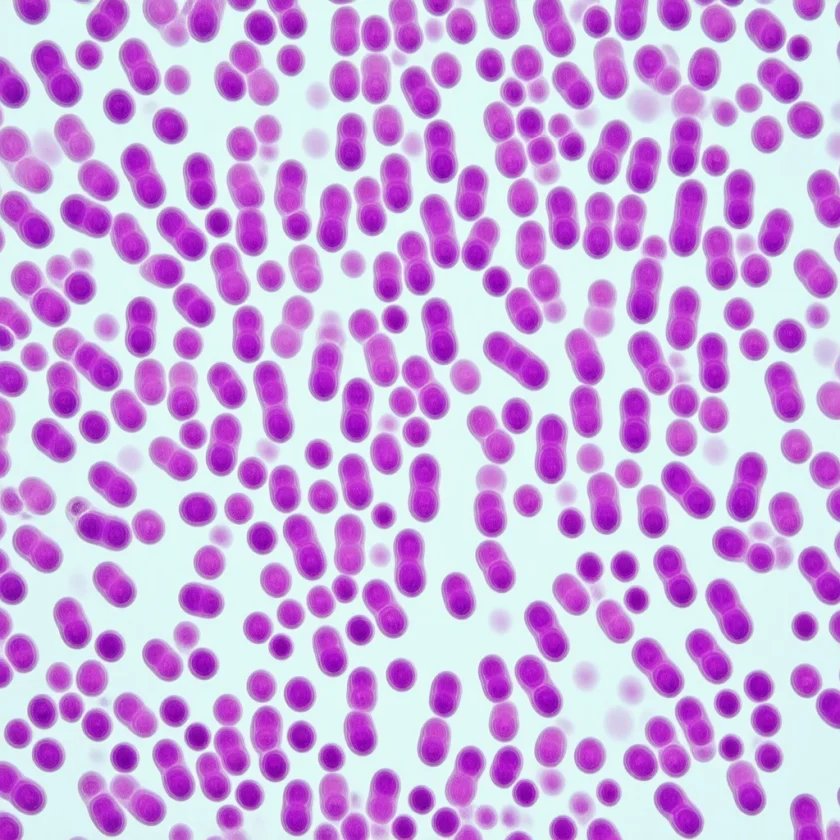
Streptococcus pneumoniae — also called pneumococcus — is a round, gram-positive bacterium that tends to pair up in tiny lancet-shaped (pointed oval) pairs under the microscope. It was discovered independently in 1881 by two scientists working on different continents: Louis Pasteur in France, and George Sternberg in the United States. Both isolated the bacterium from saliva and demonstrated that it could cause fatal infections in animals. For more than a century it has remained one of medicine's most important pathogens.
What makes pneumococcus so dangerous is a thick sugar coating called the polysaccharide capsule. This coating acts like a shield, helping the bacterium evade the immune system's first line of defense — white blood cells called phagocytes that would otherwise engulf and destroy it. Scientists have identified more than 90 different capsule types (called serotypes), each slightly different in its chemical structure. This diversity matters for vaccines and for treatment, because immunity to one serotype does not protect against the others.
Pneumococcus is responsible for an estimated 1 million or more deaths per year worldwide, with the heaviest toll falling on children under five in low-income countries, on older adults in wealthy countries, and on anyone with a weakened immune system. It is the leading cause of community-acquired bacterial pneumonia, the leading bacterial cause of ear infections in children, and one of the top two or three causes of bacterial meningitis globally.
Silent Carriage in the Nose and Throat
Here is something that surprises most people: pneumococcus lives harmlessly in the nose and throat of a large fraction of the population at any given time. This is called nasopharyngeal carriage, and it is not an infection — the bacterium is simply residing there without causing symptoms or illness.
Studies show that between 40 and 60 percent of young children carry at least one pneumococcal serotype in their nose or throat at any given time. In adults, the carriage rate is much lower — around 5 to 10 percent — partly because adult immune systems are better equipped to limit colonization. Children, especially those in daycare settings, are the primary reservoir from which pneumococcus spreads within communities. When a child sneezes, coughs, or even breathes near another person, pneumococcus can be transmitted in respiratory droplets.
Carriage is temporary. Most episodes last weeks to a few months before the immune system clears that particular serotype. Then colonization with a different serotype may occur. This constant cycling through serotypes during childhood is actually how the immune system builds up natural protection against pneumococcal disease over time — each episode of carriage, even without illness, trains the immune system to recognize and fight that serotype more effectively in the future.
The critical question is: what tips the balance from harmless carriage to active infection? The most important trigger is a viral respiratory infection. Influenza, rhinovirus (the common cold), and respiratory syncytial virus (RSV) all damage the mucous membranes that normally form a physical barrier keeping bacteria out of the lungs, sinuses, middle ear, and bloodstream. Once that barrier is disrupted, pneumococcus can slip through and cause serious disease. This is why pneumococcal pneumonia so often follows the flu — it is not a coincidence.
Research published in The Lancet Infectious Diseases by Bogaert and colleagues documented this colonization pattern across thousands of children, helping establish the foundation for modern pneumococcal vaccination strategies that target the most common disease-causing serotypes in children ( Search PubMed).
Pneumonia: The Most Common Serious Illness
Pneumonia is an infection of the lung tissue itself — the tiny air sacs (alveoli) where oxygen and carbon dioxide are exchanged. When pneumococcus invades the lungs, it triggers an intense inflammatory response. White blood cells and fluid flood into the alveoli, making it harder to breathe and reducing the lung's ability to transfer oxygen into the blood. This is what doctors call consolidation — the normally air-filled lung becomes dense and fluid-filled.
The typical symptoms of pneumococcal pneumonia develop over one to three days and include:
- High fever — often 103–104°F (39.4–40°C), frequently with shaking chills
- Productive cough — coughing up thick, rust-colored or yellow-green mucus (the rust color comes from red blood cells in the inflamed lung fluid)
- Pleuritic chest pain — a sharp, stabbing pain on one side of the chest that worsens when you take a deep breath or cough; this happens when infection spreads to the pleura (the membrane lining the chest cavity)
- Shortness of breath — ranging from mild to severe depending on how much of the lung is involved
- Fatigue and weakness
- Loss of appetite, nausea
- In older adults: sometimes confusion or altered mental status rather than classic fever and cough
Between 25 and 30 percent of adults hospitalized with pneumococcal pneumonia develop bacteremia — the bacteria break out of the lung and enter the bloodstream. This complicates recovery significantly and increases mortality. Overall, pneumococcal pneumonia kills roughly 5 to 7 percent of hospitalized adults in wealthy countries with good medical care; in older adults and those with underlying illness, the death rate is higher.
The risk of pneumococcal pneumonia following influenza infection is dramatically elevated. Influenza destroys the ciliated cells that sweep bacteria out of the airways, and suppresses key immune responses, creating an open door for pneumococcus. Historical analyses of the 1918 influenza pandemic found that most deaths were actually caused by secondary bacterial pneumonia — predominantly pneumococcal. The same pattern occurred in the 2009 H1N1 pandemic. Wunderink and colleagues' review in the New England Journal of Medicine remains one of the most comprehensive analyses of this interaction ( Search PubMed).
For a detailed breakdown of pneumonia symptom severity, staging, and when to go to the emergency room, see the Pneumonia Symptoms and Severity sub-article.
Ear Infections (Otitis Media)
Otitis media — middle ear infection — is one of the most common bacterial infections in childhood, and Streptococcus pneumoniae is responsible for a significant share of them, alongside Haemophilus influenzae and Moraxella catarrhalis. By age three, approximately 80 percent of children will have had at least one ear infection. Pneumococcal ear infections tend to be more severe and more likely to cause complications than those caused by the other two bacteria.
The infection typically starts with a viral upper respiratory infection that causes swelling and congestion in the Eustachian tube — the channel connecting the middle ear to the back of the throat. When this tube becomes blocked, bacteria from the nasopharynx can migrate up into the warm, fluid-filled middle ear and multiply rapidly.
Symptoms in children include:
- Ear pain — young infants may pull at their ears, be unusually fussy, cry more than normal, or have trouble sleeping
- Fever
- Muffled or reduced hearing
- Fluid draining from the ear (if the eardrum ruptures — which usually brings pain relief)
- Balance problems in some children
Most uncomplicated ear infections resolve on their own within 2 to 3 days without antibiotics, and current guidelines in many countries recommend watchful waiting for mild cases in children over 2. However, pneumococcal ear infections are more likely to be severe enough to require antibiotics, and children who have three or more infections within six months (recurrent otitis media) face increased risk of hearing loss, speech and language delays, and the need for ear tubes (tympanostomy).
One of the most encouraging success stories of pneumococcal vaccination is the dramatic reduction in childhood ear infections after the introduction of the pneumococcal conjugate vaccine (PCV7) in 2000. Jansen and colleagues documented a significant reduction in pneumococcal otitis media in vaccinated populations ( Search PubMed). This single public health achievement has spared millions of children painful ear infections and prevented substantial hearing loss.
Sinus Infections (Sinusitis)
The sinuses are air-filled cavities in the bones around the nose and eyes. A viral cold causes swelling of the sinus linings and blocks drainage — and if bacteria get trapped in that warm, stagnant environment, a bacterial sinus infection can develop. Streptococcus pneumoniae is one of the top two causes of bacterial sinusitis (the other being Haemophilus influenzae), complicating roughly 2 percent of viral upper respiratory infections in adults.
Distinguishing bacterial sinusitis from a lingering cold or viral sinusitis matters, because only bacterial sinusitis typically benefits from antibiotics. Key signals that a sinus infection may be bacterial rather than viral:
- Symptoms that are not improving after 10 days — or that seemed to be getting better and then suddenly worsened (called "double worsening")
- High fever (above 102°F / 39°C) along with facial pain or purulent (thick, discolored) nasal discharge lasting at least 3 to 4 days
- Facial pressure or pain that is worse on one side, often under the eye or around the forehead
- Nasal congestion producing thick yellow-green mucus
- Headache, tooth pain in the upper jaw (the roots of upper back teeth sit close to the maxillary sinuses)
- Reduced sense of smell
Most bacterial sinusitis resolves on its own within 1 to 2 weeks even without antibiotics, and guidelines generally recommend a short period of watchful waiting for mild to moderate cases. Antibiotics are typically recommended for severe or worsening cases, those lasting beyond 10 days without improvement, or patients at higher risk of complications. Rare but serious complications of untreated bacterial sinusitis include spread to the eye socket (orbital cellulitis) or the brain (meningitis, brain abscess) — which is why severe or rapidly worsening sinusitis warrants prompt medical evaluation.
Bacteremia and Sepsis
Bacteremia means bacteria in the bloodstream. When pneumococcus escapes from the lungs, ear, sinuses, or another initial site of infection and enters the blood, it can be carried throughout the body. In healthy people with intact immune systems, the body usually clears a small bacteremia within hours. But in vulnerable people, bacteria multiply rapidly in the blood, triggering a body-wide inflammatory response called sepsis.
Signs of sepsis include high fever or abnormally low temperature, rapid heart rate, rapid breathing, confusion, and dropping blood pressure. Sepsis can progress within hours to septic shock — a life-threatening state where blood pressure falls so severely that organs begin to fail. This is a medical emergency requiring intensive care.
Two groups face especially catastrophic risk from pneumococcal bacteremia:
People without a working spleen. The spleen plays a critical role in filtering bacteria from the blood and producing antibodies against encapsulated bacteria like pneumococcus. People who have had their spleen removed (splenectomy) — often after trauma or for conditions like hereditary spherocytosis — or whose spleen no longer functions properly face a lifelong risk of overwhelming post-splenectomy infection (OPSI). This syndrome is rare but carries a mortality rate of 50 to 70 percent even with rapid treatment. The risk is highest in the first 2 to 3 years after splenectomy but persists for life. Pneumococcus causes the majority of OPSI cases.
People with sickle cell disease. Sickle cell disease causes what is called functional asplenia — the spleen is present but repeatedly damaged by sickling red blood cells until it no longer functions effectively, usually by age 3 to 5. This creates the same high risk of overwhelming pneumococcal sepsis as surgical removal. Before routine pneumococcal vaccination and prophylactic penicillin programs for children with sickle cell disease, pneumococcal sepsis was the leading cause of death in young children with sickle cell disease. Van der Poll and colleagues' work on pneumococcal bacteremia and sepsis mechanisms remains foundational in this area ( Search PubMed).
Even outside these highest-risk groups, pneumococcal bacteremia complicates 25 to 30 percent of hospitalized pneumonia cases and adds substantially to mortality risk. Musher's review in the New England Journal of Medicine remains a landmark summary of invasive pneumococcal disease ( Search PubMed).
Meningitis: The Most Dangerous Outcome
Meningitis is inflammation of the meninges — the three-layered membrane that wraps around the brain and spinal cord. When pneumococcus reaches the meninges (usually via the bloodstream from a lung infection or bacteremia, or occasionally by direct spread from the ear or sinuses), it triggers a severe inflammatory response in this enclosed space. The resulting swelling, increased pressure, and damage to brain tissue make pneumococcal meningitis one of the most serious conditions in all of medicine.
Classic symptoms of bacterial meningitis include:
- Severe headache — often described as "the worst headache of my life"
- Stiff neck (neck rigidity) — difficulty bending the chin toward the chest
- High fever
- Sensitivity to light (photophobia) and sound
- Nausea and vomiting
- Confusion, altered mental status, or seizures
Even with prompt diagnosis and treatment with the best available antibiotics, pneumococcal meningitis kills 20 to 30 percent of affected adults. Of those who survive, approximately 30 percent are left with permanent complications — most commonly hearing loss (which can be profound and bilateral), cognitive difficulties, or neurological deficits. Children who survive meningitis are at risk for learning disabilities and developmental delays.
One specific risk factor deserves special mention: people with cochlear implants face an elevated risk of pneumococcal meningitis because the implant creates a pathway from the middle ear to the inner ear and potentially to the cerebrospinal fluid. Similarly, people with CSF (cerebrospinal fluid) leaks — whether from a skull fracture, surgery, or congenital defect — have a direct route through which bacteria can reach the meninges.
For detailed information about the symptoms, stages, complications, and emergency recognition of pneumococcal meningitis and other forms of invasive disease, see the Meningitis and Invasive Disease sub-article.
Who Is at Highest Risk?
Pneumococcal disease does not affect everyone equally. Certain groups have immune systems that are less able to fight off this encapsulated bacterium, making them far more vulnerable to serious disease. Understanding these risk factors is important both for individual protection decisions and for explaining why vaccination recommendations specifically target these populations.
Age extremes:
- Infants under 2 years old — cannot yet mount a strong antibody response to the polysaccharide capsule (their immune systems need the conjugated vaccine form that attaches the sugar to a carrier protein to generate protective immunity)
- Adults aged 65 and older — immune function declines with age (a process called immunosenescence), reducing the ability to produce protective antibodies and clear infection
Conditions that impair spleen function:
- Surgical removal of the spleen (splenectomy) — for any reason including trauma, hereditary blood disorders, or cancer treatment
- Sickle cell disease — functional asplenia from repeated infarction of splenic tissue
- Other hemoglobinopathies causing splenic dysfunction
Immune system conditions:
- HIV/AIDS — especially at lower CD4 counts, pneumococcal disease risk is 40 to 100 times higher than in the general population
- Congenital immune deficiencies (agammaglobulinemia, common variable immunodeficiency, complement deficiencies)
- Active treatment with immunosuppressive medications — chemotherapy, high-dose corticosteroids, biologics used in rheumatoid arthritis or inflammatory bowel disease
- Organ transplant recipients on long-term immunosuppression
Chronic organ diseases:
- Chronic lung disease — COPD, emphysema, and chronic bronchitis damage the lung's structural defenses and reduce mucociliary clearance; asthma also increases risk modestly
- Chronic heart disease — congestive heart failure and congenital heart disease increase vulnerability, partly due to fluid in the lungs
- Chronic kidney disease — the kidneys play a role in immune regulation, and dialysis patients have particularly high rates of pneumococcal disease
- Chronic liver disease and cirrhosis — the liver produces complement proteins that help destroy encapsulated bacteria; cirrhosis severely impairs this function
- Diabetes mellitus — elevates risk through impaired white blood cell function and delayed immune responses
Anatomical risk factors:
- Cochlear implants — create a conduit that bacteria can use to travel from the middle ear to the cerebrospinal fluid, substantially elevating meningitis risk; vaccination is specifically recommended before implantation when possible
- CSF leaks — whether from skull base fractures, neurosurgery, or congenital defects — allow bacteria direct access to the meninges
Lifestyle and social factors:
- Cigarette smoking damages the respiratory epithelium and impairs ciliary function, increasing susceptibility to all respiratory pathogens including pneumococcus
- Heavy alcohol use impairs immune function, reduces cough reflexes, and increases aspiration risk
- Crowded living conditions (nursing homes, military barracks, prisons, homeless shelters) facilitate transmission
All of these high-risk groups are specifically targeted by current pneumococcal vaccination recommendations. The vaccines are most effective when given before a person encounters the bacterium — ideally well before the high-risk condition develops, though even vaccination after a diagnosis of a chronic condition provides meaningful protection. The comprehensive review by Lynch and Zhanel in The Lancet covers the epidemiology of pneumococcal disease across these risk groups in detail ( Search PubMed).
Key Research Papers
- Wunderink RG, Waterer GW. Community-acquired pneumonia. N Engl J Med. 2014;370(6):543–551 — Search PubMed — Comprehensive review of pneumococcal and other causes of community-acquired pneumonia, including post-influenza risk and management.
- Lynch JP, Zhanel GG. Streptococcus pneumoniae: epidemiology and risk factors, evolution of antimicrobial resistance, and impact of vaccines. Curr Opin Pulm Med. 2010;16(3):217–225 — PubMed PMID: 20375783 — Landmark review of pneumococcal disease burden, high-risk populations, resistance patterns, and vaccine impact.
- Bogaert D, De Groot R, Hermans PW. Streptococcus pneumoniae colonisation: the key to pneumococcal disease. Lancet Infect Dis. 2004;4(3):144–154 — Search PubMed — Foundational paper on nasopharyngeal carriage rates, transmission dynamics, and the relationship between colonization and disease.
- Drijkoningen JJ, Rohde GG. Pneumococcal infection in adults: burden of disease. Clin Microbiol Infect. 2014;20 Suppl 5:45–51 — Search PubMed — Analysis of nasopharyngeal carriage patterns and their implications for disease transmission and vaccine strategy.
- Melegaro A, Gay NJ, Medley GF. Estimating the transmission parameters of pneumococcal carriage in households. Epidemiol Infect. 2004;132(3):433–441 — Search PubMed — Mathematical modeling of household transmission dynamics; demonstrates children's central role as reservoir.
- Watkins ER, Penman BS, Lourenco J, et al. Vaccination drives changes in metabolic and virulence profiles of Streptococcus pneumoniae. PLoS Pathog. 2015;11(7):e1005034 — Search PubMed — Documents serotype replacement dynamics following vaccine introduction, relevant context for understanding capsule diversity.
- Jansen AG, Hak E, Veenhoven RH, Damoiseaux RA, Schilder AG, Sanders EA. Pneumococcal conjugate vaccines for preventing otitis media. Cochrane Database Syst Rev. 2009;(2):CD001480 — Search PubMed — Systematic review quantifying the reduction in pneumococcal otitis media following PCV vaccination introduction.
- van der Poll T, Opal SM. Pathogenesis, treatment, and prevention of pneumococcal pneumonia. Lancet. 2009;374(9700):1543–1556 — Search PubMed — Detailed mechanistic review of pneumococcal virulence, bacteremia, and immune evasion including spleen-dependent clearance.
- Musher DM. Infections caused by Streptococcus pneumoniae: clinical spectrum, pathogenesis, immunity, and treatment. Clin Infect Dis. 1992;14(4):801–809 — Search PubMed — Classic comprehensive review of the full clinical spectrum of pneumococcal invasive disease.
- Doern GV, Richter SS, Miller A, et al. Antimicrobial resistance among Streptococcus pneumoniae in the United States: have we begun to turn the corner on resistance to certain antimicrobial classes? Clin Infect Dis. 2005;41(2):139–148 — PubMed PMID: 15983908 — US surveillance data on pneumococcal antibiotic resistance trends, relevant to understanding why not all infections respond to standard treatment.
- Marrie TJ. Pneumococcal pneumonia: epidemiology and clinical features. Semin Respir Infect. 1999;14(3):227–236 — Search PubMed — Detailed clinical overview of pneumococcal pneumonia presentation, laboratory findings, and outcomes.
Additional PubMed searches for further reading:
Featured Videos
Connections
- All Bacteria
- Pneumococcus Overview
- Pneumonia Symptoms and Severity
- Meningitis and Invasive Disease
- Diagnosis: Cultures and Antigen Tests
- Treatment and Prevention
- Pneumococcal Vaccines (PCV / PPSV)
- Antibiotic Treatment
- Antibiotic Resistance
- Meningitis — pneumococcus is a leading cause.
- Pneumonia
- Pulmonology Diseases
- Neurology Diseases