Hydroxyapatite vs Fluoride Toothpaste
Tooth enamel is composed of approximately 96% hydroxyapatite (Ca₁₀(PO₄)₆(OH)₂) — it is, in a real sense, the same calcium-phosphate mineral as bone, packed into an exceptionally dense crystalline form. Two materials can drive remineralization at the enamel surface: fluoride, which forms a chemically distinct fluorapatite surface layer, and hydroxyapatite itself, applied as nano-sized particles that integrate directly into existing enamel crystals. The hydroxyapatite approach was developed by NASA in the 1970s to repair astronaut tooth demineralization caused by microgravity, licensed to the Japanese company Sangi, and launched commercially in Japan as the first nano-hydroxyapatite toothpaste in 1985. Forty years of Japanese clinical use and a growing body of randomized trials now establish n-HAp as a viable alternative to fluoride for caries prevention — without fluoride's associated concerns about fluorosis, neurodevelopmental effects, or thyroid suppression at higher exposures.
Table of Contents
- Enamel Composition and the Demineralization Cycle
- How Fluoride Works (and Where It Falls Short)
- How Hydroxyapatite Works
- NASA Origin and Japanese Development
- The Head-to-Head Clinical Trial Evidence
- Fluoride Safety Concerns at Population Doses
- How Hydroxyapatite Toothpastes Differ
- The Daily Routine Practitioners Describe
- Key Research Papers
- Connections
- Featured Videos
Enamel Composition and the Demineralization Cycle
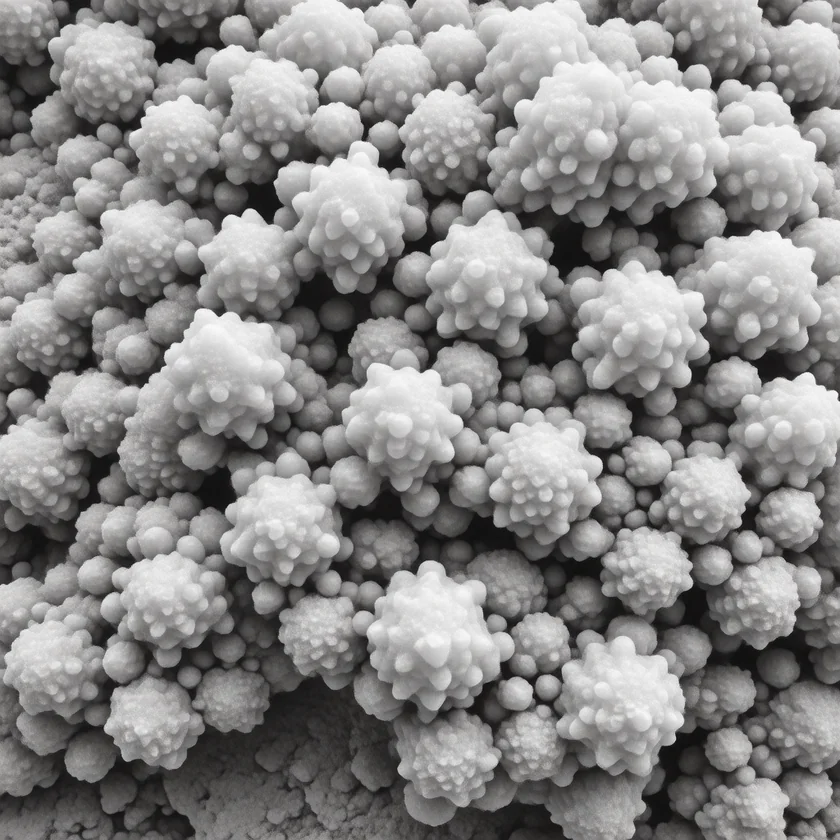
Tooth enamel is the most highly mineralized tissue in the human body. By weight, mature enamel is approximately 96% hydroxyapatite, 1% organic matrix (predominantly enamelin and amelogenin), and 3% water. The hydroxyapatite is organized into long, hexagonal-prism crystals about 50 nm wide and a few microns long, arranged in tightly packed rods that run perpendicular to the tooth surface.
This mineral is dynamic, not static. At the enamel surface, two processes are continuously in competition:
- Demineralization — when local pH drops below the critical threshold of approximately 5.5, the hydroxyapatite lattice begins to dissolve. Hydrogen ions strip away calcium and phosphate from the crystal surface, releasing them into the saliva. The threshold reflects the equilibrium constant for hydroxyapatite solubility — below pH 5.5, the saliva becomes undersaturated with respect to calcium phosphate, and dissolution proceeds spontaneously.
- Remineralization — when pH returns above 5.5 and saliva is again supersaturated with calcium and phosphate, the dissolved ions re-precipitate onto the enamel surface, partially or fully restoring the lost mineral. Saliva itself is the principal remineralizing agent; toothpaste actives accelerate the process.
The pH drop after a sugar exposure typically lasts 20-40 minutes — the so-called Stephan curve. A single sugar exposure produces one demineralization event followed by remineralization. The problem is frequency: every separate sugar exposure restarts the curve, and if exposures are spaced closely (sipping a sweetened beverage all day, frequent snacking), the enamel is held below the critical pH continuously, with no time for net remineralization. This is why frequency of sugar exposure correlates better with caries than total sugar intake.
How Fluoride Works (and Where It Falls Short)
Fluoride accelerates remineralization through three related mechanisms. Two are unambiguously beneficial; the third is a mixed picture.
- Fluorapatite formation — when fluoride ions are present in the local environment during remineralization, hydroxide groups in the apatite lattice are replaced by fluoride, forming fluorapatite (Ca₁₀(PO₄)₆F₂) or partial fluor-hydroxyapatite. The fluorapatite surface layer is less acid-soluble than pure hydroxyapatite (critical pH ~4.5 vs ~5.5) and dissolves more slowly under subsequent acid challenge.
- Catalysis of remineralization kinetics — even at very low concentrations (parts per million), fluoride ions speed up the deposition of calcium phosphate onto enamel surfaces, accelerating remineralization between acid challenges.
- Antimicrobial effect — at high local concentrations immediately after toothpaste use, fluoride can inhibit the enolase enzyme in Streptococcus mutans, reducing acid production. The effect is short-lived and not the dominant mode of action.
The clinical effect is well established — fluoride toothpaste at 1,000-1,500 ppm reduces caries by approximately 24% compared to placebo in children and somewhat less in adults (Cochrane Walsh et al. 2019). Fluoride works.
Where fluoride falls short is in its therapeutic window. At 1,500 ppm in toothpaste, fluoride is effective and safe with normal use in adults. In small children who routinely swallow toothpaste, even a pea-sized amount can deliver enough fluoride to contribute meaningfully to total fluoride intake. The result is dental fluorosis — visible white spots, mottling, or in severe cases brown staining of permanent teeth — in about 65% of US adolescents aged 12-15 according to an analysis of NHANES 2011-2012 data (Neurath 2019, a paper that carries an Expression of Concern from its journal), which put the share with moderate or severe fluorosis at 30.4%. Fluorosis is cosmetic, but it is a clear marker of supra-physiologic fluoride exposure during enamel formation.
Beyond fluorosis, the body of evidence on developmental neurotoxicity of fluoride at higher water concentrations has grown substantially. The Bashash 2017 cohort study from Mexico City found that maternal urinary fluoride during pregnancy was inversely associated with offspring IQ at age 4 and 6-12, with each 0.5 mg/L increase in maternal urinary fluoride associated with a roughly 2.5-point IQ decrement. Subsequent studies in Canada (Green 2019), and the 2024 NTP monograph, have generally supported a neurodevelopmental signal at water fluoride concentrations above approximately 1.5 mg/L. US fluoridation is at 0.7 mg/L, below the level where these effects are most reliably demonstrated — but the margin of safety is smaller than the margin originally assumed.
How Hydroxyapatite Works
Nano-hydroxyapatite (n-HAp) toothpaste works by a fundamentally different mechanism than fluoride. Instead of catalyzing the recruitment of calcium and phosphate from saliva, n-HAp delivers the building material directly. The nano-sized particles (typically 20-100 nm) integrate into the enamel surface, filling microscopic etched areas and partially reconstituting lost mineral structure.
The principal proposed mechanisms:
- Direct mineral replacement — n-HAp particles physically deposit into etched enamel pits, creating a new surface layer that is chemically identical to native enamel. Unlike fluorapatite, which is a foreign material, the new layer integrates seamlessly with the existing crystal structure.
- Acid resistance — while the remineralized hydroxyapatite layer is no more acid-resistant than native enamel (critical pH 5.5), it restores lost mineral mass and reduces the surface area exposed to acid attack. Some studies suggest the regenerated surface may actually be slightly more resistant than original enamel due to denser crystal packing.
- Plaque inhibition — n-HAp particles partially block bacterial adhesion to the enamel surface, reducing biofilm formation. Streptococcus mutans binds to the n-HAp particles in suspension rather than to the tooth surface, and the bacteria-coated particles are then washed away when the toothpaste is rinsed.
- Dentinal tubule occlusion (for sensitivity) — n-HAp particles plug exposed dentinal tubules in patients with sensitive teeth, providing rapid relief that is comparable to or better than potassium nitrate or strontium-based desensitizing pastes.
The key practical difference: n-HAp toothpaste does not require any minimum exposure time to work. The particles deposit during the act of brushing itself. Fluoride toothpaste, by contrast, depends on residual fluoride remaining in saliva and at the enamel surface after brushing — which is why dentists advise against rinsing with water after brushing with fluoride toothpaste. With n-HAp, rinsing thoroughly is fine; the deposited mineral has already integrated into the enamel.
NASA Origin and Japanese Development
The development of hydroxyapatite toothpaste traces to NASA research in the 1970s on the dental effects of long-duration spaceflight. Astronauts returning from extended missions exhibited measurable demineralization not only in their bones (the well-known microgravity-induced osteoporosis) but also in their tooth enamel. NASA researchers explored exogenous hydroxyapatite as a means of restoring lost dental mineral, and demonstrated that nano-sized synthetic hydroxyapatite could integrate with existing enamel crystals.
The technology was licensed to Sangi, a Japanese company, which spent a decade refining the manufacturing process for nano-sized hydroxyapatite particles and combining them with a stabilizing slurry suitable for toothpaste. The first nano-hydroxyapatite toothpaste launched commercially in Japan in 1985, and hydroxyapatite was officially recognized by Japan's Ministry of Health as a caries-preventing active ingredient (a regulatory status equivalent to the over-the-counter monograph category in the United States) in 1993.
Japan has been the dominant market for n-HAp toothpaste for the subsequent thirty years — partly because Japanese water is not fluoridated, leaving a market opening for an alternative caries-preventive active. The Japanese clinical experience now spans tens of millions of patient-years of routine use, with no significant safety signal.
The technology only began significant penetration outside Japan in the 2010s. European products appeared in the mid-2010s, and the US market opened in the late 2010s. The U.S. Food and Drug Administration (FDA) does not currently recognize hydroxyapatite as an approved caries-prevention active under its over-the-counter (OTC) monograph (which still lists only fluoride), so US n-HAp toothpastes are marketed as cosmetic products focused on remineralization and sensitivity claims rather than caries prevention specifically.
The Head-to-Head Clinical Trial Evidence
The pivotal modern non-inferiority trial in adults is the Paszynska 2023 study published in Frontiers in Public Health: an 18-month double-blind randomized trial in which 189 adults were included and 171 finished per protocol, comparing a fluoride-free hydroxyapatite toothpaste with a 1,450-ppm sodium fluoride toothpaste. The primary endpoint was the share of subjects with no increase in decayed, missing and filled tooth surfaces: 89.3% in the hydroxyapatite group and 87.4% in the fluoride group, and the hydroxyapatite toothpaste was not statistically inferior.
An earlier in-situ study by Amaechi and colleagues (BDJ Open 2019) had 30 adults wear intra-oral appliances holding enamel blocks from primary teeth for 14 days per arm, comparing a 10% hydroxyapatite toothpaste with a 500-ppm fluoride toothpaste. Both remineralized early caries lesions, with no statistically significant difference between them.
The O'Hagan-Wong 2022 narrative review (Odontology) summarizes the in-vitro, in-situ and clinical research on the remineralization potential of hydroxyapatite toothpaste.
Additional 2010s-2020s evidence includes:
- Hannig & Hannig 2010 (Nature Nanotechnology) — comprehensive review of nano-materials in preventive dentistry, including the in-vitro and in-situ evidence for n-HAp enamel integration.
- Najibfard 2011 — in-situ remineralization of early caries lesions, showing n-HAp performed better than placebo and comparable to 1,100 ppm fluoride.
- Esteves-Oliveira 2017 — in an in-vitro caries model on bovine enamel, the fluoride toothpastes (anti-caries and anti-erosive) all reduced demineralization compared with a fluoride-free control, while the fluoride-free nano-hydroxyapatite toothpaste did not; the authors concluded it seemed not to be suitable for inhibiting caries demineralization in vitro.
- 2024 systematic review and meta-analysis (Pawinska et al.) — of 18 retrieved studies, included 5 clinical trials and 8 in-situ trials, and concluded that hydroxyapatite is effective as an anti-caries ingredient in the absence of fluoride and an ideal substitute for fluoride in toothpaste and mouthwash.
The pediatric evidence base is somewhat smaller. A related trial, Schlagenhauf 2019, enrolled 150 highly caries-active orthodontic patients for 168 days and found that a fluoride-free microcrystalline hydroxyapatite toothpaste was not significantly different from a 1,400-ppm fluoride toothpaste for enamel caries progression. Pediatric trials are particularly important because young children swallow significant proportions of their toothpaste, and the systemic exposure profile differs between n-HAp (calcium and phosphate, both fully dietary) and fluoride (which accumulates in developing teeth and bones).
Fluoride Safety Concerns at Population Doses
This section is not an argument against fluoride toothpaste specifically — the safety margin for topical fluoride use in adults who spit out toothpaste is very wide. It is a survey of the population-level concerns driving consumer interest in n-HAp alternatives.
- Dental fluorosis — the most established adverse effect. An analysis of NHANES 2011-2012 data (Neurath 2019) found some level of fluorosis in 65% of US adolescents aged 12-15, with 30.4% in the moderate or severe categories; the journal has published an Expression of Concern about that paper. The increase since the 1980s correlates with the introduction of fluoridated toothpaste alongside fluoridated water and processed-food fluoride exposure (from fluoridated water used in commercial food and beverage manufacturing).
- Developmental neurotoxicity — the Bashash 2017 Mexico cohort, the Green 2019 Canadian MIREC cohort, the Till 2020 Canadian formula-fed-infant cohort, and the 2024 NTP fluoride monograph all converge on a developmental neurotoxicity signal at higher fluoride exposures. The NTP concluded with "moderate confidence" that fluoride at >1.5 mg/L in water is associated with reduced IQ in children. US fluoridation is at 0.7 mg/L. Most of the European Union does not fluoridate water at population level (a few small areas have natural fluoride at higher levels); Ireland is the exception, with about 70% of its population served by public water supplies fluoridated within a legal range of 0.6-0.8 mg/L.
- Thyroid effects — fluoride competes with iodine at the thyroid follicular cell, and observational evidence (Peckham et al. 2015) has linked higher fluoride exposure to elevated rates of hypothyroidism diagnosis. The effect appears to be more relevant in iodine-deficient populations.
- Bone effects — severe skeletal fluorosis from chronic high water-fluoride exposure (>4 mg/L) is well documented in India and parts of China. The effect at US fluoridation levels is debated; one meta-analysis suggested a small increase in hip fracture risk at higher water fluoride levels, but the literature is mixed.
For an individual adult who brushes twice daily with fluoride toothpaste, spits it out, and lives in a fluoridated water system, total exposure is well within tolerable limits. The concerns become more pressing in:
- Young children (high swallowing fraction during brushing, ongoing tooth development)
- Pregnant women (developmental neurotoxicity window for the fetus)
- Patients with reduced kidney function (impaired fluoride excretion)
- Patients on multiple high-fluoride sources (fluoridated water + bottled tea + fluoride toothpaste + dietary supplements)
These are the groups for whom the fluoride-exposure concerns above are greatest.
How Hydroxyapatite Toothpastes Differ
Hydroxyapatite toothpastes sold in the US and Europe differ mainly in what the label states:
- Particle size — nano-hydroxyapatite (n-HAp) or larger microcrystalline hydroxyapatite. Not all hydroxyapatite is nano-sized, and particle size matters for enamel integration; the Schlagenhauf 2019 trial used a microcrystalline form.
- Stated percentage — the major clinical trials tested hydroxyapatite in the 5-10% range, and lower concentrations may be insufficient.
- Presence or absence of fluoride — the hydroxyapatite toothpastes in the trials above were fluoride-free; whether a product also contains fluoride appears in its ingredient list.
- Other ingredients — many n-HAp toothpastes are marketed to natural-products consumers and have minimal or no synthetic flavoring, which some users find unpleasant. Most are free of sodium lauryl sulfate (SLS, the standard toothpaste foaming agent), which can contribute to mouth ulcers in some users and may damage the oral microbiome. Children's formulations exist, which bears on the swallowing-fraction concern.
The cost is higher than mass-market fluoride toothpaste — about $10-20 per tube vs $3-5 — but the per-brushing cost difference over a year is modest.
The Daily Routine Practitioners Describe
An oral-care routine combining hydroxyapatite toothpaste with the other practices covered in the deep-dive series typically looks like this:
- Morning — tongue scraping on waking (see Tongue Scraping), then optional 10-15 min coconut oil pulling before eating or drinking anything, and brushing with n-HAp toothpaste for 2 minutes after breakfast.
- Throughout the day — fewer separate sugar exposures, with sweetened beverages taken at meals rather than sipped throughout the day. A water rinse after acidic foods (citrus, vinegar dressings), and at least 30 minutes before brushing after acidic exposure — the enamel is temporarily softened, and brushing can mechanically remove softened mineral.
- Evening — brushing with n-HAp toothpaste for 2 minutes, with flossing before brushing (described as more effective than after). Some routines add an oral probiotic lozenge (S. salivarius strain K12 or M18) after brushing, as the last thing in the mouth before sleep with no rinsing afterward, to allow colonization overnight.
- Periodic — dental cleanings every 6 months for most adults, every 3-4 months for those with active periodontal disease. Fluoride varnish applied at the dental office for high caries risk is a separate matter — topical applied-and-removed fluoride at the dental office is a much smaller systemic exposure than chronic ingestion.
For young children, the central issue is the high involuntary swallowing fraction. The American Dental Association still recommends fluoride toothpaste from first-tooth eruption (with a rice-grain-sized smear); the n-HAp alternative offers caries-preventive benefit with calcium and phosphate exposure that is identical to dietary background, avoiding any contribution to fluorosis risk during enamel formation.
Key Research Papers
- Amaechi BT, AbdulAzees PA, Alshareif DO et al. (2019). Comparative efficacy of a hydroxyapatite and a fluoride toothpaste for prevention and remineralization of dental caries in children. BDJ Open, 5:18. — PubMed PMID: 31839988
- O'Hagan-Wong K, Enax J, Meyer F, Ganss B (2022). The use of hydroxyapatite toothpaste to prevent dental caries. Odontology, 110(2):223-230. — PubMed PMID: 34807345
- Paszynska E, Pawinska M, Enax J et al. (2023). Caries-preventing effect of a hydroxyapatite-toothpaste in adults: a 18-month double-blinded randomized clinical trial. Frontiers in Public Health, 11:1199728. — PubMed PMID: 37533523
- Pawinska M, Paszynska E, Amaechi BT, Meyer F, Enax J, Limeback H (2024). Clinical evidence of caries prevention by hydroxyapatite: an updated systematic review and meta-analysis. Journal of Dentistry, 151:105429. — PubMed PMID: 39471896
- Schlagenhauf U et al. (2019). Impact of a non-fluoridated microcrystalline hydroxyapatite dentifrice on enamel caries progression in highly caries-susceptible orthodontic patients: a randomized, controlled 6-month trial. Journal of Investigative and Clinical Dentistry, 10(2):e12399. — PubMed PMID: 30701704
- Hannig M, Hannig C (2010). Nanomaterials in preventive dentistry. Nature Nanotechnology, 5(8):565-9. — PubMed PMID: 20581832
- Najibfard K, Ramalingam K, Chedjieu I, Amaechi BT (2011). Remineralization of early caries by a nano-hydroxyapatite dentifrice. Journal of Clinical Dentistry, 22(5):139-43. — PubMed PMID: 22403978
- Esteves-Oliveira M et al. (2017). Caries-preventive effect of anti-erosive and nano-hydroxyapatite-containing toothpastes in vitro. Clinical Oral Investigations. — PubMed PMID: 26993660
- Tschoppe P, Zandim DL, Martus P, Kielbassa AM (2011). Enamel and dentine remineralization by nano-hydroxyapatite toothpastes. Journal of Dentistry, 39(6):430-7. — PubMed PMID: 21504777
- Bashash M et al. (2017). Prenatal fluoride exposure and cognitive outcomes in children at 4 and 6-12 years of age in Mexico. Environmental Health Perspectives, 125(9):097017. — PubMed PMID: 28937959
- Green R, Lanphear B, Hornung R et al. (2019). Association between maternal fluoride exposure during pregnancy and IQ scores in offspring in Canada. JAMA Pediatrics, 173(10):940-948. — PubMed PMID: 31424532
- Till C, Green R, Flora D et al. (2020). Fluoride exposure from infant formula and child IQ in a Canadian birth cohort. Environment International, 134:105315. — PubMed PMID: 31743803
- Neurath C, Limeback H, Osmunson B et al. (2019). Dental fluorosis trends in US oral health surveys: 1986 to 2012. JDR Clinical and Translational Research, 4(4):298-308 (Expression of Concern published in the same issue). — PubMed PMID: 30931722
- NTP (2024). National Toxicology Program Monograph: State of the science concerning the health effects of fluoride exposure. — PubMed