⚠ Evidence warning: Clinical trials or other evidence do not support the claims that modern hygiene and chlorinated water made mouth bacteria less varied, that mouth bacteria influence mood, that hydroxyapatite toothpaste is gentler on them, and that xylitol spares beneficial species. This page keeps it as a report of what people, websites or other media say.
The Oral Microbiome: The Second Most Important Microbial Ecosystem in Your Body

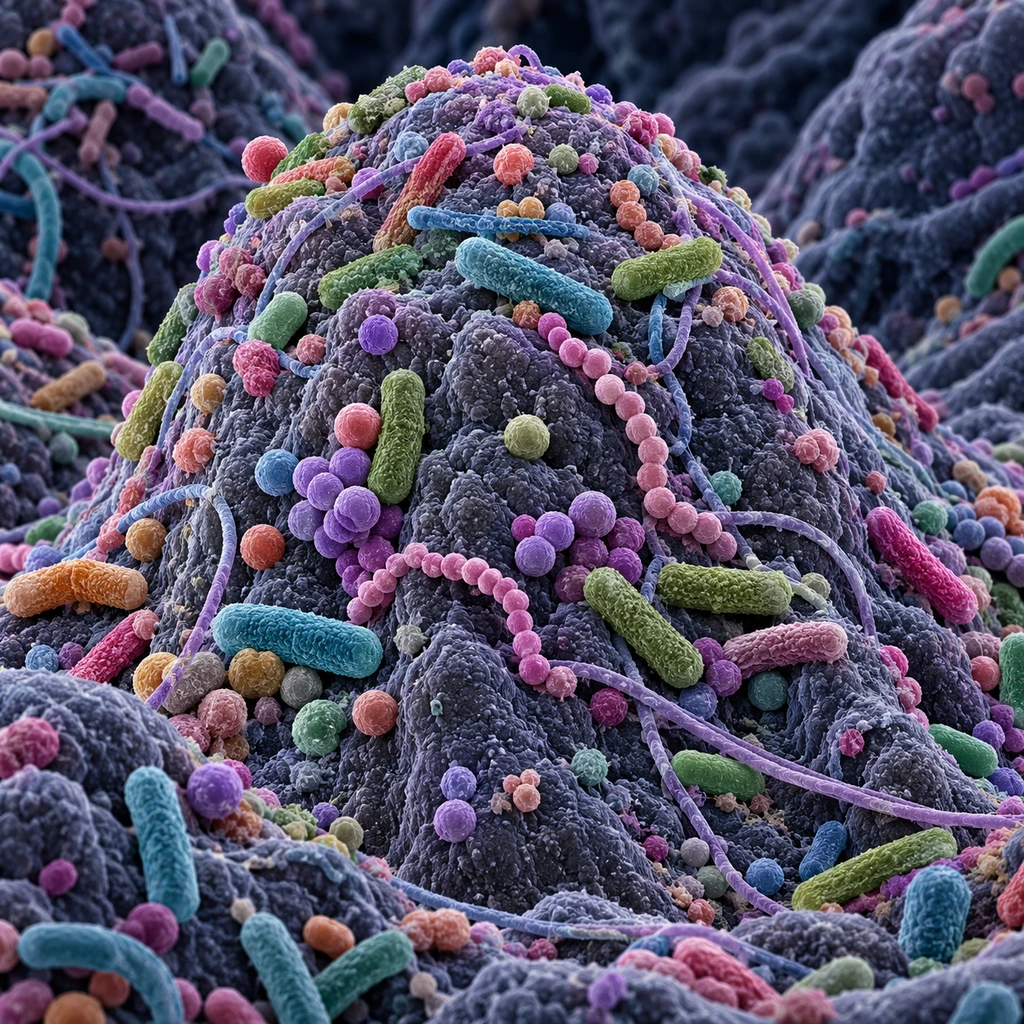
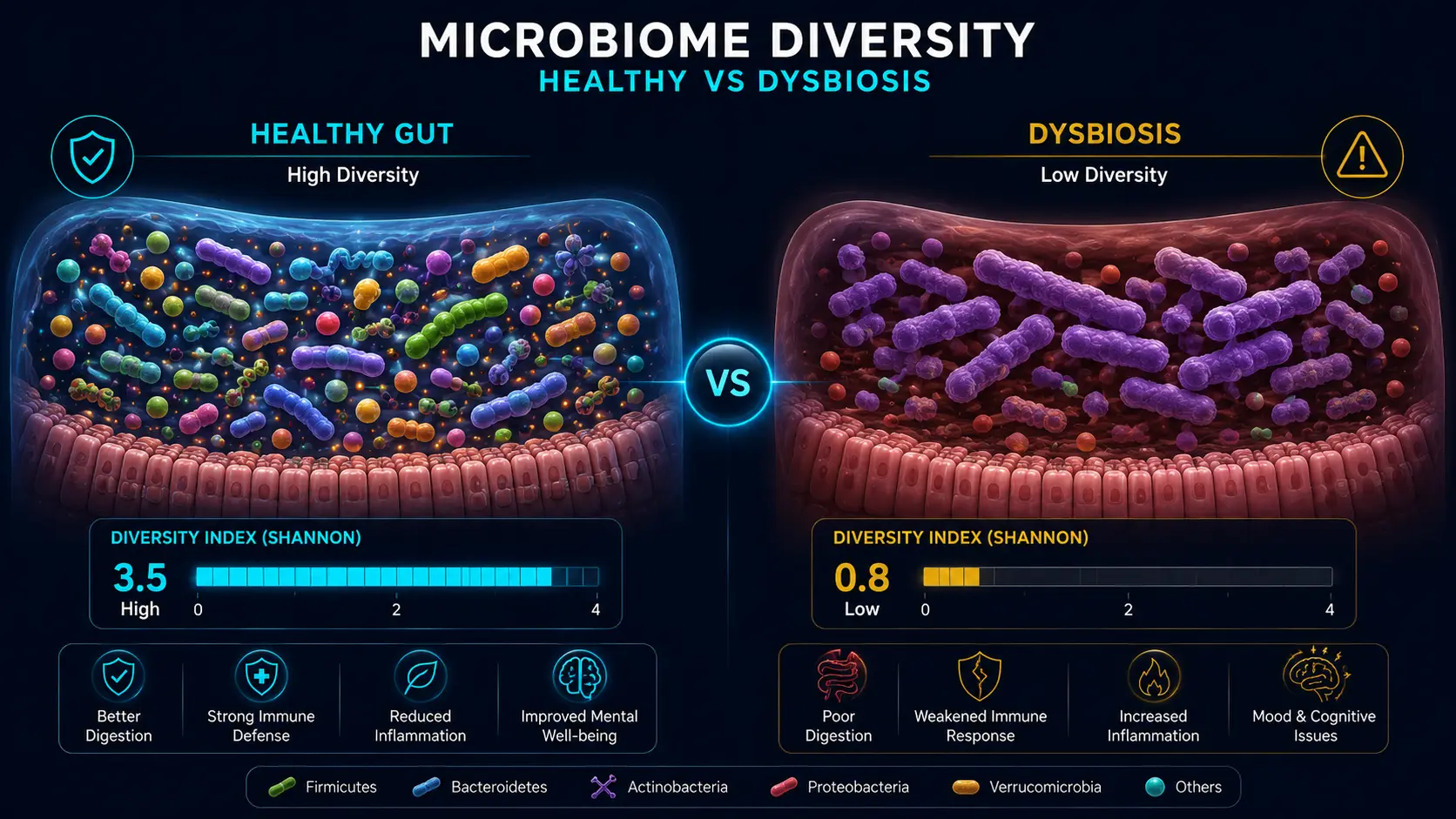
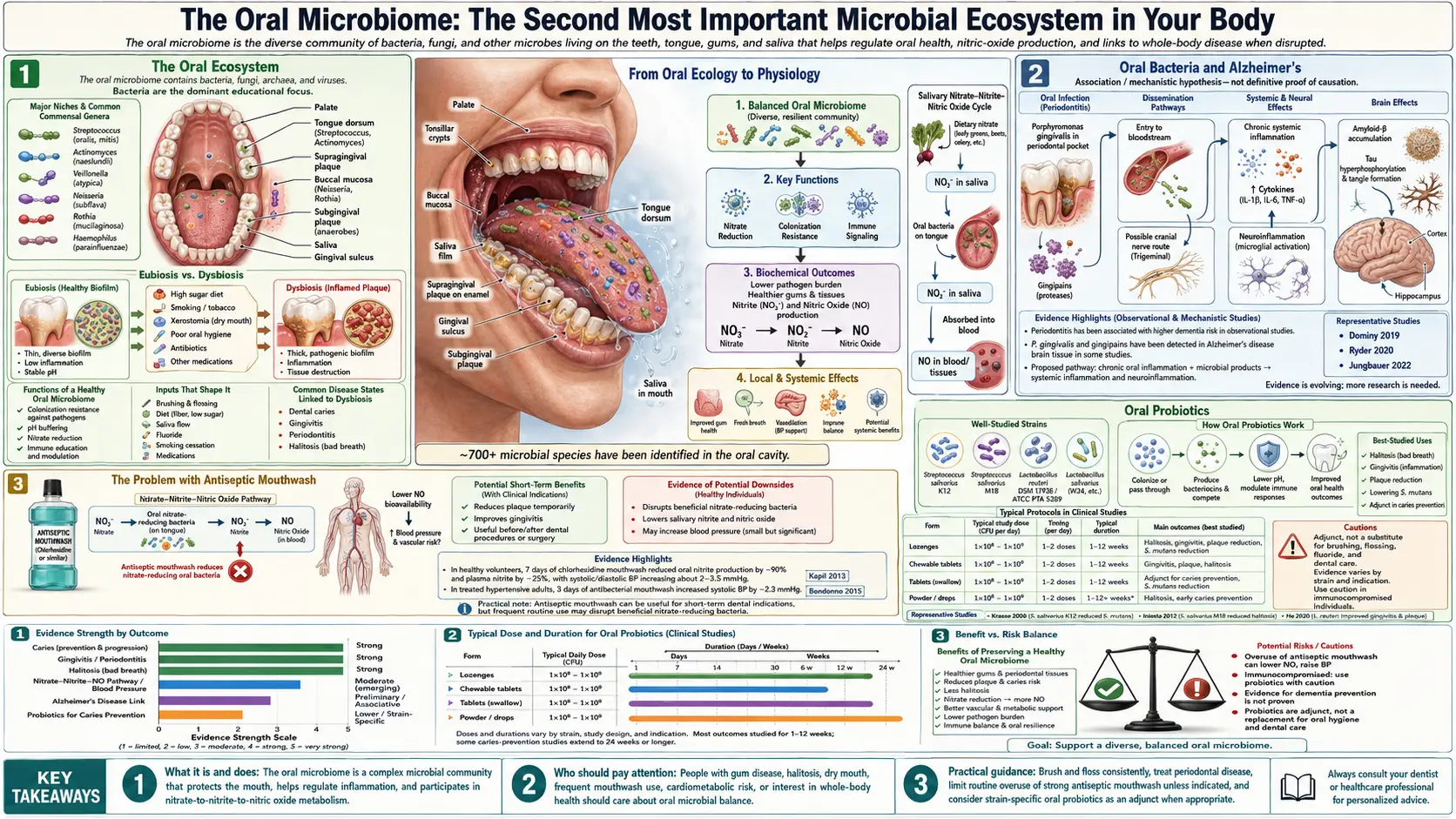
The mouth hosts over 600 prevalent bacterial types at the species level, making it the second most diverse microbial ecosystem in the human body after the gut. A 2010 survey built a database of 619 of these types, and its analysis of 36,043 gene sequences found 1,179. Unlike the gut, however, the oral microbiome is exposed to the external environment with every breath and every swallow, and its composition has been linked to cardiovascular disease, Alzheimer’s pathology, blood pressure regulation, rheumatoid arthritis, pregnancy outcomes, and even mood. A 2013 study of ancient dental plaque from 34 early European skeletons found modern mouth bacteria markedly less diverse than in historic populations, and tied the shifts to farming diets and to industrially processed flour and sugar. Some accounts also point to modern dental hygiene, with its antiseptic mouthwashes and chlorinated drinking water, and draw the same comparison with hunter-gatherer populations.
This article explores how oral bacteria reach the bloodstream, which species drive systemic disease, how nitric-oxide metabolism connects oral microbes to blood pressure, and evidence-informed approaches to nurturing a healthy oral ecosystem.
Table of Contents
The Oral Ecosystem
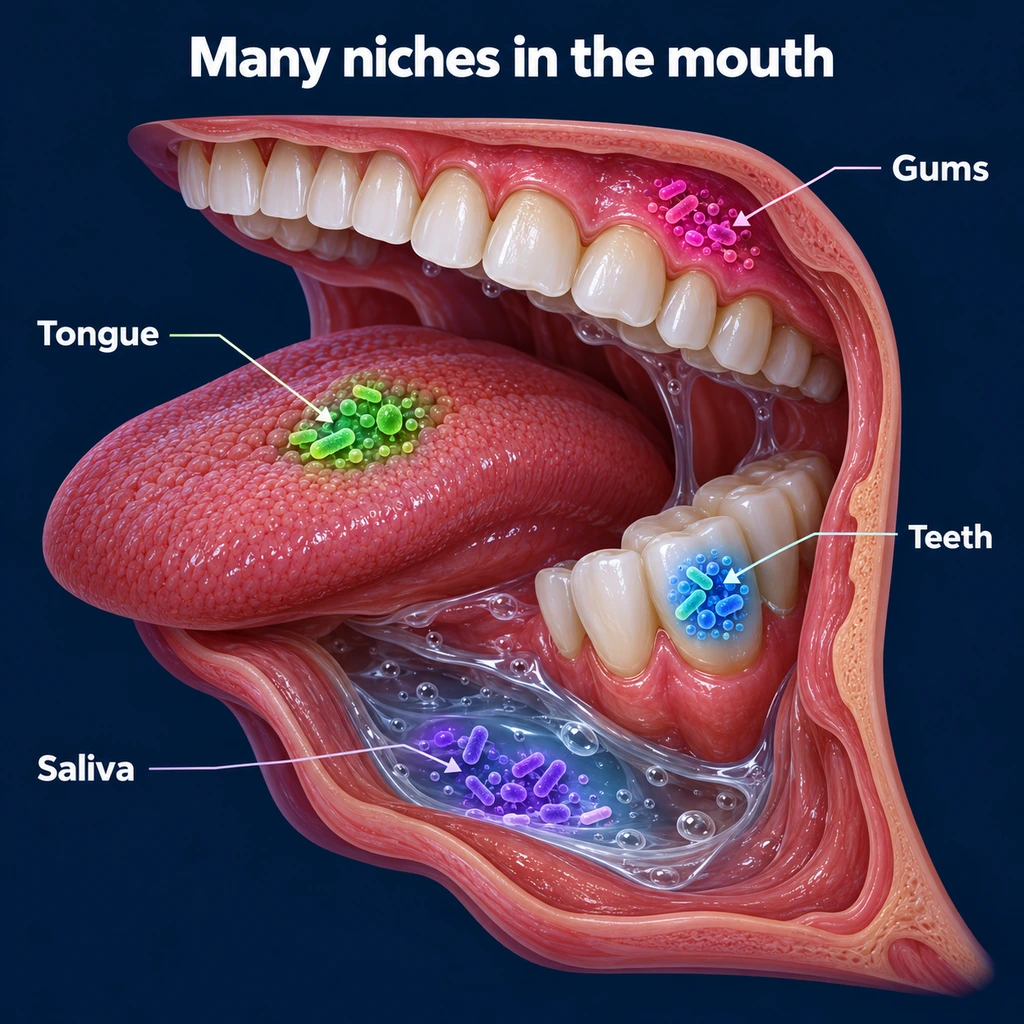
The mouth contains many distinct microbial niches: tooth enamel, gingival sulci, tongue dorsum, hard palate, buccal mucosa, and saliva itself. Each supports different communities. A healthy mouth contains a balanced mix of Streptococcus, Neisseria, Veillonella, Fusobacterium, and many others. Pathogenic dominance of Streptococcus mutans and Porphyromonas gingivalis is a hallmark of dental caries and periodontitis respectively.
The Oral–Cardiovascular Axis
Every time you brush your teeth, chew, or have dental work done, small numbers of oral bacteria enter the bloodstream — a phenomenon called transient bacteremia. In healthy people with well-maintained gums these incursions are cleared quickly. In people with periodontitis, the daily bacterial load is higher and the organisms are more aggressive. Porphyromonas gingivalis and its proteolytic enzymes, gingipains, have been found embedded in atherosclerotic plaque, and reports cite a 20–50% elevated cardiovascular-disease risk in people with moderate-to-severe periodontitis. A 2012 American Heart Association statement found that observational studies support an association independent of known confounders but do not support a causative relationship, and that there is no evidence gum treatment prevents atherosclerotic vascular disease or changes its outcomes.
Oral Bacteria and Alzheimer’s
A landmark 2019 paper in Science Advances identified P. gingivalis and its gingipains in the brains of Alzheimer’s patients, with gingipain levels correlating with two markers of brain damage, tau and ubiquitin pathology. In mice, oral infection with P. gingivalis led to infection of the brain and more production of amyloid-beta 1-42, a component of amyloid plaques. A 2026 review reports that the gingipain inhibitor atuzaginstat failed in its trial, called GAIN. The trial is described as phase 2/3, with subgroup analyses reported to suggest benefit in patients with documented infection. The oral–brain axis remains an active frontier.
Nitric Oxide and Blood Pressure
Green leafy vegetables and beets contain dietary nitrate, which must be reduced to nitrite by oral bacteria on the tongue dorsum before the body can use it to make nitric oxide. This is one of the clearest examples of a specific microbial function the human body has outsourced. These oral nitrate-reducing bacteria are a key step in that route, though rinsing them away does not always change what reaches the blood. In a 2013 trial in 19 healthy volunteers, a week of chlorhexidine rinse cut nitrite made in the mouth by 90% and nitrite in the blood by 25%. A 2015 trial saw only a trend in blood nitrite, and a 2016 double-blind trial saw no change.
Blood pressure results are mixed as well. The 2013 trial, with a fixed order of control week then rinse week, found rises of 2–3.5 mmHg within a week. The 2015 trial, in 15 people treated for high blood pressure, found systolic pressure 2.3 mmHg higher after three days, with diastolic pressure unchanged. The 2016 trial, in 17 healthy young women, found no change. A 2026 pooled analysis of five chlorhexidine studies found differences of 1.56 mmHg systolic (95% confidence interval -0.67 to 3.80) and -0.10 mmHg diastolic, neither significant, and its authors estimated the clinical importance as negligible. These studies are set out on the page Antiseptic Mouthwash, Mouth Bacteria and Blood Pressure.
Oral Bacteria in Autoimmunity
Aggregatibacter actinomycetemcomitans has been implicated in the generation of citrullinated proteins that drive rheumatoid arthritis autoimmunity. Periodontitis is a consistent risk factor for rheumatoid arthritis (RA) severity. A 2022 meta-analysis of 9 studies found that periodontal treatment went with lower rheumatoid arthritis disease activity (standardized mean difference -0.88), and rated the evidence as low or very low certainty. Similar dysbiosis patterns have been observed in inflammatory bowel disease, psoriasis, and preterm-birth-associated inflammation.
What Is Reported About Antiseptic Mouthwash
Broad-spectrum antiseptic mouthwashes — containing chlorhexidine, cetylpyridinium chloride, or alcohol — kill beneficial bacteria along with pathogens. Benefit in acute infection or post-surgical settings is genuine. Chronic daily use has been reported to disrupt dietary nitrate metabolism and lower oral microbial diversity, and a small short-term blood pressure effect has been seen in some trials and not others. A cohort of overweight adults in San Juan, Puerto Rico, linked mouthwash use twice a day or more to new high blood pressure over about three years (rate ratio 1.85, 95% confidence interval 1.17 to 2.94, against less frequent use). The main outcome was self-reported, and a study of this design shows an association, not a cause. The figures and the data on each ingredient are on the page Antiseptic Mouthwash, Mouth Bacteria and Blood Pressure. Evidence-informed dentistry has been moving toward selective rather than scorched-earth antimicrobial approaches.
Practices Described for a Healthy Oral Microbiome
- Mechanical disruption of plaque. Dental practice describes gentle brushing twice daily and interdental cleaning (floss or water flosser) once daily, and puts more weight on technique than on the toothpaste.
- Tongue care without over-scraping. Light tongue brushing preserves the nitrate-reducing community.
- Hydroxyapatite or fluoride toothpaste — both are described as rebuilding enamel, and supporters describe hydroxyapatite as gentler on mouth bacteria. A 2024 meta-analysis of 5 clinical trials and 8 in-the-mouth (in situ) trials concluded that hydroxyapatite products reduce caries without fluoride; two of its authors work for a toothpaste maker.
- Xylitol gums or mints (2–6 g/day divided) are described as suppressing S. mutans without harming beneficial species. A 2024 study linked higher blood xylitol to major cardiovascular events, such as heart attack and stroke, over 3 years (top third against bottom third, hazard ratio 1.57, 95% confidence interval 1.12 to 2.21), and a xylitol-sweetened drink raised platelet activity in 10 healthy volunteers. That study measured blood levels rather than gum use, and a 2025 letter in the same journal questioned the validity of its model.
- Antiseptic mouthwash is described by some dental sources as a prescribed, short-term product rather than a daily one.
- Nasal breathing and adequate saliva. Saliva carries antimicrobial peptides; mouth-breathing dries it away.
- Whole-food diet rich in fiber, polyphenols, and leafy greens.
- Daily acidic sodas and frequent snacking keep oral pH low and favor pathogenic species.
- Gum bleeding. Dental sources treat any bleeding on brushing as a sign of gum inflammation — it is not “normal.”
Oral Probiotics
Streptococcus salivarius K12 and M18 are the best-studied oral probiotic strains. They colonize the oral cavity and produce bacteriocins (lantibiotics) that suppress pathogenic streptococci while leaving the broader community intact. A 2019 systematic review of K12 for sore throat found 4 trials, all rated poor quality. Against no treatment, in 222 young children, streptococcal throat infection occurred in 16.2% with K12 and 48.6% without. In the placebo-controlled trial of 1,314 schoolchildren the figures were 7.8% and 8.8%, not a significant difference, and adults taking it alongside penicillin saw no significant benefit. K12 was safe and well tolerated, and the authors said more randomized trials are required. Reductions in tonsil recurrences, halitosis and dental caries markers are also reported. They come as lozenges taken after oral hygiene at bedtime. Lactobacillus reuteri is another strain with periodontal benefit in several trials.
Key Research Papers
- Dewhirst FE, Chen T, Izard J, et al. (2010). The human oral microbiome. Journal of Bacteriology — PubMed PMID: 20656903
- Adler CJ, Dobney K, Weyrich LS, et al. (2013). Sequencing ancient calcified dental plaque shows changes in oral microbiota with dietary shifts of the Neolithic and Industrial revolutions. Nature Genetics — PubMed PMID: 23416520
- Lockhart PB, Bolger AF, Papapanou PN, et al. (2012). Periodontal disease and atherosclerotic vascular disease: does the evidence support an independent association?: a scientific statement from the American Heart Association. Circulation — PubMed PMID: 22514251
- Dominy SS, Lynch C, Ermini F, et al. (2019). Porphyromonas gingivalis in Alzheimer's disease brains: Evidence for disease causation and treatment with small-molecule inhibitors. Science Advances — PubMed PMID: 30746447
- Kapil V, Haydar SM, Pearl V, et al. (2013). Physiological role for nitrate-reducing oral bacteria in blood pressure control. Free Radical Biology & Medicine — PubMed PMID: 23183324
- Konig MF, Abusleme L, Reinholdt J, et al. (2016). Aggregatibacter actinomycetemcomitans-induced hypercitrullination links periodontal infection to autoimmunity in rheumatoid arthritis. Science Translational Medicine — PubMed PMID: 27974664
- Silva DS, Costa F, Baptista IP, et al. (2022). Evidence-Based Research on Effectiveness of Periodontal Treatment in Rheumatoid Arthritis Patients: A Systematic Review and Meta-Analysis. Arthritis Care & Research — PubMed PMID: 33973383
- Wilcox CR, Stuart B, Leaver H, et al. (2019). Effectiveness of the probiotic Streptococcus salivarius K12 for the treatment and/or prevention of sore throat: a systematic review. Clinical Microbiology and Infection — PubMed PMID: 30616011
- Bondonno CP, Liu AH, Croft KD, et al. (2015). Antibacterial mouthwash blunts oral nitrate reduction and increases blood pressure in treated hypertensive men and women. American Journal of Hypertension — PubMed PMID: 25359409
- Sundqvist ML, Lundberg JO, Weitzberg E. (2016). Effects of antiseptic mouthwash on resting metabolic rate: A randomized, double-blind, crossover study. Nitric Oxide — PubMed PMID: 27769826
- Toonen LSJ, Van Swaaij BWM, Vagevuur ML, et al. (2026). The Effect of Chlorhexidine Mouthwash on Blood Pressure: A Systematic Review and Meta-Analysis. International Journal of Dental Hygiene — PubMed PMID: 41820203
- Joshipura K, Muñoz-Torres F, Fernández-Santiago J, et al. (2020). Over-the-counter mouthwash use, nitric oxide and hypertension risk. Blood Pressure — PubMed PMID: 31709856
- Witkowski M, Nemet I, Li XS, et al. (2024). Xylitol is prothrombotic and associated with cardiovascular risk. European Heart Journal — PubMed PMID: 38842092
- Valentine GC, Soderling E, Milgrom P. (2025). Oral health benefits and safety of xylitol and potential cardiovascular risk: questioning the validity of the model of Witkowski et al. European Heart Journal — PubMed PMID: 40067657
- Pawinska M, Paszynska E, Amaechi BT, et al. (2024). Clinical evidence of caries prevention by hydroxyapatite: An updated systematic review and meta-analysis. Journal of Dentistry — PubMed PMID: 39471896
- Bijoch J, Jędrasiak K. (2026). Red Complex Pathogens, Periodontal Dysbiosis and Periodontal Therapy in Alzheimer's Disease and Dementia. Journal of Clinical Medicine — PubMed PMID: 42452755
PubMed Topic Searches
Selected PubMed topic searches relevant to oral microbiome composition, dysbiosis, and its links to systemic disease.
- PubMed: Oral microbiome and periodontitis
- PubMed: P. gingivalis and cardiovascular disease
- PubMed: Oral microbiome and Alzheimer's
- PubMed: Oral bacteria, nitric oxide, and blood pressure
- PubMed: Mouthwash and oral microbiome
- PubMed: Xylitol and S. mutans
- PubMed: Oil pulling and oral health
- PubMed: Oral probiotics
- PubMed: Tongue scraping and halitosis
- PubMed: Dental caries and oral dysbiosis
- PubMed: Periodontal disease and systemic inflammation
- PubMed: Salivary microbiome as diagnostic
Connections
- All Remedies
- Mastic Gum — the original chewing gum, with plaque-reduction studies
- Probiotics
- Cardiovascular Disease
- Hypertension
- Arthritis
- Dementia
- Gut Healing
- Fermented Foods
- Mouth Taping
- Breathwork
- Beets
- Gut-Brain Axis
- Fluoride
- Inflammatory Bowel Disease
- Anti-Inflammatory Diet
- Garlic
- Psoriasis
- Silver Nanoparticles
- Aspirin
- Conditions on this site that reference this page: Bacillus subtilis · Gingivitis · Halitosis (Chronic Bad Breath) · Periodontitis (Gum Disease) · Dentistry & Oral Health · Canker Sores (Aphthous Ulcers) · Sinusitis · Tooth Decay (Dental Caries)
Featured Videos