Coenzyme Q10 (CoQ10) — Benefits Deep Dive
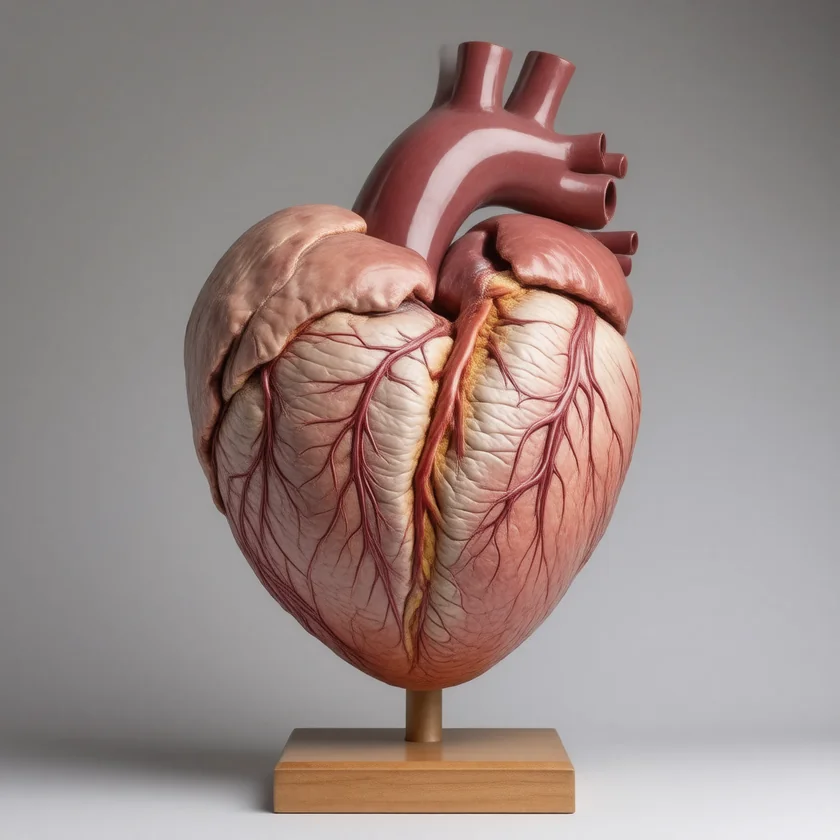
Coenzyme Q10 produces clinically meaningful effects across an unusually wide set of conditions because a single mitochondrial molecule sits at the rate-limiting bottleneck of cellular energy production. When coenzyme Q10 (CoQ10) falls — through aging, statin-induced inhibition of the mevalonate pathway, or tissue-specific deficiency in failing heart muscle — the consequences propagate outward to whichever organ has the highest mitochondrial demand. In trials, coenzyme Q10 lowered cardiovascular deaths in heart failure (Q-SYMBIO: 9% versus 16%, a 43% relative reduction), reduced migraine attack frequency and improved sperm motility; results for statin muscle symptoms are mixed, and restored mitochondrial function in aging eggs (oocytes) has been shown in mice. Each benefit page below explores one specific therapeutic application in clinical-trial depth.
Deep-Dive Articles
Heart Failure
The Q-SYMBIO landmark trial (Mortensen 2014) showed a 43% reduction in cardiovascular mortality (9% versus 16%) with 100 mg three times daily in New York Heart Association (NYHA) Class III-IV patients. The KISEL-10 trial (Alehagen) added selenium to coenzyme Q10 in elderly Swedes and lowered cardiovascular mortality (5.9% versus 12.6% over 5.2 years); at 12 years cardiovascular mortality was still lower (28.1% versus 38.7%, hazard ratio 0.59). Deep dive into the mechanism in failing heart muscle, NYHA Class III-IV protocols, and why ubiquinol matters in older patients.
Read the deep dive →Statin Myopathy (SAMS)
Statins inhibit HMG-CoA reductase, the rate-limiting step of the mevalonate pathway. Because coenzyme Q10 biosynthesis branches off the same pathway downstream of HMG-CoA reductase, every statin dose reliably lowers coenzyme Q10. The Banach 2015 (no significant benefit) and Qu 2018 (benefit) meta-analyses, the Skarlovnik 2014 and Taylor 2015 trials, prophylactic vs treatment dosing, the SAMS prevalence question, and what the research says about switching statins compared with taking coenzyme Q10.
Read the deep dive →Migraine Prevention
Sandor 2005 (adults) and Hershey 2007 (an open-label study in children and teenagers) are the early migraine studies; the 2012 American Academy of Neurology / American Headache Society (AAN/AHS) guideline rated coenzyme Q10 "possibly effective" (Level C) for preventing migraine in adults. The Parohan 2020 meta-analysis (4 trials, 221 people) found about 1.9 fewer attacks a month but no significant effect on attack duration or severity. The cortical-spreading-depression mitochondrial-energy-reserve hypothesis, and how coenzyme Q10 combines with riboflavin and magnesium to form the "mitochondrial migraine stack."
Read the deep dive →Fertility (Male & Female)
Both sperm and oocytes are exceptionally mitochondria-rich cells whose function declines with age in part through accumulated mitochondrial dysfunction. The Balercia male-fertility trials (200-300 mg/day for 6 months improving sperm motility), the Bentov 2014 in vitro fertilization (IVF) trial in women aged 35-43 (600 mg coenzyme Q10 a day; stopped early, with no significant difference in chromosomally abnormal eggs) and Bentov & Casper's 2013 review of egg (oocyte) mitochondria. Combination protocols with zinc, selenium, and dehydroepiandrosterone (DHEA).
Read the deep dive →Interactive Visualization Free Radicals & Your Antioxidant Network Follow one superoxide radical down the whole relay — superoxide dismutase (SOD), catalase, glutathione, vitamin E, vitamin C, reduced nicotinamide adenine dinucleotide phosphate (NADPH) — then release free iron and watch a membrane tear itself apart. Launch →
Table of Contents
- Deep-Dive Articles
- Why Coenzyme Q10 Produces Effects Across So Many Conditions
- Research Papers: Heart Failure
- Research Papers: Statin Myopathy
- Research Papers: Migraine Prevention
- Research Papers: Fertility
- Research Papers: Cross-Cutting (Forms, Bioavailability, Safety)
- External Authoritative Resources
- Connections
- Featured Videos
Why Coenzyme Q10 Produces Effects Across So Many Conditions
Most supplements with broad clinical claims fall apart on close mechanistic inspection. Coenzyme Q10 is unusual because its narrow molecular role — shuttling electrons between Complex I/II and Complex III of the mitochondrial electron transport chain — sits at a true rate-limiting bottleneck of cellular energy production. When coenzyme Q10 supply is inadequate, every downstream consequence follows automatically: adenosine triphosphate (ATP) synthesis falls, electron leak rises (generating superoxide that damages mitochondrial DNA), and tissues with the largest energy budgets fail first. The diverse clinical benefits below all trace back to that single biochemical fact.
- Failing heart muscle has the highest coenzyme Q10 demand and the largest deficiency — myocardial coenzyme Q10 levels fall 30-50% in heart failure, correlating with disease severity. Replenishment produced a 43% reduction in cardiovascular mortality (9% versus 16% over 2 years) in Q-SYMBIO — a larger effect size than most pharmaceutical heart failure additions to standard therapy. A 2024 meta-analysis of 33 randomized trials in heart failure (Xu 2024) found that coenzyme Q10 lowered death from any cause (risk ratio 0.64) and hospital stays for heart failure (risk ratio 0.50), and improved the 6-minute walk distance by about 32 metres, without major side effects; the evidence was rated moderate quality for death and hospital stays.
- Statins block the synthesis pathway shared with cholesterol — coenzyme Q10 biosynthesis branches off the mevalonate pathway downstream of HMG-CoA reductase. Statins reliably reduce serum coenzyme Q10 by 30-50% within 2-4 weeks. The downstream effect on muscle mitochondria drives statin-associated muscle symptoms in 10-25% of users. Whether coenzyme Q10 helps these symptoms is disputed: a 2015 meta-analysis (Banach 2015; 6 trials, 302 people) found no significant effect on muscle pain or on the muscle enzyme creatine kinase (CK), while a 2018 meta-analysis (Qu 2018; 12 trials, 575 people) found less muscle pain, weakness, cramps and tiredness, again with no change in creatine kinase. Both looked at treating people who already take statins, not at preventing the symptoms.
- Cortical neurons need stable mitochondrial energy reserves to prevent migraine attacks — the cortical-spreading-depression model frames migraine as a mitochondrial energy-failure event. Coenzyme Q10 + riboflavin + magnesium together support every layer of the electron transport chain. The 2012 American Academy of Neurology / American Headache Society guideline rated each separately, not the combination: magnesium and riboflavin "probably effective" (Level B) and coenzyme Q10 "possibly effective" (Level C) for migraine prevention in adults.
- Oocyte and sperm function depend disproportionately on mitochondrial adenosine triphosphate — meiotic spindle formation in aging oocytes is the most energy-intensive cellular event in human reproduction. In aged mice, coenzyme Q10 in the diet restored mitochondrial function and adenosine triphosphate in oocytes (Ben-Meir 2015). In people, a randomized trial in young women (under 35) with low ovarian reserve (Xu 2018; 186 women) found better ovarian response and more high-quality embryos after 60 days of coenzyme Q10 before IVF, while the Bentov 2014 trial in women aged 35-43 stopped early without a significant difference in chromosomally abnormal eggs (aneuploidy 46.5% versus 62.8%). Coenzyme Q10 also supports sperm motility, with clinical trial data in both male and female fertility.
Additional mechanisms beyond these four flagship indications include hypertension (modest but consistent blood pressure (BP) reduction through endothelial nitric oxide (NO) protection), low-density lipoprotein (LDL) antioxidant protection (ubiquinol is the first antioxidant consumed when low-density lipoprotein particles encounter oxidative stress), neuroprotection in inherited primary coenzyme Q10 deficiency (where replacement can be life-saving), and skin photoprotection through both oral and topical routes. The four pages above cover the indications with the strongest controlled-trial evidence; the main coenzyme Q10 page covers the remaining clinical applications in more detail.
Research Papers: Heart Failure
- Mortensen SA, Rosenfeldt F, Kumar A, et al. (2014). The effect of coenzyme Q10 on morbidity and mortality in chronic heart failure: results from Q-SYMBIO: a randomized double-blind trial. JACC Heart Failure 2:641-649. — PubMed PMID: 25282031
- Alehagen U, Johansson P, Björnstedt M, et al. (2013). Cardiovascular mortality and N-terminal-proBNP reduced after combined selenium and coenzyme Q10 supplementation: a 5-year prospective randomized double-blind placebo-controlled trial among elderly Swedish citizens. International Journal of Cardiology 167:1860-1866. — PubMed PMID: 22626835
- Alehagen U, Aaseth J, Alexander J, Johansson P (2018). Still reduced cardiovascular mortality 12 years after supplementation with selenium and coenzyme Q10 for four years: a validation of previous 10-year follow-up results of a prospective randomized double-blind placebo-controlled trial in elderly. PLoS One 13:e0193120. — PubMed PMID: 29641571
- Mortensen pilot trial (1990) — first CoQ10 heart failure data — PubMed: Mortensen CoQ10 HF pilot 1990
- Sander meta-analysis of CoQ10 in heart failure (2006) — PubMed: Sander CoQ10 HF meta-analysis
- Lei meta-analysis of CoQ10 in heart failure (2017) — PubMed: Lei CoQ10 HF meta-analysis 2017
- Myocardial CoQ10 deficiency in heart failure (Folkers, Langsjoen) — PubMed: myocardial CoQ10 deficiency in HF
- Ubiquinol in advanced heart failure (Langsjoen) — PubMed: Ubiquinol advanced HF Langsjoen
- CoQ10 and ejection fraction (heart failure with reduced vs preserved ejection fraction, HFrEF vs HFpEF) — PubMed: CoQ10 HFrEF HFpEF
- CoQ10 and B-type natriuretic peptide (BNP) / N-terminal pro-BNP (NT-proBNP) biomarker reductions — PubMed: CoQ10 and BNP biomarkers
- CoQ10 cardioprotection in cardiac surgery (coronary artery bypass grafting (CABG) / valve) — PubMed: CoQ10 cardiac surgery cardioprotection
- CoQ10 in dilated cardiomyopathy — PubMed: CoQ10 dilated cardiomyopathy
- Xu J, Xiang L, Yin X, et al. (2024). Efficacy and safety of coenzyme Q10 in heart failure: a meta-analysis of randomized controlled trials. BMC Cardiovascular Disorders 24:592. — PubMed PMID: 39462324
Research Papers: Statin Myopathy
- Banach M, Serban C, Sahebkar A, et al. (2015). Effects of coenzyme Q10 on statin-induced myopathy: a meta-analysis of randomized controlled trials. Mayo Clinic Proceedings 90:24-34. — PubMed PMID: 25440725
- Skarlovnik A, Janić M, Lunder M, et al. (2014). Coenzyme Q10 supplementation decreases statin-related mild-to-moderate muscle symptoms: a randomized clinical study. Medical Science Monitor 20:2183-2188. — PubMed PMID: 25375075
- Taylor BA, Lorson L, White CM, Thompson PD (2015). A randomized trial of coenzyme Q10 in patients with confirmed statin myopathy. Atherosclerosis 238:329-335. — PubMed PMID: 25545331
- Marcoff & Thompson (2007) review — CoQ10 and statin myopathy mechanism — PubMed: Marcoff Thompson JACC review
- Statin-induced serum CoQ10 depletion — PubMed: Statin serum CoQ10 depletion
- Intramuscular CoQ10 in statin users (muscle biopsy) — PubMed: statin intramuscular CoQ10 biopsy
- Mevalonate pathway and CoQ10 biosynthesis — PubMed: mevalonate pathway and CoQ10
- Qu H, Guo M, Chai H, et al. (2018). Effects of coenzyme Q10 on statin-induced myopathy: an updated meta-analysis of randomized controlled trials. Journal of the American Heart Association 7:e009835. — PubMed PMID: 30371340
- Statin-Associated Muscle Symptoms (SAMS) definitions and prevalence — PubMed: SAMS prevalence definitions
- Nocebo effect and statin myopathy (SAMSON trial) — PubMed: SAMSON nocebo
Research Papers: Migraine Prevention
- Sándor PS, Di Clemente L, Coppola G, et al. (2005). Efficacy of coenzyme Q10 in migraine prophylaxis: a randomized controlled trial. Neurology 64:713-715. — PubMed PMID: 15728298
- Hershey AD, Powers SW, Vockell AL, et al. (2007). Coenzyme Q10 deficiency and response to supplementation in pediatric and adolescent migraine. Headache 47:73-80. — PubMed PMID: 17355497
- Parohan M, Sarraf P, Javanbakht MH, et al. (2020). Effect of coenzyme Q10 supplementation on clinical features of migraine: a systematic review and dose-response meta-analysis of randomized controlled trials. Nutritional Neuroscience 23:868-875. — PubMed PMID: 30727862
- Sazali et al. (2021) systematic review — PubMed: Sazali 2021 systematic review
- Dahri (2019) CoQ10 + L-carnitine combination for migraine — PubMed: Dahri CoQ10 + L-carnitine
- Slater SK, Nelson TD, Kabbouche MA, et al. (2011). A randomized, double-blinded, placebo-controlled, crossover, add-on study of CoEnzyme Q10 in the prevention of pediatric and adolescent migraine. Cephalalgia 31:897-905. — PubMed PMID: 21586650
- Cortical spreading depression and mitochondrial energy reserve — PubMed: cortical spreading depression mitochondria
- Mitochondrial dysfunction in migraine pathogenesis — PubMed: mitochondrial dysfunction in migraine
- Holland S, Silberstein SD, Freitag F, et al. (2012). Evidence-based guideline update: NSAIDs and other complementary treatments for episodic migraine prevention in adults: report of the Quality Standards Subcommittee of the American Academy of Neurology and the American Headache Society. Neurology 78:1346-1353. — PubMed PMID: 22529203
- CoQ10 deficiency in pediatric migraine (serum levels) — PubMed: pediatric CoQ10 deficiency in migraine
Research Papers: Fertility
- Balercia et al. (2004) — CoQ10 in idiopathic asthenozoospermia — PubMed: Balercia 2004
- Balercia G, Buldreghini E, Vignini A, et al. (2009). Coenzyme Q10 treatment in infertile men with idiopathic asthenozoospermia: a placebo-controlled, double-blind randomized trial. Fertility and Sterility 91:1785-1792. — PubMed PMID: 18395716
- Lafuente et al. (2013) meta-analysis — CoQ10 and male fertility — PubMed: Lafuente 2013 meta-analysis
- Safarinejad et al. (2009) CoQ10 in idiopathic male infertility — PubMed: Safarinejad CoQ10 male infertility
- Bentov Y, Casper RF (2013). The aging oocyte — can mitochondrial function be improved? Fertility and Sterility 99:18-22. — PubMed PMID: 23273985
- Bentov Y, Hannam T, Jurisicova A, et al. (2014). Coenzyme Q10 supplementation and oocyte aneuploidy in women undergoing IVF-ICSI treatment. Clinical Medicine Insights: Reproductive Health 8:31-36. — PubMed PMID: 24987272
- Xu Y, Nisenblat V, Lu C, et al. (2018). Pretreatment with coenzyme Q10 improves ovarian response and embryo quality in low-prognosis young women with decreased ovarian reserve: a randomized controlled trial. Reproductive Biology and Endocrinology 16:29. — PubMed PMID: 29587861
- Oocyte mitochondrial function and reproductive aging — PubMed: oocyte mitochondria reproductive aging
- Aneuploidy, spindle formation, and oocyte ATP — PubMed: aneuploidy oocyte ATP
- CoQ10 + zinc + selenium for male fertility — PubMed: CoQ10 + zinc + selenium male
- CoQ10 + dehydroepiandrosterone (DHEA) in diminished ovarian reserve (DOR) — PubMed: CoQ10 + DHEA in diminished ovarian reserve
- Ben-Meir A, Burstein E, Borrego-Alvarez A, et al. (2015). Coenzyme Q10 restores oocyte mitochondrial function and fertility during reproductive aging. Aging Cell 14:887-895. — PubMed PMID: 26111777
Research Papers: Cross-Cutting (Forms, Bioavailability, Safety)
- Ubiquinol vs ubiquinone bioavailability — PubMed: ubiquinol vs ubiquinone bioavailability
- Age-related decline in serum and tissue CoQ10 — PubMed: CoQ10 age-related decline
- CoQ10 absorption with fatty meals — PubMed: CoQ10 absorption with fat
- Solubilized coenzyme Q10 formulations — PubMed: solubilized CoQ10 formulations
- Mitoquinone, a mitochondria-targeted antioxidant — PubMed: mitoquinone targeted antioxidant
- CoQ10 warfarin interaction — PubMed: CoQ10 warfarin INR
- Long-term CoQ10 safety profile — PubMed: CoQ10 long-term safety
- Primary CoQ10 deficiency genes (COQ2-9, PDSS1/2) — PubMed: primary CoQ10 deficiency genes
- CoQ10 and the antioxidant network (regeneration by alpha-lipoic acid (ALA), vitamin C) — PubMed: CoQ10 antioxidant network
- Plasma CoQ10 reference ranges — PubMed: plasma CoQ10 reference ranges
External Authoritative Resources
- Linus Pauling Institute — Coenzyme Q10 Micronutrient Information Center — the single most authoritative scientific summary of coenzyme Q10 biology and clinical evidence, regularly updated
- U.S. National Center for Complementary and Integrative Health (NCCIH) — Herbs and Supplements at a Glance
- LiverTox (U.S. National Institutes of Health, NIH) — Coenzyme Q10
- PubMed — All research on coenzyme Q10 (~16,000 papers as of 2026)
Connections
- Free Radicals & Your Antioxidant Network — interactive animation
- Coenzyme Q10 (Main Page)
- Coenzyme Q10 for Heart Failure
- Coenzyme Q10 for Statin Myopathy
- Coenzyme Q10 for Migraine
- Coenzyme Q10 for Fertility
- All Antioxidants
- Alpha Lipoic Acid
- ALA Benefits Hub
- Glutathione
- N-Acetylcysteine
- Nicotinamide Adenine Dinucleotide & Nicotinamide Mononucleotide
- Methylene Blue
- Heart Failure (Disease)
- Cardiovascular Disease
- Headache & Migraine
- Reproductive Medicine
- Oxidative Stress
- Longevity Protocols
- Lipid Panel
- Apolipoprotein B
- Coronary Calcium Score
- Vitamin B2 (Riboflavin)
- Magnesium
- Selenium
- History