Spirulina for Cholesterol and Cardiovascular Health
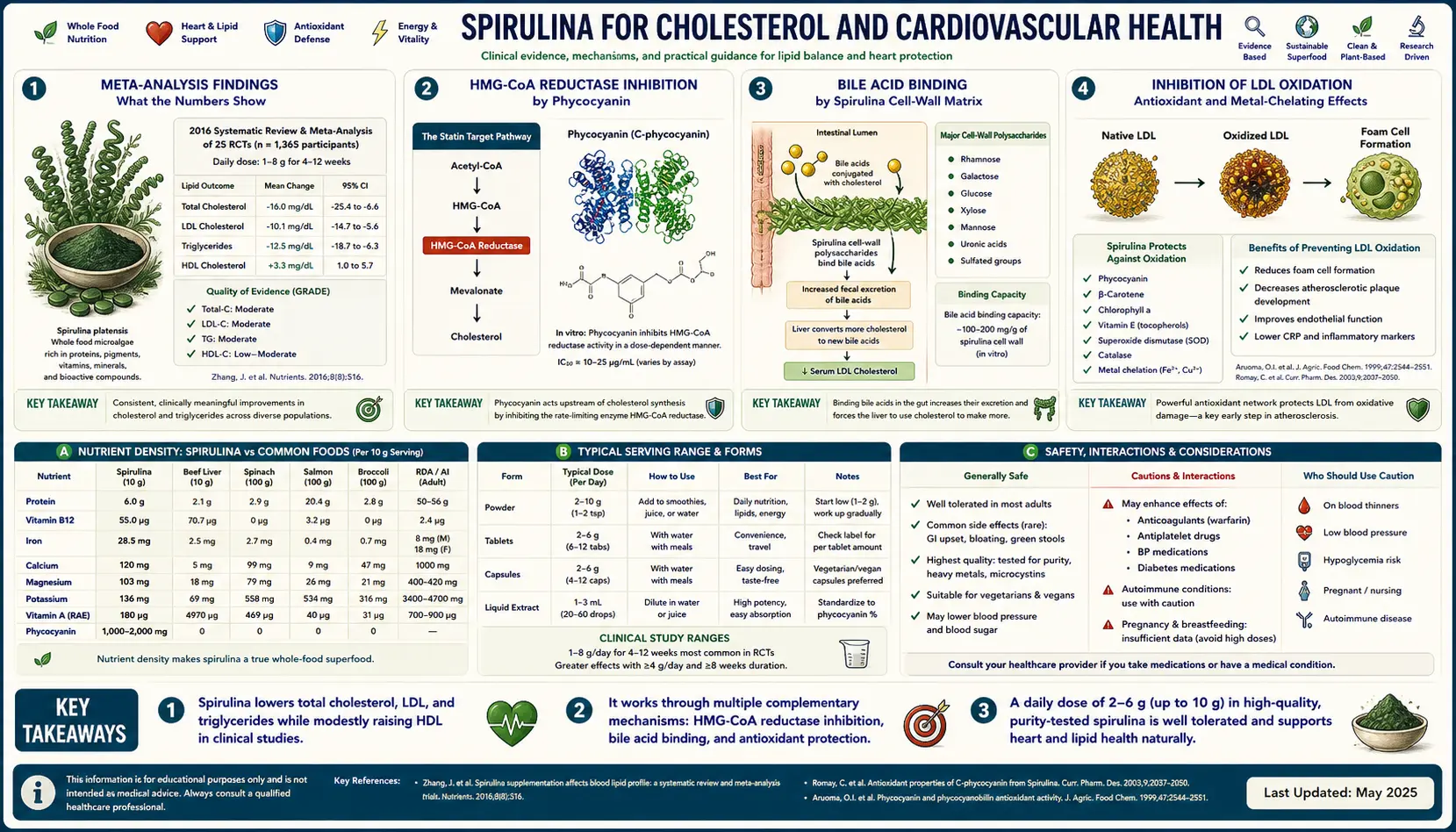
Of all the clinical applications of Spirulina, the lipid-lowering effect is the best documented and the most quantitatively impressive. The 2016 Serban meta-analysis (7 randomized controlled trials, 522 participants) found that Spirulina supplementation at 1-10 g/day produces mean reductions of total cholesterol by ~46 mg/dL, low-density lipoprotein (LDL) by ~41 mg/dL, and triglycerides by ~44 mg/dL, with a modest increase in high-density lipoprotein (HDL) of ~6 mg/dL. The effect sizes rival low-dose statin monotherapy in some trials, and uniquely among lipid-lowering interventions, Spirulina simultaneously reduces blood pressure modestly, and provides downstream antioxidant benefits that statins do not. The proposed mechanism integrates reduced cholesterol and bile-acid absorption in the gut (shown in rats and linked to the protein phycocyanin), suppression of low-density lipoprotein oxidation, and improved nitric-oxide bioavailability in the vascular endothelium.
Table of Contents
- The Meta-Analysis Findings — What the Numbers Show
- Phycocyanin and HMG-CoA Reductase: What Animal and Cell Studies Show
- Bile Acid Binding in the Gut
- Inhibition of Low-Density Lipoprotein Oxidation
- Endothelial Function and Nitric Oxide
- Blood Pressure Reduction
- Type 2 Diabetes and Metabolic Syndrome Overlap
- Dosing Patterns Described in the Literature
- Spirulina vs Statins — Where Each Fits
- Cautions
- Key Research Papers
- Connections
- Featured Videos
The Meta-Analysis Findings — What the Numbers Show
The Serban et al. 2016 systematic review and meta-analysis in Clinical Nutrition is one of several pooled summaries of Spirulina's lipid effects; newer ones are described below. Pooling seven randomized controlled trials in 522 adult participants (most with dyslipidemia at baseline, some with type 2 diabetes, some otherwise healthy), the analysis found that Spirulina at doses of 1-10 g/day for 2-12 weeks produced statistically significant and clinically meaningful changes in every lipid parameter:
- Total cholesterol: mean reduction of -46.76 mg/dL (95% confidence interval (CI) -67.31 to -26.22, p < 0.001)
- Low-density lipoprotein cholesterol: mean reduction of -41.32 mg/dL (95% confidence interval -60.62 to -22.03, p < 0.001)
- Triglycerides: mean reduction of -44.23 mg/dL (95% confidence interval -50.22 to -38.24, p < 0.001)
- High-density lipoprotein cholesterol: mean increase of +6.06 mg/dL (95% confidence interval 2.37 to 9.76, p = 0.001)
For context, atorvastatin 10 mg typically reduces low-density lipoprotein by about 35-40% (so roughly 50-60 mg/dL from a baseline of 150 mg/dL), and the U.S. Food and Drug Administration (FDA) label for rosuvastatin lists an adjusted mean low-density lipoprotein change of -45% at week 6 with 5 mg (Table 10). The reported Spirulina effect on low-density lipoprotein of -41 mg/dL is in the same range as low-dose statin monotherapy, although the comparison is imperfect because Spirulina trial participants had a range of baseline lipid levels and the percent reduction depends on the starting point.
In meta-regression, the effect was independent of the administered dose (total cholesterol p = 0.720, low-density lipoprotein cholesterol p = 0.778, triglycerides p = 0.342, high-density lipoprotein cholesterol p = 0.122), while longer supplementation was significantly associated with larger changes (total cholesterol p = 0.042, low-density lipoprotein cholesterol p = 0.042, high-density lipoprotein cholesterol p < 0.001, triglycerides p = 0.002). Notably, the lipid benefit is reproducible across both dyslipidemic and diabetic populations, suggesting the mechanism operates through general lipid metabolism rather than a specific disease-state pathway.
Later meta-analyses give a mixed picture. A 2023 GRADE-assessed dose-response meta-analysis (Rahnama et al., Pharmacological Research) pooled 20 studies with 23 arms and 1,076 participants and found that Spirulina significantly reduced low-density lipoprotein cholesterol, total cholesterol and triglycerides (standardized mean difference (SMD) -0.6 for each) and raised high-density lipoprotein cholesterol (SMD 0.3). A 2025 meta-analysis (Pinto-Leite et al., Nutrients) of 9 Spirulina trials, with 101 to 299 participants depending on the outcome, found a significant reduction in diastolic blood pressure but no significant effect on blood lipid measures, only a non-significant trend toward lower total cholesterol (p = 0.15); the authors described the size of the effect as small and of uncertain clinical significance.
Phycocyanin and HMG-CoA Reductase: What Animal and Cell Studies Show
HMG-CoA reductase (3-hydroxy-3-methylglutaryl-coenzyme A reductase) is the rate-limiting enzyme in cholesterol biosynthesis, catalyzing the reduction of HMG-CoA to mevalonate. It is the molecular target of every statin drug — lovastatin, simvastatin, atorvastatin, rosuvastatin, pravastatin, fluvastatin, pitavastatin. The clinical success of the statin class established HMG-CoA reductase inhibition as the most consequential lipid-lowering intervention available.
The studies on Spirulina point to a different route. In rats, a Spirulina concentrate lowered serum and liver cholesterol, and the authors concluded its action may involve inhibiting both cholesterol absorption in the upper small intestine (jejunum) and bile-acid reabsorption in the lower small intestine (ileum); purified phycocyanin had a stronger cholesterol-lowering effect than the concentrate (Nagaoka 2005). In hamsters fed a high-cholesterol diet, phycocyanin lowered serum cholesterol, triglycerides and low-density lipoprotein, and in human liver cells grown in the laboratory (HepG2) it raised low-density lipoprotein receptor messenger RNA while leaving HMG-CoA reductase messenger RNA unchanged (Sheu 2013). No human study has shown Spirulina acting on the statin enzyme; a PubMed search for Spirulina or phycocyanin with HMG-CoA reductase returns animal and laboratory studies only.
Combining Spirulina with statin therapy is still described as a concern because both lower blood cholesterol, so their effects on the lipid panel could add up. The commonly described practice when the two are combined is a lipid panel and alanine aminotransferase (ALT)/aspartate aminotransferase (AST) check 6-8 weeks after starting.
Bile Acid Binding in the Gut
A separate, complementary mechanism is bile acid binding in the gut lumen. In laboratory tests, a Spirulina concentrate bound bile acids more strongly than the milk protein casein and lowered cholesterol solubility and cholesterol uptake by intestinal cells (Caco-2); rats fed the concentrate excreted more cholesterol and bile acids in their feces (Nagaoka 2005). The authors identified the protein C-phycocyanin, not the cell-wall carbohydrates, as a key cholesterol-lowering component. When bile acids are lost in feces, the liver must synthesize more bile acids from cholesterol to maintain the bile-acid pool, drawing down hepatic cholesterol stores and upregulating low-density lipoprotein receptor expression to pull more low-density lipoprotein from circulation.
This is the same mechanism employed by the bile-acid-binding resins (cholestyramine, colesevelam, colestipol) and a contributing mechanism in soluble-fiber lipid-lowering effects (psyllium, oat beta-glucan). The Spirulina contribution is modest compared with pharmaceutical bile-acid resins (which can be dosed at 16-24 g/day), and the bile-acid findings come from laboratory and rat studies; how much of the low-density lipoprotein reduction seen in human trials they explain has not been measured in these studies.
Inhibition of Low-Density Lipoprotein Oxidation
The atherogenic potential of low-density lipoprotein is determined not just by quantity but by whether the low-density lipoprotein particle is in an oxidized form. Oxidized low-density lipoprotein is taken up by macrophages via scavenger receptors (scavenger receptor A (SR-A) and CD36) in an unregulated manner, producing the lipid-laden foam cells that initiate atherosclerotic plaque. Non-oxidized native low-density lipoprotein is cleared by the regulated low-density lipoprotein receptor pathway and is much less atherogenic per particle.
Spirulina supplementation reduces oxidized low-density lipoprotein in human trials. The mechanism is multifold:
- Phycocyanin scavenges peroxyl radicals that propagate the lipid peroxidation chain reaction in low-density lipoprotein particles
- Beta-carotene partitions into low-density lipoprotein particles and provides lipophilic antioxidant protection
- Phycocyanobilin inhibits the reduced nicotinamide adenine dinucleotide phosphate (NADPH) oxidase activity in vascular wall macrophages that generates the superoxide that oxidizes low-density lipoprotein in situ
- The Nrf2 induction by phycocyanin upregulates hepatic paraoxonase-1 (PON1), a high-density lipoprotein-associated enzyme that hydrolyzes oxidized lipid in low-density lipoprotein particles
The clinical translation: human trials of Spirulina in dyslipidemic patients show reduced malondialdehyde (MDA), oxidized low-density lipoprotein, and 8-isoprostane (markers of in vivo lipid peroxidation). The benefit is mechanistically distinct from the low-density lipoprotein-quantity reduction discussed above and may be the more important effect for actual cardiovascular event reduction.
Endothelial Function and Nitric Oxide
The vascular endothelium is the inner cell layer lining all blood vessels, and endothelial dysfunction is the earliest detectable abnormality in atherosclerotic disease — appearing decades before any clinical event and preceding even the structural changes of intimal-medial thickening. The hallmark of endothelial dysfunction is reduced bioavailability of nitric oxide (NO), the endothelial-derived relaxing factor that maintains vascular tone, suppresses platelet adhesion, and inhibits smooth muscle proliferation.
NO bioavailability is reduced when either (a) NO synthesis by endothelial nitric oxide synthase (eNOS) declines, or (b) the NO that is produced reacts with superoxide to form peroxynitrite faster than it can perform its physiologic functions. Phycocyanin addresses the second mechanism directly — by inhibiting vascular NADPH oxidase, phycocyanin reduces the superoxide flux that consumes NO and forms peroxynitrite. The net result is preserved NO bioavailability and improved endothelial function.
The NADPH oxidase findings come from animals. In hamsters fed an atherogenic diet for 12 weeks, Spirulina and phycocyanin lowered cardiac superoxide production by approximately 46-76%, and selenium-rich phycocyanin lowered expression of the p22phox subunit of NAD(P)H oxidase by 34% (Riss 2007). Flow-mediated dilation (FMD) of the brachial artery is the usual human measure of endothelial function, and populations with higher baseline FMD have lower long-term rates of myocardial infarction and stroke; a PubMed search for Spirulina or phycocyanin with flow-mediated dilation or the brachial artery returns no trials.
Endothelial function in cardiovascular disease is covered further on the Endothelial Dysfunction page.
Blood Pressure Reduction
Spirulina's effect on blood pressure is modest but reproducible. A 2021 meta-analysis (Machowiec et al., Nutrients) of 5 randomized controlled trials with 230 subjects reported a mean reduction in systolic blood pressure of -4.59 mmHg (95% CI -8.20 to -0.99) and diastolic of -7.02 mmHg (95% CI -8.86 to -5.18) with Spirulina supplementation at 1-8 g/day for 2 to 12 weeks. The effect is larger in hypertensive than in normotensive patients, consistent with a meaningful blood-pressure-regulating mechanism rather than a non-specific stress effect.
The proposed mechanisms include:
- Improved endothelial function and NO bioavailability (discussed above) — promoting endothelium-dependent vasodilation
- ACE-inhibitory peptides generated by digestion of Spirulina protein — reducing angiotensin II formation and downstream vasoconstriction
- Suppression of NADPH-oxidase-derived reactive oxygen species (ROS) in vascular smooth muscle — the same reactive oxygen species that drives hypertensive vascular remodeling
- Improved insulin sensitivity (in diabetic and prediabetic patients) — reducing hyperinsulinemic sympathetic activation
The effect size of -4 to -5 mmHg systolic is roughly half that of a starting-dose angiotensin-converting enzyme inhibitor (ACE inhibitor) or thiazide diuretic, so Spirulina is unlikely to replace antihypertensive medication in serious hypertension. The Machowiec authors concluded that Spirulina administration might have a supportive effect on the prevention and treatment of hypertension, and that more exact randomized controlled trials are needed to clarify its effect on blood pressure.
Type 2 Diabetes and Metabolic Syndrome Overlap
The lipid abnormalities of type 2 diabetes — elevated triglycerides, low high-density lipoprotein, small-dense low-density lipoprotein pattern — respond particularly well to Spirulina. Several randomized trials in type 2 diabetics have shown:
- Hemoglobin A1c (HbA1c): mixed results. A trial in 25 patients (2 g/day for 2 months) reported a significant HbA1c reduction (Parikh 2001); a 12-week trial of 8 g/day in 37 patients reported lower triglycerides and malondialdehyde but no HbA1c change in its abstract (Lee 2008); and a 2022 meta-analysis of 7 clinical studies found Spirulina was not significantly effective at reducing HbA1c (Ghanbari 2022)
- Fasting glucose reduction of ~10-20 mg/dL
- Triglyceride reduction of ~50-70 mg/dL (often the most impressive change in this population)
- Improvement in homeostatic model assessment of insulin resistance (HOMA-IR) (insulin resistance index)
- Reduction in inflammatory markers (high-sensitivity C-reactive protein (hs-CRP), tumor necrosis factor-alpha)
The mechanism extends the antioxidant-cardiovascular framework above. Diabetic vascular complications are driven by chronic hyperglycemia-induced oxidative stress (advanced glycation end products [AGEs], polyol pathway flux, NADPH oxidase activation). Phycocyanin's antioxidant and NADPH-oxidase-inhibiting effects target each of these. The clinical translation is most relevant for patients with metabolic syndrome looking to address multiple cardiometabolic risk factors simultaneously rather than seeking single-target intervention.
In people with metabolic syndrome and related disorders, a 2019 meta-analysis (Hamedifard et al., Phytotherapy Research) found Spirulina significantly lowered fasting plasma glucose (weighted mean difference (WMD) -10.31), insulin (WMD -0.53), total cholesterol (WMD -20.50), low-density lipoprotein cholesterol (WMD -19.02) and very-low-density lipoprotein cholesterol (WMD -6.72), and raised high-density lipoprotein cholesterol (WMD 1.42).
Metabolic syndrome and the cluster of cardiovascular risk factors are covered on the Metabolic Syndrome page.
Dosing Patterns Described in the Literature
Dosing patterns described for cardiovascular indications, based on the trial literature:
- Mild dyslipidemia (low-density lipoprotein 130-160, otherwise low risk): 2-4 g/day for 12 weeks, followed by a repeat lipid panel
- Moderate dyslipidemia (low-density lipoprotein 160-190 or with risk factors): 4-8 g/day for 12 weeks, often combined with dietary intervention (Mediterranean pattern, increased soluble fiber), followed by a repeat lipid panel; a statin is the conventional next step when the response is inadequate
- Mixed dyslipidemia (high triglycerides + low high-density lipoprotein, metabolic syndrome): 6-10 g/day, often combined with omega-3 eicosapentaenoic acid (EPA)/docosahexaenoic acid (DHA) at 2-3 g/day (the combination addresses different lipid abnormalities)
- Pre-hypertension or mild hypertension (130-140 / 80-90): 4-6 g/day, combined with sodium reduction and weight management; the reported systolic reduction is 4-6 mmHg within 8 weeks
- Adjunct to statin therapy: 2-4 g/day with liver function test (LFT) and lipid-panel monitoring
Time to effect: lipid changes are typically measurable at 4-6 weeks and maximal by 12 weeks. Blood pressure changes are visible within 4 weeks. As with all dietary supplements, consistency matters more than peak dosing — daily 5 g sustained over months is more effective than larger doses taken sporadically.
Spirulina vs Statins — Where Each Fits
Spirulina is not a statin replacement for high-risk patients. Statins remain first-line in clinical guidelines for established cardiovascular disease, diabetes with cardiovascular risk factors, familial hypercholesterolemia, and primary prevention in patients with calculated 10-year atherosclerotic cardiovascular disease (ASCVD) risk above 7.5%. The randomized trial evidence for statin reduction of myocardial infarction, stroke, and cardiovascular mortality is extraordinarily strong; the equivalent randomized event-reduction trials do not yet exist for Spirulina.
That said, the research points to clinical contexts where Spirulina has been considered as a primary option or an adjunct:
- Patients with statin intolerance (myalgia, elevated creatine kinase (CK), LFT abnormalities) — Spirulina produces meaningful low-density lipoprotein reduction with a very different side-effect profile
- Mild dyslipidemia in low-risk patients (calculated 10-year ASCVD risk < 5%) — the setting in which Spirulina plus dietary intervention has been considered in place of drug treatment
- Patients preferring dietary-supplement approaches — Spirulina is one of the few supplements with meta-analytic evidence at clinically relevant effect sizes
- Multi-target metabolic syndrome — Spirulina's combined effects on lipids, blood pressure (BP), glycemic control, and inflammation are difficult to replicate with single-target drugs
- Adjunctive to statin in patients with persistent low-density lipoprotein elevation — under physician monitoring, additive lipid reduction may help reach low-density lipoprotein goals without requiring statin dose escalation
The difference that matters most in this comparison is the one stated above: statins have randomized trials showing fewer heart attacks, strokes and cardiovascular deaths, and Spirulina does not yet have such trials.
Cautions
- Statin co-administration — theoretical additive cholesterol lowering (in a hamster and liver-cell study, phycocyanin left HMG-CoA reductase unchanged); LFT and CK monitoring is commonly described with the combination
- Warfarin and anticoagulants — theoretical anti-platelet and vitamin K1 content (small amount) interactions; close international normalized ratio (INR) monitoring is the commonly cited practice when Spirulina is started alongside warfarin
- Source quality — products vary in heavy metal and microcystin contamination and testing; testing criteria are detailed in the Phycocyanin page cautions section
- Pregnancy — therapeutic doses (above 1 g/day) lack adequate safety data in pregnancy
- Phenylketonuria — absolutely contraindicated due to phenylalanine content
- Severe hypertriglyceridemia (triglycerides > 500 mg/dL) — Spirulina alone is insufficient; this is a medical emergency conventionally treated with fibrate or omega-3 eicosapentaenoic acid/docosahexaenoic acid pharmaceutical therapy plus dietary intervention
- Active hepatic disease — while Spirulina has hepatoprotective properties in toxin models, the research raises a concern for people with active hepatitis or cirrhosis
Key Research Papers
- Serban MC et al. (2016). A systematic review and meta-analysis of the impact of Spirulina supplementation on plasma lipid concentrations. Clinical Nutrition. — PubMed PMID: 26433766
- Machowiec P et al. (2021). Effect of Spirulina supplementation on systolic and diastolic blood pressure: systematic review and meta-analysis. Nutrients. — PubMed PMID: 34578932
- Torres-Duran PV et al. (2007). Antihyperlipemic and antihypertensive effects of Spirulina maxima in an open sample of Mexican population: a preliminary report. Lipids in Health and Disease. — PubMed PMID: 18039384
- Mazokopakis EE et al. (2014). The hypolipidaemic effects of Spirulina (Arthrospira platensis) supplementation in a Cretan population: a prospective study. Journal of the Science of Food and Agriculture. — PubMed PMID: 23754631
- Park HJ, Lee YJ, Ryu HK, Kim MH, Chung HW, Kim WY (2008). A randomized double-blind, placebo-controlled study to establish the effects of spirulina in elderly Koreans. Annals of Nutrition and Metabolism. — PubMed PMID: 18714150
- Nagaoka S et al. A novel protein C-phycocyanin plays a crucial role in the hypocholesterolemic action of Spirulina platensis concentrate in rats. Journal of Nutrition. — PubMed PMID: 16177207
- Parikh P et al. Role of Spirulina in the control of glycemia and lipidemia in type 2 diabetes mellitus. Journal of Medicinal Food. — PubMed PMID: 12639401
- Mani UV, Desai S, Iyer U (2000). Studies on the long-term effect of Spirulina supplementation on serum lipid profile and glycated proteins in NIDDM patients. Journal of Nutraceuticals, Functional & Medical Foods. — doi:10.1300/J133v02n03_03
- Lee EH et al. A randomized study to establish the effects of Spirulina in type 2 diabetes mellitus patients. Nutrition Research and Practice. — PubMed PMID: 20016733
- Kalafati M et al. Ergogenic and antioxidant effects of Spirulina supplementation in humans. Medicine and Science in Sports and Exercise. — PubMed PMID: 20010119
- Karkos PD et al. Spirulina in clinical practice: evidence-based human applications. Evidence-Based Complementary and Alternative Medicine. — PubMed PMID: 18955364
- Riss J et al. (2007). Phycobiliprotein C-phycocyanin from Spirulina platensis is powerfully responsible for reducing oxidative stress and NADPH oxidase expression induced by an atherogenic diet in hamsters. Journal of Agricultural and Food Chemistry. — PubMed PMID: 17696484
- Sheu MJ et al. (2013). Antihyperlipidemic and Antioxidant Effects of C-phycocyanin in Golden Syrian Hamsters Fed with a Hypercholesterolemic Diet. Journal of Traditional and Complementary Medicine. — PubMed PMID: 24716154
- Rahnama I et al. (2023). The effect of Spirulina supplementation on lipid profile: GRADE-assessed systematic review and dose-response meta-analysis of data from randomized controlled trials. Pharmacological Research. — PubMed PMID: 37263369
- Pinto-Leite M et al. (2025). The Role of Chlorella and Spirulina as Adjuvants of Cardiovascular Risk Factor Control: A Systematic Review and Meta-Analysis of Randomised Controlled Trials. Nutrients. — PubMed PMID: 40289965
- Hamedifard Z et al. (2019). The effects of spirulina on glycemic control and serum lipoproteins in patients with metabolic syndrome and related disorders: A systematic review and meta-analysis of randomized controlled trials. Phytotherapy Research. — PubMed PMID: 31359513
- Ghanbari F et al. (2022). Effect of Microalgae Arthrospira on Biomarkers of Glycemic Control and Glucose Metabolism: A Systematic Review and Meta-analysis. Current Problems in Cardiology. — PubMed PMID: 34538515
PubMed Topic Searches
Connections
- Spirulina Overview
- Spirulina Benefits Hub
- Spirulina Phycocyanin & Antioxidant
- Spirulina Athletic Performance
- Spirulina Allergic Rhinitis
- Hypercholesterolemia
- Hypertension
- Endothelial Dysfunction
- Metabolic Syndrome
- Type 2 Diabetes
- Omega-3 Fatty Acids
- Red Yeast Rice (Natural Statin)
- Niacin (Vitamin B3)
- Oats (Beta-Glucan)
- History