L-Theanine Sources & Dosing
Here is the honest practical page. L-Theanine comes almost entirely from one plant — tea — and there is far less of it in a cup than most people assume. The 100–400 mg doses used in research are far above what a few cups of tea provide, which is why the trials used supplements. This page covers how much is really in tea, which teas have the most, how supplemental L-theanine is made and dosed, when to take it, how quickly your body clears it, and what is known about its safety and drug interactions.
Interactive Visualization Caffeine, Adenosine & Why Coffee Stops Working Caffeine doesn’t give you energy — it blocks the tiredness signal while adenosine keeps piling up behind the blockade. Move your coffee to 2 p.m. and watch your deep sleep vanish. Launch →
Table of Contents
- Where L-Theanine Comes From
- How Much Is Really in a Cup of Tea
- Shade-Grown Teas and Matcha
- Supplements and the L- vs D- Isomer
- Typical Dosing (100–400 mg)
- Timing Strategies
- Absorption, Metabolism & Half-Life
- Safety Profile
- Drug Interactions & Precautions
- Key Research Papers
- Connections
- Featured Videos
Where L-Theanine Comes From
L-Theanine is remarkable for how few natural sources it has. It is found almost exclusively in:
- Tea (Camellia sinensis) — the overwhelming dietary source. All true teas — green, black, white, oolong, matcha — come from this one plant and contain L-theanine. Herbal "teas" (chamomile, peppermint, rooibos) are not made from Camellia sinensis and contain little or no L-theanine.
- A few mushrooms — notably the bay bolete (Imleria badia, formerly Boletus badius), which contains small amounts. This is a curiosity rather than a practical source.
- A tea relative, Camellia japonica — and a handful of related species, in trace amounts.
Essentially, if you are getting L-theanine from food, you are getting it from tea. The compound is what gives high-grade green teas their savory, brothy "umami" taste, and it is concentrated in the young leaves and buds.
How Much Is Really in a Cup of Tea
This is where honesty matters. Reported values vary widely with tea type, leaf grade, amount of leaf used, water temperature, and steeping time, but a rough, realistic range for a single brewed cup (about 200–250 mL) is:
- Black tea: roughly 5–25 mg per cup
- Green tea: roughly 6–30 mg per cup, sometimes higher for premium leaf
- Matcha: higher per serving, because you consume the whole powdered leaf rather than an infusion
Put those numbers next to the research doses — 100 to 400 mg — and the gap is obvious. To get 200 mg of L-theanine from ordinary brewed tea, you might need roughly eight to a dozen or more cups, which would also deliver a large and impractical caffeine load. This is the honest reason that essentially every clinical trial uses purified L-theanine capsules, not tea: you simply cannot reach study doses by drinking a normal amount of tea.
That does not make tea useless — a cup delivers the pleasant, gentle, naturally-balanced theanine-plus-caffeine combination that makes tea feel calmer than coffee. But if you are seeking the specific effects seen in the studies, you are looking at a supplement.
Shade-Grown Teas and Matcha
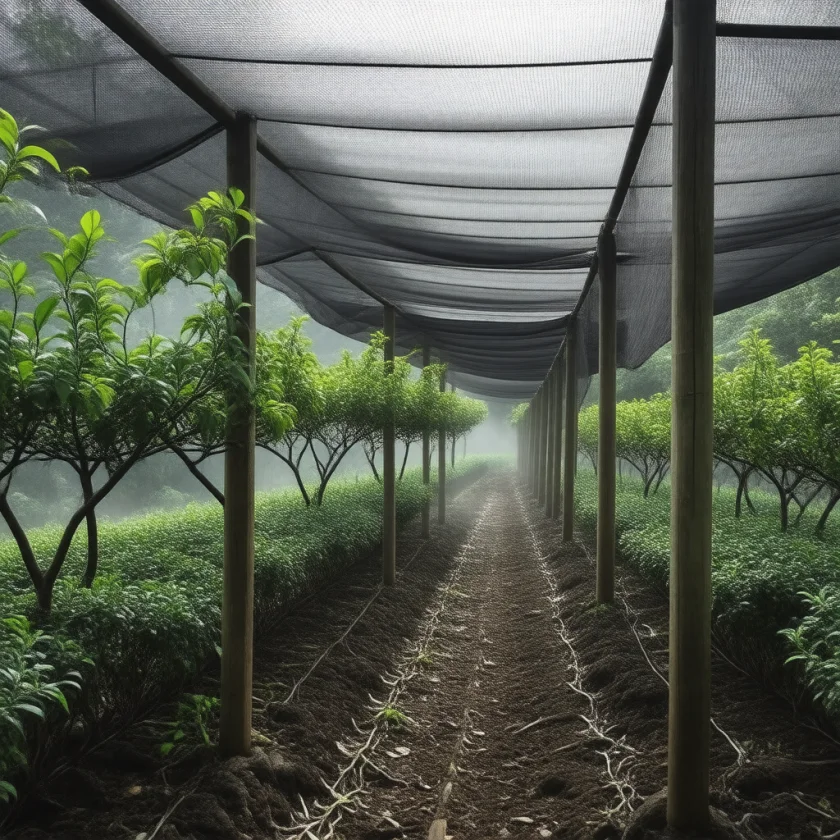
L-theanine is made in the tea plant's roots and transported to the leaves, where sunlight gradually converts it into catechins (the polyphenols like epigallocatechin gallate (EGCG)) and other compounds. Growers exploit this: by shading the plants for weeks before harvest, they slow that conversion, so more L-theanine remains in the leaf. This is why shade-grown Japanese teas — gyokuro and the matcha made from similar leaf — are prized for their sweet, umami, "brothy" character and higher L-theanine content.
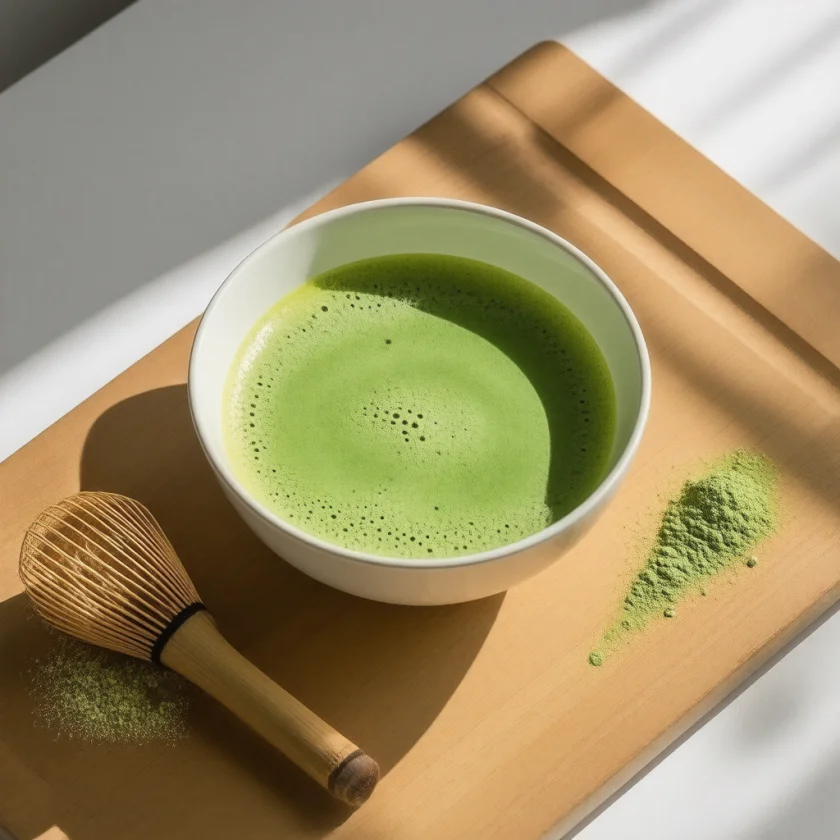
Matcha is a special case because you whisk the whole powdered leaf into water and drink all of it, rather than discarding steeped leaves. That means a serving of matcha delivers more L-theanine (and more caffeine and catechins) than an equivalent infusion of loose leaf. For someone who prefers to get L-theanine from a whole-food source rather than a capsule, high-quality matcha is the most concentrated practical option — though it still falls short of a 200 mg supplement dose per typical serving.
Supplements and the L- vs D- Isomer
Supplemental theanine is produced by fermentation or enzymatic synthesis. A key quality point: theanine exists as two mirror-image forms (isomers), L-theanine and D-theanine. The natural form in tea — and the one used in essentially all the positive research — is the L isomer.
- Pure L-theanine is the form used in the research. Enzymatically produced pure L-theanine was the form used in the Lyon attention-deficit/hyperactivity disorder (ADHD) sleep trial (400 mg/day).
- Cheaper synthetic "theanine" can be a racemic mix (a 50/50 blend of L- and D-forms). The D-form has not been shown to share the benefits, so a racemic product effectively delivers a lower dose of the active L-isomer.
- Labels: a product labelled "L-theanine" names the L-isomer; a product labelled only "theanine" may be a racemic L/D mix.
Typical Dosing (100–400 mg)
Doses used across the human research span a fairly wide range, and no official recommended intake exists (L-theanine is not an essential nutrient). Common patterns:
- 100–200 mg — the most common single dose for acute calm-focus and stress-buffering (Hidese 2019 used 200 mg/day; Nobre 2008 tested a lower 50 mg dose).
- 200–400 mg — used for sleep quality (the Lyon attention-deficit/hyperactivity disorder trial used 400 mg/day, split) and in some cognitive and combination studies.
- Up to 450–900 mg/day — used short-term in the Sarris generalized-anxiety trial, without notable safety problems (even though that trial did not show a benefit on core anxiety).
- With caffeine — roughly 200 mg L-theanine to 100 mg caffeine (a 2:1 ratio); see the Caffeine Synergy page.
The most common single dose in the trials is 100–200 mg. There is no evidence that megadoses work better; the effect appears to plateau.
Timing Strategies
- For acute stress/focus: studies gave it 30–60 minutes before the stressor or task, since alpha-wave and stress-buffering effects appear within that window.
- For sleep quality: 30–60 minutes before bed. Because it is not sedating, precise timing is not critical — the goal is a calmer pre-sleep state (see Sleep Quality).
- With caffeine: the combination studies gave the two together, in a single dose.
- With or without food: L-theanine does not require food for absorption.
Absorption, Metabolism & Half-Life
L-theanine is absorbed in the small intestine (via amino-acid transporters), crosses the blood-brain barrier, and reaches peak blood levels roughly 30 to 50 minutes after an oral dose. It is short-acting: its plasma half-life is on the order of about an hour, so it is largely cleared within a few hours. This short duration fits its use as an "as-needed" calm-focus aid rather than a compound that builds up in the body.
It is broken down mainly in the kidney back into its building blocks — glutamic acid and ethylamine — which are then excreted in the urine. It does not accumulate with normal dosing, part of why its safety record is so clean. Türközü and Şanlıer's 2017 review provides a thorough summary of L-theanine's absorption, metabolism, and safety.
Safety Profile
L-theanine has one of the more reassuring safety profiles among supplements:
- Regulatory status: In the United States, L-theanine (including commercial L-theanine ingredients) has been granted Generally Recognized As Safe (GRAS) status for use in foods and beverages. European and Japanese authorities have also reviewed it.
- Tolerability: In clinical trials, doses up to several hundred milligrams per day — and up to ~900 mg/day short-term — were well tolerated, with adverse-event rates similar to placebo.
- Side effects: uncommon and mild; occasional reports of headache, dizziness, or mild gastrointestinal upset. It does not cause the dependence, tolerance, or next-day grogginess associated with sedative-hypnotic drugs (a point emphasized by Rao and colleagues, 2015).
- Long-term data: most trials are short (days to a few weeks), so very-long-term safety is less thoroughly characterized — though the favorable metabolism and long history of tea consumption are reassuring.
Drug Interactions & Precautions
- Blood-pressure medications. L-theanine can modestly lower blood pressure, especially under stress (Yoto 2012). Combined with antihypertensive drugs it could, in theory, add to that effect — usually minor; the added drop matters most for people whose blood pressure already runs low or who take several blood pressure (BP) medications. See Hypertension.
- Stimulants. With caffeine the interaction is favorable (it smooths the edge); with prescription stimulants, no interaction studies have been published.
- Sedatives and psychiatric medication. Because L-theanine gently nudges gamma-aminobutyric acid (GABA) and monoamine signaling, it could in theory add to the effect of benzodiazepines, sedatives, or antidepressants; no serious interactions are documented, but the data are limited.
- Pregnancy and breastfeeding. There is not enough safety information for supplemental doses; food amounts from a normal amount of tea are a separate question; there are no safety data for supplement-level doses in pregnancy or breastfeeding.
- Children. The one paediatric trial (Lyon 2011) gave 400 mg/day to boys aged 8–12 with attention-deficit/hyperactivity disorder for 6 weeks and reported no significant adverse events.
Key Research Papers
- Türközü D, Şanlıer N (2017). L-theanine, unique amino acid of tea, and its metabolism, health effects, and safety. Critical Reviews in Food Science and Nutrition — PubMed PMID: 26192072
- Rao TP, Ozeki M, Juneja LR (2015). In search of a safe natural sleep aid. Journal of the American College of Nutrition — PubMed PMID: 25759004
- Yoto A, Motoki M, Murao S, Yokogoshi H (2012). Effects of L-theanine or caffeine intake on changes in blood pressure under physical and psychological stresses. Journal of Physiological Anthropology — PubMed PMID: 23107346
- Baba Y, Inagaki S, Nakagawa S, et al. (2021). Effects of L-theanine on cognitive function in middle-aged and older subjects: a randomized placebo-controlled study. Journal of Medicinal Food — PubMed PMID: 33751906
- Hidese S, Ogawa S, Ota M, et al. (2019). Effects of L-theanine administration on stress-related symptoms and cognitive functions in healthy adults: a randomized controlled trial. Nutrients — PubMed PMID: 31623400
- Sarris J, Byrne GJ, Cribb L, et al. (2019). L-theanine in the adjunctive treatment of generalized anxiety disorder: a double-blind, randomised, placebo-controlled trial. Journal of Psychiatric Research — PubMed PMID: 30580081
- Nobre AC, Rao A, Owen GN (2008). L-theanine, a natural constituent in tea, and its effect on mental state. Asia Pacific Journal of Clinical Nutrition — PubMed PMID: 18296328
- Kimura K, Ozeki M, Juneja LR, Ohira H (2007). L-Theanine reduces psychological and physiological stress responses. Biological Psychology — PubMed PMID: 16930802
- Camfield DA, Stough C, Farrimond J, Scholey AB (2014). Acute effects of tea constituents L-theanine, caffeine, and epigallocatechin gallate on cognitive function and mood: a systematic review and meta-analysis. Nutrition Reviews — PubMed PMID: 24946991
- Kim S, Jo K, Hong KB, Han SH, Suh HJ (2019). GABA and L-theanine mixture decreases sleep latency and improves NREM sleep. Pharmaceutical Biology — PubMed PMID: 30707852
PubMed Topic Searches
External Authoritative Resources
Connections
- All Amino Acids
- Caffeine, Adenosine & Why Coffee Stops Working — interactive animation
- L-Theanine Overview
- L-Theanine Benefits Hub
- L-Theanine + Caffeine Synergy
- L-Theanine for Sleep Quality
- Green Tea
- Epigallocatechin Gallate
- Glutamic Acid (Glutamate)
- Gamma-Aminobutyric Acid
- Magnesium
- Hypertension
- Anxiety
- Insomnia
- Coffee
- Taurine
- All Foods