Inositol for PCOS & Insulin Sensitivity
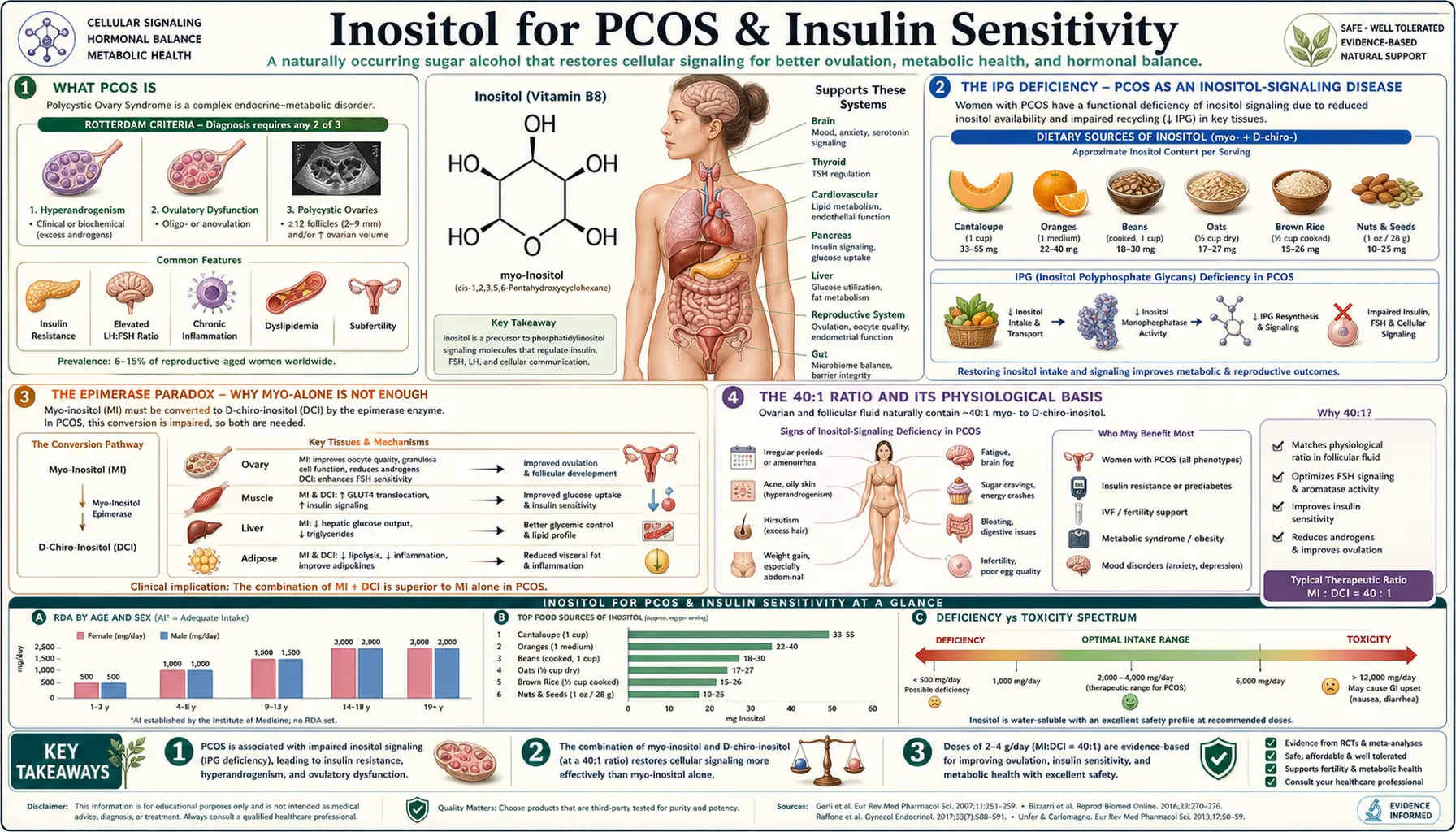
Polycystic ovary syndrome (PCOS) is one of the conditions in which inositol — mainly myo-inositol, alone or combined with D-chiro-inositol — has been studied most. Small trials, most of them from Italy, report lower insulin and androgen levels and more regular cycles, and a 2017 meta-analysis, two of whose authors listed an affiliation with a company that markets inositol products, found lower fasting insulin and HOMA-IR. Independent reviews are more cautious: the systematic review prepared for the 2023 International Evidence-based PCOS Guideline judged the evidence “limited and inconclusive” (Fitz 2024), a 2018 Cochrane review rated the fertility evidence low to very low quality, and the guideline calls inositol “experimental therapy” for infertility in PCOS. Compared head-to-head with metformin, myo-inositol caused fewer gastrointestinal side effects, while the guideline rates metformin ahead of inositol for hirsutism and central adiposity. Several inositol–PCOS trials, including some pooled in the meta-analyses below, have since been retracted or placed under an expression of concern. This deep-dive covers the mechanism researchers propose, the trials, the meta-analyses, the guideline, and the debate over the 40:1 ratio.
Table of Contents
- What PCOS Is
- The IPG Deficiency — PCOS as an Inositol-Signaling Disease
- The Epimerase Paradox Hypothesis
- The 40:1 Ratio and Where It Comes From
- The Genazzani PCOS Trials
- Unfer Meta-Analysis & Costantino 2009
- Inositol vs Metformin Head-to-Head
- The 2023 International PCOS Guideline
- Retractions and Expressions of Concern
- Doses and Durations Used in Trials
- Beyond PCOS — Insulin Resistance & Metabolic Syndrome
- Patient FAQ
- Cautions and Safety Findings in PCOS
- Key Research Papers
- Connections
- Featured Videos
What PCOS Is
Polycystic ovary syndrome is the most common endocrine condition in women of reproductive age; the 2023 international guideline puts its prevalence at 10–13% globally using the Rotterdam criteria. The Rotterdam criteria define PCOS by the presence of at least two of three features: oligo- or anovulation, clinical or biochemical hyperandrogenism, and polycystic ovarian morphology on ultrasound. The clinical presentation includes irregular or absent menstrual cycles, infertility, hirsutism (excess facial and body hair), acne, scalp hair thinning, weight gain (particularly central adiposity), and elevated risk of type 2 diabetes, dyslipidemia, hypertension, and cardiovascular disease.
Insulin resistance is common in PCOS. In a 2013 study using the euglycaemic-hyperinsulinaemic clamp, insulin resistance was present in 75% of lean women with PCOS and 95% of overweight women with PCOS, compared with 62% of overweight women without PCOS (Stepto 2013). The usual description of the pathway: insulin resistance causes compensatory hyperinsulinemia, which stimulates ovarian theca cells to overproduce androgens (especially testosterone and androstenedione) and lowers sex-hormone-binding globulin (SHBG), increasing free testosterone. The androgen excess disrupts the normal LH-FSH balance (LH rises relative to FSH), arrests follicular development at the antral stage, and prevents ovulation. The result is the characteristic polycystic ovary — not actually cysts but many small immature follicles arrested in development.
The 2023 guideline describes the main drug options this way: combined oral contraceptive pills are the first-line pharmacological treatment for menstrual irregularity and hyperandrogenism; anti-androgens such as spironolactone have a limited role where other therapies are ineffective or contraindicated, and the guideline pairs them with effective contraception because of the risk to a male fetus; and metformin is recommended primarily for metabolic features. Inositol has drawn interest because it is proposed to act on the insulin second-messenger signaling thought to contribute to both the metabolic and the reproductive features of PCOS.
The broader clinical picture is covered on the PCOS disease page, and the metabolic context on Insulin Resistance and Metabolic Syndrome.
The IPG Deficiency — PCOS as an Inositol-Signaling Disease
When insulin binds its receptor on a target cell (muscle, liver, adipose, ovary), it triggers a signaling cascade. One proposed branch of that cascade releases inositol phosphoglycan (IPG) mediators — small molecules derived from membrane glycosylphosphatidylinositol (GPI) anchors. Two families have been described:
- D-chiro-inositol-containing IPG — described in a 2002 review by Larner as a putative mediator of insulin action that accelerates the dephosphorylation of glycogen synthase and pyruvate dehydrogenase, rate-limiting enzymes of glucose disposal
- Myo-inositol-based signaling — myo-inositol is the precursor of the phosphoinositides that act as second messengers for several hormones, including FSH in the ovary
Studies from the Nestler and Baillargeon group reported that women with PCOS handle D-chiro-inositol differently. In 23 women with PCOS and 26 controls, urinary clearance of D-chiro-inositol was increased almost sixfold in PCOS and correlated inversely with insulin sensitivity, and the release of the D-chiro-inositol IPG mediator relative to insulin during a glucose tolerance test was decreased threefold (Baillargeon 2006). In a clamp study of 8 obese women with PCOS and 8 non-obese controls, the mediator's bioactivity rose with insulin in controls but stayed flat in the women with PCOS (Baillargeon 2010). The authors interpret these findings as consistent with a defect in tissue availability or use of D-chiro-inositol that may contribute to insulin resistance in PCOS.
The rationale given for supplementation is that myo-inositol supplies substrate for myo-inositol-dependent signaling, while administered D-chiro-inositol may bypass a defective conversion step (Larner 2002). This is a proposed mechanism; the clinical trials below measure hormones, insulin and cycles, not IPG release.
The Epimerase Paradox Hypothesis
Myo-inositol is converted to D-chiro-inositol by an insulin-dependent epimerase. Larner's review describes a defect in this conversion in insulin-sensitive tissues of a type 2 diabetic rat model. In the ovary, a 2014 study measured myo-inositol and D-chiro-inositol in the follicular fluid of 20 women with PCOS and 20 healthy women: the ratio fell from 100:1 in the healthy women to 0.2:1 in the women with PCOS, who also had more insulin resistance, hyperinsulinemia and higher LH (Unfer 2014).
From such findings researchers proposed the "D-chiro-inositol paradox": hyperinsulinemia is thought to speed conversion in the ovary, leaving D-chiro-inositol in excess there and myo-inositol depleted, while muscle and liver remain short of D-chiro-inositol. This is a hypothesis built from measurements like those above; it has not been tested directly in treatment trials.
What has been reported on D-chiro-inositol given alone:
- Placebo-controlled trials in PCOS — 1,200 mg/day for 6–8 weeks in 44 obese women lowered the insulin response and free testosterone, and 19 of 22 women ovulated versus 6 of 22 on placebo (Nestler 1999); 600 mg/day for 6–8 weeks in 20 lean women lowered the insulin response and free testosterone, and 6 of 10 ovulated versus 2 of 10 on placebo, a difference that was not statistically significant (Iuorno 2002).
- An IVF study — in 54 women with PCOS without insulin resistance, higher D-chiro-inositol doses were associated with more immature oocytes, fewer top-grade embryos and higher FSH requirements (Isabella 2012). The journal later published two expressions of concern about this paper.
- An animal study — in mice, high doses of D-chiro-inositol alone altered ovarian histology and raised testosterone (Bevilacqua 2021).
The 40:1 Ratio and Where It Comes From
The 40:1 combination of myo-inositol to D-chiro-inositol is described by its proponents as the "physiological plasma ratio"; the 2012 randomized trial that compared it with myo-inositol alone states it that way (Nordio 2012). No primary study establishing 40:1 as the normal plasma ratio was found in a verifiable abstract for this page. The figures that can be traced:
- Plasma: 40:1 — as stated by the trials and reviews that promote the combination (Nordio 2012; Nordio 2019)
- Healthy follicular fluid: 100:1 myo:D-chiro (Unfer 2014, 20 women)
- PCOS follicular fluid: 0.2:1 (Unfer 2014, 20 women with PCOS)
The trials behind the ratio are small. In the 2012 trial, 50 overweight women with PCOS took the combination or myo-inositol alone for six months; at the end of treatment both groups had improved metabolic parameters and no significant difference was found between them, though the authors reported a faster effect with the combination at three months (Nordio 2012). In a 2019 trial by the same lead author, 56 women (8 per group) took D-chiro-inositol alone or one of six myo:D-chiro ratios at 2 g of inositols twice a day for three months; the authors reported the 40:1 ratio as the most effective for restoring ovulation (Nordio 2019). Both trials share a lead author, and the journal that published them has issued an expression of concern about a third paper on the combination (see Retractions).
The 2023 international guideline does not endorse a particular ratio: “Specific types, doses or combinations of inositol cannot currently be recommended in adults and adolescents with PCOS, due to a lack of quality evidence.”
The Genazzani PCOS Trials
Alessandro Genazzani's group at the University of Modena and Reggio Emilia published several small studies of myo-inositol in PCOS. Two whose abstracts were checked for this page:
- Overweight women, 2008 — 20 overweight women with PCOS took myo-inositol 2 g plus folic acid 200 mcg daily or folic acid alone for 12 weeks. With myo-inositol, LH, prolactin, testosterone, insulin and the LH/FSH ratio fell significantly, HOMA and the glucose-to-insulin ratio improved, and menstrual cycles were restored in all of the women who had absent or infrequent periods. No changes occurred with folic acid alone (Genazzani 2008).
- Normal-weight women, 2014 — 24 normal-weight women with PCOS took a preparation of myo-inositol 3 g daily mixed with lactoferrin and bromelain, with no control group. LH, the LH/FSH ratio, 17-hydroxyprogesterone, androstenedione and the insulin response to a glucose load fell; BMI did not change (Genazzani 2014).
Both studies were small, and the 2014 study had no comparison group and used a multi-ingredient preparation, so its results cannot be attributed to myo-inositol alone.
Unfer Meta-Analysis & Costantino 2009
Costantino 2009
A double-blind trial published in European Review for Medical and Pharmacological Sciences. Forty-two women with PCOS took myo-inositol plus folic acid, or folic acid alone as placebo; the 2017 meta-analysis lists the treatment period as 12–16 weeks. In the myo-inositol group total testosterone fell from 99.5 to 34.8 ng/dl (placebo: 116.8 to 109), free testosterone, triglycerides, systolic and diastolic blood pressure, and the insulin response to a glucose load fell, and insulin sensitivity rose. Sixteen of 23 women on myo-inositol ovulated, versus 4 of 19 on placebo (Costantino 2009).
Unfer 2017 Meta-Analysis
The Unfer meta-analysis, published in Endocrine Connections, pooled nine randomized trials (247 women treated, 249 controls) of myo-inositol alone or with D-chiro-inositol, searched up to November 2016. What it reported:
- Significant decrease in fasting insulin (standardized mean difference −1.021)
- Significant decrease in HOMA index (standardized mean difference −0.585)
- A testosterone trend that was not statistically significant (P = 0.099); androstenedione unchanged
- A significant increase in SHBG only in studies where myo-inositol was given for at least 24 weeks
Two of the meta-analysis's five authors list an affiliation with the medical affairs department of a company that markets inositol products. Its table of included trials lists a 2007 placebo-controlled trial that the journal retracted in 2023 because it duplicated the same group's 2003 paper (retraction notice PMID 37782148); the meta-analysis has not been updated to exclude it.
Other meta-analyses
- Myo-inositol versus metformin (2019) — six trials, 355 women: no difference between the two in fasting insulin, HOMA, testosterone, SHBG or BMI, and adverse events were more frequent with metformin (risk ratio 5.17). Two of its four authors are also authors of the 2017 meta-analysis (Facchinetti 2019).
- Inositol for anovulation (2018) — ten trials: inositol was associated with a higher ovulation rate (risk ratio 2.3, with high heterogeneity) and more frequent menstrual cycles (risk ratio 6.8) than placebo; no study evaluated live birth or miscarriage (Pundir 2018).
- Inositol versus metformin or placebo (2023) — 26 trials, 1,691 women: a regular menstrual cycle was 1.79 times as likely with inositol as with placebo, inositol was non-inferior to metformin for this outcome, and BMI, testosterone, androstenedione, glucose and insulin fell more than with placebo; the authors declared no competing interests (Greff 2023). Its study tables include the 2007 trial retracted in 2023, a 2017–2018 myo-inositol-versus-metformin trial retracted in 2024, and two other trials now under expressions of concern (see Retractions).
Inositol vs Metformin Head-to-Head
Several trials have compared myo-inositol (or a myo/D-chiro combination) with metformin in PCOS. What the reviews report:
- Insulin and hormones — no difference between metformin and myo-inositol in fasting insulin, HOMA, testosterone, SHBG or BMI over the short term (Facchinetti 2019)
- Reproductive outcomes — likely no difference between metformin and inositol (Fitz 2024). A 2010 trial of 120 women reported spontaneous ovulation in 65% on myo-inositol and 50% on metformin (Raffone 2010); the journal placed that paper under an expression of concern in 2026.
- Hirsutism and waist — metformin may improve waist-hip ratio and hirsutism compared with inositol (Fitz 2024); the evidence is very uncertain for BMI
- Tolerability — myo-inositol likely causes fewer gastrointestinal adverse events than metformin, though these are typically mild and self-limited (Fitz 2024); adverse events were more frequent with metformin, risk ratio 5.17 (Facchinetti 2019)
- Vitamin B12 — in the Diabetes Prevention Program Outcomes Study, long-term metformin use was associated with biochemical B12 deficiency: low B12 in 4.3% on metformin versus 2.3% on placebo at 5 years (Aroda 2016). No comparable inositol data were found.
- Pregnancy — the 2023 guideline states that metformin is not routinely recommended for use in pregnant women with PCOS, and that side effects and safety are not known for inositol in the infertility setting
The guideline's summary: “Metformin is recommended primarily for metabolic features and has greater efficacy than inositol, which offers limited clinical benefits in PCOS,” and “Metformin should be considered over inositol for hirsutism and central adiposity, noting that metformin has more gastrointestinal side effects than inositol.”
The 2023 International PCOS Guideline
The 2023 International Evidence-based Guideline for the Assessment and Management of PCOS was led by Monash University with Australian government (NHMRC) funding, in partnership with the American Society for Reproductive Medicine, the Endocrine Society, the European Society of Endocrinology and the European Society of Human Reproduction and Embryology, and in collaboration with 32 other organizations. Its statements on inositol (certainty of evidence rated very low):
- “Inositol (in any form) could be considered in women with PCOS based on individual preferences and values, noting limited harm, potential for improvement in metabolic measures, yet with limited clinical benefits including in ovulation, hirsutism or weight.”
- “Metformin should be considered over inositol for hirsutism and central adiposity, noting that metformin has more gastrointestinal side effects than inositol.”
- “Specific types, doses or combinations of inositol cannot currently be recommended in adults and adolescents with PCOS, due to a lack of quality evidence.”
- For infertility: “Inositol in any form alone, or in combination with other therapies, should be considered experimental therapy in women with PCOS with infertility, with benefits and risks currently too uncertain to recommend the use of these agents as fertility therapies.” It adds that “side effects and safety are not known for inositol” in this setting.
- The guideline notes that the regulatory status and quality control of inositol products can differ from those of pharmaceutical products, with variable dose and quality.
The systematic review prepared for the guideline (Fitz 2024) included 30 trials (2,230 women), 19 of them pooled. It found evidence suggesting benefits of myo-inositol or D-chiro-inositol for some metabolic measures and potential benefits of D-chiro-inositol for ovulation, but possibly no effect on other outcomes, and concluded: “The evidence supporting the use of inositol in the management of PCOS is limited and inconclusive.” Its study tables include four trials that have since been retracted or placed under an expression of concern (see Retractions).
For subfertile women, the 2018 Cochrane review (13 trials, 1,472 women, mostly myo-inositol before IVF) rated the evidence low to very low quality and concluded that it is uncertain whether myo-inositol improves live birth or clinical pregnancy rates (Showell 2018).
Retractions and Expressions of Concern
Since 2023, journals have retracted or flagged a number of inositol papers in PCOS and fertility. An expression of concern means the journal has alerted readers to unresolved questions; it is not a retraction. Papers relevant to this page:
- 2007 placebo-controlled myo-inositol trial in PCOS — retracted in 2023 after textual overlap with the same group's 2003 paper was found; the corresponding author told the journal it had been adapted from the 2003 paper by an uncredited student and submitted as new work (notice PMID 37782148). It is among the included trials of the 2017 and 2023 meta-analyses above.
- 2003 placebo-controlled inositol trial in PCOS — expression of concern in 2025 after a whistleblower reported errors in the protocol and results and ethical concerns; the original data are no longer available (notice PMID 41489236).
- 2009 myo-inositol IVF trial (oocyte quality) — retracted in 2025 (notice PMID 39971415); included in the guideline's review (Fitz 2024).
- 2016 myo-inositol plus melatonin IVF trial — retracted in 2026 (notice Search PubMed); included in Fitz 2024.
- 2010 myo-inositol versus metformin ovulation trial — expression of concern in 2026 (notice PMID 42304764); included in Fitz 2024 and Greff 2023.
- 2011 myo-inositol versus D-chiro-inositol IVF trial — expression of concern in 2025 over a potential undeclared conflict of interest (notice PMID 40748343); included in Fitz 2024.
- Two 2017–2018 myo-inositol versus metformin trials from one Iranian group — one was retracted in 2024 after a 2020 expression of concern (notice PMID 38758364); the other has been under an expression of concern since 2023 (notice PMID 36848124). Both are included in Greff 2023.
- 2013 trial of the 40:1 combination and lipid profile — expression of concern in 2026 over the reliability of certain data and p-values, missing ethics-approval information and a potentially undeclared conflict of interest (notice PMID 42237957).
- 2021 trial of myo-inositol versus oral contraceptives in lean teenagers with PCOS — retracted in 2026; the journal's investigation confirmed serious methodological issues in study design, randomization and statistical analysis (notice PMID 41773614).
- 2021 multicentre trial of myo-inositol with alpha-lactalbumin — retracted in 2026 for insufficient documentation of ethics approval and unresolved methodological and statistical concerns (notice PMID 42396936).
- 2015 D-chiro-inositol study in PCOS — retracted in 2026 (notice PMID 42449055).
- 2008 study of myo-inositol for hirsutism — retracted in 2025 (notice PMID 41206152).
No re-analysis of the meta-analyses above that excludes these trials was found for this page, so how much their pooled results would change is not known.
Doses and Durations Used in Trials
What the trials used
- Myo-inositol alone: 2 g/day with folic acid 200 mcg for 12 weeks (Genazzani 2008); 4 g/day with folic acid 400 mcg (Raffone 2010, under an expression of concern). Several placebo-controlled trials used folic acid alone as the placebo.
- D-chiro-inositol alone: 600 mg/day (Iuorno 2002) or 1,200 mg/day (Nestler 1999) for 6–8 weeks.
- 40:1 combination: six months in the 2012 trial (Nordio 2012); 2 g of inositols twice a day for three months in the 2019 ratio trial (Nordio 2019).
- Duration: in the 2017 meta-analysis, SHBG rose significantly only in trials lasting at least 24 weeks (Unfer 2017).
The 2023 guideline states that specific types, doses or combinations of inositol cannot currently be recommended, because of a lack of quality evidence. No trial cited here reported a month-by-month timeline of response.
Pregnancy
A 2023 Cochrane review of seven trials (1,319 pregnant women; six trials in Italy) found that myo-inositol may reduce gestational diabetes (risk ratio 0.53) and hypertensive disorders of pregnancy (risk ratio 0.34), with low to very low certainty of evidence; the trials were small and used varying doses and timing (Motuhifonua 2023). These trials were not limited to women with PCOS. Fewer data exist on D-chiro-inositol in pregnancy.
Beyond PCOS — Insulin Resistance & Metabolic Syndrome
The proposed IPG mechanism is not specific to PCOS, and inositol has been studied in other insulin-resistant groups:
- Metabolic syndrome in postmenopausal women — 80 women on a diet took myo-inositol 2 g twice daily or placebo. At 6 months the myo-inositol group showed decreases in diastolic blood pressure (11%), HOMA index (75%) and triglycerides (20%) and a 22% rise in HDL cholesterol (Giordano 2011). In the 12-month report, all measured parameters except BMI and waist circumference improved more than with placebo, and 8 women (20%) on myo-inositol no longer met the criteria for metabolic syndrome, versus 1 on placebo (Santamaria 2012).
- Gestational diabetes prevention — the 2023 Cochrane review above (risk ratio 0.53, low to very low certainty). A separate 2023 meta-analysis on the same question was retracted by its journal (notice PMID 37502741).
Patient FAQ
Q: How long did the trials run?
Most ran 6 weeks to 6 months. In the 2017 meta-analysis, SHBG rose significantly only in trials of at least 24 weeks. No trial cited here reported when cycle changes typically begin.
Q: Is the myo-inositol plus D-chiro-inositol combination better than myo-inositol alone?
In the one trial comparing them over six months, both improved metabolic parameters with no significant difference at the end (Nordio 2012). The 2023 guideline states that no specific type, dose or combination can currently be recommended. High doses of D-chiro-inositol alone have been linked to worse oocyte measures in one IVF study (under an expression of concern) and to ovarian changes in mice.
Q: Has inositol been studied together with metformin?
The trials and reviews cited here compared the two rather than combining them. The guideline's statements compare inositol with metformin and do not address using both.
Q: Has inositol been compared with birth control pills?
Two trials in the 2017 meta-analysis compared myo-inositol plus folic acid with oral contraceptive pills. A 2021 follow-up trial in lean teenagers was retracted in 2026. The guideline names combined oral contraceptive pills as the first-line drug treatment for menstrual irregularity and hyperandrogenism.
Q: Does inositol cause weight loss?
The 2023 meta-analysis found a small BMI reduction compared with placebo (mean difference −0.45; Greff 2023). The guideline's review found the evidence very uncertain for BMI, and the guideline describes limited clinical benefits for weight. In the 12-month postmenopausal trial, BMI and waist circumference did not improve more than with placebo.
Q: What happens over the long term?
The longest trial cited here ran 12 months, in postmenopausal women. None of the cited trials reported what happens after inositol is stopped.
Cautions and Safety Findings in PCOS
- Glucose-lowering medicines — inositol lowered insulin and HOMA in trials, which raises a question about additive effects in people on insulin, sulfonylureas or metformin; no trial cited here measured this interaction.
- Combined oral contraceptives — two trials in the 2017 meta-analysis compared myo-inositol with the pill; the guideline lists the pill as first-line treatment for menstrual irregularity and hyperandrogenism.
- Bipolar disorder — a 1996 letter in the American Journal of Psychiatry, titled “Inositol-induced mania?”, raised the possibility of mood elevation in people with bipolar disorder (Levine 1996). Inositol in bipolar disorder is covered in the Bipolar & Depression deep-dive listed under Connections.
- Trying to conceive — the guideline calls inositol “experimental therapy” for infertility in PCOS, and the 2018 Cochrane review rated the evidence low to very low quality. Trials usually paired inositol with folic acid.
- Pregnancy — the guideline states that side effects and safety are not known for inositol in the fertility setting; the Cochrane review on gestational diabetes rated its evidence low to very low certainty.
- Product quality — the guideline notes that inositol products can have limited regulation, with variable dose, quality, consistency, and combination with other agents.
- Gastrointestinal effects — myo-inositol likely causes fewer gastrointestinal adverse events than metformin, and these are typically mild (Fitz 2024).
Decisions about supplements and medicines in PCOS belong with a clinician.
Key Research Papers
- Unfer V, Facchinetti F, Orrù B, Giordani B, Nestler J. (2017). Myo-inositol effects in women with PCOS: a meta-analysis of randomized controlled trials. Endocrine Connections, 6(8), 647-658. — PubMed PMID: 29042448
- Costantino D, Minozzi G, Minozzi E, Guaraldi C. (2009). Metabolic and hormonal effects of myo-inositol in women with polycystic ovary syndrome: a double-blind trial. European Review for Medical and Pharmacological Sciences, 13(2), 105-10. — PubMed PMID: 19499845
- Genazzani AD, Lanzoni C, Ricchieri F, Jasonni VM. (2008). Myo-inositol administration positively affects hyperinsulinemia and hormonal parameters in overweight patients with polycystic ovary syndrome. Gynecological Endocrinology, 24(3), 139-44. — PubMed PMID: 18335328
- Nordio M, Proietti E. (2012). The combined therapy with myo-inositol and D-chiro-inositol reduces the risk of metabolic disease in PCOS overweight patients compared to myo-inositol supplementation alone. European Review for Medical and Pharmacological Sciences, 16(5), 575-81. — PubMed PMID: 22774396
- Fitz V, Graca S, Mahalingaiah S, Liu J, Lai L, Butt A, et al. (2024). Inositol for Polycystic Ovary Syndrome: A Systematic Review and Meta-analysis to Inform the 2023 Update of the International Evidence-based PCOS Guidelines. Journal of Clinical Endocrinology and Metabolism, 109(6), 1630-1655. — PubMed PMID: 38163998
- Bizzarri M, Carlomagno G. (2014). Inositol: history of an effective therapy for Polycystic Ovary Syndrome. European Review for Medical and Pharmacological Sciences, 18(13), 1896-903. — PubMed PMID: 25010620
- Iuorno MJ, Jakubowicz DJ, Baillargeon JP, Dillon P, Gunn RD, Allan G, et al. (2002). Effects of d-chiro-inositol in lean women with the polycystic ovary syndrome. Endocrine Practice, 8(6), 417-23. — PubMed PMID: 15251831
- Nestler JE, Jakubowicz DJ, Reamer P, Gunn RD, Allan G. (1999). Ovulatory and metabolic effects of D-chiro-inositol in the polycystic ovary syndrome. New England Journal of Medicine, 340(17), 1314-20. — PubMed PMID: 10219066
- Larner J. (2002). D-chiro-inositol--its functional role in insulin action and its deficit in insulin resistance. International Journal of Experimental Diabetes Research, 3(1), 47-60. — PubMed PMID: 11900279
- Showell MG, Mackenzie-Proctor R, Jordan V, Hodgson R, Farquhar C. (2018). Inositol for subfertile women with polycystic ovary syndrome. Cochrane Database of Systematic Reviews, 12(12), CD012378. — PubMed PMID: 30570133
- Greff D, Juhász AE, Váncsa S, Váradi A, Sipos Z, Szinte J, et al. (2023). Inositol is an effective and safe treatment in polycystic ovary syndrome: a systematic review and meta-analysis of randomized controlled trials. Reproductive Biology and Endocrinology, 21(1), 10. — PubMed PMID: 36703143
- Facchinetti F, Orrù B, Grandi G, Unfer V. (2019). Short-term effects of metformin and myo-inositol in women with polycystic ovarian syndrome (PCOS): a meta-analysis of randomized clinical trials. Gynecological Endocrinology, 35(3), 198-206. — PubMed PMID: 30614282
- Pundir J, Psaroudakis D, Savnur P, Bhide P, Sabatini L, Teede H, et al. (2018). Inositol treatment of anovulation in women with polycystic ovary syndrome: a meta-analysis of randomised trials. BJOG, 125(3), 299-308. — PubMed PMID: 28544572
- Teede HJ, Tay CT, Laven J, Dokras A, Moran LJ, Piltonen TT, et al. (2023). Recommendations from the 2023 International Evidence-based Guideline for the Assessment and Management of Polycystic Ovary Syndrome. Human Reproduction, 38(9), 1655-1679. — PubMed PMID: 37580037 — Also published in Fertility and Sterility, Journal of Clinical Endocrinology and Metabolism and European Journal of Endocrinology.
- Stepto NK, Cassar S, Joham AE, Hutchison SK, Harrison CL, Goldstein RF, et al. (2013). Women with polycystic ovary syndrome have intrinsic insulin resistance on euglycaemic-hyperinsulaemic clamp. Human Reproduction, 28(3), 777-84. — PubMed PMID: 23315061
- Baillargeon JP, Diamanti-Kandarakis E, Ostlund RE Jr, Apridonidze T, Iuorno MJ, Nestler JE. (2006). Altered D-chiro-inositol urinary clearance in women with polycystic ovary syndrome. Diabetes Care, 29(2), 300-5. — PubMed PMID: 16443877
- Baillargeon JP, Iuorno MJ, Apridonidze T, Nestler JE. (2010). Uncoupling between insulin and release of a D-chiro-inositol-containing inositolphosphoglycan mediator of insulin action in obese women With polycystic ovary syndrome. Metabolic Syndrome and Related Disorders, 8(2), 127-36. — PubMed PMID: 20156067
- Unfer V, Carlomagno G, Papaleo E, Vailati S, Candiani M, Baillargeon JP. (2014). Hyperinsulinemia Alters Myoinositol to d-chiroinositol Ratio in the Follicular Fluid of Patients With PCOS. Reproductive Sciences, 21(7), 854-858. — PubMed PMID: 24501149
- Isabella R, Raffone E. (2012). Does ovary need D-chiro-inositol? Journal of Ovarian Research, 5(1), 14. — PubMed PMID: 22587479 — Expression of concern (notices: PubMed PMID: 29976256; PubMed PMID: 30470242)
- Bevilacqua A, Dragotto J, Lucarelli M, Di Emidio G, Monastra G, Tatone C. (2021). High Doses of D-Chiro-Inositol Alone Induce a PCO-Like Syndrome and Other Alterations in Mouse Ovaries. International Journal of Molecular Sciences, 22(11). — PubMed PMID: 34073634 — Animal (mouse) study.
- Nordio M, Basciani S, Camajani E. (2019). The 40:1 myo-inositol/D-chiro-inositol plasma ratio is able to restore ovulation in PCOS patients: comparison with other ratios. European Review for Medical and Pharmacological Sciences, 23(12), 5512-5521. — PubMed PMID: 31298405
- Genazzani AD, Santagni S, Ricchieri F, Campedelli A, Rattighieri E, Chierchia E, et al. (2014). Myo-inositol modulates insulin and luteinizing hormone secretion in normal weight patients with polycystic ovary syndrome. Journal of Obstetrics and Gynaecology Research, 40(5), 1353-60. — PubMed PMID: 24606639
- Raffone E, Rizzo P, Benedetto V. (2010). Insulin sensitiser agents alone and in co-treatment with r-FSH for ovulation induction in PCOS women. Gynecological Endocrinology, 26(4), 275-80. — PubMed PMID: 20222840 — Expression of concern (notice: PubMed PMID: 42304764)
- Aroda VR, Edelstein SL, Goldberg RB, Knowler WC, Marcovina SM, Orchard TJ, et al. (2016). Long-term Metformin Use and Vitamin B12 Deficiency in the Diabetes Prevention Program Outcomes Study. Journal of Clinical Endocrinology and Metabolism, 101(4), 1754-61. — PubMed PMID: 26900641
- Giordano D, Corrado F, Santamaria A, Quattrone S, Pintaudi B, Di Benedetto A, et al. (2011). Effects of myo-inositol supplementation in postmenopausal women with metabolic syndrome: a perspective, randomized, placebo-controlled study. Menopause, 18(1), 102-4. — PubMed PMID: 20811299
- Santamaria A, Giordano D, Corrado F, Pintaudi B, Interdonato ML, Vieste GD, et al. (2012). One-year effects of myo-inositol supplementation in postmenopausal women with metabolic syndrome. Climacteric, 15(5), 490-5. — PubMed PMID: 22192068
- Motuhifonua SK, Lin L, Alsweiler J, Crawford TJ, Crowther CA. (2023). Antenatal dietary supplementation with myo-inositol for preventing gestational diabetes. Cochrane Database of Systematic Reviews, 2(2), CD011507. — PubMed PMID: 36790138
- Levine J, Witztum E, Greenberg BD, Barak Y. (1996). Inositol-induced mania? American Journal of Psychiatry, 153(6), 839. — PubMed PMID: 8633705 — Letter.
- Gerli S, Papaleo E, Ferrari A, Di Renzo GC. (2007). Randomized, double blind placebo-controlled trial: effects of myo-inositol on ovarian function and metabolic factors in women with PCOS. European Review for Medical and Pharmacological Sciences, 11(5), 347-54. — PubMed PMID: 18074942 — Retracted (retraction notice: PubMed PMID: 37782148)
- Gerli S, Mignosa M, Di Renzo GC. (2003). Effects of inositol on ovarian function and metabolic factors in women with PCOS: a randomized double blind placebo-controlled trial. European Review for Medical and Pharmacological Sciences, 7(6), 151-9. — PubMed PMID: 15206484 — Expression of concern (notice: PubMed PMID: 41489236)
- Papaleo E, Unfer V, Baillargeon JP, Fusi F, Occhi F, De Santis L. (2009). Myo-inositol may improve oocyte quality in intracytoplasmic sperm injection cycles. A prospective, controlled, randomized trial. Fertility and Sterility, 91(5), 1750-1754. — PubMed PMID: 18462730 — Retracted (retraction notice: PubMed PMID: 39971415)
- Pacchiarotti A, Carlomagno G, Antonini G, Pacchiarotti A. (2016). Effect of myo-inositol and melatonin versus myo-inositol, in a randomized controlled trial, for improving in vitro fertilization of patients with polycystic ovarian syndrome. Gynecological Endocrinology, 32(1), 69-73. — PubMed PMID: 26507336 — Retracted (retraction notice: Search PubMed)
- Unfer V, Carlomagno G, Rizzo P, Raffone E, Roseff S. (2011). Myo-inositol rather than D-chiro-inositol is able to improve oocyte quality in intracytoplasmic sperm injection cycles. A prospective, controlled, randomized trial. European Review for Medical and Pharmacological Sciences, 15(4), 452-7. — PubMed PMID: 21608442 — Expression of concern (notice: PubMed PMID: 40748343)
- Jamilian H, Jamilian M, Foroozanfard F, Afshar Ebrahimi F, Bahmani F, Asemi Z. (2018). Comparison of myo-inositol and metformin on mental health parameters and biomarkers of oxidative stress in women with polycystic ovary syndrome: a randomized, double-blind, placebo-controlled trial. Journal of Psychosomatic Obstetrics and Gynaecology, 39(4), 307-314. — PubMed PMID: 28980870 — Retracted (retraction notice: PubMed PMID: 38758364)
- Jamilian M, Farhat P, Foroozanfard F, Afshar Ebrahimi F, Aghadavod E, Bahmani F, et al. (2017). Comparison of myo-inositol and metformin on clinical, metabolic and genetic parameters in polycystic ovary syndrome: A randomized controlled clinical trial. Clinical Endocrinology, 87(2), 194-200. — PubMed PMID: 28485095 — Expression of concern (notice: PubMed PMID: 36848124)
- Minozzi M, Nordio M, Pajalich R. (2013). The Combined therapy myo-inositol plus D-Chiro-inositol, in a physiological ratio, reduces the cardiovascular risk by improving the lipid profile in PCOS patients. European Review for Medical and Pharmacological Sciences, 17(4), 537-40. — PubMed PMID: 23467955 — Expression of concern (notice: PubMed PMID: 42237957)
- Pkhaladze L, Russo M, Unfer V, Nordio M, Basciani S, Khomasuridze A. (2021). Treatment of lean PCOS teenagers: a follow-up comparison between Myo-Inositol and oral contraceptives. European Review for Medical and Pharmacological Sciences, 25(23), 7476-7485. — PubMed PMID: 34919250 — Retracted (retraction notice: PubMed PMID: 41773614)
- Hernandez Marin I, Picconi O, Laganà AS, Costabile L, Unfer V. (2021). A multicenter clinical study with myo-inositol and alpha-lactalbumin in Mexican and Italian PCOS patients. European Review for Medical and Pharmacological Sciences, 25(8), 3316-3324. — PubMed PMID: 33928619 — Retracted (retraction notice: PubMed PMID: 42396936)
- Laganà AS, Barbaro L, Pizzo A. (2015). Evaluation of ovarian function and metabolic factors in women affected by polycystic ovary syndrome after treatment with D-Chiro-Inositol. Archives of Gynecology and Obstetrics, 291(5), 1181-6. — PubMed PMID: 25416201 — Retracted (retraction notice: PubMed PMID: 42449055)
- Minozzi M, D'Andrea G, Unfer V. (2008). Treatment of hirsutism with myo-inositol: a prospective clinical study. Reproductive BioMedicine Online, 17(4), 579-82. — PubMed PMID: 18854115 — Retracted (retraction notice: PubMed PMID: 41206152)
- Bertrand A, Gallot D, Pereira B, Delabaere A. (2023). Myoinositol supplementation for the prevention of gestational diabetes in at-risk patients. Systematic review and meta-analysis. Current Research in Pharmacology and Drug Discovery, 4, 100140. — PubMed PMID: 36573918 — Retracted (retraction notice: PubMed PMID: 37502741)
PubMed Topic Searches
Connections
- All Vitamins
- Inositol Overview
- Inositol Benefits Hub
- Inositol for Anxiety & Panic
- Inositol for Fertility & Egg Quality
- Inositol for Bipolar & Depression
- PCOS
- Insulin Resistance
- Metabolic Syndrome
- Diabetes
- Gestational Diabetes
- Fasting Insulin
- Hemoglobin A1c
- Testosterone
- Folate (B9)
- Magnesium
- Acne
- Metformin — the standard insulin-sensitizing drug inositol is compared against in head-to-head PCOS trials.
- History