Resistant Starches: The Prebiotic Fiber That Feeds Your Gut and Transforms Metabolism
Resistant starch is the carbohydrate nutrition science forgot and is now frantically rediscovering. Unlike the starches in white bread or mashed potatoes that are rapidly broken down into glucose in your small intestine, resistant starch does exactly what its name suggests: it resists digestion. It passes through the stomach and small intestine untouched, arriving intact in the colon, where trillions of bacteria ferment it into short-chain fatty acids (SCFAs) — butyrate, acetate, and propionate — that feed the gut lining, quiet systemic inflammation, reshape insulin sensitivity, and silently reconfigure metabolism from the bottom up. The average Western diet supplies only about 3–5 grams of resistant starch per day. Human ancestors likely consumed 30–50 grams. Closing that gap may be one of the highest-leverage, lowest-cost interventions available for gut health, liver health, metabolic disease, and long-term weight regulation.
Table of Contents
- What Are Resistant Starches?
- The Five Types of Resistant Starch
- How It Works: The SCFA Revolution
- Key Health Benefits at a Glance
- In-Depth Articles in This Series
- How Much Do You Need?
- Getting Started Safely
- Key References
- Featured Videos
1. What Are Resistant Starches?
A resistant starch is any starch — or starch-degradation product — that escapes digestion in the small intestine of healthy people and reaches the colon, where it becomes fermentable substrate for gut microbes. Functionally, resistant starch behaves like a soluble, fermentable dietary fiber, even though chemically it is still a starch (a polymer of glucose). The concept was formalized by Hans Englyst and John Cummings in the 1980s when they noticed that laboratory starch-digestion assays consistently underestimated how much starch actually reached the terminal ileum in humans. That "missing" starch was the resistant fraction, and it turned out to be the most metabolically interesting part of the carbohydrate on your plate.
Resistant starch is not a single molecule but a structural category. Whether a starch is resistant depends on the physical architecture of the food, the ratio of amylose to amylopectin, the presence of intact cell walls, and crucially the temperature history of the food (whether it has been cooked, cooled, reheated, or eaten raw).
2. The Five Types of Resistant Starch
Researchers classify resistant starch into five subtypes, each formed by a different mechanism:
- RS1 — Physically inaccessible. Starch trapped inside intact plant cell walls, as in whole or coarsely milled grains, seeds, and legumes. Chewing and milling release it; fine flour destroys it.
- RS2 — Native granular. Raw starch granules with a crystalline structure that digestive enzymes cannot penetrate. Found in raw potatoes, raw potato starch, green (unripe) bananas, banana flour, and high-amylose maize starch.
- RS3 — Retrograded. Starch that was gelatinized by cooking and then recrystallized upon cooling. This is why a cold potato salad contains substantially more resistant starch than a fresh baked potato, and why yesterday's rice, reheated, still carries more RS than rice freshly cooked.
- RS4 — Chemically modified. Starches altered by cross-linking or esterification in food manufacturing. Found in many processed foods as an added fiber ingredient.
- RS5 — Amylose-lipid complex. Starch molecules bound to fatty acids, forming helical structures that resist digestion. Formed naturally during cooking of high-amylose grains in the presence of oils.
RS1, RS2, and RS3 are the forms most people can meaningfully increase through ordinary food choices — which is the focus of this series.
3. How It Works: The SCFA Revolution
When resistant starch reaches the colon, fermentation by bacteria — particularly Ruminococcus bromii, Bifidobacterium adolescentis, Faecalibacterium prausnitzii, and Eubacterium rectale — produces short-chain fatty acids in roughly this proportion: 60% acetate, 20% propionate, 20% butyrate. Resistant starch is an unusually efficient butyrogenic substrate, meaning it drives butyrate production higher than almost any other fiber.
Butyrate is the primary energy source for the cells lining your colon (colonocytes), supplying roughly 70% of their energy needs. Well-fed colonocytes maintain a tight epithelial barrier, suppress inflammatory signaling, and starve pathogenic bacteria of the oxygen they need to overgrow. Butyrate also acts as a histone deacetylase (HDAC) inhibitor, influencing gene expression throughout the body, and activates AMPK, the master metabolic switch that shifts cells toward fat oxidation and away from lipid storage. Propionate travels through the portal vein to the liver, where it suppresses hepatic de novo lipogenesis. Acetate enters systemic circulation and helps regulate appetite via central signaling.
Through these pathways, a simple prebiotic carbohydrate ends up touching the liver, the pancreas, adipose tissue, the immune system, and the brain.
4. Key Health Benefits at a Glance
- Improved insulin sensitivity. Landmark trials show measurable increases in whole-body insulin sensitivity after 4 weeks of 40 g/day of resistant starch in insulin-resistant adults.
- Lower fasting glucose and post-meal glucose. A "second-meal effect": resistant starch eaten at breakfast reduces glucose response to lunch.
- Reduced liver fat. Human MRI-PDFF trials show significant reductions in hepatic steatosis.
- Visceral fat reduction. Modest but consistent decreases in visceral adipose tissue.
- Stronger gut barrier and reduced inflammation. Increased tight-junction integrity, lower systemic LPS.
- Enhanced satiety. Higher GLP-1 and PYY release leads to reduced appetite and spontaneous calorie reduction.
- Colorectal cancer protection. The butyrate story is strongest here — long-term adherence is associated with reduced colorectal cancer risk in multiple populations.
- Bifidogenic effect. Selectively feeds beneficial gut species; tends to reduce pathobiont abundance.
5. In-Depth Articles in This Series
This hub links to four focused deep-dives. Each is self-contained and citation-heavy; start with whichever topic matters most to you.
- Resistant Starches and the Gut Microbiome — How RS reshapes the microbial ecosystem, why Ruminococcus bromii is the keystone degrader, and what SCFA production means for gut barrier function, inflammation, and the gut-brain axis.
- Resistant Starches for Fatty Liver Disease (NAFLD / MASLD) — The gut-liver axis, how SCFAs reach the liver via the portal vein, and what human trials tell us about ALT/AST, liver fat fraction, and insulin sensitivity.
- Resistant Starches and Visceral Fat Reduction — Why visceral adipose is the dangerous kind, how SCFAs drive GLP-1 / PYY satiety signaling, and what realistic expectations look like for body composition.
- Foods Highest in Resistant Starch — A practical, table-driven guide to reaching 30 g/day from whole foods: green bananas, cooked-and-cooled potatoes and rice, lentils, oats, and more.
6. How Much Do You Need?
The modern Western intake averages 3–5 grams per day. The dose used in most clinical trials to produce metabolic benefits is 15–40 grams per day. A reasonable gut-health target for most adults is 20–30 grams per day, achievable from whole foods with modest reorganization of meals: a daily serving of lentils or beans, cooled potatoes or rice folded into at least one meal, a green banana or a tablespoon of green banana flour in a smoothie, and steel-cut oats. See the food list for exact numbers and serving sizes.
7. Getting Started Safely
Resistant starch is generally very well tolerated, but the microbiome takes time to adapt. Sudden large doses in a gut that has been eating low-fiber for years will usually produce bloating, gas, and cramping — the common reason people dismiss prebiotics after a single experiment. The right approach is to ramp up gradually over 2–4 weeks, starting at 5 g/day and adding 5 g every 3–5 days as tolerated. People with small intestinal bacterial overgrowth (SIBO), active IBS flare-ups, or advanced cirrhosis should consult a clinician before increasing fermentable fiber intake, since resistant starch can transiently worsen symptoms when fermentation occurs in the wrong location or at the wrong rate.
IMPORTANT DISCLAIMER: This information is educational and does NOT replace medical consultation. Always consult your healthcare provider before making significant dietary changes, especially if you have existing health conditions or are taking medications.
Key References
- Englyst HN, Kingman SM, Cummings JH. Classification and measurement of nutritionally important starch fractions. Eur J Clin Nutr. 1992;46 Suppl 2:S33-50. PubMed
- Birt DF, Boylston T, Hendrich S, et al. Resistant starch: promise for improving human health. Adv Nutr. 2013;4(6):587-601. PubMed
- Topping DL, Clifton PM. Short-chain fatty acids and human colonic function: roles of resistant starch and nonstarch polysaccharides. Physiol Rev. 2001;81(3):1031-64. PubMed
- Robertson MD, Bickerton AS, Dennis AL, Vidal H, Frayn KN. Insulin-sensitizing effects of dietary resistant starch and effects on skeletal muscle and adipose tissue metabolism. Am J Clin Nutr. 2005;82(3):559-67. PubMed
- Ze X, Duncan SH, Louis P, Flint HJ. Ruminococcus bromii is a keystone species for the degradation of resistant starch in the human colon. ISME J. 2012;6(8):1535-43. PubMed
- Bindels LB, Walter J, Ramer-Tait AE. Resistant starches for the management of metabolic diseases. Curr Opin Clin Nutr Metab Care. 2015;18(6):559-65. PubMed
- Keenan MJ, Zhou J, Hegsted M, et al. Role of resistant starch in improving gut health, adiposity, and insulin resistance. Adv Nutr. 2015;6(2):198-205. PubMed
- Further reading: PubMed search: resistant starch microbiome
Featured Videos
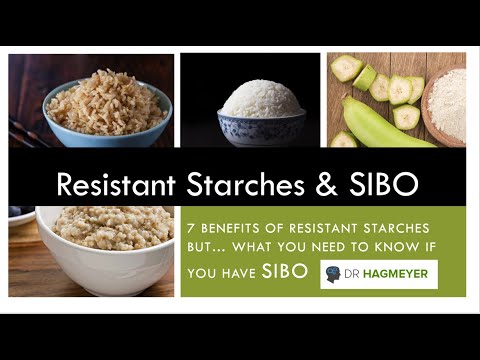
Resistant Starches and SIBO-What Everyone with SIBO Must Know.

Butyrate & Resistant Starch | Prof Chris Damman Ep1
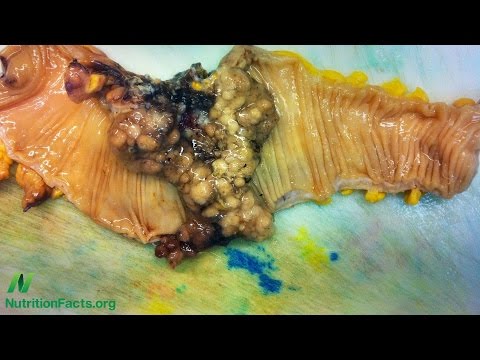
Resistant Starch and Colon Cancer

Taro Root - The Resistant Starch and Toxin Binder

Resistant starch slows the progression of CKD in the 5/6 nephrectomy mouse model

A Good Carb for Keto Dieters? Resistant Starch
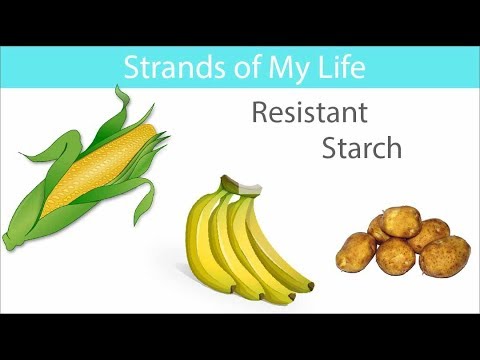
How Resistant Starch may be affecting your IBS

Weird Carbs: Your Body & “Resistant” Starch

Resistant starch: 8 things they never tell you