⚠ Evidence warning: Clinical trials or other evidence do not support the uncited laboratory claims on this page about silver nanoparticles against meningitis germs, including activity against meningococcal serogroups A, B, C, W and Y, a pneumococcal minimum inhibitory concentration range of 4 to 16 micrograms per millilitre, neem-made particles against E. coli K1, blocking of E. coli K1 entry into brain blood-vessel cells, synergy with ampicillin, vancomycin, ceftriaxone, rifampin and chloramphenicol against meningitis germs, effects on BDNF and neutrophils, and nose-to-brain transport within 30 to 60 minutes; the cited research on this page is laboratory and animal work only. This page keeps it as a report of what people, websites or other media say.
Silver Nanoparticles (AgNPs) & Meningitis Research
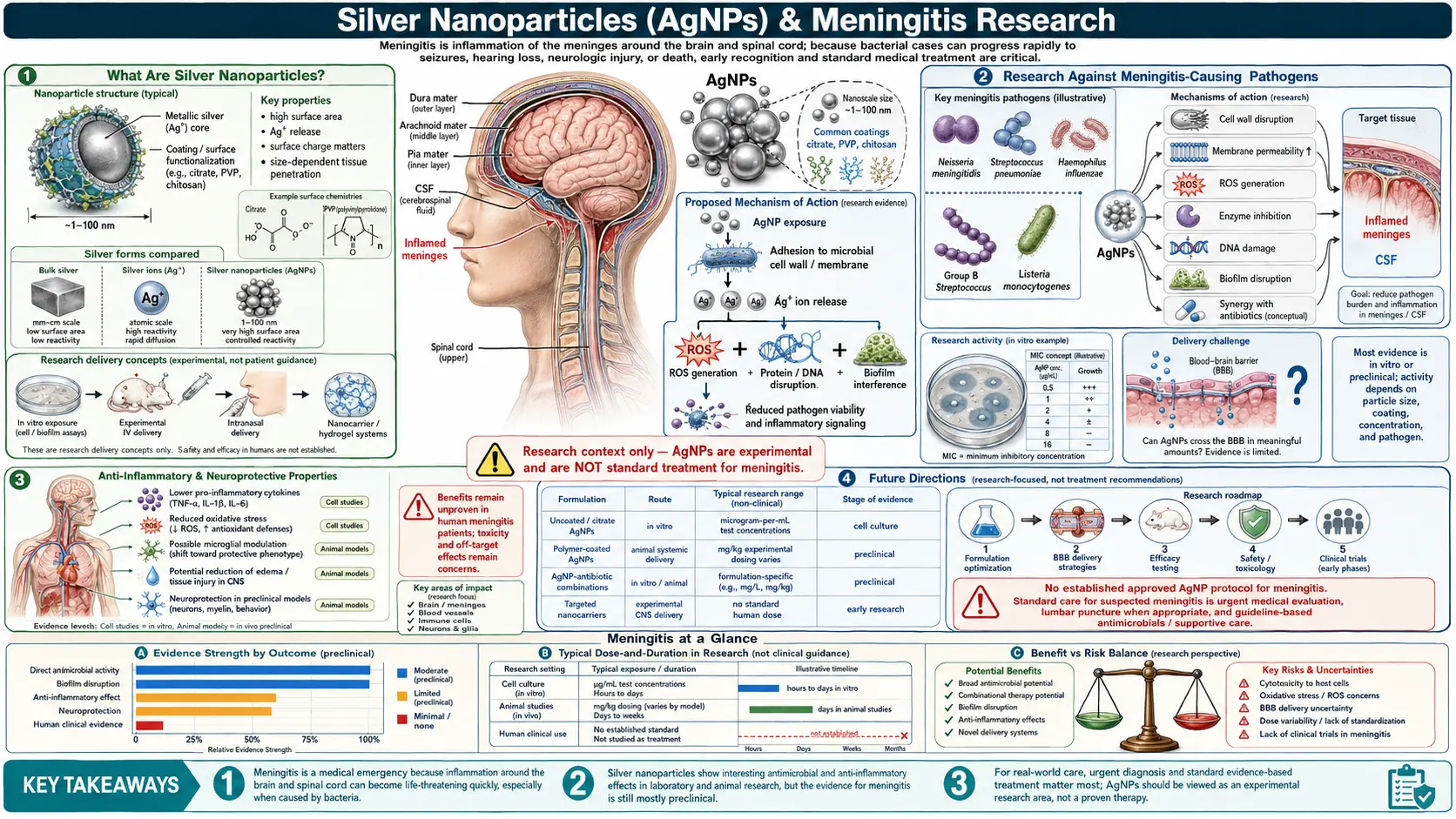
Silver nanoparticles (AgNPs) and silver nanoclusters (AgNCs) represent one of the most actively researched frontiers in nanomedicine for combating bacterial infections of the central nervous system. With antibiotic resistance rising globally and bacterial meningitis remaining a life-threatening emergency, researchers are investigating how the unique antimicrobial properties of nanoscale silver could offer new treatment strategies — particularly against drug-resistant strains that conventional antibiotics struggle to control.
Table of Contents
- Silver Nanoparticles Explained
- The Meningitis Treatment Challenge
- Mechanisms of Antimicrobial Action
- Research Against Meningitis-Causing Pathogens
- Blood-Brain Barrier Penetration Research
- Synergy with Antibiotics
- Green Synthesis Methods
- Anti-Inflammatory & Neuroprotective Properties
- Safety, Toxicity & Current Limitations
- Clinical Translation & Current Status
- Future Directions
- Key Research Papers
- Connections
- Featured Videos
Silver Nanoparticles Explained
Silver nanoparticles (AgNPs) are particles of silver that range from 1 to 100 nanometers in diameter — thousands of times smaller than the width of a human hair. At this nanoscale, silver exhibits dramatically different physical, chemical, and biological properties compared to bulk silver metal, silver-ion solutions or colloidal silver.
Key Distinctions
- Silver nanoparticles (AgNPs): Engineered particles 1–100 nm with extremely high surface-area-to-volume ratio, enabling potent antimicrobial activity at low concentrations.
- Silver nanoclusters (AgNCs): Ultra-small clusters of a few to several hundred silver atoms (<2 nm), exhibiting fluorescent properties useful for diagnostic imaging alongside antimicrobial activity.
- Colloidal silver: Suspension of larger silver particles in liquid, historically used as an antimicrobial but with less targeted activity and greater toxicity risk compared to engineered nanoparticles.
- Ionic silver (Ag+): Dissolved silver ions that provide antimicrobial action but lack the sustained-release and targeted delivery capabilities of nanoparticles.
The critical advantage of nanoparticle formulations is their ability to be surface-functionalized — coated with polymers, peptides, or antibodies that direct them to specific tissues, improve biocompatibility, and enable controlled drug release. This is what makes AgNPs particularly promising for treating infections in difficult-to-reach compartments like the central nervous system.
The Meningitis Treatment Challenge
Bacterial meningitis remains one of the most dangerous infectious diseases worldwide: according to the World Health Organization, around 1 in 6 people who get it die and 1 in 5 have severe complications. The core challenges that make AgNP research so relevant include:
- Blood-brain barrier (BBB): Most antibiotics cannot efficiently cross the BBB, requiring high systemic doses that increase toxicity risk. Only a fraction of administered antibiotics reach therapeutic concentrations in cerebrospinal fluid (CSF).
- Rising antibiotic resistance: Multi-drug resistant (MDR) strains of Streptococcus pneumoniae, Neisseria meningitidis, and Escherichia coli K1 are increasingly reported globally, limiting treatment options.
- Inflammatory damage: Bacterial lysis by antibiotics releases endotoxins that trigger severe neuroinflammation, paradoxically worsening brain damage even as the infection is cleared.
- Neonatal vulnerability: E. coli K1 and Group B Streptococcus cause devastating neonatal meningitis with limited safe antibiotic options for newborns.
- Time-critical treatment: Every hour of delay in effective treatment increases mortality and complications, demanding rapidly effective therapeutics.
Mechanisms of Antimicrobial Action
AgNPs kill bacteria through multiple simultaneous mechanisms, which is a key advantage over conventional antibiotics that typically target a single pathway. This multi-target attack makes it significantly harder for bacteria to develop resistance, although resistance can still develop (see Synergy with Antibiotics below).
1. Cell Membrane Disruption
AgNPs attach to the bacterial cell membrane via electrostatic attraction between positively charged silver ions and the negatively charged bacterial surface. This interaction:
- Increases membrane permeability, causing leakage of intracellular contents
- Creates physical "pits" and holes in the membrane structure
- Disrupts the proton motive force essential for energy production
- Is particularly effective against Gram-negative bacteria (like N. meningitidis and E. coli) due to their thinner peptidoglycan layer
2. Reactive Oxygen Species (ROS) Generation
AgNPs catalyze the production of reactive oxygen species, including superoxide anions (O2−), hydrogen peroxide (H2O2), and hydroxyl radicals (•OH). These reactive oxygen species:
- Cause oxidative damage to bacterial DNA, breaking both single and double strands
- Oxidize membrane lipids, further compromising cell integrity
- Denature critical bacterial proteins and enzymes
- Overwhelm bacterial antioxidant defense systems (superoxide dismutase, catalase)
3. Silver Ion (Ag+) Release & Enzyme Inhibition
AgNPs serve as a reservoir for sustained release of Ag+ ions, which:
- Bind to thiol (-SH) groups in bacterial enzymes, inactivating respiratory chain dehydrogenases and blocking adenosine triphosphate (ATP) production
- Interact with the 30S ribosomal subunit, inhibiting protein synthesis
- Interfere with DNA replication by intercalating between base pairs and preventing strand unwinding
- Disrupt iron-sulfur cluster enzymes essential for bacterial metabolism
4. Intracellular Penetration
Unlike bulk silver, nanoparticles can penetrate inside bacterial cells where they:
- Accumulate in the cytoplasm and cause condensation of DNA
- Disrupt the electron transport chain from within
- Trigger programmed cell death pathways in some bacterial species
Size-Dependent Efficacy
Research consistently demonstrates that smaller AgNPs are more effective antimicrobials:
- 1–10 nm: Highest antimicrobial activity; can directly interact with bacterial enzymes and DNA
- 10–20 nm: Optimal balance of efficacy and stability; most commonly used in research
- 20–50 nm: Good antimicrobial activity with improved biocompatibility
- >50 nm: Reduced efficacy due to lower surface-area-to-volume ratio, but potentially safer for systemic use
Research Against Meningitis-Causing Pathogens
A 2026 laboratory study aimed directly at the two main meningitis germs: DNA-templated silver nanoclusters killed Neisseria meningitidis and Streptococcus pneumoniae in the laboratory and, at low silver concentrations, reduced inflammatory responses in brain immune cells (microglia) without harming them. This is cell-culture work only. Most of the specific findings listed below for each germ carry no citation on this page.
Neisseria meningitidis (Meningococcus)
The leading cause of epidemic bacterial meningitis, particularly in sub-Saharan Africa's "meningitis belt." Research findings include:
- AgNPs demonstrate bactericidal activity against N. meningitidis serogroups A, B, C, W, and Y in vitro
- Gram-negative cell wall structure makes meningococcus particularly susceptible to AgNP membrane disruption
- Biogenic AgNPs synthesized from plant extracts show enhanced activity against meningococcal biofilms
Streptococcus pneumoniae (Pneumococcus)
The most common cause of bacterial meningitis in adults, with increasing multi-drug resistance globally:
- In a 2014 laboratory study, 20-nm silver nanoparticles coated with polyvinylpyrrolidone (PVP), at 0.6 mg/mL, killed pneumococcal serotypes 2, 3, 4 and 19F within 4 hours; both released silver ions and the solid particles took part in the killing, and strains without the pneumococcal capsule needed concentrations at least 33% higher, which suggests the capsule takes part in the effect
- In vitro studies report minimum inhibitory concentrations (minimum inhibitory concentration, MIC) of AgNPs against S. pneumoniae in the range of 4–16 µg/mL, depending on particle size and surface coating
- AgNPs show activity against penicillin-resistant and multi-drug resistant pneumococcal strains
- Combination of AgNPs with beta-lactam antibiotics shows synergistic effects, potentially restoring susceptibility in resistant strains
- Smaller particles (10–20 nm) required to penetrate the thicker Gram-positive peptidoglycan layer effectively
Escherichia coli K1
A major cause of bacterial meningitis in newborns; the K1 type accounts for about 80% of E. coli meningitis in newborns, while group B streptococcus is the leading cause of newborn meningitis worldwide:
- E. coli is one of the most extensively studied targets for AgNP research, with robust in vitro data showing strong bactericidal activity
- K1 capsular polysaccharide, which helps the bacteria evade the immune system and cross the BBB, does not protect against AgNP-mediated killing
- AgNPs disrupt the K1 strain's ability to invade human brain microvascular endothelial cells (HBMEC) in cell culture models
- Green-synthesized AgNPs using neem (Azadirachta indica) extract show particularly strong activity against E. coli K1 strains
Haemophilus influenzae Type B
Historically a leading cause of childhood meningitis:
- AgNPs show bactericidal activity against both typeable and non-typeable H. influenzae strains
- Research suggests AgNPs may enhance the efficacy of existing Hib antibiotics like ampicillin and chloramphenicol
Group B Streptococcus (GBS)
A major cause of meningitis in neonates and immunocompromised adults:
- AgNPs demonstrate dose-dependent bactericidal effects against GBS in vitro
- Particularly promising given the limited antibiotic options safe for neonatal use
- Research explores AgNP-coated medical devices to prevent GBS colonization in neonatal intensive care settings
Blood-Brain Barrier Penetration Research
The blood-brain barrier (BBB) is the central obstacle in treating any central nervous system (CNS) infection. The BBB consists of tightly joined endothelial cells lining brain capillaries that restrict the passage of most molecules from the bloodstream into the brain. Research on AgNP delivery across the BBB is among the most critical areas of investigation.
Size-Dependent BBB Crossing
- Nanoparticles smaller than approximately 50 nm have demonstrated ability to cross the BBB in animal models
- Particles in the 10–20 nm range show the highest penetration rates
- Ultra-small silver nanoclusters (<2 nm) can pass through BBB tight junctions but may have increased neurotoxicity
Surface Functionalization Strategies
Researchers are engineering AgNP surfaces to improve targeted BBB crossing:
- PEGylation: Coating with polyethylene glycol (PEG) increases circulation time and reduces immune clearance, giving particles more opportunities to cross the BBB
- Transferrin conjugation: Attaching transferrin protein enables receptor-mediated transcytosis across brain endothelial cells, which express high levels of transferrin receptors
- Polysorbate-80 coating: Adsorbs apolipoprotein E from blood plasma, enabling low-density lipoprotein-receptor-mediated uptake into brain endothelial cells
- Cell-penetrating peptides: TAT peptide and other CPPs facilitate direct translocation across cell membranes
- Lactoferrin functionalization: Lactoferrin receptors on BBB endothelial cells provide another receptor-mediated transport route
Meningitis-Related BBB Disruption
An important consideration is that during bacterial meningitis, the BBB is already partially compromised due to inflammation:
- Bacterial toxins and inflammatory cytokines loosen tight junctions between endothelial cells
- This increased permeability may paradoxically facilitate AgNP entry into the central nervous system during active infection
- However, this same disruption also increases the risk of nanoparticle-related neurotoxicity
- Research is exploring whether AgNPs can be administered at the window of BBB disruption to maximize therapeutic delivery while minimizing systemic toxicity
Intranasal Delivery Route
An alternative strategy bypasses the BBB entirely:
- Intranasal administration delivers nanoparticles directly to the brain via the olfactory and trigeminal nerve pathways
- Animal studies show rapid nose-to-brain transport of AgNPs within 30–60 minutes
- This route avoids first-pass liver metabolism and reduces systemic exposure
- Particularly promising for acute meningitis treatment where rapid brain delivery is critical
Synergy with Antibiotics
One of the most promising near-term applications of AgNPs is as an adjunctive therapy alongside conventional antibiotics. Research demonstrates significant synergistic effects:
Documented Synergistic Combinations
- AgNPs + Ampicillin: Synergistic against both susceptible and resistant S. pneumoniae; AgNPs disrupt membranes, allowing greater antibiotic penetration
- AgNPs + Vancomycin: Enhanced killing of Gram-positive meningitis pathogens; nanoparticles increase vancomycin uptake through membrane destabilization
- AgNPs + Ceftriaxone: The standard meningitis antibiotic shows improved efficacy when combined with AgNPs; particularly effective against resistant strains
- AgNPs + Rifampin: Combination shows enhanced penetration of bacterial biofilms, relevant for chronic or device-related meningitis
- AgNPs + Chloramphenicol: Synergistic effects observed against H. influenzae and N. meningitidis
Mechanisms of Synergy
- AgNPs create membrane pores that facilitate antibiotic entry into bacterial cells
- Nanoparticles inhibit bacterial efflux pumps that normally expel antibiotics, restoring drug susceptibility
- Combined reactive oxygen species generation from AgNPs and antibiotic-induced oxidative stress overwhelms bacterial defenses
- Lower doses of both agents can be used, reducing toxicity from either component
Overcoming Antibiotic Resistance
AgNPs show particular promise against multi-drug resistant (MDR) meningitis pathogens because:
- Their multi-target mechanism was long thought to make resistance unlikely, but resistance can develop: in a 2018 laboratory study, two E. coli strains and a Pseudomonas aeruginosa strain became resistant to silver nanoparticles after repeated exposure, with no genetic change, by making the flagellum protein flagellin, which clumps the particles together and removes their antibacterial activity
- The 2018 resistant strains were not meningitis isolates, but E. coli is itself a meningitis germ, so silver resistance in meningitis pathogens cannot be ruled out
- AgNPs can resensitize resistant bacteria to antibiotics they had previously become resistant to
- Combination therapy allows dose reduction of both agents, widening the therapeutic window
Green Synthesis Methods
Biological (green) synthesis of AgNPs uses plant extracts, fungi, or bacteria as reducing and capping agents instead of harsh chemicals. These methods produce nanoparticles with enhanced biocompatibility and often additional biological activity from the capping agents themselves.
Plant-Mediated Synthesis
- Neem (Azadirachta indica): Produces AgNPs with strong activity against Gram-negative meningitis pathogens; neem's own antimicrobial compounds serve as surface-capping agents
- Tulsi (Ocimum sanctum): Yields highly stable AgNPs with anti-inflammatory properties that may provide dual benefit in neuroinflammatory conditions
- Turmeric (Curcuma longa): Curcumin acts as both a reducing agent and surface coating, adding anti-inflammatory and neuroprotective properties to the nanoparticles
- Aloe vera: Produces well-dispersed, biocompatible AgNPs; the gel's polysaccharides serve as stabilizing agents
- Green tea (Camellia sinensis): Polyphenols reduce silver ions while providing antioxidant surface coating
- Garlic (Allium sativum): Organosulfur compounds serve as reducing agents; allicin-capped AgNPs show enhanced antibacterial activity
Microbial Synthesis
- Bacillus species: Produce intracellular and extracellular AgNPs with uniform size distribution
- Fusarium and Aspergillus fungi: Secrete enzymes that reduce silver ions extracellularly, producing easy-to-harvest nanoparticles
- Lactobacillus species: Probiotic bacteria that produce biocompatible AgNPs, potentially combining antimicrobial and probiotic benefits
Advantages of Green Synthesis
- Avoids toxic chemical reducing agents (sodium borohydride, formaldehyde)
- Biological capping agents improve biocompatibility and reduce cytotoxicity
- Plant-derived surface coatings may add synergistic anti-inflammatory or antioxidant properties
- Environmentally sustainable and cost-effective production
- Scalable for pharmaceutical-grade manufacturing
Anti-Inflammatory & Neuroprotective Properties
Beyond direct antimicrobial activity, AgNPs demonstrate properties that could address the inflammatory component of meningitis — which is responsible for much of the neurological damage:
Anti-Inflammatory Effects
- AgNPs modulate pro-inflammatory cytokine production (tumor necrosis factor-α, interleukin-1 beta (IL-1β), interleukin-6 (IL-6)), reducing the inflammatory cascade that causes brain edema and neuronal death in meningitis
- Suppression of NF-κB signaling pathway — the master regulator of inflammatory gene expression
- Reduction of matrix metalloproteinase (MMP) activity, which contributes to BBB breakdown during meningitis
- Decreased neutrophil infiltration into cerebrospinal fluid, limiting collateral tissue damage from immune response
Neuroprotective Potential
- Curcumin-capped AgNPs show protection against oxidative neuronal damage in cell culture models
- AgNPs at sub-antimicrobial concentrations reduce apoptosis (programmed cell death) in neuronal cell lines exposed to bacterial toxins
- Some studies suggest AgNPs may promote brain-derived neurotrophic factor (BDNF) expression, supporting neuronal survival
This dual antimicrobial-plus-anti-inflammatory action could be a significant advantage over conventional antibiotics alone, which kill bacteria but do nothing to mitigate the inflammatory damage that causes long-term neurological complications.
Safety, Toxicity & Current Limitations
Despite the promising research, significant safety questions must be resolved before clinical use:
Neurotoxicity Concerns
- AgNPs can accumulate in brain tissue and cause dose-dependent neurotoxicity in animal models
- Oxidative stress — the same reactive oxygen species generation that kills bacteria — can also damage neurons and glial cells
- Chronic exposure may trigger neuroinflammation, astrocyte activation, and microglial response
- Ultra-small particles (<10 nm) show the highest antimicrobial activity but also the greatest neurotoxicity risk
Narrow Therapeutic Window
- The concentration range that kills bacteria effectively while sparing human cells is narrow
- In vitro antimicrobial concentrations (4–16 µg/mL) may overlap with cytotoxic ranges for mammalian neurons
- Surface coating and functionalization significantly affect the therapeutic index — PEGylated and biogenic AgNPs show improved safety profiles
Systemic Toxicity
- Liver and kidney: AgNPs accumulate in liver, spleen, and kidneys following systemic administration; potential hepatotoxicity and nephrotoxicity at high doses
- Argyria: Chronic silver exposure can cause irreversible blue-gray skin discoloration, though this is more associated with ionic silver and colloidal silver than with controlled nanoparticle formulations
- Reproductive toxicity: Some animal studies suggest AgNPs may cross the placental barrier, raising concerns for use in pregnant women with meningitis
Standardization Challenges
- No standardized synthesis protocols exist; variations in size, shape, surface charge, and coating produce dramatically different biological effects
- Green-synthesized AgNPs face batch-to-batch consistency challenges
- Lack of unified characterization and reporting standards across studies makes comparison of results difficult
- Long-term stability and shelf-life of AgNP formulations remain under investigation
Clinical Translation & Current Status
As of 2025, AgNP-based meningitis treatment remains in the preclinical research stage. No clinical trials specifically testing AgNPs for bacterial meningitis have been registered. However, important context includes:
Current Clinical Applications of Silver Nanoparticles
- Wound dressings: nanocrystalline-silver and other silver-containing wound dressings are U.S. Food and Drug Administration-cleared and in clinical use at topical doses
- Catheter coatings: Silver-coated urinary and venous catheters reduce catheter-associated infections in hospital settings
- Dental applications: AgNP-containing dental composites and coatings are in clinical use
- Bone cement: Silver-containing bone cements for orthopedic infection prevention are in clinical trials
Barriers to Clinical Translation for Meningitis
- Regulatory pathway: AgNPs for systemic/central nervous system use face a more stringent regulatory pathway than topical applications
- Toxicology requirements: Comprehensive neurotoxicology studies in multiple animal species are needed before human trials
- Pharmacokinetics: Distribution, metabolism, and clearance of AgNPs from the central nervous system are not yet fully characterized
- Manufacturing standards: GMP-grade production with consistent nanoparticle characteristics needs development
Most Promising Near-Term Pathways
- Adjunctive therapy: AgNPs combined with standard antibiotics (ceftriaxone, vancomycin) — lower doses of both agents, wider therapeutic window
- Intranasal delivery: Bypasses the BBB entirely; most feasible route for early clinical testing
- Device-related meningitis prevention: AgNP coatings on cerebrospinal fluid shunts and intrathecal catheters to prevent device-related infections
- Diagnostic nanoclusters: Fluorescent silver nanoclusters for rapid cerebrospinal fluid-based meningitis diagnosis
Future Directions
The field of silver nanoparticle research for meningitis treatment is evolving rapidly. Key areas of active investigation include:
- Targeted delivery systems: AgNPs encapsulated in liposomes, polymeric micelles, or hydrogels for controlled release directly in the central nervous system
- Theranostic nanoparticles: Combined diagnostic and therapeutic AgNPs/AgNCs that can simultaneously detect meningitis pathogens and deliver antimicrobial treatment
- Phage-AgNP conjugates: Combining bacteriophages (viruses that attack bacteria) with AgNPs for species-specific, enhanced killing of meningitis pathogens
- AgNP-loaded hydrogel implants: For sustained antimicrobial release following neurosurgical procedures
- AI-driven nanoparticle design: Machine learning approaches to optimize AgNP size, shape, and surface chemistry for maximum efficacy against specific pathogens with minimum neurotoxicity
- Combination with immunotherapy: Using AgNPs as adjuvants to boost adaptive immune responses against meningitis-causing bacteria
Key Research Papers
A note on these citations. Every reference below has been re-checked against the PubMed record. An earlier version of this page carried DOI links for all 23 entries, and the DOIs were systematically wrong — they were valid, resolvable DOIs pointing at entirely unrelated papers (a graphene roadmap, a protein-engineering method, a study of seminal plasma). The paper titles, authors and journals were mostly correct; only the links were not, which is exactly the kind of error a reader cannot catch by clicking. Links are now numeric PubMed IDs; where a paper is not indexed in PubMed, its DOI is given instead.
Silver Nanoparticle Antimicrobial Mechanisms
- Rai M, Yadav A, Gade A. Silver nanoparticles as a new generation of antimicrobials. Biotechnology Advances. 2009;27(1):76-83. — PubMed PMID: 18854209
- Durán N, Durán M, de Jesus MB, Seabra AB, Fávaro WJ, Nakazato G. Silver nanoparticles: a new view on mechanistic aspects on antimicrobial activity. Nanomedicine: Nanotechnology, Biology and Medicine. 2016;12(3):789-799. — PubMed PMID: 26724539
- Dakal TC, Kumar A, Majumdar RS, Yadav V. Mechanistic basis of antimicrobial actions of silver nanoparticles. Frontiers in Microbiology. 2016;7:1831. — PubMed PMID: 27899918
- Morones JR, Elechiguerra JL, Camacho A, et al. The bactericidal effect of silver nanoparticles. Nanotechnology. 2005;16(10):2346-2353. — PubMed PMID: 20818017
- Lok CN, Ho CM, Chen R, et al. Silver nanoparticles: partial oxidation and antibacterial activities. Journal of Biological Inorganic Chemistry. 2007;12(4):527-534. — PubMed PMID: 17353996
- Lok CN, Ho CM, Chen R, et al. Proteomic analysis of the mode of antibacterial action of silver nanoparticles. Journal of Proteome Research. 2006;5(4):916-924. — PubMed PMID: 16602699
- Sondi I, Salopek-Sondi B. Silver nanoparticles as antimicrobial agent: a case study on E. coli as a model for Gram-negative bacteria. Journal of Colloid and Interface Science. 2004;275(1):177-182. This was the only paper whose DOI on the previous version of this page was correct — and it was attached to a different citation. — PubMed PMID: 15158396
AgNPs Against Meningitis Pathogens
- Urnukhsaikhan E, Bold BE, Gunbileg A, Sukhbaatar N, Mishig-Ochir T. Antibacterial activity and characteristics of silver nanoparticles biosynthesized from Carduus crispus. Scientific Reports. 2021;11(1):21047. Tested against E. coli and Micrococcus luteus, not against meningitis isolates. — PubMed PMID: 34702916
- Lara HH, Ayala-Núñez NV, Ixtepan-Turrent L, Rodríguez-Padilla C. Bactericidal effect of silver nanoparticles against multidrug-resistant bacteria. World Journal of Microbiology and Biotechnology. 2010;26(4):615-621. Not indexed in PubMed; confirmed in Crossref. — doi:10.1007/s11274-009-0211-3
- Bibbs RK, Harris RD, Peoples VA, Barnett C, Singh SR, Dennis VA, Coats MT. Silver polyvinyl pyrrolidone nanoparticles exhibit a capsular polysaccharide influenced bactericidal effect against Streptococcus pneumoniae. Frontiers in Microbiology. 2014;5:665. — PubMed PMID: 25520713
- Majithia KJ, Skelly E, Afonin KA, Johnson MB. DNA-templated silver nanoclusters demonstrate potent antimicrobial activity against the clinically relevant pathogens, Neisseria meningitidis and Streptococcus pneumoniae. ACS Applied Bio Materials. 2026;9(5):2359-2365. — PubMed PMID: 41707080
- Andreishcheva EN, Vann WF. Gene products required for de novo synthesis of polysialic acid in Escherichia coli K1. Journal of Bacteriology. 2006;188(5):1786-1797. Source of the statement that K1 causes 80% of E. coli newborn meningitis. — PubMed PMID: 16484189
- Alexander NG, Cutts WD, Hooven TA, Kim BJ. Mechanisms and manifestations of group B Streptococcus meningitis in newborns. Journal of the Pediatric Infectious Diseases Society. 2025;14(2):piae103. — PubMed PMID: 39927629
Nanoparticle Blood-Brain Barrier Penetration & Central Nervous System Delivery
- Patel T, Zhou J, Piepmeier JM, Saltzman WM. Polymeric nanoparticles for drug delivery to the central nervous system. Advanced Drug Delivery Reviews. 2012;64(7):701-705. The previous version listed the fourth author as Bhatt VR; the record gives Saltzman WM. — PubMed PMID: 22210134
- Tang J, Xiong L, Wang S, et al. Distribution, translocation and accumulation of silver nanoparticles in rats. Journal of Nanoscience and Nanotechnology. 2009;9(8):4924-4932. — PubMed PMID: 19928170
- Tang J, Xiong L, Zhou G, et al. Silver nanoparticles crossing through and distribution in the blood-brain barrier in vitro. Journal of Nanoscience and Nanotechnology. 2010;10(10):6313-6317. Directly relevant to this page's central question, and absent from the previous reference list. — PubMed PMID: 21137724
- Zhou Y, Peng Z, Seven ES, Leblanc RM. Crossing the blood-brain barrier with nanoparticles. Journal of Controlled Release. 2018;270:290-303. — PubMed PMID: 29269142
Antibiotic Synergy & Resistance
- Panáček A, Smékalová M, Večeřová R, et al. Silver nanoparticles strongly enhance and restore bactericidal activity of inactive antibiotics against multiresistant Enterobacteriaceae. Colloids and Surfaces B: Biointerfaces. 2016;142:392-399. — PubMed PMID: 26970828
- Vazquez-Muñoz R, Meza-Villezcas A, Fournier PGJ, et al. Enhancement of antibiotics antimicrobial activity due to the silver nanoparticles impact on the cell membrane. PLoS ONE. 2019;14(11):e0224904. The previous version gave the third author as Fourber PGB. — PubMed PMID: 31703098
- Hwang IS, Hwang JH, Choi H, Kim KJ, Lee DG. Synergistic effects between silver nanoparticles and antibiotics and the mechanisms involved. Journal of Medical Microbiology. 2012;61(Pt 12):1719-1726. — PubMed PMID: 22956753
- Panáček A, Kvítek L, Smékalová M, Večeřová R, Kolář M, Röderová M, Dyčka F, Šebela M, Prucek R, Tomanec O, Zbořil R. Bacterial resistance to silver nanoparticles and how to overcome it. Nature Nanotechnology. 2018;13(1):65-71. — PubMed PMID: 29203912
Green Synthesis Methods
- Mittal AK, Chisti Y, Banerjee UC. Synthesis of metallic nanoparticles using plant extracts. Biotechnology Advances. 2013;31(2):346-356. — PubMed PMID: 23318667
- Ahmed S, Ahmad M, Swami BL, Ikram S. A review on plants extract mediated synthesis of silver nanoparticles for antimicrobial applications: a green expertise. Journal of Advanced Research. 2016;7(1):17-28. — PubMed PMID: 26843966
- Shankar SS, Ahmad A, Pasricha R, Sastry M. Bioreduction of chloroaurate ions by geranium leaves and its endophytic fungus yields gold nanoparticles of different shapes. Journal of Materials Chemistry. 2003;13(7):1822-1826. A materials-chemistry journal not indexed in PubMed; this paper concerns GOLD nanoparticles, not silver, and is listed only as background on plant-based synthesis. — doi:10.1039/b303808b
Safety & Toxicology
- Johnston HJ, Hutchison G, Christensen FM, Peters S, Hankin S, Stone V. A review of the in vivo and in vitro toxicity of silver and gold particulates: particle attributes and biological mechanisms responsible for the observed toxicity. Critical Reviews in Toxicology. 2010;40(4):328-346. The previous version attributed this to Particle and Fibre Toxicology 2010;7:42. Both the journal and the volume were wrong. — PubMed PMID: 20128631
- Hadrup N, Lam HR. Oral toxicity of silver ions, silver nanoparticles and colloidal silver — a review. Regulatory Toxicology and Pharmacology. 2014;68(1):1-7. The key safety reference for anyone considering oral colloidal silver. — PubMed PMID: 24231525
- Sharma HS, Ali SF, Hussain SM, Schlager JJ, Sharma A. Influence of engineered nanoparticles from metals on the blood-brain barrier permeability, cerebral blood flow, brain edema and neurotoxicity. An experimental study in the rat and mice using biochemical and morphological approaches. Journal of Nanoscience and Nanotechnology. 2009;9(8):5055-5072. — PubMed PMID: 19928185
PubMed Topic Searches
Selected PubMed topic searches relevant to silver nanoparticles against meningitis pathogens and blood-brain barrier delivery.
- PubMed: Silver nanoparticles and meningitis pathogens
- PubMed: AgNPs and Neisseria meningitidis
- PubMed: AgNPs and S. pneumoniae
- PubMed: AgNPs and the blood-brain barrier
- PubMed: Nanoparticle CNS drug delivery
- PubMed: AgNPs and Cryptococcus
- PubMed: AgNPs and Listeria
- PubMed: AgNPs and CSF biofilms
- PubMed: AgNPs and H. influenzae
- PubMed: AgNPs and antibiotic resistance
- PubMed: Silver nanoparticle neurotoxicity
- PubMed: Bacterial meningitis epidemiology
Connections
- All Minerals
- Silver Nanoparticles Hub
- Silver Nanoparticles & Epstein-Barr Virus
- Meningitis
- Garlic
- Neem
- Vitamin C
- Zinc
- Escherichia Coli
- Oxidative Stress
- Turmeric
- Lysine
- Immune Boosting
- Green Tea
- Staphylococcus Aureus
- Lyme Neuroborreliosis
- Cold & Flu
- Manuka Honey
- Chaga Mushroom
- Klebsiella
- Pseudomonas
- Sepsis
- Mercury