Elecampane, Inulin and the Gut
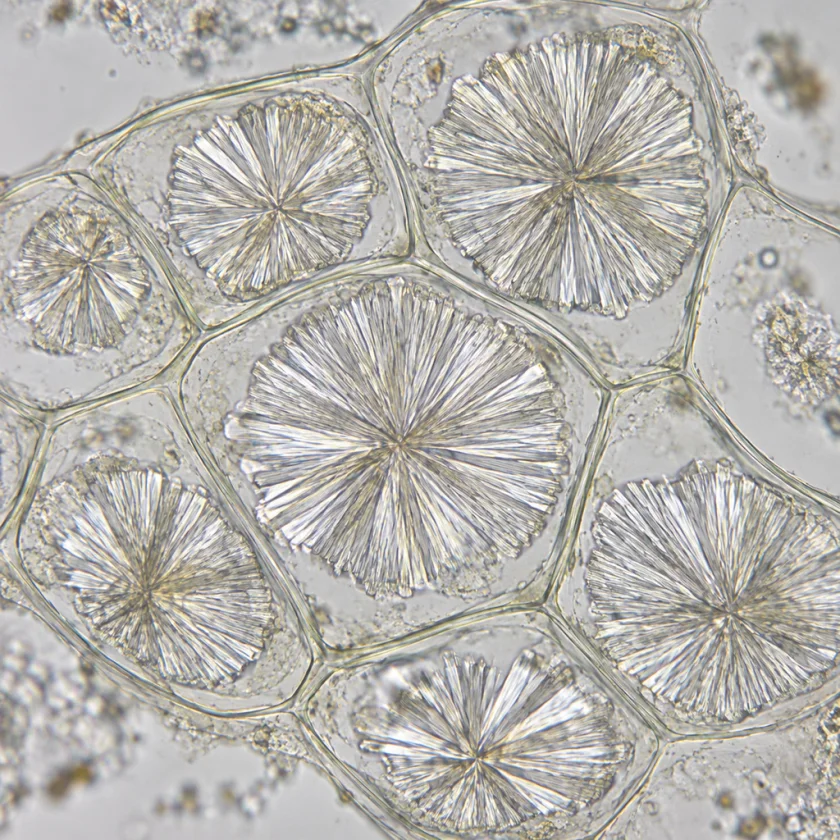
Here is a piece of chemistry history that almost every article about this plant leaves out: inulin — the prebiotic fibre now added to yoghurts, protein bars, and fibre supplements worldwide — is named after elecampane's genus, Inula. It was first isolated from elecampane root by the German chemist Valentin Rose in 1804, and the name stuck. Elecampane root is unusually rich in the stuff: a 2017 laboratory extraction study measured 38 grams of inulin per 100 grams of dried root. That makes elecampane the original inulin plant, and it gives the root a real, measurable effect on the large intestine. It also creates the most honest tension on this whole site's elecampane pages, because fermentable fructan is simultaneously a prebiotic benefit and the exact thing that triggers symptoms in irritable bowel syndrome (IBS) and small intestinal bacterial overgrowth (SIBO). Same molecule, same property, opposite verdict depending on who is reading. This page tries to give you both halves straight.
Table of Contents
- The Fibre That Was Named for This Plant
- What Inulin Actually Is
- What Happens in the Colon
- The Prebiotic Evidence — and Whose It Is
- Why This Is Fibre, Not a Herbal Action
- Chicory, Jerusalem Artichoke and Other Food Sources of Inulin
- The FODMAP Problem: Irritable Bowel Syndrome and Small Intestinal Bacterial Overgrowth
- The Other Digestive Claim: Bitter Tonic
- Dose, Tolerance and Starting Slowly
- Evidence Tiers at a Glance
- Key Research Papers
- Connections
- Featured Videos
The Fibre That Was Named for This Plant
Most prebiotic fibres are named for a chemical feature: fructooligosaccharides, galactooligosaccharides, resistant starch. Inulin is named for a plant, and that plant is elecampane. In 1804 Valentin Rose extracted from Inula helenium root a soft, white, starch-like substance that behaved oddly — it dissolved in hot water, precipitated on cooling, and would not yield glucose on hydrolysis the way starch does. It yielded fructose instead. The substance took the genus name: inulin.
The name has outlived any special association with the plant. Commercial inulin today comes overwhelmingly from chicory root, with Jerusalem artichoke, agave, and dahlia tubers as secondary sources. Nobody farms elecampane for fibre. But the etymology is not a trivia point — it tells you that this root is a genuine fructan storehouse, not a plant with a trace amount, and that has practical consequences for anyone who drinks a decoction of it. In that 2017 extraction study, water extracts of dried elecampane root made with ultrasound yielded 38 grams of inulin per 100 grams of root, the highest of the extraction methods tested (Petkova N et al., Natural Product Communications, 2017).
It also explains something about the root's character. Fresh elecampane root has a faintly sweet, banana-and-violet smell; dried, it is bitter and camphorous with a sticky, slightly sweet body. That stickiness and background sweetness are the fructan. Inulin is only mildly sweet — roughly a tenth as sweet as sucrose at most for the longer chains, more for the shorter ones — which is why the root reads as "bitter with something soft underneath" rather than as sugary.
Evidence tier: established chemistry and history.
What Inulin Actually Is
Inulin is a fructan: a chain of fructose units linked to each other, usually with a single glucose unit at one end. The links are beta-2,1 bonds between fructose molecules, and that specific bond is the whole story, because humans have no enzyme that can break it. We make amylases that cleave starch's alpha bonds and we make sucrase and lactase for specific disaccharides, but nothing in the human small intestine touches a beta-2,1 fructan link.
Chain length varies and matters. Short chains — typically two to about nine units — are usually called fructooligosaccharides or oligofructose; longer chains, up to sixty units or so, are inulin proper. Short chains ferment fast and high in the colon, which produces more gas more quickly. Long chains ferment slower and further along, which is generally gentler. Natural elecampane root contains a spread of chain lengths, and drying, storage, and simmering all shift the distribution — long-term cold storage in particular tends to break longer fructans down into shorter ones.
Because it is not digested and not absorbed, inulin contributes very little energy — conventionally counted at somewhere around 1 to 1.5 kilocalories per gram, all of it derived indirectly from bacterial fermentation products rather than from the fructose itself. Regulators in most jurisdictions classify it as a dietary fibre. It is not a drug, not a vitamin, and not an "active constituent" in the pharmacognosy sense.
Evidence tier: established biochemistry.
What Happens in the Colon
Undigested inulin travels intact through the stomach and small intestine and arrives in the colon, where a dense bacterial population treats it as food. Several things follow, and they are all well characterised for inulin as a compound.
Selective fermentation. Not all gut bacteria can use fructans, and the ones that can are enriched. Bifidobacterium species are the classic responders — the "bifidogenic effect" is the single most reproducible finding in the inulin literature — along with certain Lactobacillus and Faecalibacterium populations depending on the person's starting microbiome.
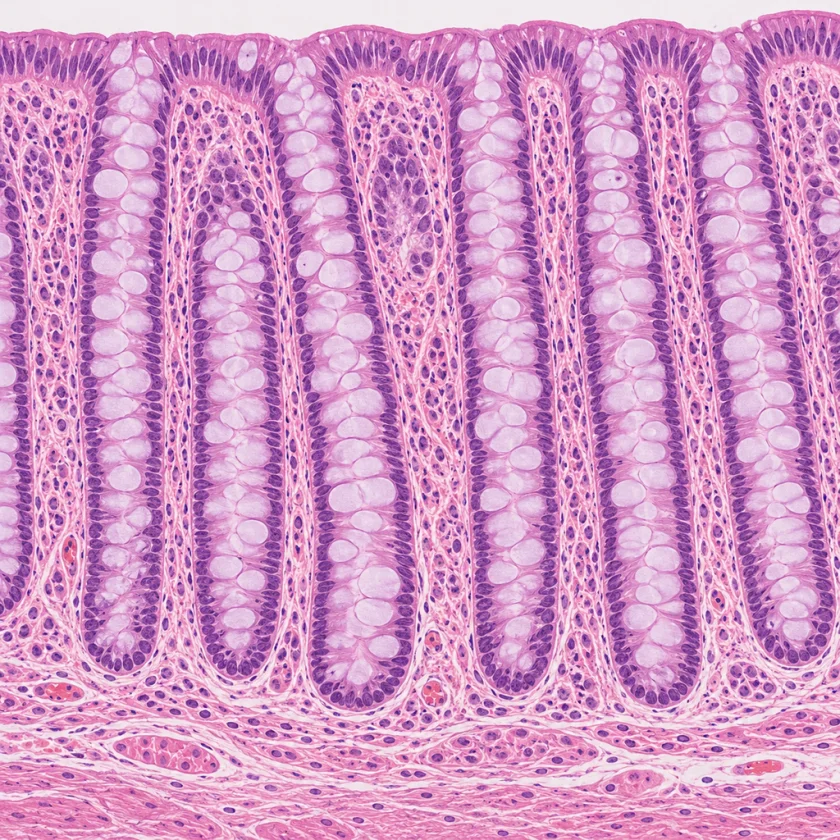
Short-chain fatty acid production. Fermentation yields acetate, propionate, and butyrate. Butyrate is the interesting one: it is the preferred fuel of colonocytes, the cells lining the colon, and it has documented roles in maintaining the gut barrier and in regulating local immune signalling. Propionate is largely taken up by the liver; acetate circulates more widely.
Luminal acidification. Those acids lower colonic pH, which disfavours some less desirable organisms and can modestly improve the solubility and absorption of certain minerals — calcium and magnesium have both been studied in this context.
Gas. Fermentation also produces hydrogen, carbon dioxide, and in some people methane. This is not a side effect of a badly behaved fibre; it is what fermentation is. Whether the gas is a non-event or a misery depends almost entirely on the individual, and that is the crux of the second half of this page.
Stool bulk and transit. Increased bacterial mass plus water retention adds stool bulk and can soften stool and speed transit. For someone constipated, that is the point. For someone with loose stools already, it is a problem.
Evidence tier: well established for inulin as a compound (human trials exist), extrapolated to elecampane.
The Prebiotic Evidence — and Whose It Is
Inulin-type fructans are among the most thoroughly studied prebiotics in existence. The International Scientific Association for Probiotics and Prebiotics consensus statement on the definition and scope of prebiotics, published in Nature Reviews Gastroenterology & Hepatology in 2017, treats inulin-type fructans as a reference case. Marcel Roberfroid's body of work, including "Inulin-type fructans: functional food ingredients" in the Journal of Nutrition in 2007, laid out the criteria and the human data. There are randomised human trials on bifidogenic effects, on calcium absorption, on stool frequency in constipation, and on satiety and metabolic markers, with meta-analyses across several of those endpoints.
One recent example on the metabolic side: a 2024 review pooled 55 randomised trials with 2,518 adults and found that inulin-type fructan supplements lowered LDL cholesterol by about 0.14 mmol/L, triglycerides by about 0.06 mmol/L and body weight by about 1 kg (0.97 kg), with little to no effect on the other heart-risk measures studied, such as blood pressure and fasting blood sugar. The effects were larger in trials lasting 6 weeks or more and in people who were overweight or obese. The authors rated the certainty of these results as low to very low (Talukdar JR et al., American Journal of Clinical Nutrition, 2024).
That is a genuinely strong evidence base. Now the caveat that matters: almost none of that research used elecampane. It used purified chicory inulin, oligofructose, or synthetic fructooligosaccharides, at controlled doses, usually 5 to 20 grams a day, often as an isolated supplement in a defined trial diet.
So the honest chain of reasoning for elecampane is: purified inulin has demonstrated prebiotic effects in humans → elecampane root contains a large proportion of inulin → therefore elecampane root, if you consume enough of it, should exert a prebiotic effect through the same mechanism. That is a reasonable inference. It is not a clinical finding about the herb, and the "if you consume enough of it" clause does real work, as the next section explains.
Evidence tier: randomised clinical trials for purified inulin; inference for elecampane.
Why This Is Fibre, Not a Herbal Action
This distinction matters more than it might seem, because the internet routinely presents elecampane's inulin content as though it were evidence of a special herbal virtue. It is not. It is evidence that the root contains a lot of a common dietary fibre.
A herbal action in the pharmacological sense means a plant-specific constituent that produces a specific physiological effect — alantolactone inhibiting an inflammatory pathway, for instance. It is characteristic of the plant. Fibre fermentation is a substrate effect: any source of the same fructan produces the same result, and the plant is irrelevant except as a delivery vehicle. Chicory inulin, Jerusalem artichoke inulin, and elecampane inulin are, gram for gram of the same chain length, doing the same thing.
Two practical consequences follow.
First, dose. The trials that established prebiotic effects used single-digit to low-double-digit grams of inulin daily. A cup of elecampane decoction made from a teaspoon or two of dried root does not deliver that, and only part of the root's inulin even makes it into the strained liquid — inulin is water-soluble, so a fair amount does dissolve, but you are still working from a small starting mass. The prebiotic contribution of a normal medicinal dose of elecampane is modest at best. It is a genuine but minor bonus, not the reason to take the herb.
Second, you cannot scale up. The obvious response — take more root — runs straight into the sesquiterpene lactones. Elecampane at higher doses causes nausea, vomiting, and cramping, and it carries the allergenic risk described in the safety article. You cannot eat your way to a therapeutic inulin dose through elecampane root without eating a therapeutically problematic dose of everything else in the root. That is the single most important practical conclusion on this page.
Evidence tier: reasoning from established pharmacology and dose arithmetic.
Chicory, Jerusalem Artichoke and Other Food Sources of Inulin
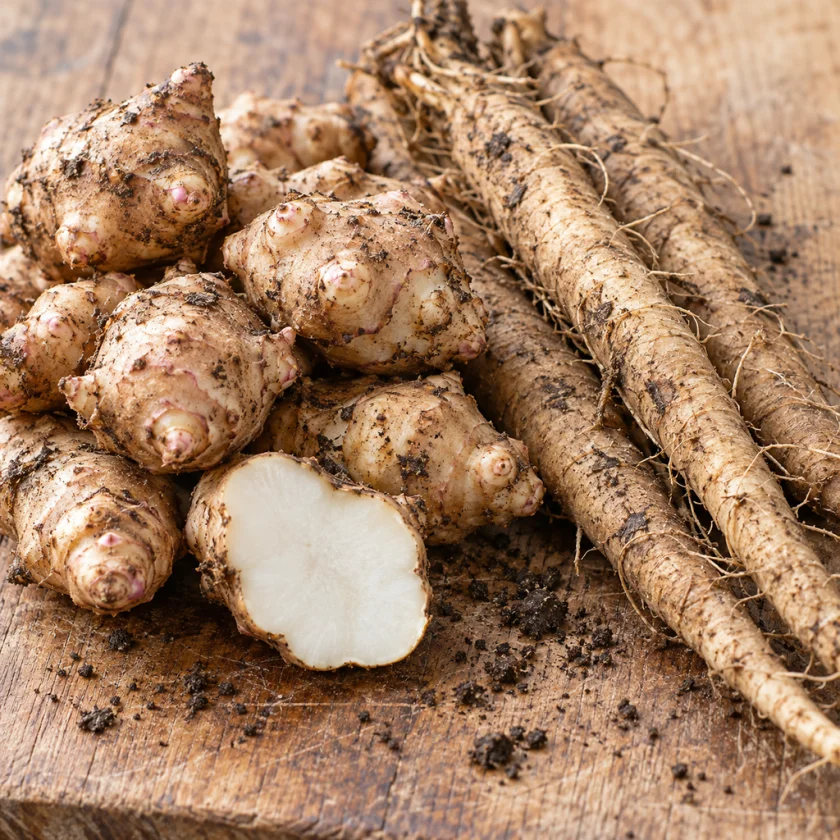
The inulin trials described above used chicory inulin, not elecampane, and foods such as chicory root and Jerusalem artichoke deliver the same fructan without elecampane’s sesquiterpene lactones. As a source of prebiotic inulin, elecampane is limited by its lactone content. Food sources of inulin include:
- Chicory root — the commercial source of nearly all supplemental inulin, and by far the most-studied. Roasted chicory root also turns up as a coffee substitute.
- Jerusalem artichoke (sunchoke) — a genuinely inulin-dense vegetable, and famous enough for its gas-producing reputation that it has acquired unprintable folk names.
- Garlic and onions, including leeks and shallots — modest per gram but eaten in real quantity by most people, which makes them a large share of typical fructan intake.
- Asparagus and dandelion root — both meaningful fructan sources.
- Yacon root, where the fructans are largely short-chain.
These deliver the same fermentable fructan at food-scale doses, with no sesquiterpene lactones, no Asteraceae sensitisation risk from the lactone fraction (chicory and dandelion are Asteraceae too, but the lactone chemistry differs), and no dose ceiling imposed by gastric irritation. Elecampane's claim to fame here is historical — it named the molecule — not practical.
The FODMAP Problem: Irritable Bowel Syndrome and Small Intestinal Bacterial Overgrowth
Now the flip side, and it is not a footnote. Fructans are the "F" in FODMAP — fermentable oligosaccharides, disaccharides, monosaccharides and polyols — and they are one of the most symptom-provoking categories in the whole group for people with irritable bowel syndrome.
The mechanism is straightforward and does not require anything to be wrong with you. Fructans are osmotically active in the small intestine, drawing water in, and then ferment rapidly in the colon, producing gas. In a person with normal visceral sensation, that is unremarkable. In a person with irritable bowel syndrome, who has heightened visceral sensitivity, the same volume of gas and fluid produces genuine pain, bloating, distension, and urgency. The low-FODMAP diet was built on exactly this observation; Halmos and colleagues demonstrated in Gastroenterology in 2014 that a diet low in FODMAPs reduced irritable bowel syndrome symptoms compared with a typical Australian diet: 30 people with irritable bowel syndrome spent 21 days on each diet, with almost all food provided, and their overall symptom score was 22.8 mm on the low-FODMAP diet versus 44.9 mm on the typical Australian diet (on a 0–100 mm scale), with less bloating, pain and wind. Fructan rechallenge studies have repeatedly reproduced symptoms in fructan-sensitive people.
One such study isolated fructan from gluten. In a 2018 double-blind crossover trial, 59 people who believed they were sensitive to gluten (coeliac disease had been ruled out) each ate muesli bars hiding 5.7 g of gluten, 2.1 g of fructans, or neither, for 7 days at a time. Overall gut-symptom and bloating scores were highest during the fructan week (overall score 38.6, against 34.3 on placebo and 33.1 on gluten), and the gluten scores did not differ from placebo — evidence that fructan, the same kind of fibre elecampane root carries, can be the real trigger (Skodje GI et al., Gastroenterology, 2018).
In small intestinal bacterial overgrowth the problem is different and arguably worse. Small intestinal bacterial overgrowth means bacteria are present in numbers where they should not be — in the small intestine, upstream of the colon. Feed a fructan into that situation and it ferments early, in a narrow-lumen segment that is not built to handle gas, producing the bloating-within-thirty-minutes pattern that people with small intestinal bacterial overgrowth describe. This is why practitioners who work with small intestinal bacterial overgrowth routinely restrict inulin and why "add a prebiotic" is often the wrong first move in that population. It is also why the hydrogen and methane breath tests used to assess small intestinal bacterial overgrowth work by feeding a fermentable substrate and measuring the gas.
There is a real irony here worth naming. Elecampane is sometimes recommended as a herbal antimicrobial for small intestinal bacterial overgrowth, on the strength of its in-vitro antibacterial activity. But the same root delivers a substantial fructan load, which is precisely what a person with small intestinal bacterial overgrowth is usually trying to reduce. Those two rationales pull in opposite directions in the same cup of tea, and nobody has run the trial that would tell you which effect dominates. For people with small intestinal bacterial overgrowth or fructan-sensitive irritable bowel syndrome, that question remains unanswered.
The research raises the same concern for people with fructose malabsorption, people with inflammatory bowel disease during a flare, and anyone who has previously reacted badly to inulin-fortified foods or fibre supplements. Rare but real allergic reactions to inulin itself, including anaphylaxis, have been reported in the literature — distinct from the sesquiterpene lactone allergy, and vanishingly uncommon, but documented. In the first case confirmed by laboratory tests, reported in 2005, a woman already allergic to artichoke had two immediate allergic reactions, one of them a severe anaphylactic shock, after eating two health foods containing inulin; the tests found IgE antibodies (allergy antibodies) against an inulin–protein compound (Franck P et al., International Archives of Allergy and Immunology, 2005).
Evidence tier: randomised and controlled human trial evidence for fructan-provoked symptoms in irritable bowel syndrome; mechanistic and clinical-practice consensus for small intestinal bacterial overgrowth.
The Other Digestive Claim: Bitter Tonic
Elecampane's traditional digestive reputation is not only about fibre. The root was also used as an aromatic bitter — a small amount before meals to wake up a sluggish appetite, settle the stomach, and ease gas and fullness. This is a different mechanism from the fructan story and deserves its own paragraph.
Bitter tonics have a real physiological basis. Bitter compounds on the tongue activate T2R bitter receptors, which trigger vagally mediated responses including increased saliva, gastric acid, and possibly bile and pancreatic secretion, along with effects on gut hormones such as cholecystokinin and ghrelin that influence appetite and gastric emptying. Bitter receptors have also been found throughout the gastrointestinal tract itself. This is an active research field with a genuine mechanism, and it explains why bitters as a class have persisted in European, Chinese, and Ayurvedic practice.
What it does not do is provide trial evidence for elecampane specifically. The bitter-tonic literature is largely mechanistic and small-scale, and where clinical work exists it is usually on gentian, wormwood, or artichoke rather than Inula helenium. Note as well that elecampane's bitterness comes largely from the sesquiterpene lactones, so a bitter dose is a lactone dose, with everything that implies. And there is a straightforward contraindication: bitters that increase gastric acid are a poor choice for someone with reflux, gastritis, or peptic ulcer disease.
Evidence tier: mechanistic, plus traditional use; no trials for elecampane.
Dose, Tolerance and Starting Slowly
Two practical points, applicable whether your interest is the fibre or the bitter.
Fructan tolerance adapts, up to a point. The gas and bloating from a new fructan intake often decrease over one to several weeks as the microbial community shifts toward organisms that ferment more completely and produce less gas per gram. This is why "start with a small amount and increase slowly" is standard advice for any inulin product, and it applies to elecampane decoction as well. Gastrointestinal tolerance studies on chicory inulin products — Bonnema and colleagues published one in the Journal of the American Dietetic Association in 2010 — find that tolerance is dose-dependent and that chain length affects it, with short-chain products producing more symptoms at equivalent doses. In that study, 26 healthy adults took 5 g and 10 g doses of each product in a randomised, double-blind crossover design: native (long-chain) inulin was well tolerated up to 10 g a day and short-chain oligofructose up to 5 g a day, while 10 g of oligofructose clearly increased symptoms, mostly wind (flatulence) and then bloating.
Elecampane's ceiling is set by something other than the fibre. With chicory inulin, the limiting factor is your own gut comfort, and you can titrate freely. With elecampane, the limiting factor is the lactone fraction: gastric irritation, nausea, vomiting, and cramping arrive at doses that have nothing to do with fermentation, and the allergenic risk does not respond to slow titration at all. So with elecampane the lactone fraction, not the fibre, sets the upper dose, while food sources such as chicory root supply inulin without that limit.
Finally, a note on blood sugar. Inulin is not absorbed and does not raise blood glucose directly, and there is some evidence that fructans can modestly improve glycaemic markers over time. Separately, elecampane carries a traditional caution about additive effects with diabetes medication. That caution concerns people taking insulin or an oral hypoglycaemic drug: an added blood-sugar-lowering effect on top of the medicine.
Evidence Tiers at a Glance
- Established chemistry and history: inulin was first isolated from Inula helenium and named after the genus; elecampane root is unusually fructan-rich.
- Randomised clinical trials (for purified inulin, not elecampane): bifidogenic effect, effects on stool frequency, mineral absorption, and some metabolic markers.
- Randomised and controlled human evidence (harm side): fructans provoke pain, bloating and distension in irritable bowel syndrome; low-FODMAP restriction reduces symptoms; rechallenge reproduces them.
- Clinical-practice consensus plus mechanism: inulin is generally restricted in small intestinal bacterial overgrowth because fermentation occurs in the small intestine.
- Inference: elecampane's inulin should act like other inulin, but at a modest dose from a normal herbal preparation, and the dose cannot be scaled up safely.
- Mechanistic plus traditional: bitter-tonic effects on appetite and digestive secretion. No trials for this plant.
- Not supported: any claim that elecampane is a good or preferred prebiotic supplement, or that its inulin content is evidence of a special herbal action.
Key Research Papers
Named papers link to their PubMed record; the remaining entries are live PubMed topic searches so you can read the current literature directly.
- Gibson GR and colleagues, the "Expert consensus document: The International Scientific Association for Probiotics and Prebiotics (ISAPP) consensus statement on the definition and scope of prebiotics," Nature Reviews Gastroenterology & Hepatology, 2017 — the reference framework, in which inulin-type fructans are the exemplar. PubMed PMID: 28611480
- Roberfroid MB, "Inulin-type fructans: functional food ingredients," Journal of Nutrition, 2007 — the foundational review of fructan physiology and human data. PubMed PMID: 17951492
- Halmos EP and colleagues, "A diet low in FODMAPs reduces symptoms of irritable bowel syndrome," Gastroenterology, 2014 — the controlled feeding trial behind low-FODMAP practice. PubMed PMID: 24076059
- Fructan rechallenge and provocation studies in IBS, which isolate fructans specifically from the wider FODMAP group. PubMed search: fructan challenge in IBS
- Bonnema AL and colleagues, "Gastrointestinal tolerance of chicory inulin products," Journal of the American Dietetic Association, 2010 — dose- and chain-length-dependent tolerance. PubMed PMID: 20497775
- Human trials of inulin and oligofructose on Bifidobacterium abundance — the most reproducible prebiotic endpoint. PubMed search: inulin oligofructose bifidobacteria human trials. — Search PubMed
- Work on short-chain fatty acid production from fructan fermentation and butyrate's role in colonocyte metabolism and barrier function. PubMed search: inulin fermentation short-chain fatty acids butyrate. — Search PubMed
- Literature on prebiotic restriction and fermentable substrate load in small intestinal bacterial overgrowth. PubMed search: SIBO fermentable carbohydrate and prebiotics
- Seca AML and colleagues, "The genus Inula and their metabolites: from ethnopharmacological to medicinal uses," Journal of Ethnopharmacology, 2014 — documents the fructan content alongside the lactones. PubMed PMID: 24754913
- Research on bitter taste receptors in the gastrointestinal tract and their effects on gut hormones, appetite, and gastric emptying — the mechanism behind bitter tonics. PubMed search: bitter taste receptors gut hormones appetite
- Reports of immediate-type allergic reactions to inulin itself, distinct from sesquiterpene lactone contact allergy. PubMed search: inulin allergy and anaphylaxis
- Studies on inulin and calcium or magnesium absorption, one of the better-supported secondary prebiotic endpoints. PubMed search: inulin and mineral absorption in humans
- Talukdar JR, Cooper M, Lyutvyn L, et al., "The effects of inulin-type fructans on cardiovascular disease risk factors: systematic review and meta-analysis of randomized controlled trials," American Journal of Clinical Nutrition, 2024 — 55 trials, 2,518 adults; low to very low certainty. PubMed PMID: 38309832
- Skodje GI, Sarna VK, Minelle IH, et al., "Fructan, Rather Than Gluten, Induces Symptoms in Patients With Self-Reported Non-Celiac Gluten Sensitivity," Gastroenterology, 2018 — a double-blind fructan and gluten challenge in 59 people. PubMed PMID: 29102613
- Franck P, Moneret-Vautrin DA, Morisset M, Kanny G, Mégret-Gabeaux ML, Olivier JL, "Anaphylactic reaction to inulin: first identification of specific IgEs to an inulin protein compound," International Archives of Allergy and Immunology, 2005 — the documented inulin allergy case. PubMed PMID: 15650313
- Petkova N, Ivanov I, Vrancheva R, Denev P, Pavlov A, "Ultrasound and Microwave-Assisted Extraction of Elecampane (Inula helenium) Roots," Natural Product Communications, 2017 — 38 g of inulin per 100 g of dried root. PubMed PMID: 30428203
Connections
- All Herbs
- Elecampane (main article)
- Elecampane Benefits Hub
- Elecampane for Cough and Bronchitis
- Elecampane Safety and Allergy
- Small Intestinal Bacterial Overgrowth
- Small Intestinal Bacterial Overgrowth Root Causes
- Irritable Bowel Syndrome
- Gastroenterology
- Prebiotic Fibre and Gut Health
- Food Intolerance
- Wormwood (bitter tonic)
- Wormwood Benefits
- Fennel
- Ginger
- Peppermint
- Chamomile
- Yarrow
Safety and disclaimer. This page is educational and is not medical advice. Elecampane's prebiotic angle is real but modest, and it is fibre fermentation rather than a specific herbal action — chicory root and Jerusalem artichoke supply the same fibre without elecampane's sesquiterpene lactones. In irritable bowel syndrome, small intestinal bacterial overgrowth, fructose malabsorption, or active inflammatory bowel disease, fermentable fructan is likely to worsen symptoms, and elecampane delivers a meaningful fructan load. Elecampane is an Asteraceae plant whose sesquiterpene lactones are documented contact allergens, with cross-reactions in people allergic to ragweed, chrysanthemum, feverfew, chamomile, arnica, or marigold. Elecampane has no established safety record in pregnancy and breastfeeding, and traditional herbal sources list both as contraindications. Bitters increase stomach acid, which works against reflux, gastritis, or ulcer disease. Higher doses cause nausea, vomiting, and cramping. Traditional cautions list additive effects with diabetes medication (blood sugar), sedatives and blood-pressure drugs. Persistent bloating, unexplained weight loss, blood in the stool, or a change in bowel habit are warning signs of bowel disease that are investigated medically.