Tribulus for Libido and Sexual Function
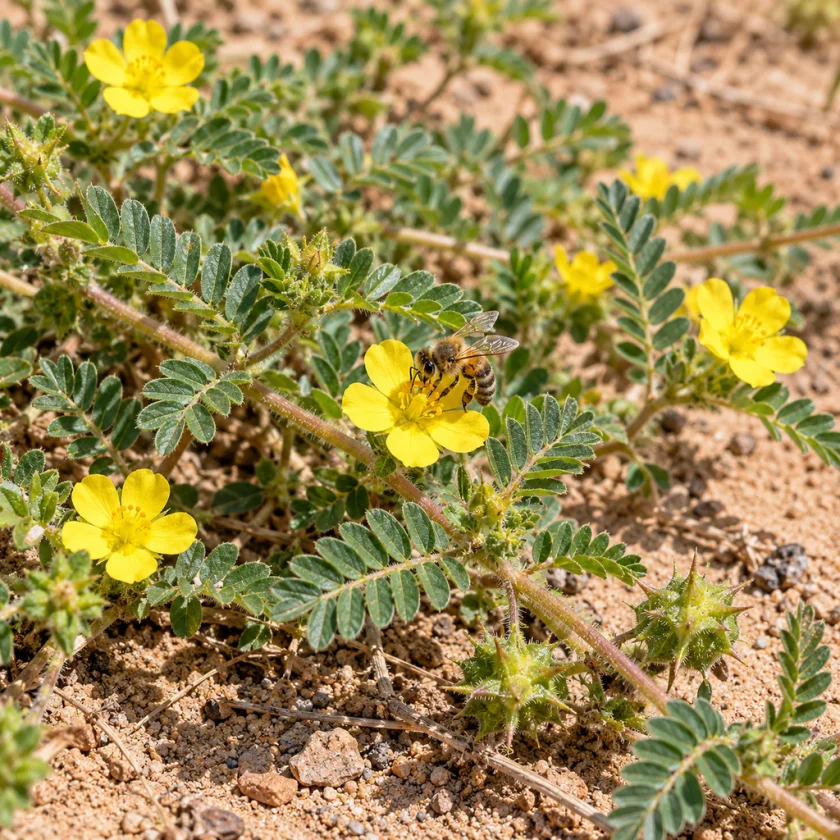
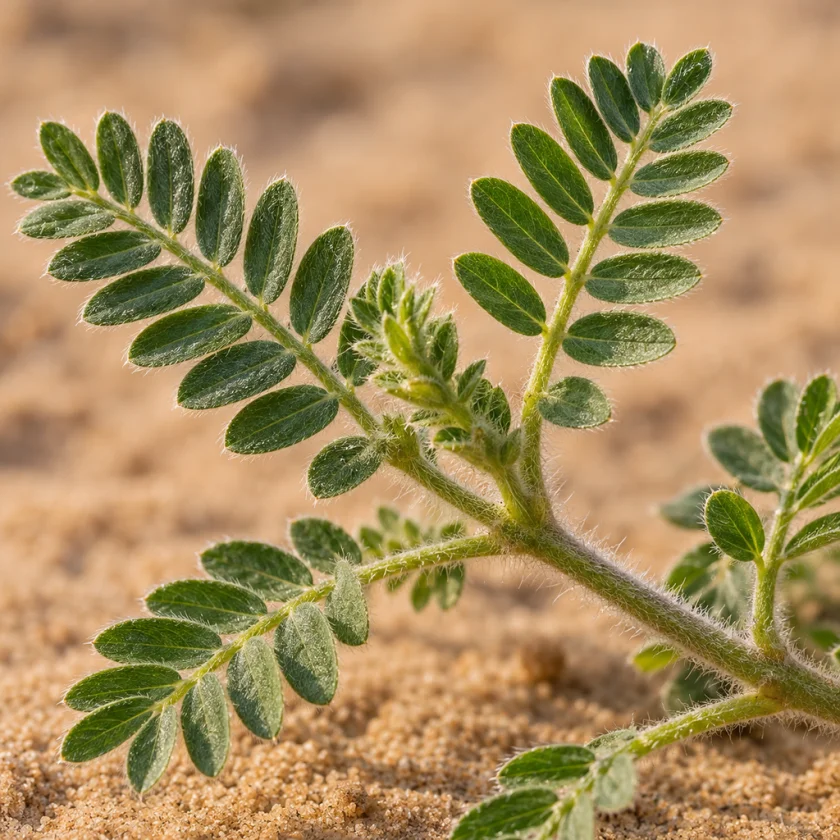
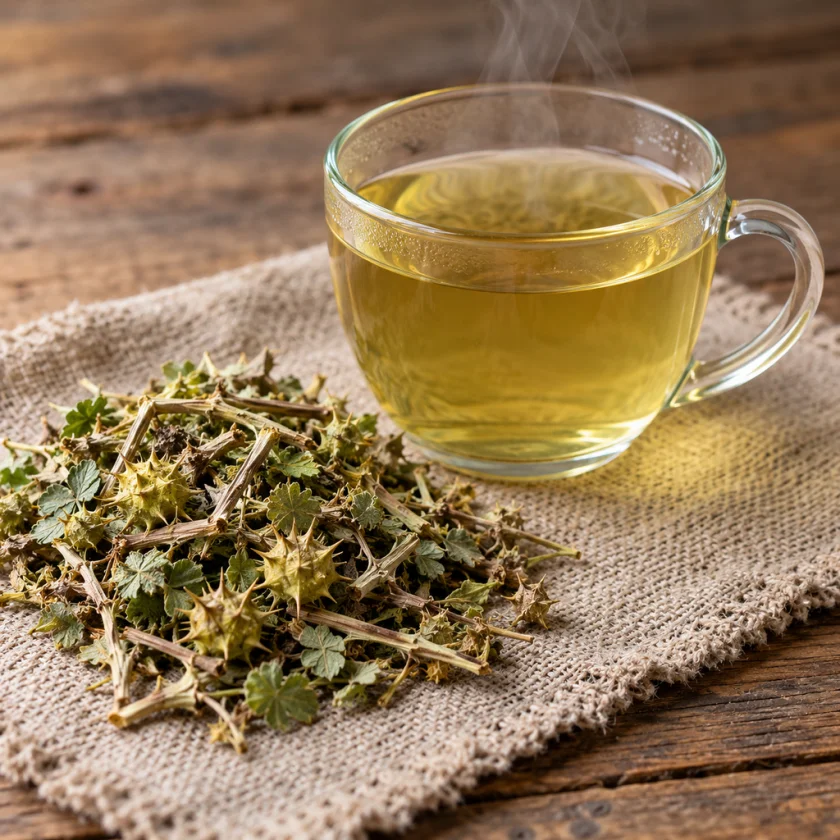
Of everything claimed for Tribulus terrestris, sexual desire is the claim with the least-bad evidence. That phrasing is deliberate. It is not "proven," it is not "strong," and it is not the same claim as the testosterone one — but unlike the hormone story, this one has actual randomized, double-blind, placebo-controlled human trials behind it, and more than one of them reported a benefit.
The results are modest, the trials are small, and men and women have not responded the same way. Two randomized trials in men with erectile dysfunction reached opposite conclusions. And the hormone results differ between women and men: in the 2018 trial in premenopausal women, free and bioavailable testosterone rose along with desire, and the authors put the benefit down to that rise, while in studies of men tribulus did not raise testosterone. How those findings fit together is the thread this page follows.
Table of Contents
- Why This Is the “Least-Bad” Claim
- Randomized Trials in Women with Low Desire
- Randomized Trials in Men — A Genuine Split
- How Big Is the Effect, Really?
- Why the Trials Disagree
- Desire Without Testosterone: Reconciling the Two Claims
- Candidate Mechanisms
- Placebo, Expectancy and Sexual Outcomes
- Who Was Studied, and What the Trials Used
- What Tribulus Is Not a Substitute For
- Verdict and Evidence Tiers
- Key Research Papers
- Connections
- Featured Videos
Why This Is the “Least-Bad” Claim
It helps to see how low the bar is elsewhere in this plant's file. The muscle and testosterone claims are NOT SUPPORTED — tested properly, came back negative (see the testosterone page). The urinary and kidney-stone uses are traditional use only. The blood-sugar and blood-pressure claims are preliminary, mostly animal. Against that backdrop, the desire claim stands out simply for having randomized human evidence at all.
What "least-bad" does not mean:
- It does not mean the effect is established. Several small trials pointing the same way is a signal, not a conclusion, and one well-conducted trial in men pointed the other way.
- It does not mean the effect is large. Where reported, improvements are on symptom questionnaires, and the changes are modest — a nudge, not the sort of effect that would be obvious without a scoring instrument.
- It does not mean it works for everyone, or that men and women can be treated as one population. The clearest positive results are in women; the male results conflict.
- It does not license the hormone claim by the back door. This is the crucial point, and the reconciliation section is where it gets settled.
Consistent with all of that are two reviews of the plant: A systematic review on the herbal extract Tribulus terrestris and the roots of its putative aphrodisiac and performance enhancing effect (Journal of Dietary Supplements, 2014) and Pro-sexual and androgen enhancing effects of Tribulus terrestris L.: Fact or Fiction (Journal of Ethnopharmacology, 2016). The first reviewed tribulus and testosterone levels (11 studies) and concluded that tribulus is ineffective for raising testosterone in humans; the second separates the pro-sexual question from the androgen question, treating the first as open and the second as answered in the negative. That is the structure of this page.
Randomized Trials in Women with Low Desire
The strongest signal in the entire tribulus literature comes from women, which is a striking fact given that essentially all tribulus marketing is aimed at men.
Premenopausal women with hypoactive sexual desire disorder
Efficacy of Tribulus terrestris for the treatment of premenopausal women with hypoactive sexual desire disorder: a randomized, double-blinded, placebo-controlled trial was published in Gynecological Endocrinology in 2018. Premenopausal women meeting criteria for hypoactive sexual desire disorder — that is, distressing low desire, a recognised clinical diagnosis rather than a general grumble — were randomly assigned to tribulus or placebo under double-blind conditions. The trial reported improvement in desire and in other domains of sexual function relative to placebo. Evidence tier: randomized clinical trial — positive, small.
Two features of this trial deserve emphasis. First, the trial (40 women) also measured testosterone: women taking tribulus had higher free and bioavailable testosterone, and the authors wrote that the improvement was "probably due to" that rise. Second, the outcome was measured with a validated sexual-function questionnaire rather than a global impression, which is the right way to do it — sexual outcomes are notoriously prone to inflation when assessed informally.
Women with sexual dysfunction more broadly
Tribulus terrestris for treatment of sexual dysfunction in women: randomized double-blind placebo-controlled study appeared in the DARU Journal of Pharmaceutical Sciences in 2014, and reported improvements across several domains — desire, arousal, lubrication and satisfaction — versus placebo in women with sexual dysfunction. Evidence tier: randomized clinical trial — positive, small.
The pattern of that result is itself informative. Lubrication and arousal are, at least in part, vascular outcomes — they depend on genital blood flow, which depends heavily on nitric-oxide signalling. A compound that improved desire only through a hormonal route would not obviously improve lubrication. A compound acting on vascular and neural arousal pathways plausibly would. Keep this in mind for the mechanisms section.
Menopausal and postmenopausal women
There is also a smaller body of work on tribulus in menopausal and postmenopausal women with sexual complaints, some of it reporting improvement in desire and satisfaction scores. This work is generally smaller, more heterogeneous in extract and dose, and harder to appraise than the two trials above; it is best read as consistent-but-weak supporting evidence rather than independent confirmation. The wider context of sexual symptoms at this life stage is on the Menopause and Perimenopause pages. Evidence tier: preliminary to weak randomized evidence.
Randomized Trials in Men — A Genuine Split
In men the evidence does not point one way. Two randomized, double-blind, placebo-controlled trials in men with erectile dysfunction reached opposite conclusions, and pretending otherwise in either direction would be dishonest.
The positive trial
Evaluation of the efficacy and safety of Tribulus terrestris in male sexual dysfunction — a prospective, randomized, double-blind, placebo-controlled clinical trial was published in Maturitas in 2017. It is the largest male trial in this literature (180 men aged 18 to 65 with mild or moderate erectile dysfunction) and ran for twelve weeks. It reported improvement in self-rated erectile function and in sexual desire scores compared with placebo. Evidence tier: randomized clinical trial — positive.
Notably, this trial is also part of the evidence against the hormonal story: symptom improvement was reported without the kind of androgen shift that a testosterone mechanism would demand. A trial can support a symptomatic benefit and undercut the proposed mechanism at the same time, and this one does.
The negative trial
Tribulus terrestris versus placebo in the treatment of erectile dysfunction: a prospective, randomized, double-blind study appeared in Actas Urológicas Españolas in 2014 and found tribulus no better than placebo for erectile dysfunction. Evidence tier: randomized clinical trial — negative.
This is not a footnote to be buried under the positive result. It used the same double-blind, placebo-controlled design but was much smaller and shorter — 30 men aged 40 or over (15 per group) taking 800 mg a day for 30 days, against 180 men over twelve weeks in the 2017 trial — and it reached the opposite conclusion; it also found no change in total testosterone. Its existence is why the honest male summary is "possibly helpful for some, unproven overall" rather than "shown to help."
Men with fertility problems
A separate strand studies tribulus in men with infertility, looking at semen parameters and sometimes hormone measures — for instance work published in the Journal of Dietary Supplements in 2017 on serum testosterone and semen parameters in unexplained male infertility, a 2017 Andrologia study on semen quality and body-fat index in infertile men, and a 2019 systematic review in Complementary Therapies in Medicine on sperm parameters in idiopathic male infertility. These are small and mixed, and they are about fertility rather than desire. Evidence tier: preliminary, distinct population. Their frequent misuse as evidence for the general testosterone claim is dissected on the testosterone page; see also Male Infertility.
How Big Is the Effect, Really?
"Improved sexual desire" is a phrase that can hide almost anything, so it is worth being explicit about what these trials measured and what magnitude of change is in play.
- The outcomes are questionnaire scores. Validated instruments — the Female Sexual Function Index and its desire subscale in the women's trials, the International Index of Erectile Function in the men's — but questionnaires nonetheless. Nobody measured frequency of intercourse under observation.
- The changes reported are modest. These are shifts in mean scores between groups, not transformations. In practical terms: the kind of change a person might describe as "a bit more interested than I was," not "a completely different experience." Anyone expecting a pharmaceutical-grade effect will be disappointed.
- Statistical significance is not clinical significance. A difference can reach significance in a small trial and still sit below the threshold at which a person would notice or care. The tribulus trials generally do not establish that their differences clear that threshold.
- Follow-up is short. Weeks to a few months. Whether any benefit persists, grows, or fades with continued use is unknown.
- Nobody has demonstrated a dose-response relationship in humans. A convincing drug effect usually shows more effect at a higher dose. There is no such curve for tribulus and desire, which weakens the causal case considerably.
- No head-to-head comparisons against established treatments exist. Tribulus has not been tested against a phosphodiesterase-5 inhibitor for erectile dysfunction, or against the pharmacological and psychological treatments used for low desire. It has only been tested against nothing.
Put together, the sober description is: a small, possibly real, modest improvement in desire scores in some populations, established in small short trials, with no dose-response and no comparison to anything that works. That is a fair reason to consider trying a cheap, reasonably tolerated botanical. It is not a reason to expect much.
Why the Trials Disagree
When two randomized trials in men with erectile dysfunction disagree, the disagreement itself carries information. Several explanations apply here, and more than one is probably operating.
- The extracts were not the same product. This is the single most under-appreciated explanation and it is not hand-waving — it is documented chemistry. Saponin and protodioscin content in tribulus varies by plant part, geographic origin, season and extraction method, as shown in the analytical literature (see the saponins and quality page). Two trials both labelled "Tribulus terrestris 750 mg" may have delivered substantially different amounts of whatever the active constituent is. In a field where nobody has firmly identified the active constituent, that is close to testing two different drugs.
- The populations differed in the ways that matter for sexual outcomes. Erectile dysfunction is not one disease. Vascular erectile dysfunction (ED) from diabetes or atherosclerosis, neurogenic erectile dysfunction, medication-induced erectile dysfunction and predominantly psychogenic erectile dysfunction have different mechanisms and different responsiveness. A botanical with a weak vascular or central effect might do something in mild psychogenic or mixed cases and nothing in established vascular disease. Trials that recruited different mixes would get different answers. See Erectile Dysfunction for why the underlying cause dominates.
- Desire and erection are different outcomes. A trial whose primary endpoint is erectile function may miss a desire effect, and vice versa. Some of the apparent conflict is two trials measuring adjacent but distinct things.
- Small samples produce unstable results. With modest sample sizes and a modest true effect, chance alone will produce some positive and some negative trials. This is normal statistics, not scandal, and it is exactly why a single trial cannot settle a question.
- Placebo response in sexual medicine is large and variable. See the placebo section. A trial with a strong placebo response will struggle to show a difference even if the active treatment does something.
The honest consequence is that nobody can currently tell you which tribulus product, at which dose, in which patient, does anything. That is a real limitation on the claim, and it is a limitation that no amount of trial-counting fixes.
Desire Without Testosterone: Reconciling the Two Claims
This is the section that makes the rest of the tribulus literature stop looking contradictory.
Set the two findings side by side:
- In healthy men, tribulus does not raise testosterone, free testosterone, DHT, or the gonadotropins. Repeatedly demonstrated. NOT SUPPORTED is the correct label for the hormone claim.
- In some randomized trials, sexual desire scores improved on tribulus. Modest, heterogeneous, but present.
A supplement marketer treats the second as evidence for the first, reasoning that desire improved therefore testosterone must have risen. That inference is invalid, and the reason it is invalid is one of the more important facts in sexual medicine: sexual desire is not a simple readout of circulating testosterone.
The evidence for that decoupling is broad and predates tribulus entirely:
- Within the normal male range, differences in serum testosterone correlate poorly with differences in libido. Two men with identical testosterone can have very different desire, and a man's desire varies across weeks in which his testosterone does not.
- Testosterone therapy reliably improves desire in men who are genuinely hypogonadal, and does much less for desire in men whose levels are already normal — another instance of "correcting a deficit is not the same as exceeding a normal."
- In women, desire responds to a wide range of interventions that are not androgens at all, including centrally acting medications, psychological and relational treatment, and treatment of pain or dryness. Female desire is not primarily an androgen-dose phenomenon.
- Desire is heavily modulated by sleep, mood, stress, medication (antidepressants being a common culprit), relationship context, pain and physical health — none of which is a hormone level.
Once you accept that desire has multiple inputs, the tribulus data are unremarkable. A compound could plausibly nudge arousal or desire through vascular, neural or central routes while leaving the endocrine axis untouched. The studies in men fit that pattern: in the 2014 erectile-dysfunction trial and the 2005 study in young men, testosterone did not change. The 2018 women's trial does not fit it: free and bioavailable testosterone rose along with desire scores, and its authors attributed the benefit to that rise.
What this means for reading results: the trials judged tribulus by questionnaire scores for desire and sexual function, not by testosterone tests. In men, testosterone did not move on tribulus — the best-established finding about this herb — so a flat test result in a man is not evidence that a felt improvement was imaginary. In the one women's trial that measured hormones, free and bioavailable testosterone did rise. Marketing that suggests testing testosterone before and after leaves these findings out.
Candidate Mechanisms
If not testosterone, then what? Three hypotheses have support, all of it preliminary (animal or in-vitro). None is established in humans, and this section is explicitly speculative — the label mechanism sections need and rarely get.
- Nitric oxide. Protodioscin has been proposed to increase nitric-oxide release in the tissues involved in genital arousal. Nitric oxide is the signal that relaxes smooth muscle in the corpora cavernosa and in vaginal and clitoral tissue, and it is the same pathway that phosphodiesterase-5 inhibitor drugs amplify downstream. Animal and isolated-tissue work is the basis for this. It would explain a mild arousal and lubrication effect, and would predict no hormone change — which matches the data in men. It would also predict a much weaker effect than a drug that targets the pathway directly, which also matches.
- Androgen-receptor density in nervous and erectile tissue. Animal studies have reported changes in androgen-receptor immunoreactivity in relevant tissues after tribulus exposure. If real, this would mean the same amount of circulating testosterone produces more downstream signal locally — a sensitivity change rather than a level change. It is a genuinely interesting hypothesis precisely because it predicts the observed dissociation. It has not been shown in humans.
- Central effects on desire. Tribulus contains small quantities of beta-carboline alkaloids (harman and harmine), which are centrally active compounds in other contexts. Whether the amounts present in a standard extract are pharmacologically meaningful is unresolved and probably doubtful, but it is the most plausible route by which a plant could affect desire specifically as opposed to arousal physiology.
Worth flagging: the mechanisms that survive scrutiny are all mechanisms for sexual function without hormonal change, which fits the hormone data in men. The 2018 women's trial, where free and bioavailable testosterone rose and the authors credited that rise, points the other way, so the mechanism question is not settled.
Placebo, Expectancy and Sexual Outcomes
Sexual outcomes are among the most placebo-responsive endpoints in medicine, and any honest discussion of a modest sexual benefit has to sit with that.
- Placebo arms in sexual-dysfunction trials routinely improve substantially. Placebo response rates of a quarter to a third are common in erectile-dysfunction trials, and can be higher on desire measures. Part of this is genuine — being enrolled in a trial means attention, permission to discuss the problem, reduced performance anxiety, and often improved communication with a partner. All of that really does help.
- Expectancy is a strong driver. Belief that a treatment will work measurably affects sexual response. This is why the double-blind placebo control is not a formality here but the entire basis for believing anything.
- Regression to the mean inflates uncontrolled results. People seek help when things are at their worst. Things at their worst tend to improve somewhat regardless. Any "9 out of 10 users reported improvement" testimonial is measuring this and nothing else.
- None of this means a placebo effect is worthless to the person experiencing it. If desire improves and the improvement is real to you, that is a real outcome. But it is not evidence about the compound, and it does not justify a claim on a label — because the same benefit was available without the purchase.
The reason the randomized trials still matter is precisely that they subtract this. That some of them found a difference beyond a large placebo response is the whole reason the desire claim is treated more generously here than the hormone claim.
Who Was Studied, and What the Trials Used
This section passes on who was studied, the doses the trials gave and the safety facts reported for tribulus.
- The people with the most relevant evidence are women with distressing low desire. Given that essentially the entire market is aimed at men, this is worth saying plainly.
- Low desire has many common, fixable causes. Antidepressants and some other medications, untreated depression or anxiety, chronic sleep deprivation, pain during sex, vaginal dryness, thyroid disease, alcohol, relationship distress, and genuine hypogonadism in men. Each of these has its own treatment, and a supplement does not remove the cause.
- Doses used in trials differed widely: the 2014 women's trial (DARU) gave 7.5 mg of extract a day for 4 weeks; the 2014 men's trial (Actas Urológicas Españolas) gave 800 mg a day in two doses for 30 days; the 2017 men's trial (Maturitas) gave six 250 mg tablets a day (1,500 mg) after meals for twelve weeks. Because extracts differ in standardization, the milligram figure alone says little about how much of the plant's saponins a product delivers — details on the quality page.
- Products vary in content. Extracts differ in protodioscin and total saponin content, and adulteration of tribulus-branded products has been reported; independent (third-party) testing checks what is in a product and whether it is contaminated, though it says nothing about whether it works.
- Trial length and endpoints. The trials ran from 4 weeks (the 2014 women's trial) to twelve weeks (the 2017 men's trial) and measured desire, arousal and satisfaction on questionnaires. In men, testosterone did not change.
- Longer use is untested. No trial has shown that use beyond twelve weeks works when shorter use did not, and "cycling" schedules are marketing conventions rather than trial protocols.
- There is no safety data on tribulus in pregnancy or breastfeeding, which also matters for women trying to conceive. The other cautions given for this herb concern hormone-sensitive conditions and people taking diabetes medication, blood-pressure medication, diuretics or lithium — tribulus is studied (mostly in animals) for lowering blood sugar and blood pressure, and is used traditionally to increase urine flow.
- Drug testing in sport or at work: doping positives have been traced to undeclared steroid contamination of tribulus-branded products. See the performance page for why.
What Tribulus Is Not a Substitute For
The most common harm from a weak supplement is not toxicity. It is delay — months spent on a bottle instead of on the thing that would have worked.
- Erectile dysfunction is a cardiovascular warning sign. The penile arteries are small; endothelial dysfunction often shows up there before it shows up as angina. The blood-vessel risks behind it — blood pressure, cholesterol (lipids), blood sugar (glucose) and smoking — are the ones checked when new erectile dysfunction appears. This is the single most important fact on this page for men.
- Established treatments for erectile dysfunction are highly effective for most men, and treating the underlying cause — diabetes, hypertension, obesity, medication side effects — often improves things on its own. See Erectile Dysfunction.
- Genuinely low testosterone has specific causes that a booster does not address. Causes include obesity and insulin resistance, sleep apnoea, opioid and glucocorticoid use, pituitary disease and primary testicular failure. See Male Hypogonadism, Low Testosterone and TRT, and the testosterone test.
- Low desire in women is frequently multifactorial and frequently treatable — medication review, pain and dryness, mood, sleep, thyroid function, life stage and relational factors all matter, and there are effective psychological and medical approaches. A botanical is a small lever compared with any of these.
- Male fertility problems are investigated, not only supplemented. The standard work-up is semen analysis, a hormone panel and examination for varicocele (enlarged veins in the scrotum). See Male Infertility and Infertility.
- The unglamorous basics beat every herb in this category. Sleep, alcohol reduction, treating depression, physical activity, weight management and honest conversation with a partner have larger effects on desire than anything sold in a capsule.
Verdict and Evidence Tiers
- Improves sexual desire in women with low desire — randomized clinical trial evidence, positive but modest and limited. Two small double-blind placebo-controlled trials report benefit. This is the best-supported use of tribulus, and it is the use its marketing largely ignores.
- Improves erectile function or desire in men with sexual dysfunction — randomized clinical trial evidence, genuinely conflicting. The largest trial reported benefit; another randomized double-blind trial found none. Possibly helpful for some men, unproven overall.
- Works by raising testosterone — NOT SUPPORTED in men. In men, testosterone did not rise on tribulus. In the 2018 trial in premenopausal women, free and bioavailable testosterone rose along with desire, and the authors attributed the benefit to that rise; that is one small trial of 40 women.
- Nitric-oxide, androgen-receptor-density and central mechanisms — preliminary (animal and in-vitro). Plausible, unconfirmed in humans, and consistent with the hormone pattern seen in men.
- Improves fertility or semen parameters — preliminary, in a separate clinical population, and not evidence for desire or for hormones.
- Documented harms stand alongside all of the above: published case reports of serious kidney injury and of liver injury with tribulus products, reported gynecomastia in men, at least one published priapism case report, and doping positives from undeclared steroid contamination of tribulus-branded products. A modest desire benefit does not erase any of these; details on the quality and safety page.
Key Research Papers
Cited as PubMed searches rather than numeric identifiers, so that you can verify each paper's identity and contents directly.
- Efficacy of Tribulus terrestris for the treatment of premenopausal women with hypoactive sexual desire disorder: a randomized, double-blinded, placebo-controlled trial. Gynecological Endocrinology, 2018. The clearest positive randomized result in the tribulus literature; free and bioavailable testosterone also rose in the tribulus group. Find on PubMed
- Tribulus terrestris for treatment of sexual dysfunction in women: randomized double-blind placebo-controlled study. DARU Journal of Pharmaceutical Sciences, 2014. Improvements reported in desire, arousal, lubrication and satisfaction domains. Find on PubMed
- Evaluation of the efficacy and safety of Tribulus terrestris in male sexual dysfunction — a prospective, randomized, double-blind, placebo-controlled clinical trial. Maturitas, 2017. The largest male trial; improved self-rated erectile function and desire over twelve weeks. Find on PubMed
- Tribulus terrestris versus placebo in the treatment of erectile dysfunction: a prospective, randomized, double-blind study. Actas Urológicas Españolas, 2014. The negative counterweight in men. Find on PubMed
- Pro-sexual and androgen enhancing effects of Tribulus terrestris L.: Fact or Fiction. Journal of Ethnopharmacology, 2016. Separates the pro-sexual question from the androgen question, which is the correct analytical move. Find on PubMed
- A systematic review on the herbal extract Tribulus terrestris and the roots of its putative aphrodisiac and performance enhancing effect. Journal of Dietary Supplements, 2014. A review of tribulus and testosterone levels (11 studies), which concluded that tribulus is ineffective for raising testosterone in humans. Find on PubMed
- The aphrodisiac herb Tribulus terrestris does not influence the androgen production in young men. Journal of Ethnopharmacology, 2005. Included here because it found no change in testosterone, androstenedione or luteinizing hormone in young men taking tribulus for 4 weeks. Find on PubMed
- Topic search — the animal and isolated-tissue work behind the nitric-oxide and androgen-receptor-density hypotheses, including protodioscin studies in rat, rabbit and primate models: PubMed search
- Topic search — tribulus in menopausal and postmenopausal women's sexual function: PubMed search
- Topic search — tribulus and semen parameters in idiopathic male infertility, the adjacent literature that is often misused: PubMed search
- Topic search — placebo response in erectile-dysfunction and sexual-desire trials, the context that makes a modest active-arm difference meaningful: PubMed search
- Topic search — the relationship (and lack of it) between serum testosterone and libido within the normal range, which is the general fact underlying this page's reconciliation: PubMed search
Connections
- All Herbs
- Tribulus terrestris (main article)
- Tribulus — Benefits Deep Dive
- Tribulus and Testosterone: The Claim Examined
- Tribulus for Athletic Performance
- Tribulus: Saponins, Product Quality and Safety
- Erectile Dysfunction
- Male Infertility
- Low Testosterone and TRT
- Male Hypogonadism
- Menopause
- Perimenopause
- Infertility
- Testosterone Test
- SHBG Test
- Maca — Benefits
- Epimedium (Horny Goat Weed) — Benefits
- Tongkat Ali — Benefits
- Ginseng — Benefits
- Arginine
- Citrulline
Safety facts. This page passes on information; it gives no advice of its own. Low sexual desire and erectile difficulty both have common, treatable causes — and new erectile dysfunction in particular can be an early sign of heart and blood-vessel disease (cardiovascular disease). There is no safety data on tribulus in pregnancy or breastfeeding, which also matters when trying to conceive. The other cautions given for this herb concern hormone-sensitive conditions and use alongside diabetes medication, blood-pressure medication, diuretics or lithium. Published case reports link tribulus products to serious kidney and liver injury, breast swelling in men (gynecomastia) has been reported, and a priapism case has been published — a prolonged painful erection is a medical emergency. Dark urine, reduced urine output, yellowing of the eyes or skin (jaundice) and upper-abdominal pain are signs of kidney or liver injury that hospitals treat as urgent; breast swelling or tenderness in a man is the sign of gynecomastia.