Tribulus terrestris
Tribulus terrestris — the spiny "puncture vine" — is one of the most heavily marketed supplements in the gym and men's-health aisle, almost always sold as a natural testosterone booster for muscle, strength, and libido. This page is going to be blunt with you, because the honest picture and the marketing picture are not the same thing. The short version: controlled human studies consistently show that tribulus does not reliably raise testosterone — not in ordinary men, and not in athletes — so its flagship claim is essentially unsupported. Where the evidence is more interesting is sexual desire: a handful of decent randomized trials, especially in women with low desire and in some men with erectile difficulty, hint that tribulus may modestly help libido — though how it works is not settled, and in one of the women's trials free testosterone rose as well. Below we walk through what the plant is, why the testosterone story took hold, what the trials actually found, the active saponins, the doses used in trials, the real safety concerns (including adulterated products), and an honest bottom line.
Table of Contents
- What Tribulus terrestris Is
- Marketing vs. Reality
- The Testosterone Claim — What the Evidence Shows
- Active Compounds: Saponins and Protodioscin
- Libido and Sexual Function
- Athletic Performance and Muscle
- Blood Sugar and Other Traditional Uses
- Forms, Standardization, and Dosing
- Safety, Side Effects, and Cautions
- The Honest Bottom Line
- Key Research Papers
- Connections
- Featured Videos
What Tribulus terrestris Is
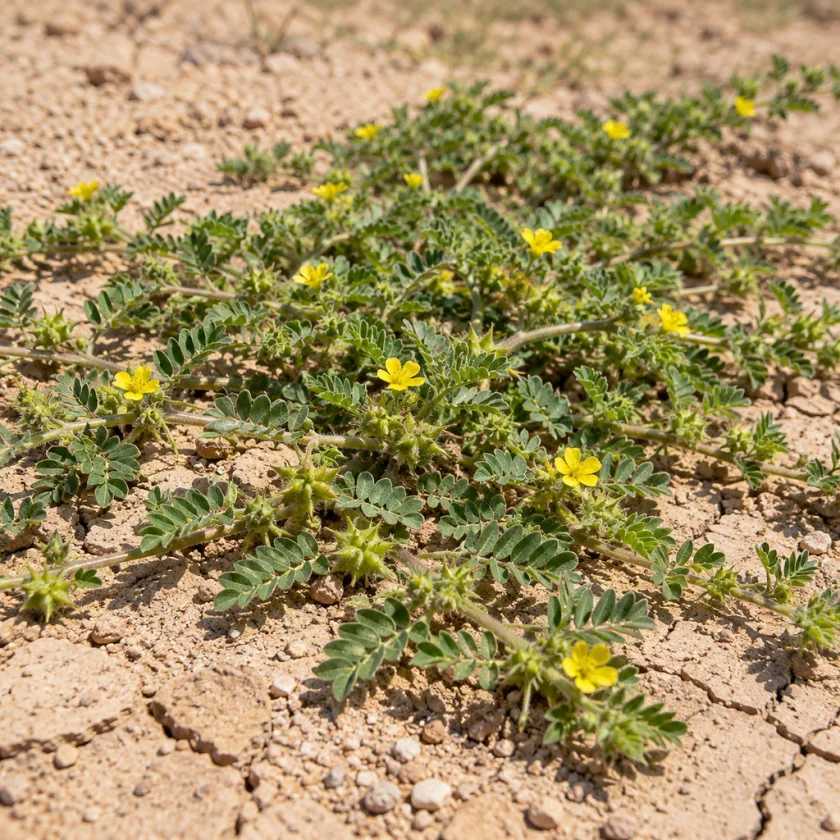
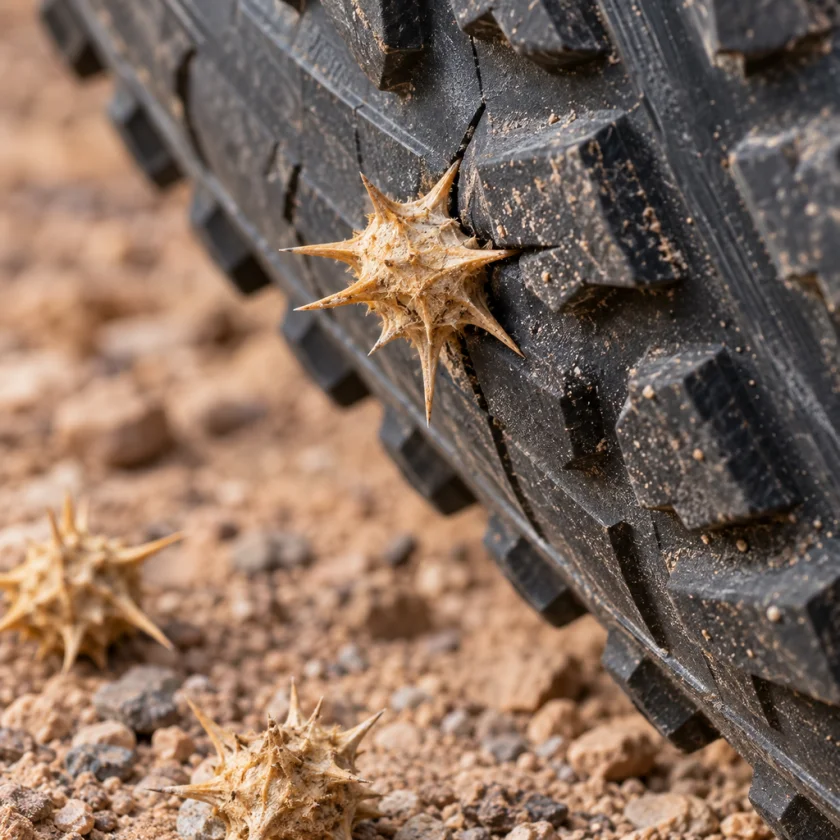
Tribulus terrestris is a low, sprawling flowering plant in the caltrop family (Zygophyllaceae). It grows as a warm-climate weed across the Mediterranean, the Middle East, Africa, southern Europe, and much of South and East Asia, and it has spread as an invasive plant elsewhere. Its most memorable feature is its seed pod, a hard little burr covered in sharp spines — sharp enough to puncture bicycle tires and injure bare feet, which is why it picked up common names like puncture vine, goathead, caltrop, and bindii.
The plant has a long history in traditional medicine, though not originally as a "muscle" herb. In Ayurveda it is called gokshura and was used mainly for urinary and kidney complaints, fluid retention, and as a general restorative tonic. In Traditional Chinese Medicine the fruit is bai ji li (or ci ji li), used for very different indications such as liver-related patterns, headache, itching, and eye complaints. In folk practice around the Mediterranean and the Balkans it was taken as a diuretic and a vitality tonic. The parts used are the fruit (the spiny pods) and the aerial parts (leaves and stems); modern supplements are usually extracts of the fruit, the aerial parts, or a mix.
It is worth noticing what is missing from those traditional records: no historical culture used tribulus specifically as a testosterone drug for building muscle. That framing is modern, and understanding where it came from tells you a lot about how to read the claims on the label.
Marketing vs. Reality
The modern "testosterone booster" reputation of tribulus can be traced largely to the 1980s and 1990s, when a standardized Bulgarian extract was promoted with claims about hormones and fertility, and stories circulated that Eastern European weightlifters used it. Bodybuilding magazines and supplement companies picked up the narrative, and because "raises your own testosterone, naturally" is an easy sell, tribulus became a fixture in pre-workout blends, "test boosters," and men's vitality stacks.
The problem is simple: the marketing ran far ahead of the evidence, and the evidence never caught up. When researchers actually put tribulus through controlled trials, the testosterone effect that the whole category is built on repeatedly failed to appear. That does not make the plant worthless — as you will see, there is a more defensible story around sexual desire — but it does mean that the single most common reason people buy tribulus is the reason the science supports least. That gap is the key to reading the claims on the label.
The Testosterone Claim — What the Evidence Shows
This is the flagship claim, so let us be clear and direct: in controlled human studies, tribulus does not reliably raise testosterone. This has been tested more than once, in exactly the populations that supplement companies target, and the answer keeps coming back the same.
- In a controlled study of 21 healthy young men over four weeks, tribulus supplementation produced no change in testosterone, androstenedione or luteinizing hormone, the pituitary hormone that drives testosterone production (Neychev & Mitev, 2005).
- In elite rugby-league players going through preseason training, five weeks of tribulus (450 mg a day) did not change the urinary testosterone/epitestosterone ratio — the measure used in sport drug testing — or improve strength or body composition beyond placebo (Rogerson et al., 2007).
- In resistance-trained men, tribulus produced no meaningful improvement in body composition or exercise performance compared with placebo (Antonio et al., 2000).
A 2014 systematic review of 11 human and animal studies — too varied in dose, duration and design to be combined in a meta-analysis — reached the same conclusion: the aphrodisiac and "performance-enhancing" reputation is not matched by reliable hormonal effects in people, and much of the supportive data comes from animals rather than controlled human trials (Qureshi et al., 2014). A detailed 2016 review by the same group that ran the 2005 young-men study weighed the whole picture and again concluded that a genuine testosterone-boosting effect in healthy men is not established (Neychev & Mitev, 2016).
Are there any studies that reported a hormone change? A few small, lower-quality, or uncontrolled studies — often in older men with low baseline testosterone, or in men with fertility problems — have reported minor shifts. But these are outweighed by the better-designed, placebo-controlled trials in the men most likely to buy the product. The honest reading is: as a way to raise testosterone and build muscle, tribulus did not do that in the controlled trials. If a label promises otherwise, the label is ahead of the science.
Active Compounds: Saponins and Protodioscin
The compounds that get the most attention in tribulus are its steroidal saponins — sugar-linked plant steroids. The marquee molecule is protodioscin, a furostanol saponin that is usually named as the presumed "active" ingredient and is the compound most supplements are standardized to. Tribulus also contains other spirostanol and furostanol saponins, small amounts of beta-carboline alkaloids (harman and harmine), flavonoids, and plant sterols.
Here is a point that quietly explains a lot of the confusion in this field: the protodioscin content of tribulus varies enormously. How much saponin a batch contains depends on which part of the plant is used (leaf material tends to be richer than fruit), where it was grown (Bulgarian, Indian, Chinese, and other sources differ substantially), the season, and how it was processed. An analytical study using HPLC documented exactly this kind of variability in saponin content across tribulus material (Ganzera et al., 2001). The practical consequence is that two bottles both labeled "Tribulus terrestris" can contain wildly different amounts of the compound that is supposed to do the work — which is part of why studies disagree and why buying a cheap, unstandardized product is close to a coin flip.
Libido and Sexual Function
This is where tribulus becomes genuinely more interesting, and where an honest page should give it credit. Several randomized, placebo-controlled trials suggest tribulus may modestly improve sexual desire and function — and whether that benefit runs through testosterone is not settled. The evidence is mixed rather than settled, but it is more promising than the muscle story.
In women
The clearest signal comes from studies in women with low sexual desire. A double-blind, placebo-controlled trial in premenopausal women with hypoactive sexual desire disorder found that tribulus improved desire and other domains of sexual function versus placebo (Vale et al., 2018). An earlier randomized, double-blind study in women with sexual dysfunction also reported improvements in desire, arousal, lubrication, and satisfaction (Akhtari et al., 2014). The Vale trial also measured hormones: the women taking tribulus had higher free and bioavailable testosterone, and the authors credited the benefit to that rise.
In men
The largest randomized trial in men with erectile and sexual dysfunction — a 12-week, double-blind, placebo-controlled study — reported improvement in self-rated erectile function and sexual desire scores with tribulus (Kamenov et al., 2017). But the picture is genuinely mixed: another randomized, double-blind trial in men with erectile dysfunction found tribulus no better than placebo (Santos et al., 2014). So for men the honest summary is "possibly helpful for some, unproven overall."
How it might work
In healthy young men tribulus did not change testosterone, while in the Vale trial in women free and bioavailable testosterone rose, so the part testosterone plays is unsettled. Researchers have also proposed other mechanisms: protodioscin may increase nitric oxide release in the tissues involved in arousal (nitric oxide is the same signal that erectile-dysfunction drugs amplify), animal work suggests possible effects on androgen receptor density in nervous and erectile tissue, and there may be central effects on desire. None of this is nailed down. The trials point to a modest libido effect for some people — a gentle nudge at best, not a drug-strength effect — and whether higher testosterone plays a part is not settled.
Athletic Performance and Muscle
The athletic and bodybuilding claims — more muscle, more strength, faster recovery — ride on the testosterone story, and since that story does not hold up, neither do they. The controlled trials in trained men (Rogerson et al., 2007; Antonio et al., 2000) found no advantage over placebo for strength, lean mass, or body composition, and a review of tribulus supplements used by athletes reached the same skeptical conclusion (Pokrywka et al., 2014).
There is a second concern for athletes. "Test booster" and "tribulus" products sit in a corner of the supplement market with a documented history of adulteration — that is, being spiked with undeclared anabolic steroids or prescription drugs. For a competitive athlete subject to drug testing, that is a real contamination risk that has nothing to do with the herb itself. Independent, sport-specific testing programmes exist to screen supplements for substances banned in sport.
Blood Sugar and Other Traditional Uses
Beyond hormones and libido, tribulus has been studied and used traditionally for a few other things. The evidence here is early — mostly laboratory and animal work with some small human data — so it is preliminary.
- Blood sugar. Animal studies and a few small human studies suggest tribulus extracts may modestly lower blood glucose. This is interesting but not established, and it matters mainly as a caution: for someone already taking diabetes medication, an added glucose-lowering effect could stack (see Safety).
- Blood pressure and fluid balance. Consistent with its traditional use as a diuretic tonic, some preliminary data point to mild blood-pressure-lowering and diuretic effects — again, more relevant as a possible interaction with blood-pressure drugs than as a treatment.
- Kidney stones and urinary complaints. This is one of the herb's oldest traditional uses (the Ayurvedic gokshura role), but rigorous human evidence that it dissolves or prevents stones is lacking.
- Cholesterol and cardiovascular markers. Some animal studies report improvements in lipids and antioxidant markers; human confirmation is limited.
In short, these are traditional and mechanistic possibilities, not proven therapies.
Forms, Standardization, and Dosing
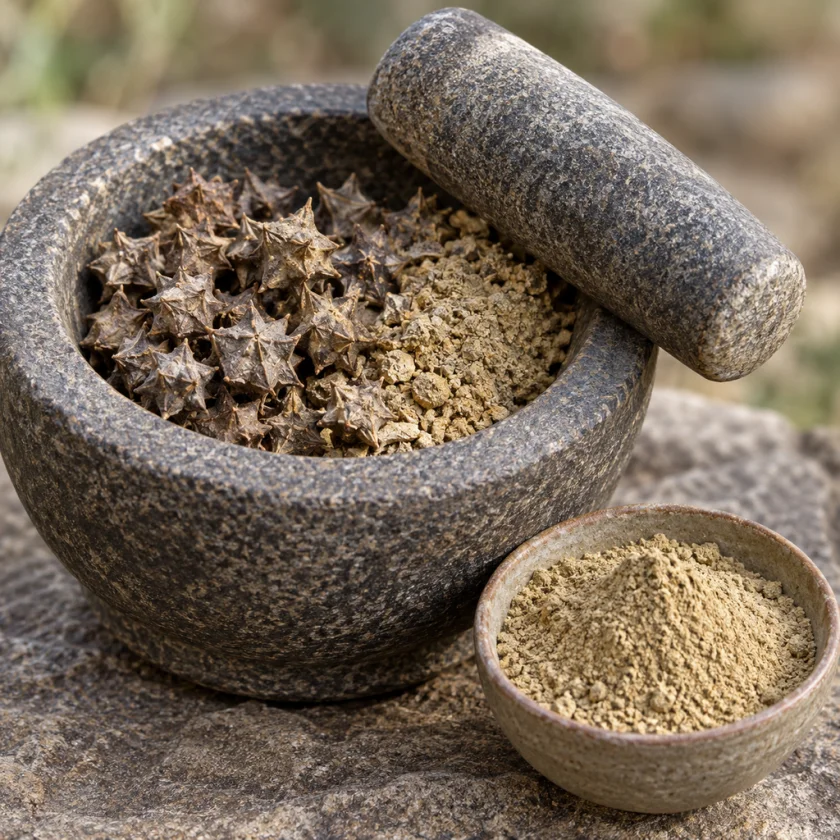
Tribulus is sold as capsules, tablets, powders, and liquid extracts, often blended into "test booster" or men's-vitality formulas. Because the raw plant varies so much, products are standardized to protodioscin or total saponins (you will see figures like "40% saponins" or a stated protodioscin percentage), and some carry independent third-party testing.
- Study doses have typically fallen in the range of about 250–1,500 mg of extract per day, often split into two or three doses with food. Doses differed widely between trials: the 2014 Akhtari trial in women gave 7.5 mg/day of extract for 4 weeks; the 2017 Kamenov trial in men gave six 250 mg tablets a day (two tablets three times daily, 1,500 mg of extract) for 12 weeks; and the 2007 rugby-league trial gave 450 mg/day.
- A dose means something only alongside its standardization — 750 mg of a well-standardized extract is not the same as 750 mg of unstandardized powder.
- "Cycling" schedules (a few weeks on, a week off) are marketing conventions, not evidence-based protocols.
- The libido trials judged results by sexual-function questionnaires — how people rated their desire and function — after four weeks (Akhtari) to twelve weeks (Kamenov).
Safety, Side Effects, and Cautions
For most healthy adults, standardized tribulus taken short-term is generally well tolerated. The most common complaints are minor stomach upset, cramping, or reflux, which often ease when the supplement is taken with food. That said, there are real safety points worth respecting:
- Rare but serious organ injury. There are case reports of severe kidney injury linked to tribulus use, including one in a previously healthy young man (Talasaz et al., 2010), as well as scattered reports of liver injury. These are uncommon, but they show that "natural" does not mean "harmless."
- Gynecomastia and hormonal effects. There are reports of breast enlargement in men (gynecomastia) associated with tribulus-containing products — an ironic outcome for something sold to boost masculinity, and another sign the hormonal claims are poorly understood.
- Adulteration and spiking. This is arguably the biggest practical risk. "T-booster" and tribulus products have been found spiked with undeclared anabolic steroids or pharmaceuticals; a good share of reported harm and failed drug tests trace back to what was added to the product, not the plant. Third-party testing is how a product is checked for added drugs.
- Medication interactions. The concerns raised are with diabetes medication (possible extra lowering of blood sugar), blood-pressure medication or diuretics (possible extra lowering of blood pressure and added fluid loss), and lithium (diuretic-type herbs can affect its clearance).
- Hormone-sensitive conditions. Given tribulus's activity at steroid and estrogen/androgen receptors in animal models, the research raises a theoretical concern for people with hormone-sensitive conditions (for example certain breast or prostate conditions), and the gynecomastia reports above show that hormonal effects can occur in people.
- Pregnancy and breastfeeding. Animal data raise reproductive-toxicity and uterine-stimulant concerns, and there is no adequate safety evidence in pregnancy; the same concerns cover trying to conceive and breastfeeding.
One more note from the veterinary literature: livestock that graze heavily on the whole tribulus plant can develop photosensitivity and neurological signs ("staggers"). That is not the same as taking a measured human extract, but it is a reminder that the plant is bioactive and not a harmless salad green.
The Honest Bottom Line
The main finding: as a testosterone or muscle booster, tribulus did not work in the controlled trials. The men most likely to buy it (lifters, athletes, guys chasing higher T) are exactly the men in whom the trials found no benefit.
Where tribulus earns a fairer hearing is libido. Several randomized trials — strongest in women with low desire, more mixed in men — suggest it may modestly improve sexual desire and function (in one trial in women, free testosterone rose as well). The points the trials and safety reports raise for that use are:
- product quality — third-party testing and standardization to protodioscin are aimed at the adulteration and variability problems;
- the size of the effect — a gentle effect for some people in the trials, not a drug-strength one;
- pregnancy, breastfeeding and hormone-sensitive conditions, where animal data raise reproductive and hormonal concerns and there is no adequate human safety evidence; and
- diabetes and blood-pressure medication, whose effect tribulus may add to — possible extra lowering of blood sugar and blood pressure.
For more energy, more muscle or better testosterone, the factors that move those needles are the basics — sleep, resistance training, protein, managing body fat, and correcting real deficiencies — rather than a "test booster" whose headline claim the science does not support.
Key Research Papers
- Neychev VK, Mitev VI. The aphrodisiac herb Tribulus terrestris does not influence the androgen production in young men. Journal of Ethnopharmacology. 2005;101(1-3):319-323. — Controlled study in healthy young men found no change in testosterone, androstenedione or luteinizing hormone. — doi:10.1016/j.jep.2005.05.017
- Rogerson S, Riches CJ, Jennings C, et al. The effect of five weeks of Tribulus terrestris supplementation on muscle strength and body composition during preseason training in elite rugby league players. Journal of Strength and Conditioning Research. 2007;21(2):348-353. — In elite athletes, tribulus produced no gain in strength or body composition and no change in the urinary testosterone/epitestosterone ratio over placebo. — doi:10.1519/R-18395.1
- Antonio J, Uelmen J, Rodriguez R, Earnest C. The effects of Tribulus terrestris on body composition and exercise performance in resistance-trained males. International Journal of Sport Nutrition and Exercise Metabolism. 2000;10(2):208-215. — No meaningful effect on body composition or performance versus placebo in trained men. — doi:10.1123/ijsnem.10.2.208
- Qureshi A, Naughton DP, Petroczi A. A systematic review on the herbal extract Tribulus terrestris and the roots of its putative aphrodisiac and performance enhancing effect. Journal of Dietary Supplements. 2014;11(1):64-79. — Systematic review: reputation not matched by reliable human hormonal or performance effects. — doi:10.3109/19390211.2014.887602
- Neychev V, Mitev V. Pro-sexual and androgen enhancing effects of Tribulus terrestris L.: Fact or Fiction. Journal of Ethnopharmacology. 2016;179:345-355. — Balanced review concluding a genuine testosterone-boosting effect in healthy men is not established. — doi:10.1016/j.jep.2015.12.055
- Pokrywka A, Obmiński Z, Malczewska-Lenczowska J, et al. Insights into supplements with Tribulus terrestris used by athletes. Journal of Human Kinetics. 2014;41:99-105. — Review of athlete use; no convincing ergogenic benefit, plus contamination concerns. — doi:10.2478/hukin-2014-0037
- Ganzera M, Bedir E, Khan IA. Determination of steroidal saponins in Tribulus terrestris by reversed-phase HPLC and evaporative light scattering detection. Journal of Pharmaceutical Sciences. 2001;90(11):1752-1758. — Documents how much protodioscin and saponin content varies across tribulus material. — doi:10.1002/jps.1124
- Vale FBC, Zanolla Dias de Souza K, Rezende CR, Geber S. Efficacy of Tribulus terrestris for the treatment of premenopausal women with hypoactive sexual desire disorder: a randomized, double-blinded, placebo-controlled trial. Gynecological Endocrinology. 2018;34(5):442-445. — Randomized trial: improved sexual desire and function in premenopausal women. — doi:10.1080/09513590.2017.1409711
- Akhtari E, Raisi F, Keshavarz M, et al. Tribulus terrestris for treatment of sexual dysfunction in women: randomized double-blind placebo-controlled study. DARU Journal of Pharmaceutical Sciences. 2014;22(1):40. — Reported improvements in desire, arousal, lubrication, and satisfaction versus placebo. — doi:10.1186/2008-2231-22-40
- Kamenov Z, Fileva S, Kalinov K, Jannini EA. Evaluation of the efficacy and safety of Tribulus terrestris in male sexual dysfunction — a prospective, randomized, double-blind, placebo-controlled clinical trial. Maturitas. 2017;99:20-26. — Largest male RCT; improved self-rated erectile function and desire versus placebo. — doi:10.1016/j.maturitas.2017.01.011
- Santos CA Jr, Reis LO, Destro-Saade R, Luiza-Reis A, Fregonesi A. Tribulus terrestris versus placebo in the treatment of erectile dysfunction: a prospective, randomized, double-blind study. Actas Urológicas Españolas. 2014;38(4):244-248. — Randomized trial in men with erectile dysfunction found tribulus no better than placebo. — doi:10.1016/j.acuro.2013.09.014
- Talasaz AH, Abbasi MR, Abkhiz S, Dashti-Khavidaki S. Tribulus terrestris-induced severe nephrotoxicity in a young healthy male. Nephrology Dialysis Transplantation. 2010;25(11):3792-3793. — Case report of serious kidney injury linked to tribulus use. — doi:10.1093/ndt/gfq457
Connections
- All Herbs
- Maca
- Epimedium (Horny Goat Weed)
- Ashwagandha
- Fenugreek
- Ginseng
- Arginine
- Zinc
- Reproductive Medicine
- Urology
- Endocrinology
- Conditions on this site that reference this page: Infertility · Perimenopause · Benign Prostatic Hyperplasia · Erectile Dysfunction · Low Testosterone and Testosterone Replacement Therapy (TRT) · Male Infertility