Muira Puama

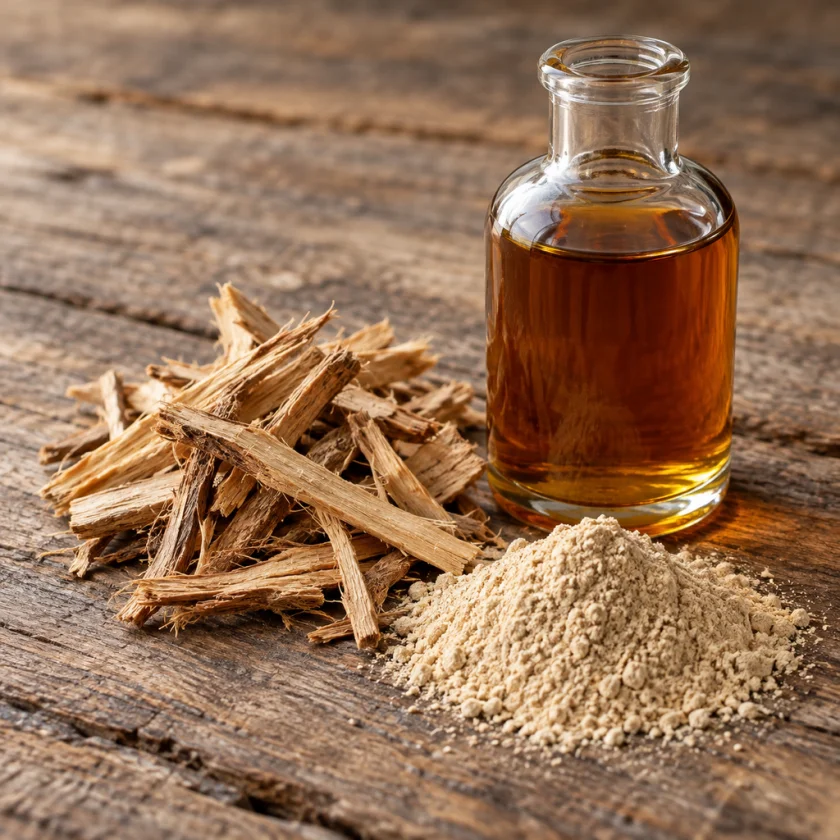
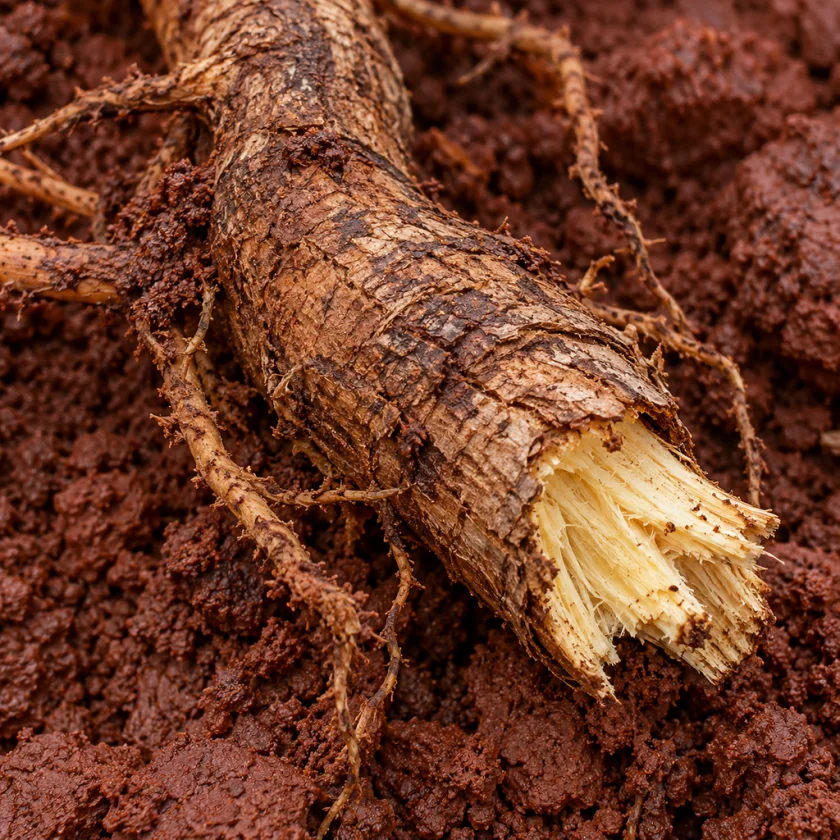
Muira puama (Ptychopetalum olacoides) is a small shrub or tree from the Amazon rainforest whose bark, root, and woody stem have been brewed and steeped for generations in Brazil. Its nickname — "potency wood" — tells you most of what you need to know about its reputation: it is one of the classic South American aphrodisiac and "nerve tonic" herbs, taken for low libido, tiredness, and a general sense of being run down. It has a genuinely interesting story, and there is real laboratory pharmacology behind it. But it is also a good example of a herb where tradition and marketing run well ahead of the human evidence, so this page tries to be honest about both. We will cover what the plant actually is, where its aphrodisiac fame comes from, what chemists have found inside it, what the studies really show (and do not show), the traditional uses beyond the bedroom, how people prepare and use it, its safety, how to buy it wisely, and a plain bottom line.
Table of Contents
What Muira Puama Is
Muira puama is the common name for Ptychopetalum olacoides Bentham, a plant in the family Olacaceae that grows in the Amazon basin, especially in Brazil. It is a modest woody plant — usually described as a shrub or small tree — and the parts used medicinally are the bark, root, and woody stem. You will also see the closely related species Ptychopetalum uncinatum sold under the same name, and older writings sometimes use the spelling "muirapuama" or the Brazilian name marapuama.
Indigenous peoples of the Amazon used the wood as a remedy long before it reached the wider world. It caught the attention of European herbalists in the late nineteenth century, was written up in Brazilian and European pharmacy references, and eventually earned a place in herbal compendiums such as the British Herbal Pharmacopoeia. Throughout that history its headline use has stayed the same: a stimulant, restorative "tonic" reputed to restore sexual vigor and lift fatigue. It is worth keeping the plant's identity clearly in mind, because — as we will see — the fact that more than one species and more than one plant part get sold as "muira puama" is part of why the herb is hard to study and hard to standardize.
The Aphrodisiac and Tonic Reputation
Muira puama's fame rests on three overlapping traditional claims. The first and loudest is as an aphrodisiac — a remedy for low sexual desire and for erectile difficulty in men, and (more recently marketed) for low libido in women. The second is as a nerve tonic: a herb thought to steady and strengthen the nervous system, sharpen a tired mind, and ease "nervous exhaustion." The third is as an anti-fatigue tonic or adaptogen-style herb — something taken to push back against everyday tiredness, stress, and low mood.
These three ideas are really one idea in traditional terms: muira puama was seen as a general restorative for a depleted, run-down person, with sexual vitality treated as one visible sign of overall vigor. That framing matters, because it shapes both how the herb is sold today (usually in "male performance" and "energy" blends) and how researchers have chosen to study it — much of the modern laboratory work looks at the brain and stress rather than at erections directly. Reputation is not evidence, though, and the next sections separate the folklore from what has actually been measured.
What Is Inside It
Chemical studies of the bark and root have turned up a mixture of fat-loving (lipophilic) compounds rather than one single "active ingredient." Reported constituents include:
- Plant sterols such as beta-sitosterol and campesterol — common plant compounds that can interact with hormone and cholesterol pathways in minor ways.
- Lupeol, a lupane-type triterpene with anti-inflammatory and antioxidant activity in laboratory studies (found in many plants, not unique to muira puama).
- Free fatty acids and their esters, including long-chain acids such as behenic and lignoceric acid, which make up a large share of the woody material.
- A volatile (essential) oil that gives the wood its aroma, along with a coumarin and tannins.
- An aromatic alkaloid reported as "muirapuamine," the compound the plant is sometimes said to be named for.
It is important to be honest here: identifying a compound is not the same as knowing it does anything useful at the doses a person takes. No single constituent has been convincingly tied to the herb's reputed sexual or tonic effects in humans. The practical lesson from the chemistry is a different one — because so many of these compounds are oily and poorly soluble in water, a quick water tea may not extract much of them, which comes up again when we talk about preparation.
What the Evidence Actually Shows
This is the section that matters most, so here it is plainly: the case for muira puama rests mostly on tradition and reported use, on animal experiments, and on an uncontrolled human study of a combination product. There is no large, well-designed, placebo-controlled trial of muira puama on its own for sexual function or anything else. Let us walk through what does exist.
Animal and laboratory work (the strongest part)
The most rigorous research comes from Brazilian pharmacology groups who studied an ethanol extract of the plant in rodents and brain tissue. Across these studies, muira puama extract showed anticholinesterase activity (it slowed the breakdown of acetylcholine, a memory-related brain chemical), improved memory retrieval in young and aging mice, produced antidepressant-like and anti-stress effects in standard behavioral tests, and protected brain-slice tissue from oxygen-and-glucose deprivation. One study even reported that the extract eased cognitive decline in a mouse model of Alzheimer-type damage. Taken together, this is a genuinely interesting body of work that gives some mechanistic support to the old "nerve tonic" idea. But every one of these findings is in animals or isolated tissue — not in people — and animal results routinely fail to carry over to humans.
Human observations (weak and mostly uncontrolled)
Muira puama's reputation for men comes from traditional and practitioner use: herbalists describe giving it to men with low libido or erectile complaints, and users report improvement. These are reports, not controlled observations — no placebo group, no randomization, no blinding — so they cannot separate a real drug effect from expectation, natural fluctuation, and the placebo response that surrounds any "potency" remedy. The best-known published human study, described next, was in women and tested a blend.
The ginkgo problem
There is a further catch that is often glossed over in marketing: the best-known human study tested muira puama inside a combination product, not by itself. It was a 2000 study of a muira puama–ginkgo blend (muira puama with Ginkgo biloba) in 202 healthy women complaining of low sex drive. It had no control group: the women rated their sex lives before and after one month on the blend, and 65% had higher average total scores afterwards. Even if such a blend helps, you cannot credit muira puama specifically, because any benefit could come from the ginkgo or the mixture as a whole. When a herb's human track record is built on combination formulas, its solo effect remains essentially unproven.
What this adds up to
So the honest summary is a layered one: promising traditional use, backed by real but animal-only pharmacology, plus human data that is either uncontrolled or entangled with other herbs. That is enough to keep muira puama scientifically interesting and to justify careful further study. It is not enough to call it a proven treatment for erectile dysfunction, low libido, fatigue, or low mood.
Traditional Uses Beyond Libido
Although "potency wood" is the label that stuck, Amazonian and later European herbalists used muira puama for more than sex. Traditional uses recorded over the years include:
- Nervous and mental exhaustion — as a tonic for people feeling depleted, forgetful, or "burned out," which lines up with the modern animal work on memory and stress.
- Rheumatism and aching joints or muscles — sometimes taken internally, sometimes applied as an alcohol-based wash or bath.
- Digestive complaints — historically used for upset stomach, poor appetite, and dysentery-type illness.
- Menstrual discomfort and general debility — folded into its broad "restorative" role.
These uses come from tradition and older herbal texts rather than from clinical trials, so they are historical context, not tested treatments. They are useful mainly for understanding why the herb was valued as an all-purpose strengthener rather than a narrow sexual remedy.
Forms and How It Is Prepared
You will find muira puama sold as dried bark or wood chips, powdered capsules, and liquid tinctures or fluid extracts. How it is prepared genuinely matters because of the chemistry described above.
- Decoction (boiled tea). The traditional method is to simmer the bark or wood in water. But since many of the herb's compounds are oily and poorly water-soluble, a brief steeping likely pulls out very little of them. Traditional and modern practice therefore leans toward prolonged boiling to coax more material into the water.
- Alcohol tincture or extract. Because alcohol dissolves the fat-loving constituents far better than water does, an alcohol-based extract is generally considered a more sensible way to capture whatever actives the plant offers. This matches its long folk use as a wood soaked in spirits.
- Capsules. Convenient and common, though the amount and type of active material depends entirely on how the raw herb was processed.
On dosing, the plain fact is that there is no established, evidence-based effective dose. Product labels commonly suggest something on the order of one to two grams of dried bark, or a smaller amount of concentrated extract, taken daily. Those figures come from tradition and manufacturers, not from dose-finding trials, so nothing shows that a larger dose works better.
Safety, Side Effects, and Cautions
Muira puama has a long history of folk use and, in the short studies and traditional reports available, is generally described as well tolerated with few reported side effects. That is reassuring as far as it goes. But it comes with an important caveat: there is very little formal toxicology or long-term safety data in humans, so "well tolerated in tradition" is not the same as "proven safe." With that in mind:
- Heart and blood pressure. The herb has a stimulant, "tonic" reputation and is frequently sold alongside other stimulant botanicals, and there is no human data on its effects on the heart or blood pressure — the gap that matters for people with heart disease, arrhythmia, or high blood pressure, and for anyone on cardiac or blood-pressure medication.
- Pregnancy and breastfeeding. There is no safety data on muira puama during pregnancy or while nursing. For blends that contain ginkgo, the European Medicines Agency's ginkgo monograph lists ginkgo extract as contraindicated in pregnancy.
- Medication interactions. Because muira puama is so often combined with Ginkgo biloba, the European Medicines Agency's ginkgo monograph (EMA/HMPC/321097/2012) states that ginkgo preparations might increase susceptibility to bleeding, that the effect of anticoagulants (such as warfarin) and antiplatelet drugs (such as clopidogrel and aspirin) taken alongside may be influenced, and that ginkgo is stopped as a precaution 3 to 4 days before surgery. The animal antidepressant-like activity also raises a theoretical caution about combining it with prescription antidepressants. The full ingredient list of a blend shows which of these apply.
- Underlying conditions. As with any tonic herb, new symptoms such as sexual difficulty or persistent fatigue can signal treatable conditions that a herb will not fix.
Quality and Identity
One of the biggest practical problems with muira puama is not safety but identity and consistency. The raw material is wild-harvested in the Amazon, two different species (P. olacoides and P. uncinatum) are both sold under the name, and products differ in which plant part is used and how it is extracted. Misidentification and adulteration have been real concerns in the herbal trade, and a water-extracted capsule and an alcohol tincture may deliver very different amounts of active material even at the same labeled weight.
Products differ in what they disclose: some name the species and plant part, describe their extraction method, or carry independent identity or quality testing; others do not. Vague "proprietary blend" products that hide the muira puama dose among a dozen other ingredients are exactly the formulas that make it impossible to know what is actually being taken.
The Honest Bottom Line
Muira puama is a traditional Amazonian aphrodisiac and "nerve tonic" with a rich history, an intriguing pharmacology, and weak human evidence. The laboratory work — anticholinesterase activity, memory and neuroprotective effects, anti-stress and antidepressant-like actions in animals — gives real scientific texture to the old "tonic for a depleted person" idea. But the human data is thin: the sexual-function reports are uncontrolled, and the best-known published human study tested a muira puama–ginkgo blend, where ginkgo muddies the picture. There is no rigorous trial of muira puama alone.
What does that mean for a real person? Muira puama is a low-key traditional herb that people take for libido and energy. Alcohol extracts capture more of its oily constituents than quick water teas, there is no safety data for pregnancy or nursing, and the cautions above cover heart and blood-pressure conditions and interacting medicines. It is not a proven remedy, and persistent sexual difficulty, fatigue, or low mood can each have important, treatable underlying causes that a herb does not address.
Key Research Papers
- Siqueira IR, Lara DR, Silva D, Gaieski FS, Nunes DS, Elisabetsky E. Psychopharmacological properties of Ptychopetalum olacoides Bentham (Olacaceae). Pharmaceutical Biology. 1998;36(5):327–334. — early behavioral characterization of the extract in mice, describing a stimulant, tonic-like central profile. — doi:10.1076/phbi.36.5.327.4657
- da Silva AL, Bardini S, Nunes DS, Elisabetsky E. Anxiogenic properties of Ptychopetalum olacoides Benth. (Marapuama). Phytotherapy Research. 2002;16(3):223–226. — an ethanol extract (30–300 mg/kg) reduced exploratory behaviour in mice without affecting movement or coordination; the authors found this comparable to an anxiety-inducing drug and read it as an anxiogenic (anxiety-producing) effect. — doi:10.1002/ptr.825
- Siqueira IR, Fochesatto C, da Silva AL, Nunes DS, Battastini AM, et al. Ptychopetalum olacoides, a traditional Amazonian "nerve tonic," possesses anticholinesterase activity. Pharmacology Biochemistry and Behavior. 2003;75(3):645–650. — the extract inhibited acetylcholinesterase in the brain, a plausible mechanism behind the "nerve tonic" reputation. — doi:10.1016/S0091-3057(03)00113-8
- da Silva AL, Piato AL, Bardini S, Netto CA, Nunes DS, Elisabetsky E. Memory retrieval improvement by Ptychopetalum olacoides in young and aging mice. Journal of Ethnopharmacology. 2004;95(2–3):199–203. — the extract improved recall in both young and aged mice. — doi:10.1016/j.jep.2004.07.019
- Siqueira IR, Cimarosti H, Fochesatto C, Nunes DS, Salbego C, et al. Neuroprotective effects of Ptychopetalum olacoides Bentham (Olacaceae) on oxygen and glucose deprivation induced damage in rat hippocampal slices. Life Sciences. 2004;75(15):1897–1906. — protected brain tissue from a stroke-like insult in the laboratory. — doi:10.1016/j.lfs.2004.06.001
- da Silva AL, Piato AL, Ferreira JG, Martins BS, Nunes DS, Elisabetsky E. Promnesic effects of Ptychopetalum olacoides in aversive and non-aversive learning paradigms. Journal of Ethnopharmacology. 2007;109(3):449–457. — memory-enhancing effects across several learning tasks in mice. — doi:10.1016/j.jep.2006.08.022
- Piato AL, Rizon LP, Martins BS, Nunes DS, Elisabetsky E. Antidepressant profile of Ptychopetalum olacoides Bentham (Marapuama) in mice. Phytotherapy Research. 2009;23(4):519–524. — antidepressant-like activity in standard rodent behavioral models. — doi:10.1002/ptr.2664
- Piato AL, Detanico BC, Linck VM, Herrmann AP, Nunes DS, Elisabetsky E. Anti-stress effects of the "tonic" Ptychopetalum olacoides (Marapuama) in mice. Phytomedicine. 2010;17(3–4):248–253. — buffered stress responses in mice, supporting an adaptogen-style framing. — doi:10.1016/j.phymed.2009.07.001
- Figueiró M, Ilha J, Pochmann D, Porciúncula LO, Xavier LL, et al. Acetylcholinesterase inhibition in cognition-relevant brain areas of mice treated with a nootropic Amazonian herbal (Marapuama). Phytomedicine. 2010;17(12):956–962. — located the extract's cholinesterase-inhibiting action in memory-relevant brain regions. — doi:10.1016/j.phymed.2010.03.009
- Figueiró M, Ilha J, Linck VM, Herrmann AP, Nunes DS, et al. The Amazonian herbal Marapuama attenuates cognitive impairment and neuroglial degeneration in a mouse Alzheimer model. Phytomedicine. 2011;18(4):327–333. — eased cognitive decline in a mouse model of Alzheimer-type brain damage. — doi:10.1016/j.phymed.2010.07.013
- Bucek EU, Fournier G, Dadoun H. Volatile constituents of Ptychopetalum olacoides root oil. Planta Medica. 1987;53(2):231. — chemical analysis of the aromatic volatile oil from the root. — doi:10.1055/s-2006-962688
- Waynberg J, Brewer S. Effects of Herbal vX on libido and sexual activity in premenopausal and postmenopausal women. Advances in Therapy. 2000;17(5):255–262. — an uncontrolled before-and-after study of a muira puama–ginkgo combination in 202 women over one month; useful to note precisely because it shows how hard it is to credit muira puama alone. — doi:10.1007/BF02853164
Connections
- All Herbs
- Maca
- Tribulus
- Epimedium
- Damiana
- Ginkgo Biloba
- Ashwagandha
- Ginseng
- Reproductive Medicine
- Infertility
- Conditions on this site that reference this page: Myalgic Encephalomyelitis / Chronic Fatigue Syndrome · Erectile Dysfunction · Low Testosterone and Testosterone Replacement Therapy (TRT)