Damiana
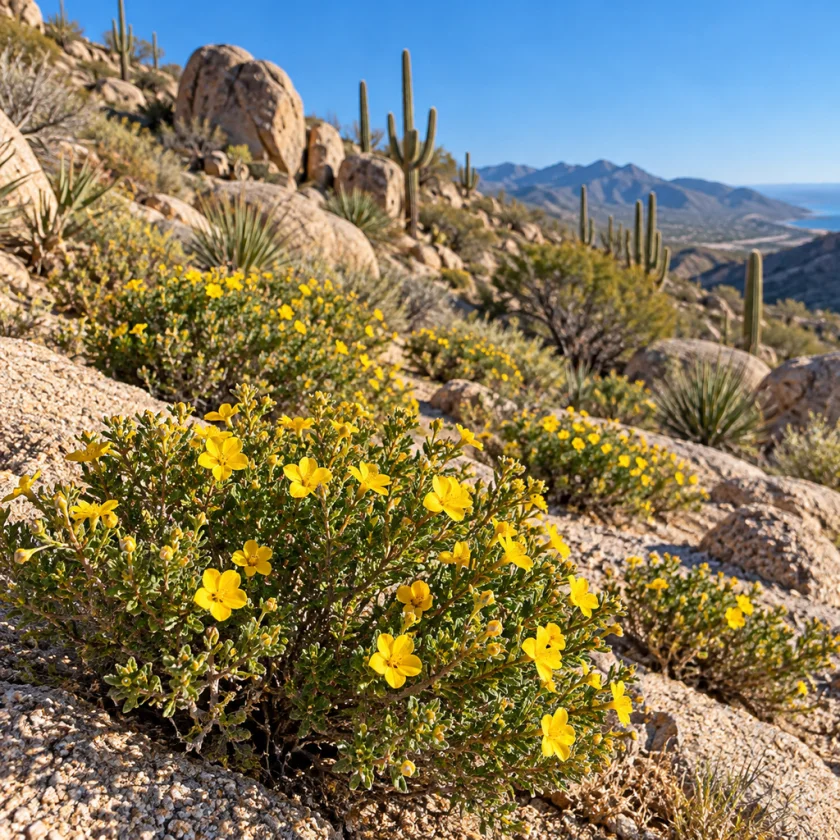
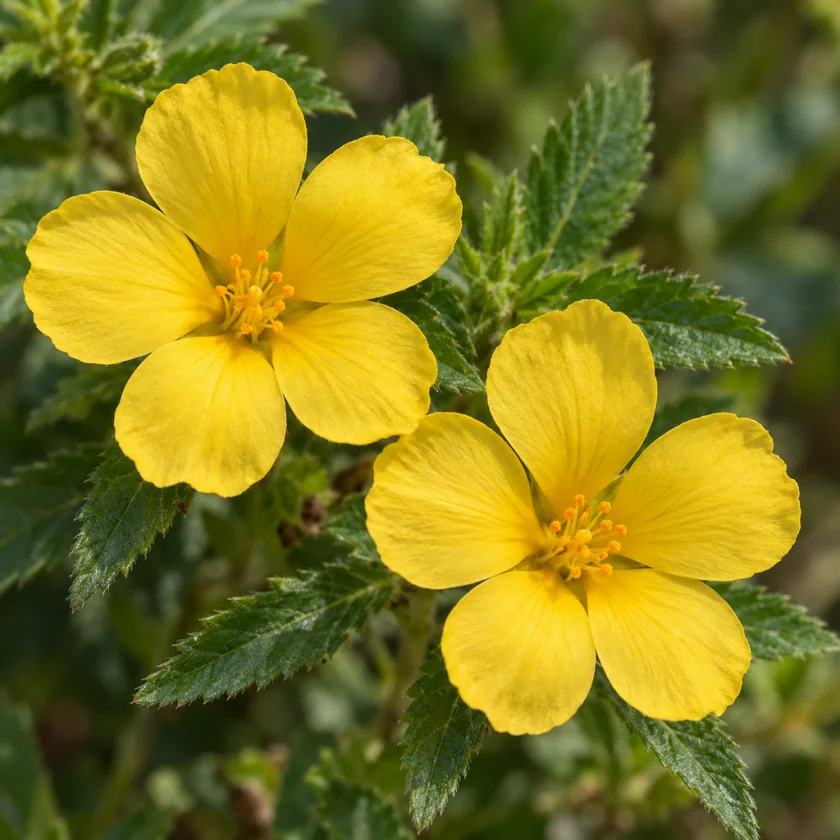
Damiana (Turnera diffusa) is a small, aromatic shrub native to Mexico, the American Southwest, Central America, and the Caribbean. For centuries it has carried a colorful reputation as an aphrodisiac and a gentle lifter of mood, and to this day it flavors a well-known Mexican liqueur and turns up in "libido" and "relaxation" teas around the world. Its yellow flowers and pleasantly bittersweet, slightly figgy leaves have made it a fixture of traditional Mexican herbalism. This page looks at what damiana actually is, what people have long used it for, what is in it, and — most importantly — what modern research does and does not show. The honest short version is that damiana is a pleasant, low-risk traditional herb whose popularity has run well ahead of its evidence: most of the promising findings come from animal studies and folklore, not from rigorous trials in people. We will treat it warmly and take it seriously, while being clear-eyed about how much we really know.
Table of Contents
- What Damiana Is
- A Traditional Mexican Remedy
- The Aphrodisiac Reputation
- The Active Compounds
- What the Evidence Shows — an Honest Look
- Damiana, Mood, and Anxiety
- Damiana and Blood Sugar
- Forms and How It Is Used
- Safety and Cautions
- The Honest Bottom Line
- Key Research Papers
- Connections
- Featured Videos
What Damiana Is
Damiana is the common name for Turnera diffusa, a low, branching shrub in the passionflower family (Passifloraceae; older texts place it in its own family, Turneraceae). You may also see it under the older botanical name Turnera aphrodisiaca — a name that tells you everything about the reputation it acquired. It grows in dry, sunny, rocky country: Texas and the desert Southwest, across much of Mexico, and down into Central America and the Caribbean. The plant rarely tops a meter in height, bears small, toothed, aromatic leaves and cheerful yellow flowers, and gives off a distinctive scent when the leaves are crushed.
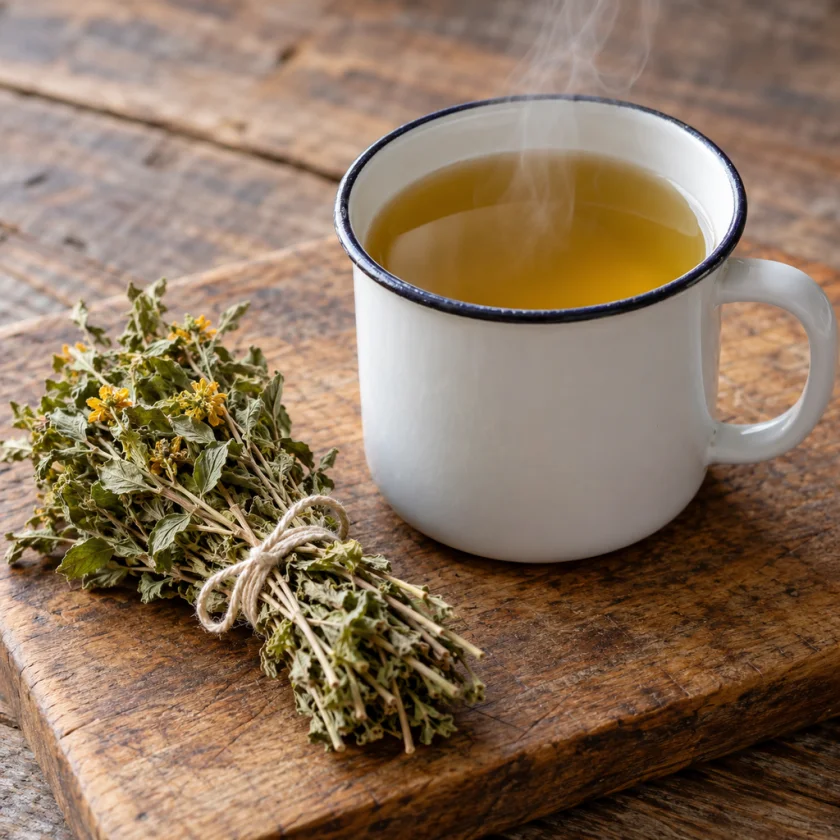
The leaves are the part used. Dried and brewed, they make a fragrant, slightly bitter, faintly fig-like tea. In its home range damiana has long been more than a medicine — it is a social and culinary plant, most famously as the flavoring in a traditional Baja California liqueur that some locals cheekily claim was the original "margarita" base before lime and triple sec took over. That blend of folk medicine, ritual, and gentle pleasure is a big part of why the herb has stayed popular for so long.
A Traditional Mexican Remedy
Damiana is one of the classic herbs of Mexican and Mesoamerican folk medicine, and traditional use is where nearly all of its reputation comes from. Historically it was reached for as:
- An aphrodisiac — by far its flagship folk use, for both men and women, said to kindle desire and improve sexual vigor.
- A mood-lifter and mild nerve tonic — taken to ease low mood, nervousness, and the flat, worn-out feeling of stress or convalescence.
- A digestive and general "tonic" — a bitter, aromatic tea to settle the stomach, encourage appetite, and act as a gentle overall pick-me-up.
- A traditional remedy for a grab-bag of complaints — folk records mention it for headaches, bed-wetting, menstrual and menopausal discomfort, and mild urinary troubles (the last of these overlapping with related bearberry-type "urinary antiseptic" herbs).
It is worth being honest about how traditions work. A long history of use tells us a plant is culturally important, broadly tolerated, and worth studying — it does not by itself prove that the plant does what tradition claims. Many of damiana's traditional uses have never been tested properly in people. That does not make them wrong; it makes them unproven. Holding both ideas at once — respect for the tradition, honesty about the evidence — is the fairest way to approach an herb like this.
The Aphrodisiac Reputation
If damiana is famous for one thing, it is as an aphrodisiac. The reputation is old, widespread, and remarkably durable: the plant literally carried the species epithet aphrodisiaca for years, and it remains a headline ingredient in countless "libido," "passion," and "sexual wellness" blends sold today.
Where does that reputation stand up? Mostly in the laboratory and the animal room, not yet in the clinic. In several rodent studies, extracts of Turnera diffusa increased measures of sexual behavior. A 1999 study found the extract had no effect on sexually potent rats but improved performance in sexually sluggish or impotent ones (Arletti 1999), and a 2009 study, which tested only sexually exhausted males, found it helped them recover sexual behavior (Estrada-Reyes 2009). In other words, the herb looked less like a switch that cranks desire past normal and more like something that may help restore flagging function. Later work suggested a plausible mechanism: in sexually sluggish rats, blocking nitric oxide production prevented the pro-sexual effect, and the authors concluded that the nitric oxide pathway was involved mainly in the brain (“mainly at central level”) (Estrada-Reyes 2013). Chemists have also found that damiana's flavonoids can inhibit aromatase (the enzyme that converts testosterone to estrogen) in test-tube studies, another biologically interesting hint.
All of that is genuinely intriguing — and all of it is preclinical. Rats are not people, test-tube enzyme effects are not bedroom outcomes, and a plausible mechanism is a reason to run a good human trial, not a substitute for one. Rigorous, placebo-controlled trials of damiana on its own in humans are essentially missing. So the fair statement is: damiana's aphrodisiac reputation is deeply rooted and supported by suggestive animal data, but it has not been confirmed in people. It is a traditional herb, not a proven remedy.
The Active Compounds
Damiana leaf is a chemically busy little plant. Phytochemical studies have catalogued a range of constituents, and while no single "magic bullet" has emerged, a few groups stand out:
- Flavonoids — including apigenin, along with other flavones and glycosides. Apigenin is a well-studied plant compound with calming, mildly anxiolytic activity in animal models, and researchers have pointed to it as a likely contributor to damiana's traditional mood effects. Flavonoids are also the constituents implicated in the test-tube aromatase inhibition mentioned above.
- Essential (volatile) oil — the aromatic fraction responsible for damiana's characteristic smell and much of its "tonic," slightly warming character. It is a complex mixture of terpenes and other volatiles.
- Arbutin — a hydroquinone glycoside also found in bearberry (uva-ursi). Arbutin is the compound behind the old "urinary antiseptic" reputation of damiana and related herbs, and it is why very large, chronic doses deserve a little caution (see Safety).
- Tannins and bitter principles — astringent compounds that give the tea its bite and underlie its digestive-tonic use. Tannins can also bind minerals such as iron in the gut.
- A mild "stimulating tonic" character — damiana has long been described as gently uplifting or stimulating. Its subtle pick-me-up reputation is usually put down to the essential oil and overall aromatic-bitter profile, but a 2009 chemical analysis also found caffeine among the main compounds of an active damiana extract, alongside arbutin and flavonoids (Estrada-Reyes 2009). The evidence for a real stimulant effect in people is thin; this is folk character more than pharmacology.
What the Evidence Shows — an Honest Look
Here is the heart of the matter, stated plainly: damiana's popularity outstrips its evidence. That is not a knock on the plant — it is simply where the science sits.
What we have is:
- Animal studies showing pro-sexual effects (in sexually exhausted and in sexually sluggish male rats), anxiolytic- and antidepressant-like effects, and blood-sugar-lowering activity. These are real, published findings and they are the strongest science damiana has.
- Laboratory and chemistry work identifying the constituents above and plausible mechanisms (nitric-oxide involvement, aromatase inhibition, apigenin's calming activity).
- A handful of human trials of multi-herb supplements that contain damiana — for example, a multi-ingredient L-arginine, ginseng, ginkgo and damiana supplement with added vitamins and minerals: in a 2001 placebo-controlled trial of 77 women, 73.5% of those taking it reported improved satisfaction with their overall sex life after 4 weeks, against 37.2% on placebo (Ito 2001). The catch is fundamental: when a product contains five or six active ingredients, there is no way to tell how much (if any) of the benefit came from the damiana. It could be the arginine, the ginseng, the ginkgo, the placebo response, or the combination.
What we largely lack is the thing that would actually settle the question: well-designed, placebo-controlled, randomized trials of damiana alone in humans, at defined doses, measuring real-world outcomes like desire, mood, or sexual satisfaction. Until those exist, every confident health claim about damiana — on any bottle, in any article — is running ahead of the data. The most defensible reading of the evidence is: promising in animals, mechanistically interesting, culturally beloved, and unproven in people. That is a perfectly respectable place for a traditional herb to be; it just is not the same as "clinically proven," and anyone who tells you otherwise is overselling.
Damiana, Mood, and Anxiety
After the aphrodisiac reputation, damiana is best known as a gentle mood-lifter and calmer of nerves — the herb you sip to feel a little lighter and less tightly wound. This use also has some laboratory backing. In rodent models of anxiety, damiana (studied under the name Turnera aphrodisiaca) has shown anxiolytic-like effects, and researchers traced much of that activity to its flavonoid apigenin, a compound with well-documented calming properties. Other animal work has reported antidepressant-like effects.
As with everything else about this plant, the honest caveat is the same: these are animal and mechanistic studies, not human trials. There is no good clinical evidence that damiana treats diagnosed anxiety or depression, and it has not been tested as a treatment for either. What can be said fairly is that a warm cup of damiana tea is a pleasant, low-risk ritual that many people find mildly relaxing, and that the herb contains constituents with plausible calming activity. People who find it helps them unwind describe a comforting traditional tea, not a medicine for a mental-health condition. Long-lasting low mood or anxiety is a medical condition in its own right, and thoughts of suicide or self-harm are an emergency sign that crisis lines and hospitals treat as urgent.
Damiana and Blood Sugar
One thread of research that gets less attention than the aphrodisiac story, but matters more for safety, is damiana's effect on blood sugar. In a 1998 screening of 28 plants used in Mexico against diabetes, given the traditional way to rabbits with temporarily raised blood sugar, Turnera diffusa was one of eight that significantly lowered the blood-sugar peak and/or the area under the glucose curve (Alarcon-Aguilar 1998).
This is a double-edged finding. On one hand, it is a plausible avenue for future study. On the other — and this is the practical takeaway — it means damiana may lower blood sugar, which matters most for people with diabetes or on blood-sugar-lowering medication. Combining a glucose-lowering herb with insulin or drugs like sulfonylureas could, in principle, push blood sugar too low. As with the other claims, the human evidence is thin: this is a caution from animal data, not an effect proven in people.
Forms and How It Is Used
Damiana leaf is sold and used in several forms:
- Tea (infusion) — the traditional and gentlest form. Dried leaf steeped in hot water makes a fragrant, bittersweet cup. This is the way most people meet damiana and the form with the longest, safest track record.
- Tincture (liquid extract) — an alcohol-based concentrate taken by the dropperful, offering a stronger, more convenient dose.
- Capsules and tablets — powdered leaf or standardized extract, often blended with other "libido" or "relaxation" herbs. When damiana is one ingredient among many, there is no way to know what the blend's effects (or its risks) owe specifically to the damiana.
- Liqueur — damiana famously flavors a traditional Mexican liqueur, its best-known culinary and social use.
- Smoking blends — damiana leaf has a folk history of being smoked, sometimes as a mild tobacco or cannabis substitute or "relaxant." Smoke from burning any plant, herbal or not, delivers tar and irritants to the lungs and carries real respiratory risk; tea delivers the herb without the smoke.
There is no established, evidence-based "correct" dose of damiana, because the human trials that would define one have not been done. Traditional tea use — a cup or a few cups a day of a normally brewed infusion — is the traditional and best-tolerated way it is taken. Traditional use keeps the amounts modest, and larger amounts have no record of working better.
Safety and Cautions
For most healthy adults, damiana is considered safe and low-risk when used as a tea or as a food/beverage flavoring, in the modest amounts people have consumed for generations. That said, "traditional and generally safe" is not the same as "risk-free," and a few honest cautions apply:
- Blood sugar — damiana may lower blood glucose. This matters for people with diabetes or taking insulin or other blood-sugar-lowering medicines; shakiness, sweating, sudden hunger and confusion are the signs of low blood sugar (see the blood-sugar section above).
- Very high doses — very large amounts of damiana have been linked to convulsions and a "strychnine-like" picture. These involved doses far beyond what anyone gets from tea.
- Pregnancy and breastfeeding — it has a folk reputation as a reproductive and uterine-acting herb, and its safety has not been established in pregnancy or in breastfeeding — there is no safety data for either.
- Iron and mineral absorption — damiana contains tannins, which can bind iron and other minerals in the gut and reduce their absorption. For people managing low iron, the effect is smallest when strong damiana (or any tannin-rich tea) is drunk an hour or two apart from iron-rich meals or iron supplements.
- Arbutin — the arbutin in damiana releases small amounts of hydroquinone in the body. This is a theoretical concern with very large, chronic doses, not with ordinary occasional tea drinking.
- Interactions and medications — damiana's interactions with medicines have not been studied in people. The known concern is with diabetes medicines, because damiana lowered blood sugar in rabbits with raised blood sugar (see above).
None of this concerns an ordinary cup of damiana tea. Traditional use has been in reasonable amounts, not as a megadosed "supplement"; the cautions on record concern pregnancy, diabetes and very large amounts.
The Honest Bottom Line
Damiana is a lovely, aromatic, culturally rich herb with a centuries-old reputation as an aphrodisiac and gentle mood-lifter. The science, so far, is best described as promising but preliminary: animal studies show pro-sexual, calming, and blood-sugar-lowering effects; chemistry offers plausible mechanisms; and the herb appears in some multi-ingredient human supplement trials that make it impossible to credit damiana alone. What is missing is the rigorous, single-herb human evidence that would turn tradition into proof.
So the fair summary: damiana is a pleasant traditional tea whose aphrodisiac and mood reputation is folklore with suggestive animal data behind it, not a proven effect. The cautions on record concern smoking it, pregnancy, diabetes and very large amounts. As a tea, it is a low-risk, agreeable herb with a long and lively tradition — and people who find a fragrant cup relaxing describe a genuine, if modest, pleasure. It has not been shown to do more than that.
Key Research Papers
- Szewczyk K, Zidorn C. Ethnobotany, phytochemistry, and bioactivity of the genus Turnera (Passifloraceae) with a focus on damiana—Turnera diffusa. Journal of Ethnopharmacology. 2014;152(3):424–443. — the comprehensive review of damiana's traditional uses, chemistry, and pharmacology; a good honest overview of how much (and how little) is known. — doi:10.1016/j.jep.2014.01.019
- Estrada-Reyes R, Ortiz-López P, Gutiérrez-Ortíz J, Martínez-Mota L. Turnera diffusa Wild (Turneraceae) recovers sexual behavior in sexually exhausted males. Journal of Ethnopharmacology. 2009;123(3):423–429. — a key animal study: in male rats that were all sexually exhausted, damiana extract helped restore sexual behavior; its chemical analysis found caffeine, arbutin and flavonoids as the main compounds of the active extract. — doi:10.1016/j.jep.2009.03.032
- Estrada-Reyes R, Carro-Juárez M, Martínez-Mota L. Pro-sexual effects of Turnera diffusa Wild (Turneraceae) in male rats involves the nitric oxide pathway. Journal of Ethnopharmacology. 2013;146(1):164–172. — in sexually sluggish rats, blocking nitric oxide production prevented the pro-sexual effect; the authors concluded the nitric oxide pathway was involved mainly at the central (brain) level. — doi:10.1016/j.jep.2012.12.025
- Arletti R, Benelli A, Cavazzuti E, Scarpetta G, Bertolini A. Stimulating property of Turnera diffusa and Pfaffia paniculata extracts on the sexual-behavior of male rats. Psychopharmacology (Berl). 1999;143(1):15–19. — the extract had no effect on sexually potent rats but improved copulatory performance in sexually sluggish or impotent ones. — doi:10.1007/s002130050913
- Zhao J, Dasmahapatra AK, Khan SI, Khan IA. Anti-aromatase activity of the constituents from damiana (Turnera diffusa). Journal of Ethnopharmacology. 2008;120(3):387–393. — damiana flavonoids inhibited aromatase in vitro, an interesting biochemical hint (not a human outcome). — doi:10.1016/j.jep.2008.09.016
- Zhao J, Pawar RS, Ali Z, Khan IA. Phytochemical investigation of Turnera diffusa. Journal of Natural Products. 2007;70(2):289–292. — isolation and identification of 35 damiana constituents: flavonoids, terpenoids, saccharides, phenolics and cyanogenic derivatives. — doi:10.1021/np060253r
- Kumar S, Sharma A. Anti-anxiety activity studies on homoeopathic formulations of Turnera aphrodisiaca Ward. Evidence-Based Complementary and Alternative Medicine. 2005;2(1):117–119. — anxiolytic-like activity of damiana (T. aphrodisiaca is a synonym of T. diffusa) in mouse anxiety models. — doi:10.1093/ecam/neh069
- Kumar S, Madaan R, Sharma A. Pharmacological evaluation of bioactive principle of Turnera aphrodisiaca. Indian Journal of Pharmaceutical Sciences. 2008;70(6):740–744. — pointed to the flavonoid apigenin as a key anxiolytic constituent of damiana. — doi:10.4103/0250-474X.49095
- Alarcon-Aguilar FJ, Roman-Ramos R, Perez-Gutierrez S, et al. Study of the anti-hyperglycemic effect of plants used as antidiabetics. Journal of Ethnopharmacology. 1998;61(2):101–110. — animal screening of traditional antidiabetic plants including Turnera diffusa; basis for the blood-sugar caution. — doi:10.1016/S0378-8741(98)00020-8
- Avelino-Flores MDC, Cruz-López MDC, Jiménez-Montejo FE, Reyes-Leyva J. Cytotoxic activity of the methanolic extract of Turnera diffusa Willd on breast cancer cells. Journal of Medicinal Food. 2015;18(3):299–305. — a preclinical (cell-culture) study of damiana extract; interesting but not evidence of any cancer benefit in people. — doi:10.1089/jmf.2013.0055
- Ito TY, Trant AS, Polan ML. A double-blind placebo-controlled study of ArginMax, a nutritional supplement for enhancement of female sexual function. Journal of Sex & Marital Therapy. 2001;27(5):541–549. — 77 women, 4 weeks: 73.5% on the multi-ingredient supplement versus 37.2% on placebo reported improved satisfaction with their overall sex life. — PubMed PMID: 11554217
- Ito TY, Polan ML, Whipple B, Trant AS. The enhancement of female sexual function with ArginMax, a nutritional supplement, among women differing in menopausal status. Journal of Sex & Marital Therapy. 2006;32(5):369–378. — a human trial of a multi-herb supplement containing damiana (plus arginine, ginseng, ginkgo); improvements cannot be attributed to damiana alone. — doi:10.1080/00926230600834901
- Live PubMed search — damiana essential oil and phytochemistry: pubmed.ncbi.nlm.nih.gov — "Turnera diffusa essential oil" — current studies on the composition of damiana's volatile oil. — Search PubMed
- Live PubMed search — damiana human/clinical and mood evidence: pubmed.ncbi.nlm.nih.gov — "Turnera diffusa aphrodisiac OR antidepressant" — the up-to-date literature on damiana's aphrodisiac and mood claims (still overwhelmingly preclinical). — Search PubMed
Connections
- All Herbs
- Maca
- Ashwagandha
- Ginseng
- Ginkgo Biloba
- Chamomile
- Passionflower
- Lemon Balm
- Kava
- Reproductive Medicine
- Psychiatry
- Type 2 Diabetes
- Conditions on this site that reference this page: Myalgic Encephalomyelitis / Chronic Fatigue Syndrome · Menopause · Erectile Dysfunction