Damiana and Libido: The Aphrodisiac Claim Examined
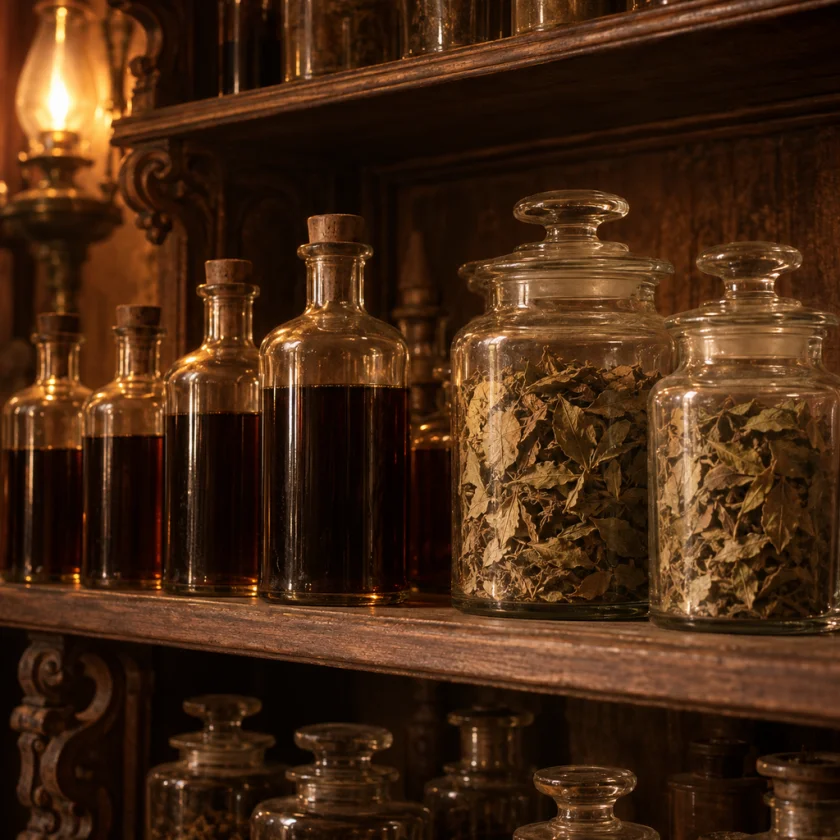
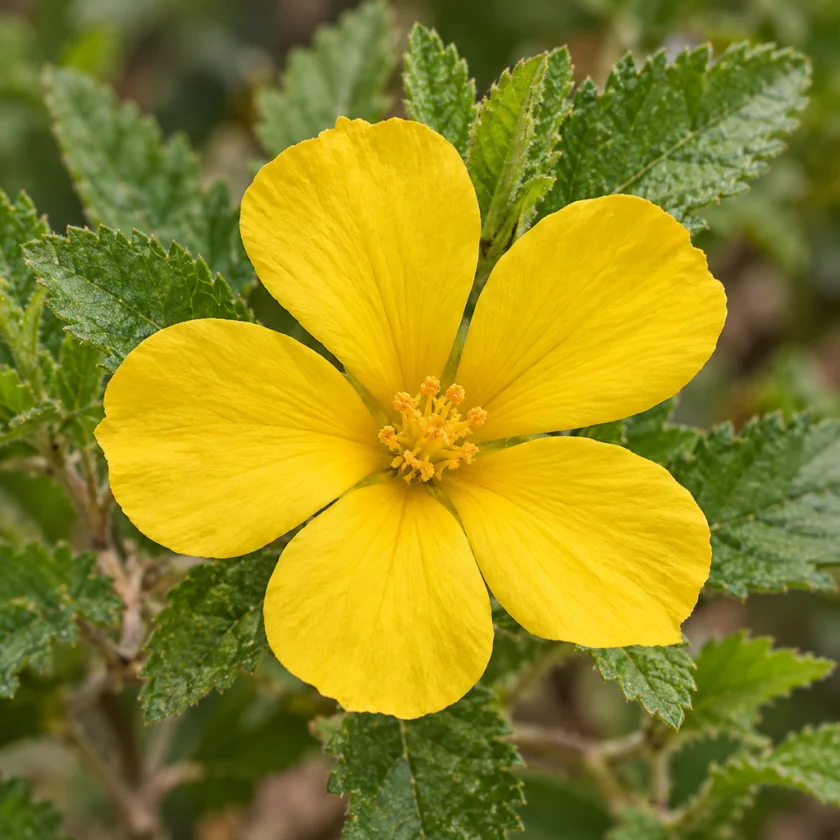
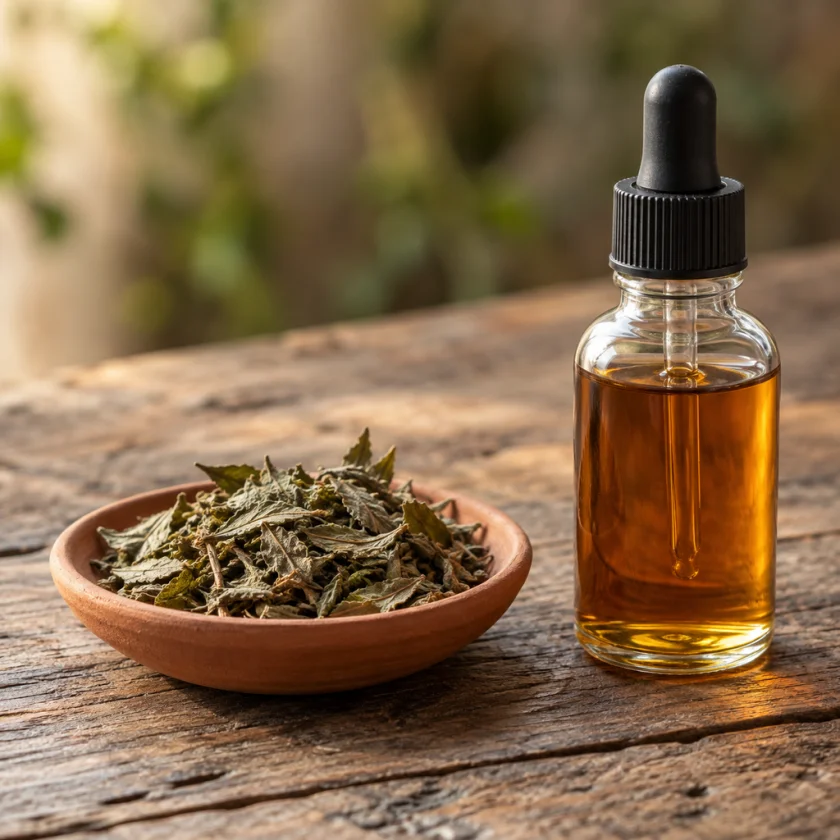
Almost everybody who searches for damiana is searching for one thing. The herb has been sold as an aphrodisiac for more than 150 years, it once carried the botanical name Turnera aphrodisiaca, and it is still a headline ingredient in libido capsules, "passion" teas and a famous Mexican liqueur. This page is about that claim, and it is going to be blunt with you: there is essentially no human evidence that damiana on its own improves libido, arousal or sexual function. Not negative evidence — absent evidence. Nobody has run the trial.
That is worth explaining rather than just asserting, because the internet is full of pages that cite real, published, peer-reviewed research on damiana and sexual function. Those papers exist. The trouble is what they actually studied: sexually exhausted rats, isolated enzymes in test tubes, and human trials of five-ingredient formulas in which damiana was one of the five. Once you see how each of those falls short of "damiana works in people," the whole picture becomes much easier to hold honestly — and much more interesting.
Table of Contents
- The Short Answer, Stated Plainly
- How the Species Name Itself Became Marketing
- 1870s Patent Medicine and the Birth of a Reputation
- What the Rodent Studies Actually Found
- Proposed Mechanisms: Nitric Oxide, PDE5, Aromatase
- The Multi-Ingredient Confound
- Borrowed Evidence: A Pattern Worth Recognising
- How the Claim Differs for Women
- What Would Actually Settle This
- What Is Known for People Who Use It
- Evidence Tiers at a Glance
- Key Research Papers
- Connections
- Featured Videos
The Short Answer, Stated Plainly
If you want the conclusion before the reasoning, here it is in four lines.
- Damiana alone, in humans, for libido or sexual function — NOT SUPPORTED. No randomised, placebo-controlled trial of single-herb damiana with sexual outcomes has been published. This is the claim the herb is sold on, and it is the claim with the least behind it.
- Damiana in rodents — preliminary, and genuinely interesting. Extracts restored copulatory behaviour in male rats that had been sexually exhausted. Real finding, real journal, wrong species.
- Mechanistic plausibility — preliminary (in vitro). Constituents inhibit aromatase in the test tube, and rodent work in sexually sluggish rats implicates nitric oxide signalling, mainly in the brain. Plausibility is a reason to run a trial, not a result.
- Multi-ingredient formulas containing damiana — clinical trial evidence, but not evidence for damiana. Blends built around L-arginine plus ginseng, ginkgo and damiana have reported improved sexual-function scores. Those trials cannot tell you which ingredient did it, and the arginine in them has its own well-described mechanism.
Everything below is an unpacking of those four lines. Nothing later contradicts them.
How the Species Name Itself Became Marketing
Damiana's accepted botanical name is Turnera diffusa Willd., in the passionflower family (Passifloraceae; older floras place the genus in its own family, Turneraceae). You will still constantly see it written as Turnera aphrodisiaca, and supplement labels love that name for obvious reasons. It looks like botanical authority vouching for the effect: even the scientists called it the aphrodisiac one.
They did not, in the sense people imagine. The epithet aphrodisiaca was applied in the nineteenth century, in the same decades and by the same commercial culture that was selling the leaf as a sexual restorative. The name is downstream of the marketing, not upstream of it. It is a label recording what sellers claimed, not a summary of what anyone had measured. Modern taxonomic treatments — and the 2014 review by Szewczyk and Zidorn in the Journal of Ethnopharmacology, "Ethnobotany, phytochemistry, and bioactivity of the genus Turnera (Passifloraceae) with a focus on damiana," which is the single best entry point to this literature — treat T. aphrodisiaca as a synonym subsumed under T. diffusa.
This matters for a practical reason beyond pedantry. When you search the literature under the old name you find a partly different set of papers, mostly the Indian pharmacology work on anxiety discussed on our mood and anxiety page. Anyone summarising "the damiana evidence" without searching both names will miss half of it — and anyone quoting the species epithet as if it were a finding has mistaken a nineteenth-century sales pitch for data.
1870s Patent Medicine and the Birth of a Reputation
Damiana has a real folk record. It is one of the classic herbs of Mexican and Mesoamerican traditional medicine, used as a bitter aromatic tonic, a mood herb and, yes, a sexual stimulant, across a very large region and a long stretch of time. That record deserves respect on its own terms: it tells us the plant is culturally important, is broadly tolerated in the amounts people actually consume, and is worth studying. It does not tell us the plant works.
What turned a regional folk herb into an international commodity was the North American proprietary-medicine trade of the 1870s. Damiana leaf and "damiana elixirs" were imported and advertised in the United States as restoratives for "sexual exhaustion," "nervous debility" and the various delicately-named complaints that patent medicine specialised in. This was the era of unregulated compound tonics sold by mail with extravagant testimonials, and damiana was a natural fit: exotic, aromatic, pleasant to take, and attached to an existing indigenous reputation that gave the advertising copy something to point at.
Two things followed from that commercial launch, and both are still with us. First, the claim became self-reinforcing: damiana was famous for being an aphrodisiac because it was sold as one, and it was sold as one because it was famous. Second, the herb entered modern commerce already bundled into compounds. Nineteenth-century damiana elixirs were multi-ingredient by design — often with alcohol doing real work — and the products sold today are overwhelmingly blends too. As we will see, that bundling is not a historical curiosity. It is the single biggest reason the evidence base is as murky as it is.
Treat all of this as history, and it is genuinely good history. Treat it as evidence and you have simply been persuaded by a very old advertisement.
What the Rodent Studies Actually Found
The strongest experimental work on damiana and sexual behaviour comes from a Mexican research group and was published in the Journal of Ethnopharmacology. The 2009 paper by Estrada-Reyes and colleagues, "Turnera diffusa Wild (Turneraceae) recovers sexual behavior in sexually exhausted males," is the one nearly every subsequent article is ultimately citing.
The design is more informative than the headline suggests. Male rats were mated to the point of sexual exhaustion — a standard model in which animals stop copulating and take a long time to resume — and then given damiana extract. The extract helped the recovery of copulatory behaviour: at the highest dose (80 mg/kg), more of the treated males completed one ejaculatory series and went on to a second, and the rest interval after ejaculation was shorter. The 2009 study tested only exhausted males; the comparison with sexually vigorous animals comes from an earlier study, which found the extract had no effect on sexually potent rats but improved the performance of sexually sluggish or impotent ones (Arletti and colleagues, Psychopharmacology, 1999). Together that is a restorative pattern, not a stimulant pattern — the extract looked less like something that pushes function above normal and more like something that shortens a refractory slump.
Related work from the same group, including the 2013 paper "Pro-sexual effects of Turnera diffusa Wild (Turneraceae) in male rats involves the nitric oxide pathway," worked in sexually sluggish rats and reported that blocking nitric oxide synthesis (with L-NAME) prevented the pro-sexual effects; the authors concluded that the nitric oxide pathway was involved “mainly at central level” — in the brain. That is how the mechanistic story below got started.
What can you legitimately take from this? That damiana extract does something measurable to rodent sexual behaviour, at doses given directly to the animal, in a specific artificial model. What you cannot take from it: any statement about human desire, arousal, erectile function or satisfaction. Rat copulatory behaviour is a behavioural readout of a hardwired reflex circuit; human sexual response involves that machinery plus attention, mood, relationship context, expectation and a placebo response that in sexual-medicine trials is famously large. Rodent-to-human translation in this field has failed repeatedly for compounds far better characterised than damiana. Tier: preliminary (animal).
Proposed Mechanisms: Nitric Oxide, PDE5, Aromatase
Three mechanistic threads get cited, and they are worth understanding because they are the reason researchers keep coming back to this plant.
Nitric oxide. Erection is fundamentally a blood-flow event: nerve and endothelial signalling releases nitric oxide, which raises cyclic GMP in smooth muscle, which relaxes the muscle and lets the erectile tissue fill. The rodent work above implicated this pathway in damiana's effect, though its authors placed the involvement mainly at the central (brain) level. That is a coherent story and it puts damiana notionally in the same neighbourhood as L-arginine, the amino acid substrate from which nitric oxide is made. Note, though, what "implicated in rats" means: it is a pathway-level inference from blockade experiments in animals, not a demonstration of increased nitric oxide in a human being.
PDE5. Because sildenafil-class drugs work by inhibiting phosphodiesterase-5, the enzyme that degrades cyclic GMP, any plant showing PDE5-inhibiting activity in a test tube gets marketed as a natural equivalent. Screening studies have reported PDE5-inhibition signals from various Turnera and related extracts. This tier deserves to be taken seriously and no further: in-vitro enzyme inhibition tells you a molecule can bind an enzyme in a cuvette at whatever concentration the assay used, which is frequently a concentration you could never reach in penile tissue by drinking tea. The same caveat applies to icariin from Epimedium, where the PDE5 story is better characterised than damiana's and still does not amount to clinical proof. Tier: preliminary (in vitro).
Aromatase inhibition. Zhao, Dasmahapatra, Khan and Khan reported in the Journal of Ethnopharmacology in 2008, in "Anti-aromatase activity of the constituents from damiana (Turnera diffusa)," that isolated damiana flavonoids inhibited aromatase, the enzyme that converts testosterone to oestradiol. Inhibit aromatase and, in principle, you shift the balance toward testosterone. This is the mechanism most often invoked when damiana is sold in "testosterone support" blends. It is also the one where the leap is largest: these were purified compounds against an isolated enzyme, at assay concentrations, with no measurement of hormones in any living animal, let alone a person. Pharmaceutical aromatase inhibitors are potent, carefully dosed drugs; a weak flavonoid signal in a screening assay is not a small dose of one. Tier: preliminary (in vitro).
The companion phytochemistry paper by Zhao, Pawar, Ali and Khan, "Phytochemical investigation of Turnera diffusa," in the Journal of Natural Products (2007), is the reference for which compounds are actually in the leaf — 35 compounds, made up of flavonoids (including apigenin derivatives), terpenoids, saccharides, phenolics and cyanogenic derivatives. The hydroquinone glycoside arbutin was identified, together with caffeine and flavonoids, in the 2009 Estrada-Reyes extract.
The Multi-Ingredient Confound
This is the most useful thing on this page, so it gets its own section and its own plain statement:
A trial of a formula cannot attribute its result to one ingredient of that formula.
The human clinical evidence people cite for damiana comes almost entirely from trials of one proprietary multi-ingredient blend — products combining L-arginine, ginseng, ginkgo, damiana and an assortment of vitamins and minerals. Two of the most-cited are by Ito and colleagues in the Journal of Sex & Marital Therapy: a double-blind, placebo-controlled study of the women's formula published in 2001, and a 2006 report, "The enhancement of female sexual function with ArginMax, a nutritional supplement, among women differing in menopausal status." Both reported improvements in aspects of sexual function — desire, satisfaction, frequency — relative to placebo or baseline. An earlier report on a men's formula appeared in the Hawaii Medical Journal in 1998: 25 men with mild-to-moderate erectile dysfunction took it for 4 weeks with no placebo group, and 21 completed the study.
Those are real trials with real results, and the results are about the product. Here is why they say nothing specific about damiana:
- Five-plus actives, one outcome. With arginine, ginseng, ginkgo, damiana and micronutrients in the capsule, an improvement in score is compatible with any one ingredient doing all the work, several contributing, or the combination behaving differently from its parts. The design contains no way to separate them. This is not a criticism of the researchers — they set out to test a product, and they tested it — it is a criticism of how the result gets quoted.
- One ingredient has a far stronger prior claim. L-arginine is the direct biochemical precursor of nitric oxide. Its relevance to genital blood flow is not speculative; it is textbook. In a formula containing a meaningful dose of arginine, arginine is the obvious first suspect for any blood-flow-mediated effect. Attributing the result to the damiana instead requires an argument nobody has made.
- Ginseng has its own single-herb evidence. Korean red ginseng has been tested on its own for erectile function with at least some positive controlled data — see our page on ginseng and erectile function. It is another plausible contributor with a better independent record than damiana's.
- Sexual-function trials have large placebo responses. Expectancy effects in this outcome domain are substantial, which is exactly why placebo control matters and why uncontrolled or open-label reports carry little weight.
- Dose is usually unstated for the minor components. Proprietary blends often do not disclose how much damiana is present. It can be a token inclusion — there for the label and the folklore — at a fraction of any traditionally used amount.
So when a product page claims "clinically studied ingredients," the useful question is what was clinically studied. Frequently the honest translation is: a different product, containing this ingredient among four others, was studied once.
Borrowed Evidence: A Pattern Worth Recognising
Once you have seen this move, you will see it constantly, and recognising it is a transferable skill worth more than any single fact about damiana. Call it borrowed evidence: a claim about ingredient X supported by a trial of a formula that contained X.
The pattern has a few recognisable tells:
- The cited trial's name is a brand, not a plant.
- The abstract's intervention line lists several botanicals plus vitamins.
- The ingredient being promoted is not the one with the strongest mechanism in the mixture — it is the one being sold.
- The dose of the promoted ingredient is not stated anywhere in the marketing.
- Follow the citation trail back and it converges on one or two papers, cited by dozens of pages that each describe it slightly more favourably than the last.
This is the same structural problem that runs through much of the botanical libido category. Tribulus is largely sold on animal data plus multi-ingredient sports supplements; Tongkat Ali has a somewhat better single-herb record but is also constantly bundled; maca has a handful of small single-herb trials, which is more than damiana has. Damiana sits at the weak end of that spectrum for human data, and near the strong end for cultural fame. That gap between fame and evidence is the whole story of this herb, and being able to name it is not cynicism — it is what lets you enjoy a traditional plant honestly instead of being sold a pharmaceutical claim it cannot support.
How the Claim Differs for Women
Damiana's folk reputation was never male-only; traditional Mexican use covers both sexes, and much of the herb's modern presence is in women's "libido" and menopause-adjacent blends. The question is whether the evidence differs.
Only in one direction, and not helpfully. The human trials that exist — the multi-ingredient supplement studies — were largely conducted in women, including women grouped by menopausal status. So the clinical literature nominally touching damiana is more female than male. But every one of those trials carries the multi-ingredient confound in full, so the extra volume of research does not translate into extra knowledge about the herb.
Meanwhile the animal work runs the other way: the rodent studies used male rats and male copulatory endpoints, so even the preliminary mechanistic evidence has nothing to say about female sexual response. And the aromatase story is genuinely ambiguous for women: reducing conversion of testosterone to oestradiol is not obviously desirable for someone whose complaint is related to falling oestrogen, which matters for anyone considering an aromatase-inhibiting botanical around menopause. Nothing here is established enough to be a real warning; it is a reason not to assume the mechanism story is automatically good news. Tier for women's sexual function, damiana alone: NOT SUPPORTED.
What Would Actually Settle This
It is fair to ask what evidence would change the verdict, because a claim nothing could ever confirm is not a scientific claim at all. For damiana, the missing study is not exotic. It would be:
- Single-herb. Standardised Turnera diffusa leaf extract, alone, with the extraction method and marker compounds specified so the product can be reproduced.
- Randomised and placebo-controlled, and blinded well enough to survive the aromatic taste of the herb giving itself away — a real practical difficulty with damiana.
- Adequately dosed, at an amount defensibly related to traditional tea or tincture use, given long enough to matter — sexual-function endpoints usually need weeks, not one dose.
- Measured with validated instruments — the established sexual-function questionnaires used throughout sexual medicine — rather than a global "did you feel friskier" question.
- Powered for a modest effect, which for this endpoint means a few hundred participants, not twenty.
None of that is technically hard. It is simply expensive, and nobody has a patent-shaped reason to pay for it: damiana is a cheap, unpatentable leaf that already sells briskly on folklore. That is a commercial explanation for the evidence gap, not a scientific one — and it means the gap is likely to persist. Absence of evidence here really is closer to "nobody looked" than to "it was tested and failed."
What Is Known for People Who Use It
Nothing above is a finding against damiana tea. What it describes is the product itself: a pleasant, aromatic, bittersweet traditional herb with a long cultural life and a low risk profile in ordinary amounts, whose flagship claim is unproven. Plenty of good things in life are unproven pleasures. For people who use it that way:
- Tea is the traditional form. It is the form with the longest track record and the most predictable exposure, and it is the form the tradition actually used. A normally brewed infusion of dried leaf, a cup or a few cups a day, is the conventional pattern.
- Single-herb products and blends. A five-botanical "passion complex" gives no way to learn whether damiana does anything, and every added botanical adds possible interactions.
- Higher doses. There is no established effective dose, so escalating is not "trying harder" — it moves into the territory where damiana's real safety considerations start to matter, including its cyanogenic glycosides.
- Smoking. Damiana has a folk history as a smoking herb and is sold in smoking blends. Inhaled combustion products are harmful whatever plant they come from, and there is no evidence the route does anything useful.
- Erectile dysfunction as a warning sign. New or persistent erectile dysfunction is a genuinely useful clinical signal — it can be an early marker of vascular or metabolic disease, and it has effective proven treatments. Using a herb in place of finding the cause is the one way an unproven-but-harmless tea can actually do harm. See erectile dysfunction.
- The confound in personal experience. Starting damiana alongside better sleep, less alcohol, more exercise or a new relationship builds a multi-ingredient trial with an n of one.
Evidence Tiers at a Glance
- Randomised clinical trial (formula, not herb): Multi-ingredient L-arginine/ginseng/ginkgo/damiana products improved female sexual-function scores versus placebo in at least one double-blind trial. Multi-ingredient confound — not attributable to damiana.
- Randomised clinical trial (damiana alone): none published. NOT SUPPORTED.
- Preliminary (animal): Damiana extract restored copulatory behaviour in sexually exhausted male rats; in sexually sluggish rats, its pro-sexual effect was prevented by nitric-oxide synthase blockade.
- Preliminary (in vitro): Damiana flavonoids inhibit aromatase; extracts in this family show PDE5-inhibition signals in screening assays.
- Traditional use only: Aphrodisiac use in Mexican and Central American folk medicine for both sexes, and as a "sexual restorative" in nineteenth-century North American proprietary medicine.
- Marketing artefact, not evidence: the synonym Turnera aphrodisiaca, and the phrase "clinically studied" applied to blends.
Key Research Papers
The papers discussed on this page end with their PubMed record; the last four entries are live PubMed topic searches for the wider literature.
- Szewczyk K, Zidorn C. Ethnobotany, phytochemistry, and bioactivity of the genus Turnera (Passifloraceae) with a focus on damiana — Turnera diffusa. J Ethnopharmacol. 2014;152(3):424-43. The comprehensive review; the best single source on what is and is not known. PubMed PMID: 24468305
- Estrada-Reyes R, Ortiz-López P, Gutiérrez-Ortíz J, Martínez-Mota L. Turnera diffusa Wild (Turneraceae) recovers sexual behavior in sexually exhausted males. J Ethnopharmacol. 2009;123(3):423-9. The central animal study; only sexually exhausted males were tested. PubMed PMID: 19501274
- Arletti R, Benelli A, Cavazzuti E, Scarpetta G, Bertolini A. Stimulating property of Turnera diffusa and Pfaffia paniculata extracts on the sexual-behavior of male rats. Psychopharmacology (Berl). 1999;143(1):15-9. No effect in sexually potent rats; improved performance in sexually sluggish or impotent rats. PubMed PMID: 10227074
- Estrada-Reyes R, Carro-Juárez M, Martínez-Mota L. Pro-sexual effects of Turnera diffusa Wild (Turneraceae) in male rats involves the nitric oxide pathway. J Ethnopharmacol. 2013;146(1):164-72. Mechanistic follow-up in sexually sluggish rats. PubMed PMID: 23298455
- Zhao J, Dasmahapatra AK, Khan SI, Khan IA. Anti-aromatase activity of the constituents from damiana (Turnera diffusa). J Ethnopharmacol. 2008;120(3):387-93. Isolated flavonoids against isolated enzyme. PubMed PMID: 18948180
- Zhao J, Pawar RS, Ali Z, Khan IA. Phytochemical investigation of Turnera diffusa. J Nat Prod. 2007;70(2):289-92. What is actually in the leaf. PubMed PMID: 17284070
- Ito TY, Trant AS, Polan ML. A double-blind placebo-controlled study of ArginMax, a nutritional supplement for enhancement of female sexual function. J Sex Marital Ther. 2001;27(5):541-9. Multi-ingredient formula containing damiana; 77 women, 4 weeks. PubMed PMID: 11554217
- Ito TY, Polan ML, Whipple B, Trant AS. The enhancement of female sexual function with ArginMax, a nutritional supplement, among women differing in menopausal status. J Sex Marital Ther. 2006;32(5):369-78. Same confound, stratified by menopausal status. PubMed PMID: 16959660
- Ito T, Kawahara K, Das A, Strudwick W. The effects of ArginMax, a natural dietary supplement for enhancement of male sexual function. Hawaii Med J. 1998;57(12):741-4. 25 men, 4 weeks, no placebo group; small, and multi-ingredient throughout. PubMed PMID: 9893389
- Literature on L-arginine and nitric-oxide-mediated erectile function, the strongest-prior ingredient in those blends. PubMed: L-arginine erectile function randomized
- Screening literature on plant-derived phosphodiesterase-5 inhibition, the source of the "natural sildenafil" framing. PubMed: plant extract PDE5 inhibition in vitro
- Korean red ginseng single-herb trials for erectile function, for contrast with damiana's absent single-herb record. PubMed: Korean red ginseng erectile dysfunction RCT
- Current damiana literature under both botanical names, for anyone auditing this page. PubMed: "Turnera diffusa" OR "Turnera aphrodisiaca"
Connections
- All Herbs
- Damiana — main article
- Damiana Benefits hub
- Damiana safety and dose
- Damiana for mood and anxiety
- Erectile Dysfunction
- Arginine and erectile function
- Arginine and nitric oxide
- Maca and libido
- Tribulus and libido
- Tribulus testosterone claims
- Epimedium and the PDE5 question
- Tongkat Ali and testosterone
- Ginseng and erectile function
- Muira Puama
- Ginkgo Biloba
- Reproductive Medicine
- Menopause
- Apigenin
Safety and disclaimer. This page is health information, not medical advice, and it describes no proven treatment use for damiana. Damiana contains cyanogenic glycosides, may lower blood glucose, and has no safety data in pregnancy or breastfeeding; the safety page covers these points, including the blood-sugar concern for people taking diabetes medication. Sexual difficulties can be the first visible sign of cardiovascular, metabolic, hormonal or psychological conditions that respond well to real treatment — new or persistent erectile dysfunction in particular can be an early marker of vascular or metabolic disease.