Manuka Honey — Benefits Deep Dive

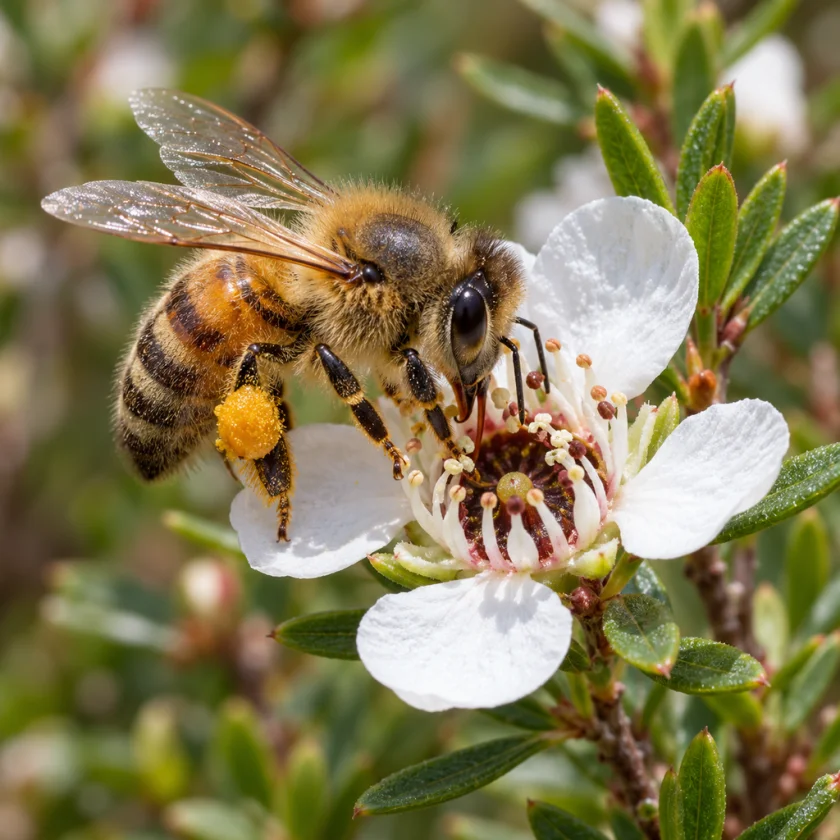
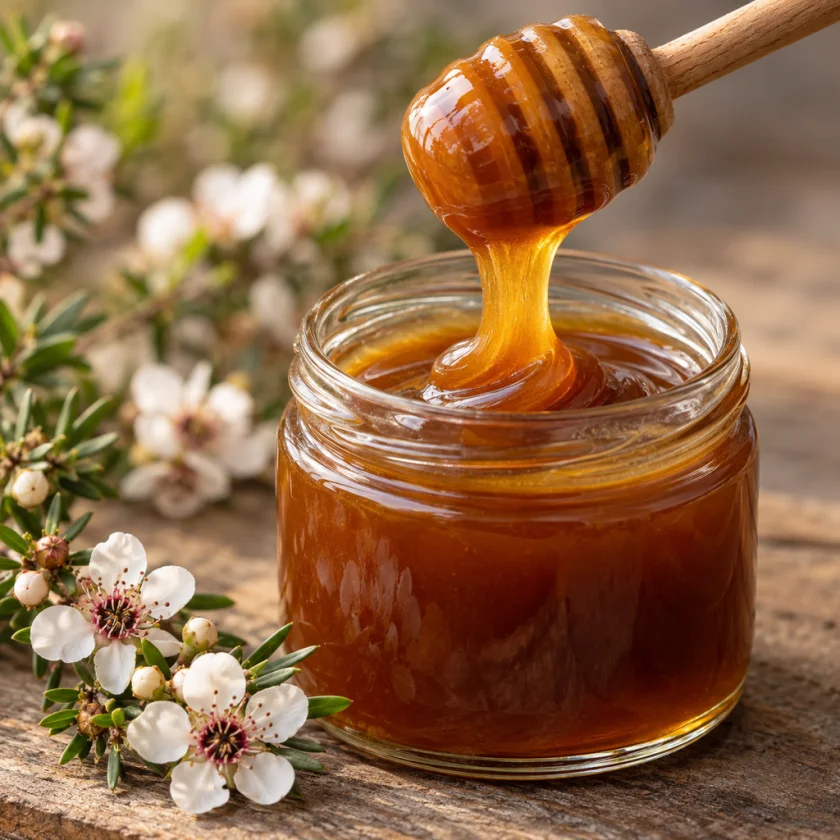
Manuka honey is monofloral nectar honey produced by Apis mellifera from the flowers of Leptospermum scoparium, a small tree native to New Zealand and southeastern Australia. Unlike conventional honeys, whose antibacterial activity depends on glucose-oxidase-generated hydrogen peroxide that decays in tissue, manuka honey contains substantial methylglyoxal (MGO) — a stable non-peroxide antibacterial compound formed non-enzymatically from dihydroxyacetone present in Leptospermum nectar. The UMF (Unique Manuka Factor) trademark grading system and the parallel MGO mg/kg scale both quantify this distinctive activity; UMF 10+ / MGO 263+ is the medical-grade threshold. In 2007 the U.S. Food and Drug Administration (FDA) cleared sterilized leptospermum-honey wound dressings for sale through its 510(k) premarket notification route (clearances K053095 and K072956); the FDA lists this type of wound dressing as an unclassified device, and a 510(k) clearance is not an approval. Four deep-dive pages below explore the main areas of manuka honey research — chronic and acute wound healing, its broad antimicrobial spectrum (including methicillin-resistant Staphylococcus aureus (MRSA) and antibiotic-resistant strains), digestive and sore-throat applications, and dermatologic conditions including atopic dermatitis and acne. Important safety fact: honey of any kind — including manuka — can cause infant botulism in babies under 12 months of age.
Deep-Dive Articles
Wound Healing
The foundational application: the U.S. Food and Drug Administration's 2007 510(k) clearances of sterilized medical-grade manuka honey dressings, Peter Molan's pioneering research at the University of Waikato (1980s onward), Rose Cooper's antibacterial characterization, the MGO osmotic-plus-low-pH-plus-non-peroxide mechanism, randomized trials in venous leg ulcers, diabetic foot ulcers, and partial-thickness burns, the UMF and MGO grading systems, and the practical clinical protocols for outpatient wound dressing.
Read the deep dive →Antimicrobial Spectrum
Methylglyoxal (MGO) as the dominant non-peroxide antibacterial compound and why the UMF rating equals the MGO concentration in clinical activity. Documented activity against methicillin-resistant Staphylococcus aureus, Pseudomonas aeruginosa, vancomycin-resistant enterococci (VRE), Helicobacter pylori, Escherichia coli, and biofilm-embedded organisms. The remarkable absence of selectable bacterial resistance after years of clinical use — a function of MGO's multi-target mechanism.
Read the deep dive →Digestive & Sore Throat
Helicobacter pylori adjunctive treatment, the Bardy 2012 head-and-neck-cancer radiation-induced mucositis trial (in which manuka honey did not improve mouth sores compared with golden syrup), traditional Māori use as rōngoa (medicine), reflux and esophagitis applications, and the practical question of whether to swallow versus dissolve in the mouth.
Read the deep dive →Skin Conditions & Acne
Atopic dermatitis (eczema) topical trials including the 2017 Alangari split-side study, acne vulgaris as adjunct topical therapy, post-surgical scar treatment and reduction of scar hypertrophy, traditional New Zealand and Australian use for skin complaints, rosacea anecdotal evidence, and practical application methods (occlusive overnight versus rinse-off masks).
Read the deep dive →Table of Contents
Why Manuka Honey Produces Effects
Most honey's antibacterial activity comes from a single mechanism — the bee enzyme glucose oxidase, present in trace amounts in nectar honey, catalyzes the slow oxidation of glucose to gluconic acid, releasing hydrogen peroxide as a byproduct. This peroxide diffuses into nearby tissue and produces local antimicrobial activity. The problem is that hydrogen peroxide is rapidly inactivated by tissue catalase, by serum proteins, and by direct dilution — conventional honey loses most of its antibacterial activity within hours of dilution into a wound bed. Manuka honey is unusual because its activity does not depend on that peroxide. The factors usually listed for honey are below. A 2011 comparison by Kwakman and colleagues found that hydrogen peroxide and bee defensin-1, the main fast-acting killers in another medical-grade honey, were absent in manuka honey, which instead contained 44 times more methylglyoxal; manuka honey also kept killing bacteria through several unknown factors after its methylglyoxal was neutralized:
- Methylglyoxal (MGO) — the dominant non-peroxide antibacterial compound, formed non-enzymatically over weeks to months from dihydroxyacetone (DHA) present at high concentration only in Leptospermum scoparium nectar. MGO is a highly reactive aldehyde-ketone that crosslinks bacterial proteins and nucleic acids, disrupts membrane integrity, and acts at multiple cellular targets simultaneously — explaining the remarkable absence of selectable bacterial resistance even after years of clinical use. Concentrations in genuine medical-grade manuka honey range from 263 mg/kg (UMF 10+) to over 1,200 mg/kg (UMF 25+) — orders of magnitude above the MGO found in any other honey type. This mechanism is unique to manuka and a few other Leptospermum species, and it is stable indefinitely in tissue.
- Osmotic effect — honey is approximately 80% sugar by weight (a supersaturated solution of glucose and fructose with very low water activity, aw ≈ 0.6). Bacteria placed in this environment lose water to osmosis and cannot maintain turgor or active metabolism. This osmotic effect is non-specific (it acts on all microorganisms) and is not reduced by exudate dilution — honey continues to draw water out of tissue and bacteria even as it is diluted, which is in fact part of the wound-debridement mechanism.
- Low pH — honey is acidic (pH typically 3.2 to 4.5), well below the pH range bacteria need for optimal growth. This both directly inhibits bacterial proliferation and locally acidifies the wound bed, which is hypothesized to improve oxygen release from hemoglobin in the surrounding capillary bed (the Bohr effect) and accelerate healing.
- Hydrogen peroxide — most nectar honeys generate low, slowly released amounts of hydrogen peroxide through the glucose-oxidase system. The peroxide is generated slowly and at low (sub-cytotoxic) concentration, so it does not damage host tissue the way concentrated peroxide preparations do. In Kwakman 2011, hydrogen peroxide was a major bactericidal factor in the comparison honey but was absent among manuka honey's bactericidal factors.
- Bee defensin-1 — a cationic antimicrobial peptide secreted into honey by the honeybee's hypopharyngeal gland. Defensin-1 disrupts bacterial cell membranes through its positive charge and amphipathic structure. In Kwakman 2011 it was a major fast-acting factor in the comparison honey but was absent in manuka honey.
The therapeutic advantage of manuka over conventional honey is the MGO component — stable, non-peroxide, multi-target, and resistant to host enzymatic deactivation. The UMF (Unique Manuka Factor) trademark grading system was developed by the New Zealand UMF Honey Association to quantify this non-peroxide antibacterial activity through a standardized agar-diffusion bioassay against Staphylococcus aureus; the UMF number is the equivalent concentration of phenol that would produce the same zone of inhibition. The parallel MGO grading (mg of methylglyoxal per kg of honey) is a direct chemical assay that correlates tightly with UMF (UMF 10+ ≈ MGO 263+; UMF 15+ ≈ MGO 514+; UMF 20+ ≈ MGO 829+). Medical-grade manuka honey for wound use is typically UMF 12+ to UMF 18+. Food-grade or culinary manuka (UMF 5+ or unrated) has insufficient MGO content for clinical applications.
The deep-dive pages explore how these mechanisms translate to distinct clinical effects: stable MGO is what allows manuka to be packed into a wound bed and maintain activity for days at a time (Wound Healing); the multi-target mechanism is what prevents resistance development across the bacterial spectrum, including methicillin-resistant Staphylococcus aureus and Pseudomonas (Antimicrobial Spectrum); the same MGO has been studied against H. pylori, while a trial in radiation-induced mouth sores (mucositis) found no benefit over golden syrup (Digestive & Sore Throat); and the combined osmotic-plus-pH-plus-MGO action makes manuka useful as a topical agent for inflammatory and infectious skin conditions (Skin Conditions & Acne).
Research Papers: Wound Healing
- Molan PC (1992). The antibacterial activity of honey. 1. The nature of the antibacterial activity. Bee World. — PubMed: Molan foundational
- Mavric E, Wittmann S, Barth G, Henle T (2008). Identification and quantification of methylglyoxal as the dominant antibacterial constituent of Manuka (Leptospermum scoparium) honeys from New Zealand. Mol Nutr Food Res. — PubMed PMID: 18210383
- Adams CJ et al. (2008). Isolation by HPLC and characterisation of the bioactive fraction of New Zealand manuka (Leptospermum scoparium) honey. Carbohydr Res. — PubMed PMID: 18194804
- Robson V, Dodd S, Thomas S (2009). Standardized antibacterial honey [brand name omitted] with standard therapy in wound care: randomized clinical trial. J Adv Nurs. — PubMed PMID: 19222654
- Jull AB et al. (2015). Honey as a topical treatment for wounds. Cochrane Database of Systematic Reviews. — PubMed PMID: 25742878
- Gethin G & Cowman S (2009). Manuka honey vs. hydrogel: a prospective, open label, multicentre, randomised controlled trial to compare desloughing efficacy and healing outcomes in venous ulcers. J Clin Nurs. — PubMed PMID: 18752540
- Subrahmanyam M (1998). A prospective randomised, clinical and histological study of superficial burn wound healing with honey and silver sulfadiazine. Burns. — PubMed PMID: 9625243
- Eddy JJ, Gideonsen MD, Mack GP (2008). Practical considerations of using topical honey for neuropathic diabetic foot ulcers: a review. Wisconsin Medical Journal. — PubMed PMID: 18702435
- Moghazy AM et al. (2010). The clinical and cost effectiveness of bee honey dressing in the treatment of diabetic foot ulcers. Diabetes Res Clin Pract. — PubMed PMID: 20646771
- Cooper RA et al. (2002). The sensitivity to honey of Gram-positive cocci of clinical significance isolated from wounds. J Appl Microbiol. — PubMed PMID: 12392533
Research Papers: Antimicrobial Spectrum
- Kwakman PHS et al. (2010). How honey kills bacteria. FASEB Journal. — PubMed PMID: 20228250
- Kwakman PHS et al. (2011). Two major medicinal honeys have different mechanisms of bactericidal activity. PLoS ONE. — PubMed PMID: 21394213
- Cooper RA et al. (2010). Absence of bacterial resistance to medical-grade manuka honey. Eur J Clin Microbiol Infect Dis. — PubMed PMID: 20549529
- Lu J et al. (2014). Manuka-type honeys can eradicate biofilms produced by Staphylococcus aureus strains with different biofilm-forming abilities. PeerJ. — PubMed PMID: 24711974
- Roberts AEL, Maddocks SE, Cooper RA (2012). Manuka honey is bactericidal against Pseudomonas aeruginosa and results in differential expression of oprF and algD. Microbiology. — PubMed PMID: 23082035
Research Papers: Digestive & Sore Throat
- Bardy J et al. (2012). A double-blind, placebo-controlled, randomised trial of active manuka honey and standard oral care for radiation-induced oral mucositis. Br J Oral Maxillofac Surg. — PubMed PMID: 21636188
- Al Somal N et al. (1994). Susceptibility of Helicobacter pylori to the antibacterial activity of manuka honey. J R Soc Med. — PubMed PMID: 8308841
- Hashemipour MA et al. (2014). Antiviral activities of honey, royal jelly, and acyclovir against HSV-1. Wounds. — PubMed PMID: 25860226
- Kingsley A (2001). The use of honey in the treatment of infected wounds: case studies. Br J Nurs. — PubMed PMID: 11842467
Research Papers: Skin Conditions
- Alangari AA et al. (2017). Honey is potentially effective in the treatment of atopic dermatitis: clinical and mechanistic studies. Immunity, Inflammation and Disease. — PubMed PMID: 28474502
- Semprini A et al. (2019). Kanuka honey versus aciclovir for the topical treatment of herpes simplex labialis: a randomised controlled trial. BMJ Open. — PubMed PMID: 31092654
- Visavadia BG et al. (2008). Manuka honey dressing: an effective treatment for chronic wound infections. Br J Oral Maxillofac Surg. — PubMed PMID: 18760866
- McLoone P et al. (2016). Honey: a therapeutic agent for disorders of the skin. Cent Asian J Glob Health. — PubMed PMID: 29138732
External Authoritative Resources
- U.S. Food and Drug Administration — Medical Devices Database (510(k) clearances K053095 and K072956, 2007, for leptospermum-honey wound dressings)
- UMF Honey Association of New Zealand — the UMF grading system
- New Zealand Ministry for Primary Industries — Manuka Honey Scientific Definition (the 5-attribute regulatory test for export-grade manuka)
- PubMed — All manuka honey / leptospermum research (~2,000 papers)
- MedlinePlus — Honey (natural medicines)
Connections
- All Herbs
- Manuka Honey (Main Page)
- Manuka Honey for Wound Healing
- Manuka Honey Antimicrobial Spectrum
- Manuka Honey for Digestive & Sore Throat
- Manuka Honey for Skin Conditions & Acne
- Honey (Conventional)
- Tea Tree
- Oregano
- Garlic
- Thyme
- Myrrh
- Silver Nanoparticles
- Staphylococcus aureus / Methicillin-Resistant Staphylococcus Aureus
- Pseudomonas aeruginosa
- Helicobacter pylori
- Eczema (Atopic Dermatitis)
- Acne
- Diabetes (Foot Ulcers)
- Collagen (Wound Healing)
- History