Horsetail — Benefits Deep Dive
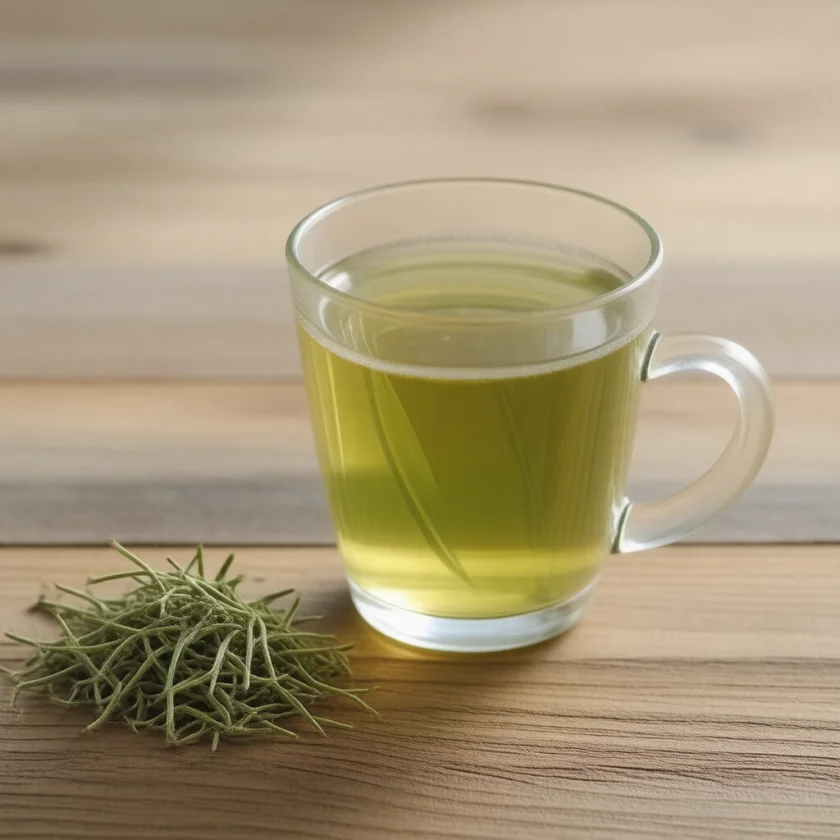
Horsetail (Equisetum arvense) is sold today mostly on two promises: that it strengthens hair and nails, and that it builds bone. Both promises rest on the same fact — the plant really is one of the most silica-rich things you can eat — and both promises skip the same three questions. Does the silica in the plant become absorbed silicon in you? Does absorbed silicon change a measurable outcome such as bone density or nail breakage? And has anyone tested horsetail itself, rather than a purified silicon supplement, against those outcomes? These four deep dives answer those questions separately instead of blurring them together, because that is where nearly every horsetail claim either holds up or quietly falls apart.
There is a second reason this herb needs its own careful treatment. Horsetail carries three real safety features that supplement marketing almost never mentions: it contains thiaminase, an enzyme that destroys vitamin B1; it contains trace nicotine and other alkaloids; and it has a toxic look-alike species, Equisetum palustre (marsh horsetail), whose palustrine alkaloids have poisoned livestock and whose accidental presence in commercial horsetail material is a documented quality-control problem. A page that tells you horsetail is “great for hair” and stops there has left out the safety facts and the limits on how long it is used.
The honest overall grade: one small randomized human trial supports a real diuretic effect, and a second, a 3-month blood-pressure trial, found blood pressure fell about as much on horsetail as on a standard diuretic drug; population and mechanistic research supports silicon mattering for bone and connective tissue; small trials of a purified, absorbable silicon compound support hair, nail and skin benefits; and almost nothing directly tests horsetail extract against those cosmetic and skeletal endpoints in people. That is not a reason to dismiss the herb. Traditional practice used it in short courses, at modest doses, with the species verified, and European herbal monographs cap the length of use because of its thiaminase.
Table of Contents
- Deep-Dive Articles
- The Three-Step Test for Any Silica Claim
- What Is Actually in Horsetail
- Evidence Tiers Used on These Pages
- Key Research: The Diuretic and Blood-Pressure Trials
- Key Research: Silicon and Bone
- Key Research: Hair, Skin and Nails
- Key Research: Thiaminase and Vitamin B1
- Key Research: Species Identity, Palustrine and Nicotine
- Who the Research Raises Concerns For
- External Resources
- Connections
- Featured Videos
Deep-Dive Articles
Horsetail for Hair, Skin and Nails
The most popular reason people buy horsetail — and the one with the largest gap between marketing and data. What the silicon trials actually tested, why brittle-nail research is so hard to run, and what a realistic expectation looks like over three months.
Read the deep dive →Horsetail, Silica and Bone Health
Silicon has a genuine role in early bone and collagen formation, and dietary silicon tracks with hip bone density in large cohorts. Whether horsetail delivers usable silicon is a separate question — and the absorption data say form matters enormously.
Read the deep dive →Horsetail as a Diuretic and for Urinary Health
The best-supported use, and the one with randomized human trials behind it: an acute diuretic study and a 3-month blood-pressure trial. How “irrigation therapy” works, why electrolytes matter, the kidney-gravel tradition, and the drug interactions that follow from any real diuretic.
Read the deep dive →Horsetail Safety: Thiaminase, Nicotine and Dose Limits
The section marketing leaves out. Thiaminase and vitamin B1 depletion, the veterinary poisonings that established it, the toxic Equisetum palustre look-alike, trace nicotine, selenium uptake, and why duration of use is capped.
Read the deep dive →The Three-Step Test for Any Silica Claim
Almost every exaggerated horsetail claim comes from collapsing three separate steps into one sentence. Pull them apart and the evidence sorts itself out immediately.
- Step one — silica content in the plant. This is not in dispute. Horsetail concentrates silicon from soil water and lays it down through its stems as hydrated silica, which is why the dried stems were used for centuries to scour pewter and sand wood. Depending on species, growing site and which part of the plant is analysed, silica can account for a substantial share of the ash weight. Evidence tier: established analytical chemistry.
- Step two — absorbed silicon in the person. Here the story gets much weaker. The body absorbs silicon almost exclusively as orthosilicic acid, a small soluble molecule. Polymerised and particulate silica is poorly absorbed. A comparative absorption study in the British Journal of Nutrition in 2009 measured how much of the silicon from eight sources healthy volunteers absorbed, judged by what came out in their urine: alcohol-free beer and a monomethylsilanetriol supplement were absorbed best (64% of the dose), followed by green beans (44%), dissolved orthosilicic acid (43%), choline-stabilised orthosilicic acid (17%), bananas and a magnesium-trisilicate antacid (4%), with colloidal silica at the bottom (1%). In the authors' words, “particulate silicates were decreasingly well absorbed with increasing polymerisation.” Horsetail itself has not been well characterised in that framework. Evidence tier: preliminary for horsetail; established for the principle that form governs absorption.
- Step three — a clinical outcome. Bone mineral density, nail breakage, hair tensile strength, skin roughness. This is where the trials live, and nearly all of the positive human trials used choline-stabilized orthosilicic acid or a colloidal silicic acid preparation — a manufactured, deliberately absorbable compound, not the herb. Evidence tier: small randomized trials, but of a different substance.
Steps one and three are frequently quoted side by side to imply step two. They do not. This is the single most useful thing to carry away from these pages: silica-rich plant is a statement about botany, and improves nails is a statement about physiology, and horsetail has never had the bridge between them properly built.
What Is Actually in Horsetail
Horsetail is not just a silica delivery vehicle. The aerial sterile stems of Equisetum arvense contain several classes of compound, and it matters which class a given claim is attributed to:
- Silica and silicates. The structural mineral. Concentrated in the epidermis and the ridges of the stem. Responsible for the abrasive texture, the folk names scouring rush and pewterwort, and for every bone/hair/nail claim.
- Flavonoids. Kaempferol and quercetin glycosides dominate. A 2008 paper in Molecules, “Phenolic Compounds in Field Horsetail (Equisetum arvense L.) as Natural Antioxidants,” characterised this fraction and attributed most of horsetail's antioxidant activity to it. The flavonoid fingerprint also has a practical use in quality control, because E. arvense and E. palustre differ in it.
- Phenolic acids and styrylpyrones. Including the petrosins reported in a 2004 Journal of Ethnopharmacology paper on hepatoprotective and free-radical-scavenging compounds isolated from the plant.
- Potassium and other minerals. Relevant to the diuretic use, and part of why the herb increases urine volume.
- Thiaminase. An enzyme, not a toxin in the ordinary sense. It cleaves the thiamine molecule, so its effect is a slow drain on vitamin B1 rather than an acute poisoning. Being an enzyme, it is heat-labile, which is the basis for “thiaminase-free” processed products.
- Trace alkaloids, including nicotine. Present in small amounts. Not enough to be pharmacologically dramatic at normal tea doses, but it is one of the reasons children and heavy long-term use appear among the concerns listed below.
- Whatever the soil offered. Equisetum is an efficient mineral accumulator and can take up selenium and heavy metals from contaminated ground. This matters most for plants gathered from roadsides or contaminated ground.
Evidence Tiers Used on These Pages
Every substantive claim across these four articles is labelled with one of four tiers. The labels are not decoration — they are the point.
- Randomized clinical trial. Humans, randomly allocated, ideally blinded and placebo-controlled. For horsetail this tier holds two small trials: one acute diuretic study and one 3-month blood-pressure trial.
- Human observational or non-randomized. Cohorts, cross-sectional associations, open-label series. The silicon-and-bone-density link sits here.
- Preliminary. Animal experiments, isolated cells, test-tube chemistry. Most of horsetail's anti-inflammatory, antioxidant and liver-related literature sits here.
- Traditional use only. Long, consistent, geographically wide human use, with no controlled trial. Wound and styptic use, the “bone-knitting” reputation, and most cosmetic use sit here. Traditional use is real information — it tells you a plant was tolerated and valued — but it is not efficacy data.
Key Research: The Diuretic and Blood-Pressure Trials
These two small trials are the strongest human evidence horsetail has, and they are worth reading precisely rather than in summary form.
- Carneiro DM and colleagues, “Randomized, Double-Blind Clinical Trial to Assess the Acute Diuretic Effect of Equisetum arvense (Field Horsetail) in Healthy Volunteers,” Evidence-Based Complementary and Alternative Medicine, 2014. A crossover study in healthy adult male volunteers comparing a dried E. arvense extract against placebo and against the thiazide diuretic hydrochlorothiazide. The horsetail arm increased 24-hour urine output significantly more than placebo, at a magnitude broadly comparable to the drug, and without the significant changes in electrolyte excretion seen in the drug arm. Tier: randomized clinical trial — small, acute, healthy volunteers only. PubMed search: Equisetum arvense diuretic randomized double-blind. — Search PubMed
- Carneiro DM, Jardim TV, Araújo YCL, Arantes AC, de Sousa AC, Barroso WKS, Sousa ALL, Cruz AC, da Cunha LC, Jardim PCBV, “Antihypertensive effect of Equisetum arvense L.: a double-blind, randomized efficacy and safety clinical trial,” Phytomedicine, 2022;99:153955. A second double-blind randomized trial, from Brazil, gave 58 adults aged 25 to 65 with stage I high blood pressure either a standardized horsetail dry extract (900 mg a day) or the diuretic drug hydrochlorothiazide (25 mg a day) for 3 months. On horsetail, blood pressure fell by an average of 12.6 mmHg systolic (the top number) and 8.1 mmHg diastolic (the bottom number), from an average of 148.5/95.7 to 134.0/84.5 mmHg. The authors found no significant difference between horsetail and the drug in how much blood pressure fell, and no significant before-and-after changes in blood tests or in signs of kidney, liver or blood-count problems. Tier: randomized clinical trial — small, 3 months, compared against a drug rather than a placebo. — PubMed PMID: 35168030
- Antiurolithiatic and kidney-stone-related animal work. Several rodent studies have examined whether Equisetum extracts reduce crystal deposition or stone formation in induced-urolithiasis models, with generally favourable but preliminary results. No human stone-prevention trial exists. Tier: preliminary (animal). PubMed search: Equisetum arvense urolithiasis
- Herbal diuretics and electrolyte handling generally. The broader literature on plant diuretics is useful context for why “works like a thiazide but spares potassium” is an interesting claim rather than an obvious one. Tier: mixed. PubMed search: herbal diuretic electrolyte excretion
Key Research: Silicon and Bone
Note carefully that this block is about silicon, not about horsetail. That distinction is the whole argument of the bone article.
- Carlisle EM, “Silicon: A Possible Factor in Bone Calcification,” Science, 1970. The foundational report placing silicon at the early, active sites of bone and cartilage formation. Tier: preliminary (animal/tissue), but historically decisive. PubMed search: silicon bone calcification
- Jugdaohsingh R and colleagues, dietary silicon and bone mineral density in the Framingham Offspring cohort, Journal of Bone and Mineral Research, 2004. Higher estimated dietary silicon intake was positively associated with hip bone mineral density in men and premenopausal women. Association, not causation, and the intake came from ordinary food and drink. Tier: human observational. PubMed search: dietary silicon bone mineral density Framingham. — Search PubMed
- Price CT and colleagues, review of silicon in postmenopausal osteoporosis, International Journal of Endocrinology, 2013. Gathers the mechanistic and observational case and is candid about the absence of definitive trials. Tier: narrative review. PubMed search: silicon postmenopausal osteoporosis review
- Jurkić LM and colleagues on the biological effects of ortho-silicic acid, Nutrition & Metabolism, 2013. Explains why the soluble form is the biologically relevant one. Tier: review. PubMed search: ortho-silicic acid biological effects
- Sripanyakorn S and colleagues, comparative absorption of silicon from foods and supplements, British Journal of Nutrition, 2009. The bioavailability study that makes step two of the three-step test unavoidable. Tier: human absorption study. PubMed PMID: 19356271
Key Research: Hair, Skin and Nails
- Barel A and colleagues on oral choline-stabilized orthosilicic acid in women with photodamaged skin, Archives of Dermatological Research, 2005. Twenty weeks of a purified silicon compound improved skin roughness and elasticity measures and reduced nail and hair brittleness scores. In numbers: 50 women took 10 mg of silicon a day as choline-stabilized orthosilicic acid (25 women) or a placebo (25 women) for 20 weeks. Three skin-roughness measures rose on placebo (+8%, +11% and +6%) and fell on the silicon compound (−16%, −19% and −8%). Nail and hair brittleness scores fell on the silicon compound compared with the women's own starting scores (the abstract reports this against baseline, not against placebo). Not horsetail. Tier: randomized clinical trial, small, different substance. — PubMed PMID: 16205932
- Wickett RR and colleagues on orthosilicic acid and hair tensile strength in women with fine hair, Archives of Dermatological Research, 2007. Reported changes in hair strength and morphology after oral silicon supplementation. In numbers: 48 women with fine hair took 10 mg of silicon a day as choline-stabilized orthosilicic acid (24 women) or a placebo (24 women) for 9 months. A measure of the hair's elasticity fell in both groups, but less on the silicon compound (−4.52%) than on placebo (−11.9%), and the hair's cross-section grew significantly thicker only on the silicon compound. Again a manufactured silicon compound. Tier: randomized clinical trial, small. PubMed PMID: 17960402
- Silicon, collagen and connective tissue. The mechanistic literature linking silicon to collagen and glycosaminoglycan synthesis is the reason the cosmetic claims are plausible at all. Tier: preliminary. PubMed search: silicon collagen synthesis connective tissue
- Horsetail extract in topical and cosmetic preparations. A modest literature on Equisetum in dermatological and wound-related contexts, mostly in-vitro or small and open-label. Tier: preliminary and traditional. PubMed search: Equisetum arvense wound healing skin
Key Research: Thiaminase and Vitamin B1
- Thiaminase activity in Equisetum. The presence of thiamine-degrading enzyme activity in horsetail is long-established and is the mechanistic basis for the duration-of-use limits in European herbal monographs. Tier: established biochemistry; human depletion cases poorly documented. PubMed search: Equisetum thiaminase thiamine degradation
- Equine and bovine thiamine deficiency from grazing Equisetum. The veterinary literature, not the human literature, is where thiaminase-driven deficiency is actually documented — horses and cattle eating large quantities of horsetail-contaminated hay developing neurological signs that respond to thiamine. Tier: veterinary case and toxicology literature. PubMed search: Equisetum poisoning horses cattle thiamine
- Thiaminase enzymes and dietary thiamine status generally. The comparative literature on plant and microbial thiaminases — bracken fern is the classic parallel — clarifies how much material and how long an exposure it takes to matter. Tier: mixed, mostly animal. PubMed search: thiaminase plant dietary thiamine status
- Thiamine deficiency syndromes in people. Necessary background for judging the risk: what B1 depletion actually looks like clinically, and who is already close to the edge. Tier: established clinical medicine. PubMed search: thiamine deficiency beriberi Wernicke review
Key Research: Species Identity, Palustrine and Nicotine
- Equisetum palustre and palustrine alkaloids. Marsh horsetail contains the piperidine alkaloid palustrine and related compounds and is regarded as toxic to livestock; this is the reason species identity is a safety issue rather than a botanical nicety. Tier: established toxicology, largely veterinary. PubMed search: Equisetum palustre palustrine alkaloid toxicity. — Search PubMed
- Analytical discrimination of E. arvense from E. palustre. Chromatographic and flavonoid-profile methods exist precisely because adulteration and admixture of commercial horsetail herb happen. Tier: analytical chemistry. PubMed search: Equisetum arvense palustre differentiation adulteration. — Search PubMed
- Alkaloid and nicotine content of Equisetum. Analyses reporting trace nicotine and related alkaloids in horsetail material. Tier: analytical chemistry. PubMed search: Equisetum arvense nicotine alkaloid content
- Mineral and selenium accumulation in Equisetum. The genus is used in phytoremediation and biomonitoring studies because it takes up soil minerals efficiently — useful for science, a caution for foragers. Tier: environmental analytical. PubMed search: Equisetum heavy metal selenium accumulation
- Anti-inflammatory and immune-cell effects of horsetail extract. Gründemann C and colleagues reported that Equisetum arvense extract modulated the function of inflammatory immunocompetent cells (BMC Complementary and Alternative Medicine, 2014); Do Monte FHM and colleagues reported antinociceptive and anti-inflammatory activity of a hydroalcoholic stem extract in mice (Pharmacological Research, 2004). Both are frequently cited as if they were clinical findings. They are not. Tier: preliminary (cell and animal). PubMed search: Equisetum arvense anti-inflammatory antinociceptive. — Search PubMed
Who the Research Raises Concerns For
Collected here so it is not buried at the bottom of a sub-article. Each item is expanded in the safety article.
- Anyone pregnant or breastfeeding. Safety is not established, and the herb contains alkaloids, including trace nicotine.
- Infants and children. Safety in children has not been established; the herb contains trace nicotine and thiaminase.
- Anyone with low or borderline thiamine status — including heavy alcohol use, bariatric surgery, prolonged vomiting, or diuretic-associated B1 loss. Thiaminase plus an already-thin B1 reserve is the one genuinely predictable harm this herb can cause.
- Anyone taking lithium. Diuretics reduce lithium clearance and can raise blood levels into the toxic range. This is a pharmacokinetic interaction, not a theoretical one.
- Anyone taking prescription diuretics — loop, thiazide or potassium-sparing. Stacking diuretic effects risks volume depletion and potassium disturbance.
- Anyone on digoxin or another drug whose safety depends on stable potassium.
- Anyone with kidney disease or heart failure. Fluid and electrolyte balance in these conditions is actively managed; an unmeasured herbal diuretic interferes with that management.
- Anyone who cannot confirm the species on the label. A product that does not name Equisetum arvense is unidentified plant material, which may include the toxic marsh horsetail described above.
External Resources
- European Medicines Agency — herbal medicine monographs — the HMPC assessment for Equiseti herba is the most useful regulatory document on horsetail, and it is where the duration-of-use limits come from.
- U.S. National Center for Complementary and Integrative Health (NCCIH) — Herbs at a Glance — plain-language United States government summaries of herbal supplements and their known cautions.
- Plants of the World Online (Kew) — authoritative taxonomy for distinguishing Equisetum arvense from Equisetum palustre and the rest of the genus.
- USDA PLANTS Database — distribution maps and identification notes for both species in North America.
- PubMed — all Equisetum arvense literature — the complete searchable body of research, which is smaller than the volume of marketing would suggest.
- PubMed — silicon supplementation, bone, hair and nails — the silicon literature that horsetail claims borrow from.
Connections
- All Herbs
- Horsetail (main page)
- Horsetail for Hair, Skin and Nails
- Horsetail, Silica and Bone Health
- Horsetail as a Diuretic
- Horsetail Safety and Dose Limits
- Silicon
- Silicon: Benefits
- Silicon and Bone Density
- Silicon for Hair and Nails
- Silicon and Connective Tissue
- Vitamin B1 (Thiamine)
- Thiamine Deficiency
- Selenium
- Potassium
- Osteoporosis
- Urinary Tract Infections
- Kidney Stones
- Hair Loss
- Stinging Nettle
- Dandelion
- Uva Ursi
- Chanca Piedra
- Collagen
Safety and disclaimer. This page is educational and is not medical advice. Horsetail is a genuine diuretic, contains an enzyme that degrades vitamin B1, contains trace nicotine, and has a toxic look-alike species. The research raises concerns about its use in pregnancy, breastfeeding, childhood, thiamine depletion, kidney disease and heart failure, and with lithium, digoxin or prescription diuretics; European herbal monographs limit how long it is used, and species identity matters because of the toxic look-alike. Nothing here is a substitute for diagnosis and treatment by a clinician who knows your history and your medication list.