Areca Nut: Traditional Claims, and Help With Quitting

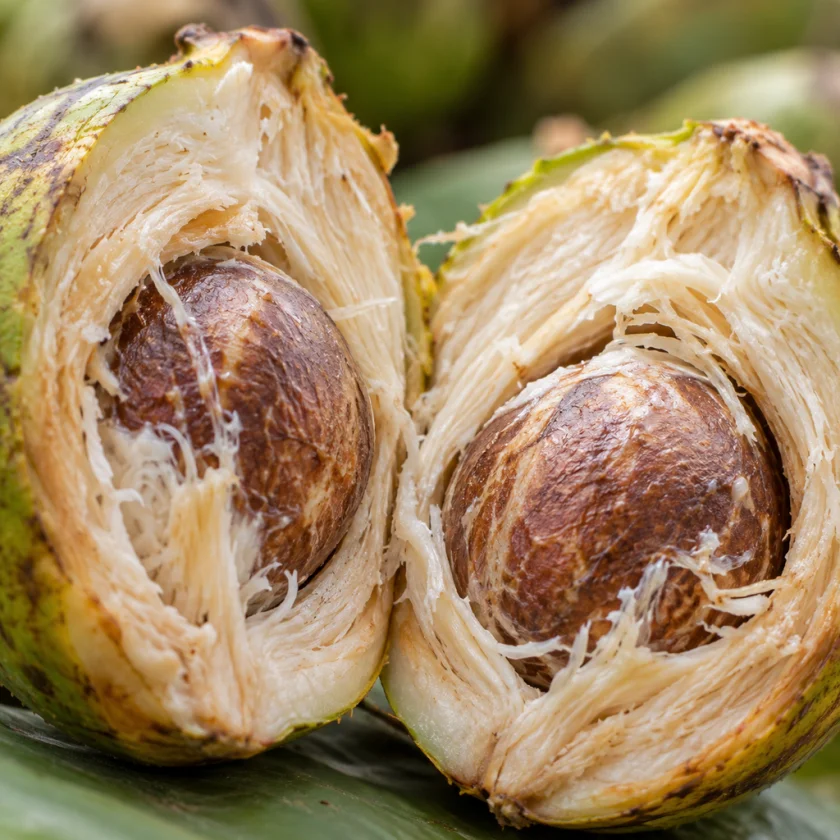
Areca nut has been chewed for thousands of years, it is offered at weddings and in temples, it is handed to guests as a mark of hospitality across South and Southeast Asia and the Pacific, and people who chew it say it helps them digest a meal and stay awake through a night shift. All of that is true, and none of it changes the cancer evidence set out below.
This page does two things. The first half documents what areca nut is claimed to do and labels how much evidence sits behind each claim — including the claims that are genuinely well founded, because a page that pretends the chew does nothing loses the reader who has felt what it does. The second half covers quitting: what quitting achieves, how cessation programmes structure a quit attempt, how quitters describe getting through withdrawal, what people substitute, and what an oral examination for a chewer covers.
The context does not change. Areca nut is an International Agency for Research on Cancer (IARC) Group 1 human carcinogen — see the carcinogenicity page — on its own, without tobacco, in every chewed form.
Table of Contents
- Why This Page Documents Claims
- Ceremonial and Social Meaning
- What It Has Traditionally Been Used For
- Claim: Digestion and the After-Meal Quid
- Claim: Alertness, Stamina and Work
- Claim: Expelling Intestinal Worms
- Other Claims: Breath, Appetite, Nausea, Mood
- The Asymmetry, Stated Plainly
- What Quitting Achieves, and How Fast
- How a Quit Plan Is Usually Structured
- Getting Through Withdrawal
- Substitutes: What Chewers Actually Use
- Refusing a Quid Without Refusing the Person
- Screening, and What an Oral Examination Covers
- What Cessation Research Actually Shows
- Relapse
- Evidence Tiers on This Page
- Key Research Papers
- Connections
- Featured Videos
Why This Page Documents Claims
This page records what the plant is used for and then labels the evidence, rather than leaving uses out. Leaving them out would mislead: a reader who has personally experienced an effect, and finds a health page insisting no such effect exists, correctly concludes the page is unreliable and stops reading — including the parts about cancer.
So the claims are here, each with its evidence tier stated: a claim that is real is marked as real, a claim with a genuine mechanism attached to a harmful practice is marked as both, and a claim that is wrong is marked as wrong.
None of these effects is presented here as a health benefit. A real pharmacological effect still arrives with a Group 1 carcinogen held against the lining of the mouth for twenty minutes at a time, several times a day, for decades.
Ceremonial and Social Meaning
Any account of areca nut that treats it purely as a drug misses most of what it is.
Archaeological and historical evidence places areca chewing in Southeast Asia several thousand years ago, and it spread with trade and migration across South Asia, southern China, island Southeast Asia, Melanesia and Micronesia. It arrived long before tobacco, which was added to the quid only after tobacco reached Asia from the Americas.
Hospitality. Offering betel and areca to a visitor is a formal courtesy in many cultures — in some, refusing it has historically been close to an insult. Prepared quid or areca nut is set out for guests, and the offering itself carries the meaning.
Marriage. Areca nut appears in wedding ritual across a wide area. In Vietnamese tradition trầu cau — betel leaf and areca nut — is central to betrothal and marriage, with a well-known origin legend attached; in South Asian weddings supari features in ceremony and in the exchanges between families; in parts of Indonesia, the Philippines and the Pacific it forms part of bridewealth or the formalisation of an agreement.
Religious observance. Areca nut is used as an offering in Hindu puja, placed with the coconut and the betel leaf, and features in temple ritual and in vows. It also appears in funeral and ancestor observances in several traditions.
Agreement and obligation. Historically, sharing betel sealed contracts, settled disputes and marked the acceptance of an invitation — the physical act standing in for a signature.
Everyday sociability. In Papua New Guinea, parts of Taiwan, Myanmar, and much of South Asia, chewing is what people do together on a break, on a long journey, at a market. The quid is shared, offered, passed. This is genuinely different from a habit conducted alone, and it is precisely why quitting is socially difficult — a point developed below.
Evidence tier: documented cultural practice. These are historical and ethnographic facts, not health claims, and nothing in the medical evidence disputes them. They are also the reason public-health messaging that treats chewers as merely ignorant fails so reliably.
What It Has Traditionally Been Used For
Areca nut appears as a named medicine in more than one classical system. In traditional Chinese medicine the seed is bīng láng, used chiefly against intestinal parasites and for what the system describes as food stagnation and accumulation of damp. In Ayurveda it appears as pūga or kramuka, with digestive, astringent and anthelmintic applications, and it is a routine component of after-meal paan. Traditional practice in Southeast Asia and the Pacific attributes to it effects on hunger, alertness, cold, toothache and diarrhoea.
The nut is genuinely rich in condensed tannins and polyphenols, which accounts for the astringency and for several of the topical and gastrointestinal uses attributed to it, and it contains the alkaloids described on the dependence page. Classical use does not distinguish, as modern medicine does, between a short course of a medicine for a specific complaint and a daily habit sustained for forty years. Almost all of the harm documented on this site attaches to the second pattern.
Claim: Digestion and the After-Meal Quid
The claim. A quid after a heavy meal settles the stomach, relieves fullness and aids digestion. This is probably the single most widely stated reason for chewing, and the after-meal paan is an institution.
What supports it. The mechanism is real. Arecoline is a muscarinic agonist, and muscarinic stimulation increases salivary secretion, gastric secretion and gut motility — which is exactly the physiology of feeling that food is moving. The heavy salivation alone provides more saliva and its digestive enzymes. Chewers reporting an effect are not imagining it.
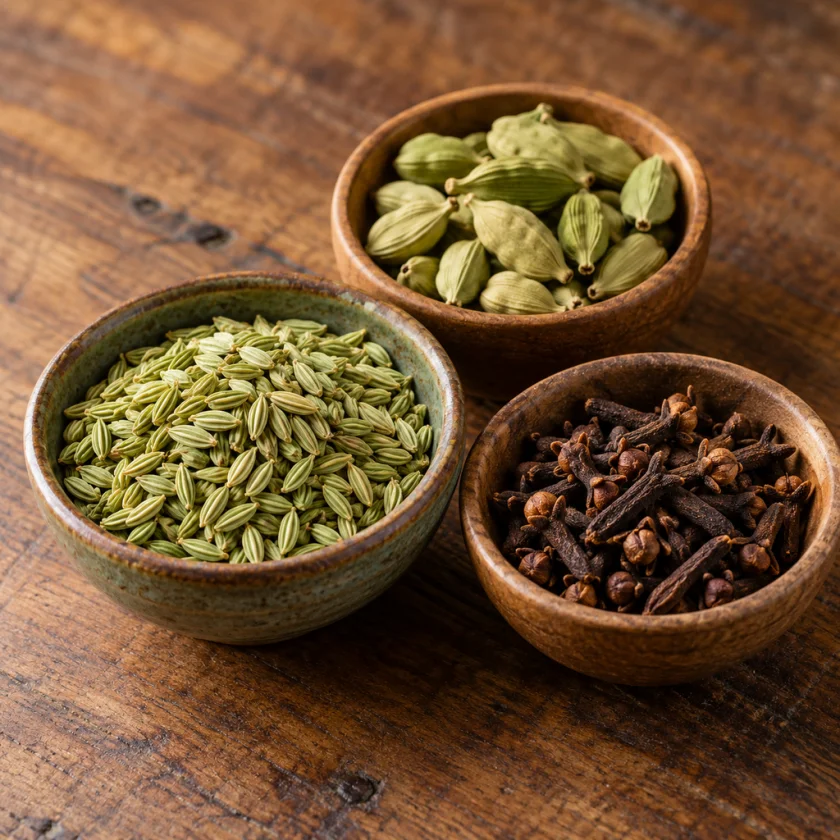
What weakens it. There are no clinical trials establishing that areca nut treats indigestion, dyspepsia or any defined digestive disorder. Increased motility is not the same as improved digestion, and in some chewers the same mechanism produces loose stools and cramping. Much of the pleasant after-meal freshness attributed to the quid comes from the accompanying fennel, cardamom, clove and aniseed — which are carminatives in their own right, are safe, and can be chewed on their own to exactly the same effect.
Tier: real mechanism, traditional use, no clinical evidence. Much of the after-meal sensation comes from the spices, as described above. See the leaf's carminative page for how thin this evidence is even for the safer component.
Claim: Alertness, Stamina and Work
The claim. Chewing keeps you awake, sharpens attention, relieves fatigue and helps you get through long or monotonous work. Drivers, fishermen, night-shift workers, students and labourers across the chewing world describe it in these terms.
What supports it. This claim is correct, and it is the honest reason most people chew. Arecoline is centrally active, crosses the blood-brain barrier, and produces measurable autonomic and electroencephalographic changes — documented by Chu in the Journal of Biomedical Science in 2001 and in Addiction Biology in 2002. Chewers reliably report increased alertness, warmth, mild euphoria and reduced fatigue, with onset in minutes. Functionally, areca occupies the same niche in its societies that coffee and cigarettes occupy elsewhere.
What has to be said next. A genuine stimulant effect does not offset a Group 1 classification, and it is not counted as a health benefit on this page. The same molecule that produces the alertness is genotoxic to the cells it sits against, drives the fibrosis described on the submucous fibrosis page, and is the reason the habit is hard to break. Caffeine produces a comparable alertness effect without a cancer classification of this kind.
Tier: established pharmacology, real subjective effect, not a benefit.
Claim: Expelling Intestinal Worms
The claim. Areca nut expels intestinal worms, particularly tapeworm. This is its most specific traditional medical indication and appears in both Chinese and Ayurvedic use.
What supports it. This is the traditional claim with the strongest pharmacological pedigree. Arecoline paralyses certain parasites, and arecoline salts were listed in veterinary pharmacopoeias and used as taeniacides — tapeworm treatments — in dogs and horses, sometimes combined with other agents. That is a documented historical drug use, not folklore.
What weakens it. The dose required is substantial, the therapeutic window is narrow, and a systemic muscarinic agonist at anthelmintic doses causes vomiting, cramping, salivation, sweating and bradycardia — which is why the veterinary use was messy and why it was abandoned once better drugs existed. Modern anthelmintics such as praziquantel and albendazole are far more effective, far safer, single-dose or short-course, and cheap. Modern parasite treatment relies on these medicines rather than areca, and daily chewing is not a deworming regimen by any account.
Tier: historically real drug action, obsolete, superseded by safer medicines. Intestinal parasites are identified with a stool test and treated with the medicines above. See the parasites section.
Other Claims: Breath, Appetite, Nausea, Mood
“It freshens the breath and cleans the teeth.” The freshening is real and comes almost entirely from the added spices and the increased saliva flow. The claim about cleaning teeth is false and inverted: chewers have more staining, more wear on the biting surfaces, more periodontal disease and more tooth loss than non-chewers. Tier: partly true for the wrong reason; the dental claim is contradicted by the evidence.
“It stops me feeling hungry.” Appetite suppression is commonly reported and is consistent with the pharmacology. It has been used in this way where food was short. Tier: consistent report, plausible mechanism, and the same cancer exposure as any other chewing.
“It settles nausea, including in pregnancy.” Widely used this way and widely believed. There is no trial evidence, the mechanism cuts both ways (arecoline can itself cause nausea and vomiting at higher intake), and chewing in pregnancy is associated with reduced birthweight and adverse birth outcomes. Tier: traditional use with a documented harm attached. Ginger, small frequent meals and prescribed anti-nausea medicines (antiemetics) are the usual alternatives used for pregnancy nausea.
“It relaxes me / lifts my mood.” Chewers report both stimulation and a settling effect, and guvacine's action on gamma-aminobutyric acid (GABA) uptake offers a partial mechanism for the latter. But mood benefit in a dependent user is confounded by relief of withdrawal — feeling better after a quid may be the absence of craving rather than a positive effect. Tier: real subjective report, confounded by dependence.
“Tobacco-free means safe.” Not a traditional claim but the most consequential belief in circulation, so it belongs on the list. Tier: false. Areca nut without tobacco is classified Group 1 on its own.
The Asymmetry, Stated Plainly
Put the two columns side by side, and the imbalance is the whole point of this article.
On the harm side: sufficient evidence in humans, across independent populations, with dose-response, for cancer of the oral cavity, pharynx and oesophagus; an established causal role in a progressive, largely irreversible, premalignant scarring condition of the mouth; documented dependence with tolerance and withdrawal; and consistent observational associations with metabolic syndrome, type 2 diabetes, cardiovascular disease, all-cause mortality, worsened asthma and reduced birthweight.
On the claimed-benefit side: a genuine short-acting stimulant effect; a genuine increase in gut motility and salivation; an obsolete anthelmintic action superseded by modern drugs; and deep cultural and ceremonial significance that is real but is not a health effect.
Not one item on the second list is supported by a clinical trial showing benefit in a defined condition. Every item on the first list is supported by human epidemiology or established clinical observation. That is not a close call requiring the reader to weigh things up; it is a category difference, and this page states it rather than leaving it implied.
What Quitting Achieves, and How Fast
Stopping is the only intervention with proven benefit, and the timeline is worth knowing because the early rewards arrive much sooner than people expect.
- Within days to weeks: mouth soreness, burning on spicy food and ulceration commonly settle substantially. Staining stops accumulating and can be cleaned. Breath improves. If you have asthma, the airway effect is pharmacological and lifts quickly.
- Within weeks to months: withdrawal symptoms resolve. Sleep and mood return to normal. Blood pressure loses the repeated acute rises. Gum inflammation improves, especially with dental treatment.
- Over months to years: the progression of oral submucous fibrosis slows or stops. Existing fibrosis does not reverse, but a mouth that stops getting stiffer is a fundamentally different future from one that does not.
- Over years: cancer risk falls. It falls toward, but does not fully reach, the risk of someone who never chewed, and the decline is gradual. Because risk rises with both quantity and duration, every year not chewed is a year not added to the exposure.
- Immediately, and permanently: no new carcinogenic exposure. That part takes effect the moment chewing stops.
How much cancer risk falls. A 2022 meta-analysis of 14 studies (Gupta and colleagues, Annals of Global Health) compared former and current chewers. For betel quid without tobacco, former chewers had about 29% less oral-cancer risk than current chewers (relative risk 5.61 against 7.89, both compared with never-chewers) and 48% less pharyngeal-cancer risk (2.50 against 4.81); for oesophageal cancer there was no clear difference. For quid with tobacco, risk was lower only in people who had quit more than 10 years earlier (relative risk 0.72 compared with current chewers, a result that did not reach statistical certainty), and was not lower in people who had quit more recently. Former chewers remained at far higher risk than people who never chewed.
Two things quitting does not do, stated so nobody is blindsided: it does not restore mouth opening that has already been lost, and it does not remove the need for oral examination. Oral examination stays relevant for a former chewer with years of exposure behind them.
How a Quit Plan Is Usually Structured
Cessation programmes describe a common structure for a quit attempt, borrowed largely from tobacco cessation and adapted here to areca. It is not clever, and structure is most of what makes attempts succeed. The steps they usually include:
- Counting for three days first. How many quids or sachets per day, at what times, in what situations. Almost everybody underestimates. The number becomes the baseline, and later the measure of progress.
- Naming the top three triggers. After lunch. The drive home. Break time with a particular colleague. Only three — those are the ones that get a plan, and a plan for three is manageable where a plan for everything is not.
- A quit date within two weeks. Far enough to prepare, close enough to still matter. Programmes usually keep the start away from a wedding or festival week.
- Telling people, specifically. The household, and the people who habitually offer a quid — that second group is the one that matters and the one most often skipped. Quitters describe “I have stopped chewing, please don't offer me one” said once in advance as easier than declining ten times awkwardly.
- Clearing the supply. House, car, work bag, desk drawer, jacket pocket — and sometimes a new route that skips a stall that was a regular stop, because places act as triggers.
- Substitutes stocked before the date, not on the day. See the next section.
- A dental or medical examination, often within the first month. It turns an abstract decision into a concrete piece of care, and it gets the mouth checked.
- A plan for the first seventy-two hours. Busy days, plenty of water, early nights, and time away from the usual chewing settings. This is described as the hardest stretch, and it is short.
- Tracking the money. Daily spend times three hundred and sixty-five is often a startling figure, and quitters describe it as a motivation that holds on days when health arguments have gone stale.
- Deciding in advance what a slip means. That it is a slip, not the end of the attempt. Programmes have this settled while calm, because clear reasoning is hard in the moment.
Abrupt or gradual? The tobacco literature generally favours a clean stop on a set date over slow tapering, and there is no evidence that areca differs. Gradual reduction still lowers exposure compared with continuing, and the order usually described for reducing is: no chewing overnight or while sleeping first (retention time is the highest-risk variable), then a shorter holding time for each quid, then fewer per day, then dropping tobacco if it is in the quid.
Getting Through Withdrawal
The withdrawal syndrome is described in detail on the dependence page: craving, irritability, low mood, anxiety, disturbed sleep, poor concentration, headache, and a distinct feeling of oral emptiness. What quitters and cessation programmes describe:
- Expecting it, and naming it. Knowing in advance that irritability and poor sleep may last a week or two — and that this is the drug leaving, not a sign of failure — is described by quitters as protective. Some tell their household so they know too.
- Riding out the individual craving. A craving is a wave, not a state; most peak and pass within a few minutes. Water, a walk, a task, a phone call are the usual distractions. Delay is easier to hold than refusal: “not in the next ten minutes” rather than “never again”.
- Giving the mouth something to do. The oral emptiness is real and responds directly to substitution.
- Brushing the teeth after meals. It occupies the after-meal trigger and leaves the mouth feeling clean and unwelcoming to a quid.
- Sleep and caffeine. Insomnia is common in the first weeks; programmes describe keeping caffeine out of the evening rather than adding more to make up for the lost stimulant.
- Movement. Physical activity blunts craving and helps mood and sleep, in any amount.
- Mood that does not lift. Persistent low mood beyond a few weeks is no longer withdrawal and is a condition in its own right — see psychiatry.
Medication. There is no established drug treatment for areca dependence. Where the quid contains tobacco, nicotine replacement addresses that component, but it does not act on the areca side.
A small double-blind trial published in 2020 (Hung and colleagues) tested two antidepressants in 111 men with betel-quid use disorder. After 8 weeks, 34.2% of men on escitalopram 10 mg a day and 33.3% on moclobemide 150 mg a day had stopped chewing for at least 6 weeks, against 5.4% on placebo — about 6 to 7 times as many. The authors call this preliminary evidence that needs larger trials, and no medicine is approved for this use.
Substitutes: What Chewers Actually Use
Substitution is the single most-reported practical tactic, because much of the habit is oral and sensory rather than purely chemical. What people use, from the reports and from cessation programmes:
- Fennel seeds, cardamom pods, cloves, aniseed, cinnamon bark. The same after-meal spices that already accompany the quid, chewed on their own. They deliver most of the freshness and ritual with none of the areca. This is the closest substitute to the after-meal paan and the most commonly successful one.
- Roasted chickpeas, pumpkin seeds, sunflower seeds, roasted peanuts, walnuts, almonds. For the chewing and the crunch. Whole foods, cheap, and they occupy the hand as well as the mouth.
- Dried coconut pieces. Reported frequently in South and Southeast Asia; texture and sweetness in roughly the right place.
- Liquorice root sticks, a plain toothpick, ice, or cold water. For the moments where the need is oral rather than gustatory.
- Sugar-free chewing gum. Effective for many, and available everywhere.
- Carrot or cucumber sticks, apple slices. For the after-meal habit if the pull is toward chewing something substantial.
What cessation programmes rule out as substitutes. Anything containing areca — including “tobacco-free” pan masala, sweet supari and flavoured areca preparations sold as mouth fresheners, which are the same carcinogen in a friendlier wrapper. Smokeless tobacco, snuff, khaini and zarda are Group 1 carcinogens too, so a swap to them keeps the cancer exposure. Hard nuts can be difficult with restricted mouth opening or a sore mouth, and soft substitutes are described as easier while the mucosa settles.
Refusing a Quid Without Refusing the Person
This is the specific difficulty of areca cessation and it deserves naming, because generic quit advice never covers it. Cigarettes are usually bought and smoked; quid is often offered. Declining means declining hospitality from a relative, in front of family, at an occasion where accepting is the polite thing to do. That is a social cost, not a willpower failure, and pretending otherwise is why so much advice bounces off.
What quitters describe as helping:
- Telling people before the occasion, not during it. One conversation in advance replaces a series of public refusals.
- A brief health reason. “The dentist found something and told me to stop” ends the conversation in a way “I'm trying to cut down” does not, because it removes the implication that a good-enough offer might change the answer.
- Accepting the gesture, declining the substance. Taking the betel leaf, taking the spices, holding the plate, passing it on. In many settings the courtesy is in the exchange, and it can be honoured without the nut.
- Bringing one's own. Arriving with fennel or cardamom to chew gives the hands and mouth something to do, and signals participation rather than disapproval.
- One recruited ally. A spouse, sibling or friend who will run interference and change the subject is described as worth more than any leaflet.
- Quitting together. Where chewing is shared, stopping together removes the trigger instead of resisting it.
Screening, and What an Oral Examination Covers
Telling the clinician about chewing. Outside high-prevalence countries chewing is not on standard history forms and is usually not asked about. The details that matter to an examiner are the words areca nut as well as paan, supari, gutka, mawa or whatever local name is used, how many a day, and for how many years. That information is what prompts a full oral examination.
What an examination for a chewer usually includes:
- A full soft-tissue examination of the mouth — cheeks, gums, palate, tongue including the sides and underside, and the floor of the mouth. Under the tongue is where lesions get missed.
- The interincisal mouth opening measured in millimetres and written in the record, so that next year's measurement can be compared.
- Whether any fibrous bands can be felt in the cheeks or palate.
- A review interval, and a note in the record that the person is or was an areca chewer.
- Outstanding dental work brought forward — access only becomes harder if fibrosis progresses.
- Blood pressure and a blood glucose check, given the metabolic associations; a visit to a doctor rather than a dentist can cover these too.
Signs that oral-cancer clinics treat as urgent, rather than waiting for a routine appointment: an ulcer or sore that has not healed in three weeks, a lump in the mouth or neck, a red or mixed red-and-white patch, unexplained bleeding, numbness of the lip or tongue, loose teeth without a dental cause, persistent pain on swallowing, or a mouth that will not open as far as it did.
Screening does not prevent cancer, but it changes what happens when it occurs. The cluster-randomised trial by Sankaranarayanan and colleagues in Kerala, published in The Lancet in 2005, offered three rounds of visual mouth inspection by trained health workers, 3 years apart, to 96,517 people aged 35 and over; 87,655 (91%) were screened at least once, and 95,356 people in the control clusters received standard care. Across everyone, oral-cancer deaths were not significantly lower (77 against 87; mortality rate ratio 0.79). Among users of tobacco or alcohol, or both, they were lower (70 against 85 deaths; rate ratio 0.66), and in male tobacco or alcohol users the rate ratio was 0.57. The “high-risk” group in the trial is defined by tobacco or alcohol use, not by areca chewing. A visual mouth examination takes only minutes.
What Cessation Research Actually Shows
Honesty about the evidence base matters here, so: cessation research specific to areca nut is much thinner than for tobacco. There are fewer trials, they are smaller, outcome measures and follow-up vary, and there is no established pharmacotherapy. Systematic reviews of interventions for areca and betel-quid cessation have repeatedly concluded that the evidence is limited and that more and better trials are needed. Anyone claiming a proven areca cessation programme is going beyond what has been shown.
What the evidence does support, at varying strength:
- Brief advice and counselling in a health setting works to some degree, extrapolated substantially from the tobacco literature where it is well established, and supported by studies in dental settings in high-prevalence populations. Being asked and advised by a clinician measurably increases quit attempts.
- Community education combined with examination has produced real change. The Indian primary-prevention intervention cohorts reported by Gupta and colleagues, including a ten-year follow-up in Kerala published in the Journal of Oral Pathology & Medicine in 1992, showed that among 12,212 tobacco users given intensive education, more stopped using tobacco and the incidence of leukoplakia (a precancerous white patch) fell substantially compared with 6,075 tobacco users given minimal advice. These remain among the most substantial cessation data in this field.
- Screening reduces mortality in tobacco and alcohol users, per the Kerala trial.
- The first trial built for areca chewers showed a large short-term effect. The Betel Nut Intervention Trial (BENIT) in Guam and Saipan, published in 2023, enrolled 176 adults who chewed areca nut or betel quid with tobacco. At day 22, 38.6% of those given five in-person sessions over 22 days plus a quitting brochure had stopped, against 9.1% of those given the brochure alone. Follow-up lasted only 22 days and quitting was self-reported.
- Lesion regression follows cessation. Follow-up of chewers who stopped has documented regression of some oral precancerous lesions, which is a concrete and encouraging finding to give someone quitting.
- Behavioural techniques transfer. Trigger identification, substitution, social support, relapse planning and motivational interviewing are not areca-specific and there is no reason to think they work less well here.
- Regulation shifts population use. Sales bans, public-place restrictions and mass-media campaigns have measurable effects, with much argument about enforcement.
The gap between a thin trial literature and a clear practical answer is worth stating directly: we do not know the best way to help someone quit areca nut, and we know with certainty that quitting helps. Those two statements are both true.
Relapse
Most people who stop any dependence-forming substance relapse at least once, and areca is no exception. Relapse most often follows a social occasion, a stressful period, or a return to a place where chewing was routine — a village, a family home, a particular workplace.
Three points recur in cessation programmes. First, a slip is not a return to baseline. One quid at a wedding is one quid; the harm is cumulative, so an interrupted habit is genuinely different from an uninterrupted one. Second, the specific trigger is information. The occasion behind a relapse tends to come round again, and knowing it allows a plan for it. Third, the number of previous attempts is not a predictor of failure. In tobacco cessation, most successful quitters had multiple prior attempts. Each attempt teaches something.
After a relapse, cessation programmes describe setting a new quit date, rather than guilt, as the usual next step.
Evidence Tiers on This Page
- Established human epidemiology. Areca nut causes oral, pharyngeal and oesophageal cancer — International Agency for Research on Cancer Group 1, with or without tobacco. Quitting reduces risk over time. Visual oral screening reduces oral cancer mortality in tobacco and alcohol users.
- Established pharmacology. The stimulant, salivary and gut-motility effects are real and mechanistically explained. The historical veterinary anthelmintic action of arecoline salts is real and obsolete.
- Documented cultural practice. The ceremonial, marital, religious and hospitality roles. Historical and ethnographic fact, not a health claim.
- Traditional use, no clinical evidence. Digestive and after-meal use; appetite suppression; nausea; toothache; mood.
- Contradicted by evidence. That chewing cleans the teeth. That tobacco-free areca is safe.
- Thin evidence base. Areca-specific cessation interventions; the time course of withdrawal; any pharmacological treatment for areca dependence, of which none is established.
- Extrapolated. Brief advice, trigger planning, substitution and relapse-prevention techniques, imported from the far larger tobacco cessation literature.
Key Research Papers
- Gupta PC, Warnakulasuriya S. “Global epidemiology of areca nut usage.” Addiction Biology, 2002;7(1):77-83. Prevalence, patterns of use, and why the estimates are estimates. PubMed PMID: 11900626
- Trivedy CR, Craig G, Warnakulasuriya S. “The oral health consequences of chewing areca nut.” Addiction Biology, 2002;7(1):115-25. The clinical picture in a chewer's mouth, beyond cancer. PubMed PMID: 11900631
- Sankaranarayanan R, Ramadas K, Thomas G, et al. “Effect of screening on oral cancer mortality in Kerala, India: a cluster-randomised controlled trial.” The Lancet, 2005;365(9475):1927-33. The strongest evidence that oral screening saves lives in this population. PubMed PMID: 15936419
- Gupta PC, Mehta FS, Pindborg JJ, Bhonsle RB, Murti PR, Daftary DK, Aghi MB. “Primary prevention trial of oral cancer in India: a 10-year follow-up study.” Journal of Oral Pathology & Medicine, 1992;21(10):433-9. Community education and examination, with measured reductions in use and in precancerous lesions. PubMed PMID: 1460581
- Winstock A. “Areca nut — abuse liability, dependence and public health.” Addiction Biology, 2002;7(1):133-8. Why cessation programmes treat this as a dependence. PubMed PMID: 11900633
- Bhat SJ, Blank MD, Balster RL, Nichter M, Nichter M. “Areca nut dependence among chewers in a South Indian community who do not also use tobacco.” Addiction, 2010;105(7):1303-10. Dependence without the tobacco confounder. PubMed PMID: 20642513
- Chu NS. “Effects of betel chewing on the central and autonomic nervous systems.” Journal of Biomedical Science, 2001;8(3):229-36. Where the alertness claim is measured rather than asserted. PubMed PMID: 11385294
- Chu NS. “Neurological aspects of areca and betel chewing.” Addiction Biology, 2002;7(1):111-4. Heart-rate, skin-temperature, reaction-time and EEG measurements during chewing. PubMed PMID: 11900630
- Guha N, Warnakulasuriya S, Vlaanderen J, Straif K. “Betel quid chewing and the risk of oral and oropharyngeal cancers: a meta-analysis with implications for cancer control.” International Journal of Cancer, 2014;135(6):1433-43. The risk figures that sit against every claim on this page. PubMed PMID: 24302487
- Warnakulasuriya S, Trivedy C, Peters TJ. “Areca nut use: an independent risk factor for oral cancer.” BMJ, 2002;324(7341):799-800. Why “tobacco-free” is not a safety claim. PubMed PMID: 11934759
- Boucher BJ, Mannan N. “Metabolic effects of the consumption of Areca catechu.” Addiction Biology, 2002;7(1):103-10. Relevant to the appetite and metabolic claims. PubMed PMID: 11900629
- Senn M, Baiwog F, Winmai J, Mueller I, Rogerson S, Senn N. “Betel nut chewing during pregnancy, Madang province, Papua New Guinea.” Drug and Alcohol Dependence, 2009;105(1-2):126-31. Why the nausea claim carries a specific harm. PubMed PMID: 19665325
- IARC Working Group. Betel-quid and Areca-nut Chewing and Some Areca-nut-derived Nitrosamines. IARC Monographs, Volume 85, 2004:1-334; reaffirmed in Volume 100E, 2012. The classification everything here is weighed against. PubMed PMID: 15635762
- Herzog TA, Wilkens LR, Badowski G, Mendez AJP, Franke AA, Pokhrel P, Chennaux JSN, Tenorio LF, Sotto PP, Kawamoto CT, Paulino YC. “The Betel Nut Intervention Trial (BENIT) — a randomized clinical trial for areca nut and betel quid cessation: primary outcomes.” International Journal of Environmental Research and Public Health, 2023;20(16):6622. The first randomised trial designed for areca and betel-quid chewers. PubMed PMID: 37623205
- Hung CC, Lee CH, Ko AM, Lane HY, Lee CP, Ko YC. “Effect of antidepressants for cessation therapy in betel-quid use disorder: a randomised, double-blind, placebo-controlled trial.” Epidemiology and Psychiatric Sciences, 2020;29:e125. Escitalopram and moclobemide against placebo in 111 men. PubMed PMID: 32370818
- Gupta R, Mariano LC, Nethan ST, Kedar A, Sinha DN, Warnakulasuriya S, Monteiro L, Sharma S, Gupta S, Singh S, Straif K. “Risk reversal of oral, pharyngeal and oesophageal cancers after cessation of betel quid users: a systematic review and meta-analysis.” Annals of Global Health, 2022;88(1):5. How far cancer risk falls after quitting. PubMed PMID: 35087705
PubMed Topic Searches
- PubMed: Areca nut cessation interventions
- PubMed: Betel quid cessation, randomised trials
- PubMed: Oral leukoplakia regression after cessation
- PubMed: Areca nut, arecoline and anthelmintic use
- PubMed: Betel quid cultural and ceremonial use
- PubMed: Brief advice in the dental setting for quid cessation
- PubMed: Gutka bans and policy evaluation
- PubMed: Prevention programmes in school-age chewers
Connections
- All Herbs
- Betel Nut — What the Evidence Shows — the hub for this set of four articles.
- Areca Nut and Oral Cancer — the Group 1 evidence in full.
- Oral Submucous Fibrosis — the early signs to recognise, and why examination matters.
- Arecoline and Dependence — the pharmacology behind both the claims and the difficulty stopping.
- Betel Nut (Areca catechu) — the main topic page.
- Betel Leaf (Piper betle) — the wrapper leaf, a different plant with its own traditions.
- Betel Leaf: Digestive and Carminative Uses — the after-meal claim examined on the leaf's side.
- Betel Leaf — Benefits — the leaf's full evidence review.
- Oral Cancer — what screening is looking for.
- Head and Neck Cancer — the wider category and its treatment pathways.
- Dentistry — where the oral examination described here belongs.
- Halitosis — the breath claim, and what actually helps.
- Addiction — how dependence is understood and treated generally.
- Parasites — where the anthelmintic claim now belongs: modern drugs, not areca.
- Type 2 Diabetes — why a chewer should have their glucose checked.
- Clove for Dental Pain and Oral Health — one of the after-meal spices, with far better-characterised pharmacology.
A real safety statement, not a disclaimer. Nothing on this page is an argument for chewing areca nut, and the effects it documents as real are real precisely because the substance is pharmacologically active in a mouth it also damages. If you chew and you want to stop, pick a date inside the next two weeks, tell the people who offer you quid before the next occasion rather than during it, and book a dental examination in the same week — the examination is worth having whatever happens with the quitting. If you are not ready to stop, then stop chewing overnight, shorten how long you hold each quid, and still get your mouth looked at, because the thing that most changes outcomes is finding a lesion early. And if food has started to burn, or something in your mouth has not healed in three weeks, that appointment is not a routine one.